
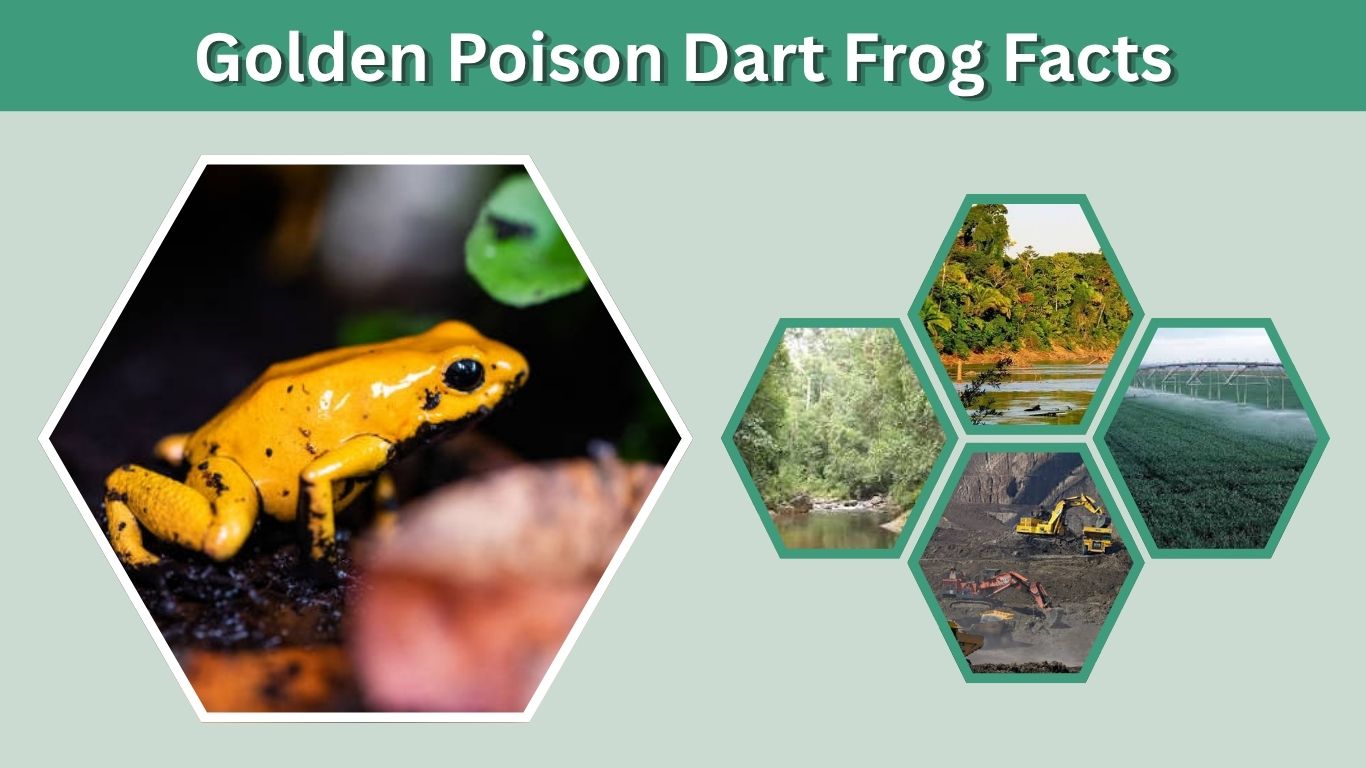
The golden poison dart frog is a tiny but extraordinary amphibian famous for its bright coloration and extremely toxic skin. Scientifically known as Phyllobates terribilis, it lives in a small area of tropical rainforest in western Colombia. Its beautiful yellow, orange, or pale-green body serves as a warning to predators. From its diet-based poison to its unusual parenting behavior, here are the most interesting facts about the golden poison frog.
Golden Poison Dart Frog Quick Facts
The golden poison frog belongs to the poison frog family, Dendrobatidae. Although people often imagine poison dart frogs as extremely small, this species is one of the largest members of its family.
| Feature | Information |
| Scientific name | Phyllobates terribilis |
| Other names | Golden poison frog, golden poison arrow frog |
| Family | Dendrobatidae |
| Size | Usually 1–2 inches long |
| Color | Yellow, golden-orange, mint green or pale green |
| Diet | Ants, termites, beetles, flies and other invertebrates |
| Habitat | Humid lowland rainforest |
| Native range | Western Colombia |
| Activity | Mainly active during the day |
| Conservation status | Endangered |
1. It Is One of the Most Toxic Animals on Earth
The golden poison dart frog is widely recognized as the most toxic frog species. Its skin contains batrachotoxin, a powerful alkaloid that interferes with the normal function of nerves and muscles.
Batrachotoxin keeps certain sodium channels in nerve cells open, preventing the cells from functioning normally. Severe exposure can result in muscle paralysis, irregular heart activity and death. A commonly cited estimate suggests that one highly toxic wild frog may carry enough poison to kill several adult humans.
The frog does not inject its poison through fangs or a stinger. The toxin is secreted through its skin, meaning the animal is poisonous rather than venomous.
2. Its Poison Probably Comes From Its Diet
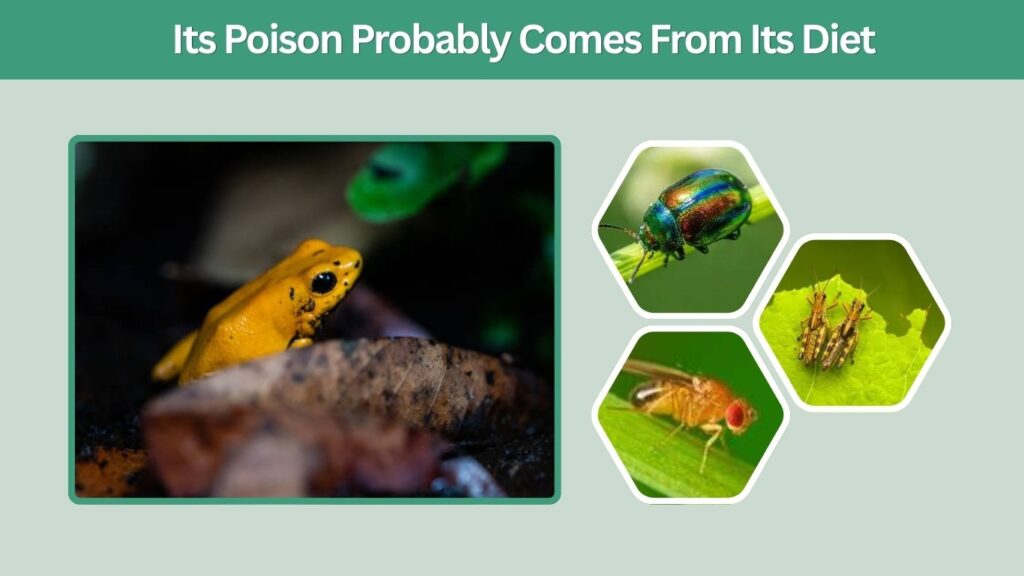
Golden poison frogs do not appear to manufacture batrachotoxin entirely by themselves. Scientists believe they obtain toxic chemicals from particular ants, mites, beetles or other small arthropods consumed in the wild.
Those chemicals are collected and stored in glands within the frog’s skin. Captive-bred golden poison frogs fed fruit flies, crickets and other non-toxic insects do not develop the dangerous toxicity found in wild individuals. This explains why zoo-kept frogs can be maintained safely by trained professionals.
However, people should never touch an unidentified wild poison frog. Oils, soap, lotion and salt on human skin can also harm the frog’s sensitive body.
3. Bright Colors Warn Predators
The brilliant color of a golden poison dart frog is not intended to provide camouflage. Instead, it makes the frog highly visible against the dark rainforest floor.
This warning system is called aposematic coloration. Bright yellow, orange and green colors tell potential predators that the animal may be toxic or unpleasant to eat. A predator that has a bad experience with a brightly colored frog may learn to avoid similarly colored animals in the future.
Adult frogs normally have a fairly uniform body color. Young frogs look different, beginning life with darker bodies and lighter stripes that gradually disappear as they mature.
4. Not Every Golden Poison Frog Is Golden
Despite its common name, the species is not always bright golden-yellow. Different populations and captive lines may appear:
- Bright yellow
- Deep golden-yellow
- Orange
- Metallic green
- Mint green
- Pale green or nearly white
Their color does not indicate that one frog is harmless. Wild frogs of different color forms can still carry powerful defensive toxins.
The species can also be distinguished from many other poison dart frogs by its relatively plain coloration. It usually lacks the complex spots, bands and patterns seen in species such as the dyeing poison dart frog.
5. It Lives Only in Colombia
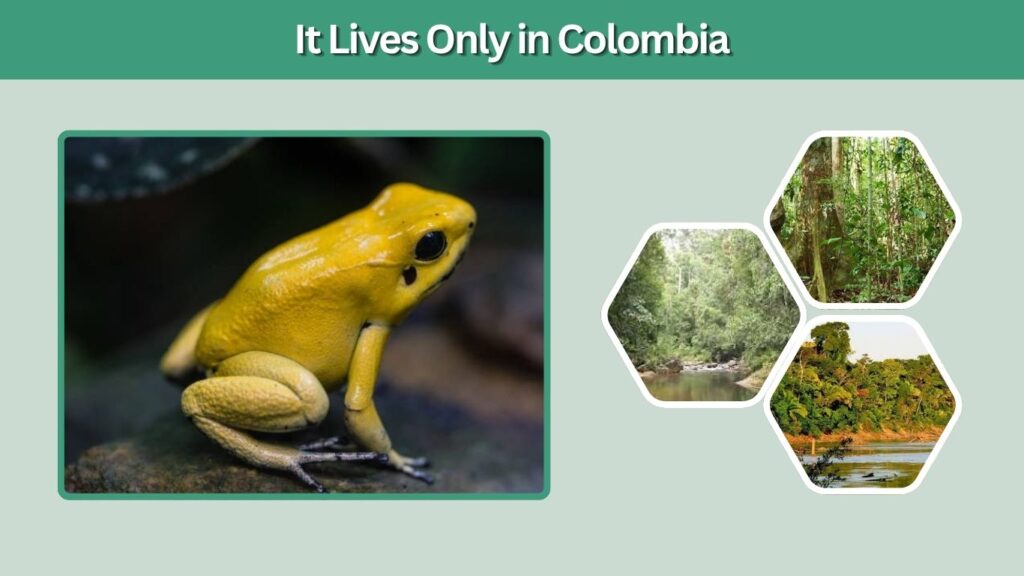
Golden poison frogs are endemic to Colombia, meaning they occur naturally nowhere else in the world. Their known range is concentrated in humid rainforest along Colombia’s Pacific side, including areas associated with the Río Saija drainage.
They live mainly on the ground in lowland tropical forests, often near streams and other freshwater sources. The environment is exceptionally wet, warm and humid throughout much of the year.
Although the frogs may be locally common in suitable habitat, their total geographic range is extremely limited. Destruction within this small area can therefore affect a large percentage of the entire wild population.
6. It Is Large for a Poison Dart Frog
Most poison dart frogs are small enough to sit comfortably on a person’s fingertip. Golden poison frogs are comparatively robust and may grow to approximately two inches long.
Females are generally larger than males. Adults have strong hind legs, rounded bodies, dark eyes and small adhesive toe pads that help them move across wet vegetation and forest debris.
Nevertheless, they are primarily terrestrial frogs. They spend much of their time walking and hopping through damp areas of the forest floor rather than living high in trees.
7. Golden Poison Frogs Hunt During the Day
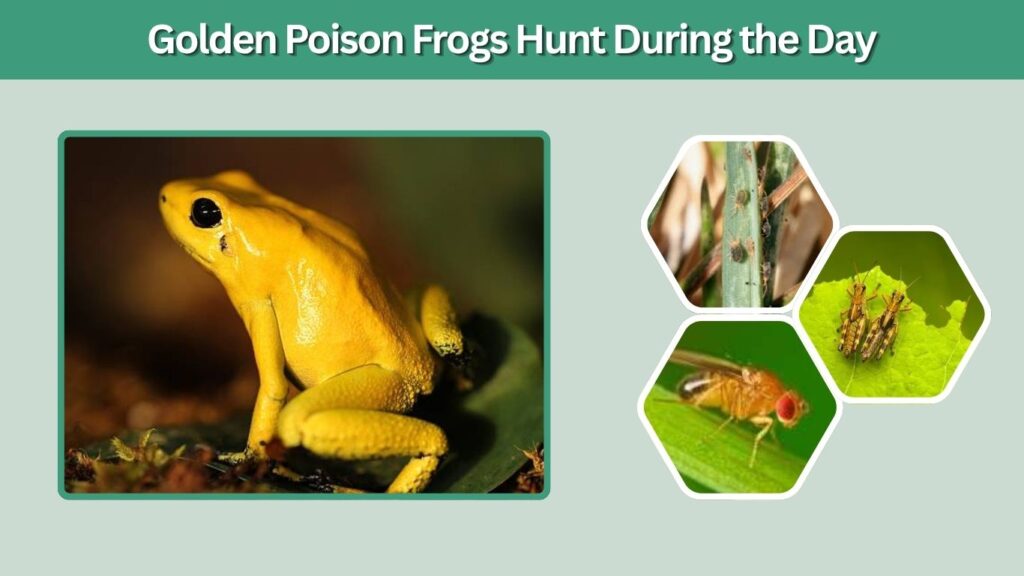
Golden poison frogs are diurnal, which means they are mainly active during daylight hours. Their warning colors provide an effective defense while they search openly for food.
They are carnivorous insect hunters that eat small animals, including:
- Ants
- Termites
- Beetles
- Mites
- Fruit flies
- Crickets
- Other tiny invertebrates
Like other frogs, they catch prey using a fast, sticky tongue. Their diet helps control populations of small forest invertebrates and may also supply the alkaloids needed for their chemical defense.
8. Males Use Calls to Attract Females
Male golden poison frogs produce a long, musical trilling call to attract potential mates and communicate with nearby frogs. Calling is especially important in dense rainforest, where plants and leaf litter can make visual communication difficult.
Courtship may involve the frogs following, touching and moving around one another before eggs are deposited in a hidden, moist location. The eggs are normally placed on land under leaves or other protective cover rather than being laid directly in a large pond.
Moist conditions are essential because frog eggs lack a hard protective shell and can quickly dry out.
9. Fathers Carry Tadpoles on Their Backs
Parental care is one of the most interesting golden poison dart frog facts. After the eggs hatch, an adult—typically the male—allows the tadpoles to climb onto his back.
He then transports them to a suitable pool, stream edge or other body of water. The tadpoles remain there while completing their development and eventually transform into small frogs.
This behavior allows the species to reproduce without depending on a large permanent pond. It also gives the young a better chance of reaching a safe aquatic nursery.
10. Indigenous Hunters Used the Poison on Darts
The name “poison dart frog” comes from reports of Indigenous Colombian hunters using frog toxins on hunting darts. Only a few poison frog species have been documented for this purpose, and all belong to the genus Phyllobates.
The golden poison frog was among the species whose skin secretions were used to coat blowgun darts. The powerful toxin allowed hunters to bring down animals without carrying heavy weapons through dense rainforest.
Not every species commonly called a poison dart frog was traditionally used in this way.
11. The Frog Is Endangered
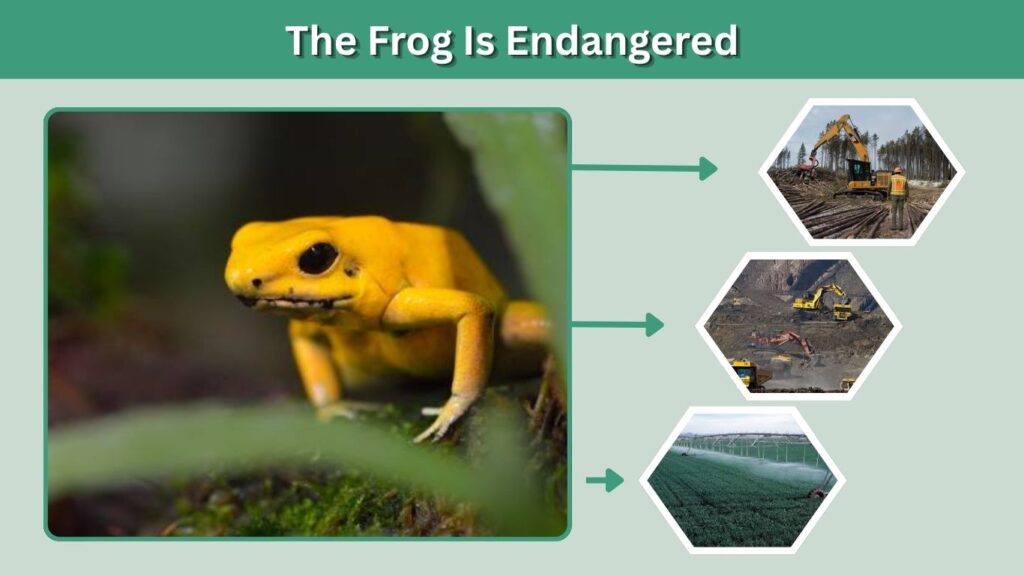
The golden poison frog is classified as Endangered, with its wild population considered to be decreasing. Its greatest danger is habitat destruction within its already restricted Colombian range.
Rainforest may be cleared or damaged by agriculture, mining, logging, road construction and human settlement. Pollution, collection for the illegal wildlife trade and infectious amphibian diseases may create additional pressure.
Protecting intact rainforest is essential because the species requires consistently humid conditions, suitable prey and clean freshwater for tadpole development.
12. Its Toxin Has Interested Medical Researchers
Batrachotoxin is dangerous, but its unusual effect on nerve cells makes it scientifically valuable. Researchers have studied the toxin to understand how sodium channels control electrical signals in nerves and muscles.
These investigations may improve scientific knowledge of pain, heart function, muscle activity and neurological disorders. Scientists generally study synthetic or carefully isolated compounds rather than collecting large numbers of wild frogs.
Protecting the species may therefore preserve both an important rainforest animal and biological information that could contribute to future medical discoveries.
FAQs
Can a golden poison dart frog kill a human?
A highly toxic wild frog contains enough batrachotoxin to cause potentially fatal poisoning. Serious exposure is uncommon because the frogs live in a restricted Colombian rainforest range and do not deliberately attack people. However, wild individuals should never be handled.
Are captive golden poison frogs poisonous?
Captive-bred frogs are generally non-toxic because their diet does not contain the particular arthropods believed to supply their defensive alkaloids. They should still be handled only when necessary because frogs have delicate, absorbent skin.
What does a golden poison frog eat?
It eats ants, termites, mites, beetles, flies, crickets and other small invertebrates. In the wild, certain prey animals are believed to provide the chemical compounds that allow the frog to store batrachotoxin in its skin.
How long do golden poison dart frogs live?
Their exact wild lifespan can vary, but golden poison frogs may live for approximately ten years. Some poison frog species can survive longer under professional human care when provided with stable humidity, suitable food and proper veterinary attention.
Why is the golden poison frog brightly colored?
Its bright coloration warns predators that touching or eating it may be dangerous. This defensive strategy is known as aposematism. Instead of hiding, the frog uses its noticeable yellow, orange or green body as a visible danger signal.
