
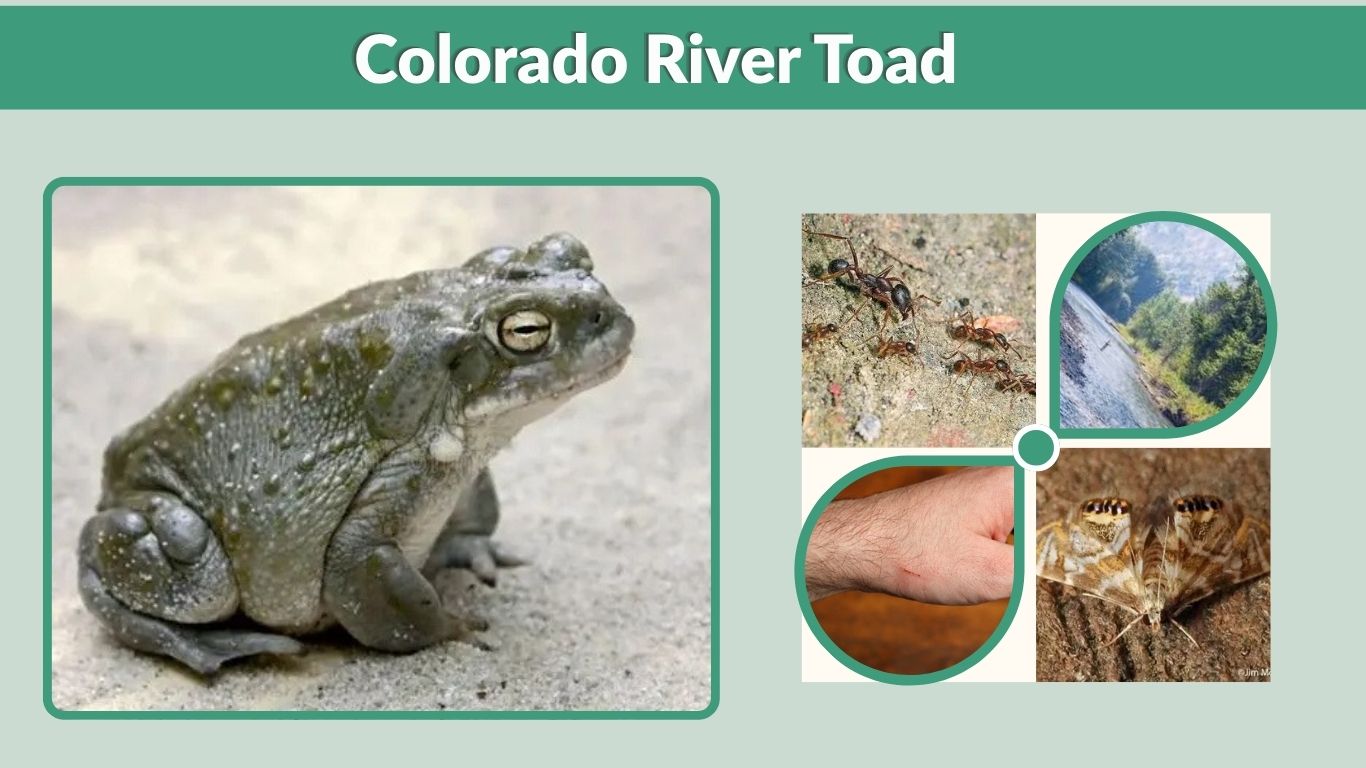
The Colorado River Toad (Incilius alvarius), also known as the Sonoran Desert Toad, is one of the largest native toads in North America. This remarkable amphibian is famous for its impressive size, distinctive appearance, and ability to survive in harsh desert environments. Found primarily in the southwestern United States and northern Mexico, the Colorado River Toad plays an important ecological role as both predator and prey. Its unique adaptations, behavior, and life cycle make it one of the most fascinating amphibians in the region.
What Is a Colorado River Toad?
The Colorado River Toad is a large amphibian belonging to the Bufonidae family. It is commonly associated with the Sonoran Desert and is known for its smooth skin, powerful legs, and prominent toxin-producing glands. Unlike many other amphibians, this species is highly adapted to hot, dry environments and spends much of its life underground to avoid extreme temperatures.
Scientific Classification
The Colorado River Toad is scientifically known as Incilius alvarius. It was formerly classified as Bufo alvarius, a name that still appears in older scientific literature and online resources. The species is closely related to other true toads found throughout North and Central America.
Physical Appearance
Several characteristics help distinguish the Colorado River Toad from other toad species:
- Large, robust body
- Olive-green to dark brown coloration
- Smooth skin with scattered warts
- Prominent parotoid glands behind the eyes
- Broad head and strong limbs
Adult Colorado River Toads typically grow between 4.5 and 7.5 inches (11–19 cm) in length, making them among the largest toads in North America.
Colorado River Toad Habitat
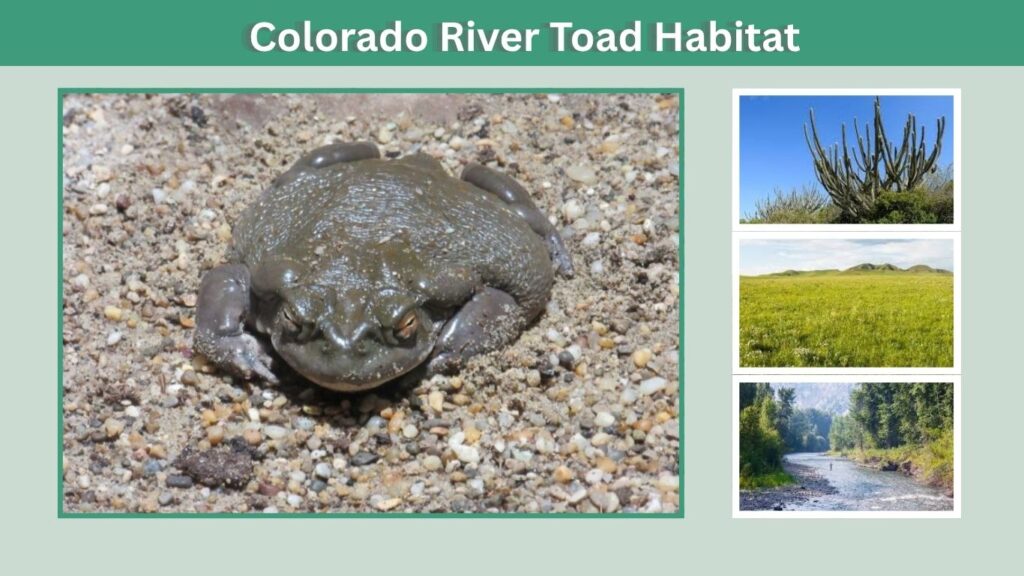
The Colorado River Toad is specially adapted to life in desert and semi-desert ecosystems. Although these environments appear harsh, they provide the resources needed for feeding, breeding, and shelter. Seasonal rainfall is particularly important because it triggers breeding activity and increases food availability.
Preferred Habitats
The species is commonly found in:
- Sonoran Desert regions
- Desert scrublands
- Grasslands
- River valleys
- Agricultural areas
These habitats provide access to temporary water sources, burrowing locations, and abundant insect populations.
Habitat Requirements
Colorado River Toads spend much of the year hidden underground in burrows or natural shelters. During periods of heavy rainfall, they emerge to feed and reproduce. Temporary ponds, flooded washes, and seasonal wetlands are essential breeding sites where eggs and tadpoles can develop successfully.
Because water availability is limited in desert environments, the timing of rainfall plays a critical role in the survival of local populations.
Colorado River Toad Distribution
The Colorado River Toad has a relatively limited geographic range compared to some other amphibians. Most populations occur in areas where desert conditions are combined with seasonal rainfall patterns.
Distribution in the United States
In the United States, the species is most commonly associated with Arizona, particularly within the Sonoran Desert region. Southern Arizona supports some of the healthiest populations due to favorable habitat conditions and seasonal monsoon rains.
Distribution in Mexico
The species also occurs across portions of northern Mexico, where similar desert ecosystems provide suitable habitat. These regions contain breeding sites and feeding grounds that support stable populations.
The distribution of the Colorado River Toad is closely linked to climate and water availability. Areas that experience regular summer rains generally support larger populations than regions with prolonged drought conditions.
Colorado River Toad Diet
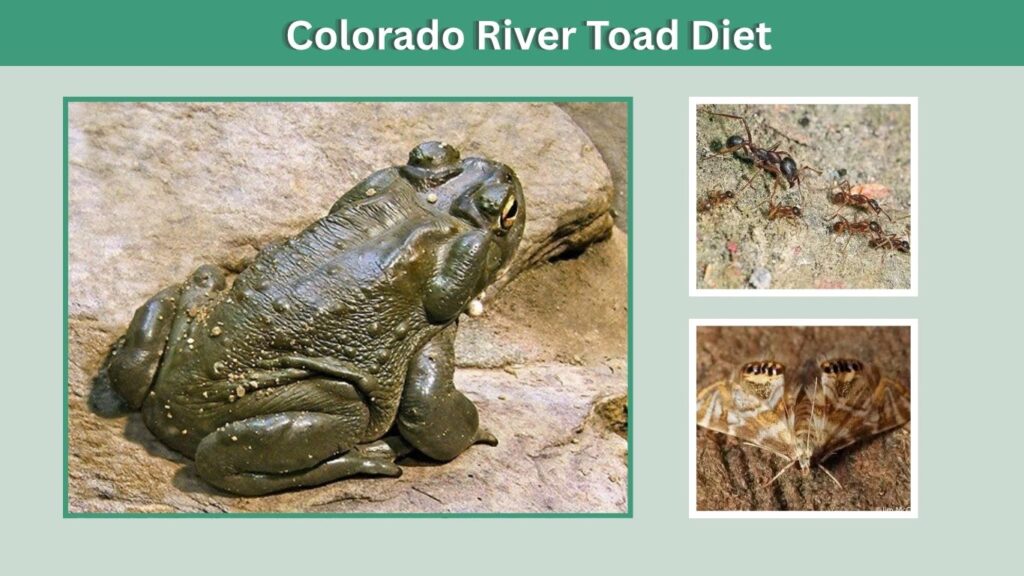
The Colorado River Toad is a carnivorous predator that consumes a wide variety of small animals. Its diet changes depending on seasonal prey availability and habitat conditions.
What Do Colorado River Toads Eat?
Common prey items include:
- Beetles
- Crickets
- Ants
- Spiders
- Moths
- Small rodents
- Other amphibians
This varied diet helps the species obtain the nutrients necessary for growth, reproduction, and survival.
Feeding Behavior
Colorado River Toads are primarily nocturnal hunters. They emerge after sunset when temperatures are cooler and prey is more active. Using their excellent vision and quick reflexes, they capture prey with a sticky tongue and powerful jaws.
Their feeding habits help control insect populations and contribute to the ecological balance of desert environments.
Colorado River Toad Life Cycle
The life cycle of the Colorado River Toad is closely tied to seasonal weather patterns. Reproduction generally occurs during periods of increased rainfall when temporary breeding pools become available.
Breeding Season
Most breeding activity takes place during the summer monsoon season. Males gather near temporary ponds and produce calls to attract females. These vocalizations can often be heard during warm evenings following rainfall.
Eggs and Tadpoles
Female Colorado River Toads lay long strings of eggs in shallow water. After hatching, tadpoles begin feeding on algae and organic matter. Development is often rapid because breeding pools may only exist for a short period before drying.
The tadpole stage is critical for survival, as young toads must complete metamorphosis before water conditions become unfavorable. Successful breeding seasons can result in large numbers of juvenile toads entering the population.
Colorado River Toad Behavior
The Colorado River Toad displays several fascinating behaviors that help it survive in challenging desert environments. Most of its activities occur at night when temperatures are lower and humidity levels are higher. These behavioral adaptations reduce water loss and improve survival in arid regions where resources can be limited.
Nocturnal Lifestyle
Colorado River Toads remain hidden during the day and become active after sunset. This behavior helps them avoid extreme daytime heat and reduces the risk of dehydration. During active periods, they search for food, locate breeding sites, and interact with other toads.
Burrowing Adaptations
One of the species’ most important survival strategies is burrowing. Colorado River Toads spend much of the year underground, emerging mainly during periods of rainfall.
Their burrowing behavior provides several benefits:
- Protection from predators
- Reduced water loss
- Shelter from extreme temperatures
- Safe overwintering locations
- Protection during drought conditions
These adaptations allow the species to survive long periods with limited surface activity.
Colorado River Toad Calls
Male Colorado River Toads produce distinctive calls during the breeding season. These sounds are used to attract females and establish breeding territories near temporary ponds.
The call is often described as a low, sustained trill that can be heard across breeding areas following seasonal rains. Vocal communication plays a key role in reproductive success and helps coordinate breeding activity within local populations.
Are Colorado River Toads Poisonous?
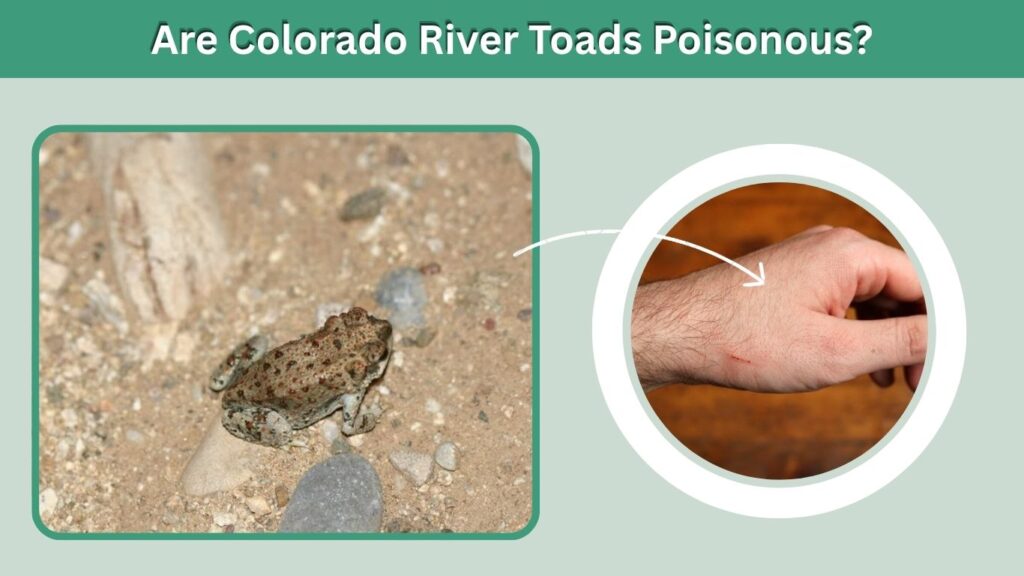
The Colorado River Toad is well known for its defensive skin secretions. These substances help protect the animal from predators and are one of the species’ most recognized characteristics. Understanding these toxins is important for both wildlife enthusiasts and pet owners.
Toxic Skin Secretions
Large glands located behind the eyes produce defensive chemicals when the toad feels threatened. These secretions discourage predators and increase the toad’s chances of survival.
Although the toxins serve a protective function in nature, they can be harmful if ingested or if they come into contact with sensitive tissues such as the eyes or mouth.
Are Colorado River Toads Poisonous to Humans?
Direct handling is generally not dangerous when proper hygiene practices are followed. However, accidental exposure to the toad’s secretions may cause irritation or other adverse effects.
Potential symptoms of exposure include:
- Eye irritation
- Nausea
- Dizziness
- Increased heart rate
- Temporary discomfort
Individuals should avoid touching their face after handling any wild amphibian and wash their hands thoroughly afterward.
Colorado River Toads and Dogs
Pet owners living in areas where Colorado River Toads occur should be aware of the risks associated with toad encounters. Dogs are particularly vulnerable because they may investigate or mouth unfamiliar animals.
Why Dogs Are at Risk
When a dog bites or licks a Colorado River Toad, toxins can enter the mouth and rapidly affect the animal. Reactions can occur within minutes and may require immediate veterinary attention.
Common Symptoms in Dogs
Signs of exposure may include:
- Excessive drooling
- Foaming at the mouth
- Disorientation
- Vomiting
- Difficulty walking
- Seizures in severe cases
Because symptoms can develop quickly, prompt action is important whenever exposure is suspected.
What to Do if a Dog Encounters a Toad
If a dog comes into contact with a Colorado River Toad, rinsing the mouth with clean water while preventing swallowing may help reduce toxin exposure. Veterinary care should be sought immediately to ensure proper treatment and monitoring.
Colorado River Toad Conservation
Although Colorado River Toad populations remain present across portions of their native range, several environmental pressures continue to affect their long-term survival. Conservation efforts focus on protecting breeding habitats and reducing human-related threats.
Major Threats
The species faces several challenges throughout its range:
- Habitat loss from development
- Road mortality
- Water scarcity
- Climate change
- Habitat fragmentation
These factors can reduce breeding success and limit movement between populations.
Conservation Efforts
Wildlife agencies and conservation organizations work to protect important habitats and monitor population trends. Efforts often focus on preserving wetlands, maintaining breeding ponds, and educating the public about responsible wildlife interactions.
Long-term conservation success depends on maintaining healthy desert ecosystems and ensuring that seasonal breeding habitats remain available.
Colorado River Toad vs Sonoran Desert Toad
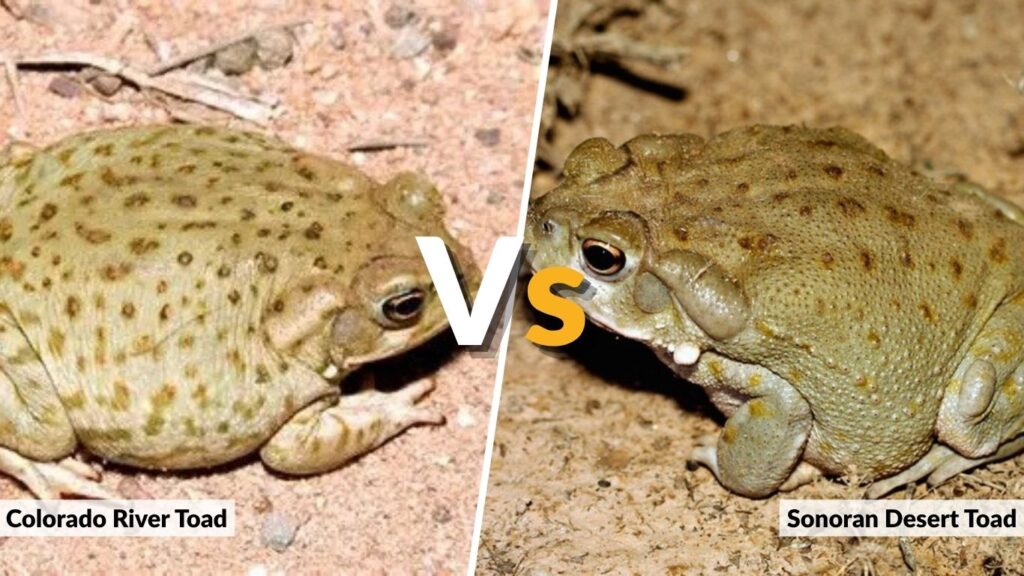
Many people wonder whether the Colorado River Toad and Sonoran Desert Toad are different species. In reality, these names refer to the same amphibian.
Are They the Same Species?
Yes, Colorado River Toad and Sonoran Desert Toad are common names for Incilius alvarius. The name used often depends on geographic location and historical usage.
Common Misconceptions
Confusion sometimes occurs because older scientific literature refers to the species as Bufo alvarius. Despite changes in scientific classification, the animal remains the same species.
Understanding these naming differences helps avoid confusion when researching habitat, behavior, conservation, or identification.
Interesting Colorado River Toad Facts
The Colorado River Toad possesses several remarkable characteristics that make it unique among North American amphibians.
Fascinating Facts
- One of the largest native toads in North America
- Can spend months underground during dry periods
- Primarily active during summer monsoon seasons
- Uses powerful toxins for defense
- Plays an important role in controlling insect populations
- Can survive in extremely harsh desert conditions
- Relies on temporary ponds for successful reproduction
These adaptations have allowed the Colorado River Toad to thrive in environments where many amphibians would struggle to survive.
FAQs
What Does a Colorado River Toad Look Like?
The Colorado River Toad is a large, olive-green to dark brown amphibian with smooth skin and prominent parotoid glands behind its eyes. Adults can grow up to 7.5 inches (19 cm) long, making them one of the largest native toads in North America.
When Do Colorado River Toads Come Out?
Colorado River Toads are most active during the summer monsoon season. They typically emerge after sunset following rainfall, when humidity levels are higher and food is more abundant.
What Is the Difference Between a Colorado River Toad and a Cane Toad?
Although both species are large and toxic, the Colorado River Toad is native to the southwestern United States and northern Mexico, while the Cane Toad is native to Central and South America and has been introduced to many other regions. They differ in appearance, habitat, and geographic range.
Can You Keep a Colorado River Toad as a Pet?
Ownership laws vary by location. Some states and countries regulate or restrict possession of native wildlife, including Colorado River Toads. Anyone considering ownership should check local wildlife regulations before obtaining one.
What Predators Eat Colorado River Toads?
Despite their toxic defenses, Colorado River Toads may be preyed upon by certain snakes, birds, mammals, and other wildlife that have developed resistance or strategies for avoiding their toxins. Juvenile toads are generally more vulnerable to predation than adults.
