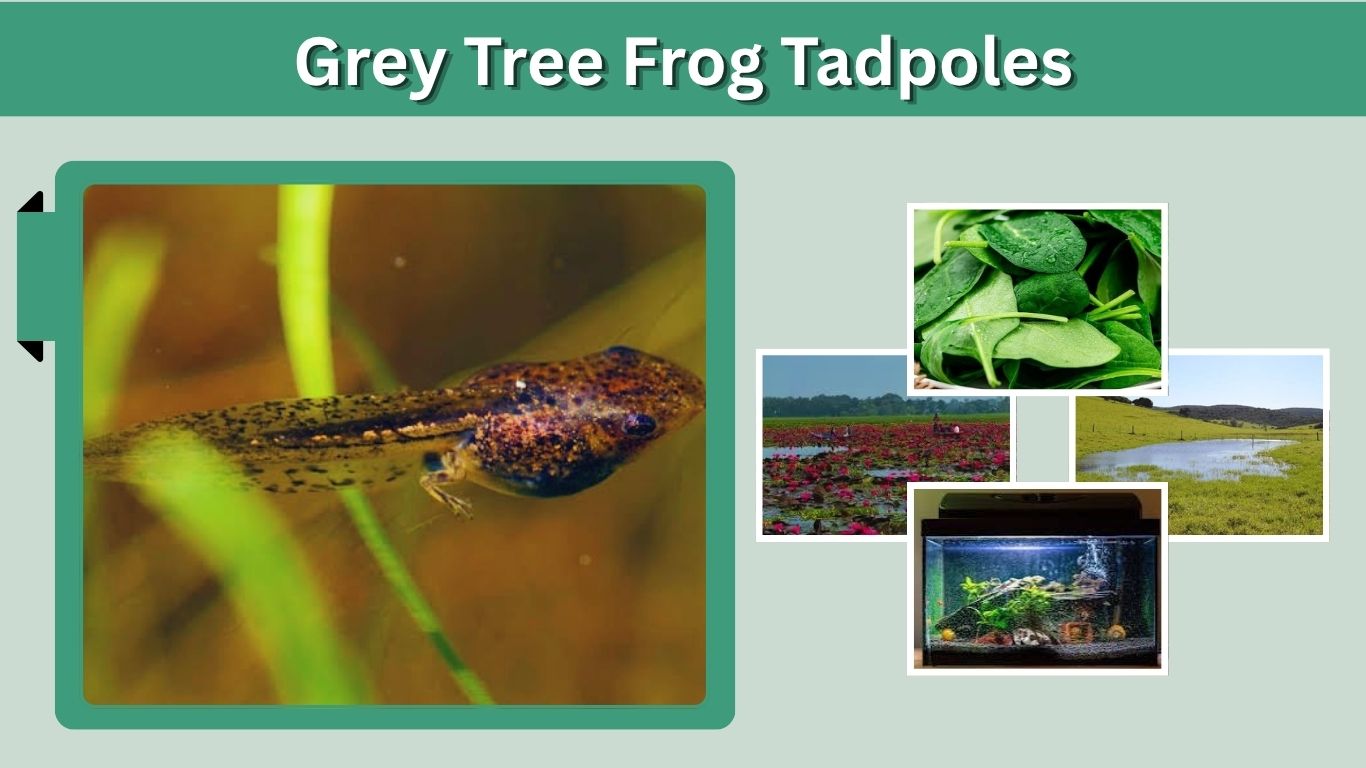
Grey Tree Frog tadpoles are fascinating aquatic creatures that eventually transform into small, tree-climbing frogs. Found in freshwater ponds, woodland pools, and wetlands across eastern North America, these tadpoles are recognizable by their rounded bodies and sometimes brightly colored tails. Both Eastern Grey Tree Frogs and Cope’s Grey Tree Frogs produce similar-looking tadpoles, making identification challenging. Their growth depends on water temperature, available food, and environmental conditions. This guide explains Grey Tree Frog tadpole identification, feeding habits, life cycle, growth stages, and proper care.
What Are Grey Tree Frog Tadpoles?
Grey Tree Frog tadpoles are the aquatic larval stage of Grey Tree Frogs. They hatch from eggs deposited in freshwater and spend several weeks developing before becoming young frogs. Unlike adults that climb trees and shrubs, tadpoles remain underwater, feeding on algae and other organic material.
Eastern Grey Tree Frog Tadpoles
Eastern Grey Tree Frog tadpoles belong to the species Dryophytes versicolor, traditionally called Hyla versicolor. They develop in shallow ponds, temporary wetlands, and woodland pools.
Cope’s Grey Tree Frog (Dryophytes chrysoscelis) produces almost identical tadpoles. Although the adult species have different mating calls, their larvae cannot reliably be distinguished through ordinary visual observation.
Grey Tree Frog Tadpole Identification
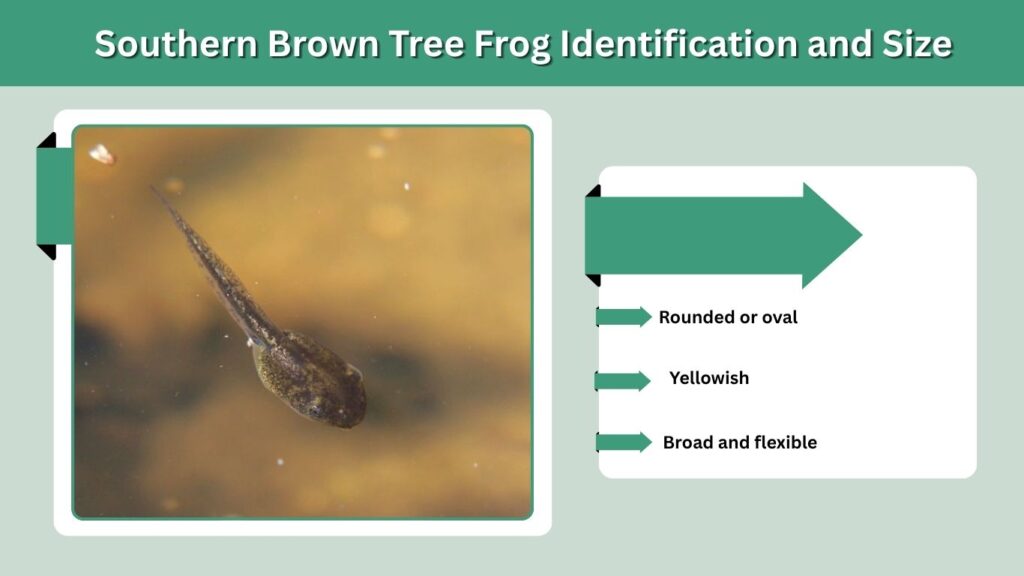
Identifying Grey Tree Frog tadpoles requires examining their body shape, coloration, tail patterns, and developmental stage. Their appearance changes as they mature, with some developing bright reddish-orange tails decorated with dark spots. These markings are particularly useful when distinguishing them from other common freshwater tadpoles.
What Do Grey Tree Frog Tadpoles Look Like?
- Body shape: Rounded or oval, becoming more elongated during development.
- Body color: Yellowish, olive-green, brown, or golden-brown.
- Tail coloration: Yellowish, orange, or reddish, sometimes with black markings.
- Eyes: Positioned toward the sides of the head.
- Tail fin: Broad and flexible, allowing efficient swimming.
- Size: Fully grown tadpoles may approach 2 inches, including their tails.
- Leg development: Hind legs appear before front legs during metamorphosis.
Why Do Grey Tree Frog Tadpoles Have Red Tails?
Grey Tree Frog tadpoles sometimes develop reddish-orange tail coloration when exposed to particular environmental conditions, including the presence of aquatic predators.
Research suggests that predator-induced changes in tail pigmentation can help redirect attacks toward the tail rather than the tadpole’s body.
However, not every Grey Tree Frog tadpole develops a bright red tail.
Where Do Grey Tree Frog Tadpoles Live?
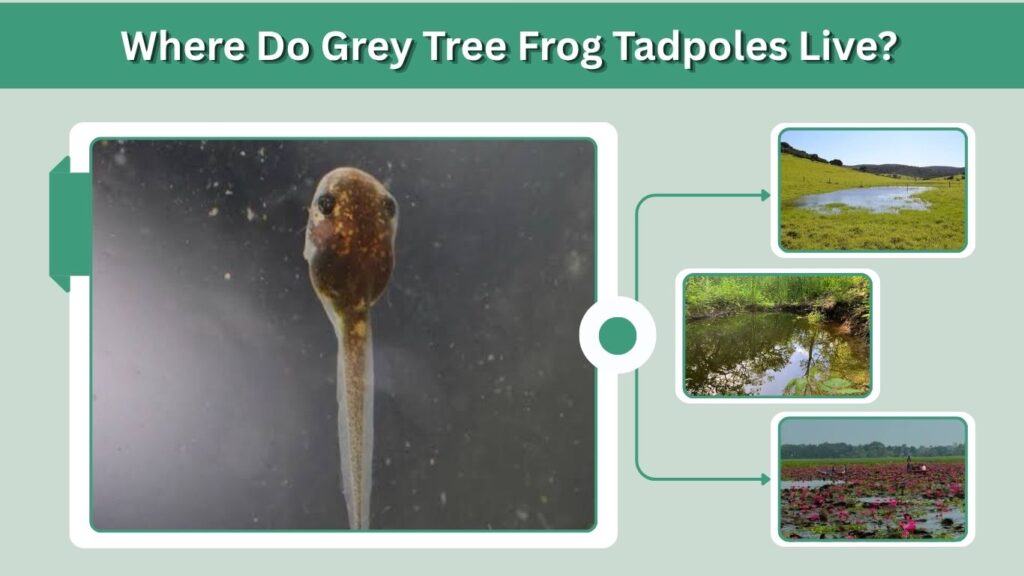
Grey Tree Frog tadpoles inhabit freshwater environments where adults gather to reproduce. These habitats generally provide aquatic vegetation, available food, and relatively shallow water. Temporary pools are particularly important because they often contain fewer fish predators than permanent lakes or ponds.
Natural Tadpole Habitats
Grey Tree Frog tadpoles commonly develop in woodland ponds, seasonal wetlands, flooded fields, roadside ditches, and shallow marshes.
They may also occur in garden ponds and rain-filled artificial containers.
In Missouri, Grey Tree Frogs and Cope’s Grey Tree Frogs frequently breed in temporary wetlands during spring and summer. Cope’s Grey Tree Frogs also occur in parts of Texas.
Grey Tree Frog Tadpole Life Cycle
Grey Tree Frogs undergo complete amphibian metamorphosis, changing from aquatic larvae into land-dwelling froglets. Their development involves major changes in body structure, breathing, and feeding habits. Environmental temperature strongly influences how quickly tadpoles complete these transformations.
Five Stages of Grey Tree Frog Development
- Egg stage: Females deposit small clusters of eggs attached to aquatic vegetation. Eggs typically hatch within three to seven days.
- Early tadpole stage: Newly hatched tadpoles begin swimming and feeding on algae and organic material.
- Growing tadpole stage: Tadpoles increase in size while developing more noticeable body and tail markings.
- Leg development: Hind legs appear first, followed by front legs. Lungs develop, allowing the animal to prepare for life outside water.
- Froglet stage: The tail gradually disappears as the young frog transitions onto land and begins hunting tiny invertebrates.
How Long Do Grey Tree Frog Tadpoles Take to Grow?
Grey Tree Frog tadpoles generally complete metamorphosis within approximately 45–65 days after hatching.
Some individuals develop faster under favorable conditions, while cooler water and limited food can delay growth.
Newly transformed froglets are often bright green before gradually developing the variable gray, brown, and green coloration seen in adults.
What Do Grey Tree Frog Tadpoles Eat?
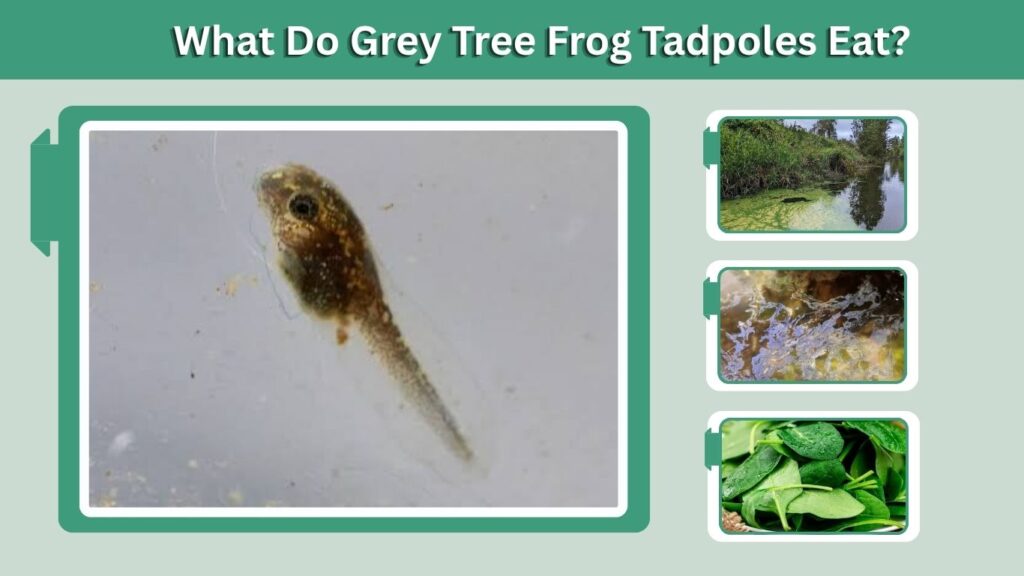
Grey Tree Frog tadpoles primarily consume algae, microscopic organisms, and decomposing organic material found in freshwater. Their feeding activity helps recycle nutrients within aquatic ecosystems. As they develop into froglets, their diet changes toward insects and other small invertebrates.
Natural Grey Tree Frog Tadpole Food
In natural ponds, tadpoles scrape algae and biofilm from submerged surfaces.
They may also consume fine organic particles suspended in the water or resting on the bottom.
Their mouthparts are adapted for collecting these food sources, supporting growth throughout the aquatic stage.
What to Feed Grey Tree Frog Tadpoles in Captivity
- Algae: Provides a natural food source.
- Specialized tadpole food: Offers nutrients appropriate for developing amphibians.
- Softened leafy greens: Small portions of suitable vegetables may supplement their diet.
- Spirulina-based food: May provide additional plant-based nutrition.
- Natural biofilm: Established aquatic surfaces support grazing.
Avoid overfeeding because uneaten food decomposes and reduces water quality.
How to Care for Grey Tree Frog Tadpoles
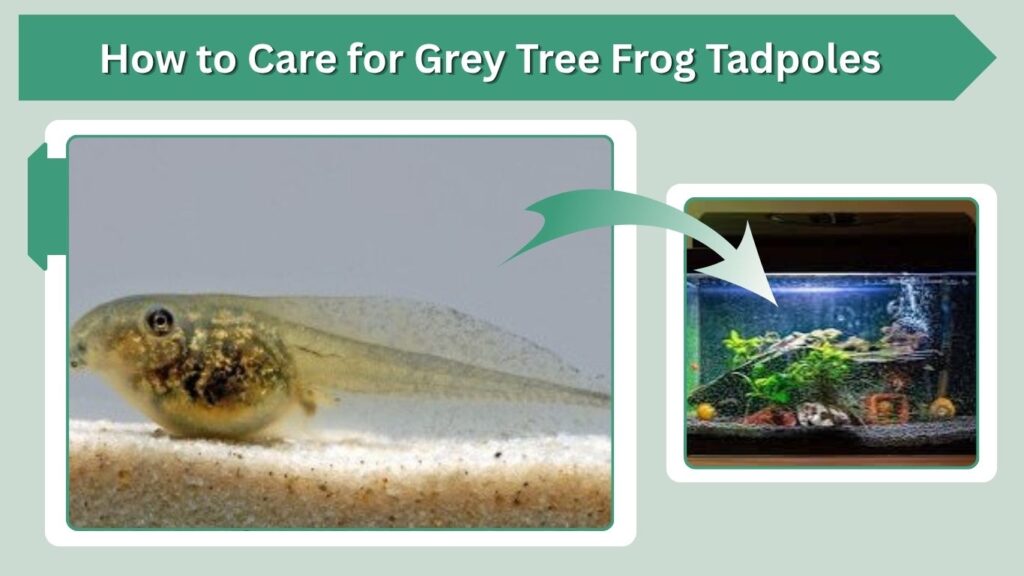
Raising Grey Tree Frog tadpoles requires clean freshwater, suitable nutrition, and careful monitoring. Their sensitive bodies can be harmed by chlorine, pesticides, sudden temperature changes, and poor water conditions. Captive care should follow species-specific requirements, and wild tadpoles are usually best left undisturbed.
Grey Tree Frog Tadpole Care Tips
- Provide clean water: Use properly dechlorinated water with stable chemical conditions.
- Maintain suitable temperatures: Avoid extreme heat, cold, and sudden temperature changes.
- Provide sufficient space: Prevent overcrowding to reduce stress and competition.
- Offer appropriate food: Supply small amounts of nutritionally suitable tadpole food.
- Monitor water quality: Remove waste and uneaten food regularly.
- Add safe aquatic vegetation: Provide surfaces for grazing and shelter.
- Prepare an exit area: Introduce shallow slopes or emerging surfaces when legs develop.
Caring for Grey Tree Frog Froglets
When tadpoles develop front legs, they need easy access to dry surfaces because they begin breathing air more frequently.
Their tails gradually shrink, and feeding shifts toward appropriately sized live insects.
Captive-bred animals from reputable legal sources are preferable to collecting wild tadpoles. Never release captive amphibians into the wild because they may introduce diseases.
Grey Tree Frog Tadpoles in Swimming Pool Covers
Grey Tree Frogs sometimes lay eggs in rainwater collected on swimming pool covers. These temporary pools can attract breeding adults, especially during warm, rainy weather. However, artificial water collections may become unsuitable as temperatures rise or water levels decrease.
What to Do if You Find Tadpoles on a Pool Cover
If tadpoles are present, avoid introducing pool chemicals or draining the cover while animals remain in the water.
Prevent the water from overheating or drying out while seeking advice from a local wildlife rehabilitator or wildlife authority.
Moving wild tadpoles between water bodies can spread diseases and may violate local wildlife regulations.
FAQs
1. How Long Does It Take Grey Tree Frog Tadpoles to Become Frogs?
Grey Tree Frog tadpoles usually complete metamorphosis in approximately 45–65 days after hatching. Development depends on temperature, food availability, and water conditions. Some tadpoles transform faster, while others require additional time under less favorable environmental conditions.
2. What Do Grey Tree Frog Tadpoles Eat?
Grey Tree Frog tadpoles mainly consume algae, biofilm, and decomposing organic material. In captivity, suitable specialized tadpole food can supplement their natural diet. Their feeding habits change after metamorphosis when young frogs begin eating small live insects.
3. Can You Raise Grey Tree Frog Tadpoles at Home?
Yes, legally obtained Grey Tree Frog tadpoles can be raised with appropriate care. They require clean freshwater, suitable temperatures, nutritious food, and emerging surfaces. However, wild tadpoles should generally remain in their natural habitats to prevent unnecessary stress and disease transmission.
4. How Can You Identify Grey Tree Frog Tadpoles?
Grey Tree Frog tadpoles have rounded bodies, olive or brownish coloration, and relatively broad tail fins. Some develop striking reddish-orange tails with dark markings. Eastern Grey Tree Frog and Cope’s Grey Tree Frog tadpoles are visually almost identical.
5. Are Grey Tree Frog Tadpoles Common in Swimming Pools?
Grey Tree Frogs sometimes breed in rainwater collected on swimming pool covers, especially during warm weather. However, chemically treated pool water can harm developing tadpoles. Consult local wildlife professionals before moving tadpoles or draining occupied breeding water.
