
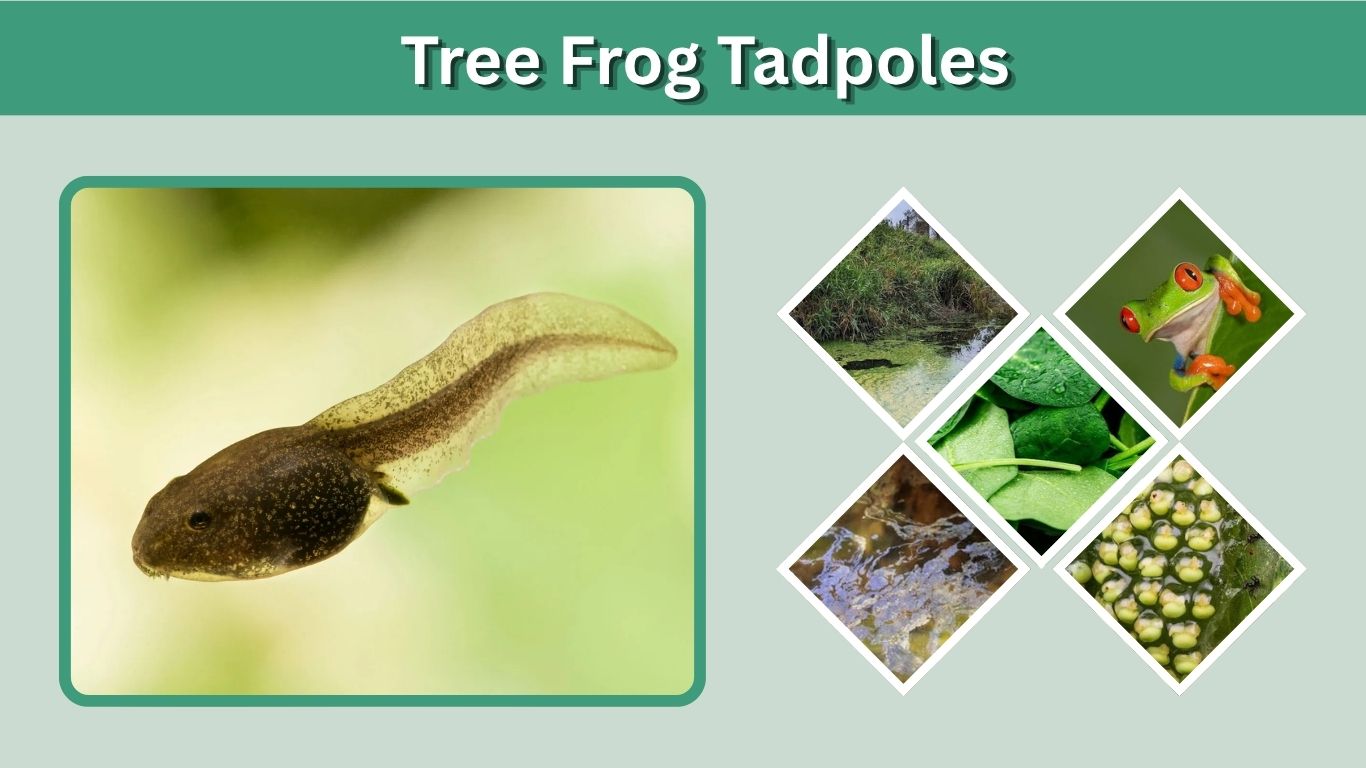
Tree frog tadpoles are the aquatic young of tree frogs, developing in ponds, wetlands, and other freshwater habitats before transforming into adult frogs. These tiny creatures have rounded bodies, long tails, and specialized features that help them survive underwater. Different species, including Gray Tree Frogs, Green Tree Frogs, Cuban Treefrogs, and Red-eyed Tree Frogs, produce tadpoles with distinctive characteristics. Understanding their appearance, feeding habits, development, and environmental needs makes identification and care easier. This guide explains common tree frog tadpole species, their life cycle, diet, and care requirements.
What Are Tree Frog Tadpoles?
Tree frog tadpoles are the larval stage of tree frogs. Although adult tree frogs often spend much of their lives climbing trees and vegetation, most species begin life in freshwater. Their eggs hatch into aquatic tadpoles that breathe through gills and swim using long, flexible tails.
Do Tree Frogs Start as Tadpoles?
Yes. Most tree frogs begin life as eggs that hatch into tadpoles. These larvae remain underwater while developing legs, lungs, and other adult characteristics.
Eventually, they absorb their tails and become small froglets capable of living outside water. This transformation is known as metamorphosis.
How to Identify Tree Frog Tadpoles
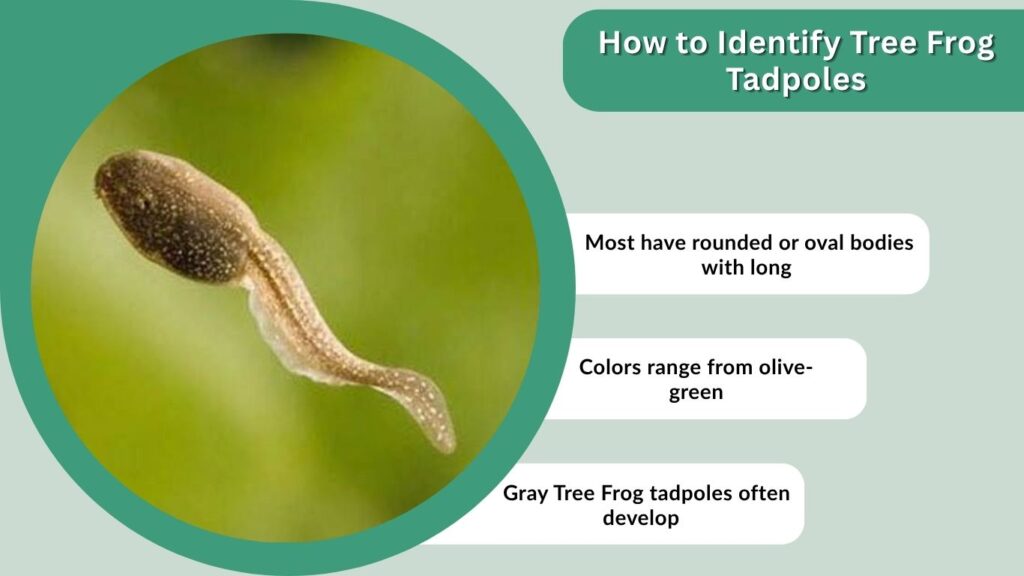
Tree frog tadpole identification can be challenging because different species often share similar body shapes and colors. Their appearance changes during development, making early-stage larvae particularly difficult to distinguish. Observing their tails, eyes, body markings, and geographic location can help narrow down possible species.
Tree Frog Tadpole Identification Features
- Body shape: Most have rounded or oval bodies with long, flexible tails.
- Body color: Colors range from olive-green and brown to gray or nearly black.
- Eyes: Tree frog tadpoles generally have eyes positioned toward the sides of their heads.
- Tail shape: Some species have broad tail fins, while others possess narrower, pointed tails.
- Tail markings: Gray Tree Frog tadpoles often develop striking orange-red and black tail patterns.
- Size: Length varies depending on species and developmental stage.
- Habitat: Shallow ponds, seasonal pools, wetlands, and water-filled depressions are common breeding locations.
Different Types of Tree Frog Tadpoles
Several tree frog species produce tadpoles with recognizable characteristics. Their size, coloration, habitat preferences, and development rates vary considerably. Understanding these differences is useful when identifying tadpoles found in garden ponds or natural wetlands.
Gray Tree Frog Tadpoles
Gray Tree Frog tadpoles are particularly recognizable by their reddish-orange tail fins with dark markings. Their bodies are generally greenish, olive, or golden-brown.
Both the Gray Tree Frog (Dryophytes versicolor) and Cope’s Gray Tree Frog (Dryophytes chrysoscelis) produce visually similar tadpoles.
These species commonly breed in woodland pools and temporary freshwater habitats. Their tadpoles typically complete metamorphosis in approximately two months.
Green Tree Frog Tadpoles
American Green Tree Frog tadpoles (Dryophytes cinereus) are generally olive, brownish, or greenish with long tails.
They inhabit ponds, marshes, and shallow freshwater wetlands across the southeastern United States.
Their development usually takes approximately two months, although temperature and food availability influence their growth rate.
Cuban Tree Frog Tadpoles
Cuban Treefrog tadpoles (Osteopilus septentrionalis) usually have dark brown bodies and mottled tails.
Their tail muscles are typically darker above and pale underneath. They can grow to approximately 1.25 inches long, including the tail.
Cuban Treefrogs are invasive in Florida, where their tadpoles frequently develop in artificial containers, ornamental ponds, and temporary water bodies.
Pacific Tree Frog Tadpoles
Pacific Tree Frog tadpoles (Pseudacris regilla) usually have brownish or olive-colored bodies with relatively broad tail fins.
They develop in shallow ponds, wetlands, and seasonal pools across western North America.
Their transformation into froglets generally takes around two to three months.
Red-Eyed Tree Frog Tadpoles
Red-eyed Tree Frog tadpoles (Agalychnis callidryas) develop in tropical freshwater pools beneath forest vegetation.
Females lay eggs on leaves hanging above water. After hatching, tadpoles drop into the water below.
Their bodies are generally brownish or olive-colored, and their development varies with environmental conditions.
White’s Tree Frog Tadpoles
White’s Tree Frog tadpoles (Ranoidea caerulea), also called Australian Green Tree Frog or Dumpy Tree Frog tadpoles, generally have brownish-green bodies.
They still develop in freshwater habitats in Australia and New Guinea.
Under favorable conditions, metamorphosis may occur in approximately six weeks, although development times vary.
Tree Frog Tadpole Life Cycle
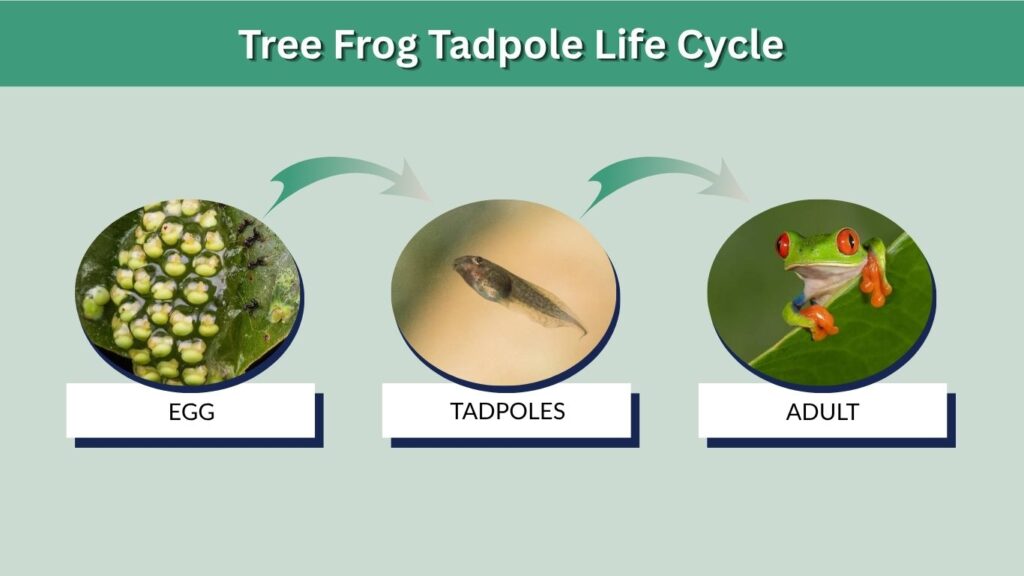
Tree frog tadpoles undergo several developmental changes before becoming adult frogs. Their transformation involves changes in breathing, feeding, movement, and body structure. Environmental factors, including temperature, water quality, and food availability, influence how quickly these changes occur.
Five Stages of Tree Frog Tadpole Development
- Egg stage: Female tree frogs deposit eggs in suitable breeding habitats. Depending on the species, eggs may be laid directly in water or on vegetation above it.
- Early tadpole stage: Newly hatched tadpoles begin swimming and feeding. They breathe primarily through gills and rely on their tails for movement.
- Growing tadpole stage: Tadpoles become larger and develop more recognizable body features. Their feeding activity increases as they grow.
- Leg development: Hind legs appear first, followed by front legs. Lungs develop, and the tail gradually becomes shorter.
- Froglet stage: The remaining tail is absorbed, and the young frog begins living outside water. Its diet shifts toward small insects and other invertebrates.
How Long Do Tree Frog Tadpoles Take to Grow?
The time required for tree frog tadpoles to become frogs depends on the species and environmental conditions. Some develop relatively quickly, while others remain aquatic for several months.
Tree Frog Tadpole Growth Time
American Green Tree Frog tadpoles typically transform within approximately two months. Gray Tree Frog tadpoles also commonly complete metamorphosis in around six to nine weeks.
Pacific Tree Frog tadpoles may require up to three months.
Red-eyed Tree Frog development is more variable, while White’s Tree Frog tadpoles can transform in approximately six weeks under suitable conditions.
Cooler temperatures and limited food may delay development.
What Do Tree Frog Tadpoles Eat?
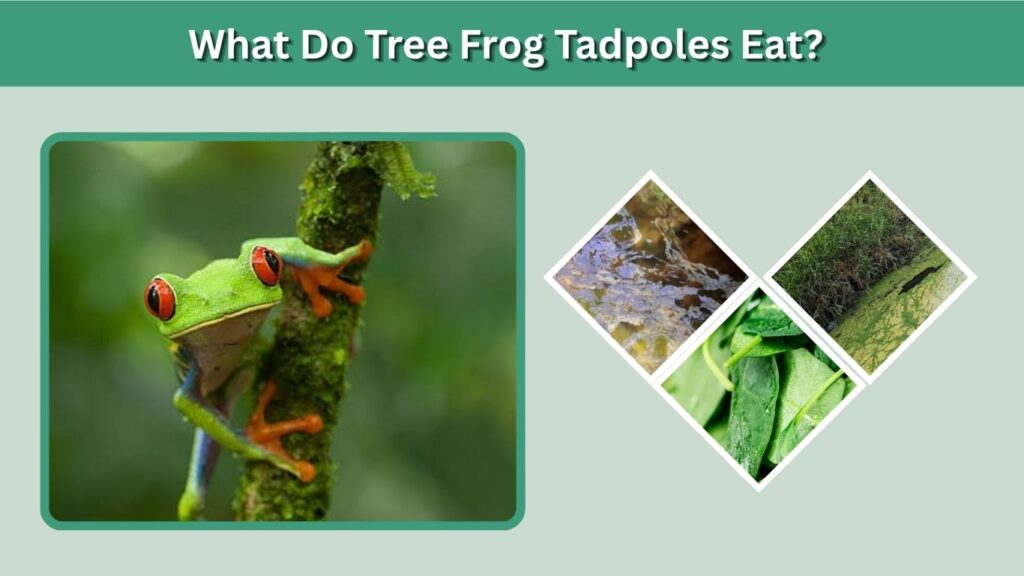
Tree frog tadpoles primarily feed on aquatic organic material, although their diets vary among species and developmental stages. Many consume algae and decomposing plant matter, while some also eat microorganisms and small animal material. Proper nutrition supports healthy growth and successful metamorphosis.
Common Tree Frog Tadpole Foods
- Algae: An important food source for many developing tadpoles.
- Aquatic microorganisms: Provide additional nutrients in natural freshwater habitats.
- Decaying vegetation: Soft plant material supports feeding in many species.
- Biofilm: Microorganisms growing on submerged surfaces may be grazed.
- Specialized tadpole food: Provides balanced nutrition for appropriately maintained captive tadpoles.
- Softened leafy vegetables: Small portions may supplement the diets of suitable species.
Do Tree Frog Tadpoles Eat Mosquito Larvae?
Some tadpoles may consume mosquito larvae or other small aquatic animals opportunistically. However, most tree frog tadpoles are not specialized mosquito predators.
They should not be relied upon as the primary method of mosquito control.
How to Care for Tree Frog Tadpoles
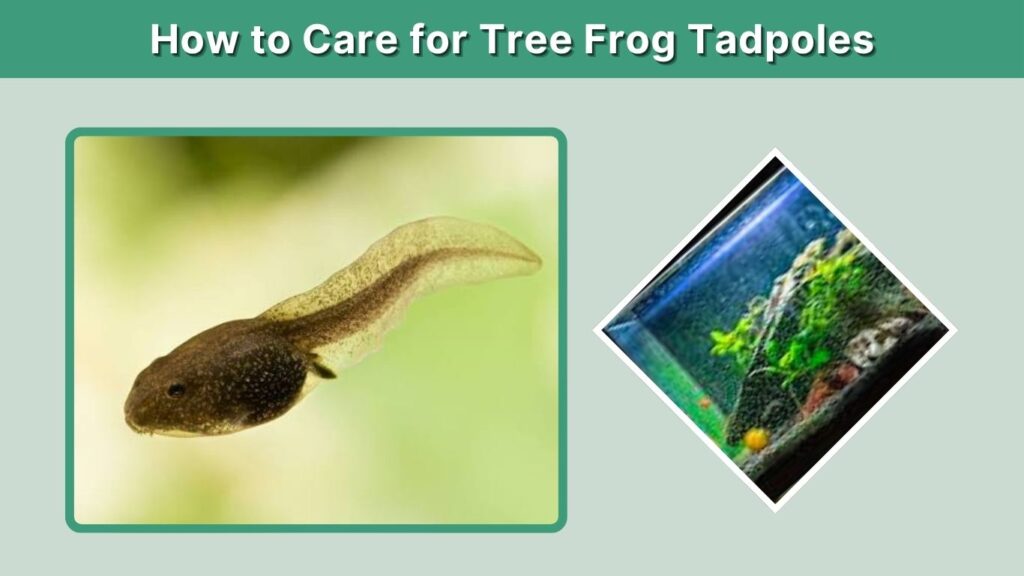
Raising tree frog tadpoles requires appropriate water conditions, suitable food, and enough space for healthy development. Different species have specific requirements, so proper identification is important before attempting captive care. Wild tadpoles are generally best left in their natural habitats.
Tree Frog Tadpole Care Tips
- Use clean water: Provide species-appropriate, dechlorinated water free from harmful chemicals.
- Maintain suitable temperatures: Keep water within the recommended temperature range for the identified species.
- Provide adequate space: Avoid overcrowding because it can increase stress and reduce water quality.
- Feed appropriately: Offer small amounts of suitable tadpole food and remove uneaten material.
- Monitor water quality: Check for waste buildup and perform careful partial water changes when necessary.
- Create an exit area: Provide shallow slopes or emerging surfaces when tadpoles begin developing legs.
- Avoid unnecessary handling: Their sensitive skin can be damaged by chemicals and rough handling.
Captive frogs should never be released into unfamiliar natural habitats because they may spread diseases or become invasive. Follow local wildlife regulations.
FAQs
1. What Do Tree Frog Tadpoles Look Like?
Tree frog tadpoles generally have rounded bodies, long tails, and eyes positioned toward the sides of their heads. Their colors vary from brown and olive to greenish or black. Some species have distinctive tail markings that help with identification.
2. How Long Are Tree Frogs Tadpoles?
Many tree frog tadpoles remain aquatic for approximately six to twelve weeks before becoming froglets. However, development varies significantly among species. Water temperature, nutrition, habitat conditions, and seasonal changes can influence how long the transformation takes.
3. What Do Green Tree Frog Tadpoles Eat?
Green Tree Frog tadpoles primarily consume algae, microorganisms, and organic material found in freshwater habitats. In suitable captive conditions, specialized tadpole food may supplement their diet. Proper feeding is important for healthy growth and successful metamorphosis.
4. Can You Raise Tree Frog Tadpoles at Home?
Yes, certain legally obtained tree frog species can be raised in captivity with appropriate equipment and care. Tadpoles require clean water, suitable food, temperature control, and safe emerging surfaces. Species-specific husbandry knowledge is essential for successful development.
5. Do All Tree Frogs Have Tadpoles?
Most tree frog species develop through an aquatic tadpole stage. However, some frogs have evolved alternative reproductive strategies, including direct development without free-swimming tadpoles. Their breeding methods depend on species, habitat, and evolutionary adaptations.
