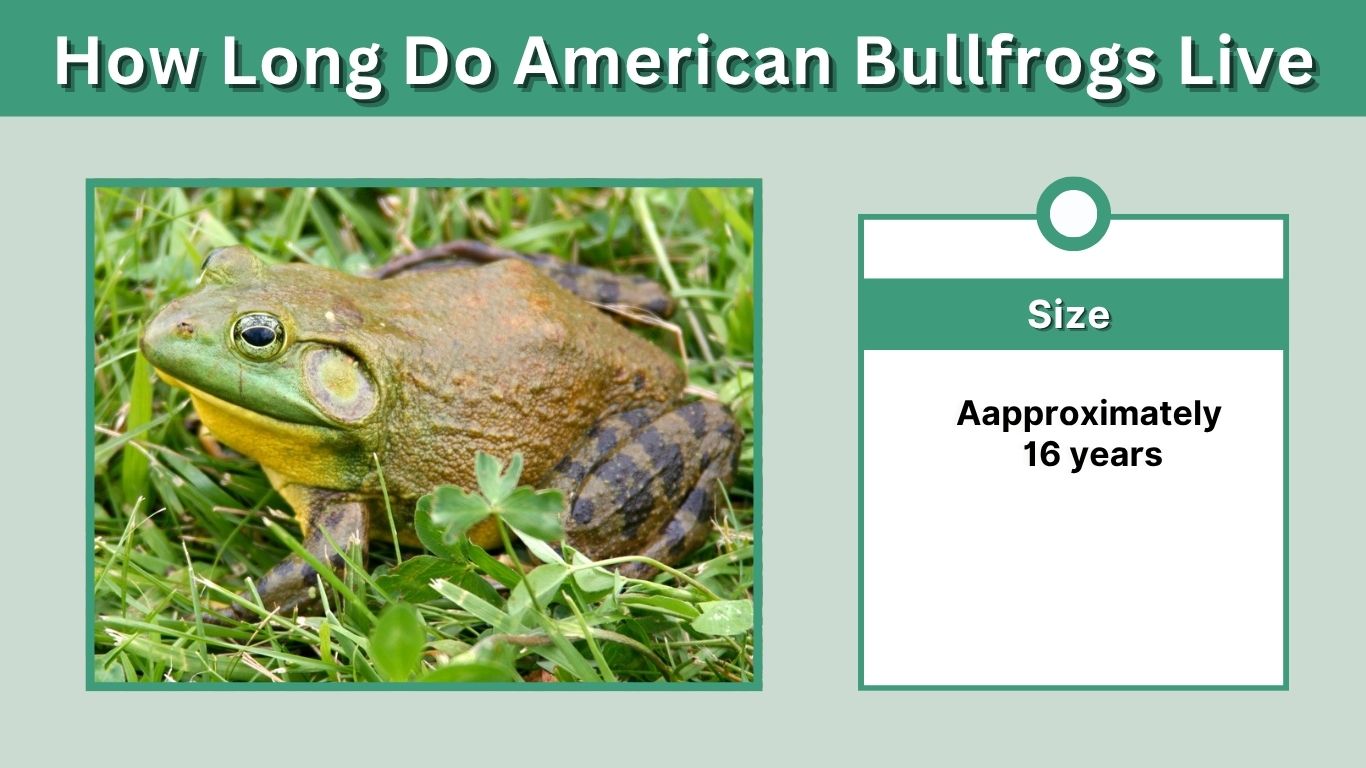
American bullfrogs generally live for about 7 to 9 years in the wild, although many die much earlier from predators, disease, drought, habitat loss, or harsh weather. Under protected captive conditions, an American bullfrog may survive considerably longer; the documented captive record is approximately 16 years. Its full development is unusually slow because the animal may spend one to three years as a tadpole before transforming into a frog.
American Bullfrog Lifespan at a Glance
The American bullfrog, scientifically known as Lithobates catesbeianus, is a large, long-lived amphibian compared with many smaller frogs. Actual longevity varies according to habitat quality, climate, food availability, predators, disease, and whether the frog lives in the wild or captivity.
| Life stage or condition | Approximate duration |
| Egg stage | Around four days before hatching |
| Tadpole stage | Approximately 1–3 years |
| Age at sexual maturity | Usually around 3–5 years |
| Typical wild lifespan | Around 7–9 years |
| Captive record | Approximately 16 years |
These figures are estimates rather than guaranteed limits. Some wild bullfrogs die during their first year, while a small number survive far longer than average.
How Long Do American Bullfrogs Live in the Wild?
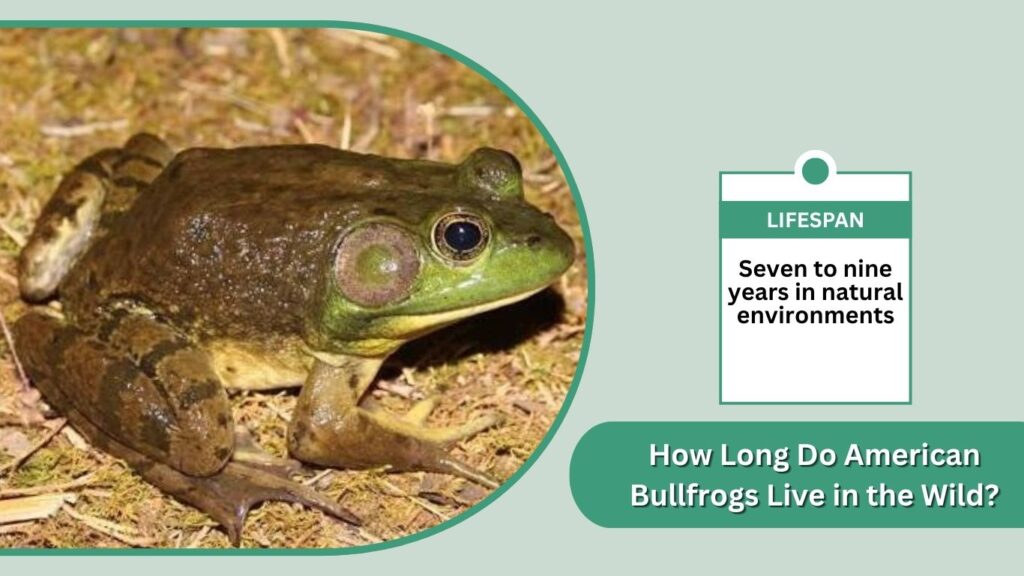
American bullfrogs commonly live for approximately seven to nine years in natural environments. The National Park Service gives a similar general estimate of around eight years.
Reaching that age is not easy. Bullfrogs face different dangers during every stage of life. Eggs may be eaten or destroyed before hatching, tadpoles are vulnerable to aquatic predators, and adults must survive cold winters, drought, disease, competition, and larger animals.
Why Many Bullfrogs Die Young
A female can lay thousands of eggs, but only a small proportion are likely to become mature adults. Common causes of early mortality include:
- Predation by fish, turtles, snakes, birds, and mammals
- Drying or severe alteration of breeding ponds
- Freezing or poor overwintering conditions
- Infections and parasites
- Competition for food and shelter
- Cannibalism by larger bullfrogs
- Road traffic and human disturbance
- Chemical contamination and declining water quality
Producing a large egg mass helps ensure that at least some offspring survive these threats.
How Long Do American Bullfrogs Live in Captivity?
Under controlled conditions, American bullfrogs can live longer than they normally do in the wild. The reported captive longevity record is approximately 16 years, although many captive individuals live for a shorter period.
Captivity can protect a frog from natural predators, drought, food shortages, and extreme weather. However, longevity still depends on proper care. Bullfrogs require a spacious aquatic environment, clean water, appropriate temperatures, varied food, hiding places, and access to both land and water.
Poor water quality, nutritional deficiencies, overcrowding, stress, and incorrect temperatures can considerably shorten a captive frog’s life. Wild bullfrogs should not be collected casually, and ownership may be controlled by wildlife laws because the species is invasive in many regions.
The American Bullfrog Life Cycle
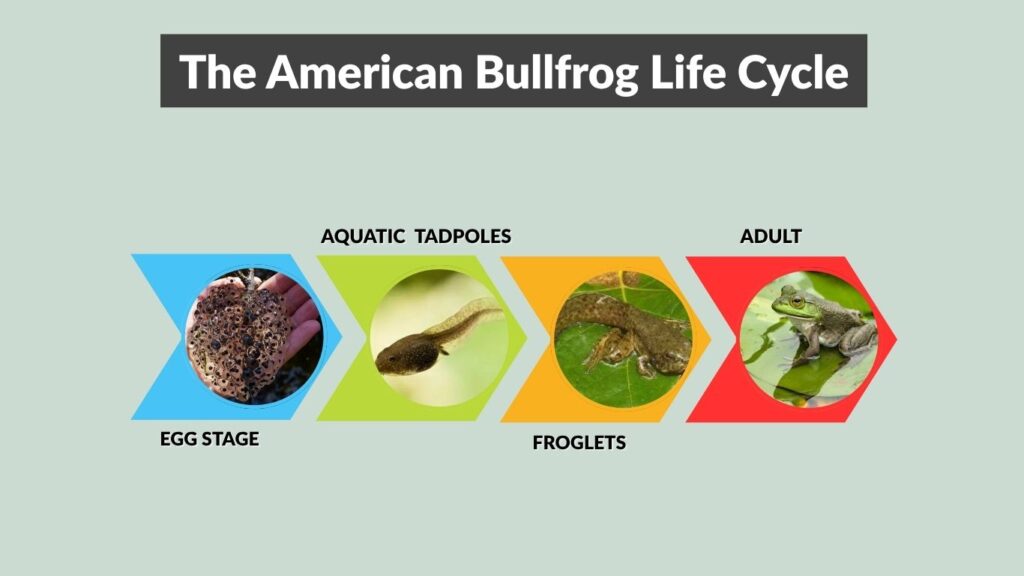
An American bullfrog’s life begins in water and passes through several distinct stages. Its relatively long tadpole period is one reason permanent ponds and lakes are important to the species.
Egg Stage
Breeding generally occurs during warm weather. Males establish territories near shallow water and produce their deep “jug-o-rum” calls to attract females.
A female deposits a floating, jelly-like sheet containing thousands of eggs. Depending on the female’s size and condition, one mass may contain approximately 12,000 to 20,000 eggs, although estimates vary. The eggs may hatch after roughly four days under suitable conditions.
The adults do not remain to care for the eggs or young. Newly hatched larvae must survive independently.
Tadpole Stage
American bullfrog tadpoles may remain aquatic for one to three years before completing metamorphosis. In cold northern regions, they frequently spend two or more winters in the water.
During this stage, tadpoles mainly consume algae, microorganisms, plant material, and decomposing organic matter. As they develop, they grow hind legs, followed by front legs. Their lungs develop, their mouths change, and the tail is gradually absorbed.
Because development takes so long, ponds that dry seasonally may not support successful bullfrog reproduction. Permanent water allows tadpoles to remain submerged, feed, and overwinter until transformation is complete.
Froglet and Juvenile Stage
After metamorphosis, the animal leaves the water as a small froglet. It still remains strongly associated with ponds, marshes, lakes, ditches, and slow waterways.
Juvenile bullfrogs consume insects and other small prey while avoiding fish, snakes, birds, turtles, and adult bullfrogs. Young individuals can also travel considerable distances over land, allowing them to colonize new ponds.
Adult Stage
Bullfrogs may require several years to become reproductively mature. Estimates generally place sexual maturity at approximately three to five years, although growth and maturity depend on climate and local conditions.
Adults are powerful ambush predators. They eat insects, crayfish, fish, smaller frogs, tadpoles, snakes, rodents, and other animals they can capture and swallow. Their broad diet helps them survive when one type of prey becomes scarce.
Where Do American Bullfrogs Live?
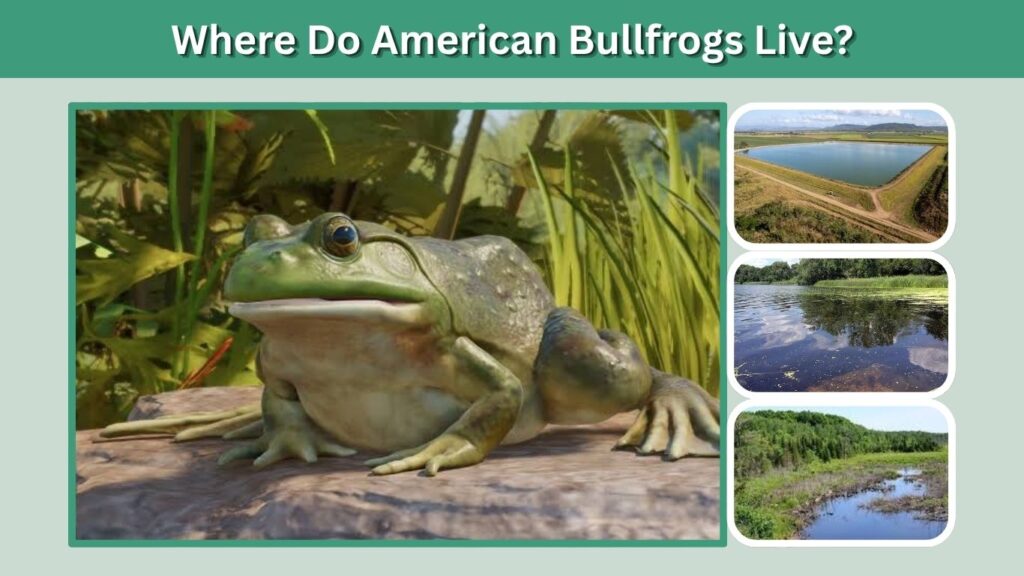
American bullfrogs live in permanent or long-lasting freshwater habitats. Suitable locations include:
- Ponds and shallow lakes
- Reservoirs and farm ponds
- Marshes, bogs, and swamps
- Slow-moving streams
- River backwaters
- Irrigation canals
- Drainage ditches
- Cattle tanks and artificial wetlands
They prefer habitats that offer deep water, shallow feeding areas, muddy bottoms, emergent plants, and places to hide. Permanent water is particularly important because tadpoles may require multiple years to transform.
The species is native to much of eastern and central North America. People have introduced it to many western regions and other parts of the world, where it can become invasive and negatively affect native amphibians and other wildlife.
How Do American Bullfrogs Survive Winter?
Bullfrogs become inactive as temperatures fall. They usually overwinter underwater, often resting in mud or sheltered areas on the bottom. Some individuals may also use protected burrows on land.
Their metabolism slows dramatically during cold weather, reducing their need for food and oxygen. Because frogs can absorb oxygen through their skin, they need water that contains enough dissolved oxygen to support them throughout winter.
Research on introduced bullfrogs in Montana found that juveniles moved less as temperatures dropped and became concentrated in a small section of the pond before it froze.
Winter survival depends on water depth, oxygen levels, temperature, shelter, and the duration of ice cover. A shallow pond that freezes completely may be unsuitable.
What Affects an American Bullfrog’s Lifespan?
No single lifespan applies to every bullfrog. Several environmental and biological factors determine how long an individual survives.
Habitat Permanence
A stable body of water provides breeding habitat, food, shelter, and safe overwintering areas. Drought or intentional drainage can kill tadpoles before they complete their long development.
Rainfall and Climate
Rainfall affects pond depth, shoreline cover, prey abundance, and the availability of nearby wetlands. A five-year study of an invasive Arizona population found that apparent survival varied with sex and precipitation, showing how strongly local conditions can affect bullfrog populations.
Predators
Bullfrogs are predators, but they are also important prey. Fish, snapping turtles, watersnakes, herons, raccoons, foxes, and other animals may eat them. Tadpoles and young frogs are particularly vulnerable.
Food Availability
Adults can eat many different animals, giving them an advantage when prey populations change. A productive wetland with insects, crayfish, fish, and smaller amphibians can support faster growth and better survival.
Disease and Water Quality
Amphibians have permeable skin that absorbs oxygen and water but also exposes them to pollutants and infectious organisms. Contamination, habitat alteration, and disease can reduce survival and breeding success.
Do Male and Female Bullfrogs Live Equally Long?
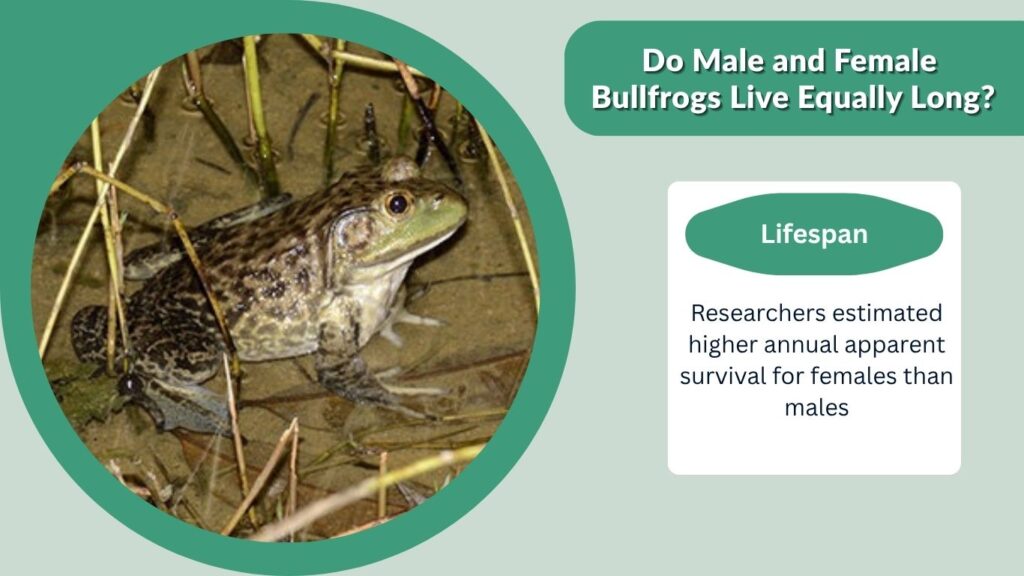
There is not enough evidence to claim that one sex always lives longer across the species’ full range. Survival can differ among populations and environmental conditions.
In one study of invasive populations in Arizona, researchers estimated higher annual apparent survival for females than males. However, the result came from one location and should not be treated as a universal lifespan rule for every American bullfrog population.
FAQs
What Is the Average Lifespan of an American Bullfrog?
American bullfrogs commonly live around seven to nine years in the wild. Their lifespan varies according to predators, climate, disease, food, water quality, and habitat stability. Many individuals die before reaching adulthood.
Can an American Bullfrog Live for 20 Years?
A lifespan of 20 years would be unusually long and is not supported by the commonly cited captive record. Available species summaries report a maximum captive lifespan of approximately 16 years.
How Long Do Bullfrogs Remain Tadpoles?
Bullfrog tadpoles usually remain in the water for one to three years. Development tends to take longer in colder northern climates, where tadpoles may overwinter more than once before completing metamorphosis.
Where Do American Bullfrogs Live?
They inhabit ponds, lakes, marshes, reservoirs, canals, ditches, slow streams, and river backwaters. They generally need permanent water because their tadpoles may take several years to develop.
Do Bullfrogs Live Longer in Captivity?
They can live longer in captivity because they are protected from predators, drought, and food shortages. However, poor husbandry, dirty water, stress, or an unsuitable enclosure can reduce their lifespan considerably.
