
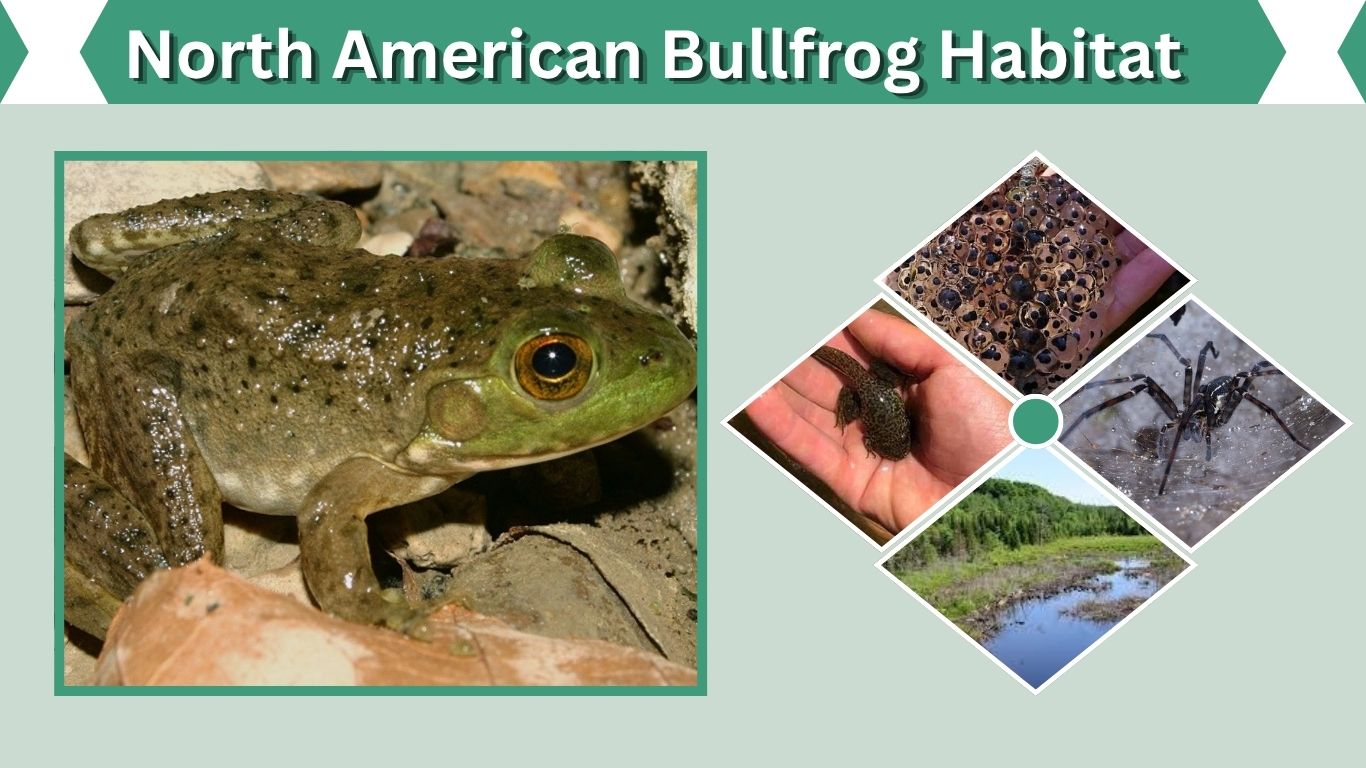
The North American bullfrog lives primarily in permanent freshwater habitats such as ponds, lakes, marshes, reservoirs, slow rivers, and irrigation canals. It usually remains close to water, resting among shoreline plants or floating with only its eyes and nostrils exposed. Permanent water is especially important because its tadpoles often need more than one season to complete development. Also called the American bullfrog, this large amphibian is native to eastern North America but has become invasive in many places outside its original range.
What Is a North American Bullfrog?
The North American bullfrog, scientifically named Lithobates catesbeianus, is a large true frog in the family Ranidae. It was formerly classified as Rana catesbeiana, so both scientific names may appear in older field guides.
Adults generally measure about 3.5–6 inches from snout to vent, although particularly large individuals can be longer. Their bodies are broad and muscular, with powerful hind legs, extensively webbed feet, and smooth green, olive, or brown skin. The underside is usually pale and may have darker mottling.
Identification Features
A North American bullfrog typically has:
- A large, heavy body
- Green, olive, brown, or mottled skin
- A broad and rounded snout
- Strong, webbed hind feet
- A large circular tympanum behind each eye
- A skin fold curving around the tympanum
- No long dorsolateral ridges running down its back
- A yellow throat in breeding males
The absence of long ridges down the back helps distinguish bullfrogs from green frogs. In an adult male, the tympanum is normally larger than the eye, while a female’s tympanum is generally similar in size to the eye.
Where Do North American Bullfrogs Live?
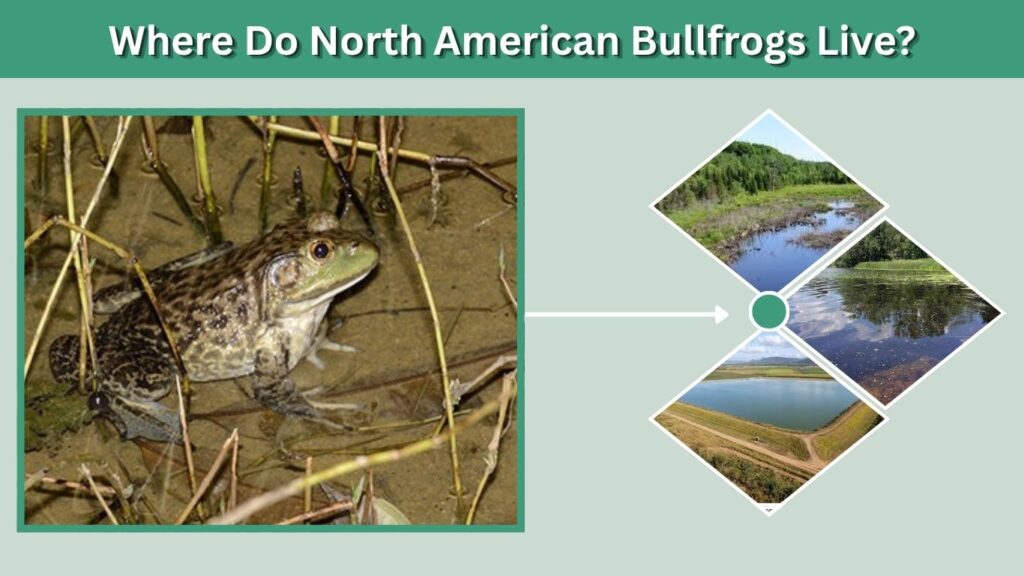
North American bullfrogs are habitat generalists, but they depend strongly on aquatic environments. They occupy permanent or long-lasting bodies of freshwater where they can feed, breed, hide from predators, and overwinter.
Common bullfrog habitats include:
- Natural ponds
- Lakes and reservoirs
- Marshes and swamps
- Bogs
- Slow-moving streams
- River backwaters
- Farm ponds and cattle tanks
- Drainage ditches
- Irrigation canals
- Artificial urban wetlands
Temporary pools may occasionally be used, but they are usually unsuitable for successful reproduction because the water may disappear before the tadpoles complete their development.
Preferred Pond Conditions
Bullfrogs are commonly associated with relatively deep, warm, slow-moving, or still water. A suitable pond usually has shallow shoreline areas for resting and breeding, deeper water for escape and overwintering, and enough vegetation to provide cover.
Cattails, reeds, water lilies, grasses, submerged plants, fallen branches, and muddy banks can all create useful shelter. Research on introduced populations has found associations with deeper water, emergent vegetation, and permanent breeding sites.
Shoreline Habitat
Adult bullfrogs frequently sit at the boundary between land and water. This position allows them to hunt terrestrial and aquatic prey while remaining close to an escape route.
When disturbed, a bullfrog normally jumps into the water and swims toward vegetation, mud, submerged branches, or deeper sections. Its green and brown coloration helps it blend into algae, wet soil, leaves, and shoreline plants.
Native Range and Introduced Distribution
The North American bullfrog is native to much of the eastern United States and parts of central North America. Humans have introduced it widely beyond that original range, including western North America and regions of Europe, Asia, and South America.
Introductions occurred for several reasons, including frog-leg production, intentional releases, movement through fish-stocking activities, and escaped or released pets. Once established, bullfrogs can spread through connected rivers, canals, ponds, reservoirs, and wetlands.
North American Bullfrogs as an Invasive Species
Bullfrogs can become damaging invasive predators outside their natural range. Their large size and broad diet allow them to eat native frogs, salamanders, fish, snakes, turtles, birds, and numerous invertebrates.
They may also compete with native amphibians for food, shelter, and breeding habitat. Their tadpoles can influence aquatic food webs, while adults may carry pathogens that threaten more vulnerable amphibian species.
A bullfrog is therefore a normal part of the ecosystem within much of its native range but can present a serious conservation problem where it has been introduced.
Seasonal Habitat Use
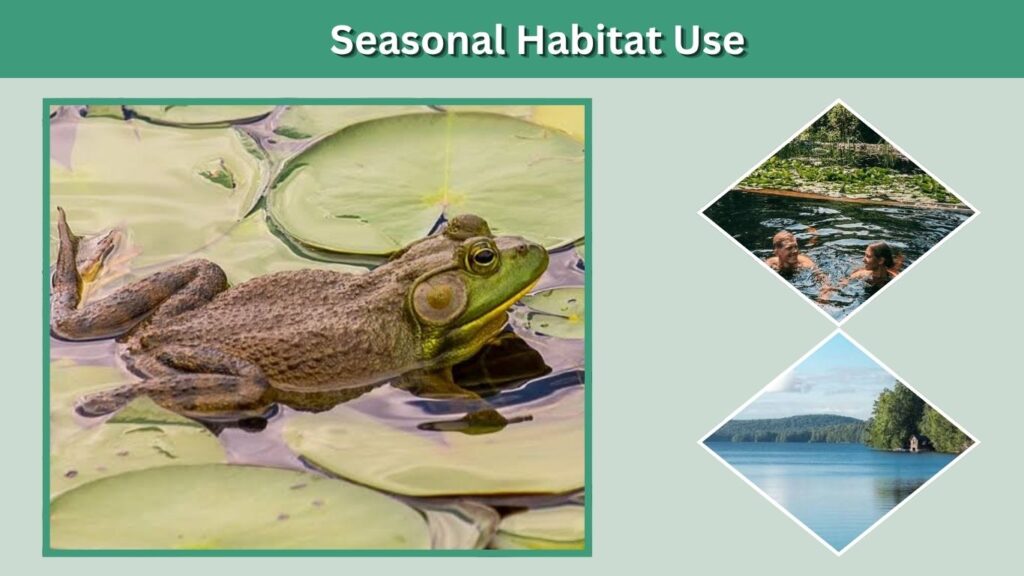
Bullfrogs use different parts of their habitat as temperature, water level, breeding activity, and food availability change.
Spring and Summer Habitat
Bullfrogs become increasingly active as air and water temperatures rise. During spring and summer, adults gather around ponds, lakes, marshes, and river backwaters.
Males establish territories in shallow water or along vegetated shorelines. From these positions, they call to attract females and warn other males. Their deep call is commonly represented as “jug-o-rum” and may carry a considerable distance over water.
Warm months are also the primary feeding period. Adults may remain hidden among aquatic plants during the day and become more active around dusk or at night.
Fall and Winter Habitat
As temperatures fall, bullfrogs become less active and move toward protected overwintering sites. Many spend winter underwater, resting in bottom mud or sheltered spaces where oxygen remains available.
They do not necessarily bury themselves completely in oxygen-poor sediment. They need access to oxygenated water because they can absorb oxygen through their moist skin. Some individuals may also overwinter in protected terrestrial burrows.
Adaptations to Aquatic Habitats
The North American bullfrog possesses several adaptations that allow it to live successfully around permanent water.
Webbed Feet and Powerful Legs
Its long hind legs produce strong jumps on land and powerful strokes underwater. Webbing between the toes increases the surface area of the feet, helping the frog push against the water while swimming.
Bullfrogs use this ability to escape predators, cross open water, pursue prey, and travel between suitable wetland habitats.
Eyes and Nostrils Above the Water
The eyes and nostrils are located high on the head. A resting bullfrog can therefore keep most of its body underwater while continuing to see and breathe above the surface.
This posture helps conceal the frog from both predators and prey. Its large eyes also provide a wide field of vision because frogs cannot rotate their heads as freely as many mammals.
Moist, Permeable Skin
Bullfrogs breathe with lungs, but they can also exchange gases through their skin. This process requires the skin to remain moist, which explains their close association with aquatic and humid environments.
Their skin also helps them absorb water. However, its permeability can make amphibians sensitive to pollution, poor water quality, pesticides, and infectious organisms.
What Do North American Bullfrogs Eat?
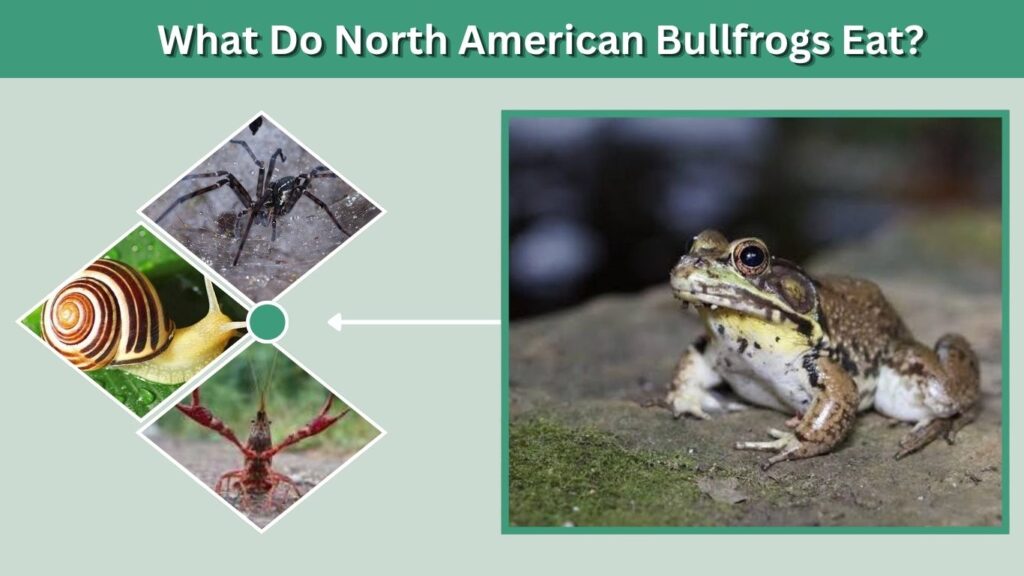
Adult bullfrogs are opportunistic ambush predators. They usually wait motionless until suitable prey enters striking distance, then lunge forward and capture it with their large mouths.
Their diet may include:
- Beetles and other insects
- Dragonfly larvae
- Crayfish
- Spiders
- Snails
- Leeches and worms
- Fish
- Tadpoles
- Salamanders
- Other frogs
- Small snakes and turtles
- Small rodents
- Occasionally birds or bats
Their prey is mainly limited by what they can overpower and swallow. Large adults may even consume smaller members of their own species.
What Do Bullfrog Tadpoles Eat?
Bullfrog tadpoles feed mainly on algae, aquatic plant material, microorganisms, and decomposing organic matter. They scrape food from rocks, plants, sediment, and submerged objects.
By processing algae and organic material, tadpoles participate in nutrient cycling within ponds. However, very high populations of invasive bullfrog tadpoles may alter aquatic food webs and compete with native larvae.
North American Bullfrog Life Cycle
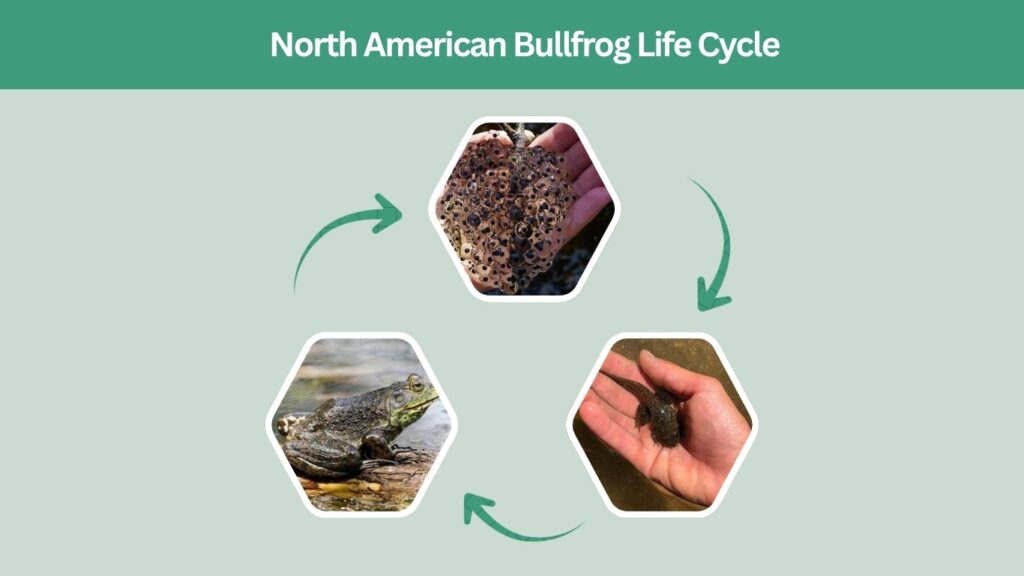
The life cycle begins when females deposit large floating sheets of eggs in warm, shallow water. A single egg mass may contain thousands of eggs. The eggs hatch into fully aquatic tadpoles with gills and long tails.
Tadpoles gradually develop hind legs, front legs, lungs, and the body form of a frog. Their tails are absorbed during metamorphosis.
Why Permanent Water Is Important
Depending on climate and local conditions, the tadpole stage may last from one to three years. Tadpoles in cooler northern habitats commonly overwinter before completing metamorphosis.
A pond that dries every summer may therefore eliminate an entire developing group. Permanent lakes, ponds, reservoirs, and backwaters provide the long, stable period required for bullfrog larvae to survive.
Predators in Bullfrog Habitats
Despite their large size, bullfrogs are eaten by numerous animals. Eggs and tadpoles may be consumed by aquatic insects, fish, turtles, snakes, wading birds, and other frogs.
Adult predators include:
- Herons and other waterbirds
- Watersnakes
- Large turtles
- River otters
- Raccoons
- Large fish
- Humans
- Other bullfrogs
Bullfrogs reduce risk by remaining partly submerged, hiding among plants, jumping quickly into deep water, and using their mottled coloration as camouflage.
FAQs
Where Do North American Bullfrogs Live?
They live near permanent freshwater environments, including ponds, lakes, marshes, reservoirs, slow streams, river backwaters, canals, and farm ponds. They generally prefer water with vegetation, muddy bottoms, and protected shoreline areas.
Do Bullfrogs Live on Land or in Water?
Bullfrogs are semi-aquatic but spend most of their time in or very close to water. They may travel overland, especially as juveniles or when searching for new habitat, but they rely on aquatic environments for breeding and tadpole development.
What Does a North American Bullfrog Sound Like?
A male produces a deep, resonant call often written as “jug-o-rum.” The call resembles the distant roar of a bull and is used to attract females and defend breeding territory.
Are North American Bullfrogs Poisonous?
North American bullfrogs are not considered poisonous to humans. However, wild amphibians may carry bacteria such as Salmonella, so they should not be handled unnecessarily, and hands should be washed after contact.
Can Bullfrogs Live in Temporary Ponds?
Adults may visit temporary water, but successful breeding is less likely because the tadpole stage can last longer than one year. Stable, permanent water gives larvae enough time to grow, overwinter, and complete metamorphosis.
