
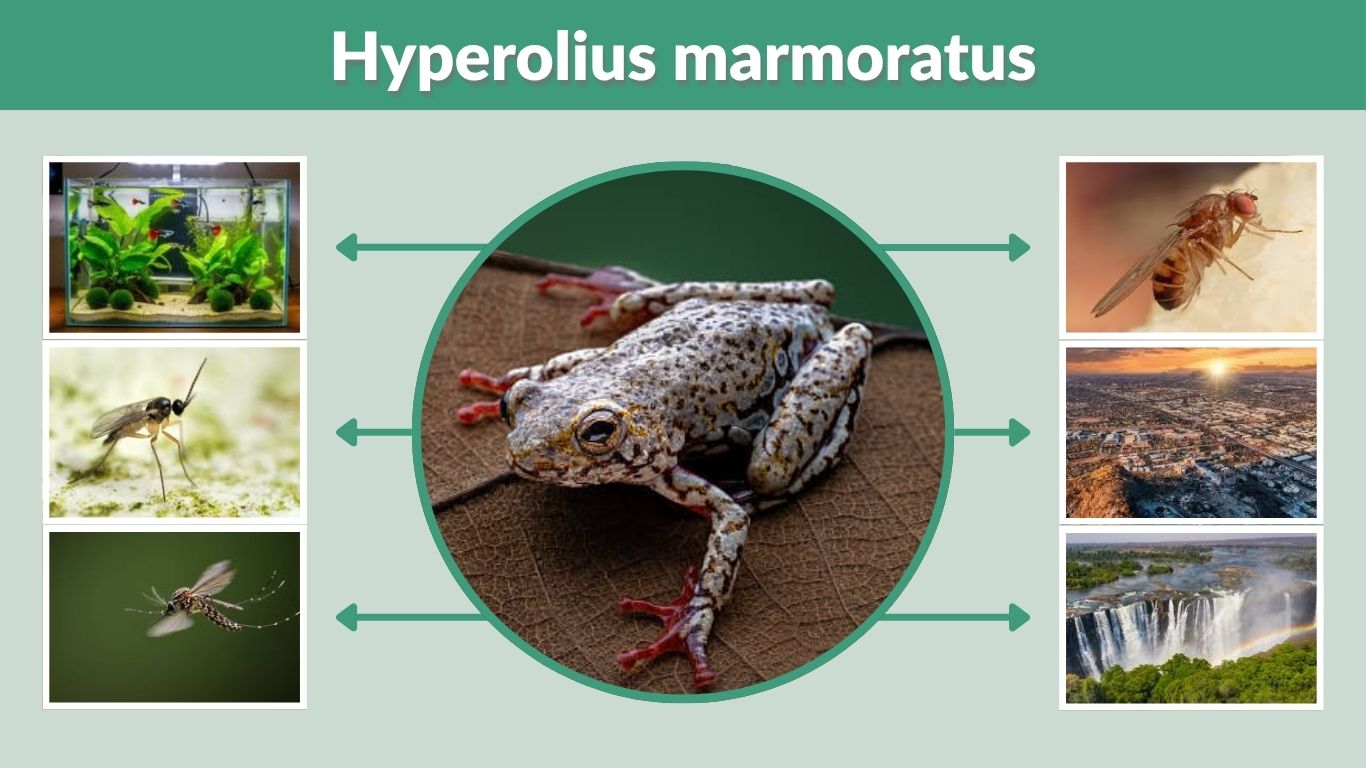
Hyperolius marmoratus, commonly known as the Painted Reed Frog or Marbled Reed Frog, is one of Africa’s most colorful amphibians. This small tree frog is famous for its bright patterns, smooth skin, and strong climbing ability. It is commonly found near wetlands, ponds, and marshes throughout southern Africa, where it spends much of its time resting on reeds and aquatic vegetation.
Because of its striking appearance and active nighttime behavior, Hyperolius marmoratus attracts both amphibian enthusiasts and wildlife researchers. The species also plays an important role in controlling insect populations in wetland ecosystems. Understanding its habitat, diet, behavior, and care needs helps highlight the importance of amphibian conservation.
What Is Hyperolius marmoratus?
Hyperolius marmoratus is a small arboreal frog species belonging to the Hyperoliidae family. It is known for its colorful body patterns, which can vary greatly between populations. These frogs are highly adapted to wetland life and are often seen clinging to reeds or leaves near freshwater habitats.
Scientific Classification
- Scientific name: Hyperolius marmoratus
- Family: Hyperoliidae
- Common names: Painted Reed Frog, Marbled Reed Frog
- Type: Arboreal amphibian
- Native region: Southern Africa
Common Names
- Painted Reed Frog
- Marbled Reed Frog
- African Reed Frog
- Ornate Reed Frog
Different regions may use slightly different names depending on local coloration and frog populations.
Physical Appearance
- Bright green, yellow, orange, or brown coloration
- Variable marbled body patterns
- Smooth skin texture
- Large eyes with horizontal pupils
- Sticky toe pads for climbing
The frog’s appearance can differ greatly between regions, making it one of the most visually diverse reed frog species in Africa.
Hyperolius marmoratus Habitat and Distribution
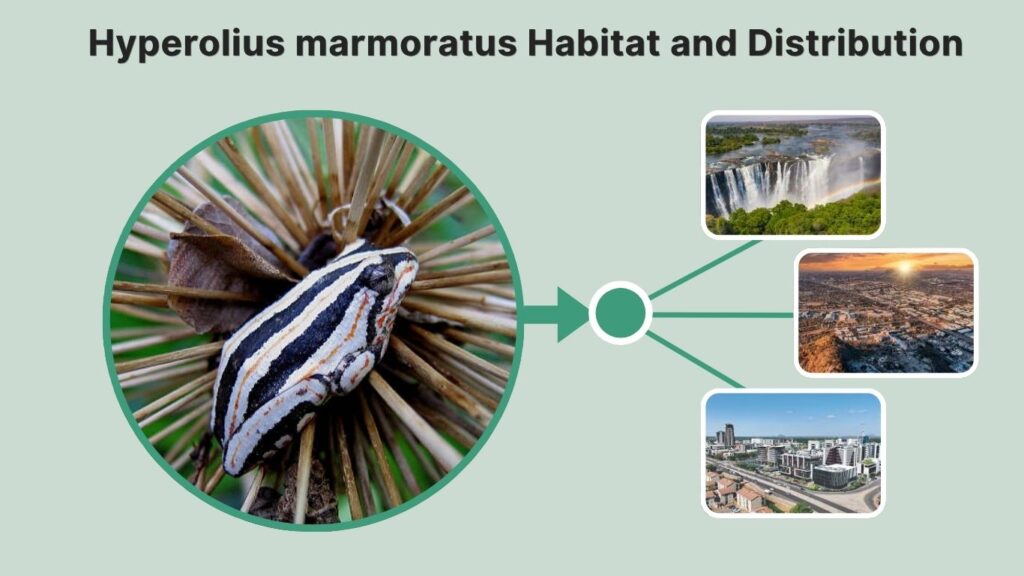
Hyperolius marmoratus thrives in warm and humid environments with easy access to freshwater. Wetlands with dense vegetation provide protection, breeding sites, and abundant insect prey. The species is commonly associated with reeds and grasses surrounding ponds and marshes.
Native Range
The species naturally occurs in several parts of southern Africa, including:
- South Africa
- Mozambique
- Zimbabwe
- Eswatini
- Botswana
Its range may extend into nearby wetland regions with suitable environmental conditions.
Preferred Habitat
- Marshes
- Wetlands
- Ponds
- Flooded grasslands
- Areas with tall reeds
These frogs prefer habitats with calm water and dense vegetation because such environments support breeding and insect populations.
Adaptations to Wetland Life
Hyperolius marmoratus has several adaptations that help it survive in wetland ecosystems. Sticky toe pads allow it to climb smooth plant surfaces easily, while its bright coloration may help with camouflage among wetland vegetation. The species is also mainly nocturnal, reducing the risk of daytime predators and dehydration.
Hyperolius marmoratus Size and Lifespan
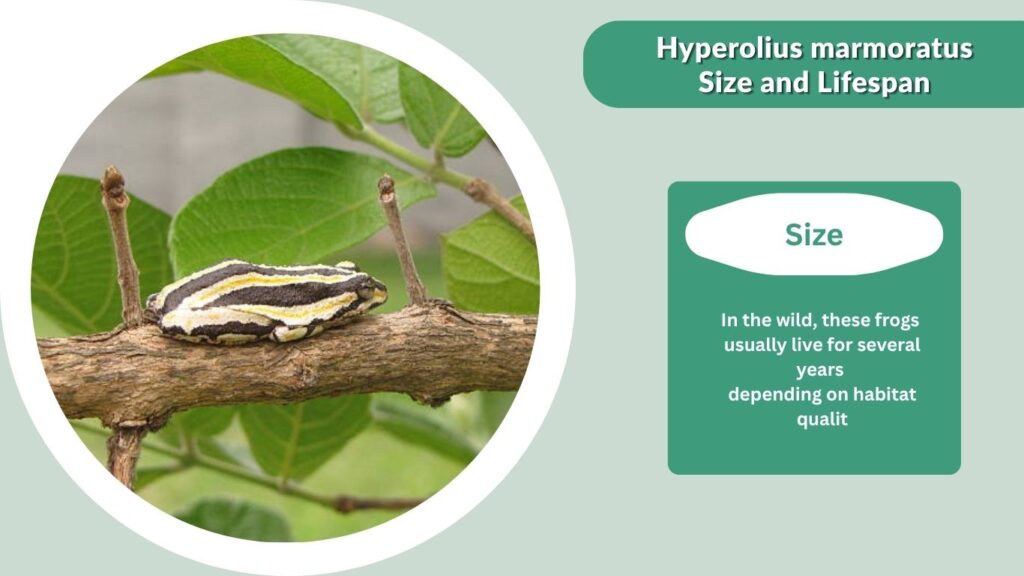
Although small in size, Hyperolius marmoratus is agile and well suited for climbing reeds and aquatic plants. Environmental conditions, food availability, and humidity levels all affect growth and survival rates.
Average Size
- Males: Around 1 to 1.5 inches long
- Females: Slightly larger than males
- Lightweight body structure
- Long legs adapted for climbing
Lifespan Expectations
In the wild, these frogs usually live for several years depending on habitat quality and predator pressure. Captive individuals may survive longer when provided with stable temperatures, humidity, and proper nutrition.
Growth and Development
Like most frogs, Hyperolius marmoratus begins life as an aquatic tadpole. After hatching from eggs laid near water, tadpoles gradually develop legs and lungs before transforming into small juvenile frogs. Moist environments are essential during this development process.
Hyperolius marmoratus Diet
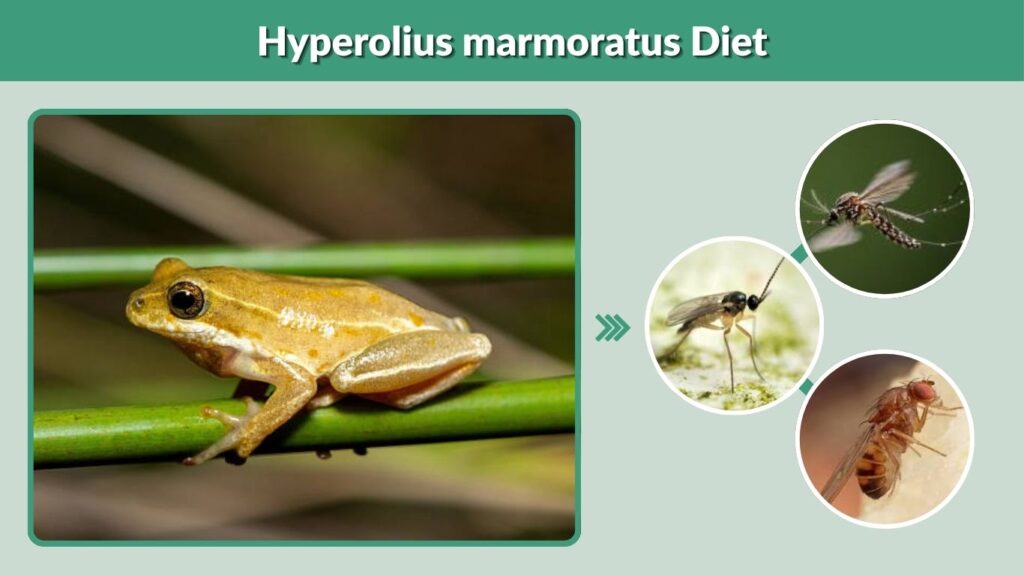
Hyperolius marmoratus is an insectivorous species that feeds mainly on small invertebrates found near wetland habitats. Its nighttime hunting behavior helps it capture insects when they are most active.
What Does Hyperolius marmoratus Eat?
- Mosquitoes
- Small flies
- Gnats
- Tiny moths
- Small spiders
- Other tiny insects
Feeding Behavior
These frogs are nocturnal hunters that rely on quick tongue strikes to capture prey. They usually wait motionless on reeds or leaves before lunging at nearby insects. Their climbing ability allows them to hunt efficiently among wetland vegetation.
Hyperolius marmoratus Behavior
Hyperolius marmoratus displays fascinating behaviors related to communication, climbing, and reproduction. Most activity occurs at night when humidity levels are higher and insect prey becomes abundant. During the breeding season, males gather near water and produce loud calls to attract females.
Calling and Communication
Male Painted Reed Frogs use vocal calls to establish territory and attract mates. These calls are usually heard after rainfall or during humid evenings near ponds and marshes. Different call patterns may also help frogs recognize members of their own species.
Breeding Behavior
Breeding generally takes place during rainy periods when temporary pools and wetlands are available. Females lay eggs on vegetation close to water, allowing newly hatched tadpoles to drop directly into the water below. Tadpole development depends heavily on warm temperatures and stable moisture levels.
Daily Activity Patterns
These frogs spend daylight hours hidden among reeds and leaves to avoid dehydration and predators. At night, they become active climbers and hunters. Their sticky toe pads allow them to move easily across wet plants and smooth surfaces.
Hyperolius marmoratus Care Guide
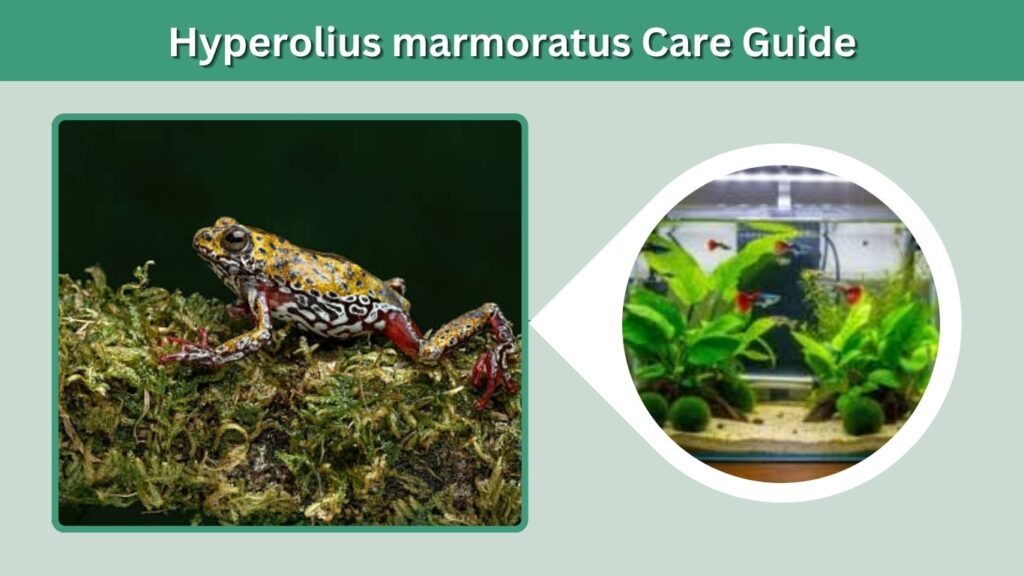
Although small, Hyperolius marmoratus requires a carefully maintained environment in captivity. Proper humidity, temperature, and enclosure design are essential for keeping these frogs healthy. Because they are arboreal, vertical climbing space is especially important.
Enclosure Setup
- Tall terrarium with climbing plants
- Shallow clean water source
- Live or artificial vegetation
- Secure ventilation system
- Moist substrate for humidity
A natural-style enclosure helps reduce stress and encourages normal climbing behavior.
Temperature and Humidity
These frogs thrive in warm tropical conditions with consistently high humidity. Daily misting helps maintain moisture levels and supports healthy skin function. Sudden drops in humidity may lead to dehydration and health problems.
Feeding in Captivity
Captive frogs should receive a varied diet of small live insects dusted with calcium supplements. Feeding several times each week helps maintain proper growth and energy levels. Fresh water should also always be available.
Hyperolius marmoratus vs Other Reed Frogs
Many African reed frogs share similar body shapes and climbing behavior, but Hyperolius marmoratus is especially known for its highly variable coloration and striking patterns. Comparing it with related species helps highlight its unique characteristics.
Comparison Table
| Feature | Hyperolius marmoratus | Hyperolius viridiflavus | Gray Tree Frog |
| Family | Hyperoliidae | Hyperoliidae | Hylidae |
| Habitat | Wetlands | Grasslands & wetlands | Forests |
| Coloration | Highly variable | Green/yellow patterns | Gray-green |
| Region | Southern Africa | Africa | North America |
| Lifestyle | Arboreal | Arboreal | Arboreal |
Unique Features
One of the most remarkable traits of Hyperolius marmoratus is the huge variation in body patterns between populations. Some individuals display bright stripes, while others show spotted or marbled markings. Their loud breeding calls and strong climbing skills also make them stand out among reed frogs.
Threats and Conservation Status
Like many amphibians, Hyperolius marmoratus faces environmental pressures linked to habitat destruction and pollution. Wetland ecosystems are especially sensitive to climate changes and human activity, which can affect frog populations over time.
Main Threats
- Wetland destruction
- Water pollution
- Habitat fragmentation
- Climate change
- Pesticide exposure
Conservation Efforts
Wetland conservation projects help protect important breeding habitats for reed frogs and many other amphibians. Environmental monitoring programs also track frog populations because amphibians are often considered indicators of ecosystem health.
IUCN Status
In many parts of its range, Hyperolius marmoratus remains relatively widespread. However, local populations may decline if wetlands are damaged or polluted. Continued habitat protection is important for long-term survival.
Interesting Facts About Hyperolius marmoratus
The Painted Reed Frog is one of Africa’s most visually striking amphibians. Its ability to display many different color patterns makes it especially interesting to researchers and amphibian enthusiasts.
Amazing Facts
- One of Africa’s most colorful reed frogs
- Excellent climber with sticky toe pads
- Mostly active at night
- Uses loud calls during breeding season
- Lives close to wetlands and marshes
- Color patterns vary greatly between populations
FAQs
What is Hyperolius marmoratus commonly called?
Hyperolius marmoratus is commonly known as the Painted Reed Frog or Marbled Reed Frog. These names come from its colorful body patterns and marbled skin appearance found across different populations in southern Africa.
How big does Hyperolius marmoratus get?
Adult Hyperolius marmoratus frogs are usually small, reaching around 1 to 1.5 inches in length. Females are generally slightly larger than males, especially during the breeding season.
What habitat does Hyperolius marmoratus prefer?
This species prefers warm wetlands with dense vegetation, including marshes, ponds, flooded grasslands, and reed-filled habitats. Moist environments are important for breeding, feeding, and skin health.
Is Hyperolius marmoratus active during the day?
No, Hyperolius marmoratus is mainly nocturnal. It hides among reeds and leaves during the daytime and becomes active at night when humidity increases and insects are more abundant.
Why is Hyperolius marmoratus important to ecosystems?
The species helps control insect populations by feeding on mosquitoes and other small insects. It also serves as prey for larger animals and acts as an indicator of healthy wetland ecosystems.
