
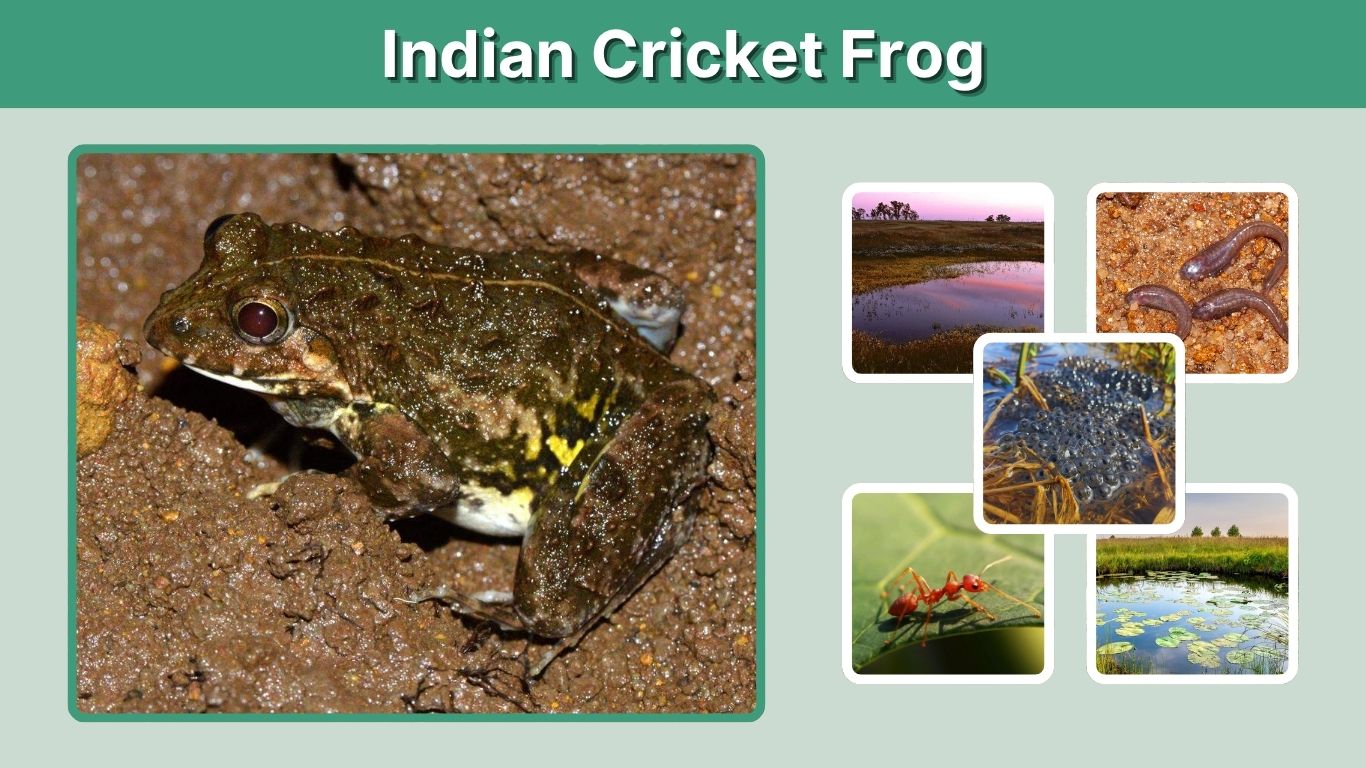
The Indian Cricket Frog is a small amphibian commonly found near ponds, wetlands, rice fields, and grassy areas across South Asia. This tiny frog is known for its sharp cricket-like calls, especially during the rainy season. Despite its small size, it plays an important role in controlling insect populations and supporting wetland ecosystems. Many people mistake it for other tiny frogs because of its color and size. Learning about its appearance, habitat, diet, and behavior can help nature lovers better understand this fascinating amphibian species.
What Is the Indian Cricket Frog?
The Indian Cricket Frog is a tiny frog species known for its chirping calls that sound similar to crickets. It usually appears during the monsoon season and prefers moist environments with shallow water sources. This frog is active mostly at night and can jump quickly when disturbed. Its small body and natural camouflage help it stay hidden from predators in grassy and muddy habitats.
Scientific Classification
- Scientific name: Fejervarya limnocharis
- Family: Dicroglossidae
- Common names: Indian Cricket Frog, Paddy Field Frog
- Animal group: Amphibian
- Native region: South Asia and Southeast Asia
Why It Is Called a Cricket Frog
The frog gets its common name from the sound made by males during the breeding season. The call closely resembles the chirping of crickets heard at night. These sounds are most common during rainy evenings near ponds, wetlands, and flooded fields. Male frogs use these calls to attract females and warn nearby rivals to stay away from their territory.
Indian Cricket Frog Identification
The Indian Cricket Frog may look simple at first glance, but several features help identify it correctly. It has a small body, smooth skin, and strong hind legs designed for jumping. Its body colors often blend with muddy or grassy surroundings, making the frog difficult to notice in natural habitats. Careful observation of its markings and body shape can help distinguish it from similar frogs.
Size and Body Shape
The Indian Cricket Frog is a relatively small amphibian with a compact body shape. Adults usually measure between 3 and 5 centimeters in length. Their lightweight bodies allow them to move quickly through wet grass and shallow water. Long hind legs help them leap away from predators within seconds. The frog’s narrow head and rounded snout also give it a distinct appearance compared to larger pond frogs.
Color and Skin Texture
- Brown, gray, or olive body colors
- Dark spots or stripes on the back
- Pale underside
- Slightly rough or smooth skin texture
- Excellent camouflage in muddy environments
Key Identification Features
- Large round eyes
- Thin body structure
- Long jumping legs
- Visible vocal sac in males
- Small toe pads
- Fast movement when disturbed
Indian Cricket Frog Habitat and Distribution
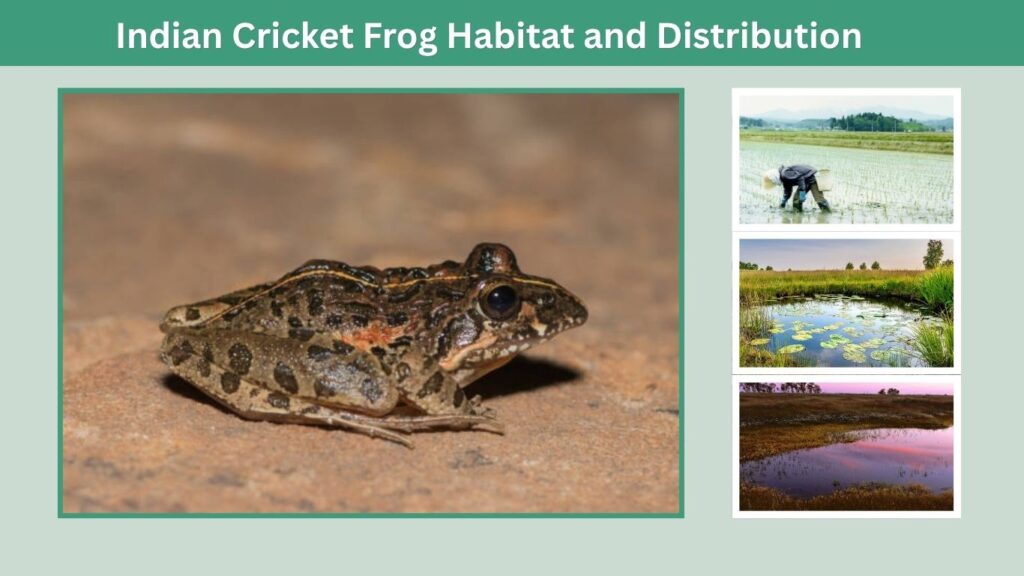
The Indian Cricket Frog thrives in warm and humid environments with easy access to water. It is commonly found in agricultural lands, wetlands, ponds, marshes, and roadside ditches. During the rainy season, large numbers appear near temporary pools formed by rainfall. This species adapts well to human-modified habitats, especially rice fields and irrigation canals where insects are abundant and water remains available for breeding.
Natural Habitat
- Rice fields
- Freshwater ponds
- Marshes and wetlands
- Rain pools
- Grassy lowlands
- Irrigation canals
Geographic Distribution
The Indian Cricket Frog is widely distributed across South Asia and nearby regions. It is especially common in India, Bangladesh, Nepal, Sri Lanka, and Pakistan. Some populations are also found in Southeast Asian countries with tropical climates. Because the species adapts easily to different wet habitats, it remains one of the more commonly seen small frogs in rural and semi-urban areas.
Seasonal Activity
This frog becomes highly active during the monsoon season when rainfall creates ideal breeding conditions. Warm temperatures and standing water encourage males to call loudly at night. During dry periods, the frog often hides beneath leaves, mud, or vegetation to avoid losing moisture. Most activity takes place after sunset because cooler nighttime conditions help prevent dehydration.
Indian Cricket Frog Behavior
The Indian Cricket Frog displays several interesting behaviors that help it survive in wetlands and grassy habitats. It is mostly nocturnal and spends much of the day hiding in moist areas. At night, the frog becomes active and searches for food while avoiding predators. Its quick jumping ability and excellent camouflage make it difficult for enemies to catch. During the breeding season, males become especially vocal near shallow water bodies.
Calling and Communication
Male Indian Cricket Frogs produce sharp chirping sounds that resemble crickets. These calls are usually heard after rain and during humid evenings. The purpose of the sound is mainly to attract females for mating. Males may also use calls to defend small territories from rival frogs. In areas with many frogs, the nighttime chorus can become very loud near ponds and flooded fields.
Jumping and Movement
This frog is known for its fast and sudden movements. When threatened, it quickly leaps into grass or shallow water to escape danger. Strong hind legs allow it to jump several times its body length. Although small, the frog is an efficient swimmer and can move easily through muddy water and wet vegetation.
Defensive Behavior
- Uses camouflage to blend with mud and grass
- Remains motionless when predators are nearby
- Escapes quickly with sudden jumps
- Hides under leaves and vegetation
- Stays near water for protection
What Does the Indian Cricket Frog Eat?
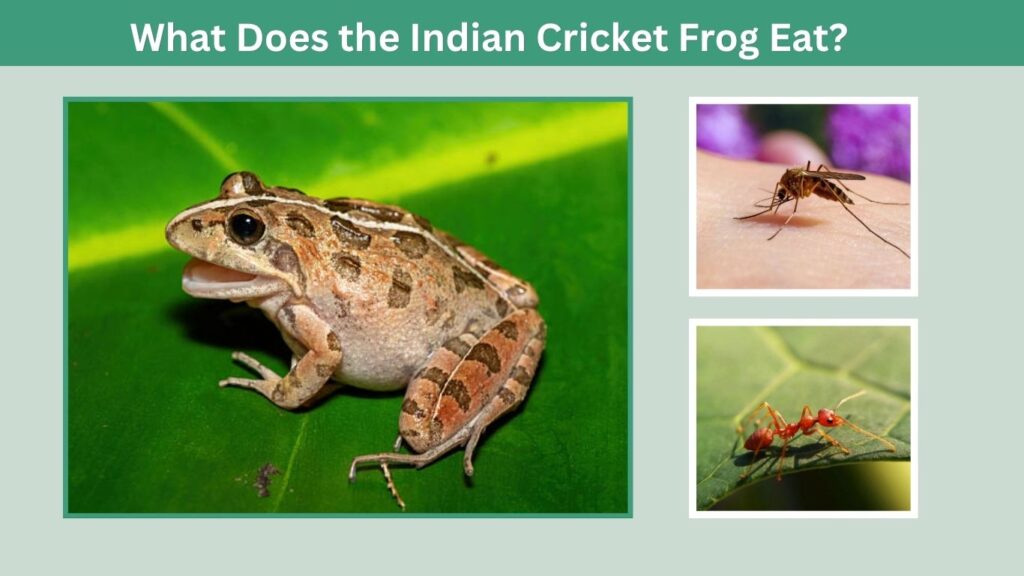
The Indian Cricket Frog mainly feeds on tiny insects and other small invertebrates found near wet environments. Because it eats many pest insects, the frog is considered beneficial for farms and gardens. It hunts mostly at night when insect activity increases around ponds, grasslands, and crop fields. Its quick tongue and sharp eyesight help it catch moving prey with impressive accuracy.
Main Diet
- Mosquitoes
- Ants
- Small beetles
- Flies
- Tiny spiders
- Termites
- Small worms
Hunting Method
The frog usually waits quietly for prey before attacking. Once an insect comes close, it quickly extends its sticky tongue to catch the target. This hunting strategy saves energy while increasing success. The frog often hunts among wet grass, muddy ground, and shallow water where insects gather in large numbers during humid weather.
Role in Pest Control
Indian Cricket Frogs help reduce insect populations naturally. Farmers often benefit from their presence because they feed on mosquitoes and crop pests. In wetlands and rice fields, these frogs contribute to ecological balance by controlling insects that might otherwise spread disease or damage plants. Their role in the food chain also supports birds, snakes, and other wildlife species.
Indian Cricket Frog Life Cycle
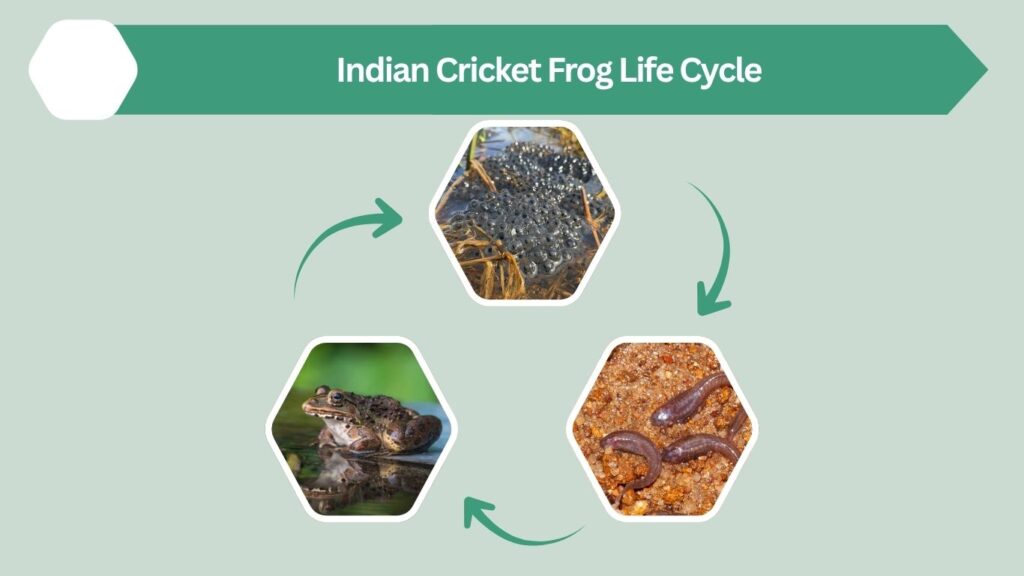
The life cycle of the Indian Cricket Frog begins during the rainy season when breeding activity increases. Like most amphibians, it goes through several stages before becoming an adult frog. Water is essential for reproduction because eggs and tadpoles develop in shallow ponds, flooded fields, and temporary rain pools. Warm temperatures and seasonal rainfall greatly influence breeding success.
Breeding Season
Breeding usually occurs during the monsoon months when water becomes widely available. Male frogs gather near ponds and call repeatedly to attract females. After mating, females lay eggs in shallow water where the young can safely develop.
Eggs and Tadpoles
- Eggs are laid in clusters
- Eggs float in calm water
- Tadpoles hatch within days
- Tadpoles feed on algae and tiny organisms
- Young tadpoles develop tails for swimming
Growth Into Adults
As tadpoles grow, they slowly develop legs while their tails become shorter. Over time, they transform into tiny froglets capable of breathing air and living on land. This process, known as metamorphosis, may take several weeks depending on temperature and water conditions. Young frogs then move into grassy habitats near water and begin feeding on small insects.
Predators and Threats
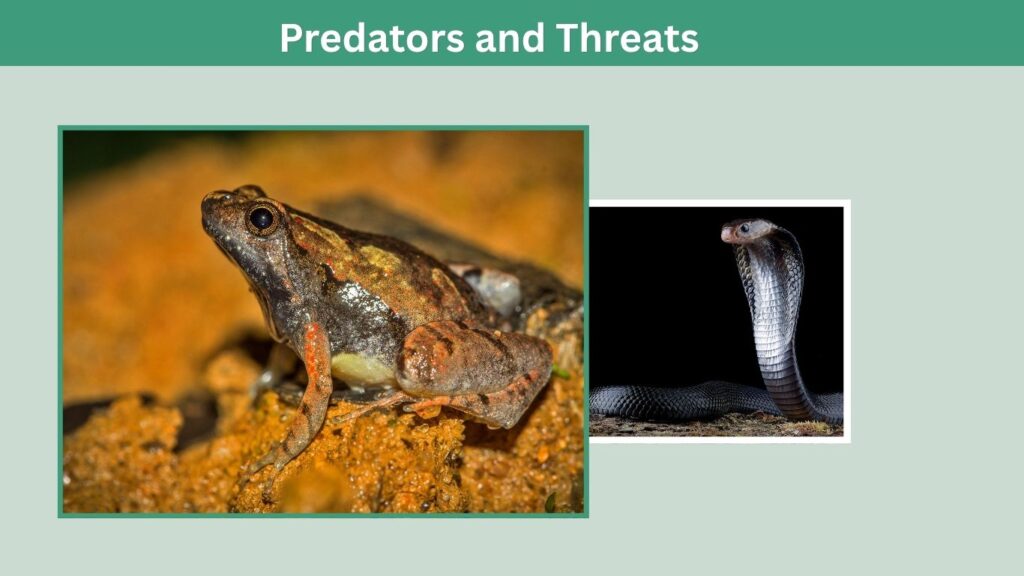
Although the Indian Cricket Frog is common in many areas, it still faces threats from predators and environmental changes. Its small size makes it vulnerable to many animals. Habitat destruction and pollution also affect local frog populations, especially in heavily developed agricultural regions.
Natural Predators
- Snakes
- Water birds
- Fish
- Larger frogs
- Small mammals
Environmental Threats
Wetland destruction remains one of the biggest dangers to the Indian Cricket Frog. Pesticides and polluted water sources can harm eggs, tadpoles, and adult frogs. Climate changes that reduce rainfall may also affect breeding habitats. Because these frogs depend heavily on clean freshwater environments, habitat protection is important for maintaining healthy populations.
FAQs
Is the Indian Cricket Frog poisonous?
No, the Indian Cricket Frog is not considered poisonous to humans. Like many frogs, its skin may produce mild protective secretions, but it is generally harmless. It mainly relies on camouflage and quick jumping to escape predators instead of using toxins for defense.
Why does the Indian Cricket Frog sound like a cricket?
The frog produces high-pitched chirping calls that closely resemble the sound of crickets. Male frogs make these calls during the breeding season to attract females and communicate with nearby males, especially during rainy nights near ponds and wetlands.
Where is the Indian Cricket Frog commonly found?
The Indian Cricket Frog is commonly found in India, Bangladesh, Nepal, Sri Lanka, and nearby South Asian regions. It prefers wetlands, rice fields, ponds, marshes, and grassy areas with shallow freshwater sources and humid conditions.
What does the Indian Cricket Frog eat?
This frog mainly eats small insects and invertebrates such as mosquitoes, ants, beetles, flies, spiders, and termites. It hunts mostly at night and helps control pest insect populations in farms, gardens, and wetland environments.
Is the Indian Cricket Frog important for the ecosystem?
Yes, the Indian Cricket Frog plays an important ecological role. It helps control insect populations naturally and also serves as food for birds, snakes, fish, and other predators. Its presence often indicates a healthy wetland ecosystem with balanced environmental conditions.
