
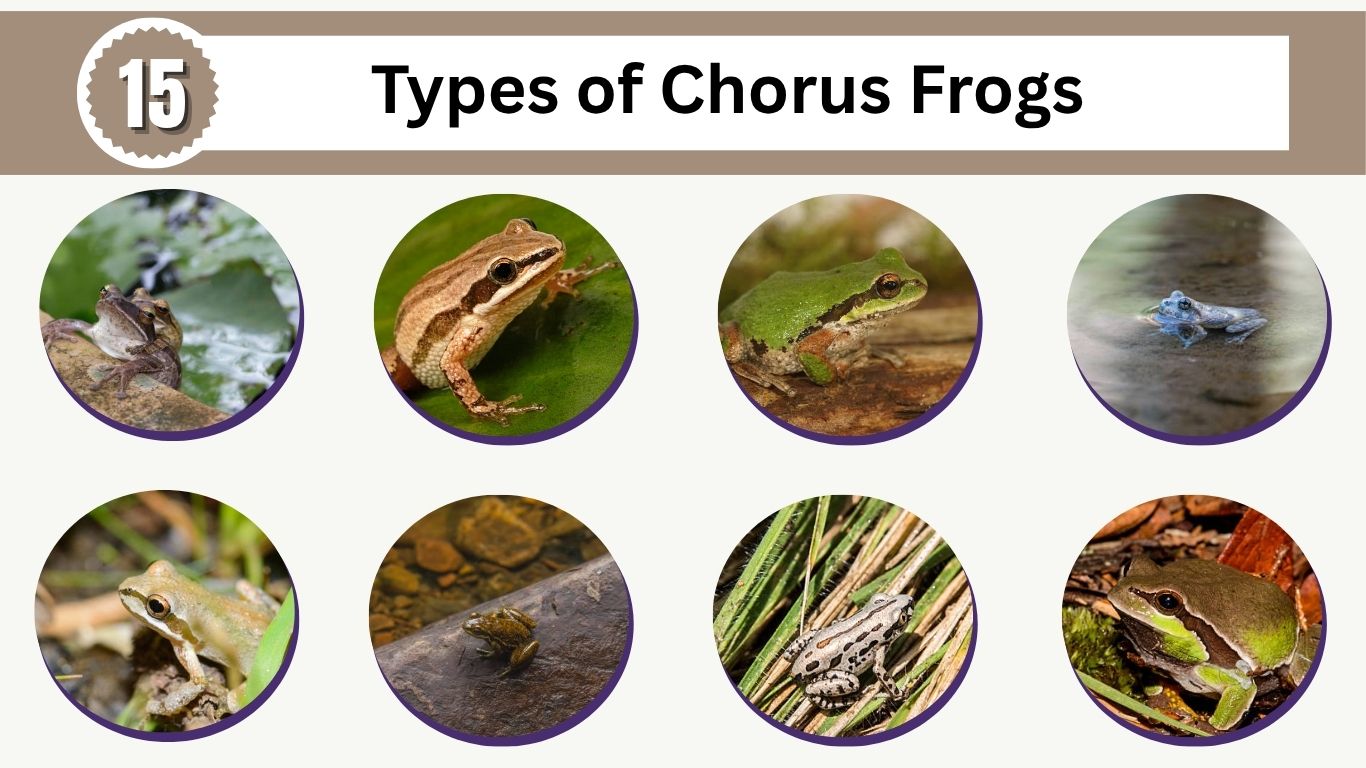
Chorus frogs are small but highly vocal amphibians known for their loud, collective calls that fill wetlands and ponds, especially during the breeding season. Despite their tiny size, they are widely distributed and play an important role in controlling insect populations. These frogs are adaptable and can survive in a variety of environments, from forests to grasslands. In this article, you will explore 15 different types of chorus frogs, along with their identification, habitat, behavior, and lifecycle, helping you better understand these fascinating and often heard amphibians.
1. Western Chorus Frog

The Western Chorus Frog is a small but highly vocal amphibian commonly heard during early spring. Known for its distinctive, rasping call that sounds like running a finger over a comb, it is often easier to hear than to see. This species is highly adaptable and thrives in a wide range of environments, especially where seasonal water is available.
Identification
- Small size, typically 2–4 cm in length
- Body color varies from brown, gray, to green
- A dark stripe runs from the snout through the eye and along the side
- Smooth skin with slight texture
- Slender body with relatively long hind legs
- Light-colored underside, usually cream or white
Habitat and Distribution
The Western Chorus Frog is widely distributed across North America, particularly in the central and eastern United States and parts of southern Canada. It prefers habitats with access to temporary or permanent water sources, such as wetlands, marshes, ponds, ditches, and flooded grasslands. This species is also commonly found in agricultural areas and suburban landscapes, showing strong adaptability to human-altered environments. During non-breeding periods, it may move away from water and inhabit grassy fields, forest edges, and even burrow into loose soil or leaf litter to maintain moisture.
Behavior and Diet
This frog is most active during the breeding season in early spring when males gather in large numbers to produce loud, chorus-like calls to attract females. Although primarily nocturnal, it may also be active during the day in cool, damp conditions. The Western Chorus Frog feeds mainly on small invertebrates, including ants, flies, beetles, and spiders. It relies on quick movements and a sticky tongue to capture prey. Its camouflage helps it remain hidden from predators such as birds, snakes, and larger amphibians.
Lifecycle
Breeding begins in early spring when temperatures rise and temporary pools form. Females lay clusters of eggs attached to submerged vegetation in shallow water. The eggs hatch into tadpoles within a few days to weeks, depending on environmental conditions. Tadpoles develop rapidly, often completing metamorphosis before seasonal pools dry up. After transforming into juvenile frogs, they disperse into surrounding terrestrial habitats. As they mature, they return to breeding sites each year, continuing the cycle.
2. Boreal Chorus Frog

The Boreal Chorus Frog is a small, hardy amphibian known for its loud, musical call that signals the arrival of spring in colder regions. It is well adapted to survive in cooler climates and is often one of the first frogs to become active after winter. Despite its small size, it plays an important role in wetland ecosystems.
Identification
- Small size, typically 2–4 cm long
- Gray, brown, or green coloration with dark markings
- Dark stripe running from snout through the eye
- Smooth skin with slight texture
- Slender body with long hind legs
- Light underside, usually white or cream
Habitat and Distribution
The Boreal Chorus Frog is found across northern parts of North America, including Canada and the northern United States. It prefers moist environments such as wetlands, marshes, ponds, and forest edges. This species is highly adaptable and can also be found in grasslands and agricultural areas. During the breeding season, it gathers in shallow, temporary pools, while outside of breeding, it may move into nearby terrestrial habitats to stay moist and protected.
Behavior and Diet
This frog is best known for its loud, trilling call, often heard in early spring even when temperatures are still low. Males call in groups, creating a chorus to attract females. The Boreal Chorus Frog is mostly nocturnal but may also be active during the day in cool conditions. It feeds on small insects and invertebrates such as ants, flies, beetles, and spiders. It uses quick reflexes and a sticky tongue to capture prey.
Lifecycle
Breeding begins early in the spring when snow begins to melt. Females lay clusters of eggs attached to vegetation in shallow water. The eggs hatch into tadpoles, which develop quickly in temporary pools. As the water begins to dry, tadpoles undergo metamorphosis into small frogs. Juveniles then move onto land, where they continue growing and eventually return to breeding sites as adults.
3. Upland Chorus Frog

The Upland Chorus Frog is a small, secretive amphibian known for its distinctive, rising trill call. It is often heard more than seen, especially during the breeding season. This species is well adapted to life in upland areas, where it can survive away from permanent water sources for much of the year.
Identification
- Small size, typically 2–4 cm long
- Brown, gray, or reddish coloration
- Dark stripe running from snout through the eye
- Smooth skin with faint patterns
- Slender body with long hind legs
- Light underside, usually cream or white
Habitat and Distribution
The Upland Chorus Frog is primarily found in the southeastern United States. It prefers upland habitats such as pine forests, grasslands, and agricultural fields. Unlike many frogs, it often lives away from permanent water and only returns to temporary pools, ditches, or flooded areas during the breeding season. Its ability to tolerate drier conditions makes it well suited to upland environments.
Behavior and Diet
This species is most active during the breeding season, when males produce a loud, rising trill to attract females. It is mostly nocturnal but may be active during cool, damp days. The Upland Chorus Frog feeds on small insects such as ants, flies, beetles, and spiders. It relies on quick movements and camouflage to hunt and avoid predators.
Lifecycle
Breeding usually occurs in late winter to early spring. Females lay small clusters of eggs in shallow, temporary water bodies. The eggs hatch into tadpoles, which develop quickly to take advantage of short-lived water sources. After metamorphosis, the young frogs disperse into upland habitats, where they continue growing until maturity.
4. Cajun Chorus Frog

The Cajun Chorus Frog is a small, vocal amphibian found in the southern United States. It is known for its distinct, repeated call that contributes to loud breeding choruses in wetland areas. This species is well adapted to warm climates and thrives in habitats with seasonal water availability.
Identification
- Small size, typically 2–4 cm long
- Brown, gray, or green body with dark markings
- Prominent dark stripe running from snout through the eye
- Smooth skin with slight texture
- Slender body with long hind legs
- Light underside, usually pale cream or white
Habitat and Distribution
The Cajun Chorus Frog is mainly found in Louisiana and nearby regions along the Gulf Coast. It prefers moist environments such as marshes, wet grasslands, ditches, and temporary ponds. This species depends on shallow, seasonal water bodies for breeding. Outside the breeding season, it may move into nearby grassy or forested areas where it can stay hidden and maintain moisture.
Behavior and Diet
This frog is most active during the breeding season, when males gather and produce loud, repetitive calls to attract females. It is primarily nocturnal but may also be active during cool, damp conditions. The Cajun Chorus Frog feeds on small insects and invertebrates such as ants, flies, beetles, and spiders. It uses quick reflexes and its sticky tongue to capture prey.
Lifecycle
Breeding typically occurs in late winter to early spring. Females lay clusters of eggs in shallow water attached to vegetation. The eggs hatch into tadpoles, which develop quickly in temporary pools. As water levels decrease, tadpoles undergo rapid metamorphosis into juvenile frogs. These young frogs then move onto land and continue growing in moist habitats.
5. Coastal Plain Chorus Frog

The Coastal Plain Chorus Frog is a small, secretive amphibian known for its distinctive call and preference for sandy, lowland habitats. It is often heard during the breeding season but can be difficult to spot due to its excellent camouflage. This species is well adapted to life in coastal and inland plains.
Identification
- Small size, typically 2–4 cm long
- Tan, brown, or gray coloration
- Dark stripe running from snout through the eye
- Smooth skin with subtle patterns
- Slender body with long hind legs
- Light underside, usually cream-colored
Habitat and Distribution
The Coastal Plain Chorus Frog is found in the southeastern United States, particularly in coastal plain regions. It prefers sandy soils, pine forests, grasslands, and areas near temporary ponds or ditches. This species relies on seasonal water bodies for breeding but spends much of its time in upland habitats, often hiding under vegetation or burrowing into loose soil.
Behavior and Diet
This frog is most active during the breeding season, when males produce a short, repetitive call to attract females. It is mainly nocturnal but may be active during cool, moist conditions. The Coastal Plain Chorus Frog feeds on small insects such as ants, flies, beetles, and spiders. It uses camouflage and quick movements to catch prey and avoid predators.
Lifecycle
Breeding usually occurs in late winter or early spring. Females lay small clusters of eggs in shallow, temporary water bodies. The eggs hatch into tadpoles, which develop rapidly due to the short lifespan of these water sources. After metamorphosis, juvenile frogs move onto land and continue their life cycle in surrounding habitats.
6. Mountain Chorus Frog

The Mountain Chorus Frog is a small amphibian adapted to cooler, higher elevation environments. It is known for its soft, trilling call that blends into the natural sounds of its habitat. This species is less commonly seen but plays an important role in maintaining ecological balance in mountainous regions.
Identification
- Small size, typically 2–4 cm long
- Gray, brown, or greenish body coloration
- Dark stripe running from snout through the eye
- Smooth skin with faint patterns
- Slender body with long hind legs
- Light underside, usually white or cream
Habitat and Distribution
The Mountain Chorus Frog is found in elevated regions of North America, particularly in mountainous and hilly areas. It prefers habitats such as forest clearings, wet meadows, and areas near small streams or temporary pools. This species depends on cool, moist environments and often stays hidden under vegetation, rocks, or leaf litter to maintain moisture.
Behavior and Diet
This frog is most active during the breeding season in spring, when males produce a soft, trilling call to attract females. It is mainly nocturnal but may also be active during cool, damp days. The Mountain Chorus Frog feeds on small insects and invertebrates such as ants, flies, beetles, and spiders. It relies on quick reflexes and camouflage to capture prey and avoid predators.
Lifecycle
Breeding typically occurs in spring when snow melts and temporary pools form. Females lay eggs in small clusters attached to vegetation in shallow water. The eggs hatch into tadpoles, which develop in these temporary aquatic habitats. As water levels decrease, tadpoles undergo metamorphosis into juvenile frogs, which then move onto land and continue their growth.
7. Illinois Chorus Frog

The Illinois Chorus Frog is a small, secretive amphibian known for its unique, high-pitched call. It is rarely seen due to its burrowing behavior and short breeding season. This species is specially adapted to sandy soils, allowing it to dig backward and remain hidden underground for most of the year.
Identification
- Small size, typically 2–4 cm long
- Brown or gray body with dark spots or markings
- Distinct dark stripe from snout through the eye
- Smooth skin with subtle texture
- Short, sturdy body adapted for burrowing
- Light underside, usually pale cream or white
Habitat and Distribution
The Illinois Chorus Frog is found in limited areas of the central United States, especially in regions with sandy soils. It prefers open habitats such as grasslands, agricultural fields, and sandy prairies. This species spends much of its life underground, emerging only during the breeding season. It depends on temporary rain-filled pools for reproduction, making it sensitive to habitat changes.
Behavior and Diet
This frog is mostly nocturnal and highly secretive. It emerges briefly during the breeding season, when males produce a distinctive, squeaky call to attract females. The Illinois Chorus Frog feeds on small insects such as ants, beetles, and other invertebrates. It relies on burrowing and camouflage to avoid predators.
Lifecycle
Breeding occurs in early spring, often after heavy rains. Females lay eggs in shallow, temporary pools. The eggs hatch into tadpoles, which develop quickly in these short-lived water bodies. As the pools dry up, tadpoles undergo rapid metamorphosis. Juvenile frogs then burrow into the soil, where they spend most of their lives underground.
8. New Jersey Chorus Frog

The New Jersey Chorus Frog is a small and rarely seen amphibian known for its brief but active breeding season. It is often heard more than observed, producing a series of short, clicking calls. This species is closely associated with sandy habitats and is considered sensitive to environmental changes.
Identification
- Small size, typically 2–4 cm long
- Brown or tan body with dark markings
- Dark stripe running from snout through the eye
- Smooth skin with faint patterns
- Slender body with moderately long hind legs
- Light underside, usually cream or white
Habitat and Distribution
The New Jersey Chorus Frog is primarily found in parts of the eastern United States, especially in sandy coastal plain regions. It prefers habitats such as pine barrens, sandy fields, and grasslands near temporary ponds. These frogs rely on seasonal water bodies for breeding and spend much of their time hidden in loose soil or vegetation to retain moisture.
Behavior and Diet
This species is mostly nocturnal and highly secretive. During the breeding season, males produce a series of short, clicking calls to attract females. The New Jersey Chorus Frog feeds on small insects such as ants, flies, and beetles. It uses quick movements and camouflage to hunt and avoid predators.
Lifecycle
Breeding occurs in early spring, often after rainfall fills temporary pools. Females lay eggs in shallow water attached to vegetation. The eggs hatch into tadpoles, which develop rapidly in these short-lived habitats. After metamorphosis, juvenile frogs move into surrounding sandy areas, where they continue their life cycle.
9. Strecker’s Chorus Frog

Strecker’s Chorus Frog is a small, tree-climbing chorus frog known for its distinctive call and slightly different behavior compared to other chorus frogs. It is more arboreal than most species, often found on low vegetation. This frog is well adapted to life in wooded and brushy environments.
Identification
- Small size, typically 2–4 cm long
- Gray or brown body with subtle patterns
- Faint or broken stripe from snout through the eye
- Smooth skin with slight texture
- Slightly larger toe pads for climbing
- Light underside, usually white or cream
Habitat and Distribution
Strecker’s Chorus Frog is found in the central United States, particularly in regions with forests, woodlands, and brushy areas. It prefers habitats near temporary ponds, ditches, and slow-moving water sources. Unlike many chorus frogs, it is often seen perched on low shrubs or vegetation rather than staying strictly on the ground.
Behavior and Diet
This species is mostly nocturnal but may be active during damp conditions. Males produce a short, repeated call during the breeding season to attract females. Strecker’s Chorus Frog feeds on small insects such as ants, flies, beetles, and spiders. Its climbing ability allows it to hunt both on the ground and on low plants.
Lifecycle
Breeding typically occurs in spring when temporary water bodies form. Females lay eggs in small clusters attached to vegetation in shallow water. The eggs hatch into tadpoles, which develop quickly before undergoing metamorphosis. After transforming into juvenile frogs, they move into surrounding vegetation and continue their growth.
10. Rio Grande Chorus Frog

The Rio Grande Chorus Frog is a small amphibian known for its distinct, rhythmic call and ability to thrive in dry regions with seasonal water. It is well adapted to arid and semi-arid environments, emerging mainly during favorable conditions. This species is often heard during breeding periods after rainfall.
Identification
- Small size, typically 2–4 cm long
- Brown, gray, or greenish coloration
- Dark stripe running from snout through the eye
- Smooth skin with faint markings
- Slender body with long hind legs
- Light underside, usually pale cream or white
Habitat and Distribution
The Rio Grande Chorus Frog is found in the southwestern United States and parts of northern Mexico. It prefers habitats such as grasslands, desert edges, and areas near temporary ponds or rain-filled pools. This species is well adapted to dry conditions and spends much of its time hidden in soil or vegetation to conserve moisture.
Behavior and Diet
This frog is mostly nocturnal and becomes highly active after rainfall. Males produce a distinctive, repeated call during the breeding season to attract females. The Rio Grande Chorus Frog feeds on small insects such as ants, flies, beetles, and spiders. It relies on quick movements and camouflage to capture prey and avoid predators.
Lifecycle
Breeding occurs after seasonal rains when temporary water bodies form. Females lay eggs in shallow pools, where they hatch into tadpoles. The tadpoles develop rapidly to complete their growth before the water dries up. After metamorphosis, juvenile frogs move onto land and continue their life in surrounding habitats.
11. Baja California Chorus Frog

The Baja California Chorus Frog is a small amphibian adapted to dry and semi-arid environments. It is known for its soft, trilling call and ability to survive in regions with limited water availability. This species becomes most active during rainy periods when breeding conditions are ideal.
Identification
- Small size, typically 2–4 cm long
- Brown, gray, or olive coloration
- Dark stripe running from snout through the eye
- Smooth skin with faint patterns
- Slender body with long hind legs
- Light underside, usually cream or white
Habitat and Distribution
The Baja California Chorus Frog is found in the Baja California region of Mexico and nearby areas. It prefers habitats such as desert edges, grasslands, and areas near temporary rain pools. This species is well adapted to dry conditions and spends much of its time hidden under soil, rocks, or vegetation to retain moisture.
Behavior and Diet
This frog is mostly nocturnal and becomes active after rainfall. Males produce a soft, trilling call during the breeding season to attract females. The Baja California Chorus Frog feeds on small insects such as ants, flies, beetles, and spiders. It relies on quick movements and camouflage to hunt and avoid predators.
Lifecycle
Breeding occurs after seasonal rains when temporary pools form. Females lay eggs in shallow water, where they hatch into tadpoles. The tadpoles develop quickly in these short-lived habitats. After metamorphosis, juvenile frogs move onto land and continue living in dry but sheltered environments.
12. Arizona Chorus Frog

The Arizona Chorus Frog is a small amphibian well adapted to dry and desert-like environments. It is known for its short, buzzing call and ability to remain hidden during dry periods. This species becomes active mainly after rainfall, when conditions are suitable for feeding and breeding.
Identification
- Small size, typically 2–4 cm long
- Gray, brown, or olive body coloration
- Dark stripe running from snout through the eye
- Smooth skin with subtle markings
- Slender body with long hind legs
- Light underside, usually pale cream or white
Habitat and Distribution
The Arizona Chorus Frog is found in the southwestern United States, particularly in Arizona and nearby regions. It prefers habitats such as desert grasslands, scrublands, and areas near temporary rain pools. This species is well adapted to arid conditions and often hides under rocks, soil, or vegetation to conserve moisture.
Behavior and Diet
This frog is mostly nocturnal and becomes active during cooler, moist conditions, especially after rain. Males produce a short, buzzing call to attract females during the breeding season. The Arizona Chorus Frog feeds on small insects such as ants, flies, beetles, and spiders. It uses quick movements and camouflage to capture prey and avoid predators.
Lifecycle
Breeding occurs after seasonal rains when temporary water bodies form. Females lay eggs in shallow pools, where they hatch into tadpoles. The tadpoles develop quickly to complete their growth before the water evaporates. After metamorphosis, juvenile frogs move onto land and continue their life in dry but sheltered environments.
13. Pacific Chorus Frog

The Pacific Chorus Frog is one of the most recognizable and widespread chorus frogs in western North America. Known for its loud “ribbit” call often heard in movies, this small frog is highly adaptable and can live in a wide range of environments, from forests to urban areas.
Identification
- Small size, typically 2–5 cm long
- Green, brown, gray, or tan coloration (can change color)
- Dark stripe running from snout through the eye to the shoulder
- Smooth skin with slight texture
- Rounded toe pads for climbing
- Light underside, usually cream or white
Habitat and Distribution
The Pacific Chorus Frog is found along the western coast of North America, from California up to British Columbia. It inhabits a wide variety of environments, including forests, grasslands, wetlands, and even urban gardens. It prefers areas near water for breeding, such as ponds, lakes, and temporary pools, but can live far from water during other times of the year.
Behavior and Diet
This species is active both day and night, especially during the breeding season. Males produce a loud, repetitive “ribbit” call to attract females. The Pacific Chorus Frog feeds on small insects such as flies, beetles, ants, and spiders. It is an opportunistic feeder and can climb vegetation to hunt.
Lifecycle
Breeding typically occurs in late winter to early spring. Females lay eggs in clusters attached to vegetation in shallow water. The eggs hatch into tadpoles, which develop in aquatic environments before undergoing metamorphosis. After transformation, juvenile frogs disperse into nearby habitats and continue growing into adults.
14. Sierran Chorus Frog

The Sierran Chorus Frog is a small amphibian found in mountainous regions of western North America. It is known for its adaptability to cooler environments and its soft, repeated call during the breeding season. This species is closely related to the Pacific Chorus Frog and shares many similar traits.
Identification
- Small size, typically 2–5 cm long
- Green, brown, gray, or tan coloration
- Dark stripe running from snout through the eye
- Smooth skin with slight texture
- Small toe pads for limited climbing ability
- Light underside, usually cream or white
Habitat and Distribution
The Sierran Chorus Frog is found in mountainous areas of California and nearby regions. It prefers habitats such as forests, meadows, streams, and temporary pools at higher elevations. These frogs are commonly seen near water during breeding but may move into surrounding vegetation afterward. They are well adapted to cooler temperatures and seasonal changes.
Behavior and Diet
This species is active during both day and night, especially in moist conditions. Males produce a soft, repeated call to attract females during the breeding season. The Sierran Chorus Frog feeds on small insects such as ants, flies, beetles, and spiders. It uses quick movements and camouflage to hunt and avoid predators.
Lifecycle
Breeding usually occurs in spring when snow melts and water becomes available. Females lay eggs in clusters attached to vegetation in shallow water. The eggs hatch into tadpoles, which develop in these aquatic environments. After metamorphosis, juvenile frogs move onto land and continue their life in nearby habitats.
15. Mexican Chorus Frog

The Mexican Chorus Frog is a small amphibian adapted to warm and semi-arid environments. It is known for its soft, buzzing call and seasonal activity, especially during rainy periods. This species remains hidden for much of the year and becomes active when conditions are favorable.
Identification
- Small size, typically 2–4 cm long
- Brown, gray, or olive coloration
- Dark stripe running from snout through the eye
- Smooth skin with subtle markings
- Slender body with long hind legs
- Light underside, usually pale cream or white
Habitat and Distribution
The Mexican Chorus Frog is found in parts of Mexico and nearby regions. It prefers habitats such as grasslands, scrublands, and areas near temporary water bodies. This species is well adapted to dry conditions and often stays hidden under soil, rocks, or vegetation to conserve moisture.
Behavior and Diet
This frog is mostly nocturnal and becomes active after rainfall. Males produce a soft, buzzing call during the breeding season to attract females. The Mexican Chorus Frog feeds on small insects such as ants, flies, beetles, and spiders. It relies on quick movements and camouflage to catch prey and avoid predators.
Lifecycle
Breeding occurs during the rainy season when temporary pools form. Females lay eggs in shallow water, where they hatch into tadpoles. The tadpoles develop quickly to complete their growth before the water dries up. After metamorphosis, juvenile frogs move onto land and continue their life in surrounding habitats.
FAQs
What are chorus frogs?
Chorus frogs are small amphibians known for their loud, collective calls during the breeding season. These calls often sound like a chorus, which is how they got their name. They are usually heard in early spring near water bodies.
Where do chorus frogs live?
Chorus frogs are commonly found in North America, especially in the United States and Canada. They prefer habitats such as wetlands, ponds, grasslands, forests, and temporary pools where they can breed and stay moist.
Why are they called chorus frogs?
They are called chorus frogs because males gather in groups and call together during the breeding season. Their combined आवाज creates a loud, continuous sound that resembles a musical chorus.
What do chorus frogs eat?
Chorus frogs mainly feed on small insects and invertebrates such as ants, flies, beetles, and spiders. They use their sticky tongues to catch prey quickly and usually hunt near the ground or low vegetation.
Are chorus frogs active year-round?
Chorus frogs are not active year-round. They are most active during the breeding season in early spring. During colder or dry periods, they become inactive and may hide under soil, leaf litter, or other sheltered areas.
