
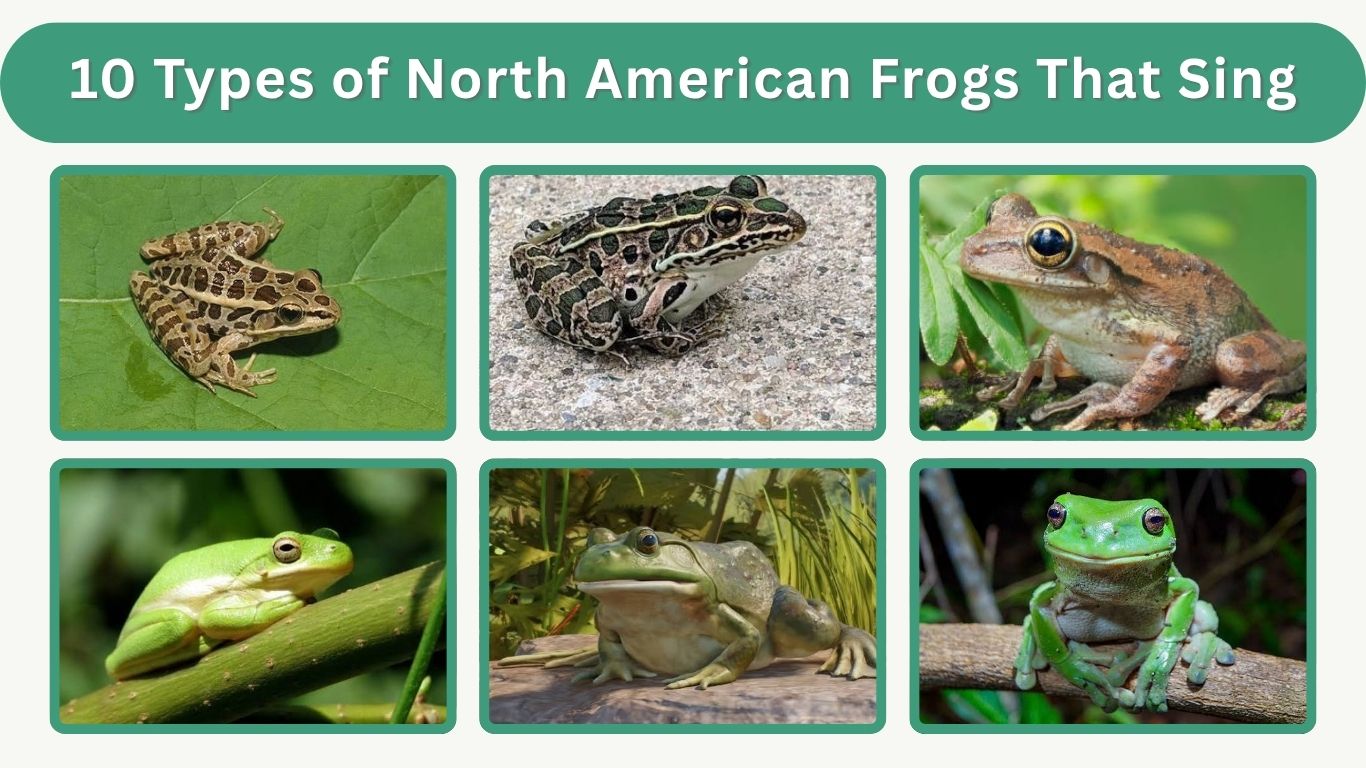
North America is home to many frogs known for their distinctive songs, calls, and nighttime choruses. Male frogs usually sing during the breeding season to attract females and communicate with nearby rivals. Some produce high-pitched peeps, while others sound like banjos, ducks, trills, or deep bellows. From the tiny Spring Peeper to the powerful American Bullfrog, each species has a recognizable voice. Here are 10 types of North American frogs that sing, along with their identification features, habitats, behavior, diet, and life cycles.
1. Spring Peeper
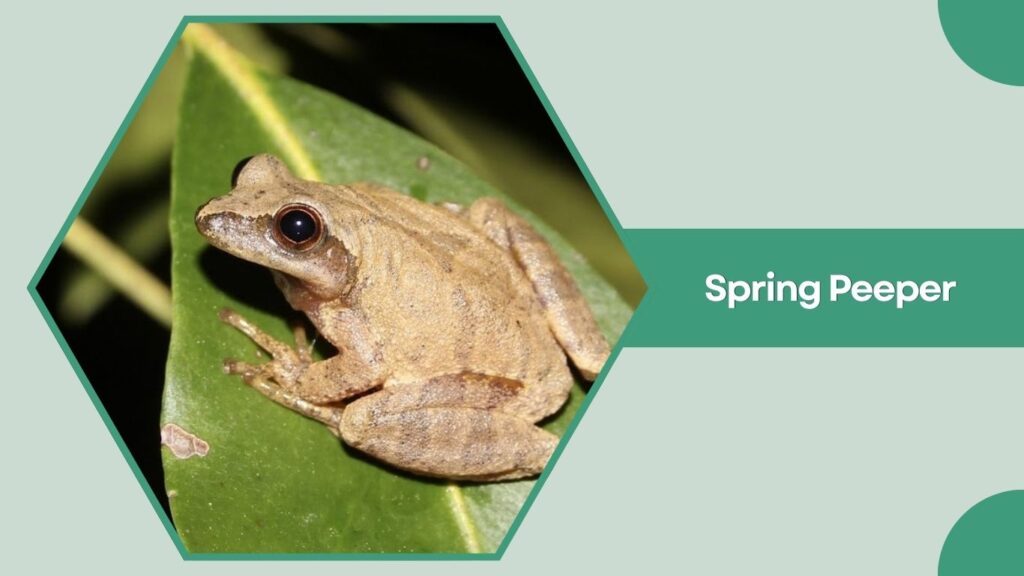
The Spring Peeper is one of the most recognizable singing frogs in North America. Despite its tiny size, it produces a surprisingly loud, high-pitched call that becomes especially noticeable during early spring evenings. These frogs are commonly heard near wetlands, ponds, marshes, and damp woodlands, where males call repeatedly to attract females during the breeding season.
Identification
- Small frog, usually around 0.75–1.5 inches long
- Tan, brown, gray, or olive body
- Distinct dark X-shaped marking on the back
- Smooth to slightly granular skin
- Small adhesive toe pads for climbing
- Pale belly compared with the upper body
- Dark stripe often runs through the eye
Habitat and Distribution
Spring Peepers are widely distributed across eastern and central North America. They live in moist forests, wooded wetlands, swamps, marsh edges, and areas surrounding temporary woodland pools. Outside the breeding season, they often remain hidden among leaf litter, low vegetation, logs, and other damp ground cover.
Although they are associated with water during reproduction, adults spend much of their lives on land in humid wooded habitats.
Song and Behavior
The Spring Peeper gets its common name from the male’s distinctive “peep” call. During breeding season, many males may call simultaneously, creating a loud chorus that can carry across wetlands at night.
Males usually call from vegetation close to shallow water. Each peep helps females locate potential mates while also allowing males to advertise their presence to nearby rivals. Calling is especially intense during mild, wet spring evenings.
Diet and Life Cycle
Spring Peepers feed mainly on small insects, spiders, mites, and other tiny invertebrates. Their feeding helps control populations of many small arthropods within woodland ecosystems.
Females lay individual eggs or small groups of eggs attached to underwater vegetation. Tadpoles hatch and develop in shallow ponds or temporary pools before transforming into tiny terrestrial frogs. Adults survive cold northern winters by entering dormancy beneath leaves, logs, and other protected ground cover.
2. Gray Treefrog
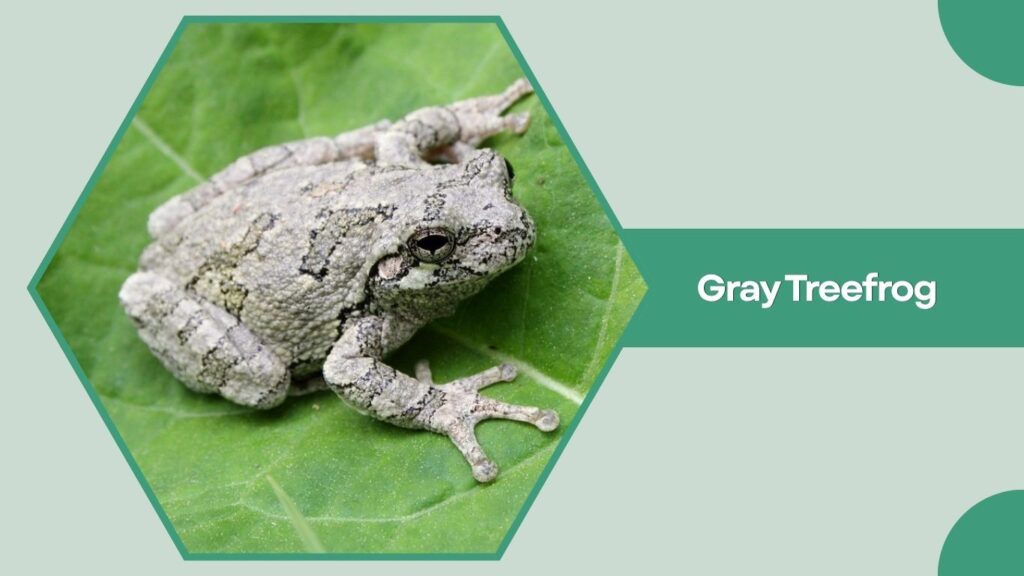
The Gray Treefrog is a well-known singing frog found across much of eastern North America. It is famous for its ability to change color from gray to green depending on temperature, surroundings, and activity. During spring and summer, males produce a musical, trilling call from trees and vegetation near ponds, swamps, and temporary wetlands to attract females.
Identification
- Usually 1.25–2 inches long
- Gray, green, or brown body coloration
- Irregular dark blotches on the back
- Bright yellow or orange coloring inside the hind legs
- Large adhesive toe pads
- Rough, slightly bumpy skin
- Pale underside
- Dark band extending through the eye
Habitat and Distribution
Gray Treefrogs occur throughout much of the eastern and central United States and parts of southeastern Canada. They prefer wooded habitats containing ponds, marshes, swamps, or temporary pools used for breeding.
Outside breeding season, they spend considerable time above ground on trees, shrubs, fences, and other vertical surfaces. Their excellent camouflage makes them difficult to locate even when they are calling nearby.
Song and Behavior
The male Gray Treefrog produces a short, musical trill that may be repeated every few seconds. Calling becomes especially noticeable on warm, humid evenings during late spring and summer.
Males often call from branches overlooking water. Their powerful toe pads allow them to climb easily, while their changing coloration provides camouflage against bark, leaves, and other surfaces.
Diet and Life Cycle
Gray Treefrogs feed on moths, beetles, ants, spiders, and numerous other small invertebrates. Females deposit clusters of eggs in shallow water, where tadpoles develop before transforming into young frogs.
Adults overwinter beneath leaf litter, bark, or other sheltered places and become active again as temperatures rise.
3. Green Treefrog
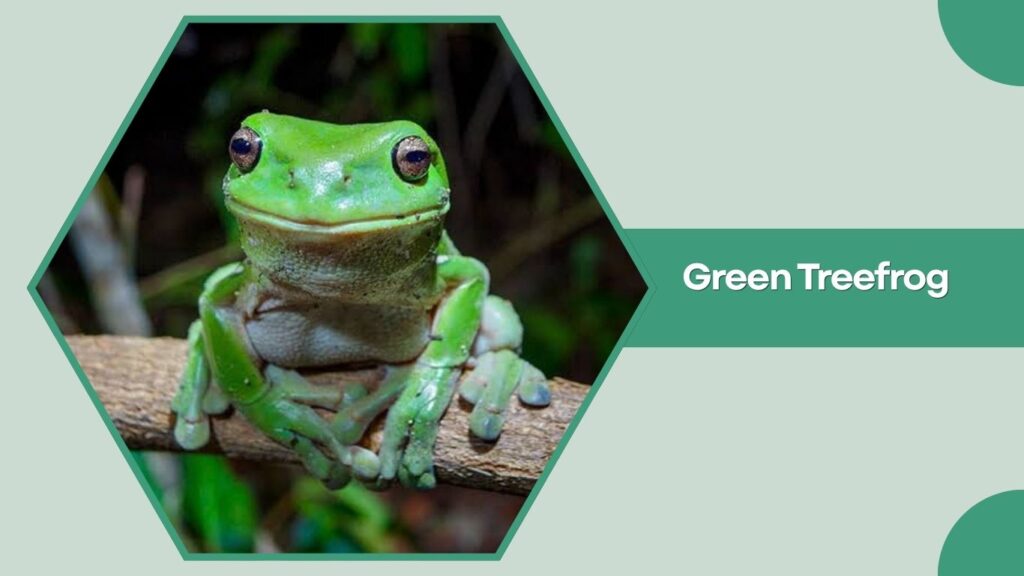
The Green Treefrog is a colorful and highly vocal North American frog most strongly associated with the southeastern United States. Its bright green body and loud nighttime calls make it relatively easy to recognize during warm weather. Males gather around wetlands, ponds, ditches, and vegetation after rainfall, producing repeated calls that form large breeding choruses.
Identification
- Usually 1.25–2.5 inches long
- Bright green to yellow-green body
- Smooth skin
- White or yellow stripe along each side
- Pale white or cream underside
- Large rounded toe pads
- Slender body and long legs
- Golden or yellowish eyes
Habitat and Distribution
Green Treefrogs are widespread across the southeastern United States, especially in warm, humid areas. They inhabit marshes, swamps, ponds, lake edges, drainage ditches, and wet forests.
They frequently rest on reeds, grasses, shrubs, and tree branches close to water. During the daytime, they often remain motionless among vegetation, where their green coloration provides excellent concealment.
Song and Behavior
Male Green Treefrogs produce a loud, nasal call often described as sounding like “quonk” or “queenk.” Choruses become especially intense during warm, rainy nights.
Males usually call from elevated vegetation around shallow water. Their calls advertise breeding readiness and help females locate potential mates.
Diet and Life Cycle
Green Treefrogs are opportunistic insect hunters. They consume flies, moths, mosquitoes, beetles, crickets, and other small invertebrates encountered on vegetation.
Females deposit eggs in aquatic habitats, and the resulting tadpoles develop in warm shallow water. Young frogs eventually leave the water and begin spending much of their time on surrounding vegetation.
4. American Bullfrog
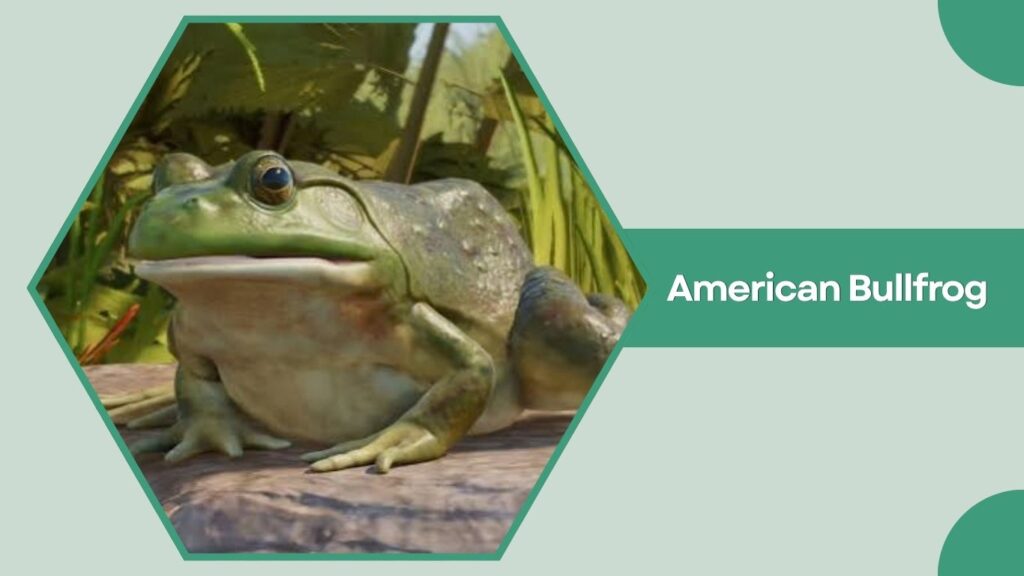
The American Bullfrog is the largest native frog in much of North America and has one of the deepest, most recognizable frog calls. Its booming voice can carry long distances across ponds and lakes during warm summer nights. Bullfrogs are powerful predators and spend much of their lives close to permanent bodies of water.
Identification
- Commonly 3.5–8 inches long
- Green, olive, or brown upper body
- Large circular eardrum behind each eye
- No raised dorsolateral folds running down the back
- Powerful muscular hind legs
- Pale underside, sometimes mottled
- Large head and wide mouth
- Male throat may appear yellow during breeding season
Habitat and Distribution
American Bullfrogs inhabit lakes, ponds, reservoirs, slow rivers, marshes, and other permanent freshwater habitats. They are native to eastern and central North America but have been introduced into many areas farther west.
Adults usually remain near water, resting along shorelines or among aquatic vegetation where they can quickly escape by jumping or swimming.
Song and Behavior
The male’s famous call is a deep, resonant sound commonly compared to “jug-o-rum.” Large males establish territories along the water and call repeatedly during the breeding season.
Bullfrogs are primarily nocturnal hunters. They often remain motionless until prey comes within striking distance, then capture it with a rapid movement of the head and mouth.
Diet and Life Cycle
American Bullfrogs have an extremely broad diet that includes insects, crayfish, small fish, other frogs, snakes, and occasionally small birds or mammals.
Females deposit large masses of eggs on the water’s surface. Bullfrog tadpoles can remain aquatic for one or more years before completing metamorphosis.
5. Green Frog
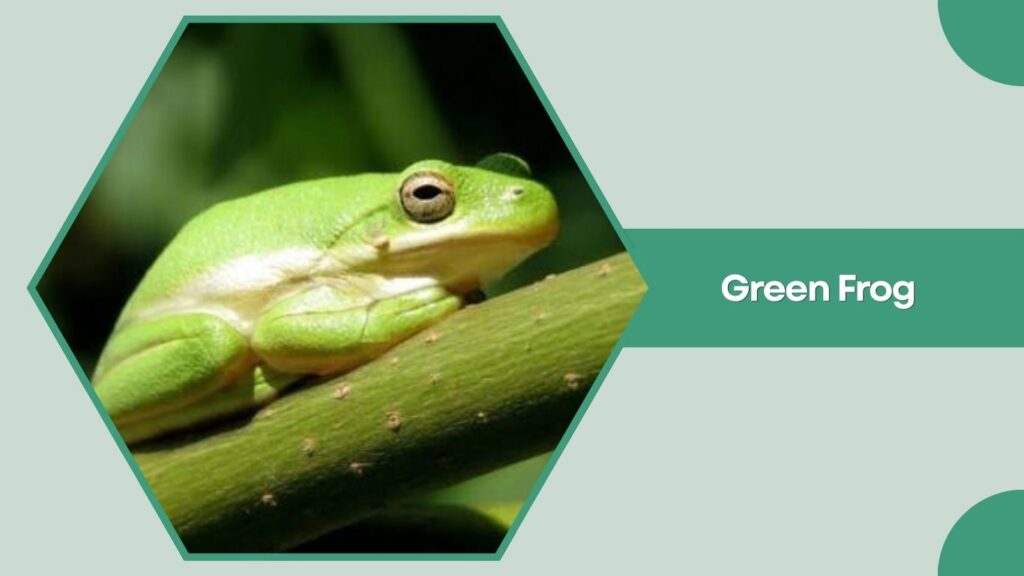
The Green Frog is a common semi-aquatic frog found throughout much of eastern North America. Despite its name, its coloration can range from bright green to brown or bronze. It is especially recognized by the male’s distinctive call, which resembles the sound of a loose banjo string being plucked near ponds, streams, and wetland edges.
Identification
- Usually 2.5–4 inches long
- Green, brown, bronze, or mixed coloration
- Large visible eardrum behind the eye
- Raised dorsolateral folds along the back
- Dark bands on the hind legs
- Pale belly
- Long, powerful rear legs
- Males often have a yellowish throat
Habitat and Distribution
Green Frogs are common across eastern Canada and much of the eastern United States. They prefer freshwater habitats such as ponds, marshes, lakes, streams, springs, and wet woodland pools.
Adults frequently sit at the water’s edge with only part of the body exposed. When disturbed, they quickly leap into the water and hide beneath vegetation or submerged debris.
Song and Behavior
Male Green Frogs make a short, metallic call resembling a banjo string being plucked. The sound may be repeated several times, usually becoming softer with each note.
Calling occurs throughout the warmer months, particularly at night. Males often defend small territories along pond or stream edges while attempting to attract females.
Diet and Life Cycle
Green Frogs consume insects, spiders, worms, snails, small fish, and occasionally smaller frogs. They hunt both on land and around the edges of water.
Females lay floating egg masses among aquatic vegetation. Tadpoles may require several months or, in colder regions, more than one season before transforming into frogs.
6. Wood Frog
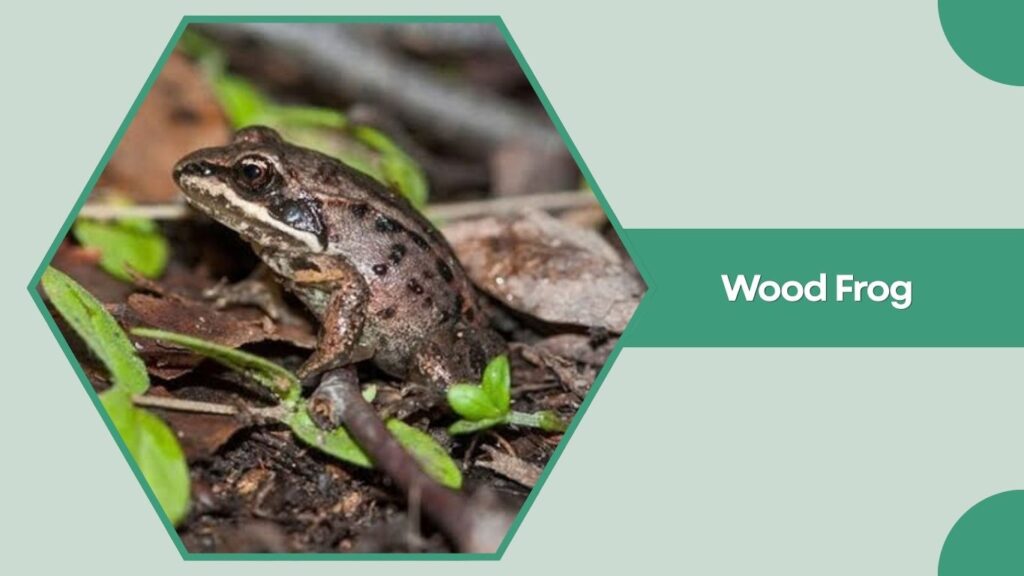
The Wood Frog is a remarkable North American species known both for its duck-like breeding call and its extraordinary ability to survive freezing conditions. It is one of the earliest frogs to begin calling in spring, sometimes appearing while snow remains on the ground. Large groups gather briefly in woodland pools, producing energetic choruses during their short breeding season.
Identification
- Usually 1.5–3 inches long
- Brown, tan, reddish, or pinkish body
- Distinct dark mask through the eyes
- Pale white line along the upper lip
- Light-colored belly
- Raised dorsolateral folds on the back
- Smooth to slightly rough skin
- Relatively pointed snout
Habitat and Distribution
Wood Frogs occur across much of Canada, Alaska, the northeastern United States, and portions of the upper Midwest and Appalachian region. They are strongly associated with forests rather than permanent ponds.
Adults spend most of the year among damp leaf litter on the forest floor. In early spring, they migrate to temporary woodland pools where fish are usually absent, creating safer conditions for eggs and tadpoles.
Song and Behavior
The Wood Frog’s call is often described as a short quacking or chuckling sound. A breeding chorus can resemble a group of ducks calling from a shallow pool.
Their breeding season is brief and begins very early in the year. Males gather at temporary pools and call intensely for several days or weeks.
Diet and Life Cycle
Adult Wood Frogs eat beetles, spiders, slugs, worms, and other forest-floor invertebrates. Females deposit rounded masses containing many eggs in shallow pools.
The species is particularly famous for overwintering beneath leaves while partially freezing. Natural compounds in its body protect vital tissues until warmer spring temperatures allow the frog to become active again.
7. Boreal Chorus Frog
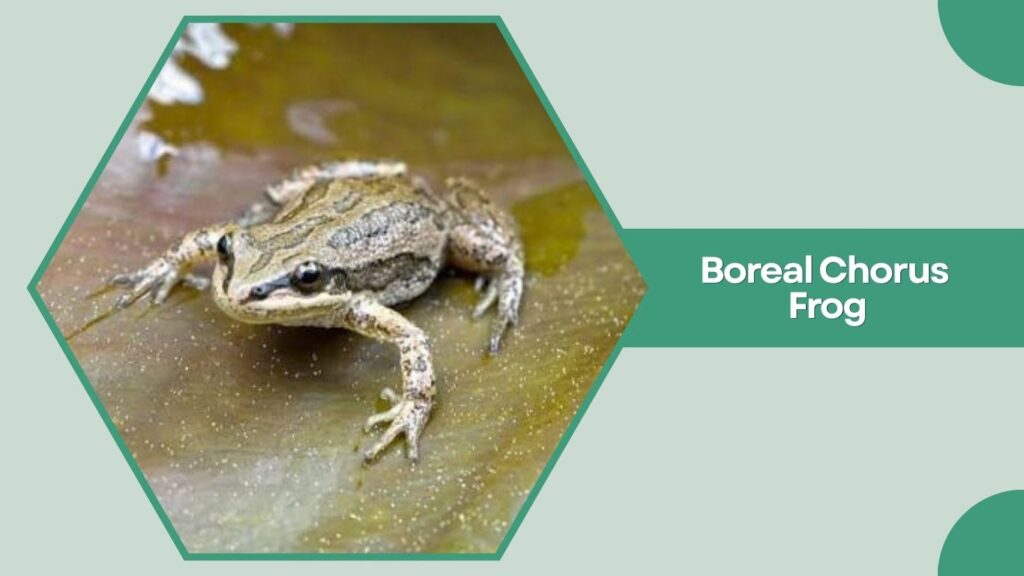
The Boreal Chorus Frog is a small but highly vocal frog found across much of central and northern North America. Its breeding call is one of the earliest frog sounds heard in spring and is often compared to the sound of a fingernail being dragged across the teeth of a plastic comb. Large groups can create surprisingly loud choruses around shallow wetlands.
Identification
- Usually about 0.75–1.5 inches long
- Brown, gray, olive, or greenish body
- Three dark stripes commonly run along the back
- Dark stripe passes through the eye
- Smooth to slightly granular skin
- Small rounded toe pads
- Pale underside
- Slender body with relatively long hind legs
Habitat and Distribution
Boreal Chorus Frogs occur across large portions of Canada and the northern and central United States. They inhabit grasslands, meadows, woodland edges, marshes, ponds, roadside ditches, and temporary pools.
They are particularly associated with shallow seasonal wetlands used for breeding. Outside the breeding season, adults spend much of their time hidden beneath vegetation, leaf litter, logs, or moist ground cover.
Song and Behavior
Male Boreal Chorus Frogs produce a rapid, rising call often described as a creaking or comb-like trill. During early spring, dozens of males may call simultaneously from shallow water and surrounding vegetation.
Their chorus can be heard from a considerable distance, even though the frogs themselves are tiny and difficult to locate.
Diet and Life Cycle
Boreal Chorus Frogs feed on small insects, spiders, mites, and other invertebrates. Females attach small groups of eggs to submerged vegetation in shallow water.
Tadpoles develop relatively quickly, an important adaptation because many breeding pools begin drying as temperatures rise. Young frogs leave the water after metamorphosis and spend the remainder of the season feeding and growing on land.
8. Pacific Treefrog
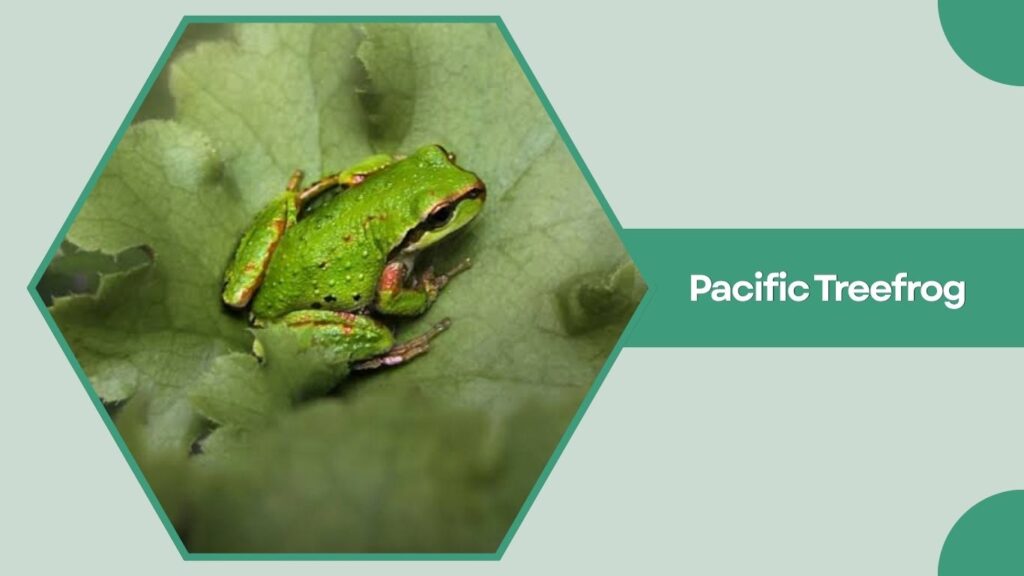
The Pacific Treefrog, also commonly called the Pacific Chorus Frog, is one of the most familiar singing frogs of western North America. It is famous for its loud two-part call, frequently heard around wetlands after sunset. Despite being small, the species can create remarkably powerful choruses and has become strongly associated with the nighttime sounds of the Pacific Coast.
Identification
- Usually 0.75–2 inches long
- Green, brown, gray, or reddish coloration
- Dark stripe extending through each eye
- Rounded adhesive toe pads
- Relatively smooth skin
- Pale underside
- Long hind legs
- Color can change depending on surroundings and conditions
Habitat and Distribution
Pacific Treefrogs occur throughout much of western North America, including the Pacific Northwest and parts of California and neighboring regions.
They occupy an impressive range of habitats, including forests, grasslands, wetlands, gardens, agricultural areas, and suburban neighborhoods. Breeding usually occurs in ponds, marshes, slow-moving water, or temporary pools.
Song and Behavior
The male’s familiar call consists of a loud two-part “rib-bit” or “kreck-ek” sound. Choruses often become especially intense after rainfall and during mild spring evenings.
Males call from grasses, reeds, shrubs, and vegetation around water. Their adhesive toe pads allow them to climb well, although they are also frequently found close to ground level.
Diet and Life Cycle
Pacific Treefrogs eat flies, beetles, spiders, ants, mosquitoes, and other small invertebrates.
Females lay small clusters of eggs attached to aquatic plants or submerged objects. Tadpoles hatch in water and feed on algae and organic material before transforming into juvenile frogs. Depending on climate, adults may remain active for much of the year.
9. Pickerel Frog
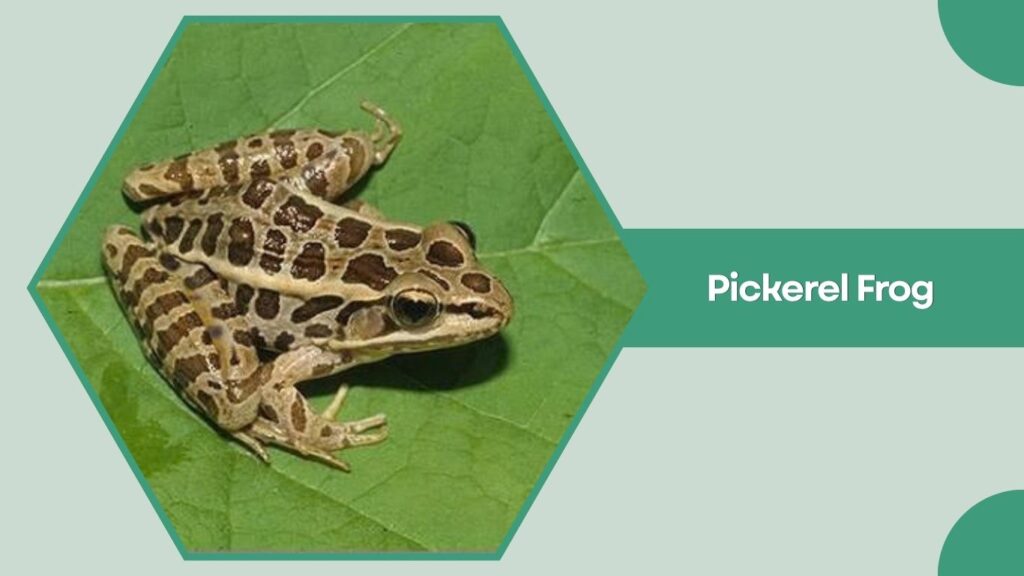
The Pickerel Frog is a distinctive spotted frog native to eastern North America. It is recognized by rows of rectangular dark spots and a low, snoring breeding call. Pickerel Frogs are strongly associated with clean, cool freshwater environments and are often found near streams, springs, ponds, wetlands, and densely vegetated shorelines.
Identification
- Usually 1.75–3.5 inches long
- Tan, bronze, or light brown body
- Two rows of rectangular dark spots
- Prominent dorsolateral folds
- Yellow or orange coloring on the inner hind legs
- Pale underside
- Long hind legs
- Relatively pointed head
Habitat and Distribution
Pickerel Frogs occur across much of eastern Canada and the eastern United States. They prefer moist environments with cool, clean water, including streams, marshes, wet meadows, ponds, and wooded wetlands.
During warmer months, adults may move into grassy areas near water. In winter, they typically seek protected aquatic locations where they can remain inactive until conditions improve.
Song and Behavior
The male Pickerel Frog produces a low, steady call often compared to snoring. The sound is softer and less explosive than the calls of many treefrogs but can still form noticeable choruses during the breeding season.
Males generally call while floating or sitting near shallow water.
Diet and Life Cycle
Pickerel Frogs eat insects, spiders, worms, and other small invertebrates. They are active hunters both on land and near water.
Females deposit spherical egg masses in shallow water, often attached to vegetation. Tadpoles develop throughout spring and early summer before transforming into juvenile frogs that move onto surrounding land.
10. Northern Leopard Frog
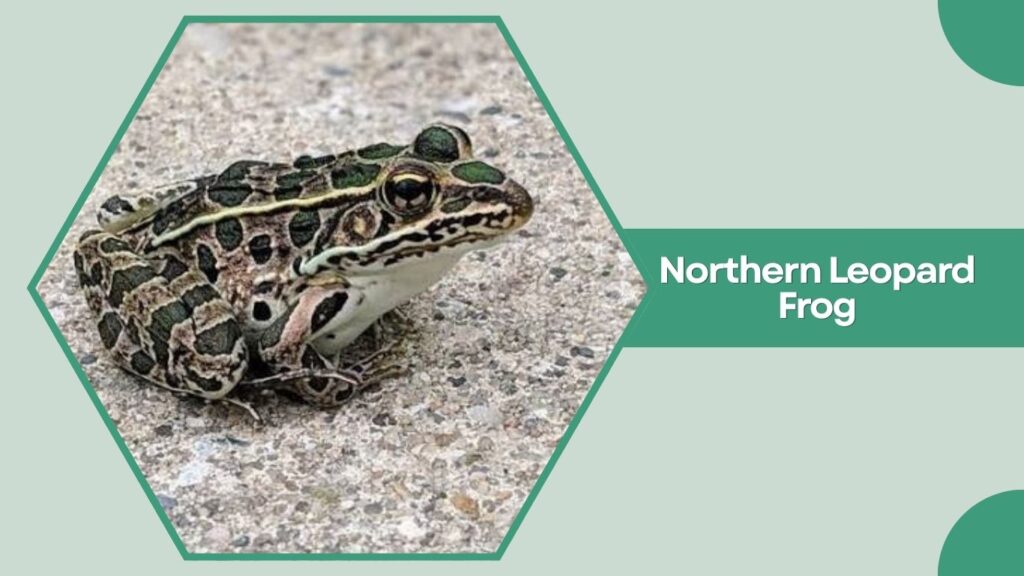
The Northern Leopard Frog is a widespread North American species known for its attractive spotted pattern and distinctive breeding calls. Its voice includes low snores followed by chuckling or grunting notes. Once extremely common in many northern wetlands and grasslands, this frog remains one of the most recognizable members of the true frog family.
Identification
- Usually 2–4.5 inches long
- Green or brown background coloration
- Large rounded dark spots with pale borders
- Light-colored dorsolateral folds
- White or cream underside
- Long, powerful hind legs
- Pointed snout
- Often has a pale stripe along the upper jaw
Habitat and Distribution
Northern Leopard Frogs occur across much of Canada and the northern and central United States. They use ponds, marshes, lakeshores, wet meadows, prairie wetlands, and slow-moving streams.
Unlike some frogs that remain close to water year-round, Northern Leopard Frogs may travel into grassy fields during summer to forage. They return to deeper aquatic habitats for overwintering.
Song and Behavior
Male Northern Leopard Frogs produce a low snoring call, frequently followed by short chuckles or grunts. Their breeding chorus is most noticeable during spring when males gather in shallow wetlands.
They are strong jumpers and may quickly leap into water when approached. On land, their spotted coloration provides effective camouflage among grasses and vegetation.
Diet and Life Cycle
Northern Leopard Frogs eat insects, spiders, worms, and other small animals they can capture. Larger individuals may occasionally consume very small vertebrates.
Females deposit large egg masses in shallow water, often attached to vegetation. Tadpoles develop through spring and summer before metamorphosing into young frogs.
FAQs
Why do frogs sing at night?
Most frog songs are produced by males attempting to attract females during the breeding season. Calling at night also helps reduce water loss and may provide protection from some daytime predators. Warm, humid, or rainy evenings often trigger especially intense choruses around ponds, marshes, and temporary wetlands.
Which North American frog has the loudest call?
Several species can produce extremely loud calls, particularly when many males sing together. American Bullfrogs are notable for their deep, powerful “jug-o-rum” calls, while Spring Peepers can create surprisingly loud choruses despite their tiny size. Perceived loudness also depends on distance and the number of calling frogs.
What North American frog sounds like a banjo?
The Green Frog is famous for a call resembling the twang of a loose banjo string. Males usually produce one or several short metallic notes from the edges of ponds, streams, and wetlands during the warmer months, making this species relatively easy to identify by sound.
What frog sounds like a duck?
The Wood Frog produces a short, chuckling or quacking breeding call that can sound surprisingly similar to ducks from a distance. Large groups gather in temporary woodland pools early in spring, and their combined chorus may make a small wetland sound like it contains a flock of ducks.
When is the best time to hear singing frogs?
Spring and early summer are usually the best seasons, although timing varies by species and region. Warm, rainy evenings after sunset are especially productive. Spring Peepers and Wood Frogs often call early in the season, while Bullfrogs and Green Treefrogs become more vocal as temperatures rise.
