
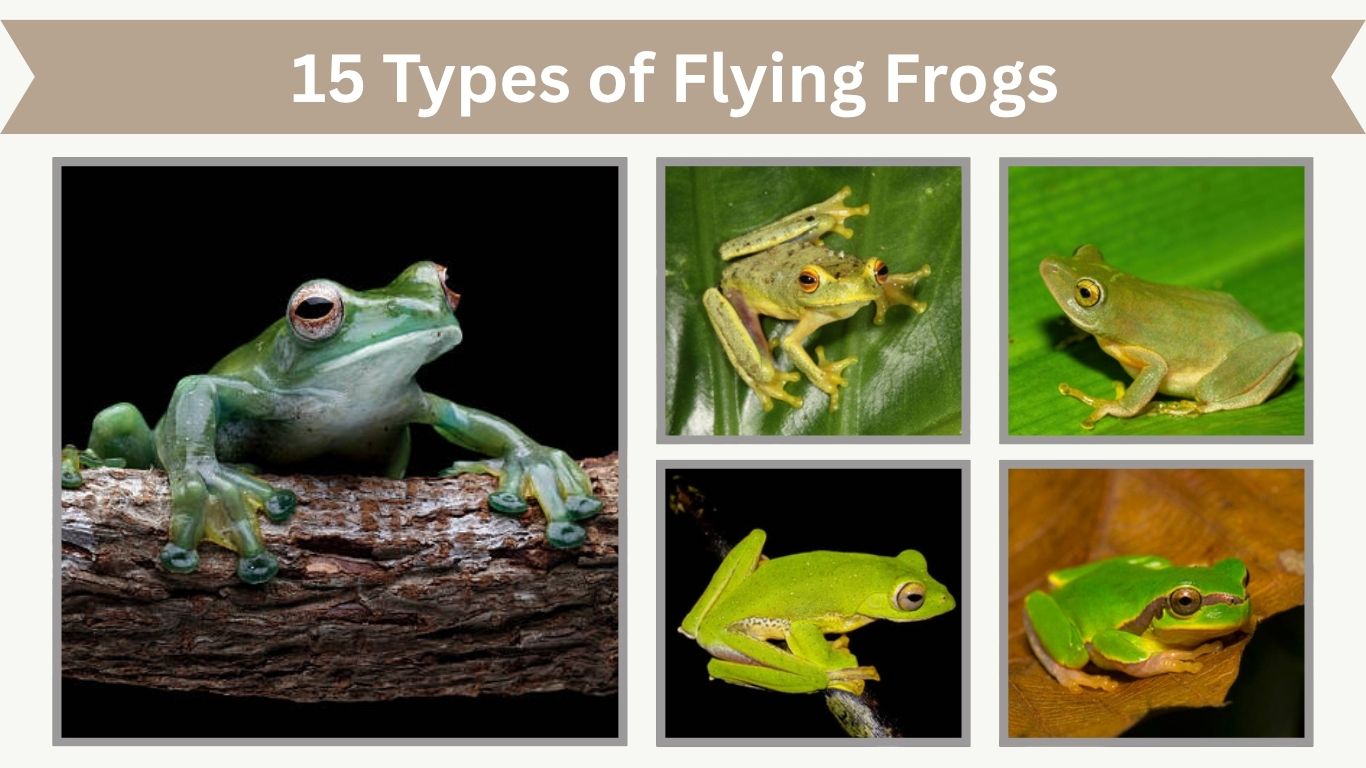
Flying frogs are some of the most fascinating amphibians in the world, known for their ability to glide between trees using large webbed feet. Found mostly in tropical forests, these unique frogs have adapted perfectly to life in the canopy. Their gliding skill helps them escape predators, hunt insects, and move efficiently through dense environments. In this article, you will discover 15 different types of flying frogs, along with their key features, habitats, behaviors, and lifecycles, giving you a clear understanding of these remarkable creatures.
1. Wallace’s Flying Frog

Wallace’s Flying Frog is a remarkable tree-dwelling amphibian known for its gliding ability. Native to Southeast Asian rainforests, it uses its large webbed feet to move between trees. This species is often highlighted for its striking appearance and unique adaptation to arboreal life, making it one of the most iconic flying frogs in the world.
Identification
- Bright green body with smooth texture
- Extremely large, fully webbed toes for gliding
- Yellow or orange webbing on feet and inner limbs
- Large eyes suited for nocturnal vision
- Body length can reach around 10 cm
Habitat and Distribution
Wallace’s Flying Frog is primarily found in tropical rainforests across Malaysia, Indonesia, and Borneo. It prefers dense forest canopies where humidity is high and water sources are nearby. These frogs are usually seen perched on tree branches above ponds, streams, or temporary rain pools. Their arboreal lifestyle keeps them mostly off the ground, reducing exposure to predators. The presence of clean, freshwater bodies is essential for their reproduction, making them sensitive to environmental changes.
Behavior and Diet
This species is nocturnal and becomes active after sunset. It spends most of its time in trees, gliding from branch to branch using its webbed feet. This gliding helps it escape predators and travel efficiently in search of food. Wallace’s Flying Frog feeds mainly on insects such as crickets, moths, and beetles. Occasionally, it may consume smaller invertebrates. Its sticky tongue allows it to catch prey quickly, while its camouflage helps it remain hidden during the day.
Lifecycle
The reproductive process begins during the rainy season when males call to attract females. After mating, females lay eggs in foam nests attached to leaves above water bodies. These nests protect the eggs from predators and drying out. Once the eggs hatch, the tadpoles drop into the water below, where they continue developing. Over time, they undergo metamorphosis, growing limbs and lungs until they become fully developed frogs ready for life in the trees.
2. Malabar Gliding Frog

The Malabar Gliding Frog is a vibrant species found in the Western Ghats of India. Known for its bright colors and excellent gliding ability, it uses its webbed feet to move between trees. This frog is well adapted to life in dense forests and is often associated with seasonal rains and moist environments.
Identification
- Bright green body with smooth skin
- Red or orange webbing between the toes
- Slender body with long limbs
- Large eyes adapted for night activity
- Medium size, typically around 8–10 cm
Habitat and Distribution
The Malabar Gliding Frog is mainly found in the Western Ghats region of India. It inhabits tropical and subtropical moist forests, especially in areas with heavy rainfall. These frogs prefer living high in trees near water bodies such as forest ponds, streams, and temporary rain pools. Their survival depends on humid conditions and dense vegetation, which provide shelter and breeding sites.
Behavior and Diet
This frog is nocturnal and arboreal, becoming active at night. It uses its webbed feet to glide between branches, helping it avoid predators and search for food. The Malabar Gliding Frog feeds primarily on insects like flies, moths, and beetles. Its hunting strategy involves waiting quietly and then quickly catching prey with its sticky tongue.
Lifecycle
Breeding usually occurs during the monsoon season. Females lay eggs in foam nests attached to leaves hanging over water. These nests protect the eggs until they hatch. Once hatched, tadpoles fall into the water below, where they continue developing. Over time, they undergo metamorphosis, transforming into juvenile frogs that eventually move into the trees.
3. Harlequin Flying Frog

The Harlequin Flying Frog is a colorful and agile gliding frog found in Southeast Asia. It is known for its striking patterns and strong climbing ability. This species uses its wide webbed feet to glide between trees, helping it move efficiently through dense forests while avoiding predators and searching for food.
Identification
- Green body with bold dark markings or patterns
- Large, fully webbed toes for gliding
- Slim body with long limbs
- Prominent eyes for night vision
- Medium size, usually around 7–9 cm
Habitat and Distribution
The Harlequin Flying Frog is commonly found in tropical forests of countries like Thailand, Malaysia, and Indonesia. It prefers dense, humid environments with plenty of trees and nearby water sources. These frogs are usually seen high in the canopy, often near streams or forest pools. Their dependence on moisture and clean water makes them sensitive to habitat disturbance and deforestation.
Behavior and Diet
This species is nocturnal and spends most of its life in trees. It glides between branches using its webbed feet, which helps it escape predators and move in search of food. The Harlequin Flying Frog feeds mainly on insects such as ants, beetles, and moths. It relies on stealth and quick movements to catch prey, often remaining still before striking suddenly.
Lifecycle
Breeding takes place during the rainy season when conditions are ideal. Females create foam nests on leaves above water bodies, where eggs are safely deposited. After hatching, tadpoles fall into the water below and continue developing. They gradually transform through metamorphosis, growing into adult frogs that return to the trees to continue their life cycle.
4. Java Flying Frog

The Java Flying Frog is a well-known gliding amphibian native to Indonesia. It is admired for its smooth green body and impressive ability to glide between trees using its webbed feet. This species thrives in humid forest environments and plays an important role in maintaining ecological balance within its habitat.
Identification
- Bright green body with smooth skin
- Large, fully webbed toes for gliding
- Long limbs with slender structure
- Pale underside with subtle coloration
- Medium size, typically around 8–10 cm
Habitat and Distribution
The Java Flying Frog is primarily found on the island of Java in Indonesia. It inhabits tropical rainforests and prefers areas with dense vegetation and high humidity. These frogs are commonly located in tree canopies near streams, ponds, or other freshwater sources. Their arboreal lifestyle keeps them off the forest floor, while access to water is essential for breeding and survival.
Behavior and Diet
This species is nocturnal and highly adapted to life in trees. It uses its webbed feet to glide from branch to branch, helping it avoid predators and search for food efficiently. The Java Flying Frog feeds mainly on insects such as flies, crickets, and beetles. It relies on patience and quick reflexes to capture prey, often striking suddenly with its sticky tongue.
Lifecycle
Reproduction occurs during the rainy season when water is abundant. Females lay eggs in foam nests attached to leaves above water bodies. These nests protect the eggs until they hatch. Once hatched, the tadpoles drop into the water below, where they continue developing. Through metamorphosis, they grow into juvenile frogs and eventually become fully adapted to life in the trees.
5. Borneo Flying Frog

The Borneo Flying Frog is a striking gliding frog native to the rainforests of Borneo. It is well known for its large size and impressive webbing, which allows it to glide efficiently between trees. This species is highly adapted to arboreal life and thrives in warm, humid environments with dense vegetation.
Identification
- Bright green body with smooth skin
- Very large, fully webbed toes for gliding
- Yellow or orange webbing between limbs
- Strong, muscular limbs for climbing
- Large size, often reaching up to 10–12 cm
Habitat and Distribution
The Borneo Flying Frog is found mainly on the island of Borneo, including parts of Malaysia, Indonesia, and Brunei. It inhabits tropical rainforests with dense canopies and high humidity. These frogs are usually located high in trees near rivers, streams, or forest pools. Their dependence on clean water for breeding makes them sensitive to habitat destruction and environmental changes.
Behavior and Diet
This frog is nocturnal and spends most of its life in trees. It glides between branches using its large webbed feet, helping it escape predators and move efficiently. The Borneo Flying Frog feeds on insects such as beetles, moths, and crickets. It uses a sit-and-wait hunting strategy, remaining still before quickly capturing prey with its sticky tongue.
Lifecycle
Breeding occurs during the rainy season when water is readily available. Females lay eggs in foam nests attached to leaves above water bodies. These nests protect the eggs from predators and drying out. After hatching, tadpoles fall into the water below, where they continue developing. Over time, they undergo metamorphosis and grow into adult frogs adapted to life in the forest canopy.
6. Rhacophorus nigropalmatus

Rhacophorus nigropalmatus, commonly associated with flying frogs, is a large gliding species found in Southeast Asia. It is widely recognized for its dramatic webbing and strong gliding ability. This frog spends most of its life in trees and is specially adapted to move through dense rainforest canopies with ease.
Identification
- Bright green body with smooth skin
- Very large black webbing between toes
- Long limbs adapted for gliding
- Yellow or orange coloration on inner legs
- Large size, reaching up to about 10 cm
Habitat and Distribution
This species is found in tropical rainforests across Malaysia, Thailand, and Indonesia. It prefers dense, humid environments with tall trees and nearby water sources such as streams and ponds. Rhacophorus nigropalmatus is typically seen high in the canopy, rarely descending to the ground except for breeding. Its habitat requires stable moisture levels, making it vulnerable to deforestation and environmental disturbance.
Behavior and Diet
Rhacophorus nigropalmatus is nocturnal and highly arboreal. It uses its extensive webbing to glide between trees, allowing efficient movement and escape from predators. The frog primarily feeds on insects such as moths, crickets, and beetles. It remains still while hunting and quickly captures prey using its sticky tongue, relying on stealth and timing.
Lifecycle
Breeding usually occurs during the rainy season. Females create foam nests on leaves hanging above water bodies, where eggs are laid safely. After hatching, tadpoles drop into the water below and continue their development. Over time, they undergo metamorphosis, gradually transforming into adult frogs that return to the trees and begin their arboreal life.
7. Rhacophorus reinwardtii

Rhacophorus reinwardtii is a well-known gliding frog species found in Southeast Asia. It is recognized for its vibrant coloration and strong arboreal adaptations. This frog uses its wide webbed feet to glide between trees, allowing it to move efficiently through dense forest environments while avoiding predators.
Identification
- Bright green body with smooth texture
- Black webbing with contrasting colors between toes
- Slender body with long limbs
- Large, forward-facing eyes for night vision
- Medium size, usually around 7–9 cm
Habitat and Distribution
This species is commonly found in Indonesia, Thailand, and nearby regions. It inhabits tropical rainforests with dense vegetation and high humidity. Rhacophorus reinwardtii prefers living in tree canopies near freshwater sources such as streams, ponds, and temporary rain pools. Its arboreal lifestyle keeps it mostly off the ground, and it depends on stable environmental conditions for survival.
Behavior and Diet
Rhacophorus reinwardtii is nocturnal and highly active at night. It glides between branches using its webbed feet, helping it escape predators and search for food. Its diet mainly consists of insects like flies, beetles, and moths. The frog uses a sit-and-wait hunting strategy, remaining still before quickly capturing prey with its sticky tongue.
Lifecycle
Breeding occurs during the rainy season when moisture levels are high. Females lay eggs in foam nests attached to leaves above water bodies. These nests protect the eggs until they hatch. Once hatched, tadpoles fall into the water below, where they develop further. Through metamorphosis, they gradually transform into adult frogs adapted to life in the trees.
8. Rhacophorus prominanus

Rhacophorus prominanus is a lesser-known flying frog species found in parts of Southeast Asia. It is adapted to life in forest canopies and uses its webbed feet for controlled gliding. Though not as famous as some other species, it plays an important role in its ecosystem and shares many characteristics with other gliding frogs.
Identification
- Green body with smooth skin
- Moderately large webbed toes for gliding
- Slender limbs suited for climbing
- Light-colored underside
- Medium size, typically around 6–8 cm
Habitat and Distribution
This species is found in tropical forest regions of Southeast Asia, particularly in areas with dense vegetation and high humidity. It prefers habitats with tall trees and access to freshwater sources such as streams or forest pools. Rhacophorus prominanus spends most of its life in the canopy, rarely coming down to the ground except during breeding periods. Its survival depends heavily on stable forest ecosystems.
Behavior and Diet
Rhacophorus prominanus is nocturnal and arboreal, becoming active at night. It glides between branches using its webbed feet, which helps it move efficiently and avoid predators. Its diet mainly consists of small insects like ants, beetles, and flies. The frog relies on camouflage and stillness while hunting, striking quickly when prey comes within reach.
Lifecycle
Breeding typically occurs during the rainy season. Females lay eggs in foam nests attached to leaves above water bodies. These nests provide protection from predators and drying conditions. After hatching, the tadpoles fall into the water below, where they continue developing. Through metamorphosis, they gradually transform into adult frogs and return to life in the trees.
9. Rhacophorus lateralis

Rhacophorus lateralis is a gliding frog species known for its arboreal lifestyle and subtle coloration. Found in forested regions, it uses its webbed feet to glide between branches. Although smaller than some other flying frogs, it is well adapted to life in humid environments and plays a role in controlling insect populations.
Identification
- Green or brownish-green body
- Moderately webbed toes for gliding
- Slender body with smooth skin
- Light underside with faint markings
- Small to medium size, around 5–7 cm
Habitat and Distribution
This species is mainly found in forested regions with high humidity, particularly in parts of South and Southeast Asia. It prefers dense vegetation and is often located in tree canopies near water sources such as streams or seasonal pools. Rhacophorus lateralis relies on moist environments and stable forest conditions, making it sensitive to habitat disturbance and deforestation.
Behavior and Diet
Rhacophorus lateralis is nocturnal and arboreal, becoming active after sunset. It glides between branches using its webbed feet, helping it move efficiently and avoid predators. Its diet mainly consists of small insects such as flies, ants, and beetles. The frog uses a sit-and-wait approach, remaining still before quickly catching prey with its sticky tongue.
Lifecycle
Breeding occurs during the rainy season when water is readily available. Females lay eggs in foam nests attached to leaves above water bodies. These nests protect the eggs until they hatch. Once hatched, tadpoles drop into the water below, where they continue developing. Through metamorphosis, they gradually transform into adult frogs adapted to life in the trees.
10. Rhacophorus maximus

Rhacophorus maximus is one of the larger flying frog species found in Southeast Asia. It is known for its strong limbs and wide webbing that allow effective gliding between trees. This species thrives in dense forests and is well adapted to a life spent mostly in the canopy.
Identification
- Bright green body with smooth skin
- Large, fully webbed toes for gliding
- Robust body with strong limbs
- Pale underside with slight yellow tones
- Large size, often reaching 9–11 cm
Habitat and Distribution
Rhacophorus maximus is found in countries such as India, Nepal, Myanmar, and parts of Southeast Asia. It inhabits tropical and subtropical forests with dense vegetation and high humidity. These frogs prefer living in tree canopies near freshwater sources like streams and forest ponds. Their dependence on moisture and intact forest ecosystems makes them vulnerable to habitat loss and environmental changes.
Behavior and Diet
This species is nocturnal and highly arboreal. It glides between branches using its webbed feet, helping it escape predators and move efficiently in search of food. Rhacophorus maximus mainly feeds on insects such as beetles, moths, and crickets. It uses a sit-and-wait hunting strategy, staying still before quickly capturing prey with its sticky tongue.
Lifecycle
Breeding usually takes place during the rainy season. Females lay eggs in foam nests attached to leaves above water bodies. These nests protect the eggs from predators and drying out. After hatching, tadpoles fall into the water below, where they continue developing. Through metamorphosis, they gradually transform into adult frogs and return to life in the trees.
11. Rhacophorus pardalis

Rhacophorus pardalis is a gliding frog species known for its adaptability and wide distribution in Southeast Asia. It is recognized for its ability to glide efficiently using its webbed feet. This species is often found in forested areas and is considered an important part of the ecosystem due to its role in controlling insect populations.
Identification
- Green or brownish body with smooth skin
- Well-developed webbing between toes
- Slender body with long limbs
- Light underside with subtle patterns
- Medium size, typically around 6–8 cm
Habitat and Distribution
Rhacophorus pardalis is commonly found in Southeast Asian countries such as Malaysia, Indonesia, and Thailand. It inhabits tropical forests, plantations, and sometimes even disturbed habitats. These frogs prefer areas with high humidity and access to water sources like ponds, streams, or temporary rain pools. Their adaptability allows them to survive in both primary forests and secondary growth areas.
Behavior and Diet
This species is nocturnal and arboreal, spending most of its time in trees. It glides between branches using its webbed feet, helping it escape predators and move efficiently. Rhacophorus pardalis feeds mainly on insects such as flies, beetles, and moths. It uses a sit-and-wait hunting method, remaining still before quickly catching prey with its sticky tongue.
Lifecycle
Breeding typically occurs during the rainy season. Females lay eggs in foam nests attached to leaves above water bodies. These nests protect the eggs from environmental threats. After hatching, tadpoles drop into the water below, where they continue developing. Through metamorphosis, they gradually transform into adult frogs adapted to life in the trees.
12. Rhacophorus annamensis

Rhacophorus annamensis is a gliding frog species native to parts of Southeast Asia. It is known for its arboreal lifestyle and ability to glide using its webbed feet. This frog thrives in humid forest environments and is an important part of the ecosystem, helping control insect populations.
Identification
- Bright green body with smooth skin
- Well-developed webbing between toes
- Slender body with long limbs
- Pale underside with slight markings
- Medium size, usually around 6–8 cm
Habitat and Distribution
This species is primarily found in Vietnam and surrounding regions. It inhabits tropical and subtropical forests with dense vegetation and high humidity. Rhacophorus annamensis prefers living in tree canopies near freshwater sources such as streams, ponds, and seasonal pools. Its reliance on moist environments makes it sensitive to habitat destruction and environmental changes.
Behavior and Diet
Rhacophorus annamensis is nocturnal and arboreal, becoming active at night. It glides between branches using its webbed feet, helping it move efficiently and avoid predators. Its diet mainly consists of insects such as ants, beetles, and moths. The frog uses a sit-and-wait hunting strategy, remaining still before quickly capturing prey with its sticky tongue.
Lifecycle
Breeding usually occurs during the rainy season. Females lay eggs in foam nests attached to leaves above water bodies. These nests protect the eggs until they hatch. Once hatched, tadpoles fall into the water below, where they continue developing. Through metamorphosis, they gradually transform into adult frogs adapted to life in the trees.
13. Rhacophorus hoabinhensis

Rhacophorus hoabinhensis is a lesser-known flying frog species found in Southeast Asia. It is adapted to an arboreal lifestyle and uses its webbed feet for gliding between trees. This species thrives in humid forest environments and contributes to maintaining ecological balance by controlling insect populations.
Identification
- Green body with smooth skin
- Moderately large webbed toes for gliding
- Slender limbs suited for climbing
- Light-colored underside
- Medium size, typically around 6–8 cm
Habitat and Distribution
Rhacophorus hoabinhensis is primarily found in Vietnam and nearby regions. It inhabits tropical forests with dense vegetation and high humidity. These frogs are usually located in tree canopies near water sources such as streams, ponds, and seasonal rain pools. Their survival depends on stable environmental conditions, especially moisture and forest cover, making them sensitive to habitat loss.
Behavior and Diet
This species is nocturnal and arboreal, becoming active at night. It glides between branches using its webbed feet, which helps it move efficiently and avoid predators. Rhacophorus hoabinhensis feeds mainly on small insects such as flies, ants, and beetles. It uses a sit-and-wait hunting strategy, staying still before quickly capturing prey with its sticky tongue.
Lifecycle
Breeding typically occurs during the rainy season. Females lay eggs in foam nests attached to leaves above water bodies. These nests protect the eggs from predators and drying out. After hatching, tadpoles fall into the water below, where they continue developing. Through metamorphosis, they gradually transform into adult frogs and return to life in the trees.
14. Rhacophorus dulitensis

Rhacophorus dulitensis is a rare flying frog species found in Borneo. It is known for its arboreal habits and ability to glide between trees using its webbed feet. This species is less commonly observed, making it of particular interest to researchers studying rainforest biodiversity and amphibian behavior.
Identification
- Green body with smooth skin
- Well-developed webbing between toes
- Slender body with long limbs
- Pale underside with subtle coloration
- Medium size, typically around 6–8 cm
Habitat and Distribution
Rhacophorus dulitensis is mainly found in the rainforests of Borneo. It prefers dense, humid forest environments with tall trees and access to freshwater sources such as streams and forest pools. These frogs live high in the canopy and are rarely seen on the ground. Their dependence on intact forest ecosystems makes them vulnerable to deforestation and environmental changes.
Behavior and Diet
This species is nocturnal and arboreal, becoming active at night. It glides between branches using its webbed feet, helping it move efficiently and avoid predators. Rhacophorus dulitensis feeds mainly on insects such as beetles, moths, and ants. It uses a sit-and-wait hunting strategy, remaining still before quickly capturing prey with its sticky tongue.
Lifecycle
Breeding usually occurs during the rainy season. Females lay eggs in foam nests attached to leaves above water bodies. These nests protect the eggs until they hatch. After hatching, tadpoles fall into the water below, where they continue developing. Through metamorphosis, they gradually transform into adult frogs adapted to life in the trees.
15. Rhacophorus translineatus

Rhacophorus translineatus is a gliding frog species found in parts of Southeast Asia. It is known for its arboreal lifestyle and subtle striped patterns along its body. Like other flying frogs, it uses its webbed feet to glide between trees, allowing it to move efficiently through forest canopies.
Identification
- Green body with faint stripe patterns
- Well-developed webbing between toes
- Slender body with long limbs
- Light underside with minimal markings
- Medium size, typically around 6–8 cm
Habitat and Distribution
Rhacophorus translineatus is found in tropical forest regions with high humidity and dense vegetation. It prefers living in tree canopies near water sources such as streams, ponds, or rain pools. These frogs depend on stable environmental conditions and are usually found in undisturbed forest habitats, where moisture levels remain consistent throughout the year.
Behavior and Diet
This species is nocturnal and arboreal, becoming active at night. It glides between branches using its webbed feet, helping it escape predators and search for food. Rhacophorus translineatus feeds mainly on small insects like flies, ants, and beetles. It relies on camouflage and patience, striking quickly when prey comes within reach.
Lifecycle
Breeding occurs during the rainy season. Females lay eggs in foam nests attached to leaves above water bodies, which protect the eggs from predators and drying out. Once the eggs hatch, tadpoles fall into the water below, where they continue developing. Through metamorphosis, they gradually transform into adult frogs adapted to life in the trees.
FAQs
What are flying frogs?
Flying frogs are a group of tree frogs that can glide through the air using their large, webbed feet. They do not truly fly like birds but can control their descent and direction while moving between trees, which helps them escape predators and travel efficiently.
Where are flying frogs commonly found?
Flying frogs are mainly found in tropical and subtropical regions of Asia, especially in Southeast Asia and parts of South Asia. They prefer dense rainforests with high humidity and access to freshwater sources such as streams, ponds, and seasonal rain pools.
How do flying frogs glide?
Flying frogs glide by spreading their fully webbed toes, which act like parachutes. This increases surface area and allows them to control their movement in the air. Their strong limbs and lightweight bodies also help them steer and land safely on branches.
What do flying frogs eat?
Flying frogs primarily feed on insects such as flies, moths, crickets, and beetles. Some larger species may occasionally eat smaller invertebrates. They use a sit-and-wait hunting method and catch prey quickly using their sticky tongues.
Are flying frogs endangered?
Some flying frog species are at risk due to habitat loss, deforestation, and environmental changes. While not all species are endangered, many depend on healthy forest ecosystems, making conservation efforts important for their long-term survival.
