
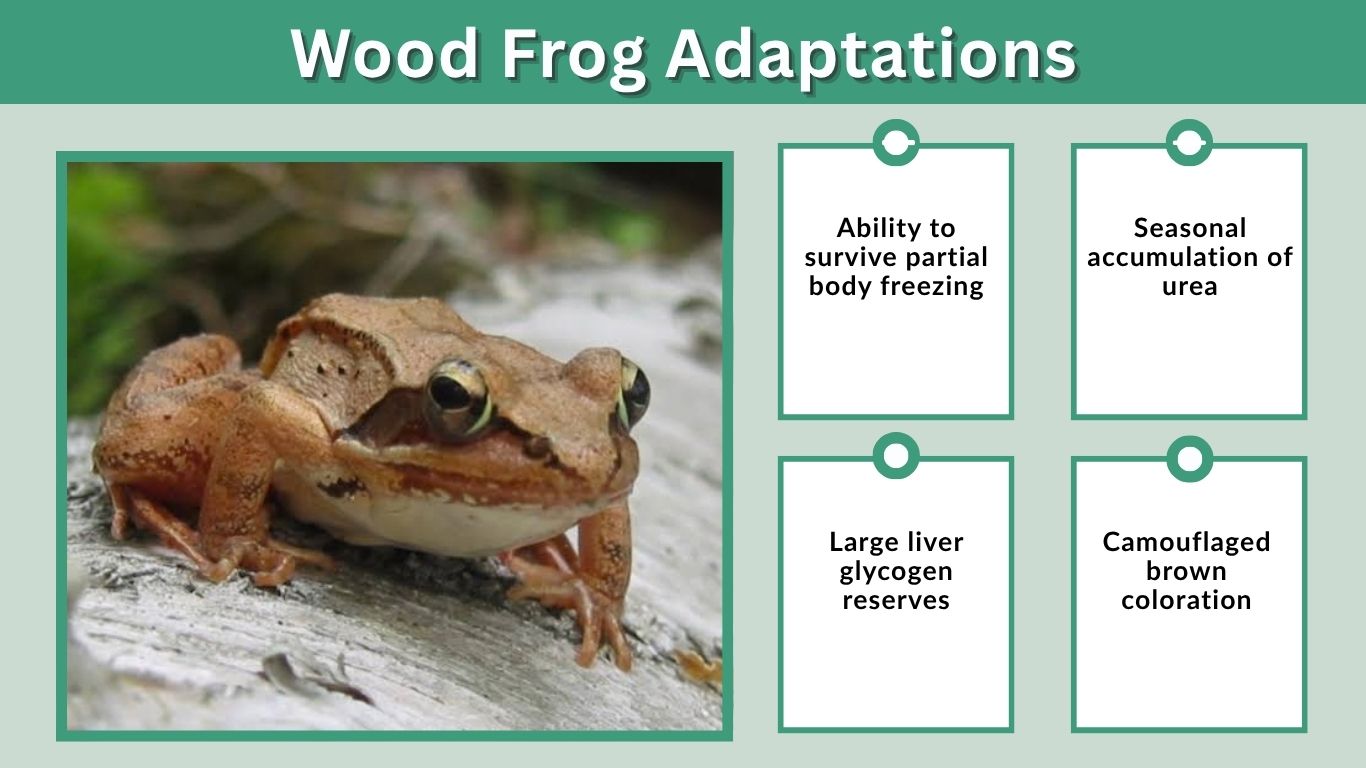
Wood frogs have some of the most remarkable survival abilities among North American amphibians. Their wood frog adaptations allow them to tolerate freezing temperatures, survive long winters, reproduce quickly in temporary ponds, and remain active in forest environments. These adaptations include physical features, behavioral strategies, and unusual physiological changes involving glucose and urea. Alaskan populations are especially impressive because they can remain frozen for months and survive temperatures far below those tolerated by many southern populations.
What Adaptations Do Wood Frogs Have?
Wood frogs (Lithobates sylvaticus, also called Rana sylvatica in older scientific literature) occupy forests, wetlands, and cold northern regions across North America. Their survival depends on several adaptations working together. Some help them hide from predators, some support reproduction, and others allow their cells and organs to withstand conditions that would kill most frogs.
Main Wood Frog Adaptations
Important adaptations include:
- Ability to survive partial body freezing
- Production of protective glucose during freezing
- Seasonal accumulation of urea
- Large liver glycogen reserves
- Camouflaged brown coloration
- Dark facial markings that blend with forest litter
- Hibernation beneath insulating leaf litter
- Rapid breeding in temporary spring pools
- Fast tadpole development in northern environments
- Seasonal changes in metabolism
These traits are especially important because wood frogs are ectotherms, so their body temperature largely follows environmental temperature.
Why These Adaptations Matter
Wood frogs live farther north than most North American amphibians. They can even occur in subarctic Alaska, where winters are long and extremely cold.
Instead of avoiding freezing completely, they have evolved ways to tolerate it. This gives them access to environments where many other frogs cannot survive. Their reproductive timing also allows them to take advantage of temporary ponds soon after winter ends.
Wood Frog Freezing Adaptation
The best-known wood frog adaptation is freeze tolerance. During winter, these frogs often shelter under leaves and other material on the forest floor rather than escaping deep below the frost line. Their body fluids can begin to freeze, yet specialized biochemical responses protect important cells and tissues until temperatures rise again.
How Can a Wood Frog Survive Freezing?
When freezing begins, ice develops mainly in extracellular spaces rather than freely forming inside sensitive cells.
At the same time, the liver rapidly releases large quantities of glucose from stored glycogen. This glucose circulates through tissues and acts as a cryoprotectant, helping limit damaging changes caused by ice formation and cellular dehydration.
Wood frogs also accumulate urea, another compound that contributes to their freeze tolerance. Research shows that both glucose and urea play important roles in protecting cells during freezing and thawing.
What Happens While the Frog Is Frozen?
A frozen wood frog may appear lifeless. Normal circulation and many physiological processes are severely reduced or temporarily suspended.
Freezing also removes water from cells as extracellular ice develops. This creates dehydration and low-oxygen conditions that the frog must tolerate in addition to cold itself.
When environmental temperatures rise, the frog gradually thaws and normal physiological activity returns. The ability to tolerate these combined stresses makes wood frogs an unusual example of vertebrate freeze tolerance.
Physiological Adaptations of Wood Frogs
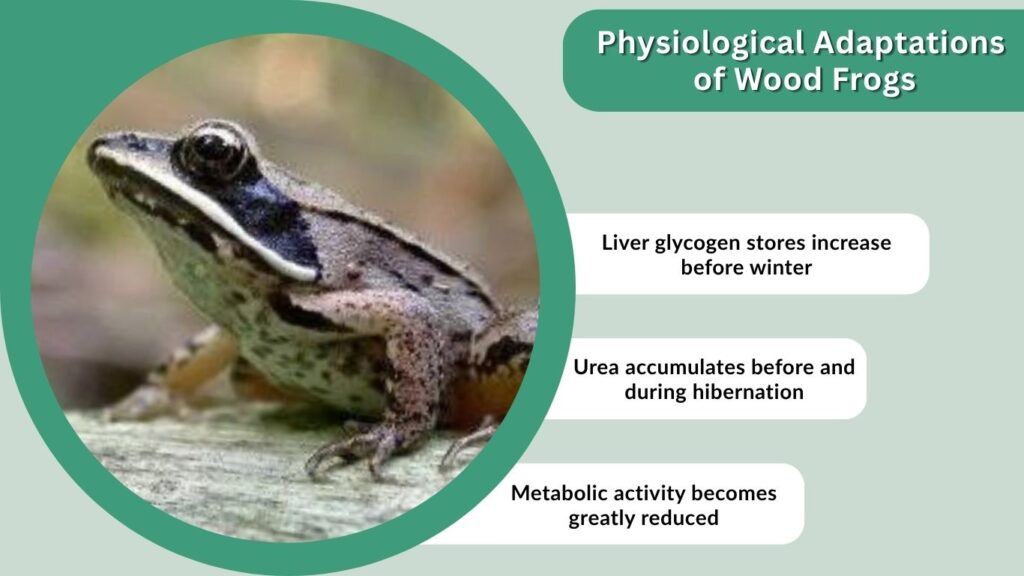
The physiological adaptations of wood frogs involve more than simply making glucose. Their bodies begin preparing for winter well before severe freezing occurs. Seasonal changes affect their liver, muscles, blood chemistry, water balance, and energy stores, creating an internal environment better suited to surviving repeated freezing and thawing.
Important Physiological Adaptations
Several physiological changes support winter survival:
- Liver glycogen stores increase before winter.
- Glucose is released rapidly when freezing begins.
- Urea accumulates before and during hibernation.
- Water shifts out of certain tissues during freezing.
- Metabolic activity becomes greatly reduced.
- Cells tolerate low oxygen during interrupted circulation.
- Protective solutes reduce freezing-related cellular injury.
Studies of Alaskan frogs found particularly large seasonal increases in liver glycogen and urea compared with frogs from milder regions.
Glucose as a Natural Cryoprotectant
Glucose is one of the wood frog’s most important biochemical defenses.
When freezing begins, stored liver glycogen is broken down and glucose is distributed through the body. High glucose concentrations help stabilize cells and reduce the harmful effects of water loss and ice formation.
Repeated freezing and thawing can produce progressively higher glucose concentrations in tissues, which may help explain the extraordinary freeze tolerance seen in wild northern frogs.
Alaskan Wood Frog Adaptations
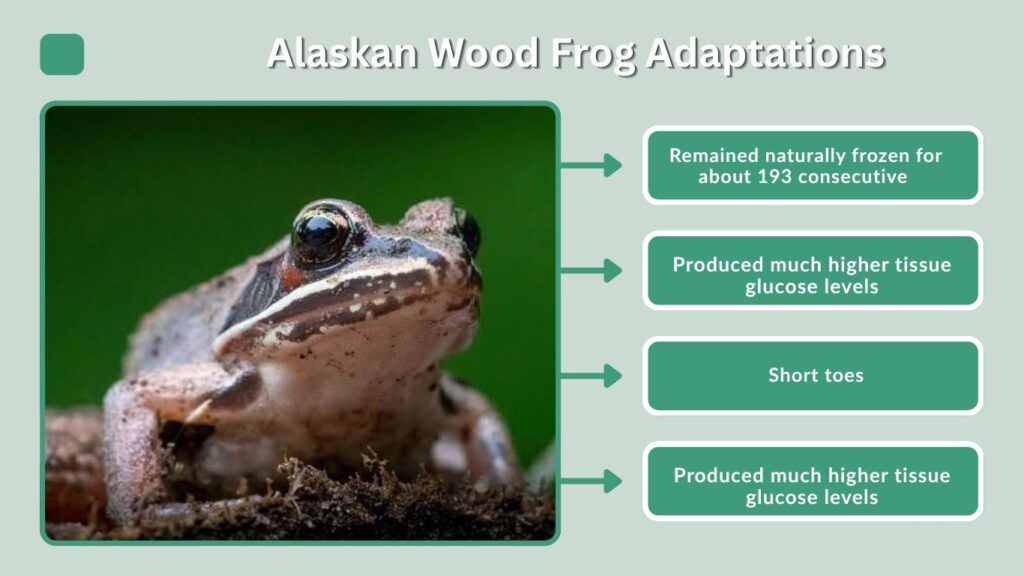
Alaskan wood frog adaptations represent an extreme version of the freeze-tolerance system seen throughout the species. Interior Alaska exposes frogs to much colder temperatures and longer winters than populations in temperate regions experience. Research indicates that northern frogs prepare for winter by producing especially high levels of cryoprotective compounds and altering their energy reserves.
Extreme Freeze Tolerance
Studies of wild Alaskan wood frogs found that they:
- Remained naturally frozen for about 193 consecutive days in one study
- Experienced hibernation sites with very low winter temperatures
- Produced much higher tissue glucose levels than laboratory-frozen frogs
- Accumulated substantial amounts of urea before winter
- Produced much higher tissue glucose levels
- Showed antifreeze glycolipids in several internal tissues
Researchers documented 100% spring survival among 18 naturally overwintering frogs monitored in one Interior Alaska study.
Why Alaskan Frogs Are More Cold-Tolerant
Northern wood frogs appear to strengthen their cryoprotectant system before and during winter.
One study found Alaskan frogs capable of surviving experimental freezing down to about −16°C, substantially colder than the limits reported for some southern populations. Their bodies store more glycogen and accumulate higher concentrations of urea and other protective solutes.
Repeated natural freeze-thaw cycles may further increase glucose production, providing additional protection as winter progresses.
Behavioral Adaptations of Wood Frogs
Wood frog survival also depends on behavior. They select suitable overwintering locations, move toward breeding ponds early in spring, and use seasonal habitats differently throughout the year. These wood frog behavioral adaptations complement their physiological abilities and help them survive both winter cold and the short breeding season.
Overwintering Behavior
Before winter, wood frogs seek protected locations beneath fallen leaves and other organic material on the forest floor.
Leaf litter does not completely prevent freezing, but it can moderate rapid temperature changes and provide a suitable hibernation microhabitat. Wood frogs can therefore overwinter relatively close to the surface rather than requiring deep aquatic hibernation sites.
Early Spring Breeding
Wood frogs are among the earliest frogs to become active after winter.
Adults migrate to temporary or seasonal pools, where males call and breeding can occur quickly. Using temporary ponds can reduce exposure to certain fish predators, although the pools may eventually dry.
In Alaska, rapid development is particularly valuable because tadpoles must complete metamorphosis before cold weather returns and seasonal water bodies freeze.
Physical and Structural Adaptations of Wood Frogs
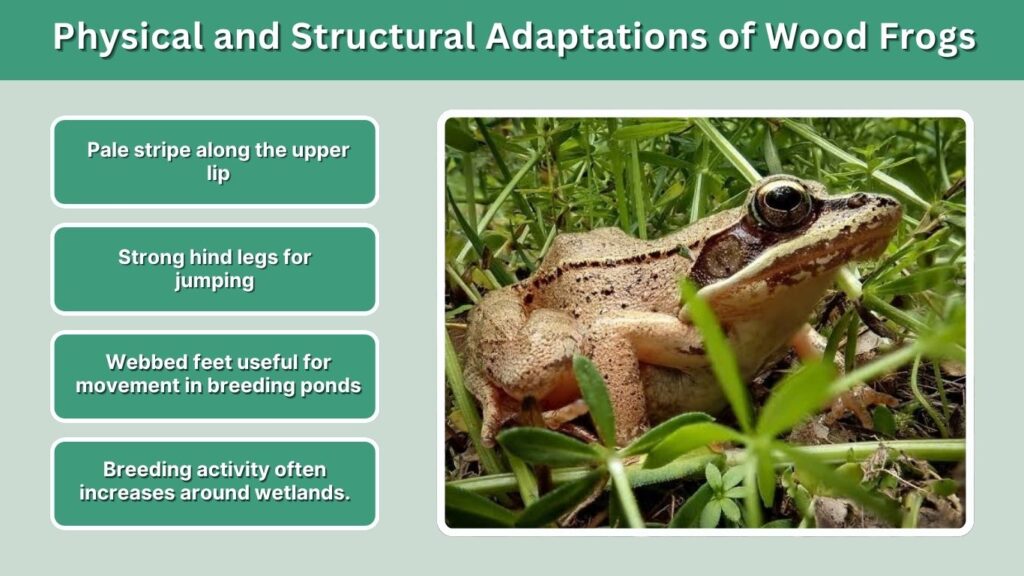
Not every wood frog adaptation is related directly to freezing. Their physical appearance also helps them survive on the forest floor. Wood frogs are usually brown, tan, reddish-brown, or grayish, giving them effective camouflage among leaves, soil, bark, and decaying vegetation.
Camouflage and Body Structure
Useful physical features include:
- Brown or reddish coloration resembling dead leaves
- Dark mask-like marking extending through each eye
- Pale stripe along the upper lip
- Strong hind legs for jumping
- Webbed feet useful for movement in breeding ponds
- Body size suitable for moving through forest-floor vegetation
Their dark eye mask is one of the easiest characteristics to use when identifying a wood frog.
Camouflage in Forest Habitats
Wood frogs spend much of their lives away from permanent water. Their earthy colors help them blend into leaves and woodland debris.
Remaining visually inconspicuous can reduce detection by predators while the frog searches for small invertebrates or rests on the ground. This structural adaptation works together with behavior, since remaining still can make a camouflaged frog particularly difficult to notice.
How Do Wood Frogs Adapt to Their Environment?
Wood frogs succeed because they combine several types of adaptation rather than relying on one remarkable trait. Camouflage supports life on the forest floor, seasonal movements allow reproduction in temporary pools, and physiological changes allow survival through freezing winters. In northern populations, these systems have become especially powerful, helping wood frogs occupy environments unsuitable for many amphibians.
Adaptation Through Natural Selection
Freeze tolerance did not appear because individual frogs deliberately changed their bodies.
Across generations, frogs with inherited traits that improved survival in cold environments were more likely to reproduce. Natural selection therefore favored mechanisms involving cryoprotectants, energy storage, cold tolerance, and appropriate seasonal behavior.
Regional differences also show that wood frog populations are not identical. Northern populations have developed substantially greater freeze tolerance than populations living in milder climates.
FAQs
Wood frogs are particularly interesting because their adaptations involve behavior, anatomy, and complex biochemical processes. Their ability to survive freezing attracts the most attention, but camouflage, breeding behavior, rapid development, and seasonal energy storage are also important parts of their survival strategy.
1. What Is the Main Adaptation of a Wood Frog?
Its most famous adaptation is freeze tolerance. Wood frogs can survive substantial body freezing by using biochemical defenses including glucose and urea that protect tissues during freezing and thawing.
2. What Are the Behavioral Adaptations of Wood Frogs?
Wood frogs shelter beneath forest-floor material during winter and migrate to temporary breeding pools early in spring. Northern tadpoles also develop rapidly enough to complete metamorphosis during relatively short warm seasons.
3. What Are the Physical Adaptations of a Wood Frog?
Brown or reddish coloration provides camouflage among leaf litter, while the characteristic dark eye mask helps break up its appearance. Strong hind legs also support quick movement across the forest floor and through aquatic breeding habitats.
4. How Do Alaskan Wood Frogs Survive Winter?
Alaskan wood frogs accumulate unusually large amounts of cryoprotective substances such as glucose and urea. Some studied frogs remained naturally frozen for approximately six months and survived extremely cold hibernation conditions.
5. Why Doesn’t a Frozen Wood Frog Die?
Its cells are protected by specialized biochemical and physiological responses. Glucose and urea help limit freezing-related cellular damage, while the frog can tolerate dehydration and low-oxygen conditions associated with freezing. Once temperatures rise, normal physiological functions gradually resume.
