
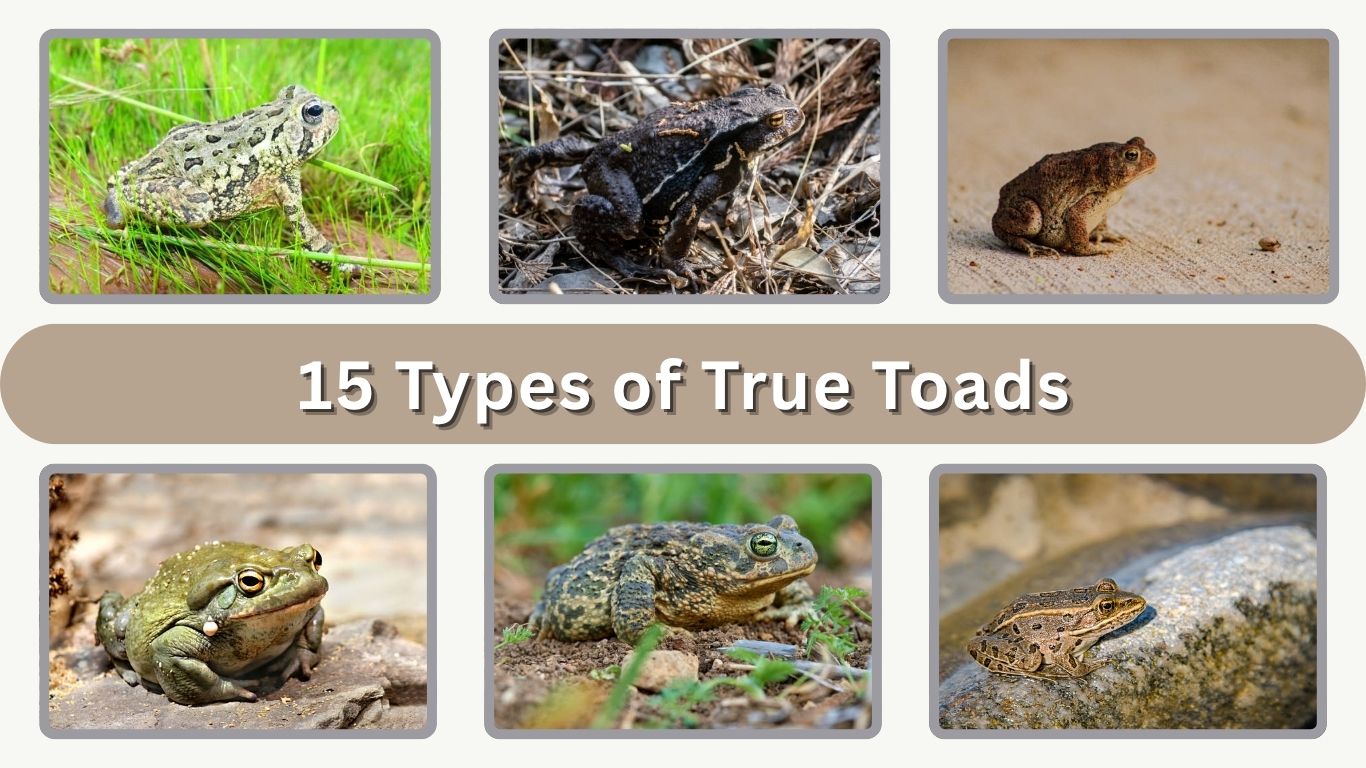
True toads are fascinating amphibians known for their dry, warty skin, strong bodies, and remarkable adaptability. They are found across forests, grasslands, deserts, wetlands, and even urban environments around the world. Unlike many frogs, true toads spend much of their lives on land and often become active during the night. These amphibians play an important role in controlling insect populations and maintaining ecosystem balance. From the tiny Oak Toad to the massive Cane Toad, each species has unique features, habitats, and behaviors that make true toads incredibly diverse and interesting.
1. American Toad

The American Toad is one of the most well-known true toads in North America. It is recognized for its rough skin, short legs, and excellent ability to adapt to different environments. This species is commonly found in forests, gardens, fields, and areas near freshwater sources.
Identification
- Medium-sized toad with a stout body
- Dry, bumpy, and warty skin texture
- Color varies from brown and gray to olive shades
- Dark spots usually contain one or two warts
- Large parotoid glands located behind the eyes
- Belly is typically lighter with scattered dark speckles
- Adults generally grow between 5 and 9 cm in length
Habitat and Distribution
The American Toad is widely distributed across the United States and Canada. It commonly inhabits forests, grasslands, gardens, farmlands, and suburban areas. This species prefers moist environments but can survive in a variety of habitats as long as shelter and water sources are available nearby.
Behavior and Diet
This toad is mainly nocturnal and becomes active during the evening. It spends much of the day hiding under logs, rocks, or leaf litter to avoid dehydration. The American Toad feeds on insects, worms, spiders, slugs, and other small invertebrates. It captures prey quickly using its sticky tongue.
Lifecycle
Breeding usually takes place during spring and early summer in shallow freshwater ponds and wetlands. Females lay long strings of eggs in water, which hatch into tadpoles within several days. Tadpoles gradually transform into tiny toads after several weeks before growing into mature adults.
2. Cane Toad

The Cane Toad is a large and highly adaptable true toad species originally native to Central and South America. It is widely recognized for its powerful body, toxic skin secretions, and ability to survive in many different environments around the world.
Identification
- Large and heavy-bodied toad species
- Dry, rough, and warty skin texture
- Color commonly ranges from brown to olive-green
- Broad head with a wide mouth
- Very large parotoid glands behind the eyes
- Strong legs designed for short hopping movements
- Belly is usually pale with darker mottling
- Adults can grow between 10 and 24 cm in length
Habitat and Distribution
The Cane Toad is found in Central and South America and has also been introduced to regions such as Australia, the Caribbean, and parts of Asia. It commonly inhabits forests, grasslands, farmlands, urban areas, and wetlands. This species adapts well to human-modified environments and often lives near gardens and roadsides.
Behavior and Diet
This toad is mainly nocturnal and becomes active after sunset. It feeds on insects, snails, worms, spiders, and even small vertebrates. Cane Toads are opportunistic feeders and will consume almost anything they can swallow. Their toxic skin secretions help protect them from predators.
Lifecycle
Breeding usually occurs during warm and rainy seasons near ponds, lakes, and slow-moving water bodies. Females lay thousands of eggs in long jelly-like strings. Tadpoles hatch quickly and develop in water before transforming into young toads. The species grows rapidly and can reproduce in large numbers under favorable conditions.
3. Common Toad

The Common Toad is a widespread true toad species found across Europe and parts of Asia. It is known for its sturdy body, rough skin, and slow-moving nature. This species is highly adaptable and can survive in forests, grasslands, gardens, and wetlands.
Identification
- Medium to large-sized toad with a broad body
- Dry, rough, and heavily warty skin
- Color usually ranges from brown and gray to olive-green
- Short legs with slow hopping movement
- Copper or orange-colored eyes with horizontal pupils
- Large parotoid glands behind the eyes
- Belly is pale with darker markings
- Adults generally grow between 8 and 13 cm in length
Habitat and Distribution
The Common Toad is widely distributed throughout Europe and parts of western Asia. It inhabits woodlands, grasslands, wetlands, gardens, and farmland areas. This species prefers damp environments with access to ponds or slow-moving water for breeding purposes.
Behavior and Diet
This toad is mainly nocturnal and hides under rocks, logs, or dense vegetation during the daytime. It feeds on insects, slugs, worms, spiders, and other small invertebrates. The Common Toad moves slowly but can defend itself by inflating its body and releasing mild toxins from its skin glands.
Lifecycle
Breeding typically occurs during spring when adults migrate to ponds and wetlands. Females lay long strings of eggs in shallow water. Tadpoles hatch and develop in aquatic environments before transforming into small toads after several weeks. Young toads gradually mature and return to land habitats.
4. Asian Common Toad

The Asian Common Toad is a widespread true toad species commonly found throughout South and Southeast Asia. It is known for its rough skin, strong adaptability, and ability to survive in both natural and urban environments. This species is frequently seen near human settlements and freshwater habitats.
Identification
- Medium-sized toad with a stout body structure
- Dry and heavily warty skin texture
- Color ranges from brown and gray to reddish-brown
- Prominent ridges present on the head
- Large parotoid glands behind the eyes
- Strong limbs adapted for hopping and walking
- Belly is lighter with darker speckled markings
- Adults generally grow between 6 and 15 cm in length
Habitat and Distribution
The Asian Common Toad is widely distributed across countries such as India, Bangladesh, Thailand, Malaysia, Indonesia, and surrounding regions. It inhabits forests, grasslands, agricultural fields, gardens, villages, and urban areas. This species prefers moist habitats but can tolerate a wide variety of environmental conditions.
Behavior and Diet
This toad is mostly nocturnal and becomes active during the evening and nighttime hours. It feeds on insects, termites, ants, beetles, worms, and other small invertebrates. The Asian Common Toad is highly adaptable and often hunts near lights where insects gather. Its skin secretions help protect it from predators.
Lifecycle
Breeding usually occurs during rainy seasons when ponds and temporary pools form. Females lay long strings of eggs in shallow water bodies. Tadpoles hatch and continue their development in water before transforming into young toads. The species grows relatively quickly and can thrive in many different environments.
5. Great Plains Toad

The Great Plains Toad is a large and distinctive true toad species native to central North America. It is recognized for its bold markings, loud breeding calls, and ability to survive in dry grassland environments. This species becomes especially active after rainfall during warm seasons.
Identification
- Medium to large-sized toad with a broad body
- Dry skin covered with noticeable warts
- Gray, brown, or olive coloration with dark blotches
- Distinct pale stripe running down the center of the back
- Large parotoid glands behind the eyes
- Strong hind legs adapted for burrowing and hopping
- Belly is usually pale with minimal spotting
- Adults typically grow between 5 and 11 cm in length
Habitat and Distribution
The Great Plains Toad is found across central regions of North America, including the United States, Canada, and northern Mexico. It commonly inhabits prairies, grasslands, open plains, deserts, and agricultural areas. This species prefers loose soil where it can burrow to escape heat and dry conditions.
Behavior and Diet
This toad is mostly nocturnal and often emerges after rainstorms. It feeds on insects, beetles, ants, grasshoppers, spiders, and other small invertebrates. The Great Plains Toad is an opportunistic hunter and uses its sticky tongue to capture prey quickly. During dry periods, it may remain buried underground for long periods.
Lifecycle
Breeding usually occurs after heavy rains when temporary pools and shallow wetlands form. Males gather near water and produce loud calls to attract females. Females lay long strings of eggs in shallow water, where tadpoles hatch and develop rapidly before transforming into young toads.
6. Wyoming Toad

The Wyoming Toad is a rare and critically endangered true toad species native to the United States. It is best known for its limited natural range and ongoing conservation efforts aimed at protecting the species from extinction. This toad prefers moist grasslands and wetland habitats.
Identification
- Medium-sized toad with a short and stout body
- Dry skin covered with small rounded warts
- Color typically ranges from brown and gray to olive-green
- Dark blotches scattered across the back
- Belly is lighter with subtle speckling
- Prominent parotoid glands behind the eyes
- Short legs adapted for walking and short hops
- Adults usually grow between 5 and 6 cm in length
Habitat and Distribution
The Wyoming Toad is native to the Laramie Basin region of Wyoming in the United States. It inhabits floodplains, wet meadows, marshes, ponds, and grasslands near shallow freshwater areas. Due to habitat loss and disease, its wild population has become extremely limited.
Behavior and Diet
This species is mainly nocturnal and remains hidden during the daytime beneath vegetation, rocks, or loose soil. It feeds on insects, ants, beetles, spiders, and other small invertebrates. The Wyoming Toad is generally slow-moving and relies on camouflage and toxic skin secretions for protection from predators.
Lifecycle
Breeding occurs during late spring and early summer in shallow ponds and wetlands. Females lay long strings of eggs in water, where tadpoles hatch and continue their development. After several weeks, tadpoles transform into young toads and begin life on land. Conservation breeding programs have played an important role in supporting the species’ survival.
7. Oak Toad

The Oak Toad is the smallest true toad species in North America. It is recognized for its tiny size, light-colored stripe, and high-pitched calls. This species is commonly found in sandy habitats and open woodlands in the southeastern United States.
Identification
- Very small toad with a compact body
- Dry skin covered with small warts
- Gray, brown, or black coloration
- Distinct pale stripe running down the center of the back
- Short legs suited for hopping short distances
- Belly is lighter in color with little or no spotting
- Large parotoid glands behind the eyes
- Adults usually grow between 2 and 3.5 cm in length
Habitat and Distribution
The Oak Toad is mainly found in the southeastern United States. It commonly inhabits pine forests, sandy woodlands, grasslands, savannas, and wetlands. This species prefers warm environments with loose soil and shallow water sources nearby for breeding.
Behavior and Diet
This toad is mostly active during the evening and nighttime hours. It feeds on ants, beetles, spiders, termites, and other small insects. The Oak Toad is known for its rapid movements and distinctive high-pitched breeding calls that sound similar to insect chirping.
Lifecycle
Breeding usually occurs during warm rainy seasons in shallow ponds, ditches, and temporary pools. Females lay strings of eggs in water, where tadpoles hatch and develop quickly. Tadpoles transform into tiny toads within a relatively short period before moving onto land habitats.
8. Red-spotted Toad

The Red-spotted Toad is a small and hardy true toad species commonly found in arid regions of North America. It is recognized for its reddish-orange spots, smooth movements, and ability to survive in desert environments with limited water sources.
Identification
- Small to medium-sized toad with a slender body
- Light gray, olive, or greenish skin coloration
- Distinct reddish or orange spots scattered across the back
- Skin appears less warty than many other true toads
- Large parotoid glands behind the eyes
- Belly is pale and usually unmarked
- Long legs adapted for active hopping
- Adults generally grow between 4 and 7.5 cm in length
Habitat and Distribution
The Red-spotted Toad is found in the southwestern United States and northern Mexico. It commonly inhabits deserts, rocky canyons, grasslands, riverbanks, and semi-arid regions. This species is strongly associated with areas near streams, springs, and temporary pools in dry landscapes.
Behavior and Diet
This toad is mostly nocturnal and becomes active during cooler nighttime temperatures. It feeds on ants, beetles, spiders, termites, and other small invertebrates. The Red-spotted Toad is an agile hunter and often remains close to rocky shelters during the daytime to avoid heat and dehydration.
Lifecycle
Breeding usually occurs after seasonal rains when temporary pools and slow-moving water sources become available. Females lay eggs in shallow water, where tadpoles hatch and develop rapidly. Young toads emerge after metamorphosis and gradually adapt to dry terrestrial habitats.
9. Yosemite Toad

The Yosemite Toad is a rare true toad species native to the mountainous regions of California in the United States. It is well known for its association with high-elevation meadows and wetlands within the Sierra Nevada range. This species is considered vulnerable due to habitat decline and environmental changes.
Identification
- Medium-sized toad with a rounded body
- Dry skin covered with small warts
- Color ranges from olive, brown, and gray to greenish shades
- Males often display brighter yellow or green coloration during breeding season
- Females usually have darker blotches and spots
- Large parotoid glands located behind the eyes
- Belly is lighter with varying dark markings
- Adults generally grow between 4 and 7.5 cm in length
Habitat and Distribution
The Yosemite Toad is found mainly in the Sierra Nevada mountains of California. It inhabits alpine meadows, wetlands, streamsides, and shallow ponds at high elevations. This species depends heavily on moist mountain environments and clean freshwater habitats for breeding and survival.
Behavior and Diet
This toad is mostly active during warmer months because mountain habitats remain cold for much of the year. It feeds on insects, ants, beetles, spiders, and other small invertebrates found in meadow ecosystems. During colder seasons, the Yosemite Toad hibernates underground to survive freezing temperatures.
Lifecycle
Breeding occurs in spring and early summer after snowmelt fills shallow wetlands and ponds. Females lay eggs in calm water, where tadpoles hatch and continue aquatic development. Tadpoles later transform into young toads before moving into nearby meadow habitats. Growth and development may be slower due to cooler mountain temperatures.
10. Natterjack Toad

The Natterjack Toad is a distinctive true toad species native to parts of Europe. It is known for its loud nighttime calls, fast movement, and characteristic yellow stripe running along its back. This species commonly inhabits sandy and coastal environments.
Identification
- Medium-sized toad with a relatively flat body
- Dry skin covered with small warts
- Brown, gray, or olive coloration with darker patches
- Bright yellow stripe running down the center of the back
- Short limbs but capable of quick running movements
- Prominent parotoid glands behind the eyes
- Belly is pale with small dark markings
- Adults usually grow between 6 and 8 cm in length
Habitat and Distribution
The Natterjack Toad is found in parts of western and northern Europe. It commonly inhabits sandy heathlands, coastal dunes, grasslands, marshes, and shallow wetland areas. This species prefers open habitats with loose soil where it can burrow and hide during the day.
Behavior and Diet
This toad is mainly nocturnal and becomes active during warm evenings. Unlike many toads that hop, the Natterjack Toad often runs quickly across the ground. It feeds on insects, spiders, beetles, ants, and other small invertebrates. Males produce extremely loud calls during breeding periods to attract females.
Lifecycle
Breeding usually occurs during spring and early summer in shallow ponds and temporary pools. Females lay long strings of eggs in calm water. Tadpoles hatch and develop rapidly before transforming into young toads. The species depends heavily on seasonal wetlands for successful reproduction.
11. Green Toad

The Green Toad is a colorful and adaptable true toad species found across Europe, Asia, and parts of North Africa. It is well known for its bright green blotches, dry warty skin, and ability to survive in both natural and urban environments.
Identification
- Medium-sized toad with a stout body
- Light gray, cream, or whitish background coloration
- Distinct bright green patches across the back and sides
- Dry skin covered with noticeable warts
- Large golden or copper-colored eyes
- Prominent parotoid glands behind the eyes
- Belly is pale with fewer markings
- Adults generally grow between 6 and 10 cm in length
Habitat and Distribution
The Green Toad is widely distributed throughout Europe, Central Asia, the Middle East, and parts of North Africa. It inhabits grasslands, deserts, wetlands, farmland areas, urban parks, and gardens. This species is highly adaptable and can tolerate dry and disturbed habitats better than many other toads.
Behavior and Diet
This toad is mainly nocturnal and becomes active after sunset. It feeds on insects, beetles, ants, spiders, worms, and other small invertebrates. The Green Toad is an active hunter and often moves across open ground while searching for prey. During hot or dry conditions, it may hide underground to conserve moisture.
Lifecycle
Breeding usually takes place during spring and early summer in shallow ponds, marshes, and temporary pools. Females lay long strings of eggs in calm water. Tadpoles hatch and develop in aquatic habitats before transforming into young toads. The species can reproduce successfully in a wide range of environmental conditions.
12. Colorado River Toad

The Colorado River Toad is one of the largest true toad species in North America. It is known for its powerful body, smooth movements, and toxic skin secretions used for defense. This species is commonly associated with desert regions and areas near permanent water sources.
Identification
- Very large toad with a heavy and broad body
- Smooth to slightly warty skin texture
- Olive-green, dark brown, or gray coloration
- Large head with noticeable ridges above the eyes
- Extremely large parotoid glands behind the eyes
- Strong limbs adapted for walking and short hops
- Belly is pale with little spotting
- Adults typically grow between 11 and 19 cm in length
Habitat and Distribution
The Colorado River Toad is found in the southwestern United States and northern Mexico. It commonly inhabits deserts, scrublands, river valleys, grasslands, and areas near streams or irrigation canals. This species prefers habitats with access to water, especially during breeding seasons.
Behavior and Diet
This toad is mostly nocturnal and becomes active during warm nights, especially after rainfall. It feeds on insects, beetles, spiders, small rodents, and other amphibians. The Colorado River Toad relies on toxic skin secretions to protect itself from predators and spends much of the daytime hidden underground or beneath rocks.
Lifecycle
Breeding usually occurs during summer rainy seasons in ponds, slow-moving streams, and temporary pools. Females lay long strings of eggs in shallow water. Tadpoles hatch and develop rapidly before transforming into young toads. Juveniles gradually move into surrounding terrestrial habitats as they mature.
13. Houston Toad

The Houston Toad is a rare and endangered true toad species native to Texas in the United States. It is known for its rough skin, secretive behavior, and dependence on sandy woodland habitats. Conservation programs have become important for protecting this declining species.
Identification
- Medium-sized toad with a stout body
- Dry skin covered with small dark warts
- Brown, gray, or olive coloration with darker blotches
- Light stripe sometimes visible along the back
- Large parotoid glands behind the eyes
- Strong legs adapted for short hopping and burrowing
- Belly is pale with fine speckling
- Adults generally grow between 5 and 9 cm in length
Habitat and Distribution
The Houston Toad is found mainly in southeastern Texas. It inhabits sandy pine forests, oak woodlands, grasslands, and areas near ponds and temporary wetlands. This species requires loose soil for burrowing and shallow freshwater habitats for breeding.
Behavior and Diet
This toad is mostly nocturnal and spends much of the daytime hidden underground or beneath vegetation. It feeds on insects, ants, beetles, spiders, and other small invertebrates. During breeding season, males produce loud calls near ponds to attract females after heavy rainfall.
Lifecycle
Breeding usually occurs during spring in shallow ponds and rain-filled pools. Females lay long strings of eggs in calm water, where tadpoles hatch and develop. After several weeks, tadpoles transform into tiny toads and begin life on land. Habitat loss and drought have greatly affected the survival of this species.
14. Fowler’s Toad

Fowler’s Toad is a common true toad species found in eastern regions of North America. It is recognized for its rough skin, excellent camouflage, and adaptability to many different environments. This species is frequently seen near sandy soils, grasslands, and freshwater habitats.
Identification
- Medium-sized toad with a stout and rounded body
- Dry skin covered with numerous warts
- Gray, brown, or olive coloration with darker spots
- Dark spots usually contain three or more warts
- Pale belly that is mostly unspotted
- Prominent parotoid glands behind the eyes
- Short legs adapted for hopping and burrowing
- Adults generally grow between 5 and 9.5 cm in length
Habitat and Distribution
Fowler’s Toad is widely distributed across eastern North America. It commonly inhabits forests, grasslands, riverbanks, sand dunes, gardens, and agricultural fields. This species often prefers sandy or loose soils where it can easily burrow for shelter and protection.
Behavior and Diet
This toad is mainly nocturnal and becomes active during warm evenings. It feeds on insects, ants, beetles, spiders, worms, and other small invertebrates. Fowler’s Toad often hides beneath rocks, logs, or loose soil during the daytime to avoid predators and dehydration.
Lifecycle
Breeding usually occurs during late spring and summer near ponds, marshes, and shallow wetlands. Females lay long strings of eggs in water, where tadpoles hatch and develop. After several weeks, tadpoles transform into young toads and gradually move onto land habitats to mature.
15. Western Toad

The Western Toad is a large and adaptable true toad species native to western North America. It is known for its rough skin, pale back stripe, and ability to survive in forests, mountains, grasslands, and wetland habitats. This species is active mainly during cooler nighttime hours.
Identification
- Medium to large-sized toad with a broad body
- Dry skin covered with noticeable warts
- Brown, gray, olive, or greenish coloration
- Distinct pale stripe running down the center of the back
- Large parotoid glands behind the eyes
- Short legs adapted for walking and hopping
- Belly is pale with darker mottling
- Adults generally grow between 5 and 13 cm in length
Habitat and Distribution
The Western Toad is found across western regions of North America, including Canada, the United States, and parts of Mexico. It inhabits forests, meadows, grasslands, marshes, streamsides, and mountain wetlands. This species prefers moist environments but can also tolerate drier habitats near reliable water sources.
Behavior and Diet
This toad is mainly nocturnal and spends much of the daytime hidden beneath logs, rocks, or loose soil. It feeds on insects, ants, beetles, spiders, worms, and other small invertebrates. The Western Toad uses camouflage and mild toxic skin secretions to defend itself from predators.
Lifecycle
Breeding usually occurs during spring and early summer in ponds, lakes, marshes, and slow-moving streams. Females lay long strings of eggs in shallow water. Tadpoles hatch and develop in aquatic habitats before transforming into young toads several weeks later. Juveniles gradually move onto land and mature over time.
FAQs
What is a true toad?
True toads belong to the family Bufonidae, which includes hundreds of toad species found around the world. They are known for their dry, warty skin, stout bodies, and large poison glands behind the eyes called parotoid glands.
What do true toads eat?
True toads mainly feed on insects and other small invertebrates. Their diet commonly includes ants, beetles, worms, spiders, slugs, and flies. Larger species may also eat tiny vertebrates such as small frogs or rodents.
Are true toads poisonous?
Many true toads produce mild toxins through their skin glands as a defense against predators. These toxins are usually not dangerous to humans but can irritate the mouth or eyes of animals that try to attack them.
Where do true toads live?
True toads are found on nearly every continent except Antarctica. They live in forests, grasslands, deserts, wetlands, gardens, and urban areas. Most species prefer habitats with access to freshwater for breeding purposes.
How do true toads reproduce?
True toads reproduce by laying eggs in water during breeding seasons. Females usually lay long jelly-like strings of eggs in ponds, marshes, or temporary pools. Tadpoles hatch from the eggs and later transform into young toads through metamorphosis.
