
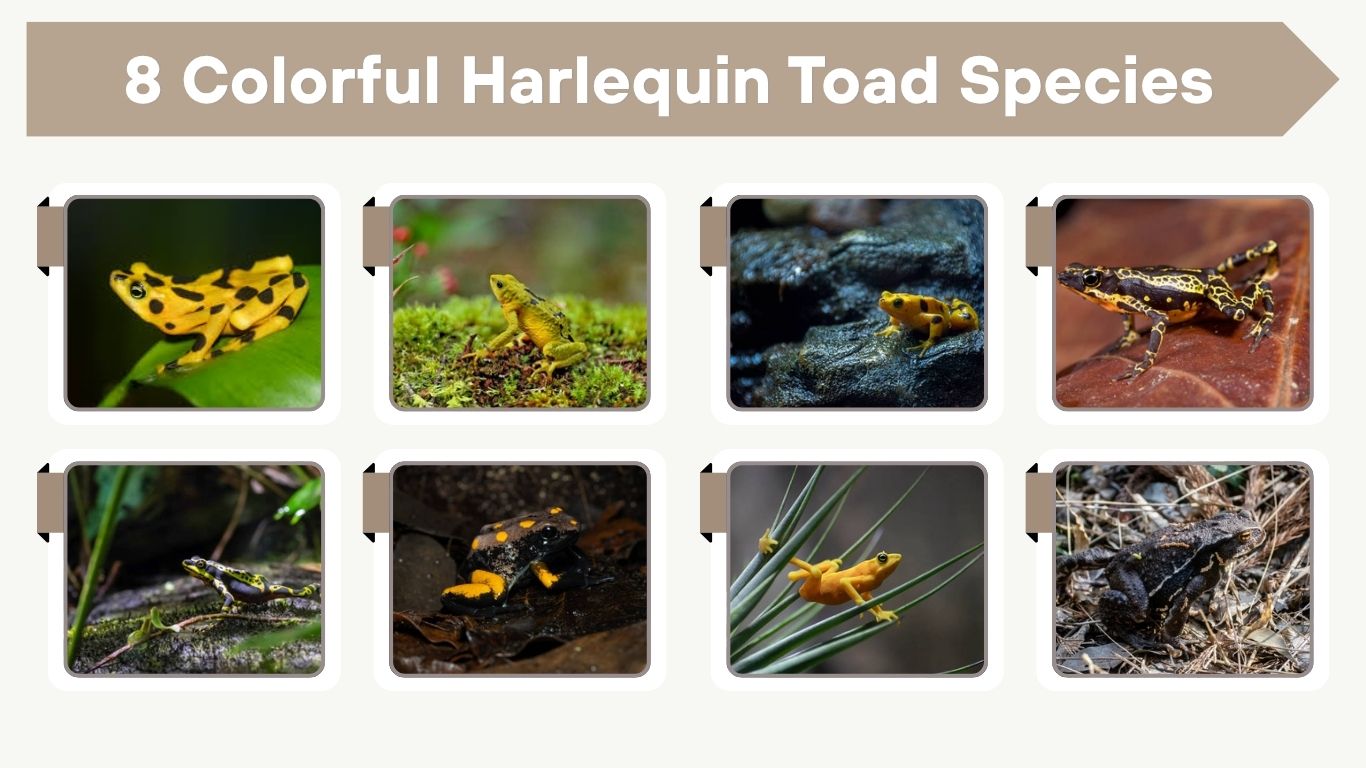
Harlequin toads are colorful amphibians belonging to the genus Atelopus, found mainly in Central and South America. These fascinating toads are known for their bright patterns, slender bodies, and close association with fast-flowing forest streams. Many species inhabit tropical rainforests, cloud forests, and mountain valleys where humidity and clean freshwater are abundant. Harlequin toads are mostly active during the daytime and feed on small insects and other tiny invertebrates. Sadly, many species are critically endangered because of habitat destruction, pollution, climate change, and deadly fungal diseases that continue to threaten wild populations.
1. Atelopus zeteki

Atelopus zeteki, commonly known as the Panamanian Golden Frog, is one of the most famous harlequin toad species in the world. It is admired for its bright yellow coloration and cultural importance in Panama. This species is critically endangered and is rarely seen in the wild today.
Identification
- Small to medium-sized harlequin toad
- Bright yellow or golden body coloration
- Some individuals display black spots or markings
- Smooth skin with a slightly glossy appearance
- Slender limbs adapted for walking and climbing over rocks
- Long fingers and toes with reduced webbing
- Adults generally grow between 3.5 and 6 cm in length
Habitat and Distribution
The Panamanian Golden Frog is native to the mountainous regions of central Panama. It inhabits tropical forests, fast-flowing streams, and humid river valleys. This species prefers cool and moist environments with clean freshwater sources and rocky stream habitats.
Behavior and Diet
This harlequin toad is mainly active during the daytime, unlike many other amphibians. It feeds on ants, small beetles, flies, and other tiny invertebrates found near streams and forest floors. The species is also known for using visual signals such as waving its limbs to communicate in noisy stream environments.
Lifecycle
Breeding usually takes place near fast-flowing streams during wet seasons. Females lay eggs in water, where tadpoles hatch and attach themselves to rocks in moving currents. Tadpoles gradually develop before transforming into small toads. Disease and habitat loss have greatly affected the survival of this species in the wild.
2. Atelopus varius

Atelopus varius, commonly known as the Variable Harlequin Toad, is a colorful and highly endangered amphibian species native to Central America. It is known for its striking body patterns and close association with fast-flowing mountain streams in tropical forests.
Identification
- Small to medium-sized harlequin toad
- Bright coloration with patterns of black, yellow, orange, green, or red
- Smooth skin with a slightly shiny texture
- Slender body with long limbs
- Thin fingers and toes with minimal webbing
- Large eyes positioned prominently on the head
- Adults usually grow between 3 and 5 cm in length
Habitat and Distribution
The Variable Harlequin Toad is found mainly in Costa Rica and western Panama. It inhabits humid tropical forests, cloud forests, and rocky stream environments at moderate to high elevations. This species depends heavily on clean freshwater streams and dense vegetation for survival.
Behavior and Diet
This species is primarily active during the daytime and is often seen moving along rocks near streams. It feeds on ants, flies, beetles, termites, and other small invertebrates. The Variable Harlequin Toad is agile and uses both visual displays and body movements to communicate in noisy stream habitats.
Lifecycle
Breeding usually occurs during rainy seasons near fast-flowing streams. Females lay eggs in freshwater, where tadpoles develop while attached to submerged rocks in strong currents. After metamorphosis, young toads move into nearby forest habitats. Habitat destruction and fungal disease have caused major declines in wild populations.
3. Atelopus spumarius

Atelopus spumarius, commonly known as the Amazonian Harlequin Toad, is a small and brightly colored harlequin toad species native to the Amazon rainforest. It is recognized for its vivid patterns and close connection to humid tropical environments near streams and forest floors.
Identification
- Small harlequin toad with a slender body
- Bright coloration ranging from yellow and orange to green and black
- Distinct dark markings or spots across the body
- Smooth skin with a glossy appearance
- Long limbs adapted for movement on wet surfaces
- Thin fingers and toes with reduced webbing
- Adults generally grow between 2.5 and 4 cm in length
Habitat and Distribution
The Amazonian Harlequin Toad is found in the Amazon Basin across parts of northern South America. It inhabits tropical rainforests, stream edges, moist leaf litter, and humid lowland forest habitats. This species prefers warm environments with high humidity and clean freshwater sources nearby.
Behavior and Diet
This toad is mostly active during the daytime and is often seen near streams or damp forest areas. It feeds on ants, termites, tiny beetles, flies, and other small invertebrates. The Amazonian Harlequin Toad relies on camouflage, quick movement, and warning coloration to avoid predators.
Lifecycle
Breeding usually occurs during rainy seasons near forest streams and shallow freshwater habitats. Females lay eggs in water, where tadpoles hatch and continue developing in aquatic environments. After metamorphosis, young toads move into nearby rainforest habitats and gradually mature into adults.
4. Atelopus ignescens

Atelopus ignescens, commonly known as the Jambato Toad, is a rare harlequin toad species once commonly found in the Andean regions of Ecuador. It became famous after disappearing for many years before being rediscovered in small populations. This species is known for its dark coloration and high-altitude habitat.
Identification
- Medium-sized harlequin toad with a slender body
- Mostly black or dark brown body coloration
- Bright orange or reddish underside in some individuals
- Smooth skin with a slightly matte texture
- Long and thin limbs adapted for rocky environments
- Narrow fingers and toes with limited webbing
- Adults generally grow between 3 and 5 cm in length
Habitat and Distribution
The Jambato Toad is native to the Andes Mountains of Ecuador. It inhabits high-altitude grasslands, cloud forests, stream edges, and moist mountain valleys. This species prefers cool temperatures and humid environments near clean freshwater streams.
Behavior and Diet
This species is mainly active during the daytime and often stays close to rocky stream habitats. It feeds on ants, flies, beetles, and other tiny invertebrates found in mountain ecosystems. The Jambato Toad is generally secretive and relies on camouflage and quick movements for protection.
Lifecycle
Breeding usually occurs near mountain streams during wet seasons. Females lay eggs in freshwater habitats, where tadpoles develop in cool flowing water. After metamorphosis, young toads move into nearby terrestrial habitats. Habitat loss and fungal disease have severely reduced wild populations of this species.
5. Atelopus balios

Atelopus balios, commonly known as the Pacific Harlequin Toad, is a critically endangered harlequin toad species native to Ecuador. It is recognized for its striking black-and-yellow coloration and strong association with tropical forest streams in western South America.
Identification
- Small to medium-sized harlequin toad
- Black body with bright yellow or cream markings
- Smooth skin with a slightly glossy texture
- Slender body and long limbs
- Thin fingers and toes with reduced webbing
- Large eyes positioned prominently on the head
- Adults generally grow between 3 and 5 cm in length
Habitat and Distribution
The Pacific Harlequin Toad is found in western Ecuador near the Pacific slope of the Andes. It inhabits tropical forests, humid valleys, and fast-flowing stream environments. This species prefers moist habitats with dense vegetation and clean freshwater systems.
Behavior and Diet
This species is mainly active during the daytime and is commonly seen near rocky stream banks. It feeds on ants, flies, beetles, termites, and other small invertebrates. The Pacific Harlequin Toad depends on camouflage and warning coloration to avoid predators in its forest habitat.
Lifecycle
Breeding usually occurs during rainy periods near streams and shallow freshwater habitats. Females lay eggs in flowing water, where tadpoles develop while attached to submerged surfaces. After metamorphosis, young toads move into nearby forest areas. Habitat destruction and disease have caused major declines in this species.
6. Atelopus peruensis

Atelopus peruensis, commonly known as the Peruvian Harlequin Toad, is a rare and colorful harlequin toad species native to the Andes Mountains of Peru. It is known for its bright markings, slender body, and dependence on cool mountain stream habitats.
Identification
- Small to medium-sized harlequin toad
- Dark brown or black body with yellow, orange, or green markings
- Smooth skin with a slightly shiny appearance
- Slender limbs adapted for climbing over wet rocks
- Thin fingers and toes with minimal webbing
- Large prominent eyes positioned on the head
- Adults generally grow between 3 and 5 cm in length
Habitat and Distribution
The Peruvian Harlequin Toad is found in high-altitude regions of Peru within the Andes Mountains. It inhabits cloud forests, mountain grasslands, humid valleys, and rocky stream environments. This species prefers cool temperatures, high humidity, and clean flowing freshwater habitats.
Behavior and Diet
This species is mostly active during the daytime and often remains close to streams and damp forest areas. It feeds on ants, flies, beetles, termites, and other tiny invertebrates. The Peruvian Harlequin Toad relies on camouflage, warning coloration, and quick movement to avoid predators.
Lifecycle
Breeding usually occurs during rainy seasons near mountain streams and freshwater habitats. Females lay eggs in flowing water, where tadpoles hatch and develop while attached to submerged rocks. After metamorphosis, young toads move into nearby forest habitats and gradually mature into adults.
7. Atelopus glyphus

Atelopus glyphus, commonly known as the Pirre Harlequin Toad, is a critically endangered harlequin toad species native to Panama. It is known for its striking coloration and close connection to humid mountain forests and fast-flowing stream habitats.
Identification
- Small to medium-sized harlequin toad
- Dark brown or black body with yellow, orange, or green markings
- Smooth skin with a slightly glossy texture
- Slender body with long limbs
- Thin fingers and toes with limited webbing
- Large eyes positioned prominently on the head
- Adults generally grow between 3 and 5 cm in length
Habitat and Distribution
The Pirre Harlequin Toad is found in eastern Panama, particularly within mountainous rainforest regions. It inhabits cloud forests, humid valleys, and rocky stream environments with abundant vegetation. This species depends heavily on clean freshwater habitats and stable humid conditions.
Behavior and Diet
This species is mainly active during the daytime and is commonly observed near streams and wet rocks. It feeds on ants, flies, termites, beetles, and other tiny invertebrates. The Pirre Harlequin Toad uses camouflage and warning coloration to reduce the risk of predation in dense forest habitats.
Lifecycle
Breeding usually occurs during rainy seasons near fast-flowing mountain streams. Females lay eggs in freshwater habitats, where tadpoles develop while attached to submerged rocks in moving water. After metamorphosis, young toads gradually move into nearby forest habitats. Habitat loss and fungal disease have severely threatened the survival of this species.
8. Atelopus hoogmoedi

Atelopus hoogmoedi, commonly known as Hoogmoed’s Harlequin Toad, is a rare harlequin toad species native to northern South America. It is recognized for its colorful body patterns and preference for humid tropical forest habitats near freshwater streams.
Identification
- Small harlequin toad with a slender body
- Dark brown or black coloration with yellow, orange, or green markings
- Smooth skin with a slightly shiny appearance
- Long limbs adapted for movement on wet surfaces
- Thin fingers and toes with reduced webbing
- Large eyes positioned high on the head
- Adults generally grow between 2.5 and 4.5 cm in length
Habitat and Distribution
Hoogmoed’s Harlequin Toad is found in parts of Suriname, French Guiana, and nearby regions of northern South America. It inhabits tropical rainforests, stream edges, moist forest floors, and rocky freshwater habitats. This species prefers warm temperatures, dense vegetation, and high humidity.
Behavior and Diet
This species is mostly active during the daytime and often stays close to streams and damp rocks. It feeds on ants, termites, flies, beetles, and other tiny invertebrates found in rainforest ecosystems. The toad relies on camouflage and warning coloration to avoid predators in its natural habitat.
Lifecycle
Breeding usually occurs during rainy seasons near clean forest streams. Females lay eggs in freshwater habitats, where tadpoles hatch and develop in flowing water. After metamorphosis, young toads move into nearby rainforest environments and continue growing until adulthood.
FAQs
What are harlequin toads?
Harlequin toads are a group of colorful amphibians belonging to the genus Atelopus. They are mostly found in Central and South America near streams and tropical forests. These toads are known for their bright patterns, slender bodies, and daytime activity.
Why are many harlequin toads endangered?
Many harlequin toad species are critically endangered because of habitat destruction, pollution, climate change, and a deadly fungal disease called chytridiomycosis. These threats have caused severe population declines and even the disappearance of some species from the wild.
What do harlequin toads eat?
Harlequin toads mainly feed on small insects and tiny invertebrates. Their diet commonly includes ants, termites, beetles, flies, and other small arthropods found near streams and forest floors in humid tropical environments.
Where do harlequin toads live?
Harlequin toads are native to Central and South America. They usually inhabit tropical rainforests, cloud forests, mountain streams, and humid valleys. Most species depend on clean freshwater habitats and moist environmental conditions for survival.
How do harlequin toads reproduce?
Harlequin toads reproduce near freshwater streams during rainy seasons. Females lay eggs in flowing water, where tadpoles hatch and develop while attached to submerged rocks. After metamorphosis, young toads move into nearby forest habitats and continue growing into adults.
