
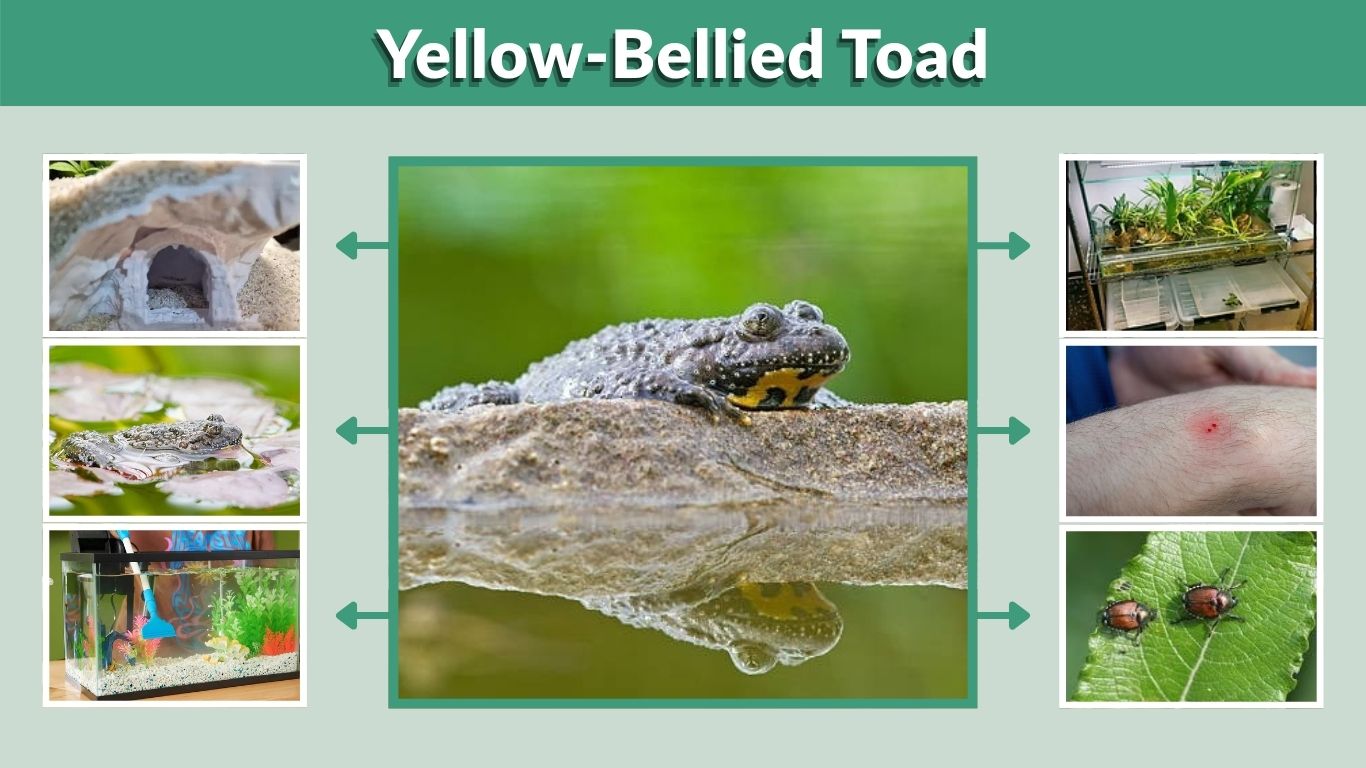
The yellow-bellied toad is a small European amphibian known for its grayish upper body and bright yellow-black belly. Many people search for this species because they want to know if it is poisonous, where it lives, what it eats, and whether it is safe to touch or keep as a pet. This guide explains yellow-bellied toad facts, habitat, diet, behavior, poison safety, care needs, and buying considerations in simple beginner-friendly language.
What Is a Yellow-Bellied Toad?
The yellow-bellied toad is a small amphibian in the genus Bombina. It is best known for the bright yellow pattern on its underside, which warns predators that it can release irritating skin secretions. Although it is called a toad, it is closely related to fire-bellied toads and has a semi-aquatic lifestyle.
Scientific Name and Common Names
The scientific name of the yellow-bellied toad is Bombina variegata. It is also commonly written as yellow bellied toad, yellow-bellied toad, yellow belly toad, or European yellow-bellied toad. These names usually refer to the same species, although related forms and regional populations may appear in conservation or scientific discussions.
The Apennine yellow-bellied toad is a related form associated with Italy. Some sources treat it separately from the European yellow-bellied toad, so readers should be careful when comparing names, care information, or conservation status.
Yellow-Bellied Toad Appearance
The yellow-bellied toad has a small, compact body with a gray, brown, or olive upper side. Its back often looks rough or warty, helping it blend into mud, stones, leaves, and shallow water edges. The most recognizable feature is the yellow and black belly pattern.
People often search for “gray toad with yellow belly” because the animal may look plain from above but very bright from below. Its eyes are also distinctive, with unusual pupils that help separate it from many common frogs and toads.
Quick Facts
- Scientific name: Bombina variegata
- Common name: yellow-bellied toad
- Family group: Bombinatoridae
- Main feature: bright yellow-black warning belly
- Lifestyle: semi-aquatic
- Diet: insects and small invertebrates
- Habitat: shallow pools, wetlands, ditches, and muddy areas
- Safety: can release irritating skin secretions
- Pet status: not always common and may be regulated in some regions
Yellow-Bellied Toad Habitat and Range
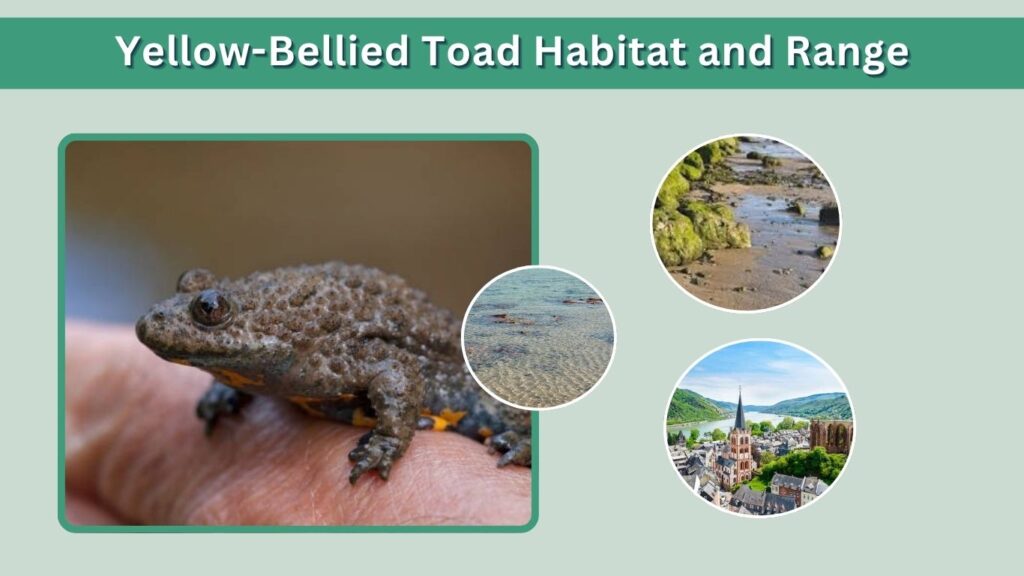
Yellow-bellied toads are closely linked to shallow water. They often use temporary pools, ditches, puddles, forest tracks, muddy hollows, and small ponds. These habitats may look simple, but they are important breeding places. The species also needs nearby land cover for shelter, resting, hibernation, and protection from predators or dry conditions.
Where Do Yellow-Bellied Toads Live?
Yellow-bellied toads live in parts of Europe, especially central, southern, and southeastern regions. They are often associated with hilly, forested, or semi-open landscapes where shallow water collects. Unlike species that depend only on large permanent ponds, yellow-bellied toads often breed in smaller temporary water bodies.
These temporary pools can be found in tire tracks, woodland paths, river edges, quarries, ditches, and muddy depressions. Such sites may dry out, but they can also have fewer fish, which helps eggs and tadpoles survive.
Apennine Yellow-Bellied Toad
The Apennine yellow-bellied toad is connected with Italian populations and is often discussed in conservation contexts. It is similar in general appearance and lifestyle, but it may be treated differently depending on the source. For a general pet or wildlife article, it is best to mention it as a related yellow-bellied toad form rather than mixing all information together.
Wild Habitat Needs
In the wild, yellow-bellied toads need shallow water, muddy edges, damp ground, and nearby shelter. They may use sunny pools for breeding and move into land areas outside breeding periods. Hiding places such as stones, vegetation, roots, leaf litter, and soil crevices help protect them from heat, dryness, and predators.
Yellow-Bellied Toad Diet and Food
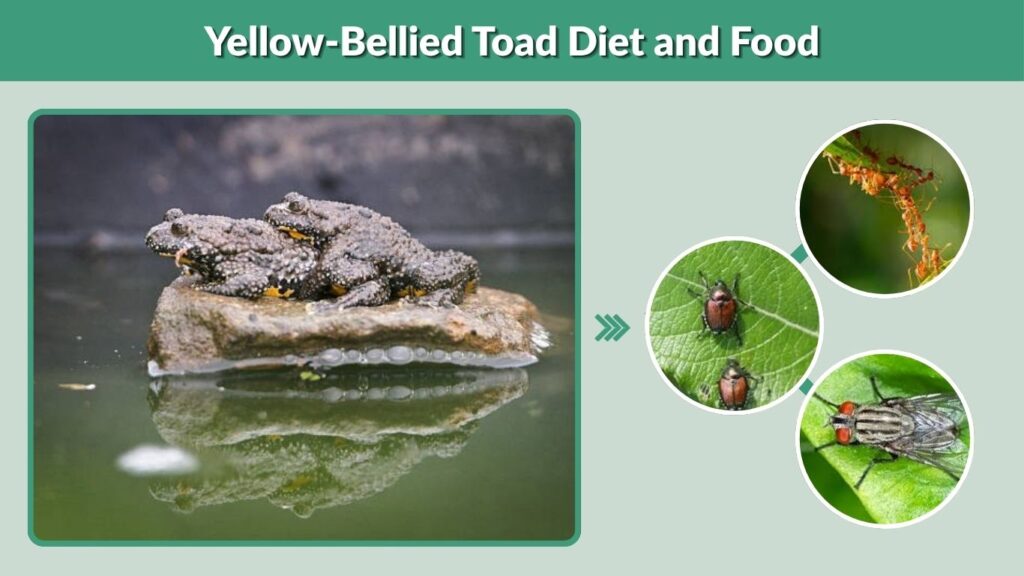
Yellow-bellied toads are carnivorous as adults. They eat small live prey found near water and damp ground. Their diet depends on local habitat, season, and prey availability. Tadpoles eat differently from adults because they live in water and feed on much smaller material before transforming into young toads.
What Do Yellow-Bellied Toads Eat?
Adult yellow-bellied toads eat small invertebrates. Their food may include:
- Small insects
- Beetles
- Ants
- Flies
- Mosquito larvae
- Worms
- Tiny aquatic invertebrates
- Other small prey near water
They usually hunt small prey that is easy to swallow. Because they live around wet places, they may find food both on land and near the water’s edge. Their diet helps control small insect populations in natural habitats.
Tadpole Diet
Yellow-bellied toad tadpoles live in water and feed on tiny food sources. They may graze on algae, microorganisms, soft plant material, and organic matter. As they grow, their needs change. After metamorphosis, young toads begin hunting tiny live prey like small insects and other little invertebrates.
Predators
Yellow-bellied toads have several predators. Birds, snakes, mammals, fish, larger amphibians, and aquatic insects may eat adults, eggs, or tadpoles. The bright belly and skin secretions help protect adults, but eggs and tadpoles remain vulnerable, especially in small pools.
Are Yellow-Bellied Toads Poisonous?
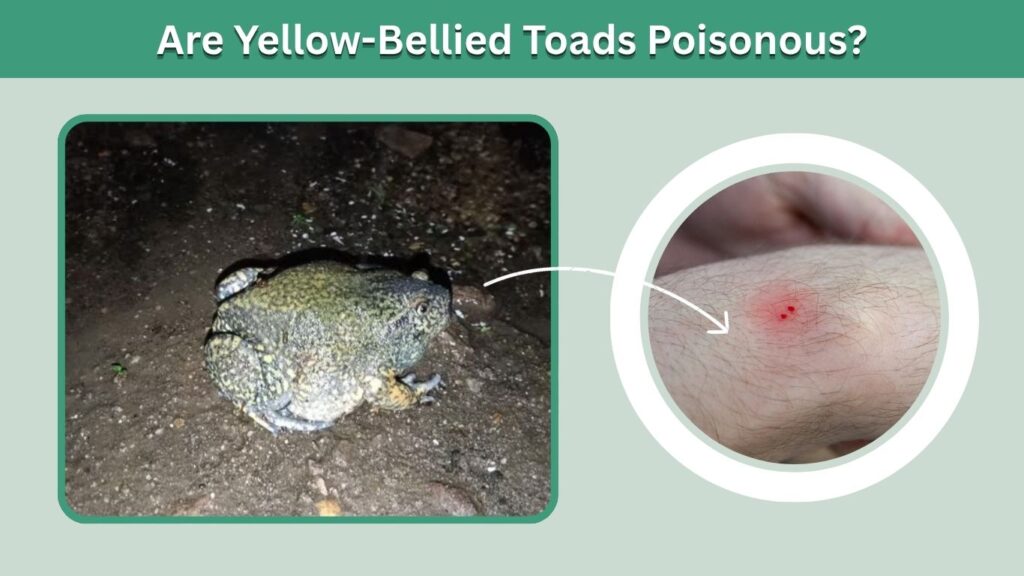
Yellow-bellied toads are poisonous in the sense that they can release irritating skin secretions. These secretions are defensive and help discourage predators. They are not aggressive toward people and do not chase or attack. However, they should not be handled carelessly, placed near the mouth, or allowed to contact the eyes or broken skin.
Can the Yellow-Bellied Toad Kill You?
A yellow-bellied toad is very unlikely to kill a person through normal contact. The main concern is irritation. Its skin secretions may bother the eyes, mouth, nose, cuts, or sensitive skin. The risk becomes higher if someone handles the toad roughly, licks it, eats it, or touches their face afterward.
If irritation happens, wash the affected area with clean water. If symptoms are strong, long-lasting, or involve the eyes or mouth, medical advice is recommended.
Is the Yellow-Bellied Toad Safe to Touch?
It is best not to touch yellow-bellied toads unless necessary. If one must be moved for safety, careful handling is important.
Safety tips include:
- Avoid unnecessary handling.
- Wet your hands before moving one.
- Do not squeeze or hold it tightly.
- Do not touch your eyes or mouth afterward.
- Wash hands with soap and water.
- Keep children from handling wild toads.
- Keep dogs and cats away from them.
Yellow-Bellied Toad Rashes and Irritation
Some people may experience skin irritation after contact with amphibian secretions. A rash is more likely if the person has sensitive skin, small cuts, or prolonged contact with the animal. Washing after contact reduces risk. Because amphibians also absorb substances through their skin, handling can harm the toad as well.
Yellow-Bellied Toad Behavior and Call
Yellow-bellied toads are interesting because of their warning display, breeding behavior, and shallow-water lifestyle. They may remain still in mud or water to avoid notice. When threatened, they may show their bright underside. During breeding periods, males call from water to attract females and defend small calling areas.
Defensive Display
The yellow-bellied toad has a famous defensive posture sometimes called the unken reflex. When threatened, it may arch its body, lift its limbs, and expose the yellow-black underside. This display warns predators that the toad may taste bad or cause irritation.
This behavior should never be forced for entertainment. If a toad shows its belly in this way, it is usually stressed or frightened. Observing from a distance is better than handling or disturbing it.
Yellow-Bellied Toad Call
Male yellow-bellied toads call during the breeding season. Their call helps attract females and may be heard near shallow pools or temporary water. The sound is part of natural mating behavior and is more likely when weather, water, and seasonal conditions are suitable.
Yellow-Bellied Toad Eyes
The eyes of the yellow-bellied toad are another useful identification feature. Their pupils can look unusual compared with many common frogs and toads. However, eye shape alone should not be used as the only identification clue. Color, belly pattern, body shape, habitat, and location should all be considered.
Yellow-Bellied Toad Care and Setup
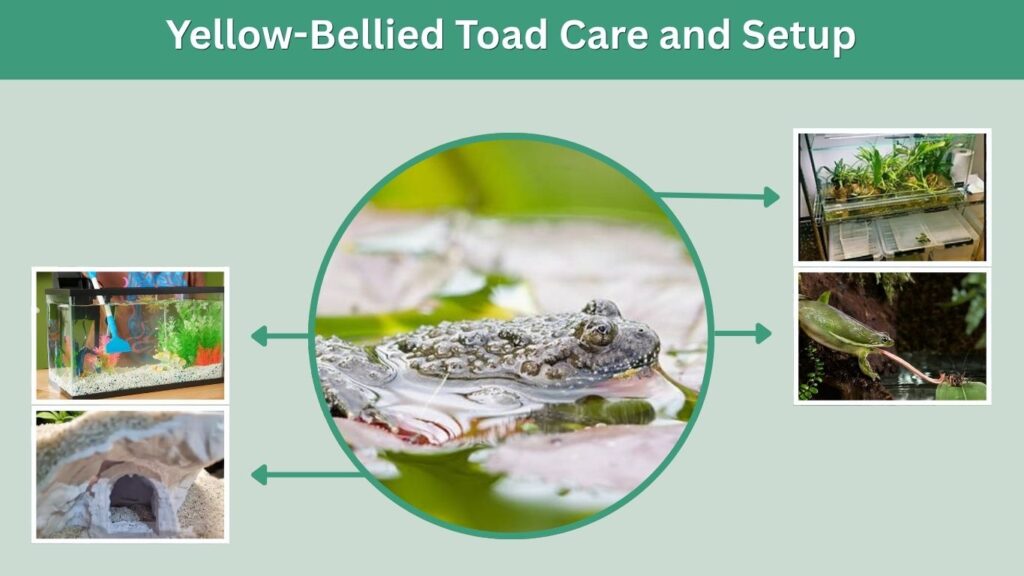
Some people search for yellow-bellied toad care because they are interested in keeping one as a pet. However, this species may be protected or uncommon in trade, depending on location. Anyone considering one should check local laws, avoid wild collection, and understand that amphibians need clean, stable, low-stress conditions.
Basic Care Sheet
A yellow-bellied toad setup should copy its semi-aquatic lifestyle. Basic care needs include:
- Semi-aquatic enclosure
- Shallow clean water
- Easy land access
- Dechlorinated water
- Hiding places
- Smooth stones or cork bark
- Cool to moderate temperatures
- Live insect diet
- Secure lid
- Regular cleaning
- Minimal handling
Yellow-Bellied Toad Setup
The enclosure should include both water and land. The water area should be shallow enough for easy access, with sloped edges or resting places. Smooth stones, cork bark, aquatic plants, and damp hiding spots can make the setup safer and more natural.
Avoid sharp gravel, dirty water, strong heat, and rough decorations. Water should be dechlorinated, and the tank should be cleaned often enough to prevent waste buildup. A thermometer is useful because overheating can stress amphibians.
Pets and Legality
Yellow-bellied toads should not be collected from the wild without knowing the law. Some populations are protected, and wild collection can damage local numbers. Captive-bred animals from responsible sources are the better choice where ownership is legal. Buyers should prepare the enclosure before bringing any amphibian home.
Yellow-Bellied Toad for Sale: What to Know
Searches for yellow-bellied toad for sale show that some readers are thinking about buying one. Before doing so, they should consider legality, animal welfare, setup cost, food supply, and long-term responsibility. The animal itself may not be the biggest expense. Proper housing, feeding, water care, and vet access matter more.
Buying Considerations
Before buying a yellow-bellied toad, check whether it is legal to own in your country or region. Ask whether the animal is captive-bred or wild-caught. Captive-bred amphibians are usually the more responsible choice because they reduce pressure on wild populations.
A healthy toad should look alert, have clear eyes, move normally, and show no visible wounds or serious weight loss. Avoid sellers who cannot explain feeding, housing, or the animal’s origin.
Care Summary Table
| Topic | Yellow-Bellied Toad Details |
| Scientific name | Bombina variegata |
| Common names | Yellow-bellied toad, yellow belly toad |
| Habitat | Shallow pools, wetlands, ditches, muddy areas |
| Diet | Insects, worms, and small invertebrates |
| Poison safety | Mild skin toxins; avoid careless handling |
| Pet setup | Semi-aquatic enclosure with clean water |
| Main feature | Bright yellow-black warning belly |
Yellow Fire Belly Toad vs Yellow-Bellied Toad
The yellow-bellied toad is sometimes confused with fire-bellied toads. Both belong to the Bombina group and have bright warning colors, but they are not always the same species. “Yellow fire belly toad” may be used loosely online, so scientific names are important.
The yellow-bellied toad usually means Bombina variegata. The Oriental fire-bellied toad is Bombina orientalis. Mixing species or creating hybrids is not recommended for casual keepers.
FAQs
Are yellow-bellied toads poisonous?
Yes. Yellow-bellied toads can release irritating skin secretions. These secretions help protect them from predators and may irritate eyes, mouth, cuts, or sensitive skin. They are not aggressive, but they should not be handled unnecessarily.
Can the yellow-bellied toad kill you?
A yellow-bellied toad is very unlikely to kill a person through normal contact. The main risk is irritation from skin secretions. Do not lick, eat, or roughly handle one. Wash your hands after contact and seek medical advice if a strong reaction occurs.
What do yellow-bellied toads eat?
Adult yellow-bellied toads eat small insects and other invertebrates. Their diet may include flies, beetles, ants, worms, mosquito larvae, and tiny aquatic prey. Tadpoles eat different foods, including algae, microorganisms, and organic material in water.
Where do yellow-bellied toads live?
Yellow-bellied toads live in parts of Europe. They are often found near shallow temporary water, wetlands, ditches, forest tracks, muddy pools, and small ponds. They need aquatic breeding sites and nearby land areas for shelter.
Can yellow-bellied toads be kept as pets?
They can be kept only where legal and properly sourced. Wild collection may be restricted and harmful to local populations. If kept legally, they need a clean semi-aquatic enclosure, shallow dechlorinated water, live food, and minimal handling.
