
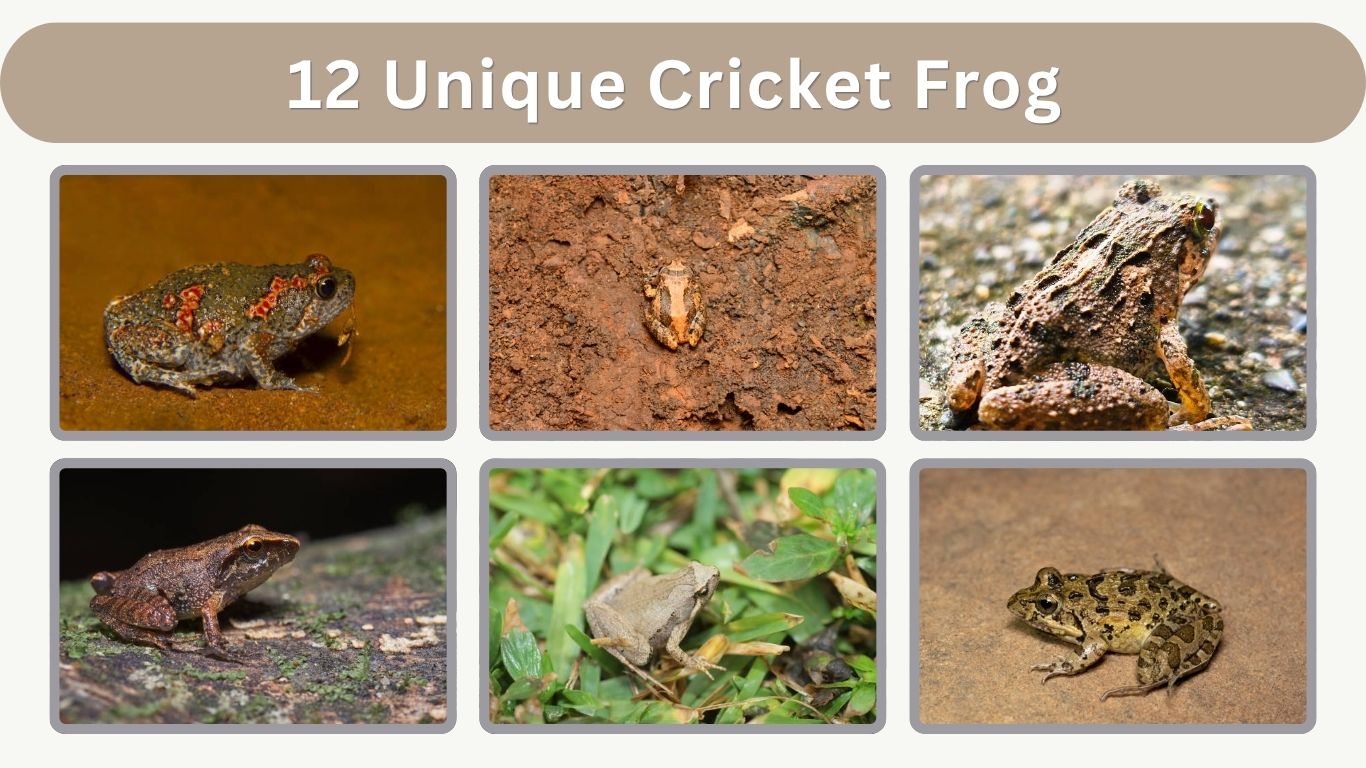
Cricket frogs are small, energetic amphibians known for their distinctive chirping calls that resemble crickets. Found in a variety of habitats around the world, these frogs are highly adaptable and play an important role in controlling insect populations. Despite their tiny size, they are excellent jumpers and quick movers, helping them avoid predators. In this article, you will explore 12 different types of cricket frogs, along with their identification, habitat, behavior, and lifecycle, giving you a clear understanding of these fascinating and often overlooked creatures.
1. Northern Cricket Frog

The Northern Cricket Frog is a small, active amphibian known for its quick movements and distinctive chirping sound, which resembles a cricket. It is commonly found near water bodies and is recognized for its excellent jumping ability and adaptability to different environments.
Identification
- Small size, usually 2–4 cm long
- Brown, gray, or green coloration with dark patterns
- Warty skin with rough texture
- Dark triangle-shaped mark between the eyes
- Long hind legs adapted for jumping
Habitat and Distribution
The Northern Cricket Frog is widely found across parts of North America, especially in the United States. It prefers habitats near freshwater sources such as ponds, lakes, marshes, and slow-moving streams. These frogs are often seen along muddy or sandy shorelines, where they can easily escape into the water when threatened.
Behavior and Diet
This species is active during warm months and is known for its rapid, zigzag jumping behavior when disturbed. The Northern Cricket Frog feeds mainly on small insects, including ants, flies, and beetles. It uses quick reflexes to capture prey and often stays close to the ground near water.
Lifecycle
Breeding usually occurs in late spring and summer. Females lay eggs in shallow water, where they hatch into tadpoles. The tadpoles develop in water before undergoing metamorphosis into small frogs. As they grow, they move to the shoreline and begin their adult life near water habitats.
2. Southern Cricket Frog

The Southern Cricket Frog is a small, agile amphibian known for its rapid movements and sharp, clicking call that resembles two stones tapping together. It is commonly found in warmer regions and is highly adapted to life near shallow water bodies, where it can quickly escape predators.
Identification
- Small size, typically 2–4 cm long
- Gray, brown, or green coloration with irregular patterns
- Warty skin with a rough texture
- Dark triangle mark between the eyes
- Long hind legs for powerful jumping
Habitat and Distribution
The Southern Cricket Frog is mainly found in the southeastern United States. It prefers warm, humid environments near freshwater sources such as ponds, ditches, marshes, and slow-moving streams. These frogs are often seen along muddy banks or floating vegetation. They rely on shallow water areas for breeding and are well adapted to seasonal changes in water levels.
Behavior and Diet
This species is active during warm weather and is known for its quick, erratic jumping when disturbed. The Southern Cricket Frog feeds primarily on small insects such as flies, ants, and beetles. It uses speed and agility to catch prey and avoid predators, often staying close to water for safety.
Lifecycle
Breeding takes place during spring and summer. Females lay eggs in shallow water, where they develop into tadpoles. The tadpoles grow and undergo metamorphosis, eventually becoming small frogs. After transformation, they remain near water habitats, continuing their life cycle in similar environments.
3. Blanchard’s Cricket Frog

Blanchard’s Cricket Frog is a small and energetic amphibian known for its rapid jumping and cricket-like call. It is commonly found near freshwater habitats and is well adapted to environments with open shorelines. This species is often recognized for its variability in color and pattern.
Identification
- Small size, around 2–4 cm in length
- Color varies from gray, brown, to green
- Warty skin with rough texture
- Dark triangle marking between the eyes
- Strong hind legs for quick jumping
Habitat and Distribution
Blanchard’s Cricket Frog is found across central parts of the United States. It prefers habitats near ponds, lakes, rivers, and marshes with exposed shorelines. These frogs are often seen on muddy or sandy edges of water bodies. They require warm temperatures and are sensitive to environmental changes, especially water quality and habitat disturbance.
Behavior and Diet
This species is highly active and known for its quick, zigzag jumping to escape threats. It produces a distinctive clicking sound similar to a cricket. Blanchard’s Cricket Frog feeds on small insects such as ants, flies, and beetles. It hunts close to the ground and relies on speed and alertness.
Lifecycle
Breeding usually occurs in late spring and summer. Females lay eggs in shallow water, where they hatch into tadpoles. The tadpoles develop in aquatic environments before transforming into juvenile frogs. After metamorphosis, they move to shoreline areas and continue living near water.
4. Cajun Cricket Frog

The Cajun Cricket Frog is a small, fast-moving amphibian found in the southern United States. It is known for its sharp clicking call and strong jumping ability. This species thrives in warm climates and is often seen near shallow water, where it can quickly escape danger.
Identification
- Small size, typically 2–4 cm long
- Gray, brown, or green body with irregular patterns
- Warty skin with rough texture
- Dark triangular mark between the eyes
- Long, powerful hind legs for jumping
Habitat and Distribution
The Cajun Cricket Frog is mainly found in Louisiana and nearby regions in the southern United States. It prefers warm, humid environments near ponds, marshes, ditches, and slow-moving streams. These frogs are commonly seen along muddy banks or in shallow water areas with vegetation. They depend on stable water sources for breeding and survival.
Behavior and Diet
This species is active during warm months and is known for its quick, unpredictable jumping when disturbed. The Cajun Cricket Frog feeds on small insects such as ants, flies, and beetles. It uses its speed and agility to catch prey and avoid predators, often staying close to water for safety.
Lifecycle
Breeding occurs during spring and summer. Females lay eggs in shallow water, where they develop into tadpoles. The tadpoles grow and undergo metamorphosis, transforming into juvenile frogs. After this stage, they remain near water bodies and continue their life cycle in similar habitats.
5. Greenhouse Frog

The Greenhouse Frog is a small terrestrial amphibian often associated with warm, humid environments. Although not a true cricket frog, it produces chirping sounds similar to crickets. It is known for its adaptability and is commonly found in gardens, greenhouses, and forested areas.
Identification
- Small size, usually 2–4 cm long
- Brown or tan body with dark stripes or markings
- Smooth to slightly textured skin
- Rounded snout with compact body shape
- Short limbs compared to typical tree frogs
Habitat and Distribution
The Greenhouse Frog is native to the Caribbean but has spread to parts of the southeastern United States and other tropical regions. It prefers moist environments such as gardens, forests, leaf litter, and greenhouses. Unlike many frogs, it does not rely heavily on standing water and can thrive in human-modified habitats with sufficient humidity.
Behavior and Diet
This species is mostly nocturnal and becomes active at night. It produces a chirping call similar to insects, which helps it avoid detection by predators. The Greenhouse Frog feeds on small invertebrates such as ants, mites, and tiny insects. It hunts on the ground, often hiding under leaves or debris during the day.
Lifecycle
Unlike many frogs, the Greenhouse Frog does not require water for reproduction. Females lay eggs in moist soil or leaf litter. The eggs develop directly into miniature frogs without a tadpole stage. This direct development allows the species to survive in environments without standing water.
6. Cuban Tree Frog (Juvenile Form)

The Cuban Tree Frog, especially in its juvenile stage, is sometimes mistaken for a cricket frog due to its small size and chirping sound. It is a highly adaptable species known for thriving in both natural and urban environments, often near human settlements.
Identification
- Small size when juvenile, around 2–4 cm
- Light green, gray, or tan coloration
- Smooth, slightly moist skin
- Large toe pads for climbing
- Color can change depending on surroundings
Habitat and Distribution
The Cuban Tree Frog is native to the Caribbean but has spread to parts of the southeastern United States. It prefers warm, humid environments and is commonly found in forests, gardens, buildings, and near water sources. Juveniles are often seen in vegetation or around lights where insects gather, making urban areas suitable habitats.
Behavior and Diet
This species is nocturnal and becomes active at night. Juveniles feed on small insects such as ants, flies, and beetles. As they grow, their diet expands to include larger prey. They are opportunistic feeders and often hunt near artificial lights where insects are abundant.
Lifecycle
Breeding typically occurs in warm, wet conditions. Eggs are laid in water, where they hatch into tadpoles. The tadpoles develop in aquatic environments before transforming into juvenile frogs. As they mature, they become larger and more adapted to climbing and hunting in a variety of habitats.
7. Indian Cricket Frog

The Indian Cricket Frog is a small amphibian known for its sharp, insect-like calls and quick movements. It is commonly found in warm, tropical regions and is well adapted to both natural and human-influenced environments, often seen near water sources.
Identification
- Small size, usually 2–4 cm long
- Brown, gray, or greenish body with patterns
- Smooth to slightly rough skin
- Compact body with short limbs
- Distinct cricket-like chirping sound
Habitat and Distribution
The Indian Cricket Frog is widely found across South Asia, including India and surrounding regions. It prefers habitats near ponds, ditches, rice fields, and slow-moving water bodies. These frogs are often seen in grassy or muddy areas with high humidity. They are adaptable and can survive in both rural and semi-urban environments.
Behavior and Diet
This species is mostly nocturnal and becomes active during the evening and night. It feeds on small insects such as ants, flies, and tiny beetles. The Indian Cricket Frog uses stealth and quick movements to catch prey and avoid predators, often staying close to moist ground or vegetation.
Lifecycle
Breeding usually occurs during the rainy season when water is abundant. Females lay eggs in shallow water, where they hatch into tadpoles. The tadpoles develop in aquatic environments before undergoing metamorphosis into adult frogs that continue living near water sources.
8. Ornate Narrow-mouthed Frog

The Ornate Narrow-mouthed Frog is a small species often grouped with cricket frogs due to its insect-like call. It is known for its compact body and unique appearance. This frog is commonly found in warm regions and is well adapted to living close to the ground in moist environments.
Identification
- Small size, around 2–4 cm long
- Rounded body with narrow mouth
- Brown or gray coloration with patterns
- Smooth or slightly textured skin
- Short limbs and compact shape
Habitat and Distribution
This species is widely found in South and Southeast Asia. It prefers habitats such as grasslands, forest edges, agricultural fields, and areas near water sources. The Ornate Narrow-mouthed Frog often hides under leaf litter, stones, or soil during the day to retain moisture and avoid predators.
Behavior and Diet
The frog is mostly nocturnal and becomes active at night. It produces a chirping call similar to insects, which helps it remain unnoticed. Its diet mainly consists of small insects like ants and termites. It forages close to the ground and relies on camouflage for protection.
Lifecycle
Breeding usually occurs during the rainy season. Eggs are laid in shallow water or temporary pools. After hatching, tadpoles develop in water before undergoing metamorphosis into small frogs. As they grow, they adapt to a more terrestrial lifestyle.
9. Painted Narrow-mouthed Frog

The Painted Narrow-mouthed Frog is a small, ground-dwelling amphibian often associated with cricket-like frogs due to its chirping call. It is known for its distinct body patterns and compact shape. This species is well adapted to warm climates and is commonly found in moist environments.
Identification
- Small size, typically 2–4 cm long
- Rounded body with a narrow mouth
- Brown or gray body with painted-like markings
- Smooth to slightly textured skin
- Short limbs with a compact appearance
Habitat and Distribution
The Painted Narrow-mouthed Frog is found across parts of South and Southeast Asia. It prefers habitats such as grasslands, forest floors, agricultural lands, and areas near water sources. These frogs often hide under leaf litter, rocks, or soil during the day to maintain moisture and avoid predators.
Behavior and Diet
This species is mostly nocturnal and becomes active at night. It produces a cricket-like chirping sound that helps it blend into its surroundings. The frog feeds mainly on small insects such as ants and termites. It forages close to the ground and relies on camouflage for protection.
Lifecycle
Breeding occurs during the rainy season when temporary water bodies form. Females lay eggs in shallow pools or flooded areas. The eggs hatch into tadpoles, which develop in water before undergoing metamorphosis. After transformation, the young frogs move onto land and continue their life cycle in moist habitats.
10. Sri Lankan Cricket Frog

The Sri Lankan Cricket Frog is a small amphibian known for its sharp, insect-like call and quick movements. It is commonly found in tropical environments and is well adapted to living close to moist ground and water sources, where it can easily find food and shelter.
Identification
- Small size, around 2–4 cm long
- Brown or gray body with subtle patterns
- Smooth to slightly rough skin
- Compact body with short limbs
- Produces a distinct cricket-like chirping sound
Habitat and Distribution
The Sri Lankan Cricket Frog is mainly found in Sri Lanka and nearby regions. It prefers humid environments such as forest floors, grasslands, agricultural areas, and places near ponds or slow-moving water. These frogs often hide under leaf litter or soil during the day to retain moisture and avoid predators.
Behavior and Diet
This species is mostly nocturnal and becomes active at night. It feeds on small insects such as ants, termites, and tiny beetles. The frog relies on camouflage and quick movements to catch prey and avoid threats, often staying close to the ground in moist areas.
Lifecycle
Breeding typically occurs during the rainy season. Females lay eggs in shallow water or temporary pools. After hatching, tadpoles develop in aquatic environments before undergoing metamorphosis into adult frogs that continue living on land near moist habitats.
11. Asian Painted Frog

The Asian Painted Frog is a small, colorful amphibian often associated with cricket-like frogs due to its chirping call. It is known for its distinct patterns and adaptability to different environments. This species is commonly found in warm regions and plays a role in controlling insect populations.
Identification
- Small size, usually 2–4 cm long
- Rounded body with a narrow mouth
- Brown or gray coloration with painted patterns
- Smooth skin with slight texture
- Short limbs and compact structure
Habitat and Distribution
The Asian Painted Frog is widely found across South and Southeast Asia. It prefers habitats such as grasslands, agricultural fields, forest edges, and areas near water bodies. These frogs often stay hidden under leaf litter, stones, or soil during the day to maintain moisture and avoid predators.
Behavior and Diet
This species is mostly nocturnal and becomes active at night. It produces a cricket-like chirping sound, helping it blend into its surroundings. The Asian Painted Frog feeds mainly on small insects such as ants and termites. It forages close to the ground and relies on camouflage for protection.
Lifecycle
Breeding usually occurs during the rainy season. Females lay eggs in shallow water or temporary pools. The eggs hatch into tadpoles, which develop in water before undergoing metamorphosis. After transformation, the young frogs move onto land and continue their life cycle in moist environments.
12. Microhyla ornata

Microhyla ornata, commonly known as the Ornate Narrow-mouthed Frog, is a small amphibian often grouped with cricket frogs due to its insect-like call. It is widely distributed and highly adaptable, making it one of the more commonly encountered small frogs in warm, humid regions.
Identification
- Very small size, around 2–3 cm long
- Rounded body with a narrow mouth
- Brown or gray coloration with decorative patterns
- Smooth skin with fine markings
- Short limbs and compact structure
Habitat and Distribution
Microhyla ornata is widely found across South and Southeast Asia. It inhabits grasslands, forest edges, agricultural fields, and areas near temporary or permanent water sources. These frogs prefer moist environments and are often seen during the rainy season. They typically hide under leaf litter or soil to maintain moisture.
Behavior and Diet
This species is nocturnal and becomes active during the night. It produces a cricket-like chirping sound, which helps it blend into its surroundings. Microhyla ornata feeds mainly on small insects such as ants and termites. It stays close to the ground and uses camouflage to avoid predators.
Lifecycle
Breeding occurs during the monsoon season. Females lay eggs in shallow water bodies or temporary pools. The eggs hatch into tadpoles, which develop in aquatic environments. After metamorphosis, the young frogs transition to land and continue living in moist habitats.
FAQs
What are cricket frogs?
Cricket frogs are small amphibians known for their sharp, chirping calls that resemble crickets. They are usually found near water or moist environments and are recognized for their quick movements and strong jumping ability, which help them escape predators.
Where do cricket frogs live?
Cricket frogs are commonly found in North America, South Asia, and Southeast Asia. They prefer habitats such as ponds, marshes, streams, grasslands, and agricultural fields. Most species stay close to moisture, though some can live in leaf litter or soil.
Why are they called cricket frogs?
They are called cricket frogs because of the sound they produce. Their call closely resembles the chirping of crickets, which helps them blend into their environment and avoid attracting predators.
What do cricket frogs eat?
Cricket frogs mainly feed on small insects such as ants, flies, beetles, and termites. They use a sit-and-wait hunting strategy, quickly catching prey with their sticky tongues when it comes within reach.
Are cricket frogs harmful to humans?
Cricket frogs are harmless to humans. They do not bite or produce dangerous toxins. In fact, they are beneficial because they help control insect populations and contribute to a balanced ecosystem.
