
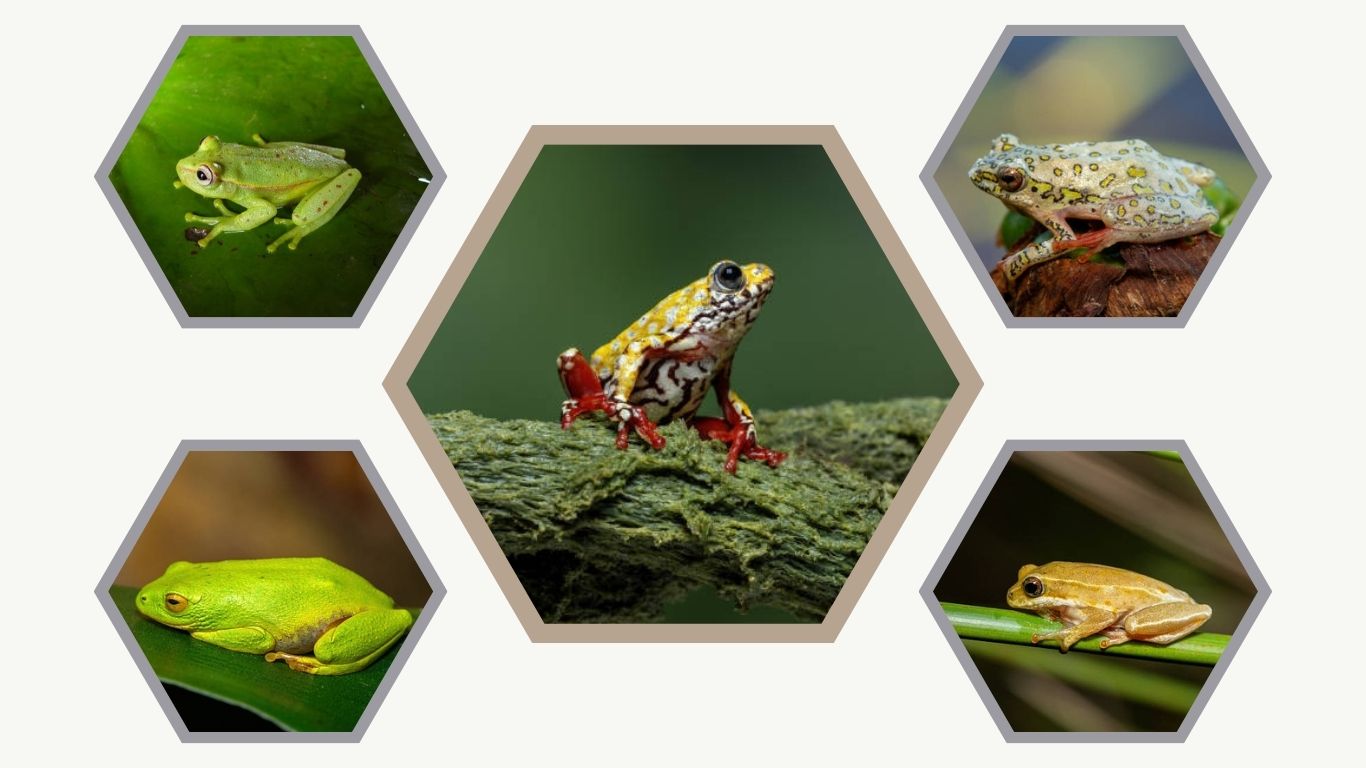
Reed frogs are small, colorful amphibians commonly found in wetlands and tropical regions of Africa. These frogs are known for their bright patterns, climbing abilities, and distinctive nighttime calls. Most reed frogs live near ponds, marshes, swamps, and grassy freshwater habitats where they feed on insects and breed during rainy seasons. Their sticky toe pads help them move easily through reeds and aquatic plants. With many species displaying unique colors and markings, reed frogs are among the most fascinating tree-dwelling frogs in the amphibian world.
1. Hyperolius viridiflavus

Hyperolius viridiflavus, commonly known as the Painted Reed Frog, is one of the most colorful and adaptable reed frogs found across Africa. This species is well known for its striking patterns, bright coloration, and ability to live in a wide range of wet habitats.
Identification
- Small-sized frog with a slender body
- Bright green, yellow, or brown coloration with dark markings
- Smooth skin with glossy appearance
- Long legs adapted for climbing vegetation
- Large eyes with horizontal pupils
- Adults usually grow between 2 to 4 cm in length
Habitat and Distribution
The Painted Reed Frog is widely distributed throughout sub-Saharan Africa. It commonly inhabits wetlands, marshes, ponds, lakesides, and grassy areas near water sources. This species is highly adaptable and can also survive in agricultural fields and gardens where moisture is available.
Behavior and Diet
This reed frog is mostly active at night and spends much of its time climbing reeds and grasses. It is an excellent climber due to its sticky toe pads. The diet mainly consists of small insects such as mosquitoes, flies, ants, and beetles. Its loud calls are commonly heard during the rainy season when males attract females for breeding.
Lifecycle
Breeding usually occurs during rainy periods when temporary pools form. Females lay eggs on aquatic vegetation near water. After hatching, tadpoles develop in the water before transforming into froglets within several weeks. The species grows quickly and reaches maturity in a relatively short time.
2. Hyperolius marmoratus

Hyperolius marmoratus, commonly known as the Marbled Reed Frog, is a brightly colored amphibian recognized for its beautiful marbled patterns and strong climbing ability. This species is commonly found in southern and eastern parts of Africa near freshwater habitats.
Identification
- Small frog with a slim and lightweight body
- Distinct marbled or striped patterns across the back
- Color varies from green and yellow to brown with dark markings
- Smooth skin with a shiny surface
- Expanded toe pads that help with climbing
- Adult size usually ranges from 3 to 4.5 cm
Habitat and Distribution
The Marbled Reed Frog is commonly found in wetlands, swamps, ponds, river edges, and reed beds across southern and eastern Africa. It prefers warm environments with abundant vegetation near shallow freshwater areas. This species can also adapt to human-modified habitats such as farmland ponds and garden water features.
Behavior and Diet
This frog is nocturnal and becomes most active after sunset. It spends much of its time resting on reeds and aquatic plants during the breeding season. Its diet mainly includes mosquitoes, moths, flies, and other small insects. Males produce loud repetitive calls to attract females, especially after rainfall.
Lifecycle
Breeding usually begins during the rainy season when water levels increase. Females lay clusters of eggs on vegetation close to water surfaces. Tadpoles hatch and continue their development in water before transforming into young frogs. The complete lifecycle from egg to adult can take only a few months under favorable conditions.
3. Hyperolius cinnamomeoventris

Hyperolius cinnamomeoventris, commonly known as the Cinnamon-bellied Reed Frog, is a colorful African tree frog admired for its bright body colors and active climbing behavior. This species is commonly associated with moist environments and dense vegetation near freshwater habitats.
Identification
- Small frog with a slender and delicate body
- Bright green or yellow upper body coloration
- Orange, red, or cinnamon-colored underside
- Smooth skin with glossy texture
- Long limbs and adhesive toe pads for climbing
- Adult length typically ranges from 2.5 to 4 cm
Habitat and Distribution
The Cinnamon-bellied Reed Frog is found in central and western regions of Africa. It usually inhabits swamps, marshes, ponds, flooded grasslands, and forest edges with abundant moisture. The species prefers areas with thick reeds and aquatic plants where it can easily hide and breed.
Behavior and Diet
This species is mainly nocturnal and becomes active during humid evenings. It is an agile climber that spends much of its time on reeds and leaves above water. Its diet includes mosquitoes, flies, moths, ants, and other small invertebrates. Males produce sharp and repetitive calls during the breeding season to attract mates.
Lifecycle
Breeding commonly occurs during rainy periods when temporary pools and wetlands expand. Females deposit eggs on vegetation near water, allowing tadpoles to hatch and drop into the water below. Tadpoles develop rapidly before transforming into froglets. Young frogs mature quickly in warm and wet environmental conditions.
4. Hyperolius puncticulatus

Hyperolius puncticulatus, commonly known as the Dotted Reed Frog, is a small and attractive reed frog species known for its spotted body patterns and excellent climbing skills. It is commonly found in moist tropical regions of Africa near freshwater habitats.
Identification
- Small frog with a thin and agile body
- Body covered with tiny dark spots or dotted markings
- Color ranges from green and yellow to light brown
- Smooth and moist skin texture
- Large eyes with horizontal pupils
- Sticky toe pads adapted for climbing plants and reeds
- Adults generally grow between 2 and 3.5 cm in length
Habitat and Distribution
The Dotted Reed Frog inhabits wetlands, swamps, marshes, ponds, and grassy floodplains in central and eastern Africa. It prefers areas with dense aquatic vegetation and permanent moisture. The species is often seen resting on reeds and leaves near shallow water bodies.
Behavior and Diet
This frog is mostly active at night and remains hidden among vegetation during the daytime. It is a skilled climber and frequently moves through reeds while hunting. Its diet mainly includes small insects such as flies, mosquitoes, moths, and tiny beetles. During the rainy season, males produce high-pitched calls to attract females.
Lifecycle
Breeding usually takes place during warm rainy months when water becomes abundant. Females lay eggs on plants growing above or near water. After hatching, tadpoles fall into the water and continue their development there. The tadpoles later transform into small froglets and gradually mature into adults.
5. Hyperolius tuberilinguis

Hyperolius tuberilinguis, commonly known as the Tinker Reed Frog, is a small African reed frog species recognized for its unique vocal sounds and colorful appearance. It is commonly associated with wetlands and dense vegetation near freshwater environments.
Identification
- Small frog with a slender and lightweight body
- Bright green, yellow, or brown coloration with dark markings
- Smooth skin with slightly glossy texture
- Rounded snout and relatively large eyes
- Expanded toe pads that assist with climbing reeds and grasses
- Adults typically measure between 2 and 3 cm in length
Habitat and Distribution
The Tinker Reed Frog is found in parts of central and eastern Africa. It commonly lives in marshes, ponds, swamps, flooded grasslands, and lakeside vegetation. This species prefers humid habitats with abundant reeds and aquatic plants where it can remain hidden from predators.
Behavior and Diet
This frog is nocturnal and becomes active during the evening and nighttime hours. It spends most of its time climbing reeds and calling from elevated vegetation near water. Its diet mainly includes mosquitoes, flies, moths, ants, and other small insects. The species is especially known for its metallic “tink” call, which inspired its common name.
Lifecycle
Breeding occurs mainly during rainy seasons when temporary pools and wetlands expand. Females lay eggs on vegetation close to water sources. Tadpoles hatch and continue their development in shallow water before transforming into froglets. Young frogs grow rapidly in warm and moist conditions before reaching adulthood.
6. Hyperolius riggenbachi

Hyperolius riggenbachi, commonly known as Riggenbach’s Reed Frog, is a colorful and active reed frog species native to parts of central Africa. This species is admired for its vibrant appearance and strong association with wetland vegetation.
Identification
- Small frog with a slim and delicate body structure
- Bright green or yellow coloration with darker markings
- Smooth skin with a shiny appearance
- Long legs designed for climbing and jumping
- Large eyes with horizontal pupils
- Adhesive toe pads that help grip reeds and leaves
- Adults usually grow between 2 and 3.5 cm in length
Habitat and Distribution
Riggenbach’s Reed Frog is commonly found in marshes, swamps, ponds, and moist grasslands within central African regions. It prefers warm and humid environments with dense aquatic vegetation. The species is often seen resting on reeds and plants close to shallow freshwater habitats.
Behavior and Diet
This frog is primarily nocturnal and becomes most active after sunset. It climbs vegetation to search for food and to avoid predators. Its diet mainly consists of small insects including flies, mosquitoes, moths, and ants. During the breeding season, males call repeatedly from elevated perches near water to attract females.
Lifecycle
Breeding generally takes place during rainy periods when wetlands expand and temporary pools form. Females lay eggs on leaves or vegetation above water. Once hatched, tadpoles drop into the water and continue developing until metamorphosis. Young froglets gradually mature into adults under suitable environmental conditions.
7. Hyperolius balfouri

Hyperolius balfouri, commonly known as Balfour’s Reed Frog, is a small and colorful reed frog species native to parts of Africa. It is known for its attractive coloration, agile climbing ability, and close connection to wetland habitats.
Identification
- Small frog with a slender and lightweight body
- Green, yellow, or brown coloration with darker patterns
- Smooth and moist skin texture
- Long hind legs adapted for jumping and climbing
- Large eyes with horizontal pupils
- Sticky toe pads that provide strong grip on vegetation
- Adults generally reach about 2 to 4 cm in length
Habitat and Distribution
Balfour’s Reed Frog is commonly found in wetlands, marshes, ponds, and grassy areas near freshwater sources in parts of eastern and central Africa. The species prefers humid environments with dense reeds and aquatic plants that provide shelter and breeding sites.
Behavior and Diet
This species is mainly active during the night and spends much of its time climbing reeds and leaves above water. It feeds on small insects such as flies, mosquitoes, moths, and ants. Males produce repeated calls during breeding periods to attract females and establish territory among nearby vegetation.
Lifecycle
Breeding usually occurs during rainy seasons when temporary pools and wetlands become available. Females lay eggs on vegetation close to water, allowing tadpoles to hatch and enter the water below. Tadpoles develop over several weeks before transforming into young froglets that later mature into adults.
FAQs
What do reed frogs eat?
Reed frogs mainly feed on small insects and other tiny invertebrates. Their diet commonly includes mosquitoes, flies, moths, ants, beetles, and small spiders. They help control insect populations in wetland environments by actively hunting during the night.
Where do reed frogs live?
Reed frogs are mostly found in Africa and prefer wetlands, marshes, ponds, swamps, lakesides, and grassy areas near freshwater. They usually live among reeds and aquatic plants where they can hide from predators and breed safely.
Are reed frogs poisonous?
Most reed frog species are not dangerous to humans. Some may produce mild skin secretions for protection against predators, but they are generally harmless when left undisturbed. It is still recommended to avoid handling wild frogs unnecessarily.
How do reed frogs reproduce?
Reed frogs reproduce during rainy seasons when water becomes abundant. Females lay eggs on vegetation near water, and the tadpoles hatch before developing in the water. After metamorphosis, young froglets leave the water and grow into adults.
Why are reed frogs colorful?
The bright colors and patterns of reed frogs help them blend into vegetation, attract mates, and sometimes warn predators. Their coloration can vary greatly depending on the species, environment, and even temperature or humidity levels.
