
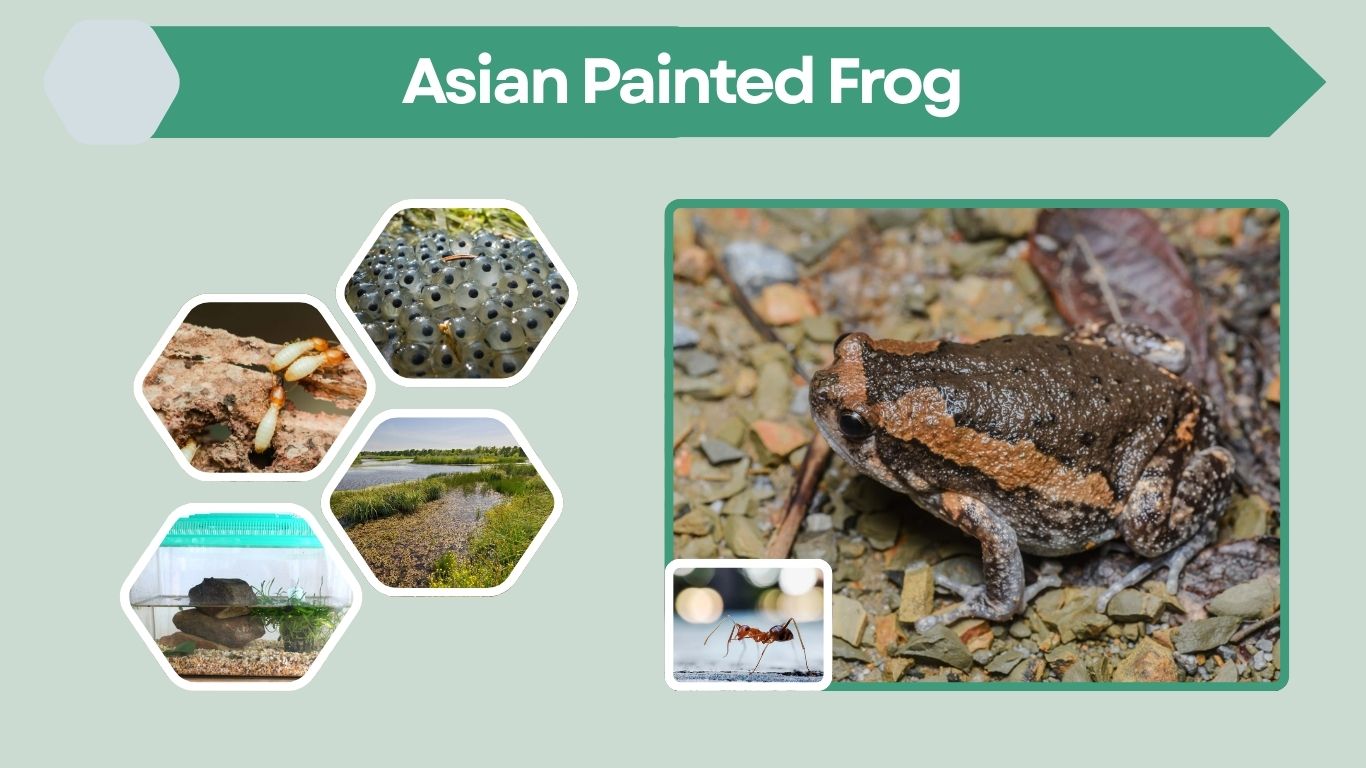
The Asian Painted Frog is a small, round-bodied amphibian known for its colorful stripe patterns and unusual appearance. This frog is commonly found in wetlands, gardens, rice fields, and tropical regions across South and Southeast Asia. Many people recognize it for its chubby body, burrowing habits, and loud nighttime calls during rainy weather. It has also become popular in the pet trade because of its calm behavior and easy care needs. Learning about its habitat, diet, lifespan, and behavior helps people better understand this fascinating frog species.
What Is the Asian Painted Frog?
The Asian Painted Frog is a burrowing amphibian famous for its rounded body shape and bright markings. It spends much of its time hidden beneath moist soil and becomes active after rainfall. This frog is mainly nocturnal and feeds on insects during the night. Because of its unusual appearance and peaceful behavior, it has gained popularity among frog enthusiasts and reptile keepers in many countries.
Scientific Name and Classification
- Scientific name: Kaloula pulchra
- Family: Microhylidae
- Common names: Asian Painted Frog, Chubby Frog, Banded Bullfrog
- Animal group: Amphibian
Why It Is Called a Painted Frog
The frog gets its name from the colorful stripe patterns running along its body. Most individuals have dark brown or gray skin with cream, orange, or yellow bands on the sides. These markings create a painted appearance that helps distinguish the species from many other frogs. The body colors also help provide camouflage among soil, leaves, and muddy habitats.
Asian Painted Frog Identification
The Asian Painted Frog has a unique body shape that makes it easy to recognize. Unlike slender tree frogs or pond frogs, this species has a short, rounded body with small legs and smooth skin. Its wide mouth and pointed snout give it a distinctive appearance. Because it spends time underground, the frog has strong limbs adapted for digging into loose and moist soil.
Size and Body Shape
Adult Asian Painted Frogs usually grow between 5 and 8 centimeters long. Their bodies appear round and inflated compared to most frogs. The species has short legs, a broad head, and a compact shape that helps it burrow underground efficiently. Despite looking heavy, these frogs can move quickly when threatened and often disappear into soil or leaf litter within seconds.
Color and Markings
- Dark brown or gray upper body
- Cream or orange side stripes
- Pale belly coloration
- Smooth skin texture
- Pattern variations between individuals
Key Identification Features
- Rounded “chubby” body
- Pointed snout
- Small eyes
- Wide mouth
- Strong digging legs
- Short limbs compared to tree frogs
Asian Painted Frog Habitat and Distribution
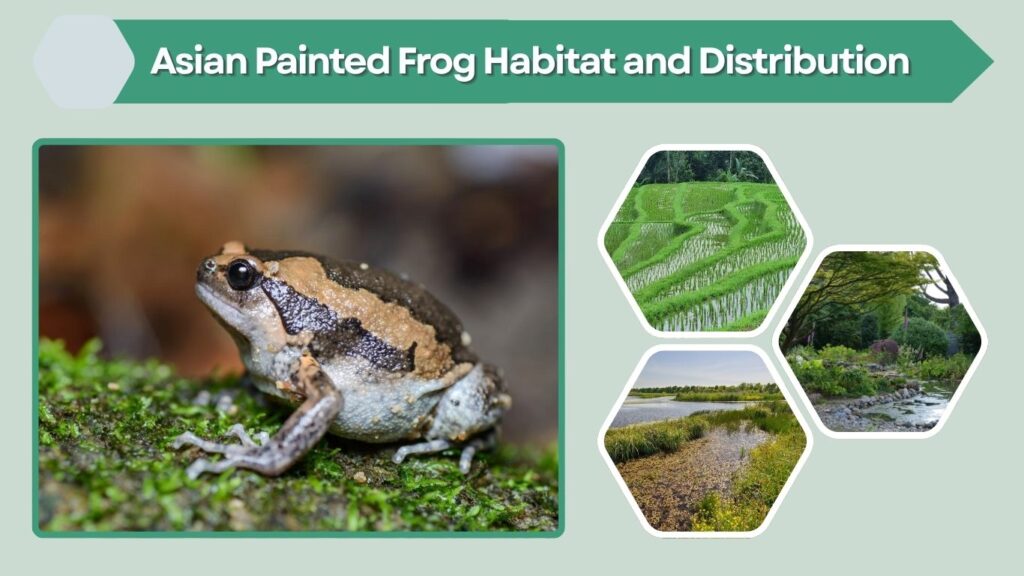
The Asian Painted Frog thrives in warm and humid environments with soft soil and seasonal rainfall. It is commonly found in wetlands, agricultural areas, gardens, forest edges, and grasslands. During dry conditions, the frog hides underground to retain moisture. Heavy rainfall often brings large numbers of these frogs to the surface, especially during nighttime breeding activity near shallow water sources.
Natural Habitat
- Rice fields
- Wetlands
- Moist gardens
- Forest edges
- Grasslands
- Temporary rain pools
Geographic Distribution
This species is widely distributed across South and Southeast Asia. It naturally occurs in India, Bangladesh, Nepal, Thailand, Myanmar, Sri Lanka, Vietnam, and surrounding tropical regions. Due to the pet trade and accidental introductions, some populations have also appeared outside their native range. The frog adapts well to both rural and urban environments as long as moisture and shelter remain available.
Burrowing Behavior
The Asian Painted Frog is an excellent burrower that spends much of the day hidden beneath soil or leaf litter. Burrowing helps protect the frog from heat, predators, and dehydration. During dry weather, it may remain underground for long periods until rain returns. This behavior is one reason the species survives successfully in areas with changing seasonal conditions.
Asian Painted Frog Behavior
The Asian Painted Frog is mostly active at night when temperatures are cooler and humidity levels are higher. It remains hidden during the daytime and emerges after sunset to feed and search for mates. The species is generally calm and slow-moving but can become defensive if threatened. Its unusual defense behaviors make it one of the more interesting small frogs in Asia.
Nocturnal Activity
This frog spends daytime hours resting underground or beneath debris. After rainfall or during humid nights, it becomes active and moves through wet environments searching for insects. Most feeding and breeding activities occur after dark because moist nighttime conditions help prevent dehydration.
Sound and Communication
- Loud croaking calls during breeding season
- Males call after heavy rain
- Sounds help attract females
- Calls may continue throughout the night
- Vocal behavior increases near shallow water areas
Defense Mechanisms
- Inflates its body to appear larger
- Produces mild skin secretions
- Burrows quickly into loose soil
- Uses camouflage to avoid predators
- Remains still when danger is nearby
What Does the Asian Painted Frog Eat?
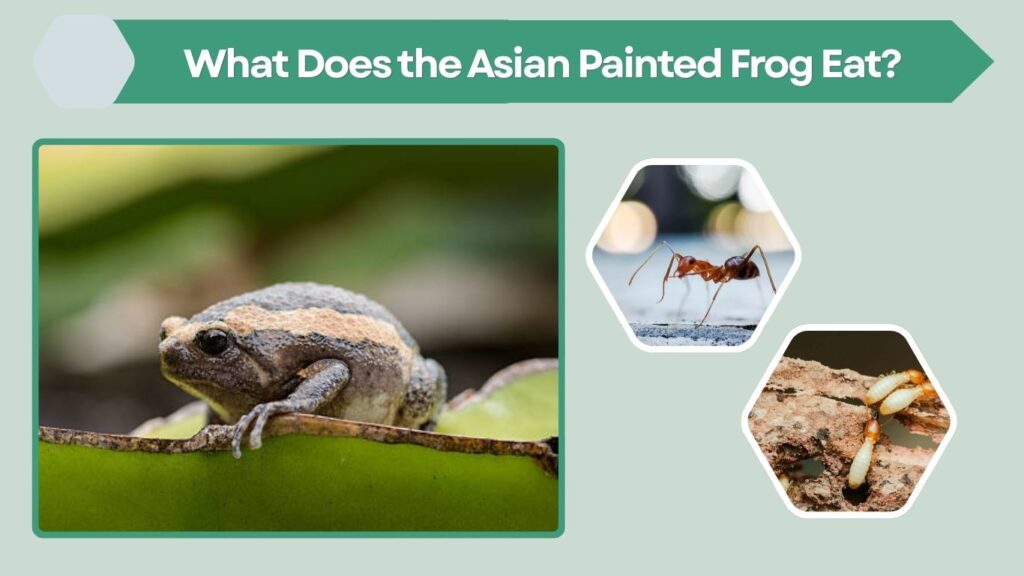
The Asian Painted Frog is an insect-eating amphibian that feeds mainly on small invertebrates found near moist habitats. It hunts mostly at night and waits quietly for prey to move close before attacking. Its wide mouth and sticky tongue help capture insects quickly. Because this frog consumes many pests, it plays an important role in maintaining balance in gardens, farms, and wetland ecosystems.
Main Diet
- Ants
- Termites
- Beetles
- Small worms
- Flies
- Tiny spiders
- Other soft-bodied insects
Hunting Style
The frog mainly uses an ambush hunting strategy. It hides among leaves, soil, or grass and waits for insects to approach. Once prey comes close enough, the frog rapidly extends its sticky tongue to capture the target. This feeding method allows it to conserve energy while still catching a large number of insects during nighttime activity.
Importance in Pest Control
Asian Painted Frogs help reduce populations of harmful insects naturally. Farmers and gardeners benefit from their presence because they feed on termites, ants, mosquitoes, and crop pests. Their feeding behavior helps support healthier ecosystems without the need for excessive pesticide use. They also serve as prey for birds, snakes, and other wildlife species.
Asian Painted Frog Lifespan and Life Cycle
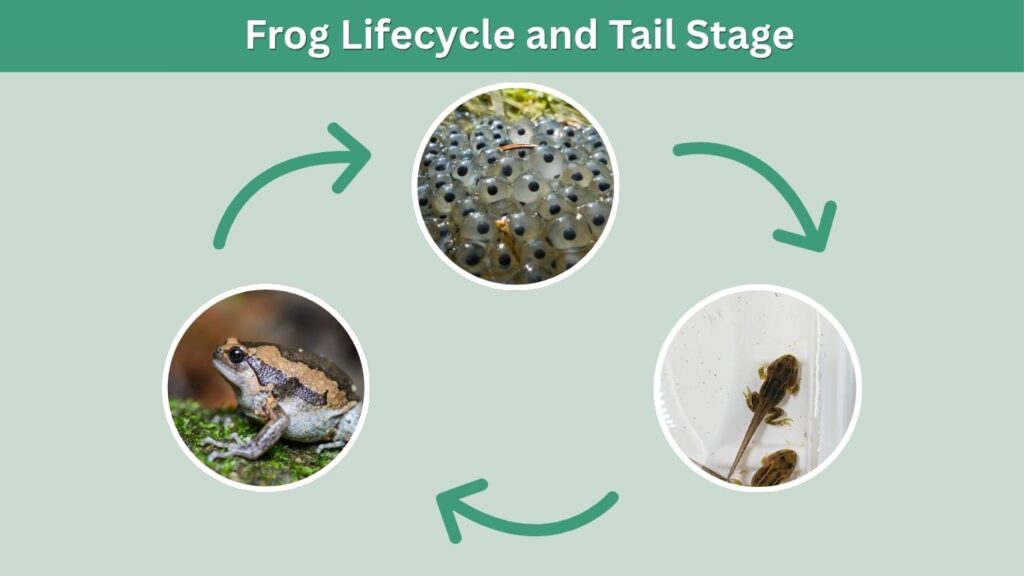
The Asian Painted Frog goes through several life stages, beginning as eggs and eventually developing into adult frogs. Like most amphibians, water is essential for reproduction and tadpole growth. Rainfall strongly influences breeding activity because temporary pools and wetlands provide safe environments for eggs and young tadpoles to develop properly.
Average Lifespan
In the wild, Asian Painted Frogs usually live several years depending on environmental conditions and predator threats. Frogs kept in captivity with proper care often survive longer because they receive stable food, clean water, and protection from predators. Factors such as habitat quality, humidity, temperature, and diet all influence lifespan.
Breeding Season
- Breeding mainly occurs during rainy seasons
- Males gather near shallow water
- Loud calls attract females
- Eggs are laid in calm water
- Moist environments improve survival rates
Tadpole Development
After eggs hatch, tadpoles begin living fully in water and feed on algae and tiny organic matter. As they grow, legs slowly develop while their tails gradually shrink. This process, known as metamorphosis, transforms them into small froglets capable of living both on land and near water sources. Young frogs later move into moist habitats where insects are abundant.
Asian Painted Frog as a Pet
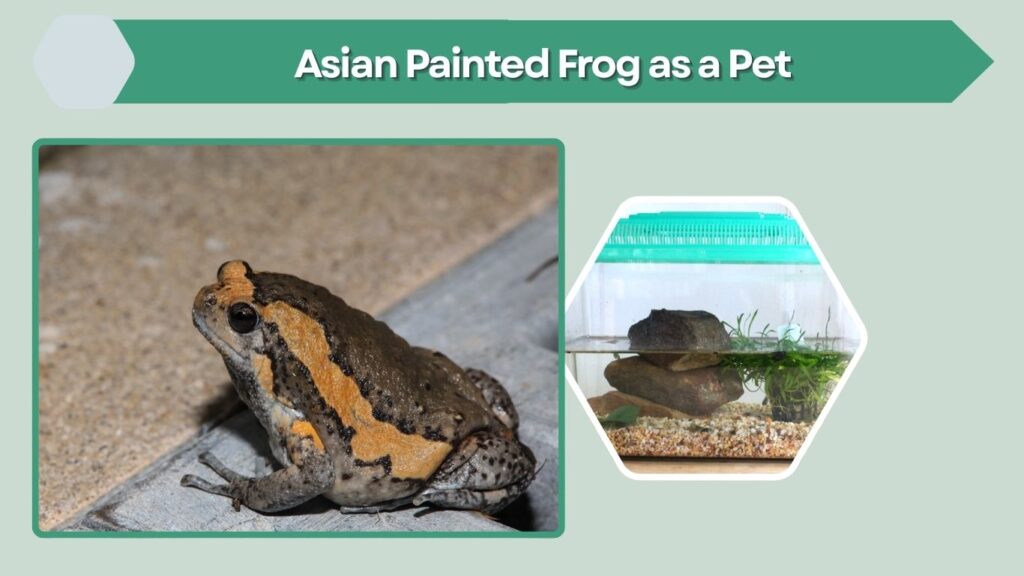
The Asian Painted Frog has become a popular pet because of its calm nature and unusual appearance. Many beginners choose this species since it requires relatively simple care compared to larger amphibians. However, owners still need to provide proper humidity, clean water, suitable substrate, and regular feeding to keep the frog healthy in captivity.
Is It a Good Pet?
This species is often considered beginner-friendly due to its peaceful behavior and manageable care needs. It spends much of its time hidden beneath substrate and usually becomes active during the evening. Although not highly interactive, many owners enjoy observing its feeding habits and burrowing behavior.
Tank Setup and Care
- Use moist soil or coconut fiber substrate
- Maintain moderate humidity levels
- Provide shallow clean water
- Include hiding places and leaf litter
- Keep temperatures warm but not extreme
Feeding in Captivity
Asian Painted Frogs in captivity are commonly fed live insects such as crickets, mealworms, roaches, and small worms. Feeding should occur several times each week depending on the frog’s age and size. Fresh water should always be available, and leftover insects should be removed to maintain a clean enclosure environment.
FAQs
What is the scientific name of the Asian Painted Frog?
The scientific name of the Asian Painted Frog is Kaloula pulchra. It belongs to the Microhylidae family, which includes many small narrow-mouthed frogs found in tropical regions of Asia and other warm climates around the world.
How big does an Asian Painted Frog get?
Adult Asian Painted Frogs usually grow between 5 and 8 centimeters in length. They have a rounded, chubby appearance with short legs and compact bodies, making them look larger and heavier than many other small frog species.
Is the Asian Painted Frog poisonous?
The Asian Painted Frog is not considered dangerous to humans. It may release mild skin secretions when stressed or threatened, but these are generally harmless. Washing hands after handling the frog is still recommended to avoid irritation or contamination.
Can Asian Painted Frogs be kept as pets?
Yes, Asian Painted Frogs are commonly kept as pets because of their calm behavior and simple care requirements. They need a warm enclosure with moist substrate, shallow water, hiding places, and a steady supply of live insects for feeding.
What does the Asian Painted Frog eat?
Asian Painted Frogs mainly eat insects and other tiny invertebrates. Their diet includes ants, termites, beetles, flies, small worms, and spiders. In captivity, they are often fed crickets, mealworms, and other live feeder insects.
