
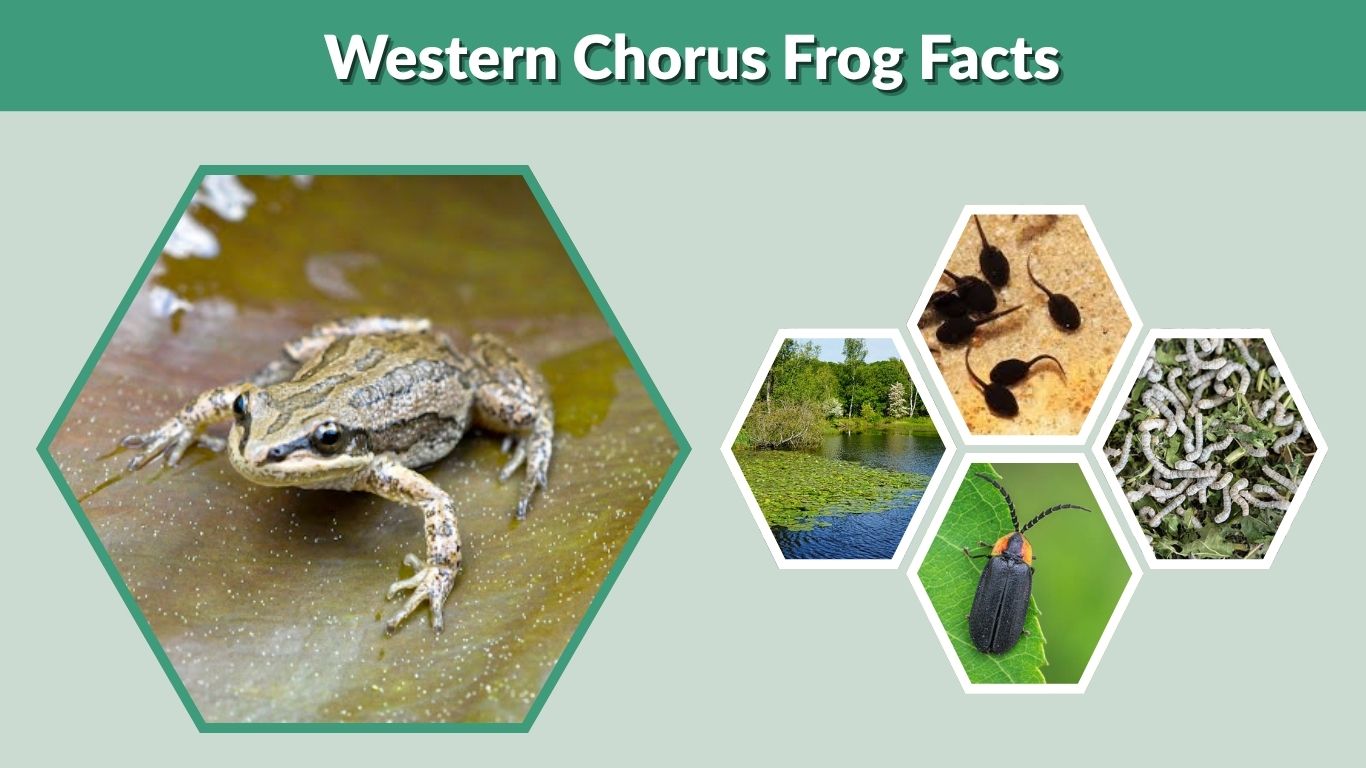
The Western Chorus Frog is a tiny amphibian famous for its loud springtime calls and striped body patterns. Despite its small size, this frog can produce surprisingly strong chirping sounds that fill wetlands, ponds, and marshes during breeding season. It is commonly found across parts of Canada and the northern United States, especially in moist grasslands and temporary pools. Many nature lovers recognize this species by its chorus-like nighttime calls and excellent camouflage. Learning about its habitat, behavior, range, and diet helps people better understand this important wetland amphibian.
What Is the Western Chorus Frog?
The Western Chorus Frog is a small tree frog species known for its loud breeding calls and ability to survive in cool climates. It is often one of the first frogs heard during early spring. Although tiny, this frog plays an important ecological role by feeding on insects and serving as prey for larger animals. Its striped body and secretive nature help it blend into grasses and wetland vegetation.
Scientific Name and Classification
- Scientific name: Pseudacris triseriata
- Family: Hylidae
- Common names: Western Chorus Frog, Striped Chorus Frog
- Animal group: Amphibian
- Related species: Boreal Chorus Frog
Why It Is Called a Chorus Frog
The name “chorus frog” comes from the loud group calls made during breeding season. Large numbers of males gather near shallow wetlands and call together during warm evenings. Their sounds resemble the noise produced by running fingers across a comb. This chorus helps attract females and signals the arrival of spring in many regions.
Western Chorus Frog Identification
The Western Chorus Frog is small and lightweight with smooth skin and long legs. It usually has brown, gray, or green coloration that blends with grasses and muddy habitats. Dark stripes running along its back are one of its most recognizable features. Because of its camouflage and tiny size, the frog can be difficult to spot even when many are calling nearby.
Size and Body Shape
Adult Western Chorus Frogs are usually between 2 and 4 centimeters long. Their slim bodies and lightweight structure allow them to move quickly through grasses and wetland plants. They have long hind legs that help with jumping and short front limbs used for climbing over vegetation. Despite being classified as a tree frog, they spend much of their time near the ground.
Color and Markings
- Gray, brown, or light green body colors
- Three dark stripes on the back
- Dark stripe running through the eye
- Pale belly coloration
- Camouflage patterns that match vegetation
Key Identification Features
- Small body size
- Smooth skin texture
- Rounded eyes
- Narrow head shape
- Small toe pads
- Thin dark facial stripe
Western Chorus Frog Habitat and Range
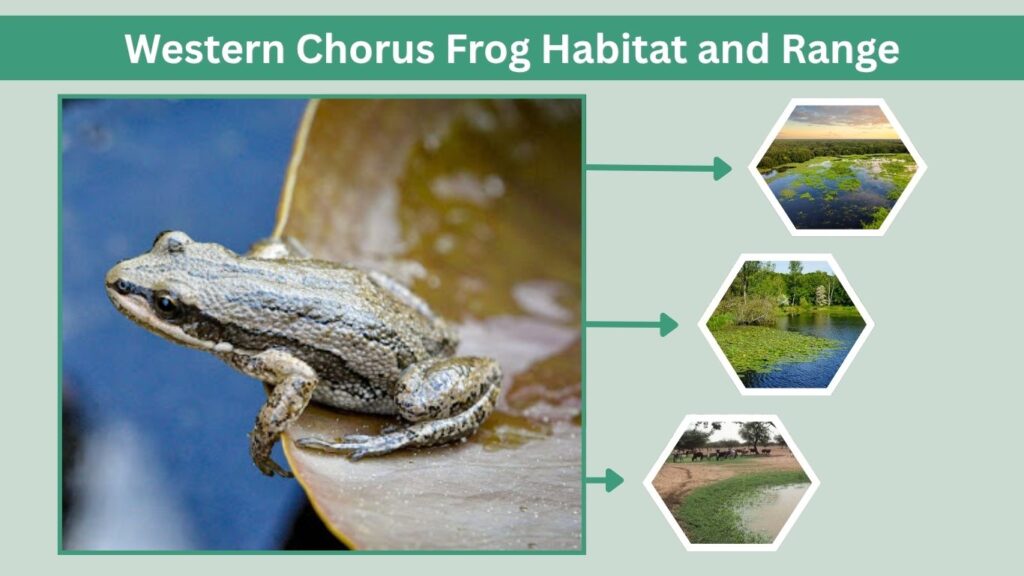
The Western Chorus Frog prefers moist environments with shallow freshwater sources. It is commonly found in marshes, ponds, wet meadows, grasslands, and forest edges. Temporary spring pools are especially important for breeding because they often contain fewer predators than permanent ponds. This adaptable species can survive in both natural wetlands and some human-modified environments with enough moisture and vegetation.
Natural Habitat
- Wetlands
- Marshes
- Temporary ponds
- Flooded grasslands
- Forest edges
- Shallow roadside ditches
Geographic Range
The Western Chorus Frog is widely distributed across parts of North America. It occurs throughout sections of southern Canada and the northern United States, especially around prairie regions and the Great Lakes area. Populations may vary depending on habitat quality and seasonal water availability. Wetland loss has reduced numbers in some local regions where breeding sites have disappeared.
Seasonal Movement
During early spring, Western Chorus Frogs move toward shallow breeding pools after snowmelt and rainfall. Males gather first and begin calling to attract females. After breeding season ends, the frogs spread into nearby grassy habitats where they spend summer feeding and hiding beneath vegetation. In colder months, they shelter beneath leaves, logs, or soil to survive freezing winter temperatures.
Western Chorus Frog Sound and Communication
The Western Chorus Frog is best known for its loud and distinctive breeding calls. Even though the frog is tiny, groups of calling males can create a powerful nighttime chorus heard from long distances. These calls are most common during spring when temperatures rise and breeding activity begins near wetlands and temporary ponds.
What Does the Western Chorus Frog Sound Like?
- Sounds similar to running fingers over a comb
- High-pitched chirping call
- Repeated short notes
- Loudest during warm evenings
- Common near breeding wetlands
Why Males Call
Male frogs use their calls mainly to attract females during breeding season. Calling also helps establish territory among nearby males. The louder and more active males often attract more mates. These vocalizations become especially intense after rainfall when breeding conditions are ideal.
What Does the Western Chorus Frog Eat?

The Western Chorus Frog feeds on small insects and other tiny invertebrates found in wetlands and grassy habitats. Its diet helps control insect populations naturally, making the frog beneficial for ecosystems and nearby gardens. Because it is mainly active at night, most feeding takes place during evening hours when insects become more active around water sources and vegetation.
Main Diet
- Mosquitoes
- Ants
- Beetles
- Small flies
- Spiders
- Tiny worms
- Other small insects
Hunting Behavior
The Western Chorus Frog uses an ambush hunting strategy to catch prey. It stays hidden among grasses or wet vegetation and waits for insects to move nearby. Once prey gets close enough, the frog quickly extends its sticky tongue to capture it. This method helps conserve energy while still allowing the frog to feed successfully in dense wetland environments.
Importance in Pest Control
Western Chorus Frogs help reduce populations of mosquitoes and agricultural pests. Their feeding behavior supports healthier ecosystems by naturally controlling insects without chemicals. Wetlands with healthy frog populations often have balanced insect communities, which benefits both wildlife and nearby human environments.
Western Chorus Frog Behavior
The Western Chorus Frog is mostly nocturnal and spends much of the daytime hidden beneath vegetation, leaves, or logs. It becomes more active during humid evenings and rainy weather. Despite its tiny size, this species is agile and capable of fast movements when threatened. Camouflage and quick escape behavior help protect it from predators in open wetland habitats.
Nocturnal Activity
- Active mostly after sunset
- Hides during daytime hours
- Increased movement after rainfall
- Most feeding occurs at night
- Breeding calls strongest during evenings
Climbing and Jumping Ability
Although small, the Western Chorus Frog is an excellent jumper. Strong hind legs allow it to leap quickly through grasses and shallow water areas. It can also climb low vegetation and reeds, especially near breeding wetlands. These abilities help the frog avoid predators and move efficiently between feeding and breeding sites.
Defense Mechanisms
The frog mainly relies on camouflage for protection. Its striped body blends well with grasses, mud, and wetland plants. When danger approaches, it quickly jumps away or hides beneath vegetation. Remaining motionless is another important defense behavior because predators often overlook the frog’s natural coloration in complex wetland environments.
Western Chorus Frog Life Cycle
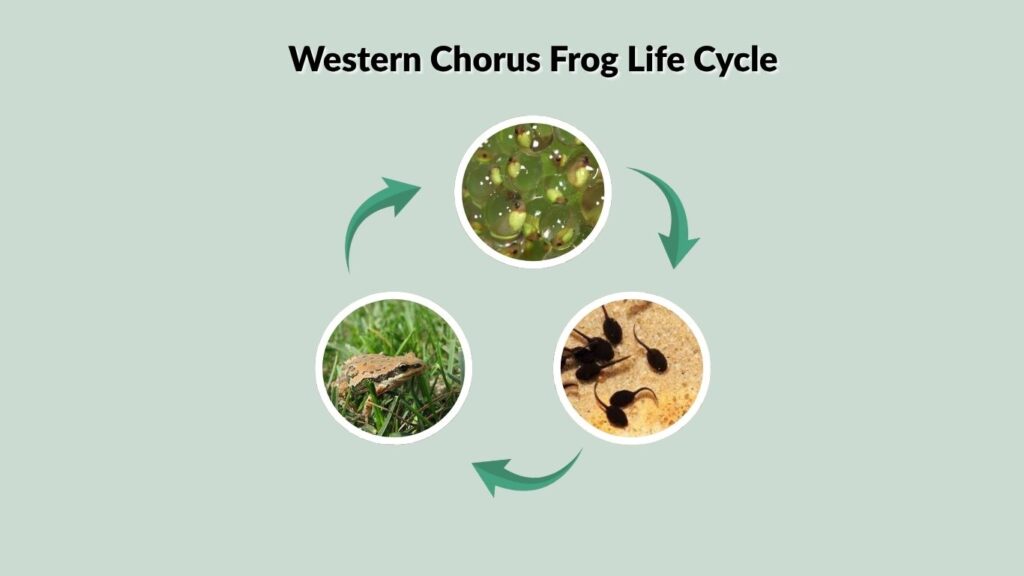
The life cycle of the Western Chorus Frog begins during early spring when adults gather near temporary pools and wetlands for breeding. Water is essential because eggs and tadpoles develop in shallow aquatic habitats. Seasonal rainfall and warm temperatures strongly influence breeding success and tadpole survival in many populations.
Breeding Season
- Breeding begins in early spring
- Males call near shallow ponds
- Females lay eggs in clusters
- Temporary pools provide safe breeding sites
- Rainfall increases breeding activity
Eggs and Tadpoles
Female frogs lay small clusters of eggs attached to underwater plants or debris. After hatching, tadpoles begin feeding on algae and organic matter found in shallow water. Tadpoles grow quickly because many temporary breeding pools dry up later in the season. Fast development improves survival before water sources disappear.
Metamorphosis
As tadpoles mature, they slowly develop legs while their tails shrink. This transformation process, called metamorphosis, eventually produces tiny froglets capable of living on land. Young frogs move into grassy habitats near wetlands where they continue feeding and growing until adulthood.
Are Western Chorus Frogs Poisonous?
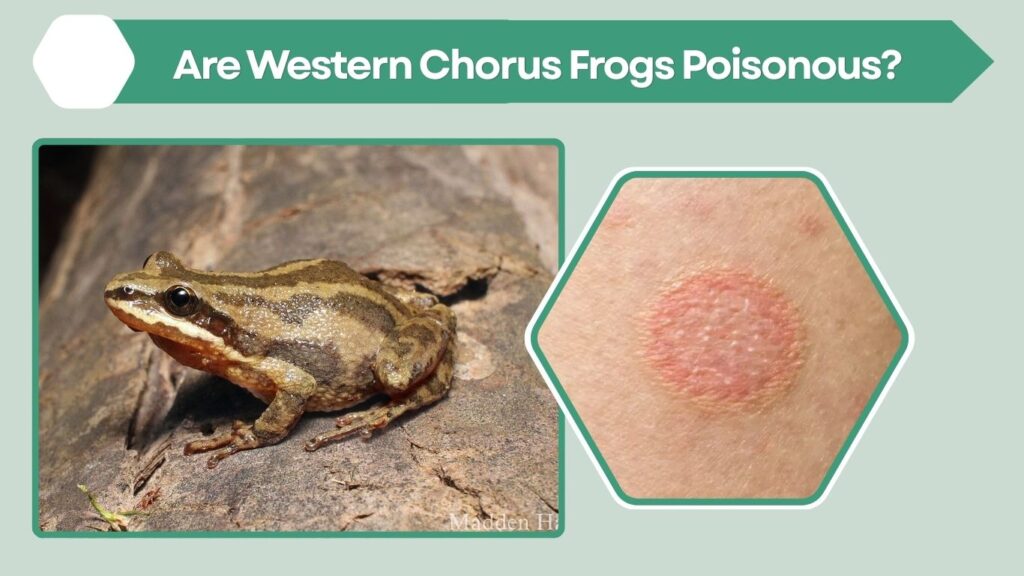
Western Chorus Frogs are not considered poisonous to humans. They may produce mild skin secretions like many amphibians, but these secretions are generally harmless. The species is safe to observe in nature, although unnecessary handling should be avoided to protect the frog’s sensitive skin and natural moisture balance.
Toxicity and Human Safety
- Non-poisonous amphibian species
- Mild skin secretions may occur
- Safe to observe in the wild
- Harmless to humans when not disturbed
- Best handled minimally
Safe Handling Tips
If handling becomes necessary, clean hands should be used to avoid transferring chemicals or oils onto the frog’s delicate skin. Frogs should never be squeezed or kept out of moist environments for long periods. Gentle observation from a distance is usually the safest approach for both humans and the animal itself.
FAQs
What is the scientific name of the Western Chorus Frog?
The scientific name of the Western Chorus Frog is Pseudacris triseriata. It belongs to the Hylidae family, which includes many small tree frogs found throughout North America and other regions with wetland habitats.
What does a Western Chorus Frog sound like?
The Western Chorus Frog produces a loud, high-pitched call that sounds similar to running fingers across a comb. Large groups of males call together during spring evenings, creating the famous “chorus” that gives the species its common name.
Are Western Chorus Frogs poisonous?
No, Western Chorus Frogs are not poisonous to humans. They may produce mild skin secretions like many amphibians, but these are generally harmless. It is still best to avoid unnecessary handling to protect the frog’s sensitive skin.
What do Western Chorus Frogs eat?
Western Chorus Frogs mainly eat small insects and invertebrates such as mosquitoes, ants, beetles, flies, spiders, and tiny worms. Their diet helps naturally control insect populations in wetlands, grasslands, and nearby gardens.
Are Western Chorus Frogs endangered?
Western Chorus Frogs are not globally endangered, but some local populations face decline due to wetland destruction, pollution, and habitat loss. Conservation programs in certain regions focus on protecting breeding habitats and restoring wetland ecosystems.
