
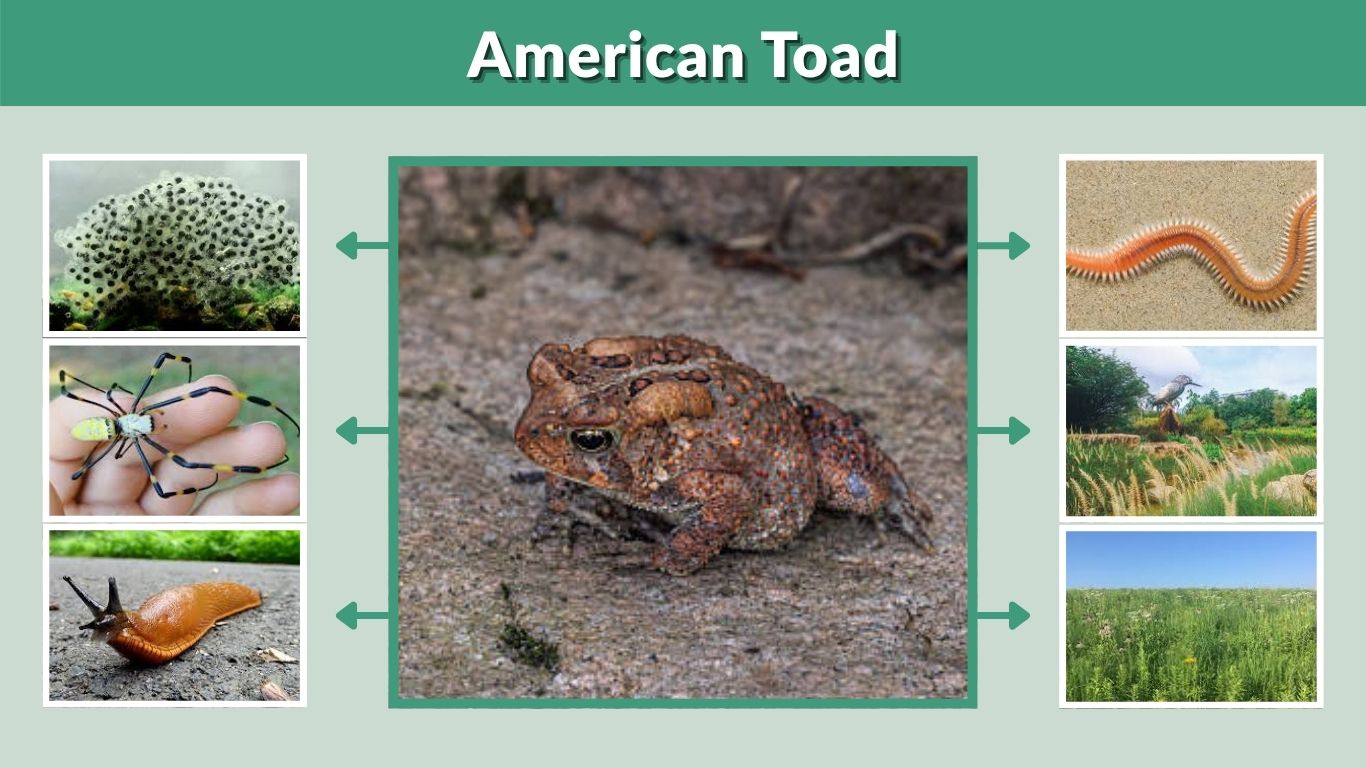
The American Toad is one of the most familiar amphibians in North America. Scientifically known as Anaxyrus americanus, this hardy toad is commonly found in forests, gardens, grasslands, and suburban yards. It is recognized by its warty skin, short legs, and musical breeding calls heard during spring evenings near ponds and wetlands.
American Toads play an important role in controlling insect populations because they feed on beetles, worms, ants, and other small invertebrates. Their ability to adapt to many habitats has helped them survive across a wide geographic range. Learning about their habitat, life cycle, calls, and behavior highlights the ecological importance of this fascinating amphibian.
What Is the American Toad?
The American Toad is a medium-sized amphibian belonging to the Bufonidae family. It is one of the most widespread toads in eastern North America and is known for its rough skin and calm behavior. Unlike frogs, American Toads spend more time on land and prefer moist terrestrial habitats close to freshwater sources.
Scientific Classification
- Scientific name: Anaxyrus americanus
- Family: Bufonidae
- Common name: American Toad
- Type: Terrestrial amphibian
- Native region: North America
Physical Appearance
- Dry, warty skin texture
- Brown, gray, olive, or reddish coloration
- Large parotoid glands behind the eyes
- Short legs compared to frogs
- Golden or copper-colored eyes
American Toad Scientific Name Explained
The scientific name Anaxyrus americanus refers to its classification within the true toad family. The species was previously placed in the genus Bufo before being reclassified. Its scientific naming helps distinguish it from other North American toads and related amphibians.
American Toad Habitat and Distribution
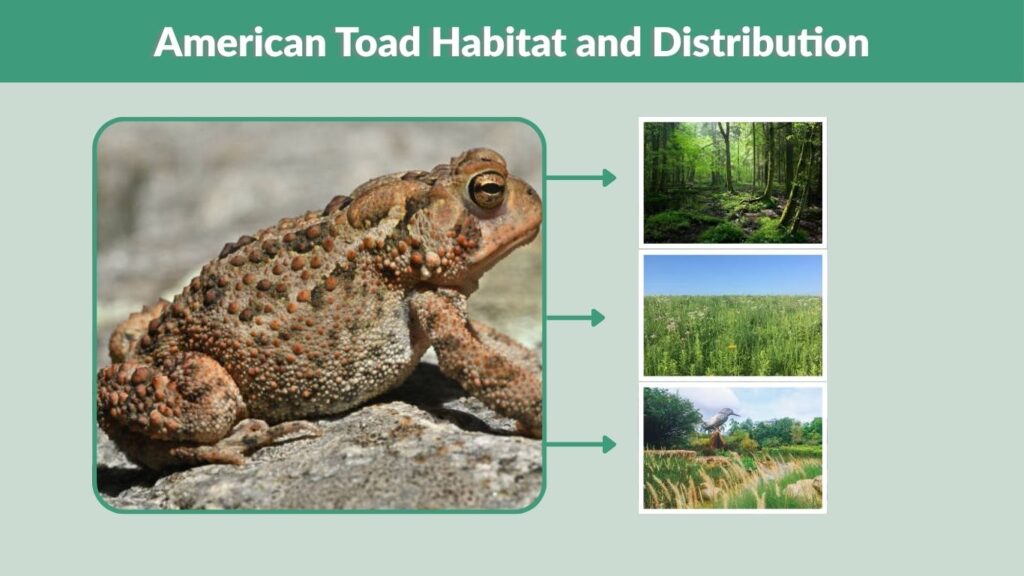
American Toads are highly adaptable and can survive in many different environments. They prefer moist habitats with loose soil and nearby freshwater, but they also live successfully in suburban gardens and parks. During dry or cold weather, they often hide underground to conserve moisture and energy.
Natural Habitat
- Forests
- Grasslands
- Gardens
- Wetlands
- Suburban backyards
Moist soil and shaded hiding places are especially important because toads lose water easily through their skin.
Geographic Distribution
The American Toad is widely distributed throughout:
- Eastern United States
- Southern Canada
- Great Lakes region
- Northeastern North America
Its broad range makes it one of the most recognizable amphibians in the region.
Habitat Adaptations
American Toads have several adaptations that help them survive in changing environments. Their skin coloration provides camouflage against leaves and soil, while burrowing behavior protects them from extreme temperatures and dehydration. These traits allow the species to thrive in forests, fields, and human-altered habitats.
American Toad Size and Lifespan
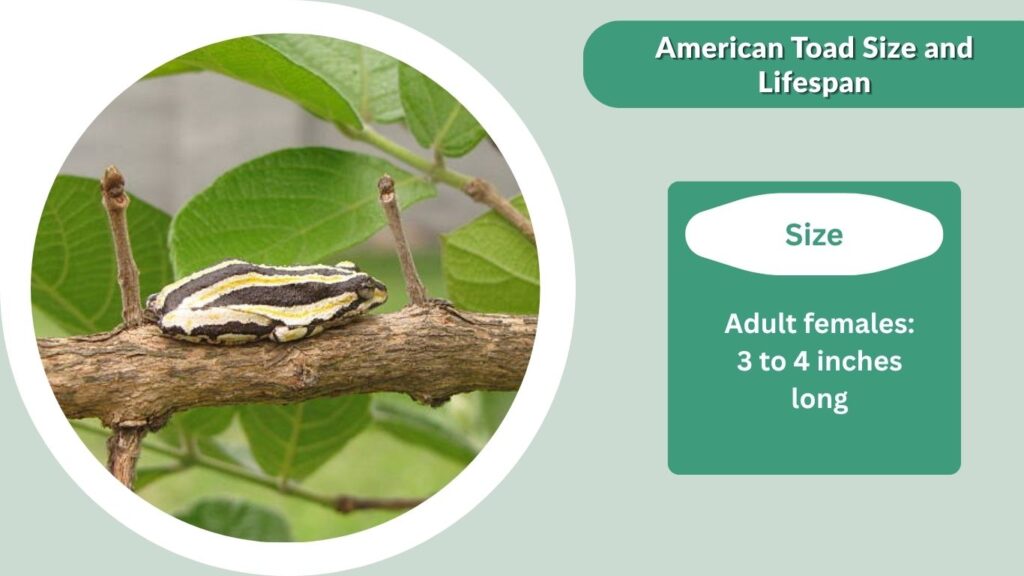
The American Toad may appear small, but it is a durable amphibian capable of surviving harsh winters and seasonal environmental changes. Growth rates depend on food availability, climate, and habitat quality.
Average Size
- Adult males: 2 to 3 inches long
- Adult females: 3 to 4 inches long
- Females usually larger than males
- Compact body with short limbs
Lifespan Expectations
Wild American Toads commonly live for several years, although predators and environmental hazards reduce survival rates. In captivity, properly cared-for individuals may survive for over 10 years under stable conditions.
Growth and Development
American Toads begin life as eggs laid in long jelly-like strings within shallow water. After hatching, tadpoles develop in ponds before transforming into tiny juvenile toads. Young toads leave the water after metamorphosis and gradually adapt to life on land.
American Toad Diet and Feeding Habits
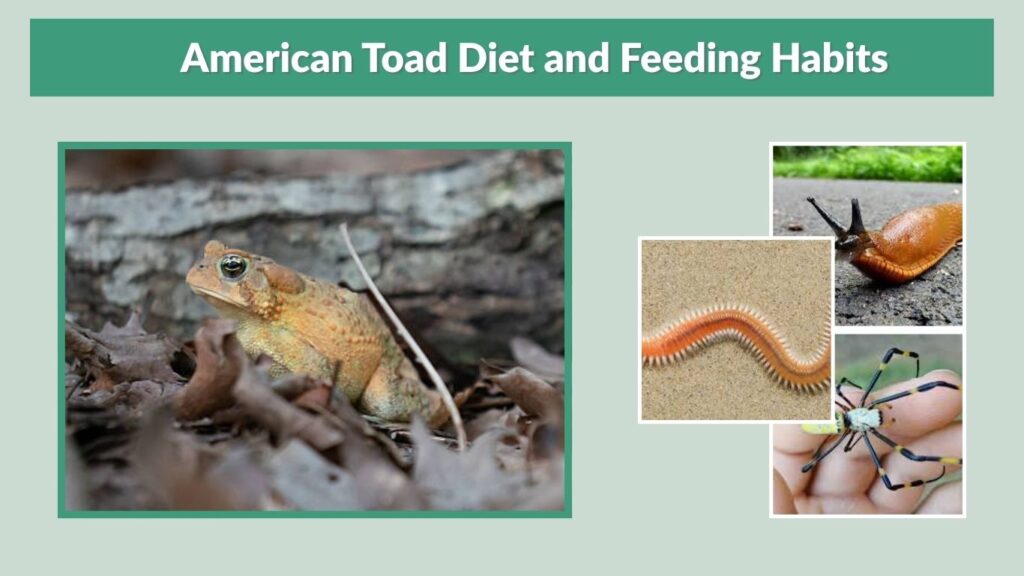
American Toads are nocturnal insectivores that help control pest populations in natural and suburban ecosystems. Their feeding behavior benefits gardens and forests by reducing insects and other small invertebrates.
What Do American Toads Eat?
- Beetles
- Ants
- Worms
- Slugs
- Spiders
- Small insects
Hunting Behavior
American Toads usually hunt at night using ambush techniques. They remain still until prey moves nearby, then quickly capture it with their sticky tongues. Their excellent eyesight helps detect movement even in low-light conditions.
American Toad Call and Sound
The American Toad is well known for its long musical trill, which is commonly heard during spring and early summer evenings. Male toads gather near ponds and wetlands to call for mates during the breeding season. Their calls are one of the easiest ways to identify the species in the wild.
American Toad Call Description
The call of the American Toad is a high-pitched musical trill that may last several seconds. Males usually produce these sounds while floating in shallow breeding ponds. Large groups calling together can create loud nighttime choruses in wetland habitats.
Why American Toads Call
American Toads mainly call to attract females during the breeding season. Males may also use vocalizations to compete with nearby males or establish small breeding territories near water sources.
Best Time to Hear American Toad Sounds
The best time to hear American Toad calls is during warm spring evenings after rainfall. Wetlands, ponds, marshes, and flooded ditches are common breeding locations where calling activity becomes especially noticeable.
American Toad Life Cycle
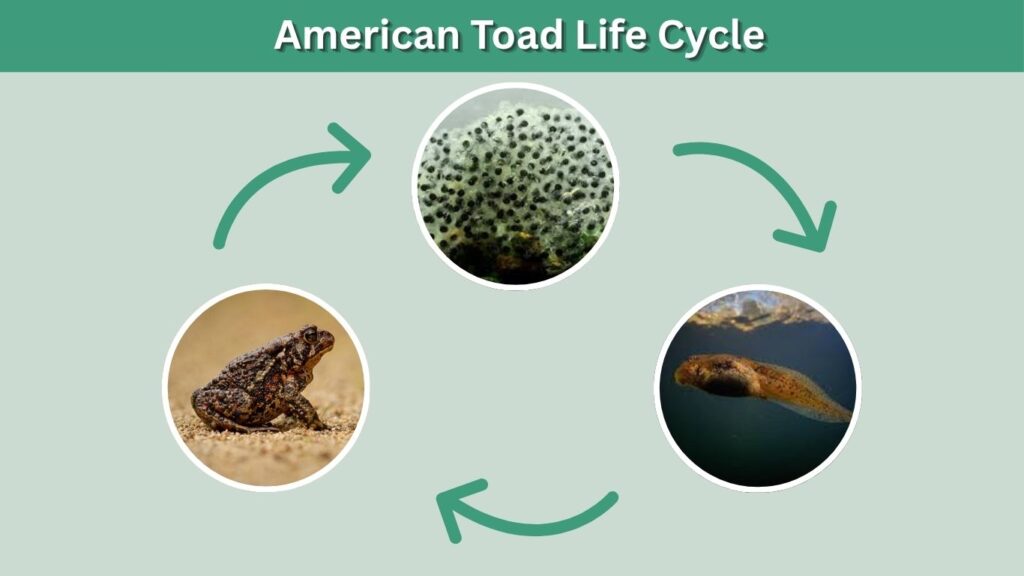
The life cycle of the American Toad includes several developmental stages, beginning in water and ending on land. Moisture and temperature strongly influence breeding success, tadpole growth, and juvenile survival.
Egg Stage
- Females lay long strings of eggs
- Eggs hatch in shallow freshwater
- Breeding occurs during spring
- Warm temperatures speed development
Tadpole Development
After hatching, tadpoles remain fully aquatic and feed on algae and organic material in the water. Over time, they develop legs and lungs while gradually losing their tails. This transformation process is known as metamorphosis.
Adult Stage
Young toads leave the water after metamorphosis and begin life on land. Adults spend most of their time in moist terrestrial habitats and return to ponds mainly during the breeding season.
American Toad Poison and Defense Mechanisms
American Toads possess natural defense systems that help protect them from predators. Their skin glands produce mild toxins that discourage many animals from attacking or eating them. These defensive adaptations increase survival in the wild.
Is the American Toad Poisonous?
American Toads are mildly toxic because of secretions produced by their parotoid glands. These toxins are not dangerous to humans through casual contact, but pets such as dogs may become sick if they bite or lick a toad.
Defensive Behaviors
- Puffing up the body to appear larger
- Remaining motionless for camouflage
- Releasing defensive toxins
- Hiding underground during danger
These behaviors help reduce attacks from birds, mammals, and snakes.
Predators of American Toads
Despite their toxins, American Toads are still preyed upon by several animals. Common predators include snakes, birds, raccoons, and larger amphibians. Tadpoles are especially vulnerable to fish and aquatic insects.
American Toad vs Fowler’s Toad
American Toads are often confused with Fowler’s Toads because both species share similar body shapes and overlapping ranges. However, there are several physical and behavioral differences that help identify them correctly.
Comparison Table
| Feature | American Toad | Fowler’s Toad |
| Scientific Name | Anaxyrus americanus | Anaxyrus fowleri |
| Skin Spots | 1–2 warts per spot | 3 or more warts per spot |
| Call | Long musical trill | Short nasal call |
| Habitat | Forests and gardens | Sandy habitats |
| Belly Color | Spotted | Usually plain |
Key Identification Differences
American Toads usually have fewer warts within each dark skin spot compared to Fowler’s Toads. Their calls are also much longer and more musical. Habitat preferences may differ slightly, with Fowler’s Toads often favoring sandy soils and coastal environments.
Interesting Facts About American Toads
American Toads are highly adaptable amphibians capable of surviving cold winters by burrowing underground below the frost line. Their ability to live near humans has helped them remain common across much of their range.
Amazing Facts
- Can survive freezing winters underground
- Produces loud breeding choruses
- Excellent natural insect controller
- Mostly active during nighttime
- Uses skin toxins for defense
- Commonly found in backyard gardens
FAQs
What is the scientific name of the American Toad?
The scientific name of the American Toad is Anaxyrus americanus. It belongs to the Bufonidae family, which includes true toads.
Are American Toads poisonous to humans?
American Toads produce mild toxins through their skin glands, but they are generally harmless to humans if handled carefully and hands are washed afterward.
What do American Toads eat?
American Toads feed mainly on insects and small invertebrates, including beetles, ants, worms, slugs, and spiders.
How long do American Toads live?
In the wild, American Toads commonly live for several years. Captive individuals may survive for more than 10 years with proper care.
What does an American Toad sound like?
The American Toad produces a long, musical trill that is commonly heard near ponds and wetlands during spring breeding season.
