
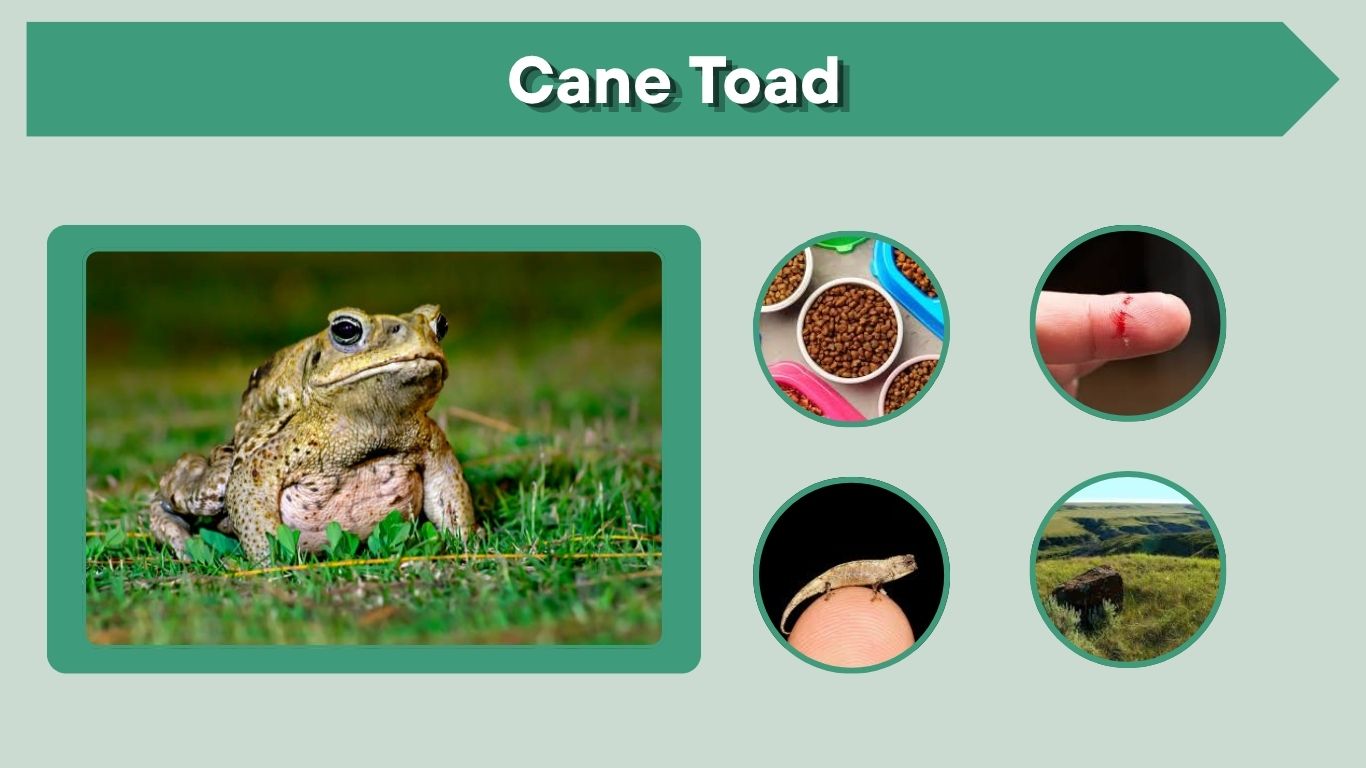
The Cane Toad is one of the most well-known invasive amphibians in the world. Scientifically called Rhinella marina, this large toad was originally native to Central and South America but was introduced to other regions for pest control. It is now especially famous in Australia, where its rapid spread has caused serious environmental problems.
Cane Toads are recognized for their tough warty skin, large poison glands, and ability to survive in many habitats. They are active mainly at night and feed on a wide variety of animals and insects. Understanding their habitat, poison, diet, and ecological impact helps explain why this species remains such a major concern in some ecosystems.
What Is a Cane Toad?
The Cane Toad is a large terrestrial amphibian belonging to the Bufonidae family. It is one of the biggest toad species in the world and is highly adaptable to tropical and subtropical climates. The species became widely known after being introduced into several countries to control agricultural pests.
Scientific Classification
- Scientific name: Rhinella marina
- Family: Bufonidae
- Common name: Cane Toad
- Type: Terrestrial amphibian
- Native region: Central and South America
Physical Appearance
- Thick warty skin
- Large poison glands behind the eyes
- Brown, olive, or reddish coloration
- Strong legs for hopping
- Broad and heavy body shape
Cane Toad Scientific Name Explained
The scientific name Rhinella marina identifies the species within the true toad family. It was previously classified under the genus Bufo before taxonomic revisions placed it in Rhinella. Scientific naming helps distinguish Cane Toads from native toad species in invaded regions.
Cane Toad Habitat and Distribution
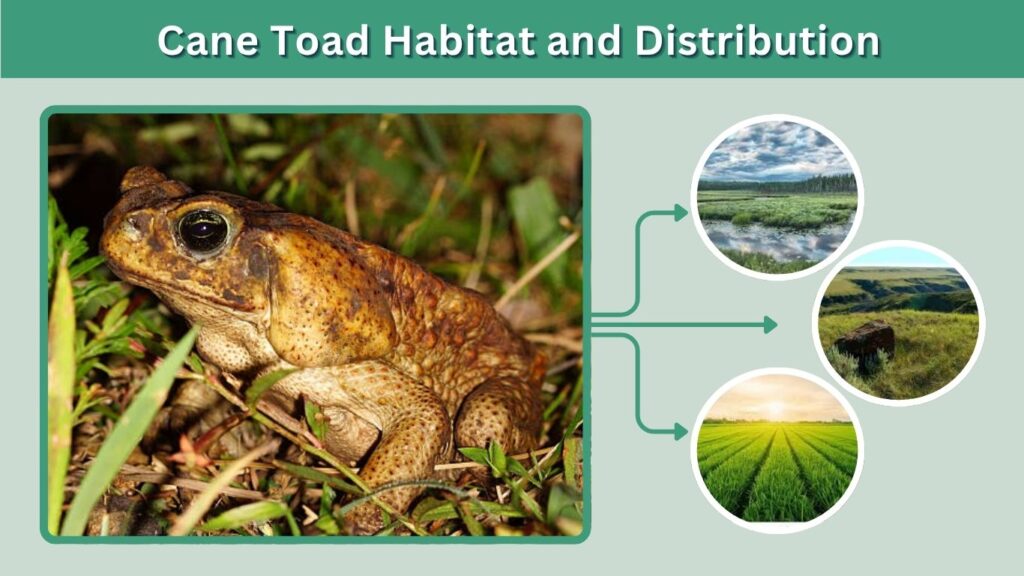
Cane Toads are highly adaptable and can survive in forests, grasslands, wetlands, farms, and suburban environments. Their ability to reproduce quickly and tolerate many environmental conditions has allowed them to spread far beyond their original range.
Native Habitat
- Tropical forests
- Wetlands
- Grasslands
- Agricultural fields
- Riverbanks and ponds
These habitats provide moisture, shelter, and abundant insect prey needed for survival.
Cane Toads in Australia
Cane Toads were introduced to Australia in the 1930s to control beetles damaging sugar cane crops. However, the toads spread rapidly and became an invasive species. Native predators often die after attempting to eat them because of their powerful toxins.
Cane Toads in Florida
Established Cane Toad populations also exist in Florida, especially in warm urban and suburban environments. Gardens, canals, and ponds provide suitable habitats where the species can breed successfully throughout much of the year.
Cane Toad Size and Physical Features
The Cane Toad is much larger than many native toad species. Females are generally bigger than males and can become extremely heavy under favorable environmental conditions.
Average Size
- Adults commonly reach 4 to 6 inches long
- Large females may exceed 9 inches
- Heavy-bodied structure
- Males usually smaller than females
Largest Cane Toads Recorded
Some exceptionally large Cane Toads have weighed several pounds. Growth depends on food availability, climate, and habitat quality. Invasive populations often thrive where predators are limited and food is abundant.
Unique Physical Adaptations
- Powerful poison glands
- Tough protective skin
- Strong night vision
- Excellent ability to survive dry conditions
- High reproductive capacity
These traits make Cane Toads highly successful invaders in many ecosystems.
Cane Toad Diet and Feeding Habits
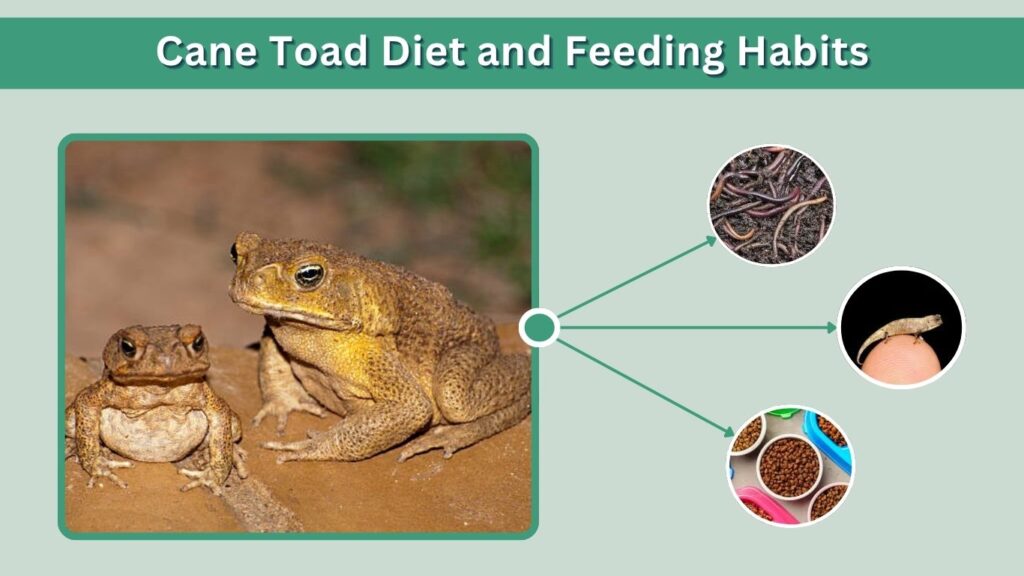
Cane Toads are opportunistic feeders that eat almost anything small enough to swallow. Their flexible diet is one reason they adapt so successfully to new environments.
What Do Cane Toads Eat?
- Beetles
- Ants
- Worms
- Small reptiles
- Pet food
- Small mammals
- Other amphibians
Hunting Behavior
Cane Toads mainly hunt at night using ambush feeding techniques. They remain still until prey approaches, then quickly capture it with sticky tongues. Artificial lights often attract insects, making urban environments ideal feeding locations for these toads.
Are Cane Toads Poisonous?
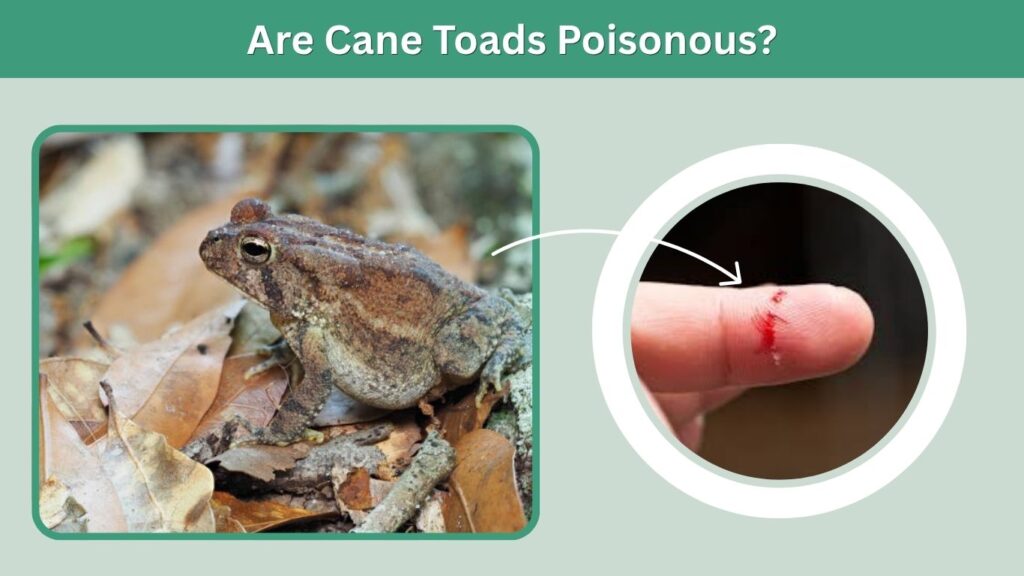
Cane Toads are highly toxic amphibians that use poison as a defense against predators. Large glands behind their eyes release a milky toxin capable of harming or killing many animals. Their poison is one of the main reasons the species has caused major ecological problems in areas where it has been introduced.
How Cane Toad Poison Works
The toxin produced by Cane Toads affects the nervous and cardiovascular systems of predators. When threatened, the toad secretes poison from its parotoid glands. Animals that bite or swallow the toad may experience severe poisoning symptoms within minutes.
Are Cane Toads Poisonous to Humans?
Cane Toads are dangerous if their toxins are swallowed or transferred into the eyes or mouth. Casual skin contact is usually not serious, but handling should always be followed by thorough hand washing. Children should avoid touching these toads because the poison may cause irritation or illness.
Are Cane Toads Poisonous to Dogs?
- Excessive drooling
- Vomiting
- Bright red gums
- Disorientation
- Seizures in severe cases
Dogs are especially vulnerable because they may bite or lick the toad. Immediate veterinary treatment is extremely important if poisoning symptoms appear.
Why Are Cane Toads a Problem?
Cane Toads are considered one of the world’s most harmful invasive amphibians. Their rapid reproduction, toxic defenses, and broad diet allow them to spread quickly and disrupt native ecosystems.
Environmental Problems
Cane Toads compete with native amphibians and reptiles for food and habitat. Many predators die after attempting to eat them because native wildlife often has no natural resistance to the toxins.
Problems in Australia
Australia has experienced some of the worst ecological impacts from Cane Toad invasions. Since their introduction, the toads have spread across large regions and contributed to declines in native snakes, lizards, and marsupials that consume them.
Control and Management Efforts
- Public awareness campaigns
- Removal programs
- Habitat monitoring
- Research on biological control
- Protection of native predators
Scientists and wildlife agencies continue searching for effective ways to reduce Cane Toad populations without harming native wildlife.
Cane Toad Life Cycle and Reproduction
Cane Toads reproduce rapidly, which contributes greatly to their invasive success. Warm temperatures and access to freshwater allow breeding to occur repeatedly throughout the year in some regions.
Cane Toad Eggs
Females lay long strings containing thousands of eggs in ponds, wetlands, and slow-moving water. The eggs hatch quickly under warm conditions, allowing populations to grow rapidly.
Tadpole Development
Tadpoles remain aquatic while feeding on algae and organic matter. Even at this stage, they contain toxins that discourage predators. Over time, tadpoles develop legs and lungs before leaving the water as tiny juvenile toads.
Baby Cane Toads
Young Cane Toads resemble miniature adults and grow quickly in warm environments with abundant food. Juveniles already possess toxic skin secretions that help protect them from predators.
Cane Toad Sound and Communication
Cane Toads use vocal sounds mainly during breeding season. Males gather near water and produce calls to attract females and compete with other males.
Cane Toad Calls
The Cane Toad produces a low-pitched rattling or trilling sound that may continue for several seconds. Breeding choruses are often heard near ponds after rainfall.
When Cane Toads Call
- Warm rainy nights
- Breeding season
- Near wetlands and ponds
- Humid evening conditions
Calling activity increases after heavy rain because moist conditions support breeding and movement.
Communication and Territory
Male Cane Toads may compete for favorable calling spots near breeding water. Vocalizations help attract mates and may discourage nearby rivals from entering the same area.
Cane Toad vs Southern Toad
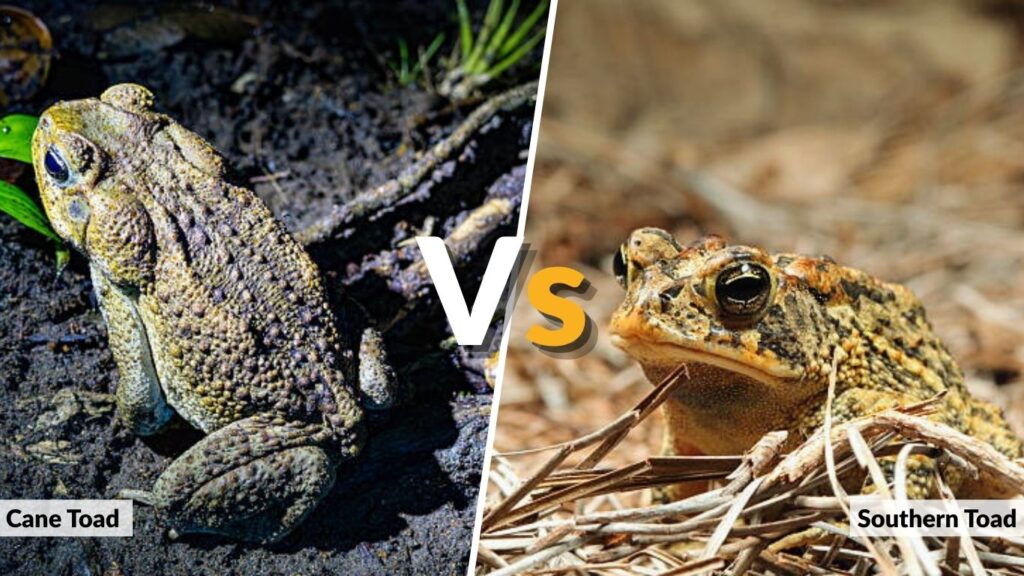
Cane Toads are sometimes confused with native Southern Toads, but several features clearly separate the two species. Cane Toads are much larger and possess more prominent poison glands.
Comparison Table
| Feature | Cane Toad | Southern Toad |
| Scientific Name | Rhinella marina | Anaxyrus terrestris |
| Size | Very large | Medium |
| Poison Strength | Highly toxic | Mildly toxic |
| Habitat | Tropical and suburban | Forests and sandy habitats |
| Body Shape | Heavy and bulky | Smaller and slimmer |
Key Differences
Cane Toads have larger heads, thicker bodies, and more obvious poison glands than Southern Toads. Southern Toads are also generally less aggressive and less harmful to predators and pets.
FAQs
Are Cane Toads dangerous to humans?
Cane Toads are generally not deadly to humans, but their toxins can cause irritation, nausea, and other health problems if swallowed or transferred into the eyes or mouth. Hands should always be washed after contact.
How fast do Cane Toads reproduce?
Cane Toads reproduce very quickly. A single female may lay thousands of eggs at one time, allowing populations to grow rapidly in suitable environments.
What sounds do Cane Toads make?
Male Cane Toads produce low-pitched trills or rattling calls, especially during rainy nights in breeding season near ponds and wetlands.
Where are Cane Toads originally from?
Cane Toads are native to Central and South America. They were later introduced into several countries, including Australia, for agricultural pest control.
Can Cane Toads survive in urban areas?
Yes, Cane Toads adapt well to urban and suburban environments. Gardens, canals, parks, and outdoor lights that attract insects provide excellent feeding and breeding opportunities.
