
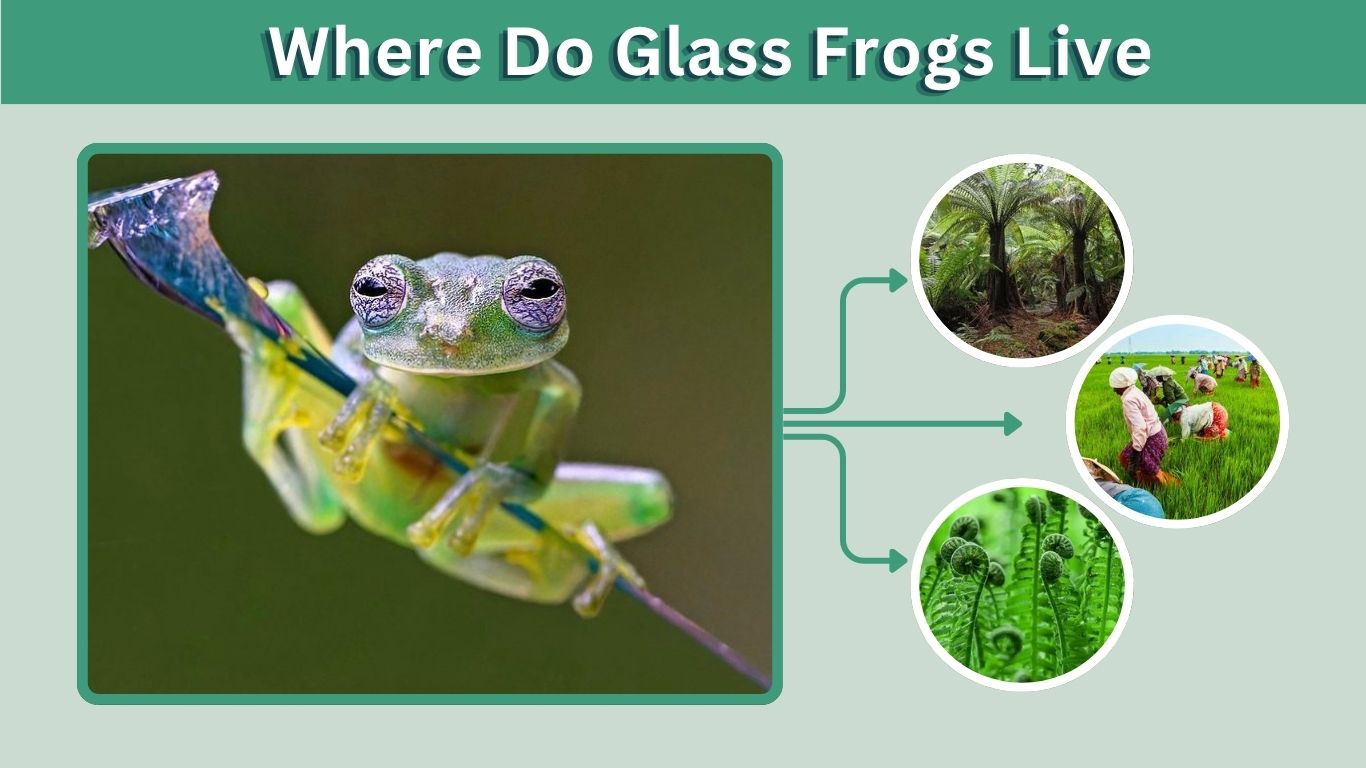
Glass frogs live in humid tropical forests throughout Central and South America. Most species stay close to clear, fast-moving streams, where adults rest on leaves and branches while their tadpoles develop in the water below. Their translucent bodies, green coloring, and climbing ability help them survive among rainforest vegetation. Although glass frogs are often associated with the Amazon, many species also inhabit mountain forests, cloud forests, and lowland rainforests outside the Amazon Basin.
Where Do Glass Frogs Live?
Glass frogs live mainly in tropical parts of Central and South America. Their natural range extends from southern Mexico through Central America and into northern and central regions of South America.
They are usually found in warm, moist forests with abundant vegetation and clean running water. Most species live near streams because their reproductive cycle depends on both trees and freshwater.
Common glass frog habitats include:
- Tropical rainforests
- Cloud forests
- Humid mountain forests
- Lowland forests
- Forest edges
- Vegetation beside rivers and streams
- Areas near waterfalls
Glass frogs spend most of their adult lives above the ground, but their tadpoles live underwater.
What Continent Do Glass Frogs Live On?
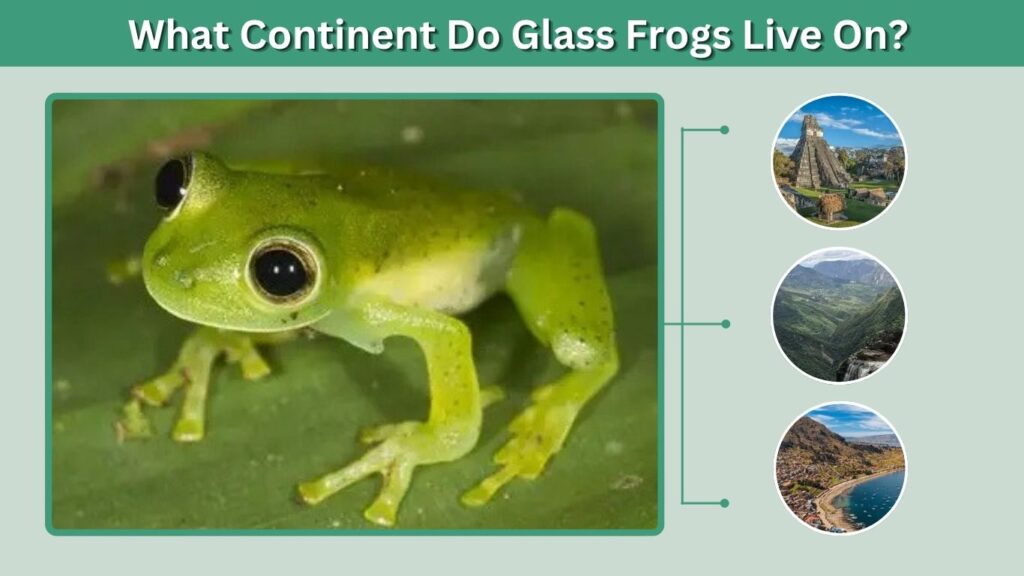
Glass frogs naturally occur in two continents: North America and South America.
Their North American range is limited mainly to southern Mexico and Central America. In South America, they occur across several tropical countries, especially in areas containing moist forests and freshwater streams.
Countries Where Glass Frogs Live
Glass frogs may be found in countries such as:
- Mexico
- Belize
- Guatemala
- Honduras
- Nicaragua
- Costa Rica
- Panama
- Colombia
- Venezuela
- Ecuador
- Peru
- Bolivia
- Brazil
- Guyana
- Suriname
- Argentina
The exact range varies by species. Some glass frogs are widespread, while others live in only one mountain range, watershed, or small forest region.
Do Glass Frogs Live in the Rainforest?
Yes, most glass frogs live in rainforests or similarly humid tropical forests. Rainforest environments provide the moisture, vegetation, insects, and running water they need.
Glass frogs have thin, permeable skin that can lose moisture quickly. Humid conditions help prevent dehydration, especially during the night when they are most active.
Rainforests also provide broad leaves and branches that glass frogs use for:
- Sleeping
- Hiding from predators
- Hunting insects
- Calling for mates
- Laying eggs
- Guarding egg clutches
During the day, glass frogs commonly rest beneath leaves, where they remain hidden from birds, snakes, and other predators.
Do Glass Frogs Live in the Amazon Rainforest?
Some glass frog species live within the Amazon rainforest, but not all glass frogs are Amazonian animals.
Glass frogs also occur in Central American forests, the Andes Mountains, cloud forests, and tropical regions outside the Amazon Basin. Countries such as Colombia, Ecuador, Peru, Bolivia, and Brazil contain species that may live in or near Amazonian habitats.
However, many glass frogs are especially diverse in humid mountain forests along the Andes. These environments often contain rocky streams, dense vegetation, frequent rainfall, and cooler temperatures than lowland Amazon forests.
Where Do Glass Frogs Live in the Rainforest?
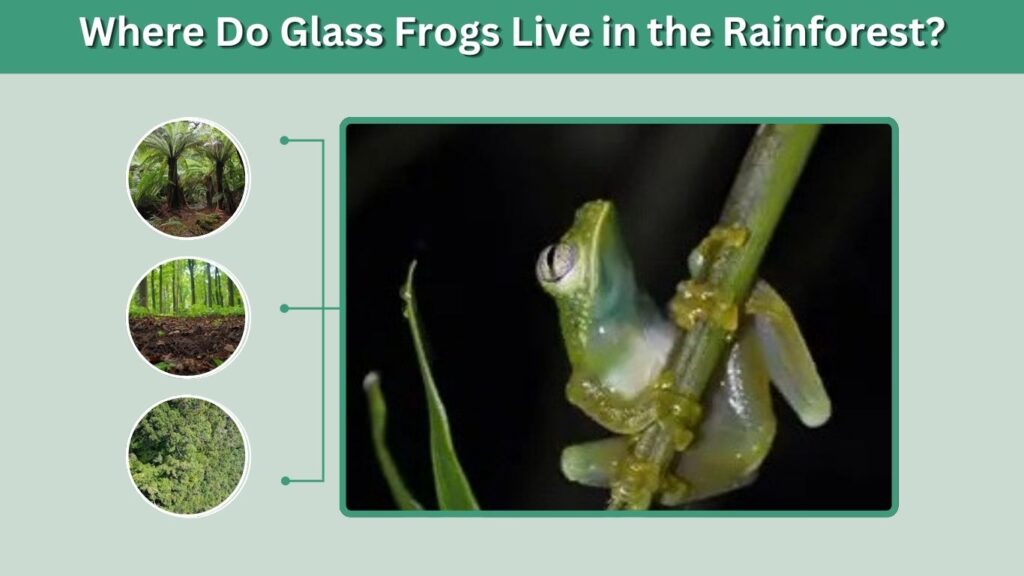
Glass frogs usually live in the understory and lower canopy near streams. They spend much of their time on shrubs, leaves, vines, and tree branches hanging over or beside running water.
Rainforest Layers Used by Glass Frogs
| Rainforest area | How glass frogs use it |
| Forest floor | Tadpoles may live in nearby streams |
| Understory | Adults hunt, rest, and hide on plants |
| Some species climb into higher vegetation | |
| Streamside vegetation | Males call and females lay eggs |
| Leaves above water | Egg clutches develop before hatching |
Glass frogs are strongly arboreal, meaning they are adapted for life in trees and other vegetation. Expanded toe pads allow them to grip leaves and smooth plant surfaces.
Why Do Glass Frogs Live Near Streams?
Streams are essential to the glass frog life cycle. Adults live on nearby vegetation, while tadpoles develop in the water.
During the breeding season, males choose leaves or branches above a stream and call to attract females. A female deposits her eggs on the vegetation rather than placing them directly in the water.
When the embryos finish developing, the tadpoles hatch and fall into the stream below. They then live among rocks, leaf litter, mud, and submerged debris until metamorphosis.
Living near moving water gives glass frog tadpoles several advantages. Flowing streams generally contain oxygen-rich water and may have fewer fish than large ponds or rivers. However, strong currents and flooding can also create risks.
What Trees Do Glass Frogs Live In?
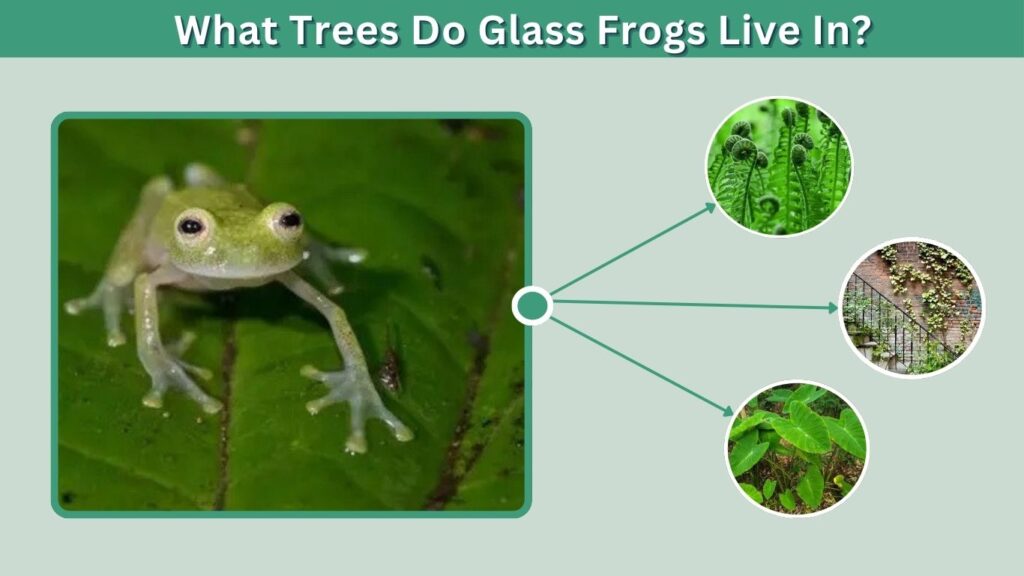
Glass frogs are not restricted to one particular type of tree. They use many kinds of rainforest vegetation as long as suitable leaves and branches are located near clean streams.
They may live on:
- Small trees
- Shrubs
- Broad-leaved plants
- Vines
- Ferns
- Branches overhanging water
- Plants growing along stream banks
Broad leaves are especially valuable because they provide sleeping surfaces and locations for egg clutches. Some species prefer the underside of leaves, while others place eggs on upper surfaces, branches, rocks, or moss.
The condition of the surrounding vegetation is more important than the exact tree species. Dense plants provide shade, moisture, food, and protection.
What Is the Weather Like Where Glass Frogs Live?
Glass frogs usually inhabit areas with high humidity, regular rainfall, and relatively stable temperatures. The exact climate depends on elevation and geographic location.
Lowland rainforest species may experience warm temperatures throughout the year. Mountain and cloud forest species often live in cooler environments with heavy mist and frequent rain.
Typical habitat conditions include:
- High humidity
- Frequent rainfall
- Mild to warm temperatures
- Moist leaves and soil
- Shaded streams
- Limited seasonal temperature changes
Some glass frogs breed mainly during rainy periods, when streams are flowing and vegetation remains moist. Rain also reduces the risk that eggs laid on leaves will dry out.
Do Glass Frogs Live in Groups?
Glass frogs do not normally live in organized packs or permanent social groups. Adults are generally independent animals.
Several frogs may gather near the same stream during the breeding season because the area provides suitable calling sites and egg-laying locations. However, this does not mean they form a cooperative group.
Males may defend small territories from other males. Territorial disputes can include calling, pushing, wrestling, and kicking. In some species, males guard one or more egg clutches on leaves.
Outside the breeding season, glass frogs may be more widely dispersed throughout the surrounding vegetation.
Where Do Different Glass Frog Species Live?
Glass frog species can have very different geographic ranges. Some live across several countries, while others are restricted to a small area.
Emerald Glass Frog
The emerald glass frog is associated with humid forests in parts of Central and South America. It typically lives on vegetation near mountain streams and other flowing waterways.
Northern Glass Frog
Northern glass frogs occur mainly in parts of Central America and southern Mexico. They inhabit humid forests near streams, where males call from vegetation above the water.
Giant Glass Frog
Giant glass frogs are found in parts of Central and South America. Despite the name, they are still relatively small compared with many common tree frogs. They depend on forested stream habitats.
Bare-Hearted Glass Frogs
Bare-hearted glass frogs belong to a group known for highly transparent undersides. Different species occur in tropical forests across Central and South America, often near clean, fast-flowing streams.
How Long Do Glass Frogs Live?
The exact lifespan of glass frogs is not well documented for every species. In the wild, they may live for several years, but survival depends on habitat quality, predators, disease, climate, and food availability.
Young glass frogs face especially high risks. Eggs may be eaten by insects, snakes, or other predators, while tadpoles can be washed away by floods or consumed by aquatic animals.
Adults may survive longer because their camouflage helps them avoid detection. In carefully maintained captive environments, some glass frogs may live several years, although lifespan differs by species and quality of care.
Why Is Glass Frog Habitat Important?
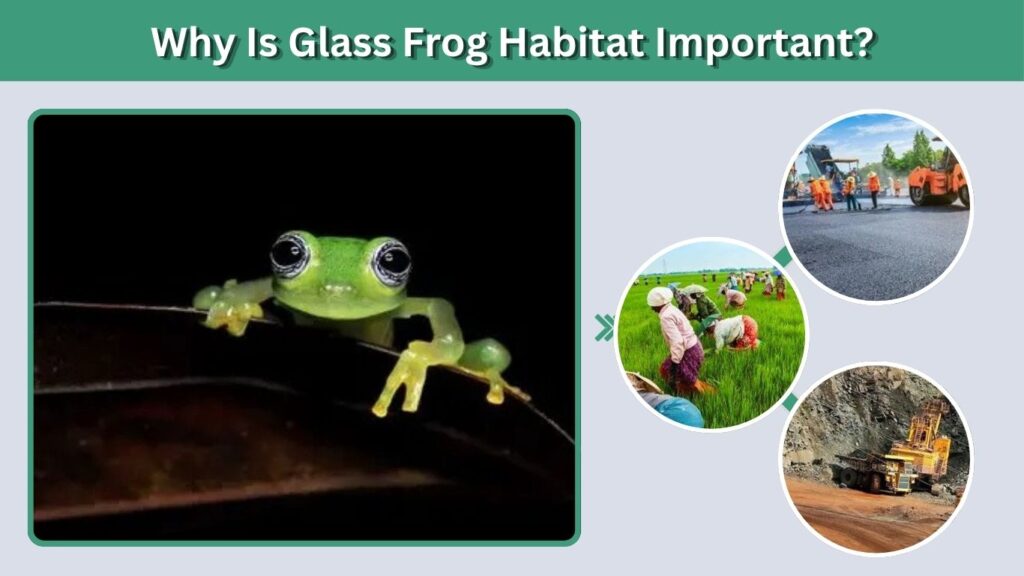
Glass frogs need both healthy forests and clean streams. Destruction of either part of their habitat can interrupt their life cycle.
Removing streamside vegetation eliminates resting places, calling sites, and egg-laying surfaces. Water pollution can harm eggs and tadpoles, while deforestation changes humidity and temperature.
Major habitat threats include:
- Logging
- Water pollution
- Climate change
- Stream alteration
- Forest fires
- Infectious diseases
Because some glass frogs have very small ranges, the destruction of one forest area may threaten an entire species.
FAQs
Where do most glass frogs live?
Most glass frogs live in humid tropical forests in Central and South America. They are usually found on leaves, shrubs, and branches near clean, flowing streams. Adults live above ground, while their tadpoles develop in the water.
Do glass frogs live in trees?
Yes. Glass frogs are arboreal and spend much of their adult lives in trees, shrubs, vines, and other vegetation. Their expanded toe pads help them grip leaves and branches. They commonly choose plants located beside or above rainforest streams.
Do glass frogs live in water?
Adult glass frogs do not live permanently in water. They usually stay on vegetation near streams. Their tadpoles are aquatic and live in flowing water until they complete metamorphosis and emerge as young frogs.
Are glass frogs found only in South America?
No. Glass frogs live in both Central and South America. Their range begins in southern Mexico and extends through Central America into tropical South America. Different species occupy different countries and forest regions.
What habitat do glass frogs prefer?
Glass frogs prefer humid forests containing dense vegetation and clean running water. They are especially associated with rainforest streams, cloud forests, and moist mountain forests. Shade, high humidity, broad leaves, insects, and suitable breeding sites are essential parts of their habitat.
