
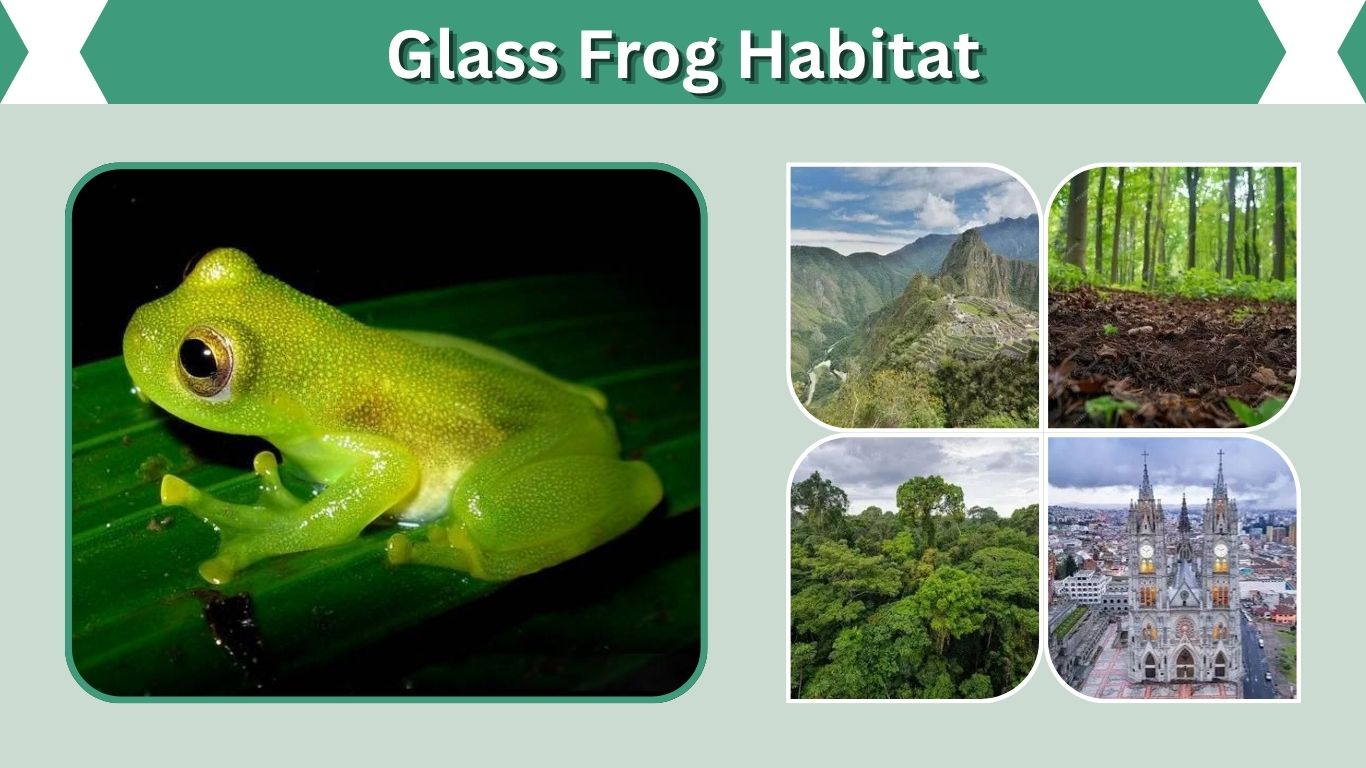
Glass frogs inhabit humid tropical forests in Central and South America. They are especially associated with clean, fast-flowing streams surrounded by dense vegetation. Adult frogs spend most of their lives on leaves and branches, while their tadpoles develop in the water below. This connection between forest plants and freshwater makes glass frogs highly dependent on healthy streamside ecosystems. Their transparent bodies, sticky toe pads, nocturnal behavior, and unusual reproductive habits are all adaptations that help them survive in this specialized environment.
What Is the Natural Habitat of a Glass Frog?
The typical glass frog habitat is a humid tropical forest containing streams, rivers, waterfalls, or other sources of running water. Most species are arboreal, meaning they live primarily in trees, shrubs, vines, and other vegetation above the ground.
Glass frogs are commonly found in:
- Tropical rainforests
- Cloud forests
- Humid mountain forests
- Lowland wet forests
- Forested riverbanks
- Vegetation beside waterfalls
- Secondary forests near streams
Their habitat must provide suitable plants for resting, hunting, calling, and laying eggs. It must also contain clean water where tadpoles can grow.
Glass frogs occur in the humid Neotropics, with particularly high diversity on the slopes of the Andes and in Costa Rica and Panama.
Where Are Glass Frogs Found?
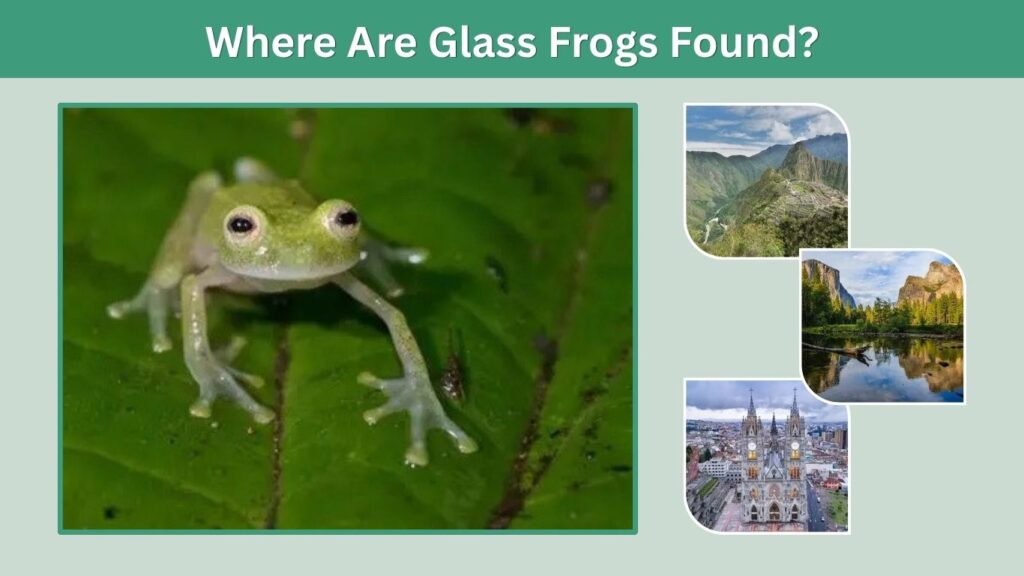
Glass frogs are native to tropical regions of the Americas. Their distribution stretches from southern Mexico through Central America and into South America.
Countries Within Their Range
Different glass frog species may occur in:
- Mexico
- Belize
- Guatemala
- Honduras
- Nicaragua
- Costa Rica
- Panama
- Colombia
- Venezuela
- Ecuador
- Peru
- Bolivia
- Brazil
- Guyana
- Suriname
- Argentina
Not every species lives throughout this entire range. Some are widespread across several countries, while others are limited to one mountain, river system, or isolated forest.
For example, the emerald glass frog occurs in wet forests from Honduras through Central America to Panama, Colombia, and Ecuador.
Glass Frog Habitat Map
A glass frog habitat map would show a long but irregular distribution through the tropical Americas.
The northern part of the range begins in southern Mexico. It then follows humid forest regions through Central America before extending into northern, western, and central South America.
Important areas include:
| Region | Typical glass frog habitat |
| Southern Mexico | Humid forests near rocky streams |
| Central America | Rainforests, cloud forests, and mountain streams |
| Andes Mountains | Moist slopes, valleys, and high-elevation forests |
| Amazon region | Lowland rainforest and forested waterways |
| Atlantic forests | Humid woodland streams and waterfalls |
Glass frogs are not distributed evenly across these regions. Their populations are often concentrated around suitable watersheds rather than throughout an entire country.
Do Glass Frogs Live in Rainforests?
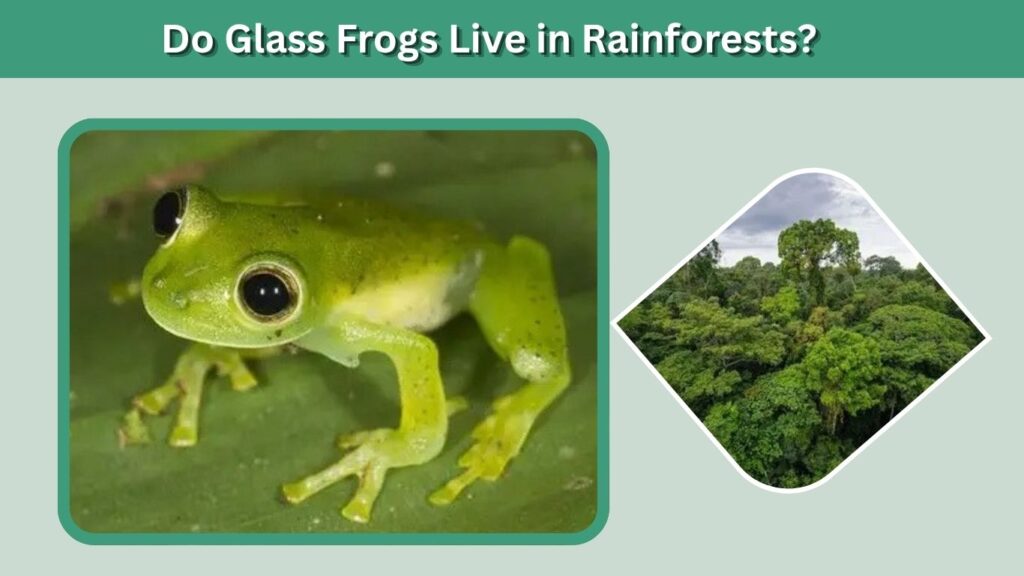
Yes, rainforests are among the most important glass frog habitats. These forests provide the moisture, shade, vegetation, food, and freshwater the frogs require.
Glass frogs have thin, permeable skin that can lose moisture quickly. The high humidity of the rainforest helps them remain hydrated, particularly while resting on exposed vegetation.
Rainforest plants also provide surfaces where glass frogs can:
- Sleep during the day
- Hide from predators
- Hunt small insects
- Call for mates
- Deposit eggs
- Guard developing embryos
Although glass frogs are strongly associated with rainforests, some species live in cloud forests, humid foothills, and other moist forest environments.
What Rainforest Layer Do Glass Frogs Live In?
Glass frogs commonly use the understory and lower canopy, especially where vegetation hangs over streams.
They may rest on low shrubs only a short distance above the water, but some species climb higher into trees outside the breeding season.
Rainforest Areas Used by Glass Frogs
| Habitat area | Purpose |
| Undersides of leaves | Daytime resting and camouflage |
| Streamside shrubs | Hunting and calling |
| Branches over water | Mating and territorial behavior |
| Broad leaves | Egg-laying surfaces |
| Stream bottom | Tadpole development |
| Lower canopy | Shelter and movement |
Their expanded toe pads allow them to cling to leaves, branches, and smooth plant surfaces. This climbing ability helps them avoid many ground-dwelling predators.
Why Do Glass Frogs Live Near Streams?
Running water is essential to the glass frog life cycle. Adults live in vegetation near streams, while tadpoles live underwater.
During reproduction, a male usually calls from a leaf or branch hanging above a stream. After mating, the female lays a gelatinous clutch of eggs on vegetation or another surface over the water.
When the tadpoles hatch, they drop directly into the stream. They may then hide in mud, leaf litter, sand, sticks, and debris along the bottom.
This unusual arrangement allows glass frogs to use two connected habitats:
- A terrestrial, arboreal habitat for adults and eggs
- An aquatic habitat for tadpoles
The loss of either habitat can prevent successful reproduction.
Climate of the Glass Frog Habitat
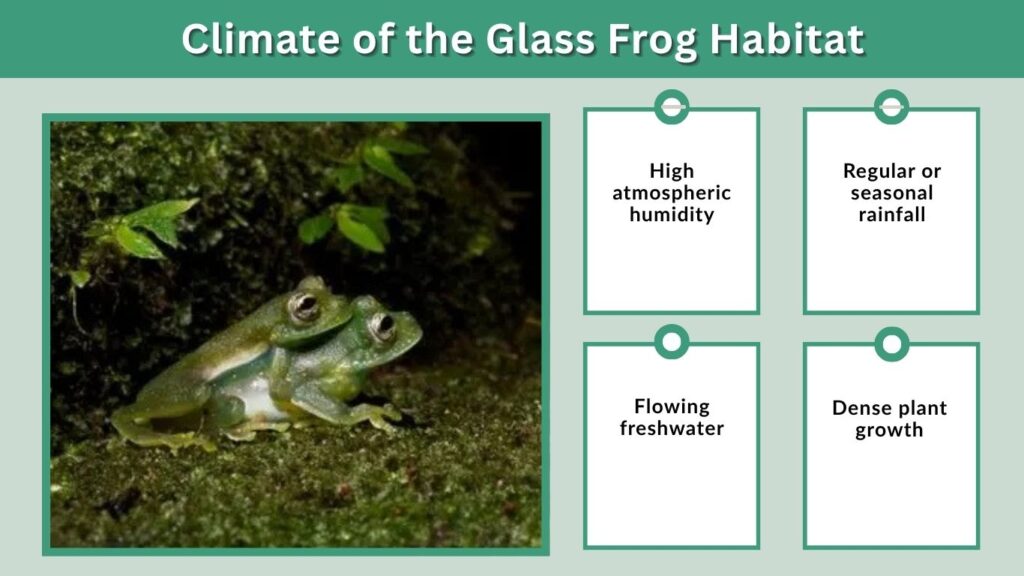
Glass frogs generally live in moist environments with frequent rainfall and high humidity. However, temperature and rainfall patterns vary according to elevation and location.
Typical Habitat Conditions
Glass frog environments often have:
- High atmospheric humidity
- Regular or seasonal rainfall
- Shaded vegetation
- Moist leaves
- Flowing freshwater
- Warm or mild temperatures
- Dense plant growth
Lowland species may experience warm conditions throughout the year. Species living in mountain or cloud forests may experience cooler temperatures, mist, and frequent rain.
Breeding activity in some species increases during wetter periods because rainfall keeps the frogs and their exposed egg clutches moist.
Glass Frog Habitat in the Andes Mountains
The Andes are especially important for glass frog diversity. Humid slopes contain numerous streams, valleys, waterfalls, and cloud forests that create suitable habitats.
Andean glass frogs may live at different elevations. Some inhabit warm foothill forests, while others are found in cooler mountain environments.
Northern glass frogs, for example, can live near clear, rocky streams from near sea level to elevations exceeding 1,600 metres.
Mountain glass frog habitats commonly include:
- Rocky streams
- Steep, forested slopes
- Moss-covered vegetation
- Frequent mist
- High humidity
- Overhanging leaves
Many mountain species have very small ranges, making them vulnerable to localized habitat destruction.
Glass Frog Habitat in Costa Rica
Costa Rica supports several glass frog species because it contains extensive rainforests, cloud forests, mountains, rivers, and protected watersheds.
Glass frogs may occur on both the Caribbean and Pacific sides of the country. They are commonly observed at night on vegetation close to forest streams.
Some species use wet lowland forests, while others inhabit higher-elevation environments. Waterfalls can also create suitable habitat because the surrounding spray keeps plants continuously moist.
Certain species are found on large, low-growing leaves in the spray zones of streams and waterfalls.
Habitat Adaptations of Glass Frogs
Glass frogs possess several adaptations that help them survive in wet, densely vegetated environments.
Transparent and Green Bodies
Their green backs blend with leaves, while translucent tissues reduce the contrast between the frog’s body and its surroundings. This camouflage makes resting frogs more difficult for predators to detect.
Adhesive Toe Pads
Expanded toe pads help glass frogs grip wet leaves and narrow branches. This is especially important during rain or when vegetation grows directly above moving water.
Nocturnal Activity
Most glass frogs are active at night, when humidity is higher and temperatures are lower. Nighttime activity reduces water loss and allows them to hunt insects under safer conditions.
Eggs Laid Above Water
Laying eggs on leaves keeps them away from many fish and other aquatic predators. The tadpoles can then fall into the stream when they hatch.
Parental Care
Many glass frogs care for their eggs. Females may hydrate newly laid clutches, while males of some species guard eggs for longer periods.
Glass Frog Habitat and Ecological Niche
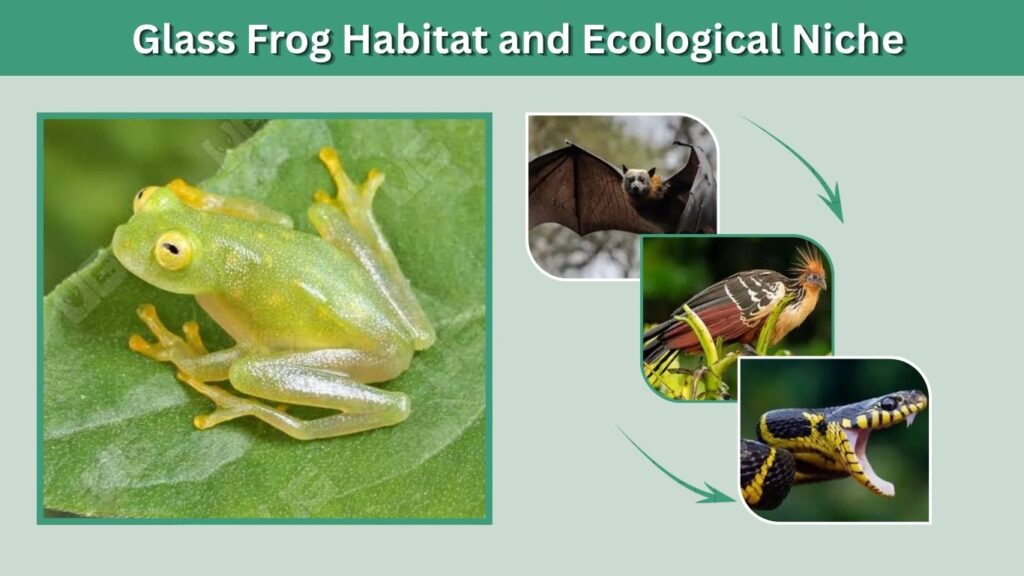
The ecological niche of a glass frog includes its role as both predator and prey within the rainforest.
Adult glass frogs eat small insects and other invertebrates, helping regulate their populations. Tadpoles may consume algae, organic particles, and plant material in streams.
Glass frogs are eaten by:
- Snakes
- Birds
- Bats
- Large spiders
- Small mammals
- Predatory insects
- Aquatic animals
Their eggs also provide food for wasps, crickets, snakes, and other predators.
Because glass frogs depend on clean water and stable humidity, their presence may indicate that a streamside forest remains relatively healthy.
Habitat Differences Between Glass Frog Species
Not every glass frog uses exactly the same environment.
Emerald Glass Frog Habitat
Emerald glass frogs inhabit wet tropical forests near rivers and streams. They may occur from lowland forests to elevations of approximately 2,000 metres.
Reticulated Glass Frog Habitat
Reticulated glass frogs are associated with humid forests in Central America. Adults usually remain on vegetation near streams, where males guard territories and egg clutches.
Amazon Giant Glass Frog Habitat
Amazonian glass frogs inhabit humid lowland forests connected to rivers, creeks, and smaller waterways. Dense streamside plants provide important breeding and resting sites.
Diane’s Bare-Hearted Glass Frog Habitat
Diane’s bare-hearted glass frog is associated with humid tropical forest in Costa Rica. Like other glass frogs, it depends on vegetation and flowing freshwater for reproduction.
Threats to Glass Frog Habitats
Glass frogs are vulnerable because they require both intact forests and clean waterways.
Major threats include:
- Deforestation
- Agricultural expansion
- Mining
- Road construction
- Water pollution
- Stream diversion
- Climate change
- Forest fragmentation
- Infectious diseases
- Illegal wildlife collection
Removing streamside vegetation destroys resting, calling, and egg-laying sites. Polluted water may harm eggs and tadpoles, while changing rainfall patterns can cause streams to dry up or flood unpredictably.
Water is fundamental to glass frog reproduction, and pollution can directly threaten species that depend on forest streams.
FAQs
What is a glass frog’s habitat?
A glass frog’s habitat is usually a humid tropical forest near a clean, flowing stream. Adults live on leaves, shrubs, and branches, while tadpoles develop in the stream. Some species inhabit lowland rainforests, whereas others live in mountain or cloud forests.
Do glass frogs live in the Amazon?
Some glass frog species live in the Amazon rainforest, particularly near forested rivers and streams. However, glass frogs are not limited to the Amazon. Many species live in Central America, the Andes, cloud forests, and other humid tropical regions.
Do glass frogs live in trees or water?
Adult glass frogs primarily live in trees and other vegetation near water. Their tadpoles live in streams. Eggs are usually laid on leaves or branches above the water so the newly hatched tadpoles can drop into the stream.
How is a glass frog adapted to its habitat?
Glass frogs have green coloring, translucent tissues, sticky toe pads, nocturnal habits, and moisture-sensitive skin. These features help them blend into leaves, climb wet plants, avoid predators, and remain active in humid rainforest environments.
Why are streams important to glass frogs?
Streams provide the aquatic habitat needed by glass frog tadpoles. Adults also use surrounding plants for calling, mating, and laying eggs. Without clean streams and healthy streamside vegetation, glass frogs may be unable to reproduce successfully.
