
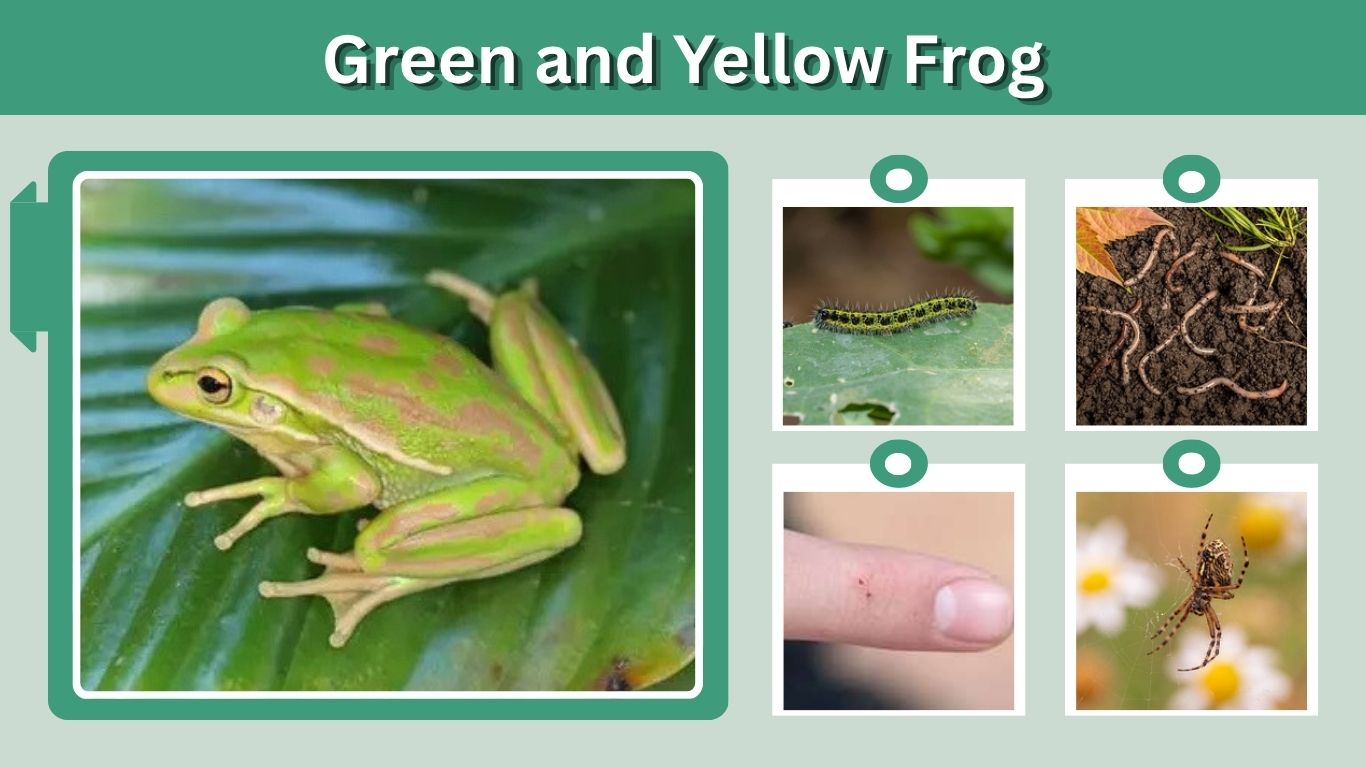
A green and yellow frog may be a harmless treefrog, a large wetland frog, or a brightly colored poison frog. The description does not identify one particular species because frogs from several regions can display green backs, yellow stripes, golden patches, yellow feet, or black-and-yellow spots. Location, size, skin texture, toe pads, and markings provide better identification clues than color alone.
What Kind of Frog Is Green and Yellow?
Several unrelated frogs may look green and yellow. Some have permanent yellow markings, while others show yellow only on their throat, feet, sides, or hidden parts of their legs.
| Possible species | Important markings | Main range |
| American green treefrog | Green body, pale side stripe, occasional yellow flecks | Southeastern United States |
| Squirrel treefrog | Small green body and yellow upper lip | Southeastern United States |
| Green and golden bell frog | Green back with gold or bronze patches | Southeastern Australia |
| Australian green tree frog | Green back; some populations have yellow feet and leg surfaces | Northern and eastern Australia |
| Eastern dwarf tree frog | Green or bronze back; males have a yellow throat | Eastern Australia |
| Poison frog | Bright yellow, green, and sometimes black warning patterns | Central and South America |
Common Green and Yellow Frog Species
American Green Treefrog
The American green treefrog is a small, smooth-skinned frog measuring approximately 1–2.5 inches long. Its color may range from grayish green to vivid emerald green. Many individuals have a pale stripe along each side, while some display scattered yellow flecks. Rounded toe pads allow the frog to climb reeds, shrubs, walls, and windows.
American green treefrogs are common around ponds, marshes, wet gardens, and ditches in the southeastern United States. They frequently appear near porch lights because the lights attract flying insects.
Squirrel Treefrog
A small green-and-yellow frog in Florida, Alabama, Georgia, or nearby states could be a squirrel treefrog. Adults are usually 1–1.5 inches long and have slender bodies with smooth skin.
Their color can change between green, gray, tan, and brown. Green individuals commonly have a noticeable yellow upper lip, although their other markings vary considerably. Some also have pale side stripes or mild blotches.
Green and Golden Bell Frog
The green and golden bell frog has a glossy green back covered with irregular gold, bronze, or brown patches. Adults can reach approximately 8.5 centimetres in body length. Other identification features include golden eyes, a white belly, a pale side stripe, nearly fully webbed toes, and bright blue coloring inside the thighs.
This Australian wetland frog lives around ponds, dams, streams, marshes, and lagoons. Its appearance may change considerably because cold or inactive individuals can become dark brown.
Australian Green Tree Frog
The Australian green tree frog is much larger and heavier than most small treefrogs, reaching approximately 11 centimetres long. It normally has a green back, white belly, golden iris, large toe pads, and heavily webbed feet.
Some northern populations have yellow coloring on their fingers, toes, webbing, and the undersides of their limbs. These markings can make the frog appear distinctly green and yellow when it climbs or jumps.
Eastern Dwarf Tree Frog
The eastern dwarf tree frog is a small Australian species with a bright green or bronze back. Green individuals may have a bronze stripe along each side, while adult males develop a yellow throat.
Its small size, pointed head, smooth body, and tiny toe discs help distinguish it from the much larger Australian green tree frog.
Are Green and Yellow Frogs Poisonous?
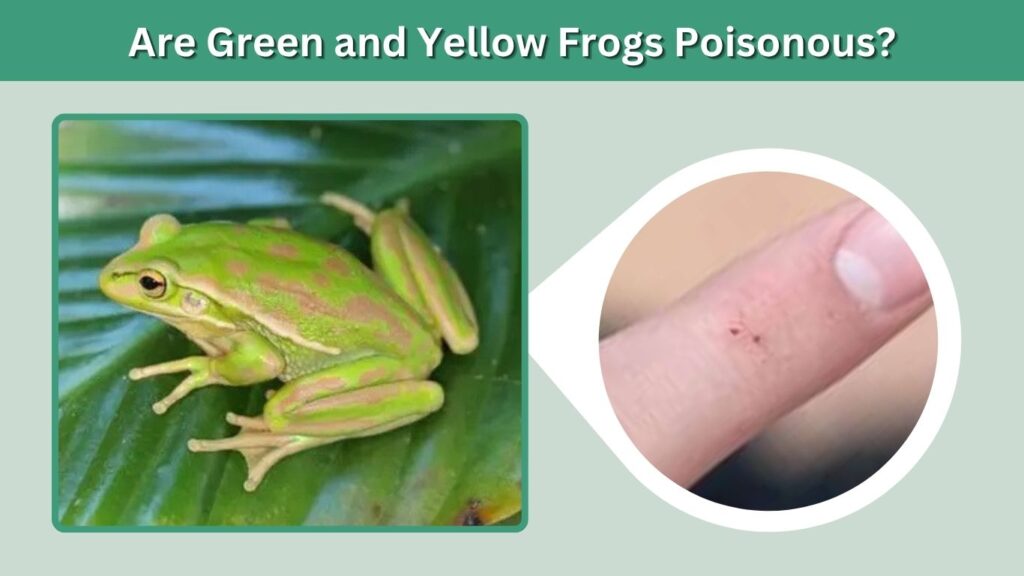
Color alone cannot determine whether a frog is poisonous. Most green-and-yellow frogs found around homes, gardens, and ordinary ponds are treefrogs or wetland frogs rather than dangerous poison frogs.
However, some Central and South American poison frogs have striking combinations of yellow, green, and black. Their bright coloration warns predators about toxic chemicals stored in their skin. Poison frog toxins vary greatly among species, and only a small number possess extremely powerful toxins.
Wild poison frogs obtain many of their defensive alkaloids from eating particular ants, mites, termites, beetles, and other small invertebrates. Frogs raised in human care on a different diet may lose most or all of this toxicity.
Warning Signs of a Poison Frog
A frog may require extra caution when it has:
- Extremely bright, contrasting colors
- Yellow markings combined with bold black bands or spots
- A very small body and smooth skin
- Daytime activity on a tropical forest floor
- A known origin in Central or South America
These features do not prove that a frog is toxic. Never handle an unknown brightly colored frog simply to test its identity.
Green Frog With Yellow and Black Spots
A green frog with yellow and black spots could belong to several different groups. Geographic location is the most important clue.
A brightly colored tropical frog with sharp black-and-yellow patterns may be a poison frog. In contrast, a frog in the United States may simply have natural yellow flecks, dark blotches, or yellow coloring hidden on its legs.
Some treefrogs also change color according to temperature, moisture, activity, and surroundings. A frog that appears bright green during one observation may later become olive, brown, or gray.
Check These Identification Features
When photographing the frog, look for:
- Toe pads: Rounded discs suggest a climbing treefrog.
- Webbing: Heavy webbing indicates a strong swimmer.
- Side stripe: A pale stripe may indicate an American green treefrog.
- Yellow upper lip: Common in green squirrel treefrogs.
- Gold patches: Characteristic of the green and golden bell frog.
- Yellow throat: May identify an adult male of certain species.
- Black warning pattern: Possible in some tropical poison frogs.
- Body size: Separate tiny treefrogs from large bell frogs and green tree frogs.
Take photographs from above and from the side without turning the frog over or restraining it.
Green and Yellow Frogs Habitat and Behavior
Green-and-yellow treefrogs generally occupy moist habitats with abundant vegetation and insects. They may live around ponds, marshes, swamps, temporary pools, forests, drainage channels, and suburban gardens.
Treefrogs often rest on reeds, leaves, branches, walls, or windows. Their enlarged toe pads allow them to grip smooth and vertical surfaces. Green and golden bell frogs are more strongly associated with open wetlands and may swim, float among aquatic plants, or bask beside the water.
Many frogs become active after rain or during warm, humid evenings. Their calls are most noticeable during breeding periods, when males gather around suitable water.
What Do Green and Yellow Frogs Eat?
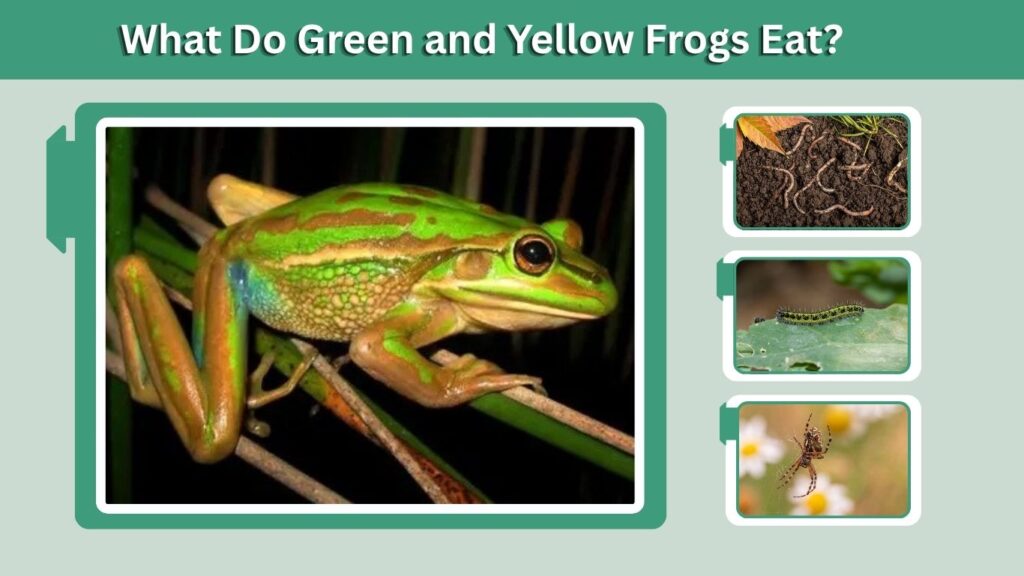
Most adult frogs are predators that consume animals small enough to swallow. Depending on their size and habitat, their food may include:
- Flies and mosquitoes
- Moths
- Beetles
- Ants and termites
- Crickets
- Spiders
- Caterpillars
- Worms
- Smaller frogs
Treefrogs commonly wait on leaves or near lights and capture insects with a quick movement of the tongue. Poison frogs concentrate on tiny rainforest invertebrates, including ants, termites, mites, and small beetles. Some of these prey supply the chemicals used in their skin defenses.
Tadpoles usually have a different diet and may consume algae, microorganisms, decaying vegetation, and suspended organic material.
Green and Yellow Frogs Life Cycle
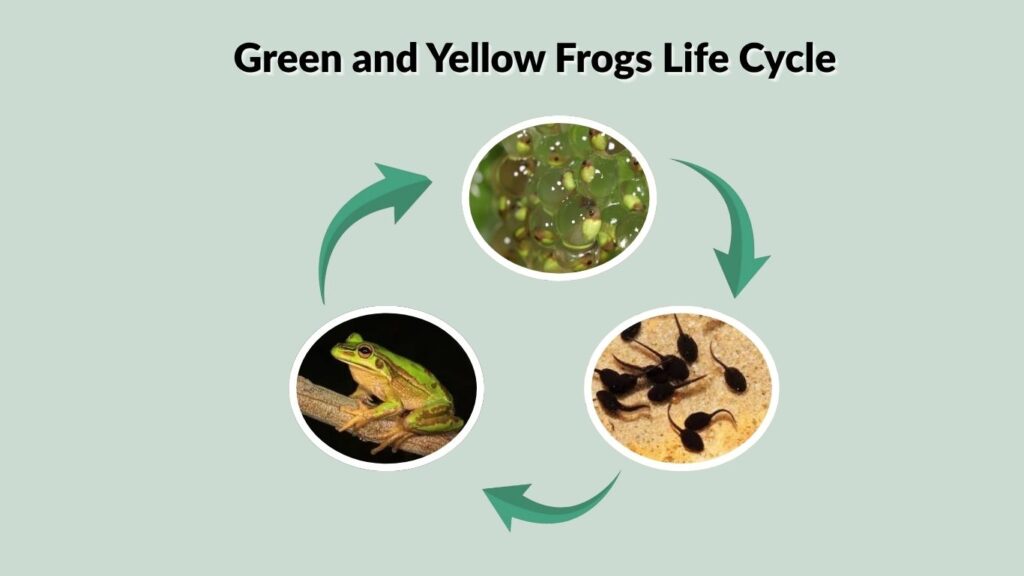
The life cycle begins when a female deposits eggs in water or another moist location. Aquatic tadpoles hatch from the eggs and breathe through gills. As they develop, they grow hind legs, followed by front legs, absorb their tails, and begin breathing air with lungs.
The young frog then leaves the water as a froglet. Its colors and markings may change as it grows, so juveniles do not always resemble adults exactly.
Poison frogs have more specialized breeding behavior. Depending on the species, eggs may be deposited in damp leaf litter or on vegetation, and a parent may transport newly hatched tadpoles to small pools of water.
What to Do After Finding One
Observe the frog without touching it whenever possible. A photograph and general location are usually enough for an identification app, museum, wildlife agency, or local herpetology group.
When a frog must be moved from inside a building, place a clean container over it and gently slide stiff paper underneath. Release it in a sheltered area close to where it entered rather than carrying it to a distant wetland.
Wash your hands with soap and water after touching any frog, aquarium water, or amphibian enclosure. Healthy amphibians may carry Salmonella, and germs can spread from an animal or its environment to people.
FAQs
What is the small green frog with a yellow stripe?
It may be an American green treefrog, particularly when the pale yellow or cream stripe runs from the jaw along the side. In Australia, the graceful tree frog can have a pale green or yellow stripe extending from the nostril past the eye.
Is a green frog with yellow spots dangerous?
Usually not, but markings alone cannot confirm safety. Ordinary treefrogs may have yellow flecks, while certain tropical poison frogs have bright warning patterns. Avoid handling an unidentified frog, especially when it has sharply contrasting yellow, green, and black coloring.
Why does my green frog have yellow feet?
Yellow feet may be a normal species characteristic. Some Australian green tree frog populations have yellow fingers, toes, webbing, and limb surfaces. Other treefrogs reveal hidden yellow coloring only when climbing or jumping.
Can a green-and-yellow frog be kept as a pet?
Wild frogs should not be collected without checking local wildlife laws. Captive frogs also require species-specific temperatures, humidity, lighting, live food, clean water, and veterinary care. Protected species and wild poison frogs should never enter the pet trade.
Should I touch a green-and-yellow frog?
It is safer not to handle it. Handling can stress the frog and expose its absorbent skin to oils, soap, sunscreen, or chemicals. When contact is unavoidable, keep it brief and wash your hands thoroughly afterward.
