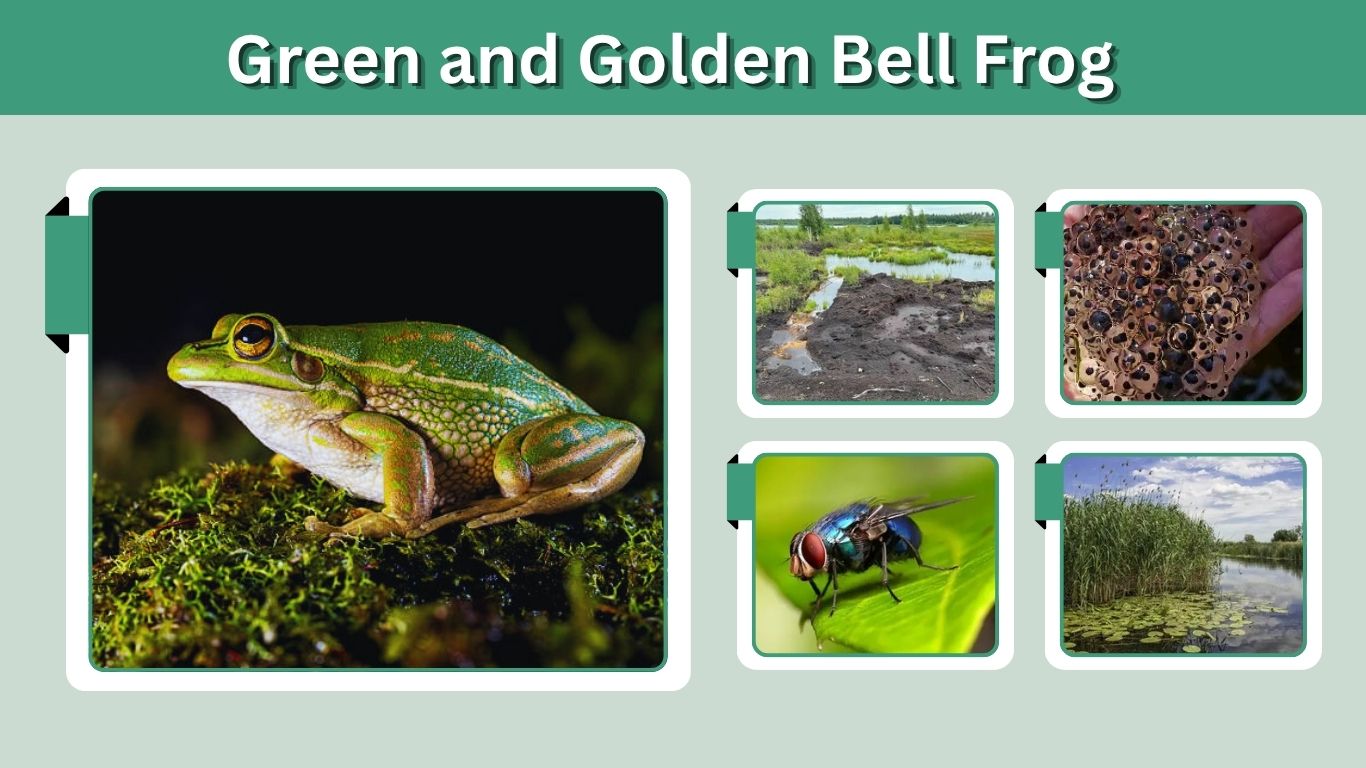
The green and golden bell frog is one of Australia’s most striking amphibians. Its glossy green body, metallic gold markings, golden eyes, and bright blue inner thighs make it relatively easy to recognize. Once widespread and common in southeastern Australia, this frog has suffered major population declines and is now protected. This guide explains its appearance, habitat, diet, call, behavior, life cycle, distribution, adaptations, and the threats affecting its survival.
Green and Golden Bell Frog Overview
The green and golden bell frog’s scientific name is Litoria aurea, although some classifications use Ranoidea aurea. It belongs to the treefrog family, but it spends much of its life around ponds, marshes, lagoons, and other wetlands.
| Feature | Description |
| Scientific name | Litoria aurea |
| Other name | Green and gold bell frog |
| Maximum body length | Approximately 8.5 cm |
| Main colors | Bright green with gold or bronze patches |
| Diet | Insects, spiders, worms, and other small animals |
| Native range | Southeastern Australia |
| Activity | Active during both day and night |
| NSW status | Endangered |
| Australian federal status | Vulnerable |
The species is listed as Endangered in New South Wales and Vulnerable under Australia’s federal environmental law.
What Does a Green and Golden Bell Frog Look Like?
Adult green and golden bell frogs are large, strongly built frogs that may grow to approximately 8.5 centimetres in body length. Females are generally larger than males.
Identification Features
Important features include:
- A glossy green back
- Irregular gold, bronze, or brown patches
- A cream-colored stripe extending along the side
- A white or creamy belly
- Golden eyes with horizontal pupils
- Bright blue coloring inside the thighs and groin
- Almost fully webbed toes
- Small discs at the ends of the fingers and toes
The exact pattern varies between individuals. Some frogs are mostly green, while others have extensive bronze or golden patches. When cold or inactive, a frog may become dark brown and look very different from its usual bright-green appearance.
Male vs. Female
Female green and golden bell frogs usually reach around 70–80 millimetres, while males commonly measure about 50–60 millimetres. Mature males may also develop darker coloring around the throat because this area contains the vocal sac used during calling.
Where Do Green and Golden Bell Frogs Live?
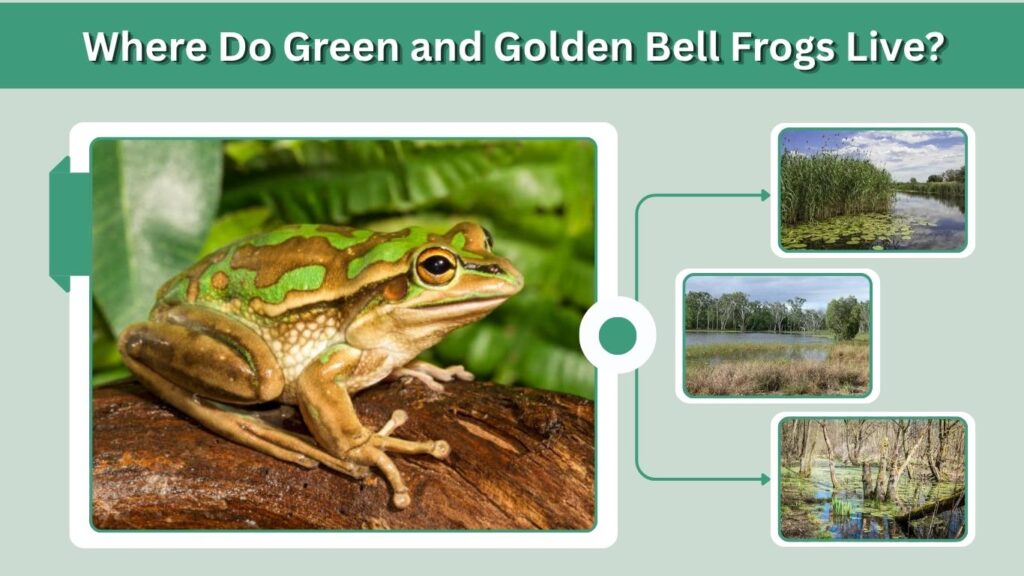
The species was formerly widespread along the southeastern coast of Australia. Its historical range extended from northeastern Victoria through coastal New South Wales and into northeastern NSW, with populations also occurring around the Australian Capital Territory and Southern Highlands.
Today, its Australian distribution is much more fragmented. Remaining populations occur mainly in parts of coastal New South Wales, the Sydney Basin, several islands, southeastern highlands and coastal areas, and northeastern Victoria.
Natural Habitat
Green and golden bell frog habitat generally includes:
- Permanent or semi-permanent ponds
- Freshwater lagoons
- Marshes and swamps
- Farm dams
- Slow-moving streams
- Floodplain wetlands
- Vegetated drainage areas
- Sunny wetlands with reeds and grasses
The best habitat usually provides open water, emergent aquatic plants, sunny basking areas, nearby shelter, and terrestrial vegetation through which frogs can move between wetlands.
These frogs may also occupy modified environments when suitable water and vegetation remain. However, polluted water, introduced fish, dense shading, pesticides, and the loss of connected wetlands can make an area unsuitable.
Green and Golden Bell Frogs in New Zealand
The species is native to Australia but was introduced to New Zealand, probably during the 1860s. It is now considered an introduced and naturalized species there.
New Zealand populations are mainly recorded in northern parts of the country, including Northland, Auckland, Waikato, the Coromandel Peninsula, and the Bay of Plenty. They occupy ponds, lakes, swamps, sluggish streams, farmland, and bush edges.
The green and golden bell frog should not be confused with New Zealand’s native frogs. It is also not naturally native to Tasmania; reports of a similar green-and-gold frog there may refer to the southern bell frog or another species.
What Do Green and Golden Bell Frogs Eat?
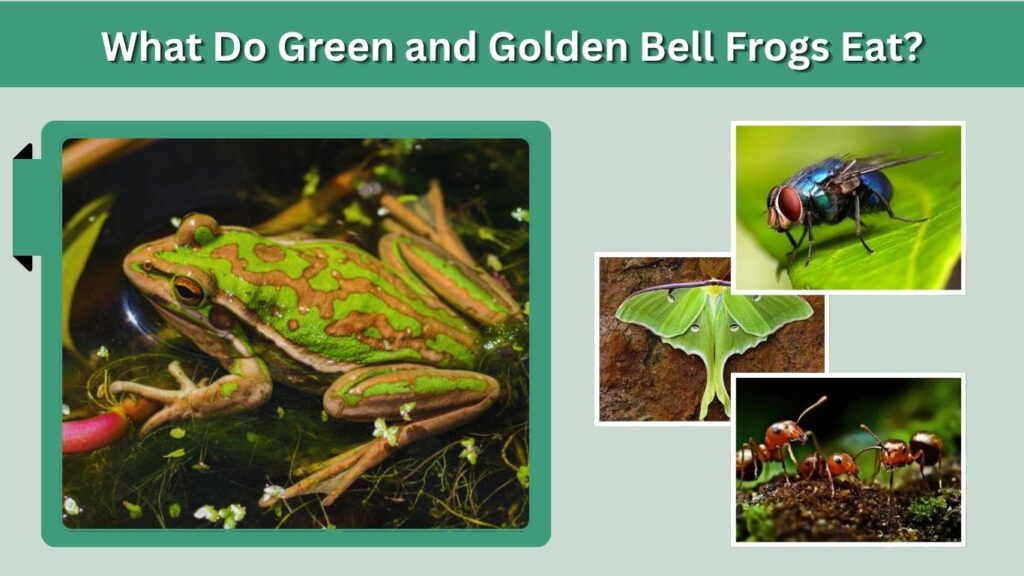
Green and golden bell frogs are opportunistic predators. They usually sit near water or vegetation and rapidly capture prey with their sticky tongues.
Common Foods
Their diet may include:
- Beetles
- Ants
- Flies
- Moths
- Crickets
- Cockroaches
- Spiders
- Worms
- Caterpillars
- Other small invertebrates
Large adults may occasionally eat smaller frogs, including individuals of their own species. Their feeding behavior helps control insect populations around wetlands. NSW habitat guidelines identify beetles, ants, spiders, and other invertebrates as typical foods.
Tadpoles have a different diet. They generally feed on algae, microorganisms, plant material, and organic debris found in the water.
What Does the Green and Golden Bell Frog Call Sound Like?
Male frogs call primarily during the breeding season to attract females and establish their presence around breeding ponds. They commonly call while floating in the water or sitting among aquatic vegetation.
The call is a deep, prolonged, descending sound containing roughly three parts or syllables. It may be heard from spring through summer, especially during warm and wet conditions.
Several males may call from the same wetland, creating a loud chorus. Calling usually increases after rainfall and during suitable nighttime temperatures, although the species can also be active during daylight.
Behavior and Daily Activity
Unlike many frogs that remain hidden throughout the day, the green and golden bell frog is partly diurnal. It may sit openly on reeds, rocks, logs, or floating vegetation and bask in sunlight.
Are They Nocturnal?
Green and golden bell frogs are active during both daytime and nighttime. During the day, they may bask, rest in vegetation, or remain near the water. At night, particularly on warm and damp evenings, they often move farther from shelter to hunt.
Their willingness to bask is an unusual and noticeable behavior among Australian frogs.
Seasonal Activity
Activity is highest during warmer months. In cold weather, frogs become less active and may shelter beneath logs, rocks, vegetation, soil cracks, or other protected places. This reduced winter activity is sometimes described as hibernation, although it is more accurately a period of seasonal inactivity.
Breeding and Life Cycle
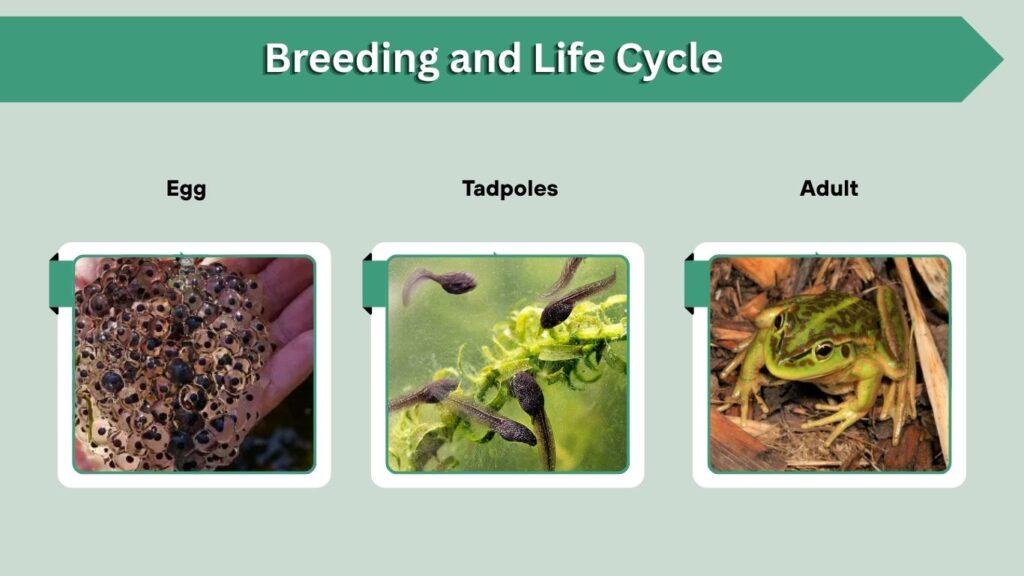
Breeding usually occurs during spring and summer when temperatures rise and wetlands contain enough water for tadpole development.
The green and golden bell frog has four main life stages:
- Egg
- Tadpole
- Metamorph or froglet
- Adult
Females deposit eggs in small clusters in shallow water. The egg clusters may initially float before sinking or becoming attached to aquatic vegetation.
Green and Golden Bell Frog Tadpoles
Tadpoles can grow surprisingly large, sometimes reaching approximately 8 centimetres or more in total length. Young tadpoles are usually dark, but older individuals may develop green and gold coloring.
They often swim near the middle or surface of ponds rather than remaining entirely on the bottom. Development from tadpole to frog can take approximately three to eleven months, depending on water temperature, food, breeding time, and environmental conditions.
After metamorphosis, young froglets leave the water but remain dependent on moist vegetation and nearby shelter.
Important Adaptations
The green and golden bell frog has several adaptations that help it survive in wetland environments.
Color Change
The frog can change from bright green to bronze or dark brown. This helps it blend with reeds, mud, leaves, and shadows while also responding to temperature and activity levels.
Webbed Feet
Its nearly fully webbed toes make it a powerful swimmer. Small toe discs also help it grip aquatic plants, wet surfaces, and low vegetation.
Sun-Basking Behavior
Basking may help the frog regulate its body temperature and remain active. However, it still requires easy access to water and damp shelter to prevent dehydration.
Flexible Feeding
Because it eats many different invertebrates and occasionally small vertebrates, the frog can take advantage of prey that becomes available during different seasons.
Why Is the Green and Golden Bell Frog Endangered?
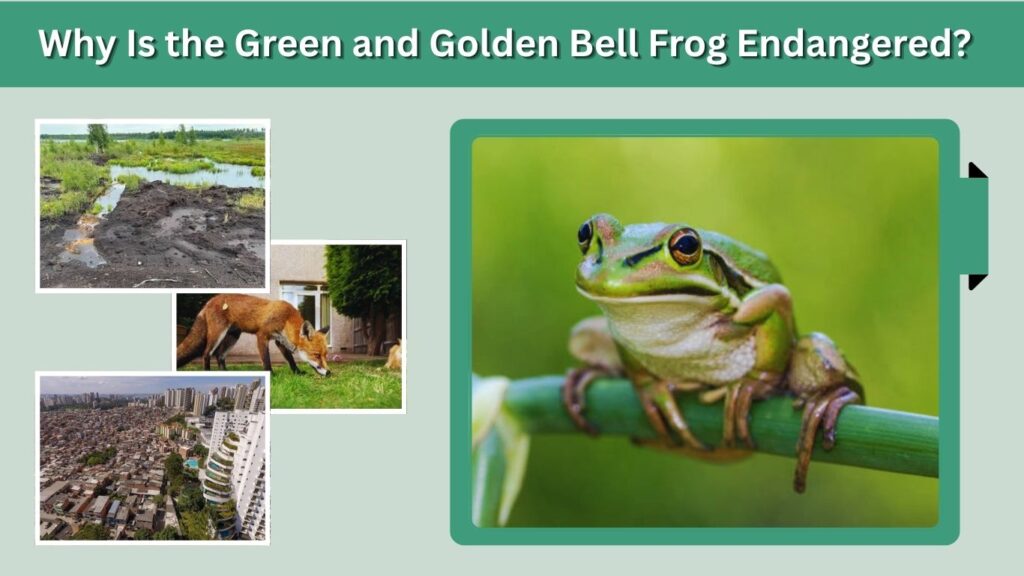
The species was once considered one of the most familiar frogs along southeastern Australia’s coast. Its decline has resulted from several interacting threats rather than a single cause.
Major threats include:
- Destruction and modification of wetlands
- Urban and industrial development
- Changes in water flow and water quality
- Amphibian chytrid fungus
- Predation by introduced fish
- Predation by cats and foxes
- Pesticides and herbicides
- Roads and barriers between wetlands
- Drought and climate change
- Isolation of small populations
Chytrid fungus has contributed heavily to the species’ decline. Introduced fish may eat eggs and tadpoles, while habitat fragmentation prevents frogs from moving safely between feeding, breeding, and sheltering areas.
Conservation projects now focus on restoring breeding ponds, linking isolated populations, controlling predators, monitoring disease, and improving wetland vegetation. In 2026, NSW conservation work also included releasing treated frogs as part of an experimental effort to improve resistance to chytrid fungus.
Are Green and Golden Bell Frogs Poisonous?
Green and golden bell frogs are not considered dangerously poisonous to humans. However, frogs have sensitive skin and may release mild protective secretions when stressed.
Avoid handling wild frogs unless necessary. Oils, sunscreen, soap, insect repellent, and other substances on human hands can damage their absorbent skin. Handling can also spread chytrid fungus between wetlands.
They should never be collected from the wild as pets. Because the species is protected in Australia, keeping or selling one may require specific wildlife permits and legally documented captive-bred origins.
FAQs
How long do green and golden bell frogs live?
Their exact lifespan in the wild is not well established. Some individuals have reportedly lived approximately 10–15 years in captivity, but wild frogs face disease, predators, drought, habitat loss, and other hazards that may shorten their lives.
Is the green and golden bell frog a treefrog?
It belongs to a treefrog family and has small toe pads, but it is strongly associated with water. It spends considerable time swimming, floating, basking beside ponds, and moving through low wetland vegetation rather than living mainly in trees.
What predators eat green and golden bell frogs?
Predators may include snakes, birds, large fish, turtles, foxes, cats, and larger frogs. Introduced fish are especially harmful because they consume eggs and tadpoles before they can complete metamorphosis.
Can green and golden bell frogs change color?
Yes. They can change from vivid green and gold to olive, bronze, or almost dark brown. Temperature, activity, surroundings, and stress can influence their appearance, so color alone should not be used for identification.
What should I do if I find one?
Observe and photograph it without touching or moving it. In Australia, sightings can be reported through FrogID or the relevant state wildlife authority. Do not release chemicals, remove vegetation, introduce fish, or relocate the frog to another wetland.
