
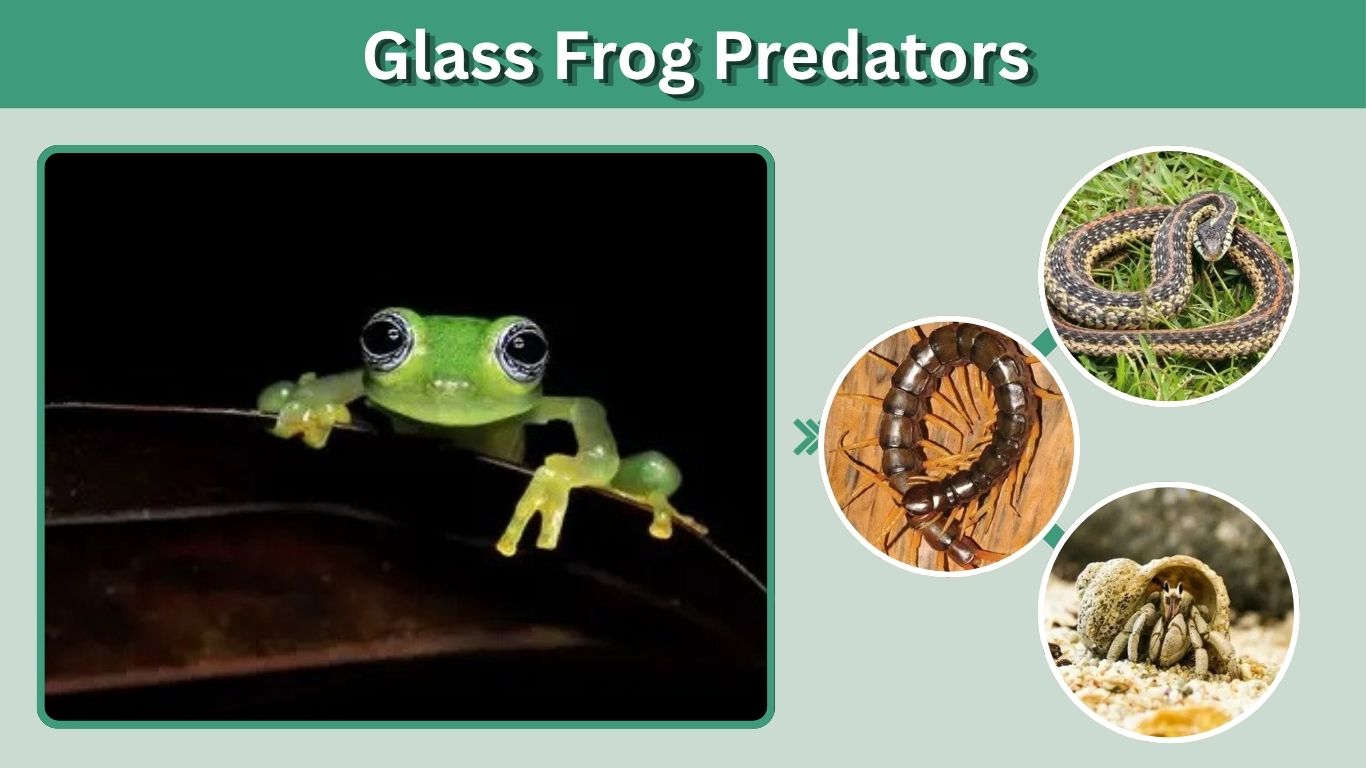
Glass frogs may look almost invisible while resting on rainforest leaves, but they still face numerous predators. Snakes, birds, spiders, wasps, centipedes, fish, and other animals may eat glass frogs during different stages of their life cycle. Eggs and tadpoles are especially vulnerable because they cannot escape as easily as adults. However, glass frogs use transparency, camouflage, parental care, defensive kicking, hidden resting positions, and flexible hatching times to improve their chances of survival.
What Are the Predators of Glass Frogs?
Glass frogs belong to the family Centrolenidae and live mainly in humid forests of Central and South America. Adults usually occupy vegetation near streams, while eggs are deposited on leaves or rocks above water. After hatching, tadpoles fall into the stream below. Each habitat exposes them to a different collection of predators.
| Life stage | Common predators |
| Eggs and embryos | Wasps, centipedes, crickets, katydids, spiders, snakes, crabs, fly larvae |
| Tadpoles | Fish, aquatic insects, freshwater crustaceans |
| Adult frogs | Snakes, birds, large spiders, katydids and larger frogs |
Observed predators vary among species and locations. Researchers have documented wasps, centipedes, spiders, katydids, crickets, snakes and crabs attacking glass frogs or their eggs. Birds and larger frogs may also capture adults.
8 Common Glass Frog Predators
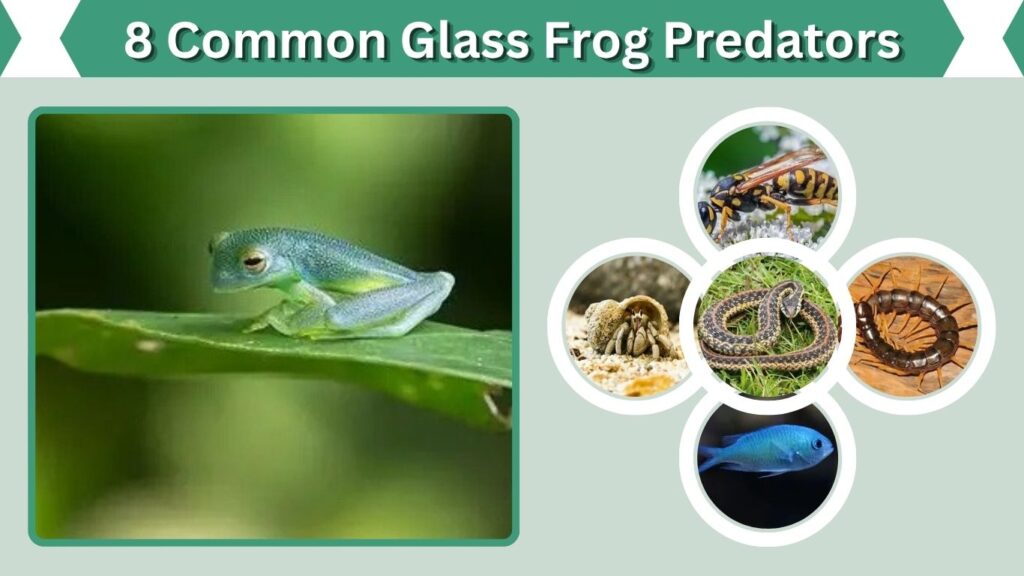
Glass frog predators range from large vertebrates to surprisingly small invertebrates. Some attack adult frogs, while others specialize in eggs or newly hatched tadpoles.
1. Snakes
Arboreal snakes are among the most dangerous glass frog predators. These snakes can move through branches and leaves near rainforest streams, allowing them to reach both adults and exposed egg clutches.
A snake may swallow an adult guarding its eggs and then consume the clutch. Because many glass frogs are small and lack strong physical weapons, avoiding detection is usually more effective than fighting a snake. Snakes have been recorded preying on both eggs and adult glass frogs.
2. Birds
Rainforest birds search leaves and branches for small animals, including frogs. A glass frog resting on the upper surface of a leaf may become visible to an insect-eating bird, especially if the frog moves.
Birds are believed to be an important reason glass frogs benefit from their green coloration and translucent bodies. Field experiments using frog models found that naturally translucent models received fewer attacks than fully opaque models, demonstrating the survival value of glass frog camouflage.
3. Large Spiders
Large hunting spiders can capture glass frogs despite being invertebrates. Ctenid wandering spiders are powerful nocturnal predators that actively search vegetation rather than depending entirely on webs.
Researchers have directly observed a ctenid spider preying on a glass frog. Spiders may also attack eggs or adult males sitting beside their clutches. Their ability to climb leaves and hunt at night brings them into the same habitat used by calling and breeding glass frogs.
4. Katydids and Crickets
Large katydids and crickets are omnivorous and may eat small frogs or soft amphibian eggs. Although they are normally considered plant-eating insects, some species are capable hunters.
Katydids have been recorded attacking adult glass frogs as well as their eggs. A cricket identified as Paroecanthus tibialis has also been observed consuming early-stage glass frog embryos. These insects are particularly dangerous at night, when glass frogs are active and breeding.
5. Wasps
Wasps are major predators of glass frog eggs. They land on egg clutches attached to leaves and attempt to remove or eat individual embryos.
Male glass frogs sometimes defend their offspring by positioning themselves over the clutch and kicking attacking wasps with their hind legs. Researchers observing Hyalinobatrachium talamancae recorded males confronting several wasps simultaneously. However, a small male cannot always prevent determined wasps from reaching the eggs.
6. Centipedes
Predatory centipedes can climb rainforest vegetation and locate exposed frog eggs. Their venomous front appendages help them overpower small animals.
Glass frog fathers may remain close to their eggs, but their small size limits their ability to repel larger centipedes. Clutches without continuous parental attendance are generally more exposed to predation, dehydration and other causes of embryo mortality.
7. Crabs and Fly Larvae
Some predators attack glass frogs before the embryos have developed enough to escape. A freshwater crab has been observed pulling an entire glass frog egg mass from a leaf and eating it.
Certain flies can also parasitize frog clutches. The flies place their offspring near or inside the gelatinous eggs, after which the developing larvae consume the embryos. These attacks can destroy numerous eggs without threatening the adult frogs directly.
8. Fish, Crustaceans and Aquatic Insects
Once tadpoles hatch and fall into the stream, they encounter a new group of predators. Fish, freshwater crustaceans and predatory aquatic insects may capture them before they reach shelter.
Glass frog tadpoles often remain concealed beneath rocks, leaf litter or sediment. Hiding helps them avoid predators and prevents fast currents from carrying them downstream. Later hatching can also produce stronger tadpoles that are better prepared to enter predator-filled streams.
How Glass Frogs Protect Themselves From Predators
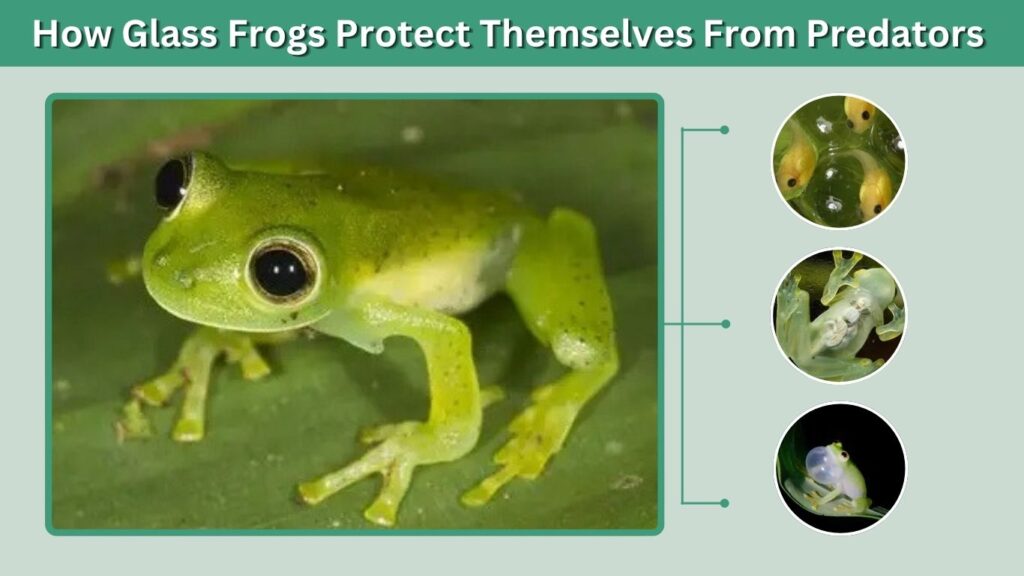
Glass frogs cannot completely avoid predators, but several unusual adaptations make them harder to detect or capture.
Transparency and Camouflage
The transparent belly of a glass frog does not make it completely invisible. Instead, translucency softens the outline between the frog and the leaf, creating an effect known as edge diffusion. Its green back also matches the surrounding vegetation.
Some glass frogs increase their transparency while resting by moving most circulating red blood cells into the liver. This reduces the visible red coloration inside the body and helps the frog blend into a leaf during the day.
Nocturnal and Hidden Behavior
Most glass frogs are active at night. During the day, they may rest motionless on the underside of broad leaves, where their green coloration, translucent tissues and flattened posture make them difficult to distinguish from vegetation.
Remaining still is important because movement may reveal a frog even when its coloration is effective.
Parental Egg Protection
Parental care is an important glass frog defense. Depending on the species, females may initially hydrate or brood the eggs, while males may remain beside clutches for several nights.
Attending parents keep eggs moist and may physically confront predators. Males have been observed covering their clutches, raising their bodies defensively and kicking wasps away. Continued parental attendance can significantly improve hatching success.
Early Hatching
Glass frog embryos do not always hatch on a fixed day. When an egg clutch is threatened by predators, dehydration or parental abandonment, embryos may hatch early and fall into the stream.
This escape strategy removes them from immediate danger on the leaf, although very young tadpoles may be less capable of escaping aquatic predators. Under safer conditions, embryos can remain inside their eggs longer and enter the water at a more developed stage.
Glass Frog Predators and Prey
Glass frogs occupy the middle of the rainforest food web. They are prey for snakes, birds, spiders and other hunters, but they are also predators themselves.
Adult glass frogs mainly eat small insects and other arthropods, including flies, moths, crickets, ants and spiders. Larger individuals may occasionally eat smaller frogs. By consuming insects and then becoming food for larger animals, glass frogs help transfer energy through both forest and stream ecosystems.
Do All Glass Frog Species Have the Same Predators?
Predators differ according to a species’ size, geographic range, breeding behavior and egg-laying location. However, closely related species living beside rainforest streams often face similar threats.
Reticulated glass frog fathers are known for guarding eggs and kicking approaching wasps. Northern glass frog embryos can adjust their hatching time when paternal care ends. For less-studied species, including Diane’s bare-hearted glass frog, there is not enough published evidence to establish a unique predator list, so general family-level predators are usually discussed instead.
FAQs
What is the main predator of a glass frog?
Glass frogs do not have one universal main predator. Arboreal snakes, birds and large spiders are important predators of adults, while wasps, centipedes and katydids frequently attack eggs. Tadpoles face fish, crustaceans and predatory aquatic insects after entering streams.
How does a glass frog protect itself from predators?
A glass frog relies mainly on camouflage. Its green coloration and translucent tissues soften its body outline against leaves. It may also rest motionless beneath vegetation. Parents protect eggs by covering clutches, keeping them hydrated and kicking at approaching insects.
Do snakes eat glass frogs?
Yes. Arboreal snakes can eat adult glass frogs, embryos and entire egg clutches. They can travel through vegetation above streams where glass frogs breed. A snake may even capture a male guarding eggs before consuming the undefended clutch.
What animals eat glass frog eggs?
Glass frog eggs may be eaten by wasps, centipedes, crickets, katydids, spiders, snakes and crabs. Some fly larvae also consume developing embryos. Egg clutches are exposed on vegetation, although their position above water protects them from many aquatic predators.
What eats glass frog tadpoles?
Fish, freshwater crustaceans and predatory aquatic insects can eat glass frog tadpoles. To reduce this risk, tadpoles often hide beneath rocks, sediment or leaf litter in fast-flowing streams. Their elongated bodies and strong tails help them move through these aquatic habitats.
