
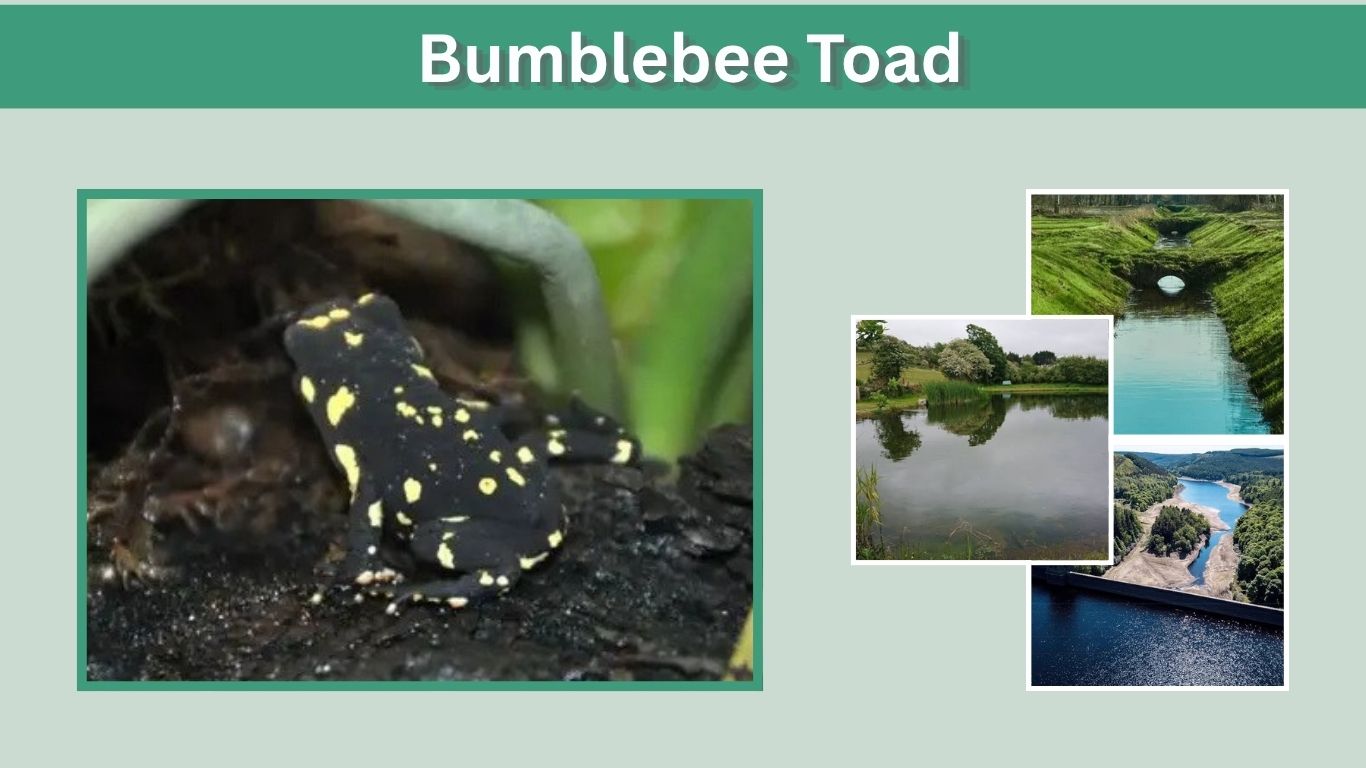
The bumblebee toad is a tiny South American amphibian recognized by its striking black-and-yellow body and bright red markings. Also called the bumblebee walking toad or red-bellied toad, it spends much of its time walking across the ground rather than making long jumps. Its attractive colors and daytime activity have made it popular among amphibian keepers, but it still requires carefully controlled housing, small live foods and minimal handling.
Bumblebee Toad Quick Facts
The scientific name most commonly associated with the bumblebee toad is Melanophryniscus stelzneri. It belongs to Bufonidae, the true-toad family. However, pet-trade identification can be confusing because similar Melanophryniscus species are sometimes sold under the same common name.
| Feature | Information |
| Common names | Bumblebee toad, bumblebee walking toad, red-bellied toad |
| Scientific name | Melanophryniscus stelzneri |
| Family | Bufonidae |
| Adult size | Approximately 1–1.4 inches |
| Color | Black with yellow and red markings |
| Diet | Small insects and other arthropods |
| Activity | Mainly terrestrial and often active by day |
| Native region | South America, especially Argentina |
| Conservation status | Least Concern |
| Handling | Should be avoided except when necessary |
AmphibiaWeb currently lists the species as Least Concern and not included in CITES. Nevertheless, local populations may be vulnerable because they occupy small, fragmented habitats.
What Does a Bumblebee Toad Look Like?
The bumblebee toad has one of the most distinctive appearances among small terrestrial toads. Its dark body is covered with irregular yellow or cream-colored patches that resemble a bumblebee’s pattern.
Identification Features
- Dark brown or black upper body
- Bright yellow spots or irregular bands
- Red or orange markings on the belly and feet
- Short legs and a compact body
- Rough skin without prominent parotoid glands
- Rounded snout and dark eyes
Most adults measure approximately 25–30 millimeters, or around one inch long. Females are generally larger and may reach 30–35 millimeters, while exceptionally large individuals can approach 40 millimeters.
Why Is It Called a Walking Toad?
Bumblebee toads have short limbs and often travel with deliberate walking movements. They can hop when necessary, but they are less powerful jumpers than many frogs.
Their walking behavior suits the grasslands and rocky ground they occupy in the wild. In captivity, they may also climb low plants, moss and pieces of bark, although they should not be housed in a tall enclosure where a fall could cause injury.
Bumblebee Toad Natural Habitat and Distribution
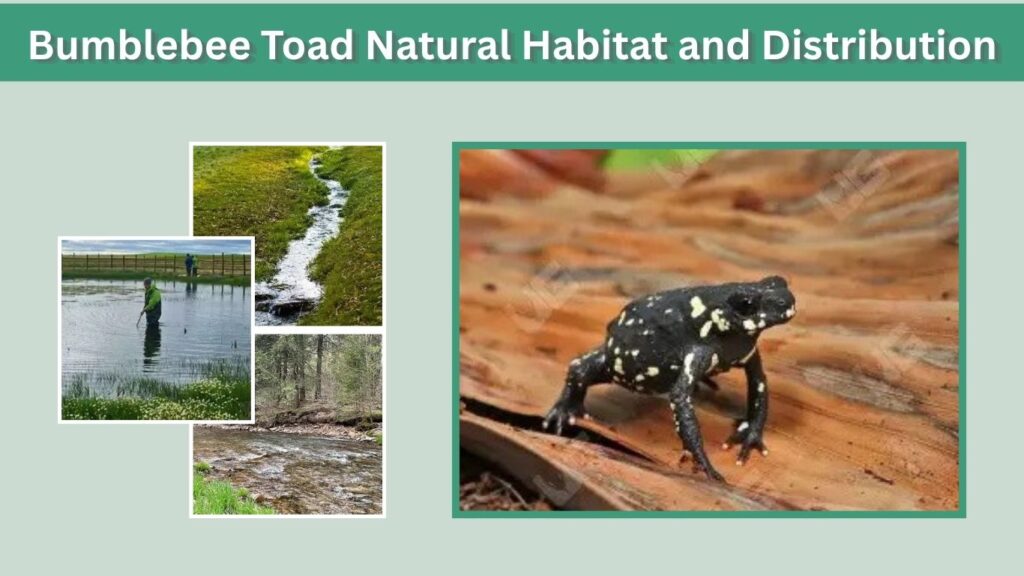
Melanophryniscus stelzneri is strongly associated with Argentina, including localized populations in Córdoba, San Luis and Salta. It inhabits grasslands, rocky outcrops, shrublands and other open terrestrial environments. Its distribution is fragmented, and the exact classification of some geographically separated populations remains complicated.
Breeding Habitat
Bumblebee toads reproduce after periods of heavy rain. Breeding may occur in:
- Shallow temporary ponds
- Small streams
- Wet grassy depressions
- Roadside pools
- Muddy seasonal wetlands
A study of breeding sites in Argentina found that the toads favored small, shallow, temporary pools with muddy banks and substantial vegetation cover. These pools often contained few aquatic predators or competing amphibians.
Bumblebee Toad Behavior
Unlike many amphibians that remain hidden throughout the day, bumblebee toads may become active during daylight. They walk through vegetation searching for small arthropods and often become especially active after rain.
When threatened, the toad may arch its body and expose the brightly colored underside. This defensive display, known as the unken reflex, warns potential predators that the animal may contain unpleasant or toxic skin chemicals.
Bumblebee Toad Call
Male bumblebee toads call during breeding periods, often after strong rainfall has filled temporary pools. Breeding choruses may occur during the day rather than exclusively at night.
The call is generally a rapid, high-pitched series of notes. Calling can become surprisingly noticeable when several males are kept together, so the potential noise should be considered before placing an enclosure in a bedroom or quiet office.
What Do Bumblebee Toads Eat?
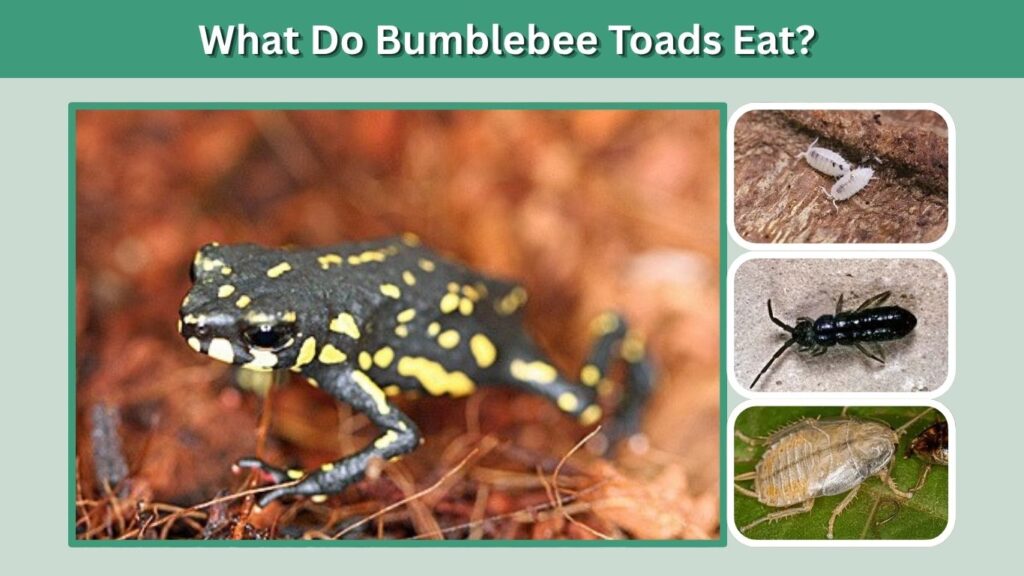
Wild bumblebee toads are insectivores that consume many tiny arthropods. Research examining stomach contents found ants, springtails, mites, beetles, termites and insect larvae among their main foods.
Suitable Captive Foods
Captive bumblebee toads can be offered:
- Flightless fruit flies
- Pinhead crickets
- Springtails
- Dwarf isopods
- Tiny roach nymphs
- Small silkworms
- Other appropriately sized feeder insects
Food should be smaller than the distance between the toad’s eyes. A varied diet is preferable to relying on one feeder species. Feeder insects should be properly nourished and supplemented according to guidance from an experienced exotic-animal veterinarian.
Adults generally eat several times each week, while young, growing toads may require smaller meals more frequently. Uneaten insects should be removed before they disturb the toads or damage plants.
Are Bumblebee Toads Poisonous?
Wild Melanophryniscus toads can carry defensive alkaloids in their skin. Research indicates that M. stelzneri can obtain and store certain alkaloids from its food, much like some poison frogs. Wild diets rich in ants and mites are thought to contribute to this chemical defense.
Captive-bred animals eating standard feeder insects may lack many of the compounds present in wild individuals. However, they should not automatically be considered harmless. Avoid touching the mouth, eyes or broken skin after contact, and wash your hands thoroughly.
Handling should also be limited because oils, salts, soap and chemicals on human skin can damage an amphibian’s sensitive skin.
Bumblebee Toad Care
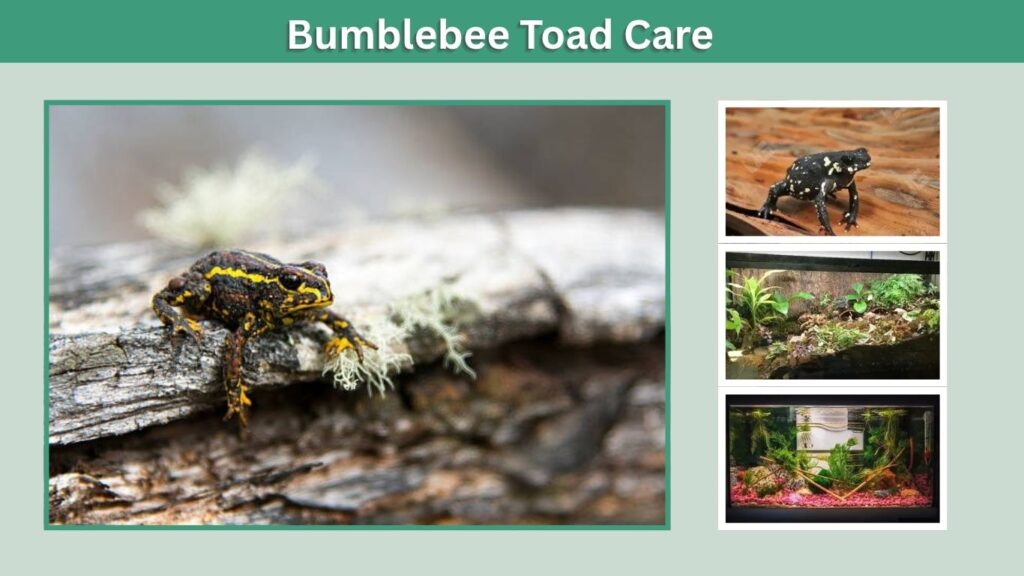
A bumblebee toad enclosure should provide adequate floor space, good ventilation, hiding places and a choice between slightly wetter and drier areas. A terrestrial terrarium is generally more suitable than a deep paludarium.
Enclosure and Tank Size
A small group can be housed in a secure, well-ventilated glass or plastic terrarium. One husbandry source recommends at least 2.5 gallons of enclosure volume per animal, with no enclosure smaller than five gallons. More floor space is beneficial because these toads spend most of their time on the ground.
Include several hiding places so each animal can retreat without being crowded. Cork bark, leaf litter, small caves, grasses and sturdy low-growing plants can create a natural-looking habitat.
Substrate
Suitable substrate options include pesticide-free topsoil, coconut fiber, leaf litter and a drainage layer where necessary. The substrate should retain some moisture without remaining waterlogged.
Avoid loose gravel that could be swallowed with food and materials containing fertilizers, pesticides, aromatic oils or sharp pieces. Spot-clean waste and replace contaminated substrate when required.
Temperature and Humidity
A practical daytime temperature range is approximately 70–75°F, or 21–24°C. Some keepers maintain them slightly warmer, but overheating is a greater danger than allowing a modest nighttime temperature drop. Use a digital thermometer rather than estimating the temperature by touch.
Moderate humidity with good airflow is preferable to constantly saturated conditions. One husbandry guide recommends approximately 60–80% humidity, but the enclosure should include moisture variation instead of being uniformly wet.
Heat lamps are usually unnecessary in a warm room and can rapidly dry or overheat a small enclosure. When supplemental heat is needed, it should be controlled by a thermostat and positioned to create a safe temperature gradient.
Water
Provide a shallow dish of clean, dechlorinated water. The dish should be easy to enter and exit, as bumblebee toads are terrestrial rather than strong swimmers.
Replace the water daily or whenever it becomes dirty. Deep pools, powerful filters and steep-sided containers are unnecessary and may create a drowning risk.
Breeding Bumblebee Toads
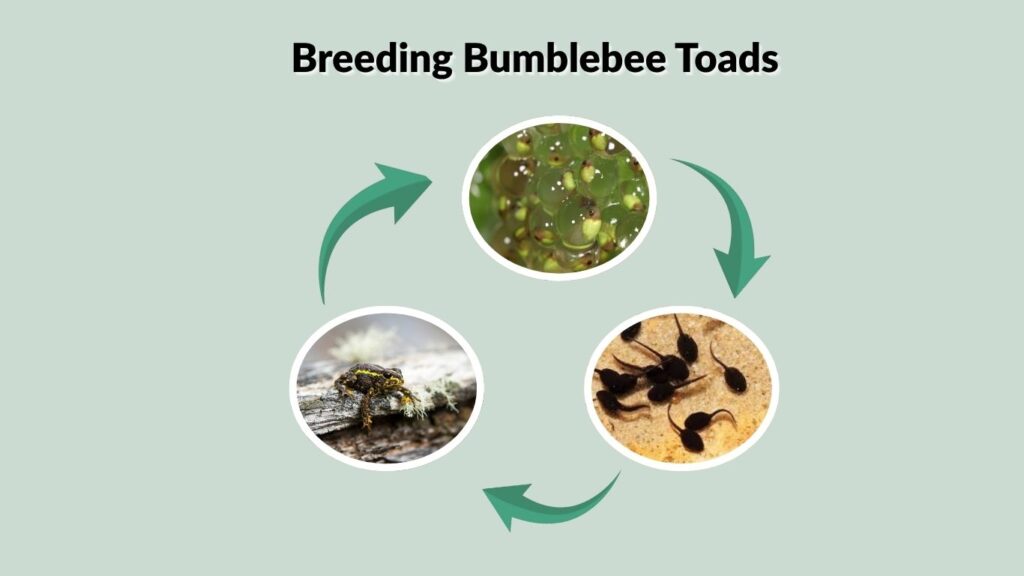
Bumblebee toads are explosive breeders in nature. Heavy rain and the sudden appearance of temporary pools trigger adults to gather, call, mate and deposit eggs.
The eggs are placed in gelatinous masses attached to underwater vegetation. Tadpole development must be completed before temporary breeding pools disappear, and declining water levels can affect the timing of metamorphosis.
Captive breeding is more difficult than ordinary maintenance. It may require seasonal temperature changes, increased feeding, simulated rainfall and a separate aquatic breeding area. Raising the extremely small tadpoles and newly metamorphosed toadlets can also be challenging.
Buying a Bumblebee Toad
Choose captive-bred animals from a breeder who can provide the scientific name, feeding history, age and origin. Common names are unreliable, and some toads marketed as M. stelzneri may belong to a related species.
A healthy toad should appear alert, have clear eyes, maintain a normal body shape and respond quickly to small live prey. Avoid animals with severe weight loss, skin sores, abnormal posture, swollen limbs or difficulty moving.
FAQs
How big do bumblebee toads get?
Most bumblebee toads remain approximately 1–1.4 inches long. Males are commonly close to one inch, while females are usually larger and may occasionally reach around 1.6 inches. Their tiny size means they require very small feeder insects and a secure enclosure.
How long do bumblebee toads live?
Reliable, scientifically documented lifespan information is limited. With stable temperatures, clean housing, varied nutrition and veterinary care, captive animals may live for several years. Buyers should therefore view them as a long-term responsibility rather than short-lived display pets.
Can you handle a bumblebee toad?
Routine handling is not recommended. Bumblebee toads have absorbent skin that can be harmed by soap, lotion, oils and other residues. When movement is essential, use clean, wet, powder-free gloves or gently guide the toad into a small container.
Can bumblebee toads live together?
They are commonly maintained in small groups when sufficient floor space, hiding places and food are provided. Keep similarly sized individuals together and monitor them during feeding. Crowding can cause competition, stress and difficulty ensuring that every toad receives enough food.
Do bumblebee toads need a paludarium?
They do not need a large aquatic section for ordinary care. A terrestrial terrarium with moist substrate, good ventilation and a shallow water dish is normally more appropriate. A temporary pool or specialized rain chamber is mainly relevant when attempting captive breeding.
