
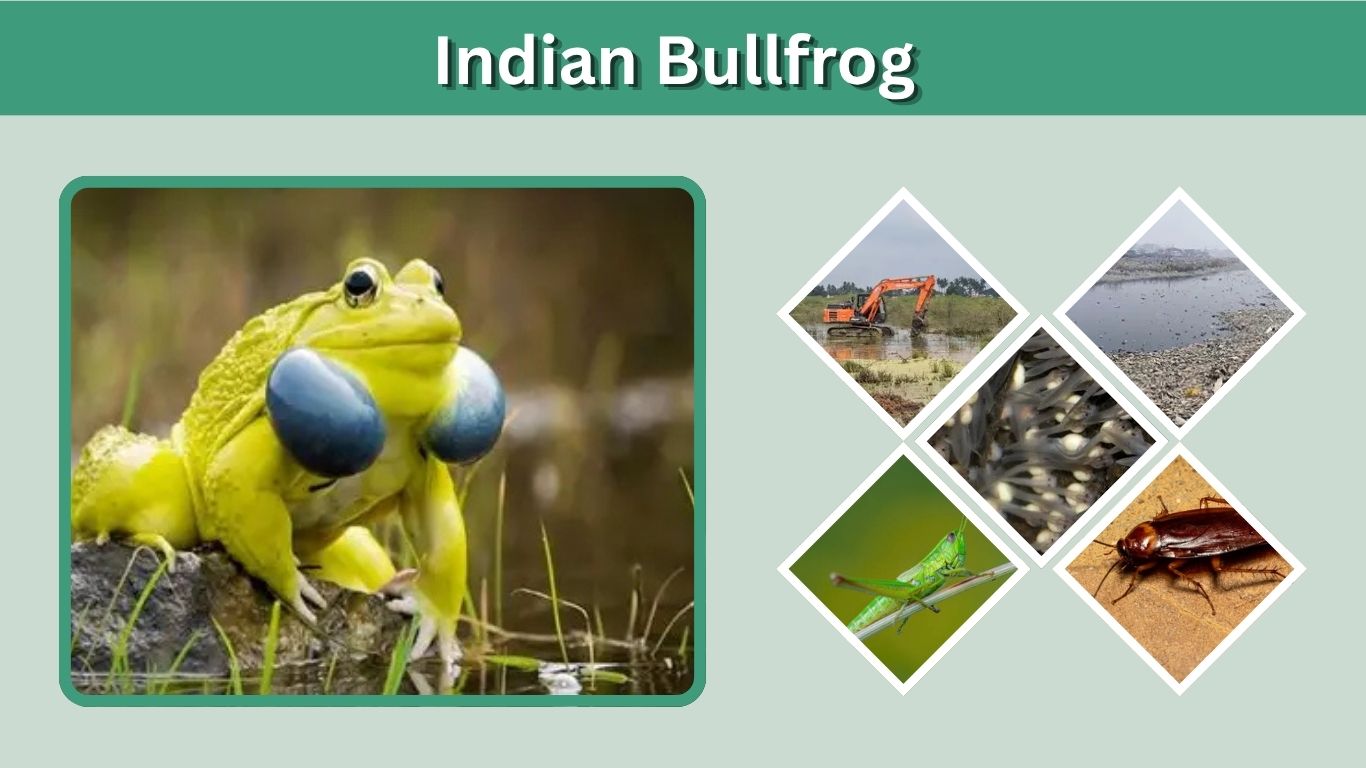
The Indian bullfrog is one of South Asia’s largest and most recognizable frogs. During most of the year, it has an olive-green or brown body that blends into muddy wetland vegetation. When the monsoon breeding season begins, adult males undergo a dramatic transformation, becoming bright yellow and inflating two blue vocal sacs while calling for females. Its scientific name is Hoplobatrachus tigerinus, and it is also called the Indus Valley bullfrog or tiger frog.
Indian Bullfrog Quick Facts
The Indian bullfrog belongs to the family Dicroglossidae. It is a large, powerful and mainly nocturnal amphibian associated with freshwater habitats and agricultural landscapes.
| Feature | Information |
| Scientific name | Hoplobatrachus tigerinus |
| Other names | Indus Valley bullfrog and tiger frog |
| Family | Dicroglossidae |
| Maximum size | Approximately 160 mm or more |
| Normal color | Olive-green or brown-green |
| Breeding male color | Bright yellow with blue vocal sacs |
| Diet | Insects and small vertebrates |
| Habitat | Wetlands, ponds, marshes and rice fields |
| Activity | Mainly nocturnal |
| Breeding period | Monsoon season |
| Conservation status | Least Concern |
What Does an Indian Bullfrog Look Like?
The Indian bullfrog has a strong body, pointed snout, large eyes and muscular back legs. Its skin is usually olive, greenish brown or yellowish brown, with darker spots or lines that provide camouflage around muddy water and vegetation.
Identification Features
An adult can be identified by:
- A large, robust body
- A pointed or slightly rounded snout
- Strong, partly webbed hind feet
- Long folds running along the back
- Olive-green or brown coloration
- Dark markings on the body and legs
- A pale underside
- Powerful legs for jumping and swimming
The species can reach a snout-to-vent length of around 160 millimeters, although size varies among individuals and populations. Females are often larger than males.
Yellow Male Indian Bullfrog
The famous yellow Indian bullfrog is not a separate species. It is an adult male displaying temporary breeding coloration.
At the beginning of the mating season, males change from dull green or brown to vivid yellow. They also inflate two blue or bluish-purple vocal sacs on the sides of the throat. This combination of sound and color may help attract females and communicate with competing males. Females normally retain their olive or brown appearance.
Baby and Juvenile Bullfrogs
Young frogs are smaller, slimmer and less brightly colored than breeding adults. Juveniles normally have greenish or brown bodies with dark spots and bands on the legs.
They begin life as aquatic tadpoles before developing legs, absorbing their tails and leaving the water as young frogs. Tadpoles may eat aquatic organisms, organic material and other tadpoles while developing.
Where Do Indian Bullfrogs Live?
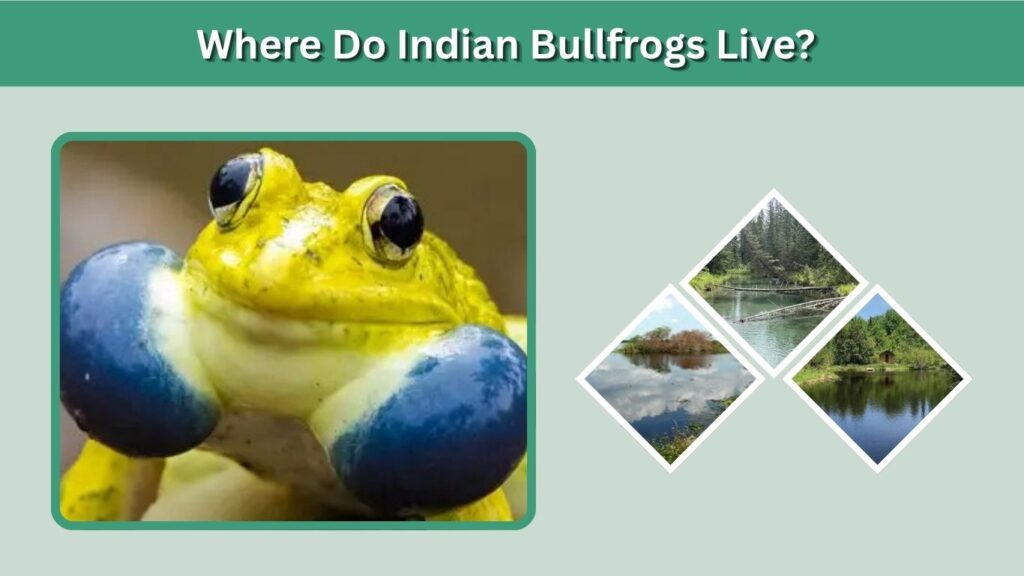
The native range includes India, Bangladesh, Nepal, Pakistan, Myanmar and parts of Afghanistan. The species has also been introduced outside its natural range, including Madagascar and the Maldives.
Indian Bullfrog Habitat
Indian bullfrogs are primarily found in lowland freshwater environments, including:
- Ponds
- Marshes
- Swamps
- Temporary rain pools
- Irrigation canals
- Rice fields
- Lakeshores
- Slow-moving streams
- Vegetation beside permanent water
They are especially common in human-modified agricultural environments such as flooded paddy fields. During dry periods, individuals may shelter in holes, thick vegetation or damp spaces near permanent water. They are generally less common in dense forests and coastal habitats.
What Do Indian Bullfrogs Eat?
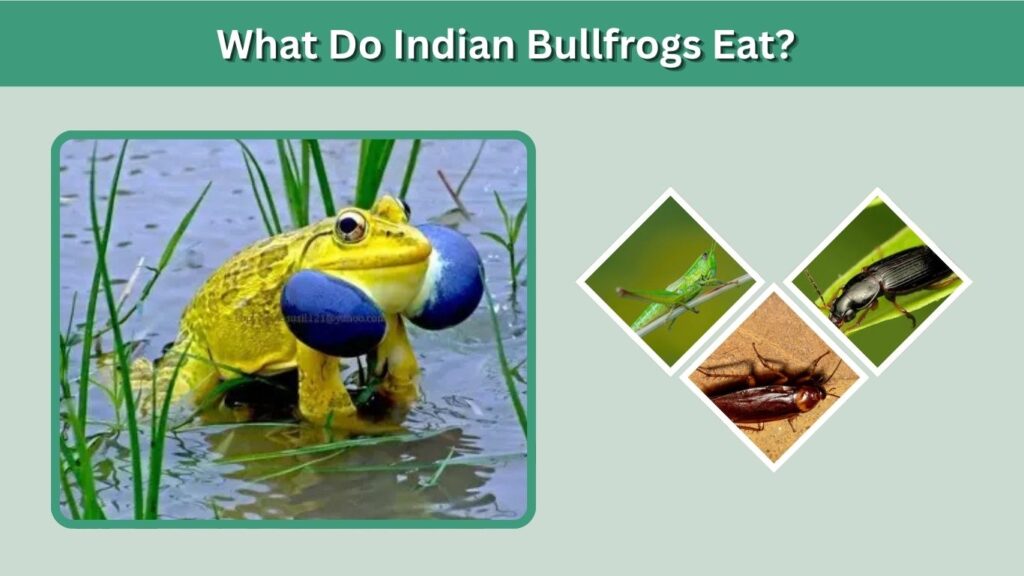
Indian bullfrogs are opportunistic predators. They eat many kinds of animals and usually capture anything small enough to overpower and swallow.
Common Foods
Their diet may include:
- Beetles
- Crickets
- Spiders
- Centipedes
- Worms
- Other frogs and tadpoles
- Small snakes and lizards
- Small mammals
- Young birds
Invertebrates make up much of the diet, but larger bullfrogs can capture small vertebrates. Research on invasive Indian bullfrogs in the Andaman Islands found that they selected relatively large prey and consumed endemic vertebrates, raising concerns about predation and competition with native frogs.
Indian bullfrogs commonly use a sit-and-wait hunting strategy. A frog remains still until prey approaches, then lunges forward and captures it with its mouth.
Indian Bullfrog Sound and Call
The male Indian bullfrog produces a loud, repeated breeding call during the rainy season. The exact sound may be described as a deep croak, bellow or nasal call.
The two vocal sacs inflate and deflate as the male calls. These sacs amplify the sound and also provide a striking blue visual signal against the male’s yellow body. Groups of males may gather in shallow water and form loud choruses after heavy monsoon rain.
Breeding and Life Cycle
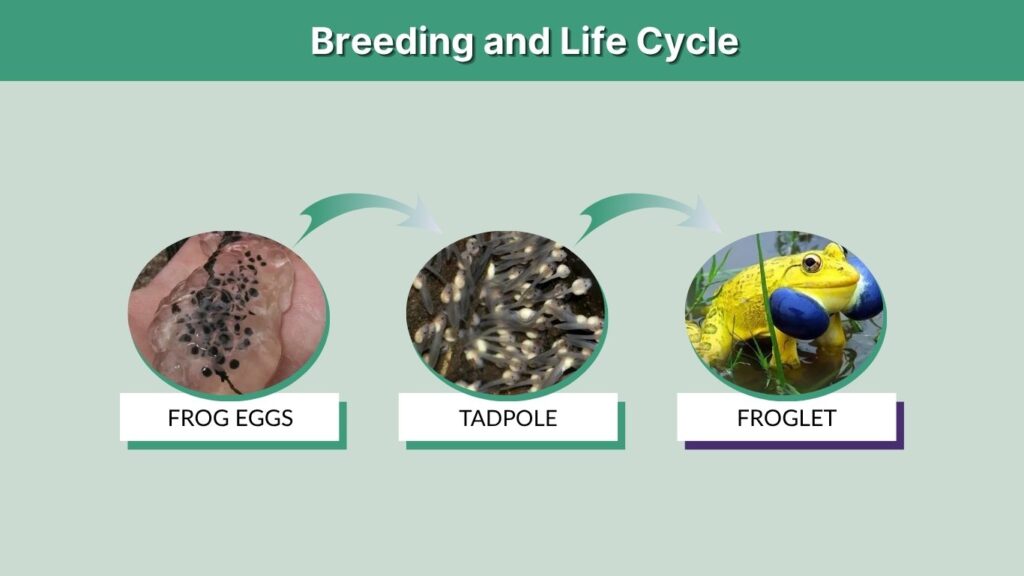
Indian bullfrogs are seasonal breeders. Most reproductive activity occurs during the monsoon, when rainfall fills temporary pools, wetlands and agricultural fields.
Mating Behavior
Males gather in shallow water and call to females. When a female approaches, the male holds her in a mating embrace called amplexus. Competition can be intense, and nearby males may attempt to displace the successful caller.
Eggs and Tadpoles
Females lay large numbers of jelly-covered eggs in water, often near aquatic vegetation. After hatching, the tadpoles grow rapidly in warm, food-rich pools.
The life cycle includes:
- Egg
- Aquatic tadpole
- Tadpole with developing legs
- Froglet with a shrinking tail
- Juvenile frog
- Reproductive adult
Many eggs and tadpoles are eaten by fish, insects, birds, snakes and other frogs. Only a small proportion survive to become adults.
Are Indian Bullfrogs Poisonous?
Indian bullfrogs are not generally regarded as dangerously poisonous or venomous to humans. They do not inject venom through a bite or sting. However, wild frogs should not be handled unnecessarily.
Amphibians can carry Salmonella even when they appear healthy. Wash your hands thoroughly after touching a frog, its water or anything in its environment, and avoid touching your eyes or mouth. Handling can also damage the frog’s delicate, absorbent skin.
Predators and Adaptations
Indian bullfrogs are hunted by water snakes, birds, mammals, large fish and other predators. The Asiatic water snake is among their documented natural predators.
Several adaptations help them survive:
- Olive coloration provides camouflage.
- Strong hind legs support fast jumping.
- Webbed feet improve swimming.
- Large body size discourages smaller predators.
- Nocturnal activity reduces daytime exposure.
- Rapid breeding allows populations to recover from high tadpole mortality.
When threatened, a bullfrog may jump into water, hide in vegetation or remain motionless against mud and plants.
Indian Bullfrogs in the Andaman Islands
Although the species is native to mainland South Asia, it was introduced to the Andaman Islands, where it has spread through farms, plantations, disturbed forests and wetlands.
Studies found that invasive Indian bullfrogs consumed many prey categories, including native and endemic vertebrates. Their diet also overlapped with that of some native frogs, suggesting possible competition. Large carnivorous tadpoles may create an additional threat to native amphibian larvae.
Conservation Status and Threats
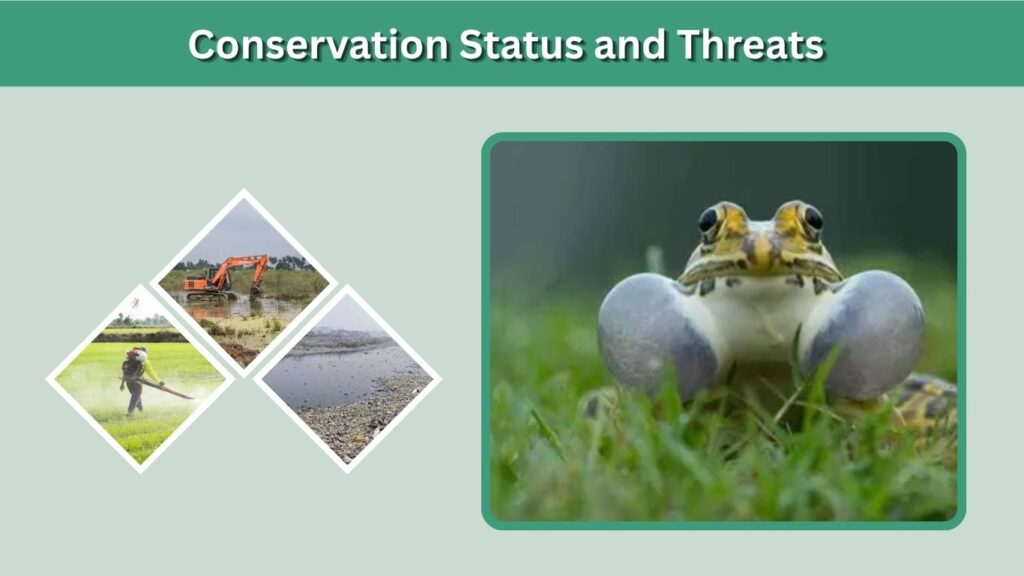
The Indian bullfrog is currently classified as Least Concern. Its broad distribution, adaptability and ability to breed in artificial wetlands help maintain large populations across much of its native range.
Local populations may still be affected by:
- Wetland destruction
- Water pollution
- Agricultural pesticides
- Prolonged drought
- Road mortality
- Illegal hunting and collection
- Loss of temporary breeding pools
The species can be beneficial in its native range by consuming agricultural pests. However, it may become ecologically harmful when introduced to islands or other areas containing vulnerable native wildlife.
FAQs
What is the scientific name of the Indian bullfrog?
The scientific name is Hoplobatrachus tigerinus. It belongs to the family Dicroglossidae and is also called the Indus Valley bullfrog or tiger frog. Older scientific literature may list it under the name Rana tigerina.
Why does the Indian bullfrog turn yellow?
Adult males turn bright yellow during the monsoon breeding season. The color, combined with their blue vocal sacs and loud calls, creates an intense mating display that may help females locate and select potential partners.
How big can an Indian bullfrog grow?
Large adults can reach approximately 160 millimeters in body length, excluding the extended legs. Females are generally larger than males, although males become much more colorful during breeding season.
What sound does an Indian bullfrog make?
Males produce a loud, repeated croaking or bellowing call. Two blue vocal sacs inflate on either side of the throat, amplifying the sound during monsoon breeding choruses.
Can an Indian bullfrog be kept as a pet?
Its large size, powerful feeding response and need for spacious aquatic and terrestrial areas make it difficult to maintain. Collecting or trading wild frogs may also be regulated, so local wildlife laws must be checked before obtaining one.
