
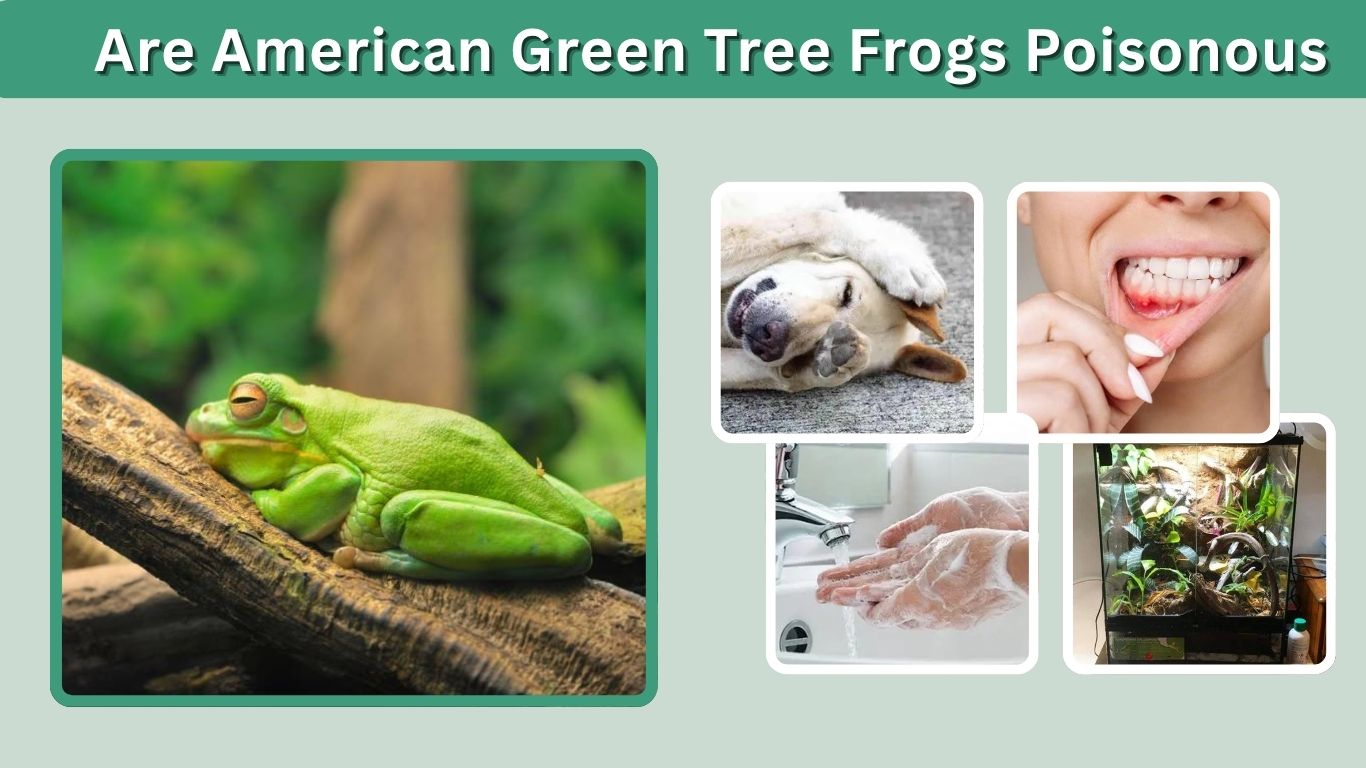
The American green tree frog (Hyla cinerea, also called Dryophytes cinereus) is a small, bright-green frog found across the southeastern United States. Its vivid color sometimes makes people wonder whether it is poisonous like a poison dart frog. However, American green tree frogs are not considered dangerously poisonous to humans, dogs, or cats. Their moist skin produces protective mucus that may cause mild irritation if it enters the eyes or mouth, but casual contact is unlikely to cause serious poisoning.
Are American Green Tree Frogs Poisonous?
American green tree frogs are not known to produce the powerful toxins associated with poison dart frogs, cane toads, or certain other amphibians. They are also not venomous because they cannot bite or sting to inject venom.
| Question | Answer |
| Are they poisonous to humans? | Not dangerously poisonous |
| Are they venomous? | No |
| Can their skin mucus irritate you? | Possibly, especially in the eyes or mouth |
| Are they poisonous to dogs? | Serious poisoning is not expected |
| Are they poisonous to cats? | Serious poisoning is unlikely |
| Can they carry germs? | Yes, amphibians may carry Salmonella |
Their smooth, moist skin produces mucus that helps prevent dehydration and allows their toe pads to remain wet and adhesive while climbing. Research on Hyla cinerea shows that specialized mucus glands are important for attachment rather than functioning as a dangerous venom-delivery system.
Are American Green Tree Frogs Poisonous to Humans?
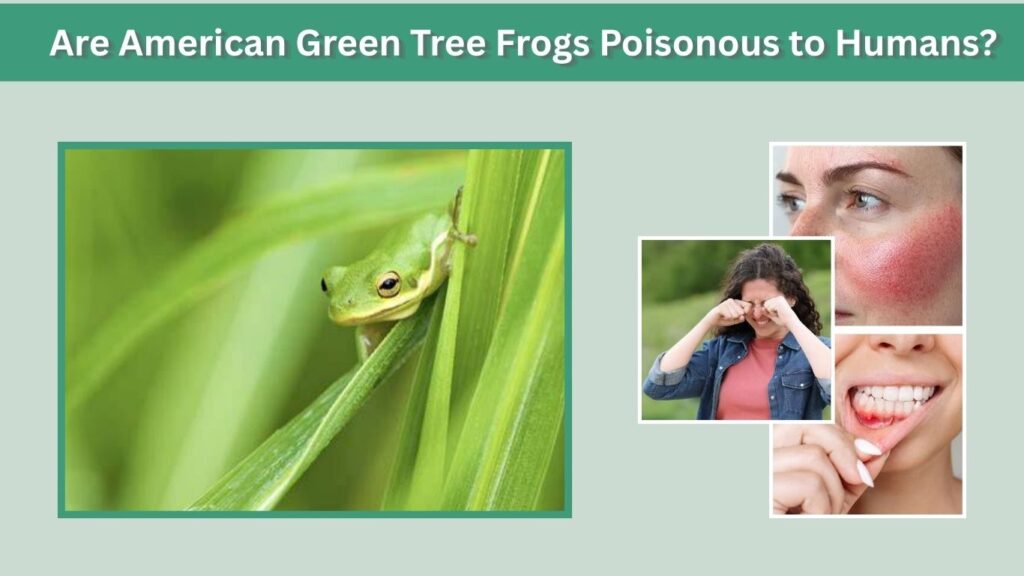
Touching an American green tree frog is not normally dangerous. The frog cannot sting, and its small mouth does not present a meaningful biting threat. Nevertheless, unnecessary handling should be avoided for the safety of both the person and the frog.
Can Their Skin Secretions Cause Irritation?
The frog’s skin is covered with mucus. This substance is not considered a medically significant poison, but it may cause temporary irritation if transferred to sensitive areas.
Possible effects may include:
- Mild burning or itching of the eyes
- Temporary mouth irritation
- Skin redness in sensitive individuals
- An unpleasant taste if mucus reaches the lips
- Irritation of an existing cut or wound
Wash the affected skin with soap and water. Rinse an irritated eye gently with clean lukewarm water for several minutes. Seek medical advice if eye pain, swelling, breathing trouble, or persistent irritation develops.
The Greater Concern Is Germ Exposure
The more realistic human health concern is not poison but bacteria. Frogs and other amphibians can carry Salmonella while appearing completely healthy. The bacteria may be present on the animal, in its droppings, in enclosure water, or on objects it has contacted.
A person could become infected after handling a frog and then touching food, the mouth, or the face without washing their hands. Children under five, adults over 65, and people with weakened immune systems face a greater risk of serious illness from animal-associated germs.
How to Handle One Safely
Avoid handling wild frogs unless they must be moved from immediate danger. When contact is necessary:
- Wet your clean hands with dechlorinated water.
- Hold the frog gently without squeezing it.
- Keep it away from your eyes, nose, and mouth.
- Return it to nearby vegetation as quickly as possible.
- Wash your hands thoroughly afterward.
Frogs have highly sensitive, permeable skin. Soap, sanitizer, lotion, sunscreen, insect repellent, salt, and other chemicals on human hands may harm them. Frequent handling can also cause stress.
Are American Green Tree Frogs Poisonous to Dogs?
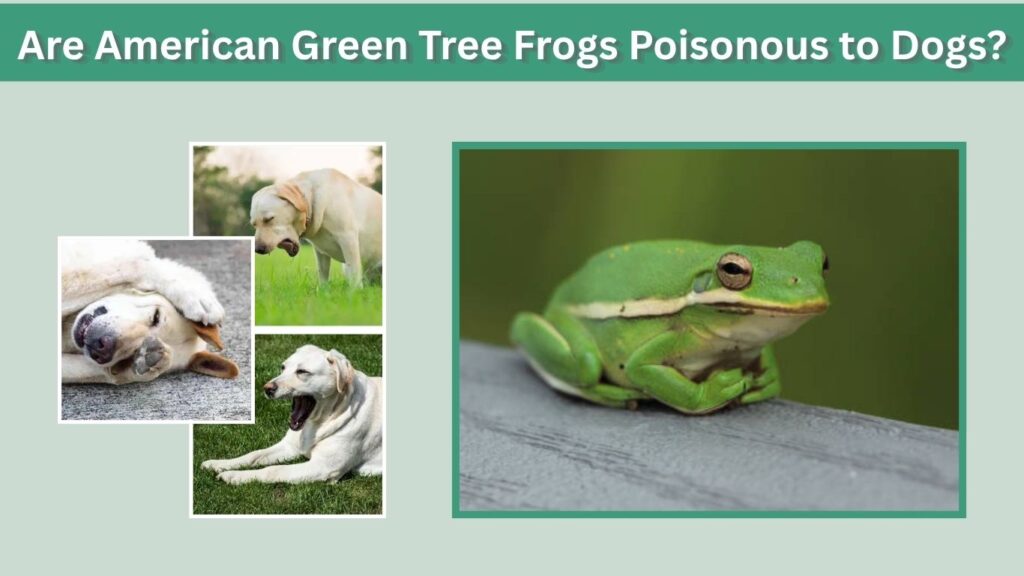
A correctly identified American green tree frog is not expected to cause severe or fatal poisoning in a dog. However, a dog that licks, mouths, or chews one may react to the frog’s skin mucus or experience gastrointestinal irritation.
Possible signs include:
- Excessive drooling
- Foaming around the mouth
- Lip licking
- Pawing at the face
- Gagging
- Vomiting
- Temporary loss of appetite
These signs do not necessarily indicate life-threatening poisoning. The bad taste and irritation may cause a dog to release the frog quickly.
What to Do If a Dog Bites One
Remove the dog from the area and prevent further contact. Gently wipe or rinse its mouth with clean water, directing the water outward rather than toward the throat. Do not force water down the dog’s mouth, and do not induce vomiting unless instructed by a veterinarian.
Contact a veterinarian promptly if the dog develops:
- Repeated vomiting
- Severe weakness
- Tremors or seizures
- Difficulty breathing
- Loss of coordination
- Abnormal heart rate
- Collapse
- Symptoms that continue or worsen
Serious amphibian poisoning in dogs is more commonly associated with large toxic toads, particularly cane toads, rather than American green tree frogs. The Merck Veterinary Manual notes that severe or fatal toad poisoning is primarily linked to highly toxic species such as the marine or cane toad.
Are American Green Tree Frogs Poisonous to Cats?
American green tree frogs are not considered dangerously poisonous to cats. Still, a cat that bites or eats a frog could experience mouth irritation, drooling, gagging, vomiting, or digestive upset.
Cats may also injure frogs without eating them. Domestic cats have sharp teeth and bacteria-rich saliva, so even a small puncture wound may be fatal to a frog. Keep cats indoors or supervise them outside, particularly at night when tree frogs are active.
Call a veterinarian if the cat continues drooling, refuses food, vomits repeatedly, becomes weak, breathes abnormally, or behaves unusually after contacting an amphibian.
How to Identify an American Green Tree Frog
Correct identification is important because not every green frog has the same level of risk.
The American green tree frog is generally:
- About 1–2.5 inches long
- Smooth-skinned and slender
- Bright green, olive green, gray-green, or occasionally brownish
- Marked with a pale white or yellow stripe from the jaw along each side
- Equipped with round adhesive toe pads
- Sometimes covered with small yellow or gold spots
It usually lives around ponds, marshes, wetlands, shrubs, trees, and vegetation near water. It is nocturnal and feeds mainly on insects.
American Green Tree Frog vs. Cuban Tree Frog
The invasive Cuban tree frog can be green and may be mistaken for an American green tree frog. Cuban tree frogs are typically larger, have bumpier skin, very large toe pads, and more variable or mottled coloration. Their skin secretions can produce stronger irritation, particularly if they enter the eyes.
The Florida Museum notes that the native green tree frog is smaller and smoother than the invasive Cuban tree frog, which has larger toe pads and irregularly bumpy skin.
What to Do After Touching a Green Tree Frog
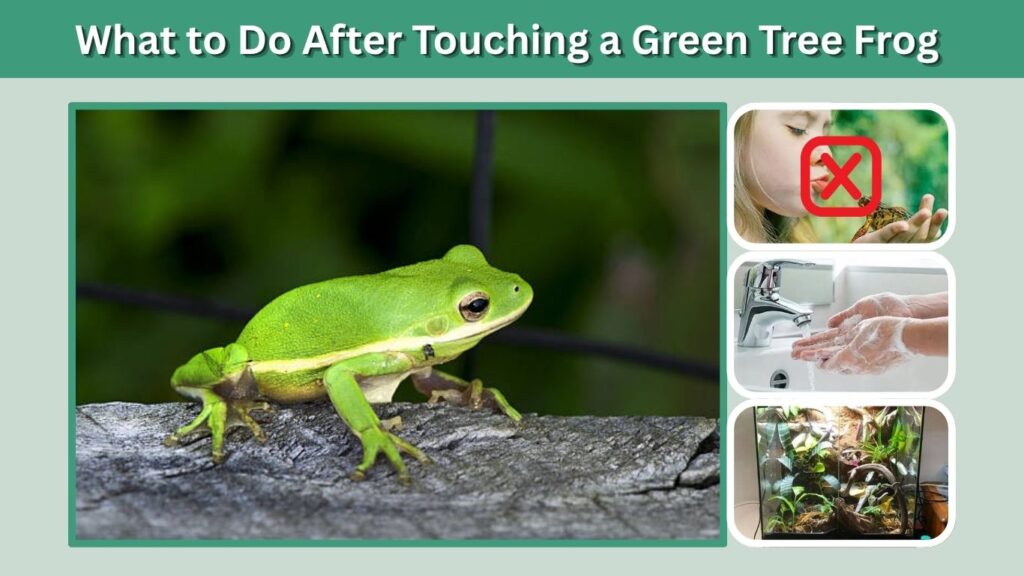
After touching the frog:
- Wash your hands with soap and running water.
- Avoid touching your face before washing.
- Clean surfaces the frog contacted.
- Keep frogs and their enclosures away from kitchens.
- Do not kiss a frog or hold it close to your face.
- Supervise children around all amphibians.
Pet enclosures, water bowls, decorations, and cleaning tools can also carry bacteria. The CDC recommends washing hands after touching amphibians or anything in their habitat and keeping them away from areas where food is prepared or eaten.
FAQs
Can touching an American green tree frog make you sick?
Touching one does not usually cause poisoning. However, its mucus may irritate sensitive skin, eyes, or the mouth. Frogs may also carry Salmonella, so wash your hands thoroughly after handling the animal or anything from its enclosure.
Can an American green tree frog kill a dog?
A correctly identified American green tree frog is not expected to kill a healthy dog. Mild drooling or mouth irritation may occur after licking or biting one. Severe symptoms require immediate veterinary attention because the animal may have contacted a more toxic species.
What happens when a cat eats an American green tree frog?
The cat may drool, gag, vomit, or experience temporary stomach irritation. Serious poisoning is unlikely, but swallowing the frog may create other health risks. Contact a veterinarian if symptoms persist, worsen, or include weakness, tremors, breathing difficulty, or abnormal behavior.
Is it safe to keep an American green tree frog as a pet?
It can be kept safely with appropriate housing and hygiene, although local wildlife laws should be checked. Choose a captive-bred frog rather than taking one from the wild. Minimize handling and wash your hands after touching the frog, enclosure, water, or equipment.
Are baby American green tree frogs poisonous?
Juvenile American green tree frogs are not considered dangerously poisonous. They may still have protective skin mucus and can carry germs, just like adults. Handle them as little as possible because their small bodies and sensitive skin are easily injured.
