
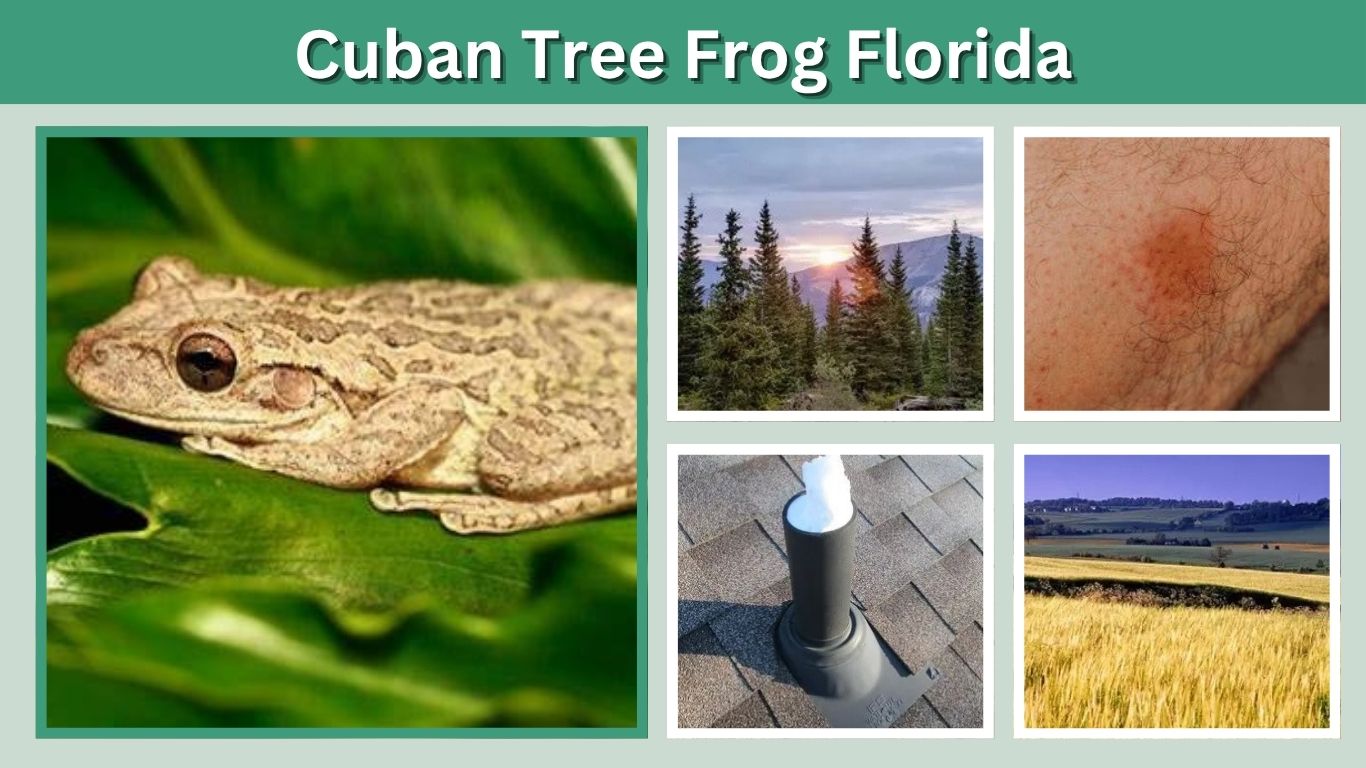
The Cuban tree frog is Florida’s largest tree frog and one of the state’s most widespread invasive amphibians. It can be white, green, gray, tan, or dark brown, making color alone unreliable for identification. These frogs commonly gather around homes, gardens, pools, outdoor lights, and ornamental plants. Although they are not dangerously poisonous to humans, their defensive skin secretions can irritate the eyes, nose, skin, and pets’ mouths. They also threaten Florida’s native frogs through predation and competition.
Are Cuban Tree Frogs Native to Florida?
Cuban tree frogs, scientifically known as Osteopilus septentrionalis, are native to Cuba, the Bahamas, the Cayman Islands, and the Isle of Youth. They are not native to Florida.
The earliest confirmed United States records date to the 1920s in the Florida Keys. They probably arrived as stowaways inside shipping crates and other cargo brought from the Caribbean. By the mid-1970s, they had spread across much of southern Florida.
Today, Cuban tree frogs are established throughout the Florida Peninsula and in several areas of the Panhandle. They continue spreading by hiding in ornamental plants, vehicles, boats, campers, and transported materials.
Cuban Tree Frog Identification
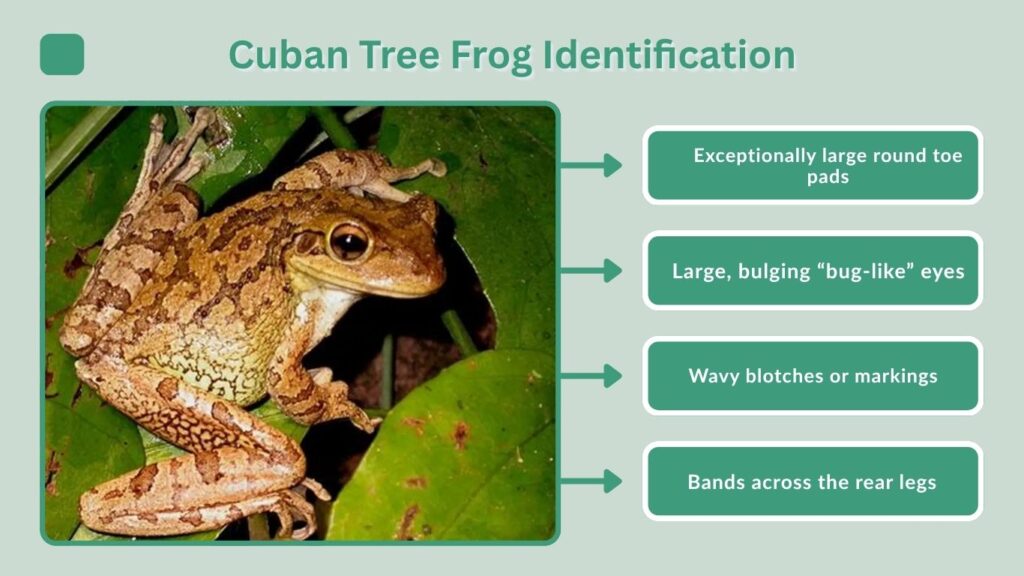
Cuban tree frogs vary considerably in appearance. One individual may be pale white, while another may be green, gray, beige, yellowish, or dark brown.
Main Identification Features
Look for a combination of these characteristics:
- Exceptionally large round toe pads
- Large, bulging “bug-like” eyes
- Warty or bumpy skin on the back
- Smooth skin on top of the head
- Wavy blotches or markings
- Bands across the rear legs
- Yellow coloration around the groin or armpits
- A body longer than three inches in large adults
Adult females can exceed six inches, although most individuals measure about 1.5 to 2.5 inches without the legs extended. Any Florida tree frog longer than three inches is almost certainly a Cuban tree frog.
White Cuban Tree Frogs
A white frog found on a Florida wall, window, tree, or patio may be a Cuban tree frog. These frogs can rapidly change between pale white, gray, brown, and greenish shades in response to temperature, surroundings, moisture, and activity.
Color should never be the only identification method. Check the frog’s large toe pads, prominent eyes, bumpy back, size, and leg markings before deciding that it is invasive.
Juvenile Cuban Tree Frogs
Young Cuban tree frogs are usually brown, gray, or green. They often have a pale, irregular line extending from the eye toward the rear legs. Their reddish-brown eyes, small back warts, and bluish leg bones visible through the skin can also help with identification.
Cuban Tree Frog vs Native Florida Tree Frog
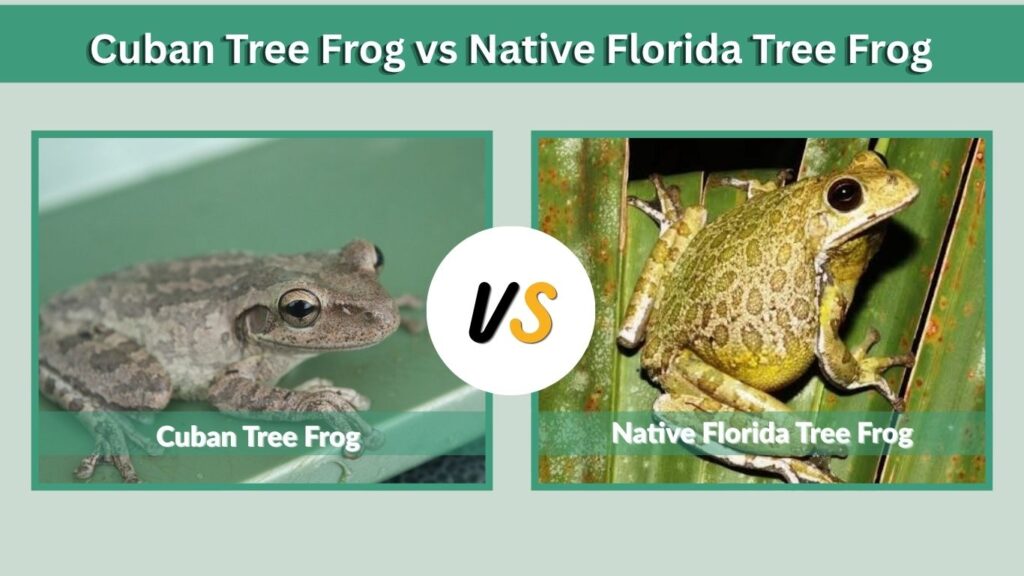
Several native species, particularly the barking tree frog and Cope’s gray tree frog, can resemble Cuban tree frogs. Juveniles are especially easy to misidentify.
| Feature | Cuban tree frog | Native Florida tree frogs |
| Adult size | Often large; females may exceed 6 inches | Usually considerably smaller |
| Toe pads | Exceptionally large | Generally smaller |
| Eyes | Large and bulging | Usually less prominent |
| Back texture | Often covered with irregular warts | Varies by species |
| Common locations | Buildings, windows, plumbing and gardens | Vegetation and natural habitat |
| Status | Invasive | Protected native wildlife |
A native barking tree frog can be large and have a bumpy back, so size and texture are not always enough. Do not remove or euthanize a frog unless its identification is certain.
Where Are Cuban Tree Frogs Found in Florida?
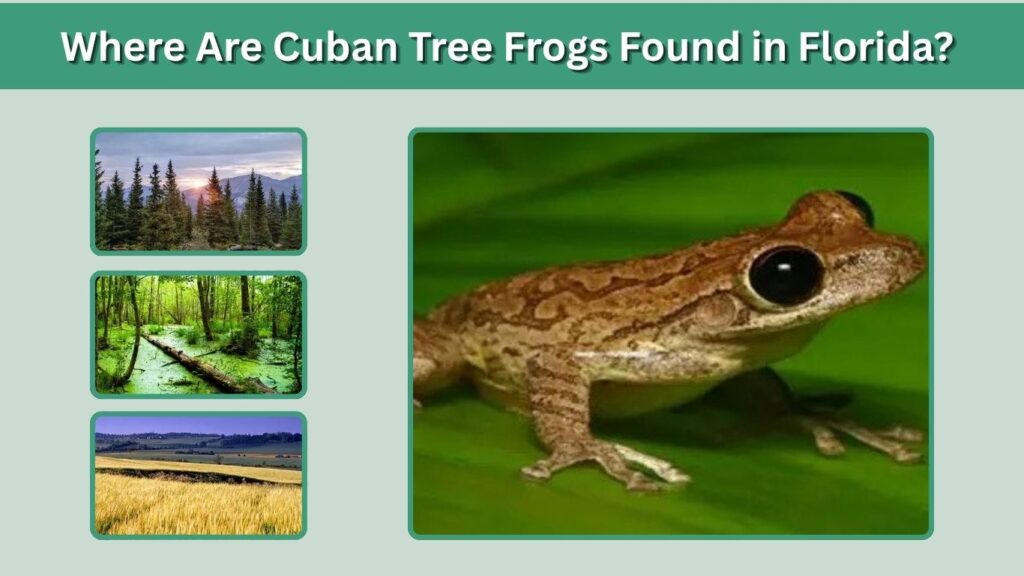
Cuban tree frogs inhabit natural and human-modified environments. They occur in hardwood hammocks, pine forests, swamps, agricultural land, citrus groves, plant nurseries, gardens, and suburban neighborhoods.
They prefer moist, sheltered environments and are especially common around human development. During the day, they hide in trees, plants, roof spaces, shutters, siding, electrical boxes, pipes, and other narrow spaces. They become most active at night when humidity increases.
Around homes, they are frequently found:
- On windows near outdoor lights
- Behind shutters and siding
- Inside birdhouses
- Around swimming pools
- In potted plants
- Inside electrical equipment
- In roof vent pipes
- In sinks, drains, and toilets
They gather around lights because insects provide an easy source of food. Their raspy call, sometimes compared to a squeaking door, is particularly noticeable after warm rain.
Why Are Cuban Tree Frogs Bad for Florida?
Cuban tree frogs eat native frogs, including green and squirrel tree frogs. They also consume lizards, small snakes, snails, spiders, millipedes, insects, and sometimes other Cuban tree frogs.
Their tadpoles compete with native tadpoles for food and space and may reduce native tadpole growth and survival. Cuban tree frogs also reproduce successfully in temporary pools, ditches, ornamental ponds, buckets, birdbaths, and other small bodies of standing water.
They can cause additional problems by:
- Entering homes and bathrooms
- Clogging drains
- Making loud calls at night
- Occupying bird nest boxes
- Defecating on walls and windows
- Entering transformers and electrical equipment
Removing Cuban tree frogs from an area can improve the survival and recovery of native tree frog populations.
Are Cuban Tree Frogs Poisonous?
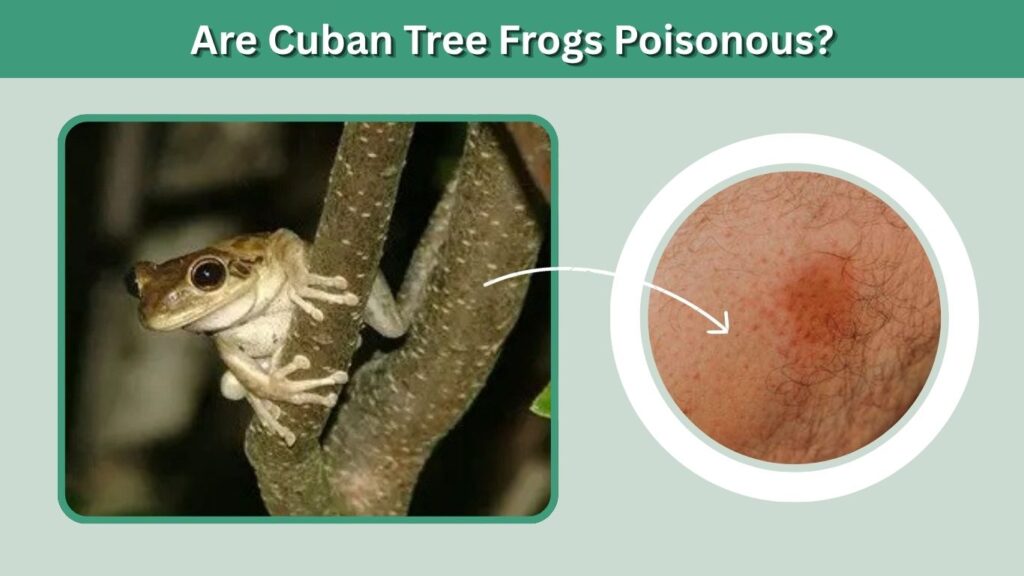
Cuban tree frogs are not dangerously poisonous in the same way as Florida’s invasive cane toads. However, they produce sticky defensive skin secretions that can strongly irritate human mucous membranes.
Contact may cause burning or itching of the eyes and nose that can last for over an hour. Avoid touching your eyes, nose, or mouth after handling one. Wear rubber gloves or use a plastic bag as a protective barrier and wash thoroughly afterward.
Are They Dangerous to Dogs and Cats?
A dog or cat that bites a Cuban tree frog may experience excessive drooling and mouth irritation. Serious reactions appear uncommon, but seizures have occasionally been reported. Pets should therefore be prevented from attacking or eating these frogs.
Contact a veterinarian promptly when a pet develops persistent drooling, vomiting, weakness, tremors, breathing difficulty, or seizures after encountering a frog.
How to Get Rid of Cuban Tree Frogs in Florida
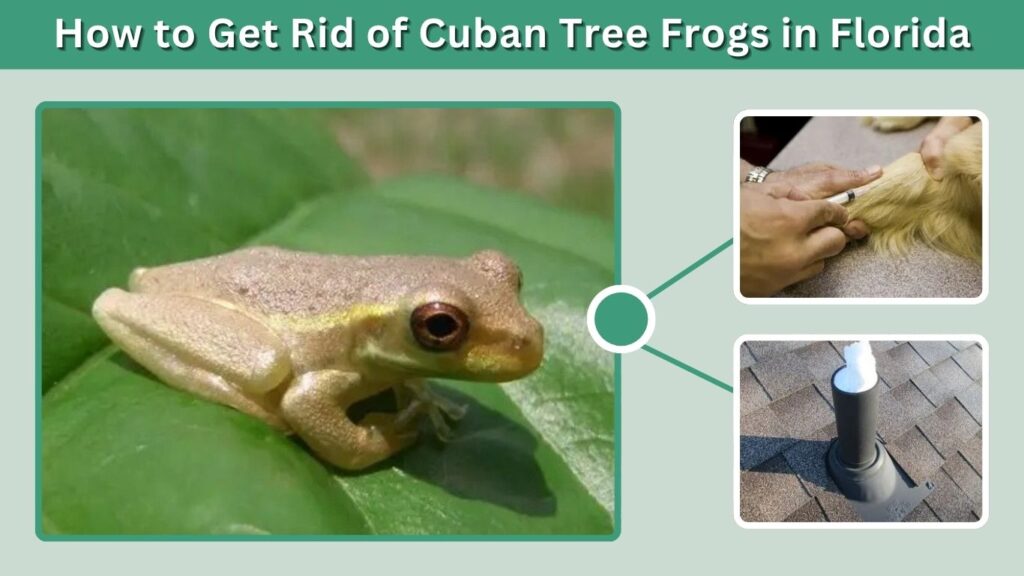
UF/IFAS recommends an integrated approach involving adult removal, elimination of breeding sites, and changes that make the property less attractive to the frogs. Confirm the species before taking action because Florida has several similar-looking native frogs.
Capture Frogs Safely
Wear gloves or place a plastic bag over your hand. Approach the frog quickly, capture it through the bag, and seal the bag securely.
Short vertical sections of PVC pipe can also attract tree frogs seeking daytime shelter. Check these refuges regularly and release any native frogs found inside.
Use Humane Euthanasia
For a positively identified Cuban tree frog, UF/IFAS recommends placing the sealed, bagged frog in a refrigerator for three to four hours to anesthetize it, followed by at least 24 hours in a freezer. The frozen frog can then be disposed of in household trash. Never place a living frog directly in the trash.
Do not use bleach, pesticides, bug spray, sunscreen, salt, or other household chemicals. These products can cause prolonged suffering and may harm native wildlife.
Remove Breeding Sites
Cuban tree frogs lay eggs as floating films of small black dots on the water surface. Check ponds, buckets, birdbaths, coolers, tarps, and children’s pools after warm rain.
Remove egg films with a fine aquarium net and empty unnecessary standing water. Properly maintain swimming pools and regularly refresh water that must remain outdoors.
Make Your Home Less Attractive
Reduce future activity by:
- Turning off unnecessary outdoor lights
- Using yellow insect-reducing bulbs
- Covering roof plumbing vents with hardware cloth
- Sealing gaps around doors, windows, and siding
- Checking plants before moving them
- Inspecting boats, campers, and vehicles before travel
- Removing clutter that provides daytime hiding places
These measures reduce insects, shelter, breeding water, and opportunities for frogs to enter the building.
FAQs
Where in Florida are Cuban tree frogs most common?
They are established throughout the Florida Peninsula and have reached several Panhandle locations. They are especially abundant in warm, humid suburban neighborhoods containing gardens, pools, artificial water sources, ornamental vegetation, outdoor lighting, and numerous sheltered hiding places.
How did Cuban tree frogs get to Florida?
They probably reached the Florida Keys during the early twentieth century as hidden stowaways in shipping crates and cargo from the Caribbean. They later spread through plant shipments, cars, trucks, boats, campers, and other human transportation.
What do Cuban tree frogs eat in Florida?
They eat insects, spiders, snails, millipedes, lizards, small snakes, native frogs, and members of their own species. Beetles, roaches, ants, caterpillars, and grasshopper-like insects are common prey.
Can Cuban tree frogs be released somewhere else?
Moving a captured Cuban tree frog can spread the invasion to another property or region. Positively identified individuals should not be transported and released elsewhere. UF/IFAS recommends humane euthanasia because the species harms native wildlife.
Are all large tree frogs in Florida Cuban tree frogs?
Not necessarily. Native barking tree frogs and Cope’s gray tree frogs may look similar, and young Cuban tree frogs can be difficult to distinguish from native species. Identification should be based on several features, not color or size alone.
