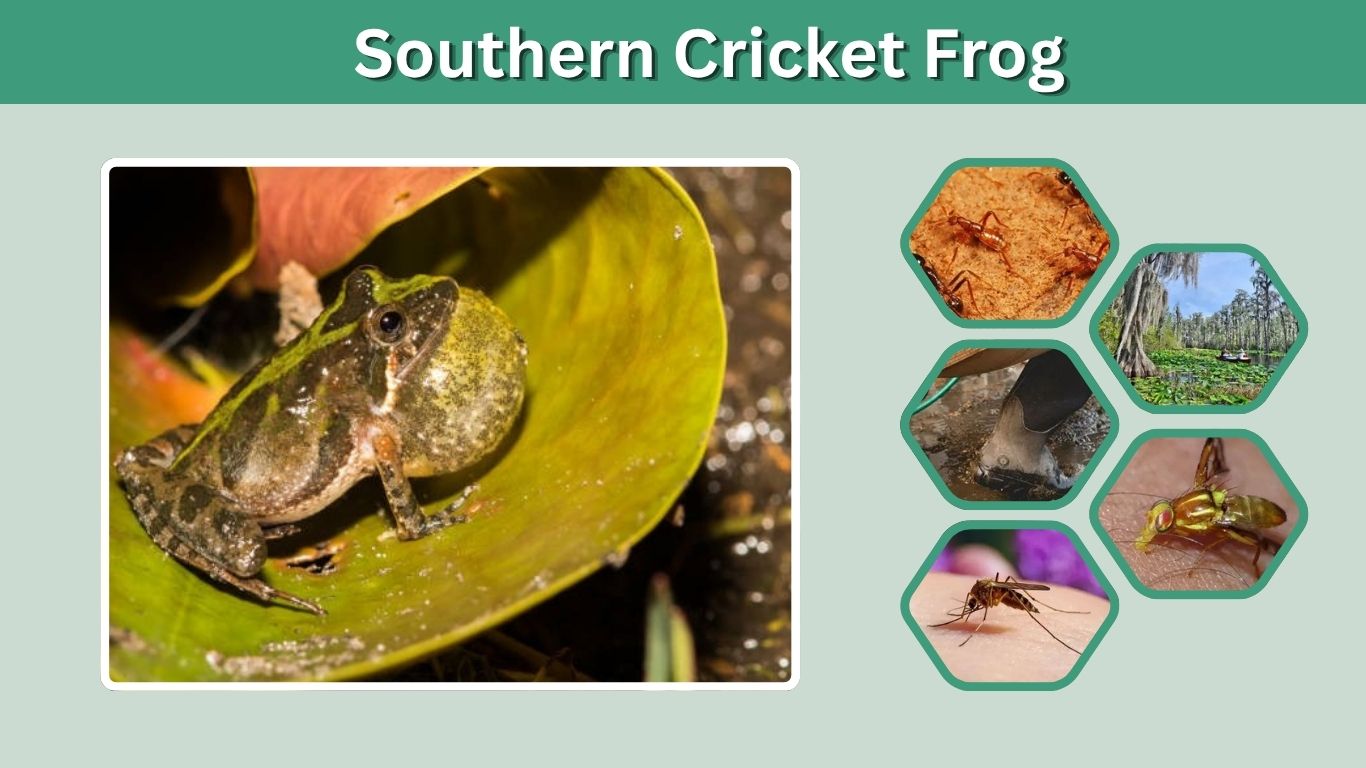
The Southern cricket frog is a tiny, energetic amphibian found around ponds, wetlands, swamps, ditches, and other freshwater habitats in the southeastern United States. Although it belongs to the tree-frog family, it spends most of its time close to the ground and water rather than climbing trees. Its pointed snout, long hind legs, rough skin, variable colors, and rapid clicking call help distinguish it from other small frogs.
Southern Cricket Frog Overview
The Southern cricket frog’s scientific name is Acris gryllus. It belongs to the family Hylidae and is closely related to the Northern cricket frog and Blanchard’s cricket frog. The accepted species classification continues to place it in the genus Acris.
| Feature | Description |
| Scientific name | Acris gryllus |
| Family | Hylidae |
| Average length | About 0.6–1.5 inches |
| Color | Green, gray, brown, reddish or nearly black |
| Diet | Insects, spiders and other small arthropods |
| Habitat | Pond edges, bogs, swamps, canals and ditches |
| Call | Rapid metallic clicking |
| Activity | Mainly daytime, but may also call at night |
| Conservation | Generally widespread and abundant |
Despite being classified with tree frogs, Southern cricket frogs have only small toe pads and limited climbing ability. They are much more likely to be seen jumping through grass or sitting beside shallow water.
What Does a Southern Cricket Frog Look Like?
Southern cricket frogs are extremely small, slender frogs with pointed heads and long, powerful hind legs. Their skin is rough or slightly warty, which sometimes causes them to be mistaken for tiny toads.
Identification Features
Important field marks include:
- A pointed snout
- A dark triangular mark between the eyes
- A pale or brightly colored stripe along the middle of the back
- A Y-shaped marking that may extend toward the eyes
- A sharply defined dark stripe on the back of each thigh
- Long hind legs with relatively little toe webbing
- Small toe pads
- Rough, granular skin
Color is highly variable. An individual may be green, olive, tan, reddish brown, dark gray or almost black. Some have a bright green, yellow, orange or reddish stripe down the back, while others have only faint markings. North Carolina wildlife authorities note that cricket frogs can range from greenish brown to red and commonly show a dark triangle between the eyes.
Southern Cricket Frog Size
Adults generally measure less than 1.5 inches long. Their legs make them appear larger when stretched out, but the body itself can fit comfortably on the end of a person’s finger.
Their powerful legs allow them to make surprisingly long jumps. Virginia wildlife authorities report that they may jump more than three feet—approximately 30 times their body length—when escaping a predator.
Southern Cricket Frog Call and Sound
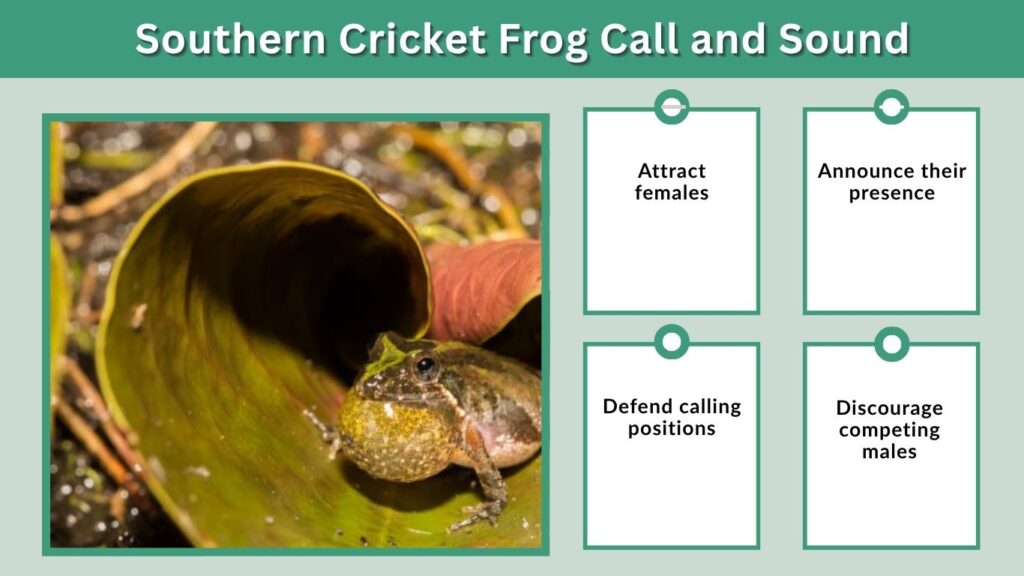
The Southern cricket frog produces a rapid series of metallic clicks. The sound is frequently compared to two marbles or small stones being tapped together.
Why Do They Call?
Male frogs call to:
- Attract females
- Announce their presence
- Defend calling positions
- Discourage competing males
A chorus of several males can sound like a continuous series of clicks coming from the vegetation around a pond. The call is similar to that of the Northern cricket frog but is generally slower.
Calling activity is most noticeable during the breeding season, particularly after rain or during warm, humid weather. In warmer southern areas, individuals may be heard during much of the year.
Southern Cricket Frog Habitat
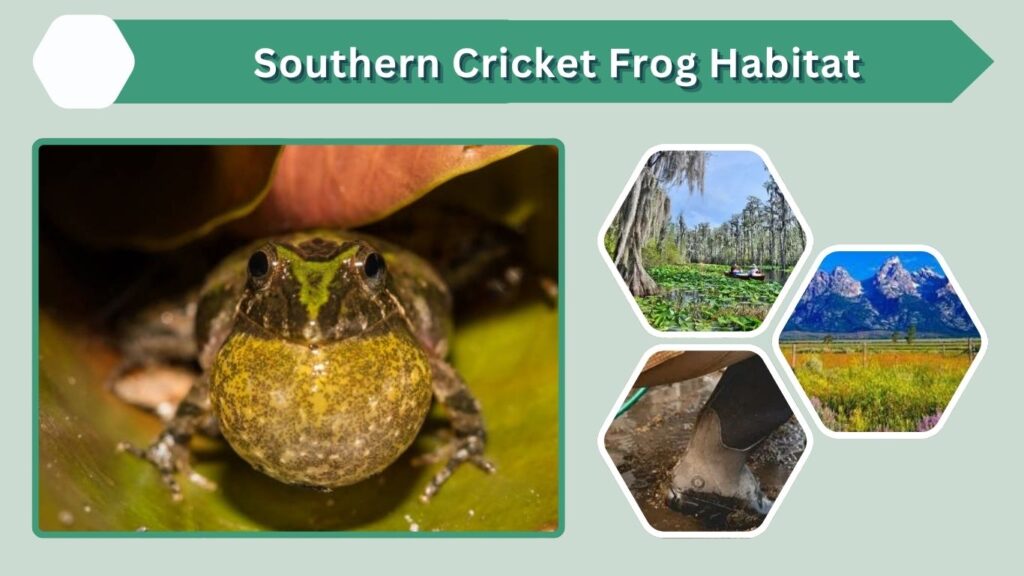
Southern cricket frogs live around sunny, shallow freshwater habitats. They usually remain close to the water’s edge, where low vegetation provides hiding places and abundant insect prey.
Common habitats include:
- Ponds
- Marshes
- Bogs
- River swamps
- Wet meadows
- Flooded fields
- Roadside ditches
- Slow-moving streams
- Drainage canals
- Temporary pools
They can use both natural and human-made waterways. In Florida, they are found around almost every type of freshwater habitat, including swamps, ponds, wetlands and artificial drainage canals. They may occasionally move into drier upland areas but return to water for breeding.
Southern Cricket Frog Range
The species occurs primarily in the Coastal Plain of the southeastern United States. Its range extends from southeastern Virginia through the Carolinas, Georgia and Florida, and westward through parts of Alabama and Mississippi.
In Virginia, the Southern cricket frog is limited mainly to the southeastern Coastal Plain. Farther south, particularly in Florida and the Gulf Coast region, it can be locally abundant.
The Florida population has sometimes been called the Florida cricket frog, while other populations have been referred to as coastal plain cricket frogs.
What Do Southern Cricket Frogs Eat?
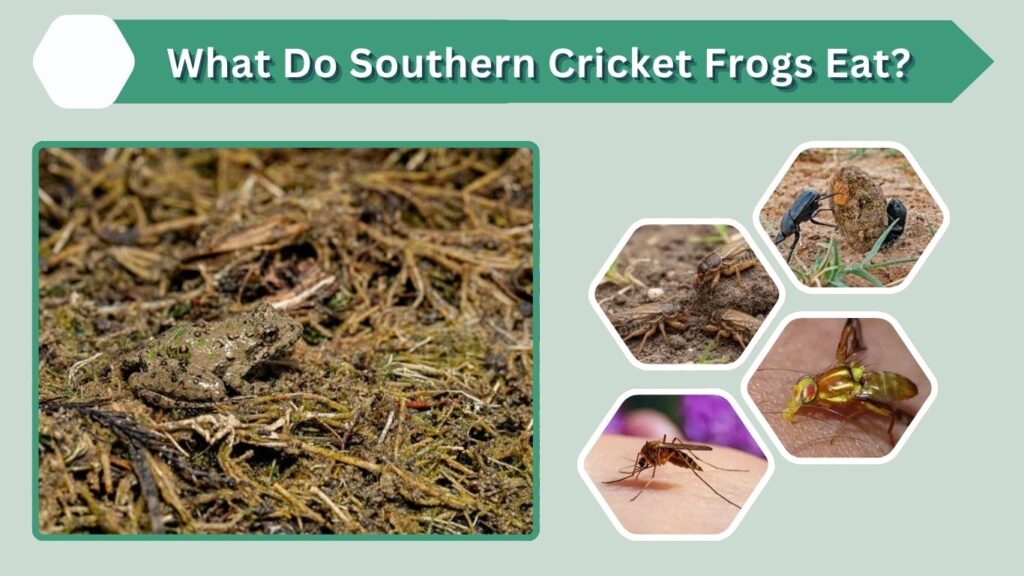
Southern cricket frogs are insectivores that consume small animals they can catch near the ground or water.
Their diet may include:
- Mosquitoes
- Flies
- Small beetles
- Ants
- Leafhoppers
- Springtails
- Tiny moths
- Spiders
- Aquatic insects
- Other small arthropods
They usually sit quietly and wait for prey to approach before lunging forward. Because they consume many small insects, they contribute to the natural food balance of wetland habitats. The frogs themselves are eaten by fish, snakes, birds, turtles and larger frogs.
Southern Cricket Frog Life Cycle
The life cycle begins when males gather at shallow freshwater breeding sites and call for females.
Eggs and Breeding
Breeding generally occurs during spring and summer, although the exact season varies with temperature and location. A female may deposit up to approximately 150 eggs during a breeding event.
The eggs may be attached individually or in small groups to submerged plants. Some can also settle on the bottom of shallow water.
Southern Cricket Frog Tadpoles
The eggs hatch into small aquatic tadpoles. They feed on algae, microorganisms and decaying organic material while developing in shallow water.
Depending on water temperature, food and other environmental conditions, tadpoles may complete metamorphosis in approximately 50–100 days. Their tails gradually shrink, legs form, and the young frogs leave the water as miniature versions of the adults.
Baby Southern Cricket Frogs
A newly transformed baby Southern cricket frog is extremely small. Young frogs remain near wet vegetation, muddy pond edges and other damp areas where tiny insects are available.
Their color may change as they grow. Juveniles can be brown, gray, green or darkly patterned, so body shape and thigh markings are more reliable than color alone.
Northern vs Southern Cricket Frog
The Northern and Southern cricket frogs look very similar, particularly where their ranges meet.
| Feature | Southern Cricket Frog | Northern Cricket Frog |
| Snout | More pointed | Usually more rounded |
| Hind legs | Relatively longer | Slightly shorter |
| Toe webbing | Less extensive | More extensive |
| Thigh stripe | Clean and sharply defined | Usually irregular or ragged |
| Call | Slower clicking series | Faster clicking series |
| Main range | Southeastern Coastal Plain | Wider eastern and central range |
The Southern cricket frog’s sharply defined thigh stripe and reduced toe webbing are among the most useful identification features. Northern cricket frogs usually have more extensive webbing and a less even stripe on the back of the thigh.
Southern vs Blanchard’s Cricket Frog
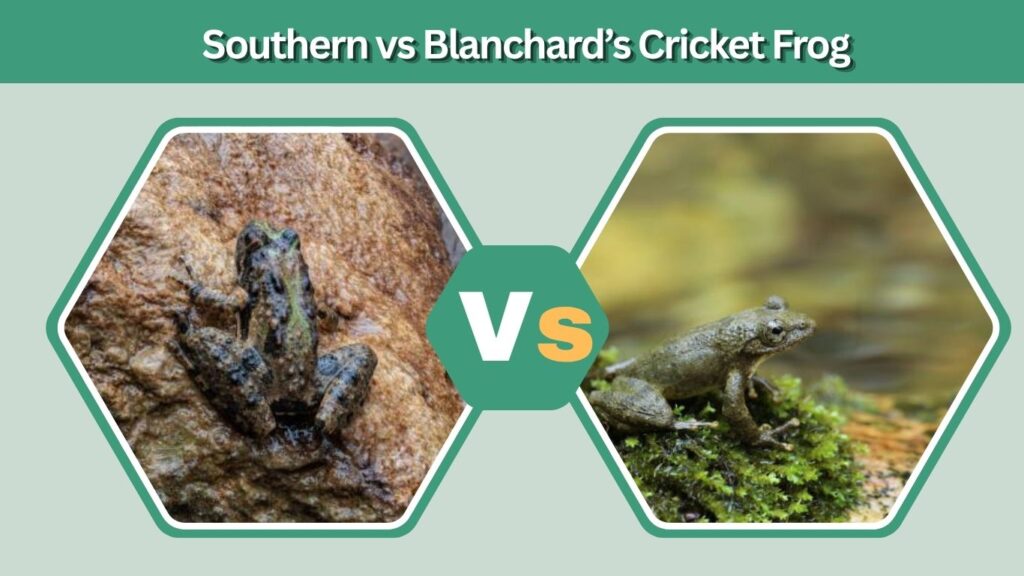
Blanchard’s cricket frog, Acris blanchardi, mainly occupies central portions of North America, while the Southern cricket frog is associated with the southeastern Coastal Plain.
Blanchard’s cricket frog generally has more extensive hind-toe webbing, a shorter-looking snout and different call characteristics. Geographic location is often the easiest initial clue because their main ranges are largely separate. Blanchard’s cricket frog is currently recognized as a separate species rather than a Southern cricket frog subspecies.
Are Southern Cricket Frogs Poisonous?
Southern cricket frogs are not generally considered dangerously poisonous to humans. However, wild frogs should not be handled unnecessarily because their delicate, permeable skin can absorb oils, soaps, lotions and chemicals from human hands.
Wash your hands after touching any frog or anything in its habitat. Amphibians can carry Salmonella even when they appear healthy, so they should be kept away from food preparation areas and young children should be supervised carefully.
Are Southern Cricket Frogs Endangered?
The Southern cricket frog is generally considered widespread and abundant across much of its southeastern range. It is not currently viewed as facing major range-wide conservation concerns.
Local populations may still be affected by:
- Wetland drainage
- Water pollution
- Pesticide exposure
- Loss of shoreline vegetation
- Road mortality
- Drought
- Infectious diseases such as chytridiomycosis
Protecting shallow wetlands, grassy pond margins and clean freshwater breeding sites helps maintain healthy populations.
FAQs
How long do Southern cricket frogs live?
Their exact lifespan in the wild varies, but many probably live only a few years. Eggs and tadpoles experience heavy predation, and adults are eaten by snakes, fish, birds and larger amphibians. Individuals that survive metamorphosis may begin breeding relatively early.
Can Southern cricket frogs climb trees?
They can climb low plants and vegetation, but they are not strong tree climbers. Their toe pads are smaller than those of typical tree frogs. They spend most of their time on muddy banks, grass, floating vegetation or other surfaces close to water.
Can a Southern cricket frog be kept as a pet?
Capturing a wild frog is generally discouraged and may be restricted by local wildlife laws. These tiny frogs also require clean water, live insects, appropriate humidity and careful handling. Observing them in their natural habitat is usually the better option.
Why is it called a cricket frog?
Its name comes from its rapid clicking call, which can resemble a cricket or small objects being tapped together. A calling group may produce a loud chorus even though each frog is only around an inch long.
Do Southern cricket frogs live in Florida?
Yes. Southern cricket frogs are widely distributed in Florida and occur around ponds, marshes, swamps, ditches and drainage canals. Florida individuals may display many different colors, including brown, green, gray, reddish and nearly black.
