
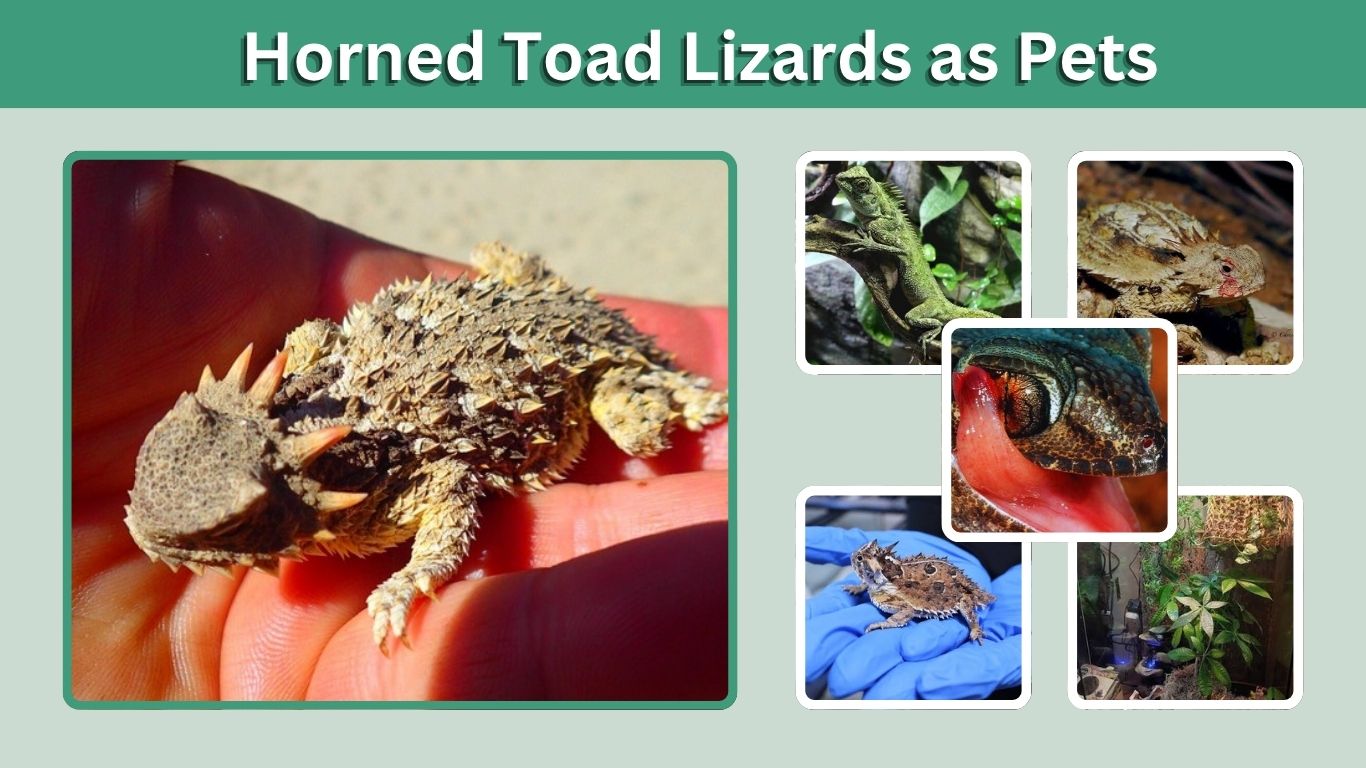
Horned toad lizards may look like fascinating pets, but keeping one is much more complicated than caring for common reptiles such as leopard geckos or bearded dragons. These small, spiny reptiles have specialized diets, specific habitat requirements, and legal protections in some parts of their range. Many wild horned lizards also adapt poorly to captivity. Before considering a horned toad as a pet, it is important to understand its diet, enclosure needs, handling requirements, conservation status, and local wildlife laws.
Can You Have a Horned Toad as a Pet?
Whether you can legally keep a horned toad depends on the exact species and where you live. “Horned toad” is a common name for several horned lizards in the genus Phrynosoma, and regulations differ among states and countries.
Some species are protected and cannot legally be captured from the wild or possessed without special authorization.
Are Horned Toads Legal to Keep?
Before obtaining one, check:
- The exact horned lizard species
- State wildlife regulations
- Local reptile laws
- Whether captive-bred ownership is permitted
- Whether a wildlife permit is required
- Restrictions on collecting wild reptiles
- Rules covering buying or transporting the species
For example, the Texas horned lizard (Phrynosoma cornutum) and mountain short-horned lizard are listed as threatened in Texas. Texas Parks and Wildlife states that handling or possessing protected horned lizards requires appropriate authorization.
Never take a horned lizard from the wild simply because you find one on your property or while traveling.
Do Horned Toads Make Good Pets?
For most people, horned toads do not make good beginner pets.
Texas Parks and Wildlife specifically notes that horned lizards do not survive well in captivity and does not recommend keeping them as pets. Their specialized ant-heavy diet and environmental needs make long-term captive care challenging.
Someone wanting a beginner-friendly pet lizard will usually find captive-bred leopard geckos, crested geckos, or bearded dragons considerably easier to maintain.
Horned Toad Pet Diet
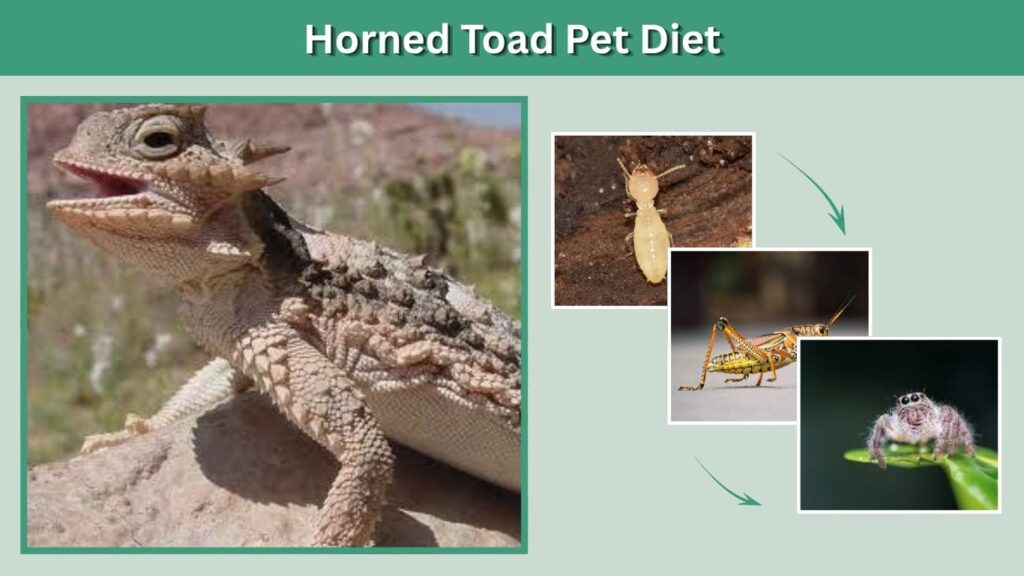
Diet is one of the biggest challenges of keeping horned lizards. Many species have evolved to eat large quantities of ants, particularly native harvester ants. Simply substituting mealworms or crickets may not provide the same nutrition or feeding behavior.
What Do Pet Horned Toads Eat?
Depending on species, foods can include:
- Harvester ants
- Other suitable ant species
- Small beetles
- Small crickets
- Grasshoppers
- Termites
- Spiders
- Other appropriately sized insects
Ants are especially important. National Park Service observations describe horned lizards as specialized ant eaters that commonly wait for ants and other insects to approach rather than actively chasing prey.
Why Is Their Diet Difficult?
A horned lizard may need a surprisingly large number of ants.
Supplying appropriate live ants every day can be considerably harder than purchasing crickets or mealworms for common pet reptiles. Wild ants can also present problems because they may have been exposed to pesticides or other contaminants.
This specialized diet is one major reason wild-caught horned lizards frequently fail to thrive in captivity.
Horned Toad Enclosure and Habitat
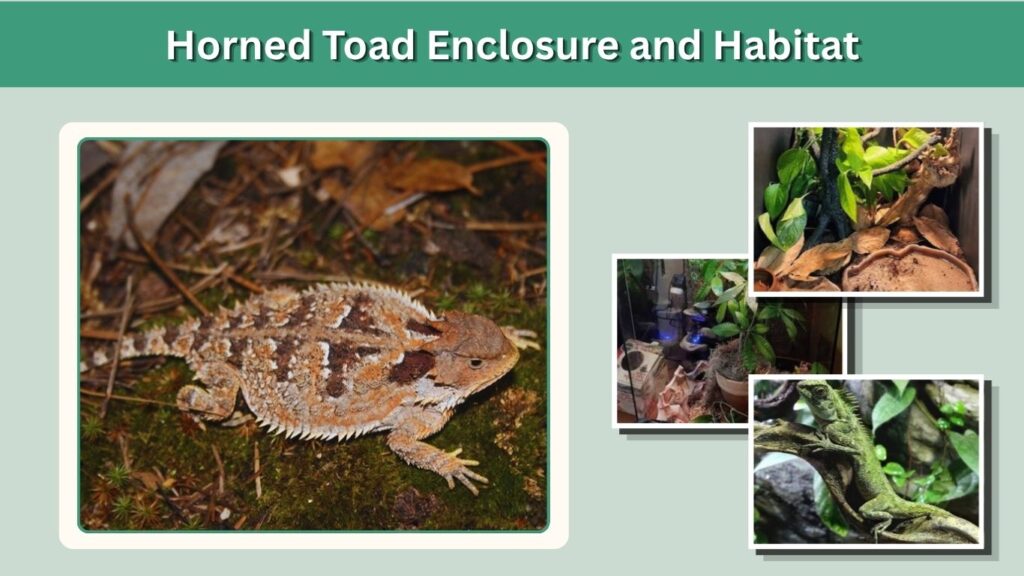
Horned lizards are adapted to open environments where they can bask, hide, dig, and search for insects. An enclosure should therefore reproduce the conditions required by the particular species rather than simply providing a small glass tank with sand.
Different horned lizard species inhabit deserts, grasslands, shrublands, and even relatively high-elevation environments.
Basic Enclosure Requirements
A suitable setup generally needs:
- Spacious floor area
- Species-appropriate loose substrate
- Strong UVB lighting
- A warm basking area
- A cooler retreat
- Natural-looking rocks and branches
- Shaded hiding places
- Areas suitable for shallow burrowing
- Clean drinking water when appropriate
- Excellent ventilation
Horizontal space is especially valuable because horned lizards spend most of their time moving across the ground.
Temperature and UVB Lighting
Horned lizards are ectothermic and depend on external heat to control their body temperature.
A captive enclosure therefore needs a temperature gradient rather than one uniform temperature. The lizard should be able to move between a warm basking area and cooler shelter.
Strong, appropriately positioned UVB lighting is also important for normal vitamin D3 production and calcium metabolism.
Exact temperatures should be based on the particular species because a desert horned lizard and a mountain short-horned lizard do not experience identical natural conditions.
Can You Handle a Pet Horned Toad?
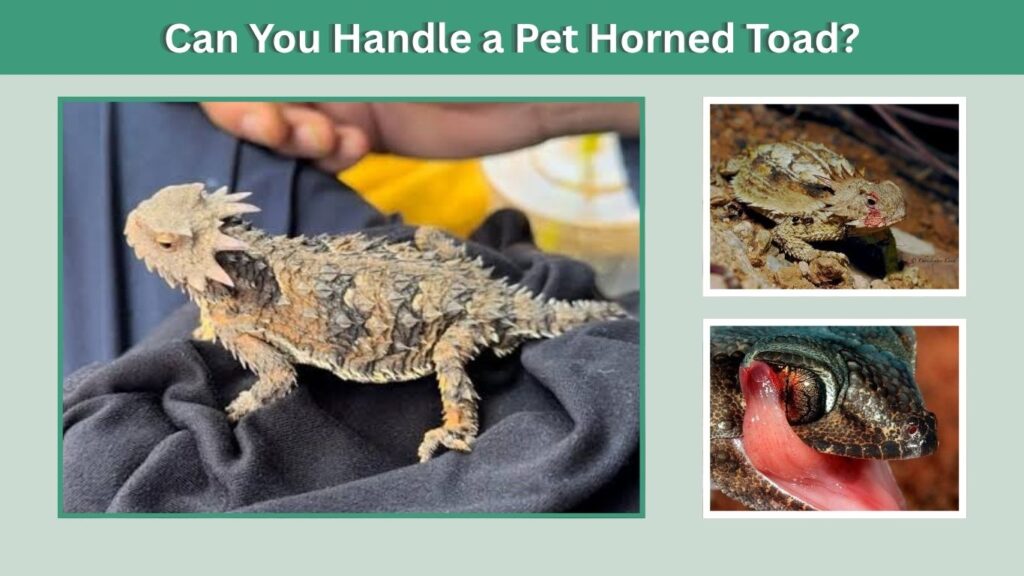
Horned lizards are better regarded as observation animals than handling pets.
Frequent handling may cause unnecessary stress. Their defensive behavior is designed around avoiding predators rather than interacting physically with larger animals.
Some horned lizards may freeze when frightened, which can mistakenly make them appear comfortable with being held.
Signs a Horned Toad Is Stressed
Watch for:
- Attempting to escape
- Flattening the body
- Inflating the body
- Closing the eyes
- Refusing food
- Persistent hiding
- Sudden color changes
- Rapid movement
- Blood squirting in species capable of the behavior
Some horned lizards can eject blood from near the eyes as an extreme defense. The National Park Service describes this behavior as a predator-defense mechanism rather than normal everyday behavior.
A captive lizard should never intentionally be frightened just to observe this response.
Horned Toad Pet Care Challenges
Keeping a horned toad alive is different from helping it thrive. These reptiles evolved around specialized prey, seasonal temperature changes, particular substrates, and large outdoor territories. Reproducing all of those conditions in captivity can be challenging even for experienced reptile keepers.
Common Problems With Pet Horned Lizards
Potential difficulties include:
- Obtaining enough appropriate ants
- Nutritional deficiencies
- Dehydration
- Incorrect temperatures
- Insufficient UVB exposure
- Improper substrate
- Chronic stress
- Poor appetite
- Difficulty adapting after wild capture
- Legal problems involving protected species
Wild-caught individuals are particularly risky because removal from their habitat adds stress and can contribute to declining local populations.
Should You Catch a Wild Horned Toad?
No. Wild horned lizards should be left where they are unless an authorized wildlife professional has a legitimate reason to move one.
In addition to possible legal restrictions, capturing a wild animal removes it from an environment where its food, shelter, temperatures, and breeding opportunities are naturally available.
Texas wildlife officials have specifically discouraged collecting horned lizards for pets because they are difficult to maintain successfully in captivity.
Texas Horned Toad as a Pet
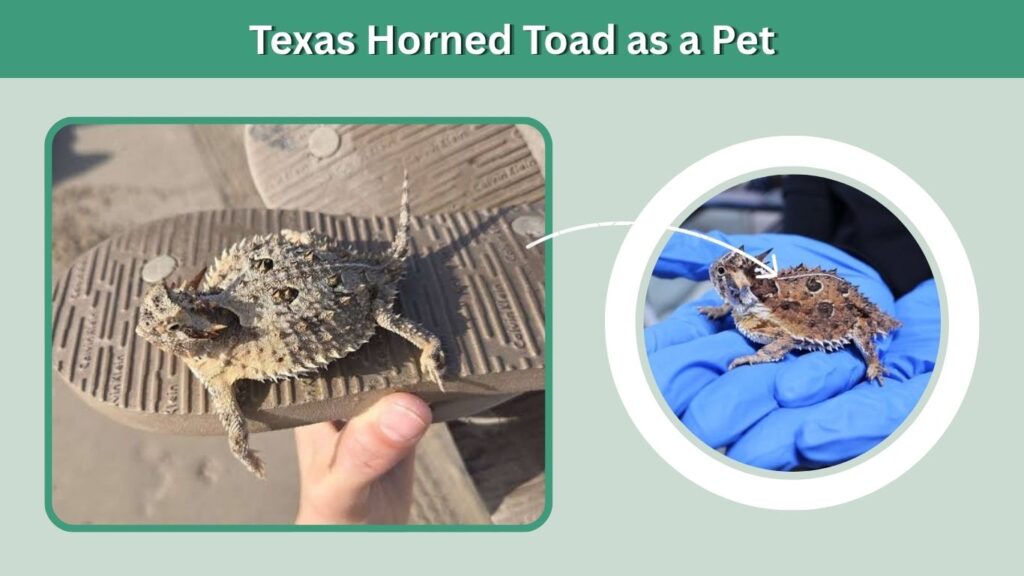
The Texas horned lizard is one of the species people most frequently want as a pet because of its distinctive horns, flattened body, and unusual ability to squirt blood from around its eyes.
However, it is also a species for which wildlife protection is especially important.
Can You Keep a Texas Horned Toad?
In Texas, the Texas horned lizard is currently classified as a state-threatened species. It should not be collected or kept as an ordinary pet without the required authorization.
Its decline has been associated with several pressures, including habitat changes and historical collection for the pet trade.
Anyone who encounters one should enjoy observing it in its natural environment rather than taking it home.
What Should You Do If You Find One?
If you encounter a wild horned lizard:
- Leave it in its natural habitat.
- Do not take it home.
- Keep dogs and cats away.
- Avoid disturbing nearby ant colonies.
- Do not intentionally make it use defensive behaviors.
- Photograph it from a respectful distance.
- Follow local wildlife regulations.
The best way to enjoy these unusual reptiles is often simply to watch them behaving naturally.
Is a Captive-Bred Horned Toad Better?
If a horned lizard species is legal to keep where you live, a legitimately captive-bred animal is a much better option than taking one from nature.
Captive breeding can reduce pressure on wild populations and provides more information about the animal’s origin.
Even then, horned lizards remain specialized reptiles. Prospective keepers should understand their dietary and environmental requirements before obtaining one.
Before Getting a Horned Toad
Ask yourself:
- Is this exact species legal where I live?
- Is the animal genuinely captive-bred?
- Can I reliably provide its natural-type diet?
- Can I obtain appropriate live ants?
- Can I provide correct UVB and heating?
- Do I understand its seasonal needs?
- Is an experienced reptile veterinarian available?
- Can I provide proper care for its entire life?
If several answers are no, choosing a more established captive reptile species is usually the better option.
FAQs
1. Can you have a horned toad as a pet?
Possibility depends on the species and local laws. Some horned lizards are protected, and taking them from the wild may be illegal. Even where ownership is permitted, they can be difficult reptiles to maintain.
2. What does a pet horned toad eat?
Horned lizards mainly eat insects, and many species depend heavily on ants—especially harvester ants. Some also consume beetles, grasshoppers, spiders, and other small invertebrates.
3. Can I keep a Texas horned toad as a pet?
The Texas horned lizard is listed as threatened in Texas and cannot simply be collected from the wild and kept as an ordinary pet. Wildlife permits and regulations apply.
4. Are horned toads easy to care for?
No. Their specialized diet, environmental requirements, UVB needs, temperature requirements, and sensitivity to captivity make them much more difficult than many commonly kept pet lizards.
5. Do pet horned toads shoot blood from their eyes?
Some horned lizard species are capable of squirting blood from around their eyes when severely threatened. It is a defensive response associated with stress and should never be deliberately triggered in a captive animal.
