
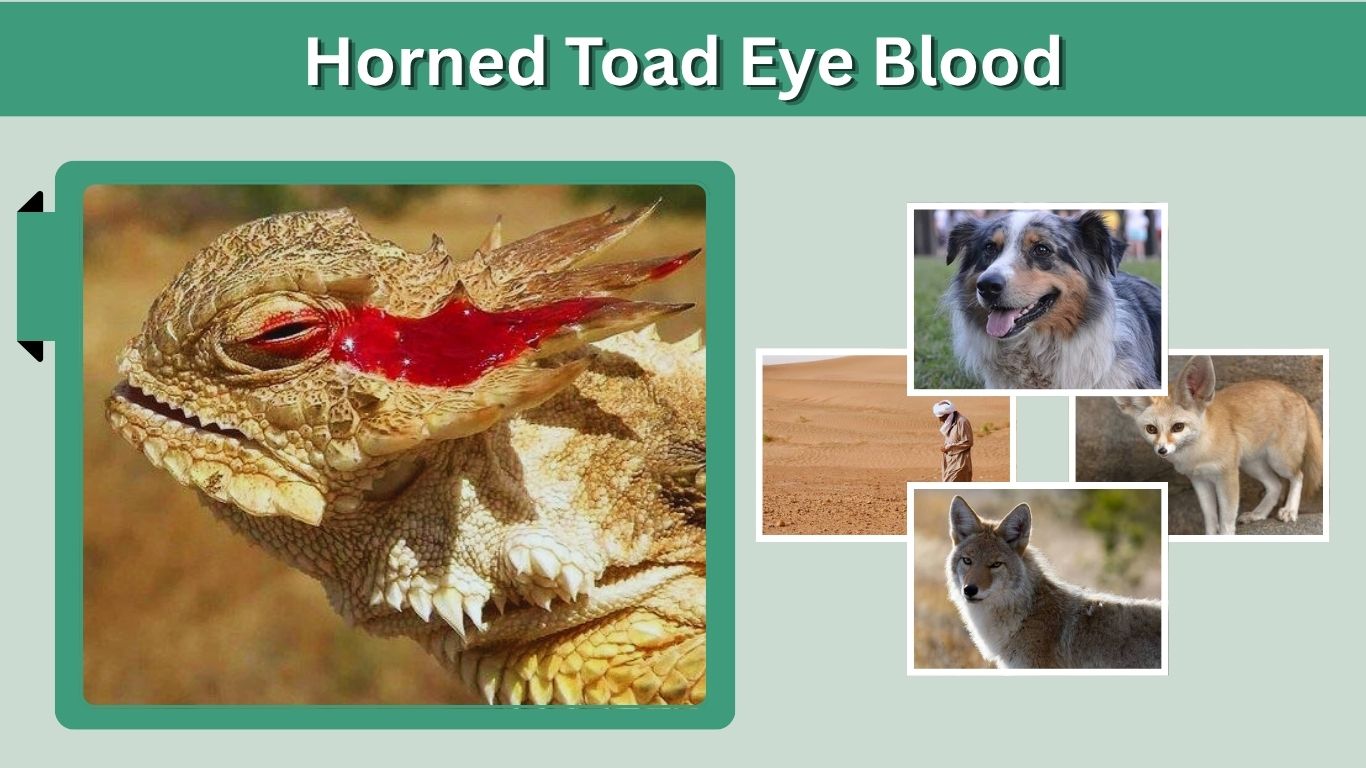
Horned toads have one of the strangest defense mechanisms in the reptile world: some species can actually shoot blood from around their eyes. Despite the name, a horned toad is not a toad at all—it is a horned lizard belonging to the genus Phrynosoma. When threatened by certain predators, the lizard can increase pressure around specialized blood-filled spaces near its eyes and eject a stream of blood. This dramatic behavior helps confuse attackers and is especially effective against coyotes, foxes, and other canine predators.
Do Horned Toads Really Shoot Blood From Their Eyes?
Yes. Horned toads really can squirt blood from around their eyes, although not every horned lizard species uses this defense. It is generally a last-resort response after camouflage, body inflation, and other protective behaviors fail. Texas horned lizards and some short-horned species are particularly well known for this remarkable ability.
What Does Horned Toad Blood Shooting Look Like?
During the defense, a small stream of blood suddenly shoots from the region around one or both eyes.
Important features include:
- The blood originates from vessels around the eye area.
- The stream can be directed toward an attacker.
- It may reach several feet in some species.
- The behavior usually occurs during intense stress.
- It is particularly useful against mammalian predators.
- The lizard does not normally use the defense when simply resting or hunting.
- Blood shooting is only one of several defenses available to horned lizards.
To someone seeing it for the first time, the behavior can appear as though the animal’s eye has been injured. However, it is a specialized defensive response rather than an accidental wound.
Do All Horned Toads Shoot Blood?
No. Blood squirting occurs in certain members of the Phrynosoma genus.
Texas Parks and Wildlife specifically notes blood-squirting behavior in Texas horned lizards and short-horned lizards, while the round-tailed horned lizard does not use the same defense.
This is important because “horned toad” is a general common name covering several different species rather than one particular animal.
How Does a Horned Toad Shoot Blood From Its Eyes?
The mechanism depends on temporarily increasing blood pressure around the head and eyes. Horned lizards have blood-filled sinus areas surrounding the eyes. Under severe threat, pressure increases in this region until blood can be released through tissues near the eyelids and corners of the eyes. The resulting stream can then be directed toward the predator.
Horned Toad Blood-Squirting Process
The basic process can be described as:
- A predator approaches: The lizard first relies on camouflage or remains motionless.
- The threat continues: It may flatten or inflate its body.
- Pressure increases: Blood pressure rises in vessels and sinuses around the eyes.
- Blood is released: Blood exits near the corners of the eyes.
- The stream reaches the predator: The lizard may direct it toward the predator’s face or mouth.
- The predator reacts: Canine predators often display strong dislike or surprise.
- The lizard escapes: The distraction provides an opportunity to flee or hide.
Texas Parks and Wildlife describes the blood as coming from ruptured vessels in the sinus region near the eyes.
How Far Can a Horned Toad Shoot Blood?
Distance varies between individuals and species.
The National Park Service reports that the greater short-horned lizard can shoot blood up to about three feet, or roughly one meter.
Some reports for Texas horned lizards describe even greater distances under certain circumstances, but three feet is a useful conservative figure documented by the National Park Service.
The lizard does not spray continuously. It produces a short, targeted burst intended to interrupt an attack.
Why Do Horned Toads Shoot Blood?
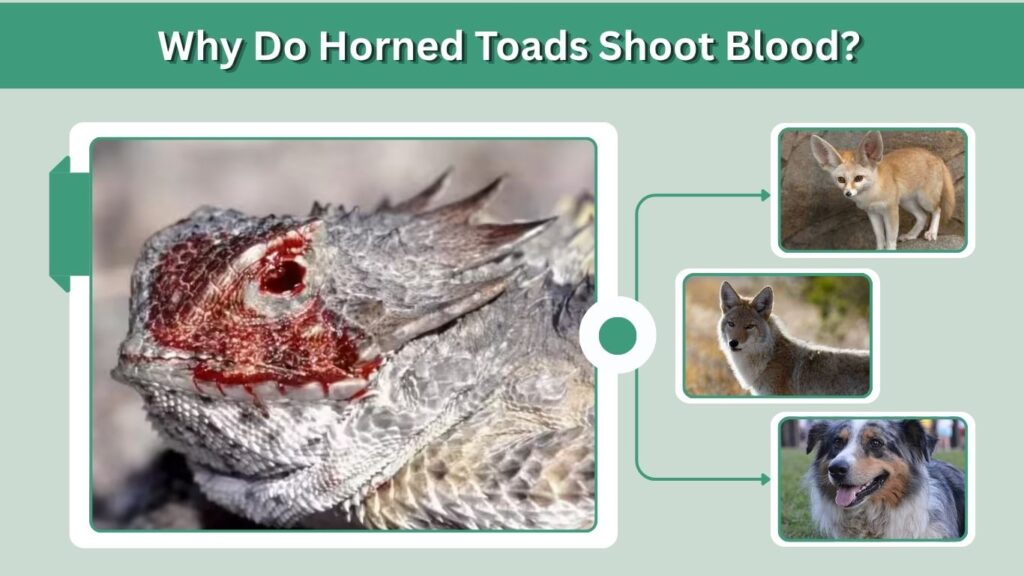
Blood shooting is primarily an anti-predator defense. Horned lizards already have excellent camouflage and spiny bodies, so they usually do not begin an encounter by spraying blood. Instead, the behavior becomes useful when a predator has noticed the lizard and other defensive techniques are failing.
Predators the Defense Works Against
Horned lizard blood appears especially effective against canine predators, including:
- Coyotes
- Foxes
- Domestic dogs
- Other members of the dog family
When blood reaches a canine predator’s mouth, the animal may shake its head, withdraw, lick its mouth, or abandon the attack.
Research indicates that horned-lizard blood contains plasma-borne compounds that produce a strongly unpleasant response in coyotes and related predators. A 2024 study also found evidence that the defensive compounds are associated with horned lizards that eat Pogonomyrmex harvester ants.
Why Doesn’t the Horned Toad Use Blood First?
Producing this defense has a biological cost because the animal is losing some of its own blood.
Therefore, horned lizards rely on cheaper defenses first. Their color pattern often blends remarkably well with surrounding soil, rocks, and vegetation. Staying still may prevent a predator from noticing them altogether.
If detected, they may inflate their bodies and expose their horns. Blood squirting becomes especially valuable when these strategies fail.
Is Horned Toad Eye Blood Toxic?
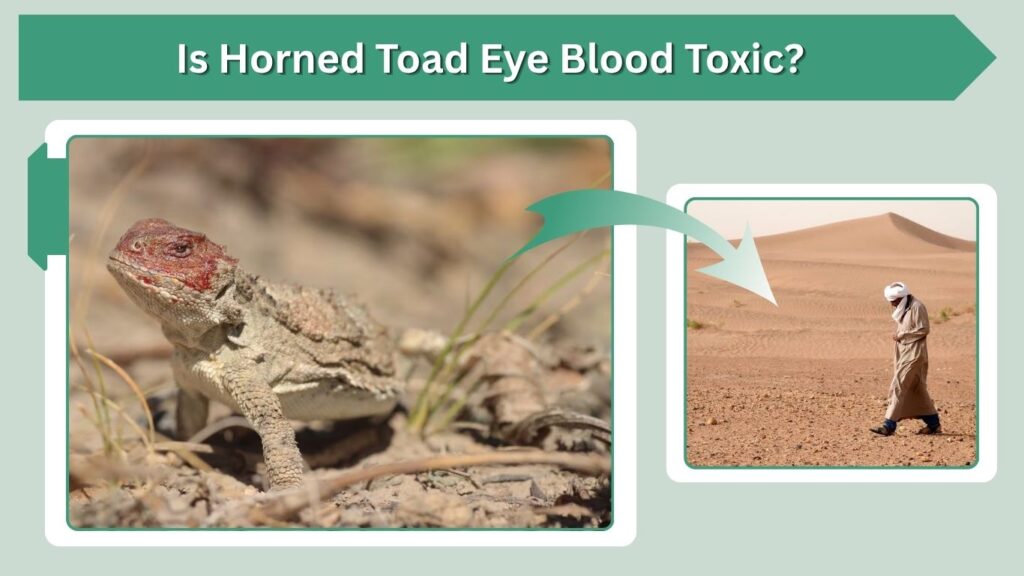
The blood is not best described as a venom that poisons anything it touches. Instead, certain compounds in the blood make it extremely unpleasant to some predators, particularly canines.
Research suggests this unusual chemistry may be connected to the horned lizard’s ant-rich diet. Many species specialize in eating harvester ants, and recent research found stronger aversive blood compounds in horned lizards consuming Pogonomyrmex ants than in individuals fed crickets.
Is Horned Toad Blood Dangerous to Humans?
Horned toad blood is not considered dangerous to humans under ordinary circumstances.
Key points include:
- It is not venom.
- The lizard does not use blood to hunt prey.
- It generally sprays only when seriously threatened.
- The defense is directed mainly at predators.
- Horned lizards are not aggressive toward humans.
- Handling wild animals unnecessarily should still be avoided.
If you encounter a horned lizard, the best approach is to observe it without picking it up. This reduces stress and allows the animal to conserve energy and blood.
Does Horned Toad Blood Hurt Coyotes?
The main effect appears to be intense unpleasantness rather than serious poisoning.
National Park Service sources describe the blood as foul-tasting or noxious to coyotes and other canines.
This makes the defense unusually specialized. A predator that has an unpleasant experience may become less willing to attack another horned lizard in the future.
Other Horned Toad Defense Mechanisms
Blood shooting attracts the most attention, but horned lizards possess an entire collection of defenses. These adaptations are important because they are relatively small animals facing snakes, birds, coyotes, and other predators in open habitats.
How Horned Toads Protect Themselves
Their defenses include:
- Camouflage: Body colors resemble sand, soil, rocks, and vegetation.
- Remaining motionless: Staying still makes the lizard difficult to detect.
- Flattening the body: This reduces its visible profile and makes it harder to pick up.
- Body inflation: The lizard can make itself look significantly larger.
- Sharp horns: Head horns make swallowing the animal more difficult.
- Spiny scales: Rough scales create an uncomfortable mouthful for predators.
- Burrowing: Some individuals quickly push themselves into loose soil.
- Blood squirting: Certain species use eye blood when other defenses fail.
The National Park Service notes that horned lizards may flatten themselves against the ground or inflate themselves before resorting to blood squirting.
Can a Horned Toad Shoot Blood More Than Once?
A horned lizard can potentially repeat the behavior, but blood loss limits how much it can afford to expend.
For this reason, the defense should not be intentionally triggered by handling or frightening a wild lizard. Repeated stress can waste energy and force the animal to use a costly defense unnecessarily.
Texas Horned Toad Eye Blood
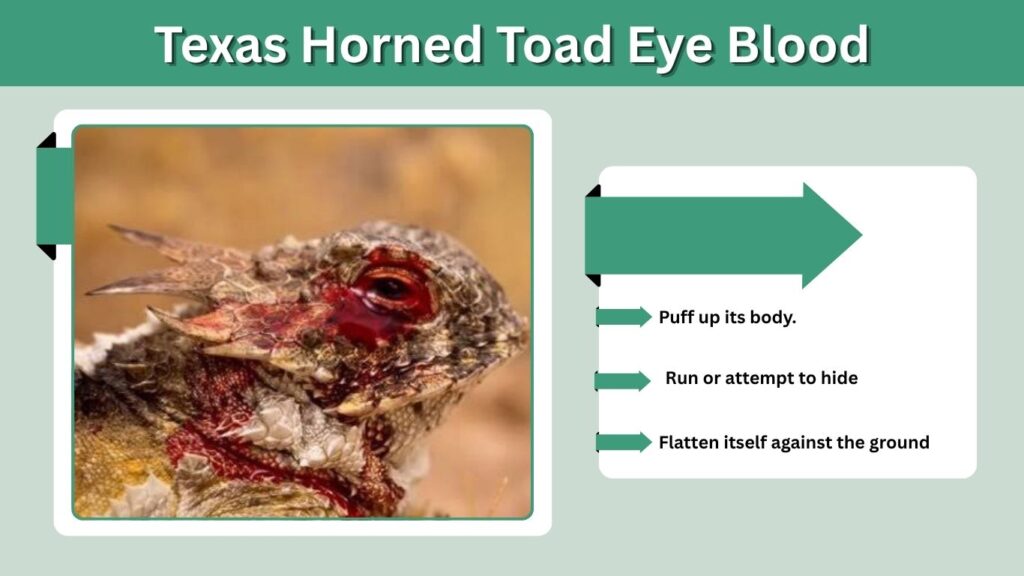
The Texas horned lizard (Phrynosoma cornutum) is perhaps the species most strongly associated with stories about blood shooting. It is native to parts of the southern and central United States and northern Mexico and is especially culturally associated with Texas.
How the Texas Horned Lizard Defends Itself
A threatened Texas horned lizard may:
- Freeze and depend on camouflage.
- Flatten itself against the ground.
- Puff up its body.
- Present its head horns toward the attacker.
- Run or attempt to hide.
- Squirt blood from around its eyes when severely threatened.
Texas Parks and Wildlife confirms that this seemingly legendary behavior is real and that the blood is particularly distasteful to canine predators.
FAQs
1. Why does a horned toad shoot blood from its eyes?
It shoots blood as a defense against predators. The blood can surprise an attacker and contains compounds that are especially unpleasant to predators such as coyotes and foxes.
2. How far can a horned toad squirt blood?
Some horned lizards can squirt blood approximately three feet, or about one meter. The exact distance can vary between species and individuals.
3. Does shooting blood hurt the horned toad?
The behavior causes the lizard to lose a small amount of blood, so it is likely costly. This is one reason blood squirting appears to be used as a stronger defensive response rather than the first option.
4. Do Texas horned toads shoot blood from their eyes?
Yes. The Texas horned lizard is one of the species known to use eye-blood squirting when severely threatened, particularly during encounters with canine predators.
5. Is horned toad blood poisonous?
It is not considered venomous or generally poisonous to humans. However, it contains compounds that produce a strong unpleasant reaction in coyotes and other canine predators, helping the lizard escape.
