
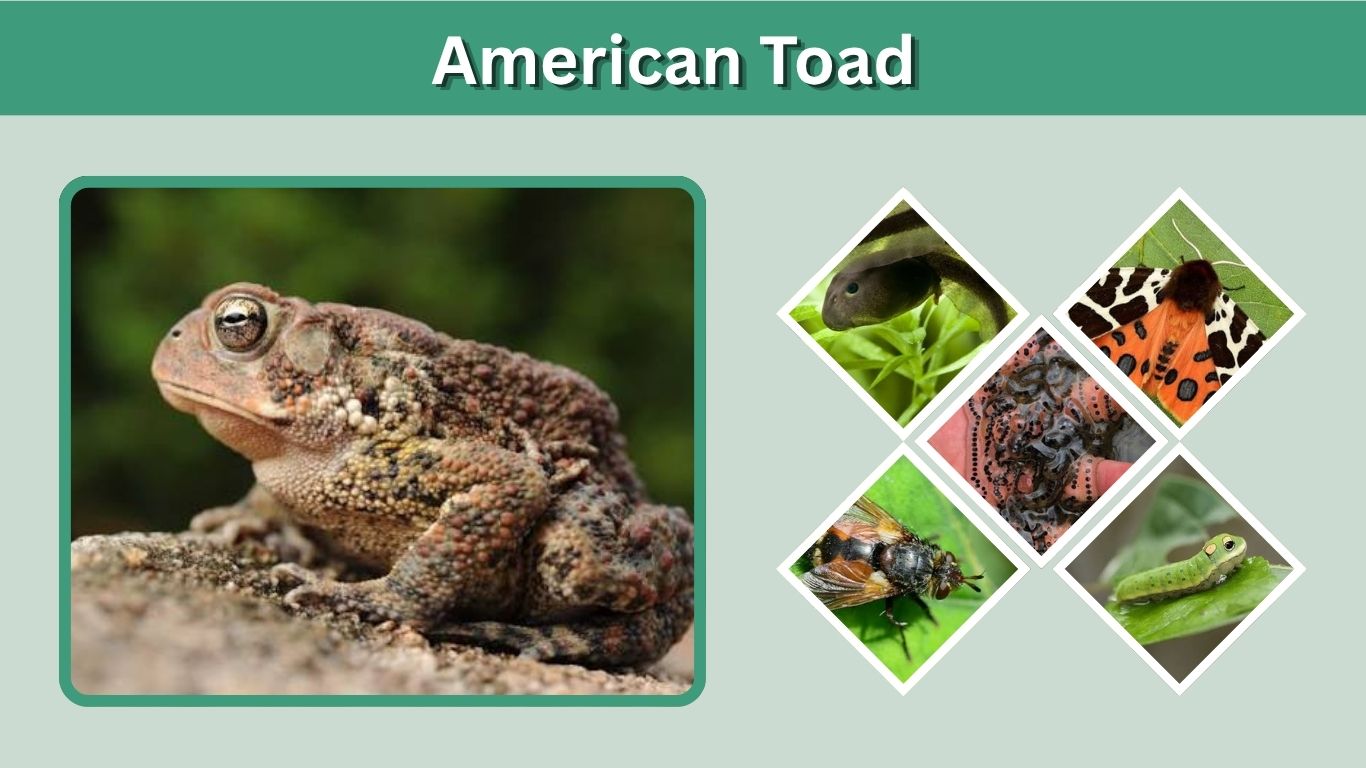
The American toad is one of the most familiar toads in eastern North America. Known for its dry, warty skin, short legs, and distinctive breeding call, this adaptable amphibian can live in forests, gardens, fields, and suburban areas. People often want to know how to identify an American toad, what it eats, whether it is poisonous, how long it lives, and how it differs from Fowler’s toad. These are also among the most common related topics associated with the species.
What Is an American Toad?
The American toad (Anaxyrus americanus) is a medium-sized amphibian native to much of eastern North America. It belongs to the family Bufonidae, commonly known as true toads.
Although people sometimes call it an “American toad frog,” toads and frogs have several differences in body shape and lifestyle. American toads usually have comparatively dry, rough skin, short legs, and a stockier body than many typical frogs.
They are mainly active from spring through fall and spend much of the day hiding beneath vegetation, leaf litter, logs, rocks, or loose soil.
American Toad Identification
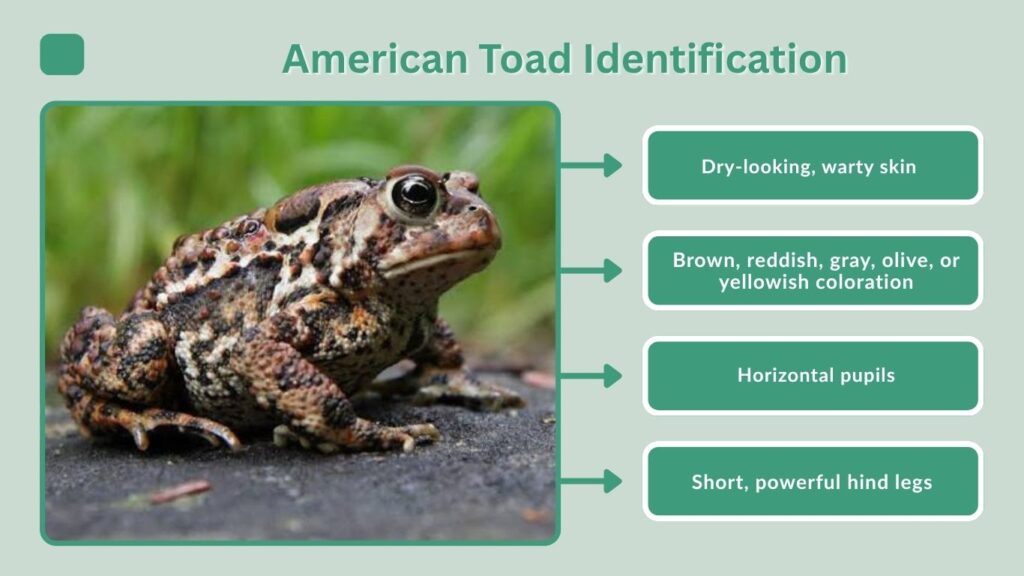
American toads can vary considerably in appearance, but several features can help identify them.
Typical characteristics include:
- Brown, reddish, gray, olive, or yellowish coloration
- Dry-looking, warty skin
- Usually one or two large warts within each dark dorsal spot
- Large parotoid glands behind the eyes
- Horizontal pupils
- Pale underside, sometimes with dark spotting
- Short, powerful hind legs
Adult American toads generally reach around 2 to 3½ inches in body length, although some females may grow larger.
Color is highly variable. Red, orange, dark brown, and nearly black American toads can occur, so color alone should not be used for identification.
Where Does the American Toad Live?
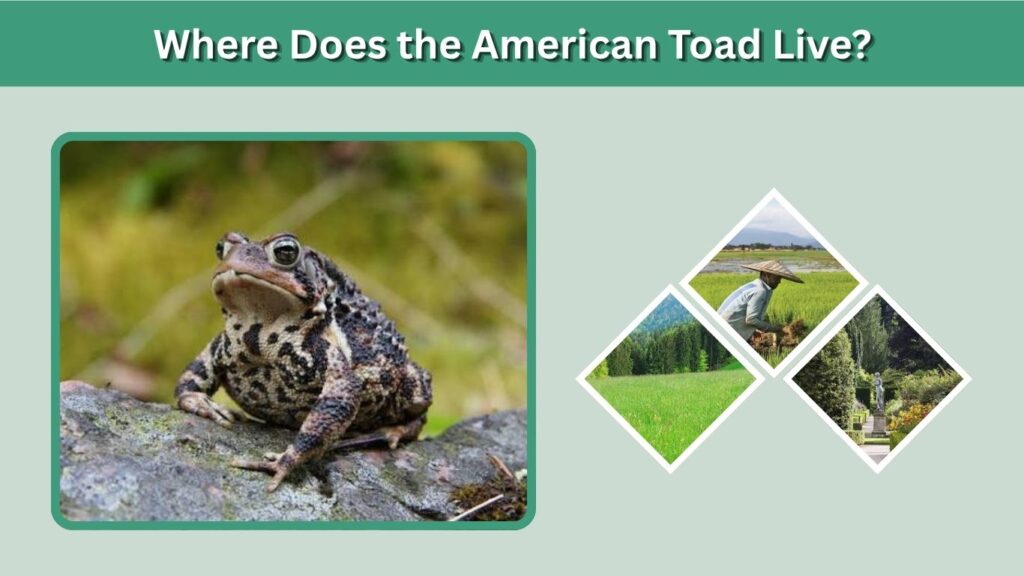
American toads occupy a broad range of habitats. They are especially common in forests and woodland edges but can adapt well to human-altered environments.
Common habitats include:
- Deciduous forests
- Grasslands
- Meadows
- Agricultural areas
- Gardens
- Backyards
- Wetland edges
- Parks
They usually require access to moist hiding places, loose soil, and temporary or permanent water for reproduction.
During hot or dry periods, American toads may burrow into the soil to conserve moisture. They can also shelter under logs, rocks, boards, and dense vegetation.
What Does an American Toad Eat?
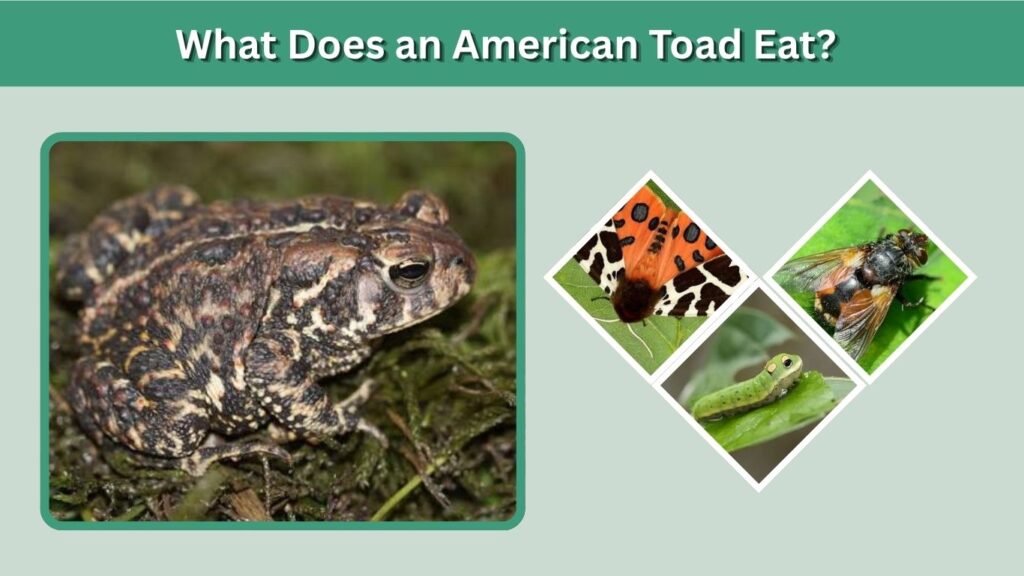
American toads are opportunistic carnivores that consume a wide variety of small invertebrates. Their feeding behavior also makes them useful garden predators.
An adult may eat:
- Beetles
- Ants
- Crickets
- Spiders
- Caterpillars
- Flies
- Moths
- Earthworms
- Slugs
- Other small invertebrates
They usually sit quietly and wait until prey comes within striking distance. The toad then quickly extends its sticky tongue to capture the animal.
Young toads eat much smaller prey, while tadpoles have a very different diet and feed largely on algae and organic material.
American Toad Call and Sound
The call of the male American toad is one of its most recognizable characteristics. Interest in the species’ call and sound is especially common during the spring breeding season.
The mating call is a long, high-pitched musical trill that may continue for several seconds. Groups of calling males can create a loud chorus around ponds and other breeding areas.
Males usually call from shallow water while trying to attract females.
The exact timing of calling varies with location and weather, but breeding activity generally increases as temperatures warm during spring.
American Toad Eggs and Tadpoles
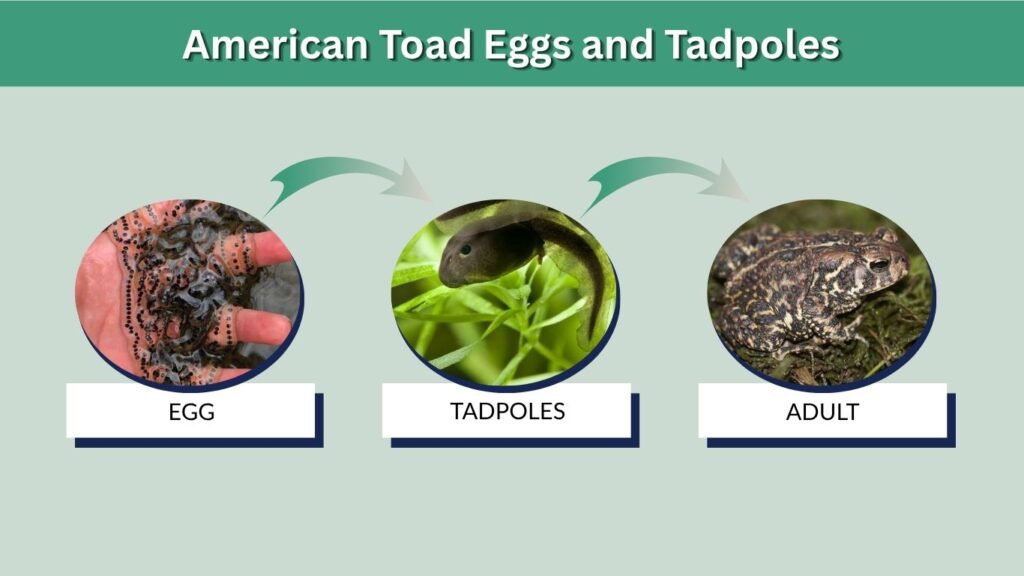
After mating, a female American toad lays thousands of small black eggs surrounded by clear jelly.
Unlike the rounded egg masses produced by many frogs, American toad eggs are typically deposited in long gelatinous strings.
These strings may become wrapped around submerged vegetation.
The eggs hatch into dark tadpoles that often gather in large groups in shallow water. Tadpoles feed and grow quickly because many breeding ponds are temporary.
After several weeks, they undergo metamorphosis and emerge as tiny juvenile toads.
Young American toads may be only a fraction of an inch long when they first leave the water.
American Toad Life Cycle
The life cycle begins with eggs laid in water during spring breeding.
The main stages are:
- Egg
- Tadpole
- Developing tadpole with legs
- Toadlet
- Juvenile
- Adult
As tadpoles develop, hind legs appear first, followed by front legs. The tail gradually disappears as the animal prepares for terrestrial life.
Once metamorphosis is complete, young toads leave the water and begin feeding on tiny insects and other invertebrates.
They continue growing until they become sexually mature and return to suitable water to reproduce.
How Long Do American Toads Live?
The lifespan of an American toad varies greatly between individuals.
Wild toads face many threats, including predators, road traffic, drought, severe weather, habitat loss, and disease. Consequently, many do not survive long enough to reach their maximum potential lifespan.
Individuals that avoid these dangers can live for several years.
Captive toads living under controlled conditions may survive considerably longer because they receive regular food, clean water, shelter, and protection from predators.
Are American Toads Poisonous?
Yes, American toads produce defensive toxins, but they are not considered highly dangerous to humans under normal circumstances.
The large parotoid glands behind their eyes produce a milky secretion that discourages predators.
Touching an American toad does not usually poison a person through normal intact skin. However, the secretion should not be allowed to enter the eyes, mouth, or an open wound.
Always wash your hands after handling a toad.
Are American Toads Poisonous to Dogs?
American toads can cause problems if a dog grabs, bites, or mouths one.
The defensive secretion may cause:
- Excessive drooling
- Foaming at the mouth
- Pawing at the face
- Mouth irritation
- Vomiting
American toads are generally less dangerous than highly toxic species such as cane toads, but pets should still be prevented from harassing them.
If a dog develops severe or persistent symptoms after mouthing a toad, contact a veterinarian.
Male vs Female American Toad
Male and female American toads look similar, but adults can sometimes be distinguished by several characteristics.
Females are generally larger and heavier than males.
During the breeding season, males often develop darkened areas on their thumbs called nuptial pads. These structures help them hold onto females during mating.
Males also possess the vocal structures responsible for the characteristic breeding call, while females generally do not produce the same prolonged mating trill.
A calling adult beside a breeding pond is therefore almost certainly male.
American Toad vs Fowler’s Toad
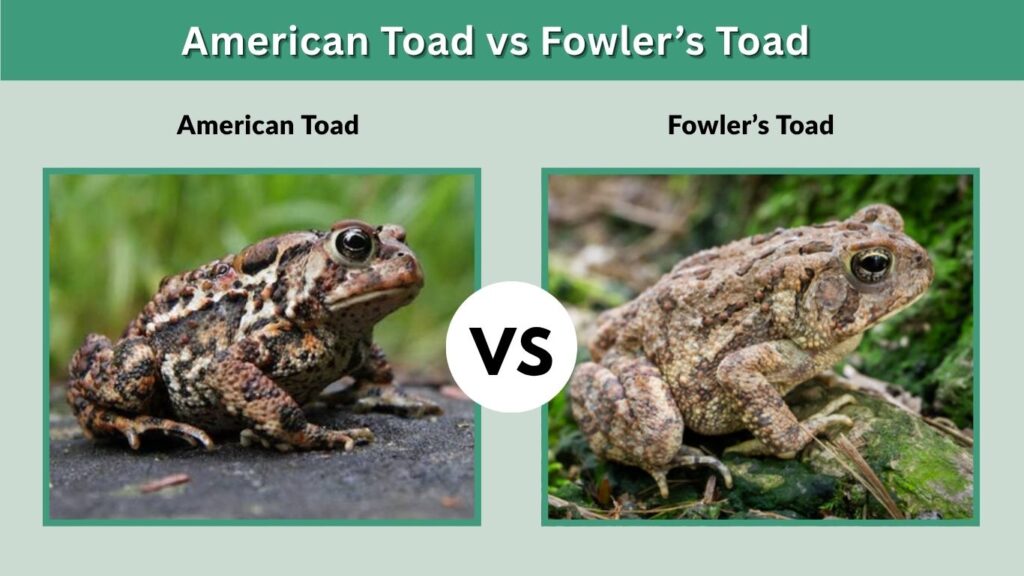
American toads and Fowler’s toads can look extremely similar and sometimes occur in the same regions.
One commonly used feature involves the dark spots on the back.
American toads often have one or two warts per dark spot, while Fowler’s toads frequently have three or more warts within each spot.
Fowler’s toads may also have a cleaner-looking belly with fewer dark markings.
Their calls differ as well. The American toad produces a long musical trill, while Fowler’s toad has a shorter, harsher, nasal-sounding call.
Because characteristics can overlap, identifying some individuals may require examining several traits rather than relying on a single feature.
Can You Keep an American Toad as a Pet?
American toads can adapt to captivity when local laws allow collection and proper care is provided. Pet care and enclosure setup are also common areas of interest surrounding this species.
A suitable enclosure should provide:
- Deep, moist substrate suitable for burrowing
- Hiding places
- A shallow water dish
- Appropriate ventilation
- Live insects for food
- A natural day-night cycle
The enclosure should be moist but not waterlogged.
Captive toads can eat appropriately sized crickets, roaches, earthworms, and other feeder invertebrates. A varied diet is preferable to relying on one food.
Handling should be kept to a minimum because amphibian skin is sensitive to oils, chemicals, and residues on human hands.
American Toad Predators
Despite their defensive toxins, American toads are eaten by numerous predators.
Potential predators include snakes, birds, raccoons, skunks, and some mammals.
Tadpoles and young toads are even more vulnerable and may be eaten by fish, aquatic insects, birds, snakes, and other amphibians.
Their camouflage, burrowing behavior, and chemical defenses all improve their chances of survival.
FAQs
What is the scientific name of the American toad?
The scientific name of the American toad is Anaxyrus americanus.
How big does an American toad get?
Most adults are approximately 2 to 3½ inches long, although particularly large females can exceed this range.
Do American toads burrow?
Yes. American toads can dig backward into loose soil to escape heat, dry conditions, predators, and cold weather.
Do American toads bite?
American toads are not aggressive toward humans and normally depend on camouflage, escape, inflation of the body, and toxic skin secretions for defense rather than biting.
What does an American toad sound like?
The male American toad produces a long, musical, high-pitched trill during the breeding season. The sound can last several seconds and is often heard around ponds during spring.
