
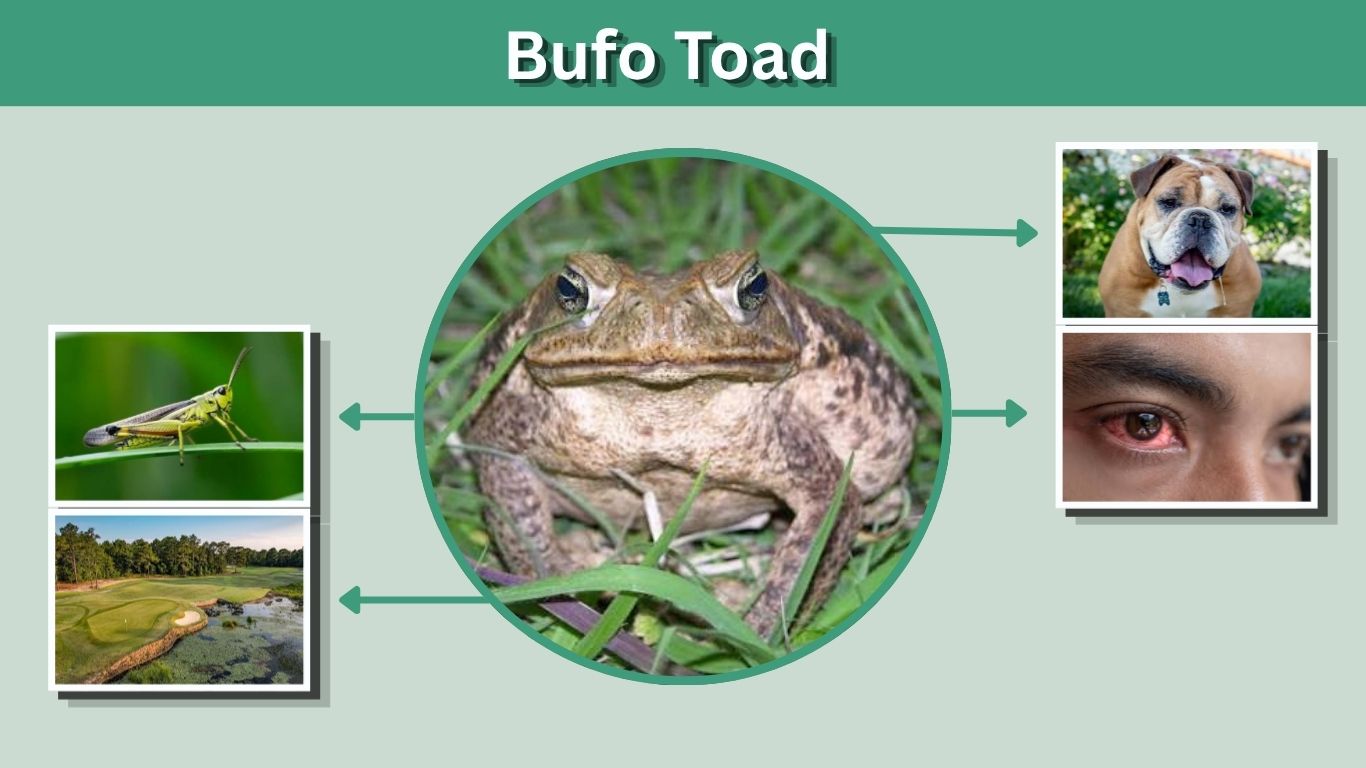
The term Bufo toad is commonly used in Florida for the invasive cane toad, a large amphibian capable of producing powerful defensive toxins. Although “Bufo” is an older scientific classification, the cane toad is now known as Rhinella marina. These toads are especially important for dog owners because contact with their toxic secretions can cause a medical emergency in pets. This guide explains Bufo toad identification, habitat, size, poison, effects on dogs and humans, and how it differs from native Florida toads.
What Is a Bufo Toad?
In Florida, “Bufo toad” usually refers to the cane toad, also called the giant toad or marine toad.
Its accepted scientific name is Rhinella marina. Older scientific literature placed the species in the genus Bufo, which explains why the name “Bufo toad” remains widely used.
Cane toads are native to parts of Central and South America but have been introduced to several other regions. They became established in southern Florida after introductions and accidental releases.
These large, adaptable amphibians often thrive around residential neighborhoods where insects, pet food, outdoor lights, and artificial water sources are readily available.
Bufo Toad Identification
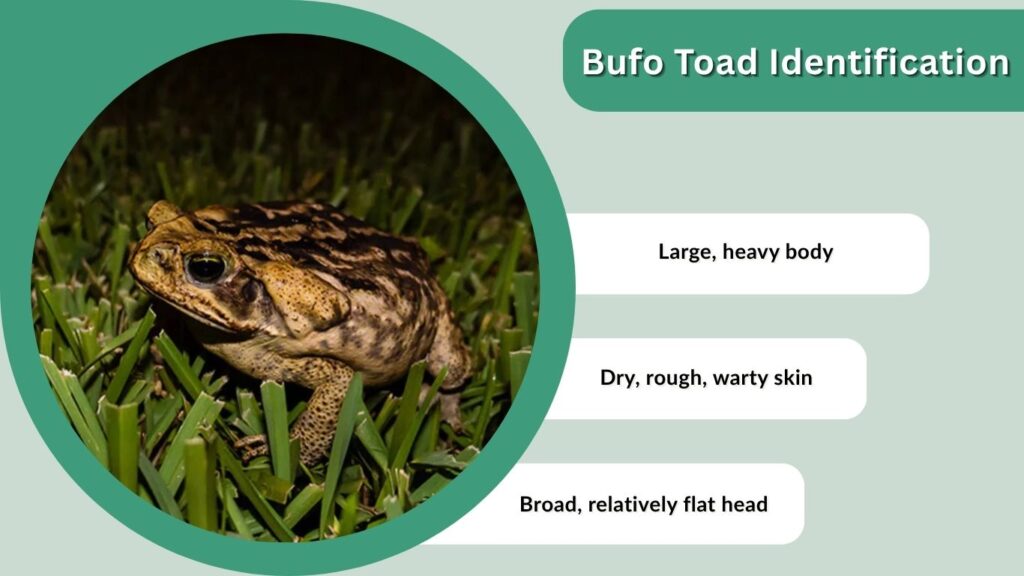
Correct identification is important because Florida also has several harmless native toad species.
Look for these characteristics:
- Large, heavy body
- Dry, rough, warty skin
- Broad, relatively flat head
- Very large parotoid glands behind the eyes
- Brown, tan, gray, reddish, or olive coloration
- Cream-colored belly
- Horizontal pupils
- No prominent ridges connecting the eyes to the parotoid glands
The large triangular parotoid glands behind the eyes are particularly noticeable. These glands produce the toxic secretion used to discourage predators.
Young cane toads are more difficult to identify because they are much smaller and can resemble native species.
How Big Do Bufo Toads Get?
Bufo or cane toads are among the largest true toads encountered in Florida.
Adults commonly reach around 4 to 6 inches in body length, although particularly large specimens may grow considerably larger.
Females are generally larger than males.
Their substantial size is one feature that separates large adult cane toads from many native Florida species. However, size alone is unreliable because young cane toads can be very small.
Bufo Toads in Florida
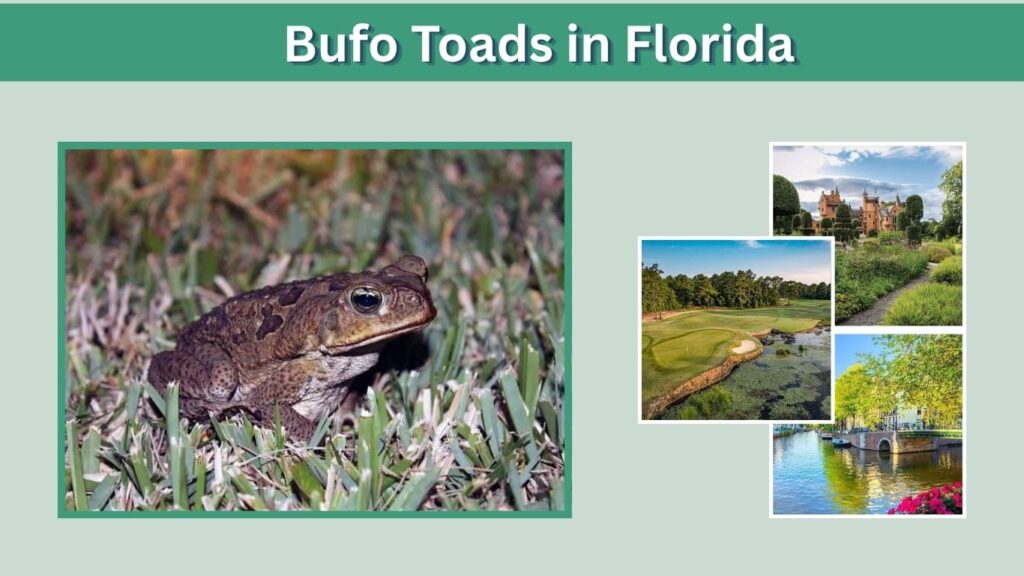
Cane toads are established primarily in central and southern Florida, particularly in developed areas.
They are frequently encountered around:
- Residential yards
- Golf courses
- Gardens
- Canals
- Ponds
- Ditches
- Agricultural land
- Parking lots
- Buildings
Warm temperatures and abundant water allow them to remain active through much of the year in southern portions of the state.
They are primarily nocturnal, so homeowners are particularly likely to encounter them after sunset.
Outdoor lights can indirectly attract cane toads because lights attract insects, providing an easy feeding area.
What Do Bufo Toads Eat?
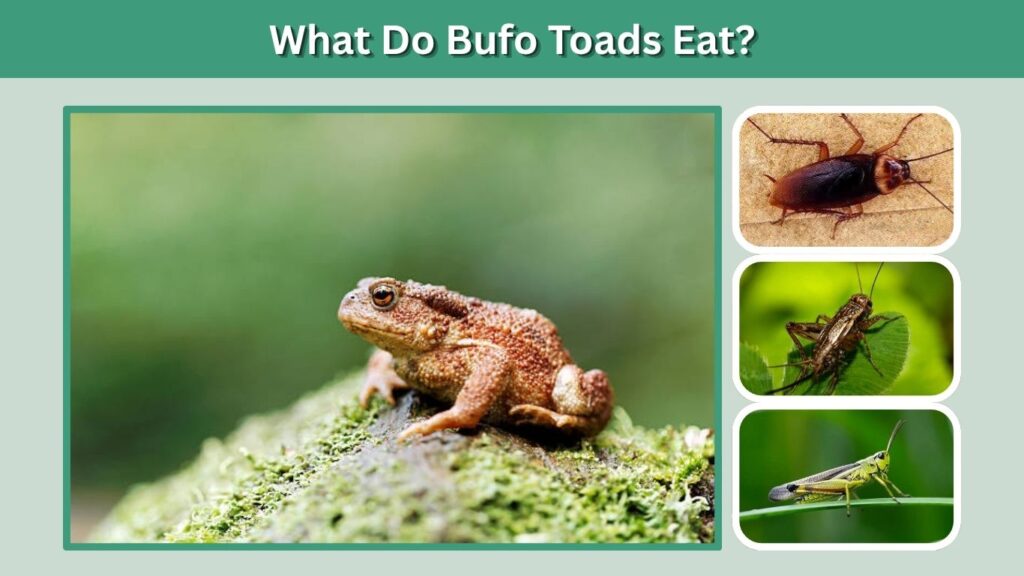
Bufo toads are opportunistic predators with an extremely broad diet.
They commonly eat:
- Beetles
- Cockroaches
- Crickets
- Grasshoppers
- Ants
- Spiders
- Worms
- Snails
- Small frogs
- Other small animals
Large individuals may consume small vertebrates when the opportunity occurs.
Cane toads may also eat pet food left outdoors, making bowls of dog or cat food an unnecessary attraction around homes.
Are Bufo Toads Poisonous?
Yes. Bufo toads produce powerful defensive toxins.
Large glands located behind their eyes release a milky secretion containing compounds known collectively as bufotoxins.
The toxin is primarily dangerous when it enters the mouth, eyes, or damaged skin rather than simply from a toad being nearby.
A predator that bites or mouths the toad can receive a substantial dose almost immediately.
The toxins can affect several body systems, including the heart and nervous system. Dogs are particularly vulnerable because they commonly investigate toads with their mouths.
Bufo Toad Poison vs Venom
Bufo toads are generally described as poisonous rather than venomous.
A venomous animal actively delivers venom through structures such as fangs or stingers.
A poisonous animal produces toxins that cause harm when another animal touches, eats, or mouths it.
Cane toads do not inject their toxin through a bite. Instead, their parotoid glands release defensive secretions when they are threatened or attacked.
Are Bufo Toads Poisonous to Dogs?
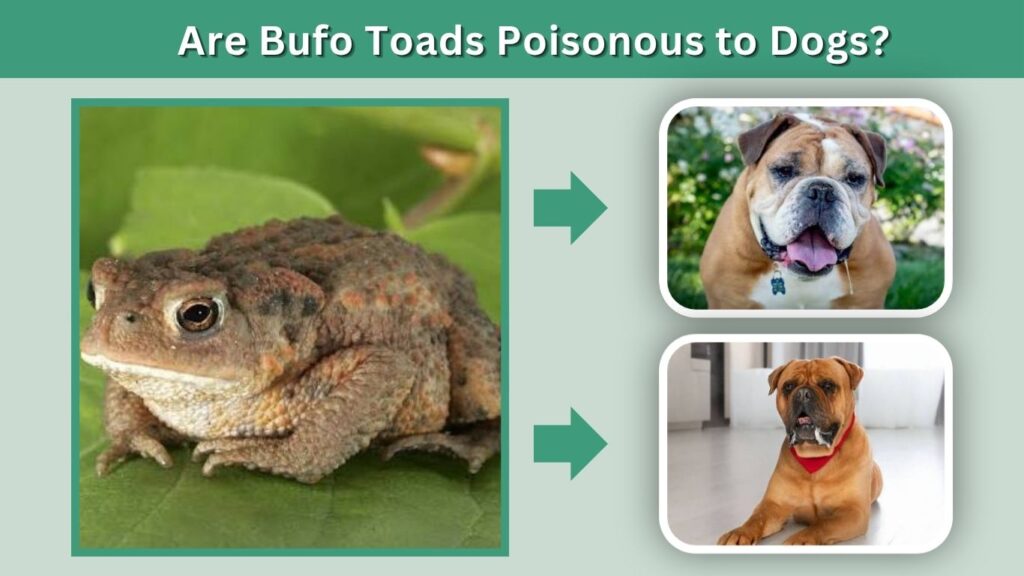
Yes. Bufo toad poisoning can be life-threatening to dogs.
Dogs frequently become exposed when they bite, lick, or pick up a cane toad.
Toxin can be absorbed rapidly through the tissues of the mouth.
Signs may begin within minutes and can include:
- Heavy drooling
- Foaming at the mouth
- Bright red gums
- Pawing at the mouth
- Head shaking
- Vomiting
- Disorientation
- Weakness
- Abnormal heart rhythm
- Tremors
- Seizures
- Collapse
Severe poisoning can be fatal without rapid veterinary treatment.
What to Do If a Dog Bites a Bufo Toad
Treat suspected cane toad poisoning as an urgent veterinary situation.
Immediately prevent your dog from further contact with the toad.
If it can be done safely, gently wipe or rinse toxin from the mouth while keeping water directed outward rather than toward the throat. The goal is to remove residue without causing the dog to swallow or inhale water.
Then contact a veterinarian or emergency veterinary hospital immediately.
Do not wait for severe symptoms to develop, particularly if your dog is small or has clearly bitten the toad.
Do not administer unapproved medications or home remedies in place of professional veterinary care.
Are Bufo Toads Poisonous to Humans?
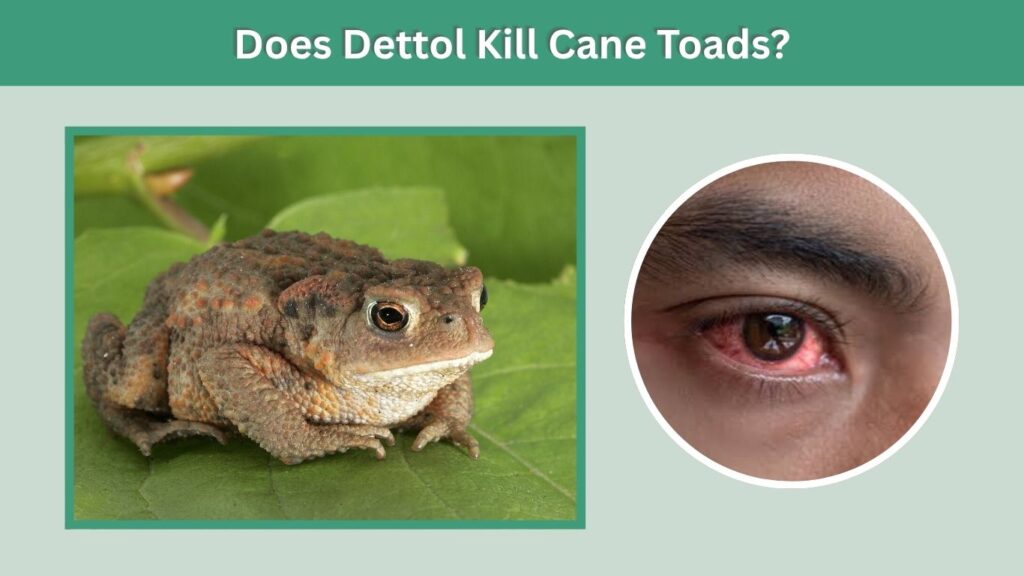
Cane toad secretions can also irritate or poison humans, although serious exposure is much less common than poisoning in dogs.
Touching intact toad skin and then washing your hands is unlikely to cause severe poisoning. Problems are more likely if secretions enter the:
- Eyes
- Mouth
- Nose
- Open cuts
Exposure can cause pain and irritation.
After handling a cane toad, wash your hands thoroughly with soap and water. If secretion enters the eyes, rinse continuously with clean water.
Seek medical help for significant exposure or symptoms such as persistent vomiting, severe dizziness, abnormal heartbeat, confusion, or other concerning reactions.
Bufo Toad vs Regular Toad
Several physical characteristics can help distinguish an invasive cane toad from smaller native species.
Cane toads usually have enormous parotoid glands that extend down the shoulders. They also have broad heads and can become exceptionally large.
Many native toads have:
- Smaller parotoid glands
- More pronounced cranial ridges
- Different spotting patterns
- Smaller adult body sizes
Identification becomes more difficult with juveniles, so multiple characteristics should be checked before deciding that a toad is invasive.
Bufo Toad vs Southern Toad
The Southern toad is native to Florida and is sometimes mistaken for a young cane toad.
One useful difference involves the structures on top of the head.
Southern toads have conspicuous raised cranial ridges, often ending in noticeable knobs behind the eyes.
Cane toads generally lack these prominent knobs and possess much larger parotoid glands.
Because Southern toads are beneficial native wildlife, accurate identification is important before attempting to remove a suspected cane toad.
Cane Toad vs Bufo Toad
In Florida usage, there is usually no practical difference between a cane toad and a Bufo toad.
“Bufo toad” is simply an older common name that became established when the cane toad was classified as Bufo marinus.
Today the species is scientifically classified as:
Cane toad – Rhinella marina
You may still encounter the names Bufo toad, giant toad, and marine toad referring to the same species.
Bufo Toad Eggs and Tadpoles
Cane toads breed in freshwater environments such as ponds, canals, ditches, and other shallow water bodies.
Females can produce thousands of eggs.
The eggs are typically laid in long gelatinous strings rather than rounded clusters.
After hatching, dark-colored tadpoles gather in the water and feed as they develop. They eventually undergo metamorphosis and emerge as tiny terrestrial toadlets.
Both eggs and tadpoles can contain toxins, meaning predators may be affected at multiple stages of the cane toad life cycle.
When Is Bufo Toad Season in Florida?
Cane toads can be active throughout much of the year in warm parts of Florida.
Activity generally increases during warm and wet weather, when insects are abundant and suitable breeding water is available.
They are especially noticeable:
- After rainfall
- During warm nights
- Around ponds and canals
- Near outdoor lighting
- During humid summer weather
Because they are primarily nocturnal, pet owners should be particularly cautious when allowing dogs outside after dark.
How to Keep Bufo Toads Away From Your Yard
Making a property less attractive can reduce encounters.
Useful measures include:
- Remove outdoor pet food at night
- Keep garbage containers closed
- Eliminate unnecessary standing water
- Reduce insect-attracting outdoor lighting
- Keep grass trimmed
- Remove clutter that provides hiding places
- Fill openings under fences where practical
- Supervise pets outdoors after dark
Never handle a suspected cane toad with bare hands if contact with its secretions can be avoided. Gloves and appropriate tools provide additional protection.
Local wildlife regulations should also be followed when removing invasive animals.
FAQs
What is another name for a Bufo toad?
The name Bufo toad most commonly refers to the cane toad, also called the giant toad or marine toad. Its scientific name is Rhinella marina.
Can touching a Bufo toad poison you?
Casual skin contact is usually less concerning than getting the toxic secretion into your eyes, mouth, or an open wound. Wash your hands thoroughly after contact.
Can a Bufo toad kill a dog?
Yes. Cane toad toxin can cause severe and potentially fatal poisoning in dogs, particularly when a dog bites or mouths the toad. Immediate veterinary attention is important.
Where do Bufo toads live in Florida?
They are especially established in central and southern Florida, where they occur around neighborhoods, gardens, golf courses, canals, ponds, and other developed landscapes.
Are Bufo toads and cane toads the same?
Yes, in Florida the term “Bufo toad” commonly refers to the cane toad. The name comes from its older scientific classification, Bufo marinus.
