
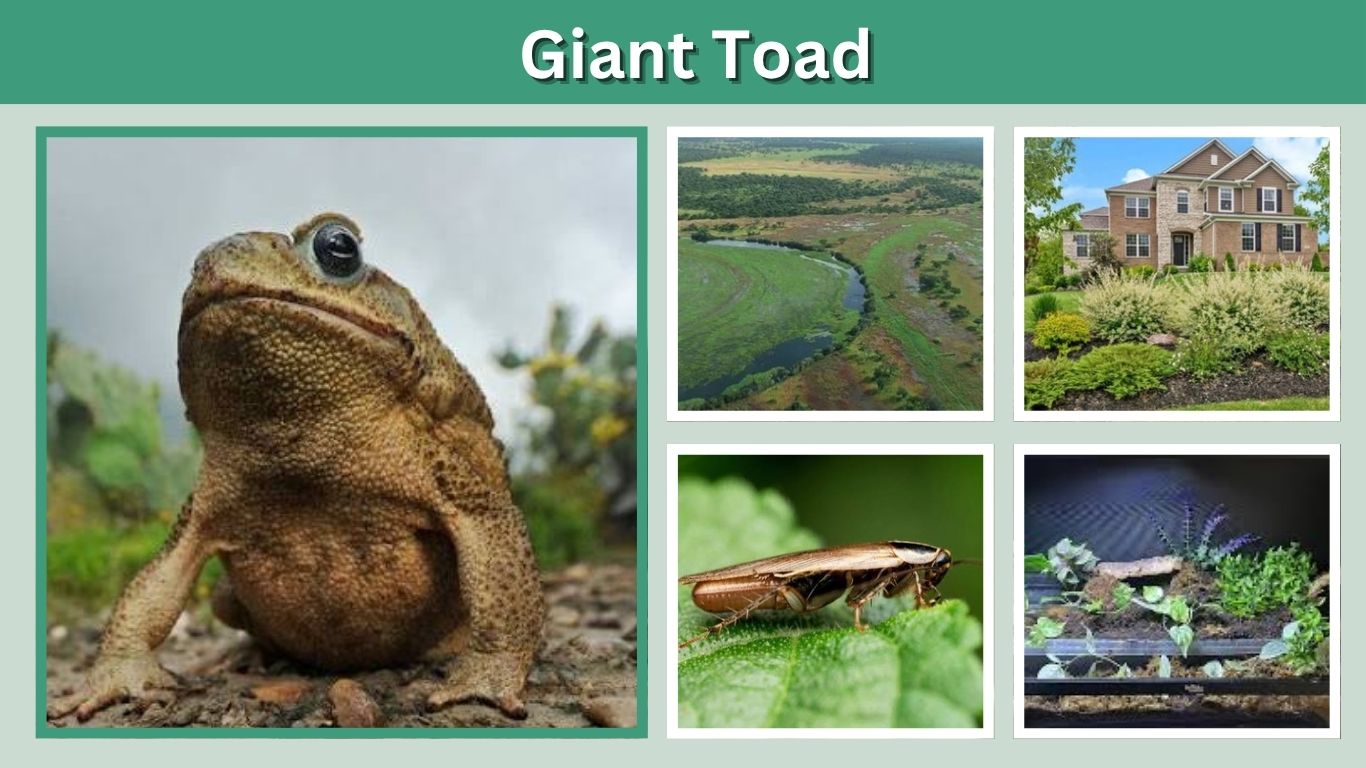
The name “giant toad” commonly refers to the cane toad, one of the world’s largest true toads. Known scientifically as Rhinella marina and formerly as Bufo marinus, this powerful amphibian has a broad diet, defensive toxins, and an impressive ability to survive in human-altered environments. Although native to the Americas, it has been introduced to Florida, Australia, and numerous tropical islands. This guide explains the giant toad’s appearance, habitat, behavior, diet, toxicity, lifespan, and suitability as a pet.
What Is a Giant Toad?
“Giant toad” is an informal name that can describe several unusually large toad species. However, it most often means the cane toad or marine toad. These animals belong to the family Bufonidae, commonly called true toads. They have dry-looking skin, short legs, prominent poison glands, and a heavy body adapted for life primarily on land.
Scientific Classification
- Common names: Giant toad, cane toad, marine toad
- Scientific name: Rhinella marina
- Former scientific name: Bufo marinus
- Family: Bufonidae
- Order: Anura
- Class: Amphibia
- Average length: 4–6 inches
- Maximum length: More than 9 inches in exceptional individuals
- Typical lifespan: Approximately 10–15 years
Is Every Giant Toad a Cane Toad?
Not necessarily. Several large amphibians are called giant toads. The Asian giant toad, also known as the river toad, is Phrynoidis asper. The Malaysian giant toad usually refers to this same Southeast Asian species.
The Japanese common toad and some African toads may also be described as giant toads because of their size. These species should not be confused with the cane toad, as their habitats, appearance, and toxicity can differ.
Giant Toad Appearance and Size
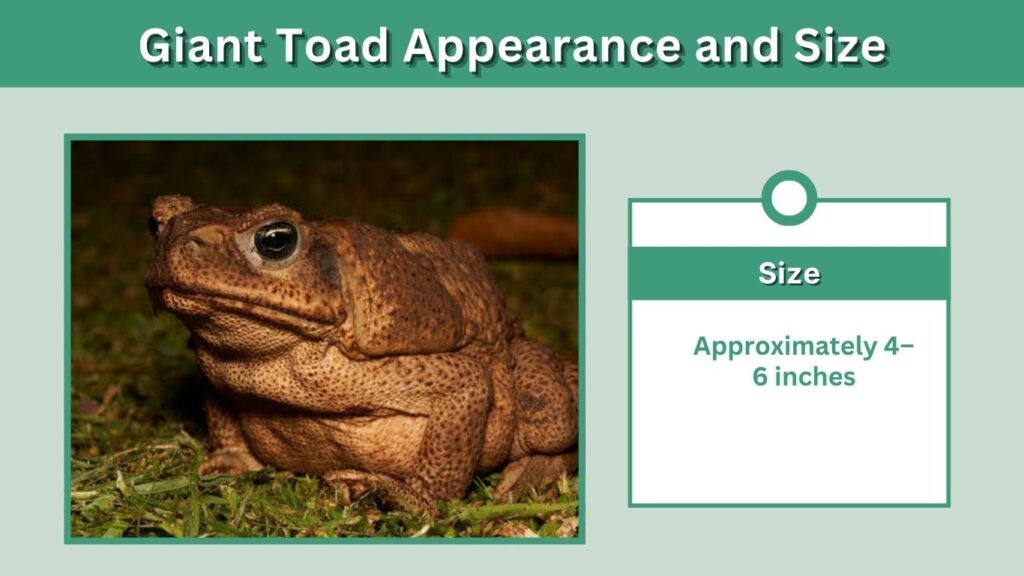
Giant toads possess broad heads, thick bodies, short legs, and rough skin covered with bumps. Their colors help them blend into soil, leaves, and tree debris. Females generally grow larger than males, while males may develop rough pads on their front feet during the breeding season.
Identifying a Cane Toad
- Large, triangular poison glands behind the eyes
- Dry, rough, and heavily textured skin
- Brown, gray, olive, or reddish coloration
- Cream-colored underside, sometimes with dark markings
- Horizontal pupils with golden or copper-colored irises
- Broad head and relatively short legs
- No enlarged toe pads for climbing
How Big Can a Giant Toad Grow?
Most adult cane toads measure between 4 and 6 inches long. Large females can exceed 7 inches, while exceptional individuals may reach approximately 9 inches or more. Their weight varies considerably depending on sex, age, habitat, and food availability.
The Asian giant toad usually reaches approximately 4–6 inches. Its flattened body, prominent ridges, and strongly webbed hind feet help distinguish it from a cane toad.
Male vs. Female Giant Toad
Females are usually larger and have smoother-looking skin than adult males. Males often have darker throats and may make loud calls to attract females. During breeding periods, males develop nuptial pads that help them hold females while eggs are released and fertilized.
Where Do Giant Toads Live?
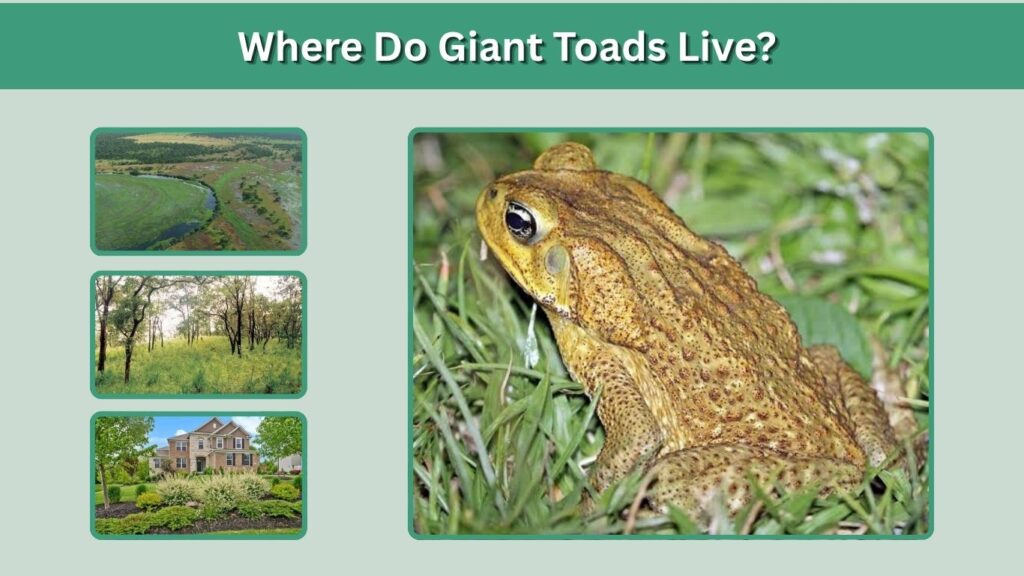
Cane toads are native to parts of southern Texas, Mexico, Central America, and South America. People introduced them to other regions in attempts to control agricultural pests. They now occur in Australia, Florida, the Caribbean, and many Pacific islands, where they can become invasive.
Preferred Habitat
- Tropical and subtropical forests
- Grasslands and open woodlands
- Farms and agricultural fields
- Gardens and suburban yards
- Areas surrounding ponds and drainage canals
- Roadsides and disturbed environments
- Locations near buildings and outdoor lights
Giant Toads in Florida
Florida has established populations of invasive cane toads, especially in central and southern parts of the state. They often appear in residential neighborhoods at night, particularly during warm, wet weather.
Outdoor pet food, standing water, insects gathered around lights, and accessible shelter can attract them. Florida residents should learn to distinguish cane toads from beneficial native species, such as the southern toad.
Giant Toads in Australia
Cane toads were introduced into Australia in 1935 to help control beetles damaging sugarcane. The plan was unsuccessful, and the toads spread across large areas of northern and eastern Australia.
Their toxins can kill native predators that attempt to eat them. They also compete with some native animals for food and shelter, making them a serious invasive species.
What Do Giant Toads Eat?
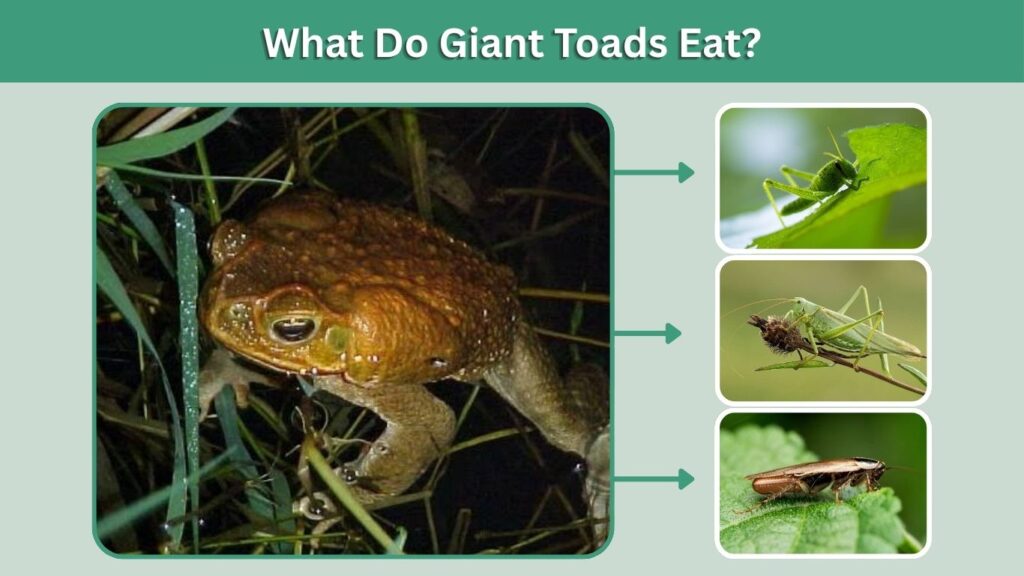
Giant toads are opportunistic feeders that consume almost anything they can overpower and swallow. They hunt mainly at night and detect prey through movement. Instead of chewing, a toad uses its sticky tongue and jaws to capture food before swallowing it whole.
Common Foods
- Beetles
- Crickets
- Cockroaches
- Grasshoppers
- Ants and termites
- Moths and caterpillars
- Worms, snails, and slugs
- Spiders and centipedes
- Small frogs and reptiles
- Young rodents
- Pet food and food scraps
Hunting Behavior
A giant toad commonly sits still and waits for prey to move within striking distance. It then extends its sticky tongue in a rapid motion. Larger food may be pushed into the mouth with the front feet.
Cane toads readily gather beneath outdoor lights because insects are abundant there. This behavior partly explains why they thrive near homes and commercial buildings.
Are Giant Toads Poisonous?
Giant cane toads are poisonous rather than venomous. They do not inject venom through fangs or a stinger. Instead, large parotoid glands behind their eyes release a milky secretion called bufotoxin when the animal feels threatened.
Effects of Giant Toad Toxin
- Intense irritation of the mouth and eyes
- Heavy drooling or foaming in pets
- Red or inflamed gums
- Vomiting
- Loss of coordination
- Abnormal heart rhythm
- Tremors or seizures
- Death in severe animal exposures
Are They Dangerous to Humans?
A cane toad does not normally attack people. However, its secretion can irritate human skin, eyes, nose, and mouth. Wash exposed skin immediately and avoid touching your face after handling a toad.
Children should be taught never to pick up unknown amphibians. Anyone who experiences significant symptoms after exposure should contact a medical professional or poison-control service.
Protecting Dogs and Cats
Dogs are particularly vulnerable because they may bite or lick a toad. If exposure occurs, wipe the animal’s gums and mouth carefully with a damp cloth, moving outward so toxin is not pushed down the throat. Contact an emergency veterinarian immediately. Do not force water into an unconscious or convulsing animal’s mouth.
Giant Toad Behavior and Life Cycle
Giant toads are mainly nocturnal. They hide during the day beneath vegetation, boards, rocks, or other sheltered objects. At night, they emerge to hunt. Although they may appear slow, they can make quick hops when disturbed.
Breeding and Development
- Males call from shallow water to attract females.
- A female releases thousands of eggs in long, jelly-like strings.
- Eggs may hatch in approximately one to three days under warm conditions.
- Dark-colored tadpoles gather in dense schools.
- Tadpoles transform into tiny toadlets within several weeks.
- Young toads leave the water and begin feeding on small invertebrates.
How Long Do Giant Toads Live?
Cane toads may live approximately 10–15 years in favorable conditions. Captive individuals receiving proper care can sometimes live longer. Wild survival depends on food, weather, disease, predators, habitat quality, and human activity.
Can You Keep a Giant Toad as a Pet?
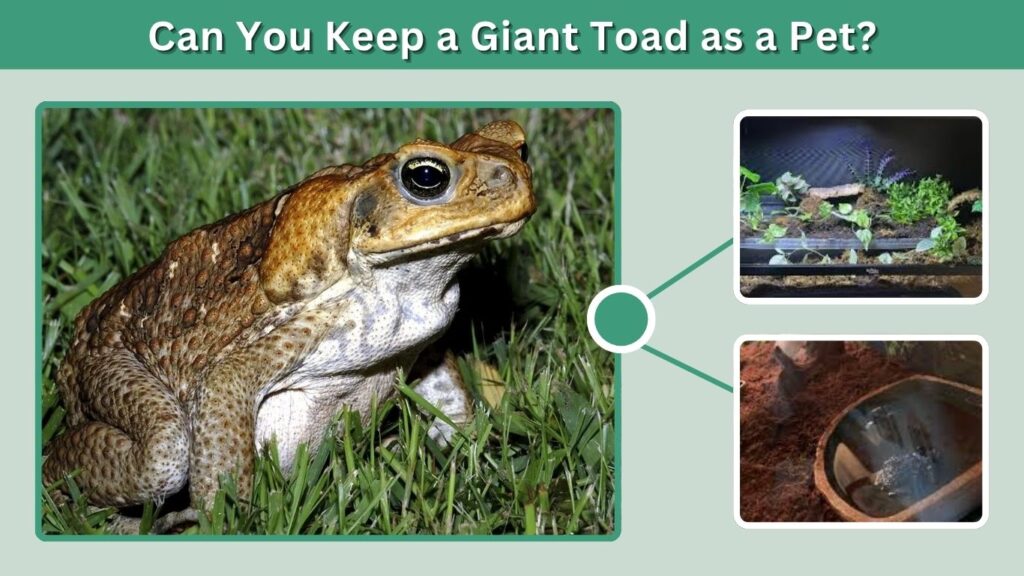
Cane toads are occasionally kept by experienced amphibian enthusiasts. However, they are not appropriate for every household. Their toxins, adult size, strong feeding response, and long lifespan create considerable responsibilities.
Basic Care Requirements
- A large, secure, well-ventilated enclosure
- Moist but not waterlogged substrate
- A shallow water dish for soaking
- Hiding places and adequate floor space
- Moderate tropical temperatures
- A varied diet of properly sized invertebrates
- Calcium and vitamin supplementation when appropriate
- Strict hygiene after enclosure maintenance
Check local regulations before obtaining one because owning, selling, transporting, or releasing cane toads may be restricted. Never collect or relocate an invasive toad without following local wildlife rules. A captive animal must never be released outdoors.
FAQs
What is the scientific name of the giant toad?
The giant cane toad’s current scientific name is Rhinella marina. It was previously classified as Bufo marinus, so the older name still appears in books and pet-related searches.
What is the largest giant toad species?
The cane toad is among the largest true toads. Exceptional females can grow beyond 9 inches, although most adults are significantly smaller.
Can a giant toad kill a dog?
Yes. A dog that bites or mouths a cane toad can absorb a dangerous amount of toxin. Immediate mouth decontamination and emergency veterinary treatment may be necessary.
Are giant toads found naturally in Florida?
Cane toads are not native to Florida. They were introduced and have established invasive populations, particularly in warmer central and southern areas.
Can giant toads swim?
Yes. They can swim and enter water to breed, but adult cane toads spend much of their lives on land. They should not be confused with fully aquatic frogs.
