
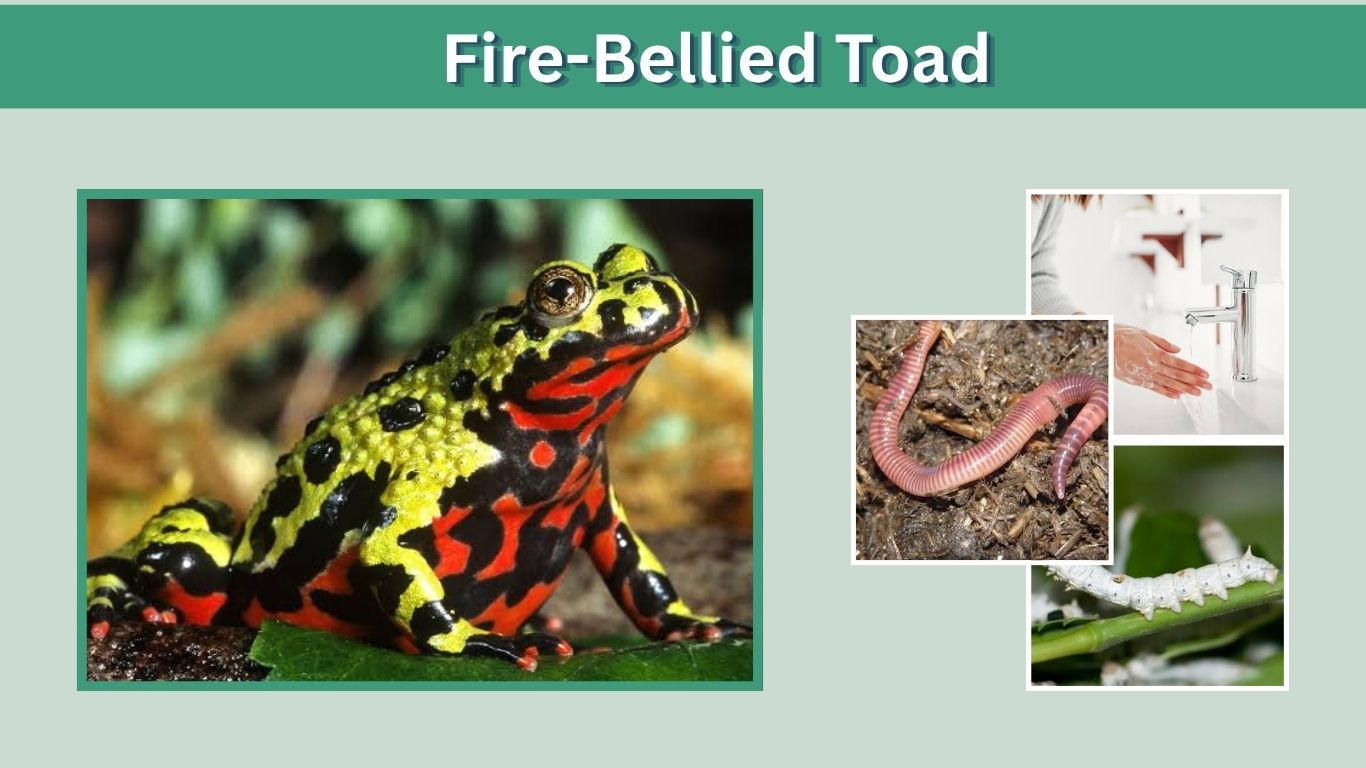
The fire-bellied toad is a small, semiaquatic amphibian recognized by its green or brown back and brilliantly colored underside. When threatened, it displays its red, orange, or yellow belly to warn predators that its skin produces an unpleasant toxin. The Oriental fire-bellied toad is the species most frequently kept as a pet, but several related species occur across Europe and Asia. With clean water, cool temperatures, varied food, and a well-designed paludarium, these active toads can live for many years.
What Is a Fire-Bellied Toad?
Fire-bellied toads belong to the genus Bombina and family Bombinatoridae. Despite their common name, they are not members of the true-toad family Bufonidae. They have flattened bodies, webbed feet, rough skin, and a strong connection to shallow freshwater habitats.
Basic Characteristics
- Common pet species: Oriental fire-bellied toad
- Scientific name: Bombina orientalis
- Family: Bombinatoridae
- Average size: Approximately 1.5–2 inches
- Activity: Diurnal and crepuscular
- Diet: Small live invertebrates
- Lifestyle: Semiaquatic
- Captive lifespan: Commonly 10–15 years, potentially longer
Fire-Bellied Toad Species
Several species carry the fire-bellied name:
- Oriental fire-bellied toad: Bombina orientalis has a bright green or brown back with black spots and a red-orange underside.
- European fire-bellied toad: Bombina bombina usually has a brown or gray back and an orange-and-black belly.
- Yellow-bellied toad: Bombina variegata has a dull upper body and a bold yellow-and-black underside.
- Apennine yellow-bellied toad: Bombina pachypus is native to Italy and resembles the yellow-bellied species.
- Yunnan fire-bellied toad: Bombina maxima is a larger species sometimes called the giant fire-bellied toad.
Appearance and Defensive Adaptations
An Oriental fire-bellied toad normally has a vivid green back marked with irregular black patches. Some individuals are naturally brown or become duller when stressed, cold, or kept under inadequate conditions. Its underside is bright orange or red with black markings unique to each animal.
Identification Features
- Flattened, oval-shaped body
- Green, olive, or brown upper surface
- Black spots across the back
- Rough skin covered with small tubercles
- Red-orange underside with black markings
- Webbed hind feet for swimming
- Heart-shaped or triangular pupils
- No clearly visible external eardrum
- Short limbs and a broad head
The Unken Reflex
When threatened, a fire-bellied toad may arch its back, raise its legs, or partially flip over to expose its colorful belly. This defensive behavior is called the unken reflex.
The bright underside acts as warning coloration, telling predators that the toad is unpleasant or potentially harmful to eat. If danger continues, the skin may release a milky or foamy secretion.
Male vs. Female
Females are generally larger and rounder, especially when carrying eggs. Males may have thicker front legs and develop dark nuptial pads on their forearms or fingers during the breeding season. Sexually mature males also produce soft calls, while females normally remain quiet.
Natural Habitat and Behavior
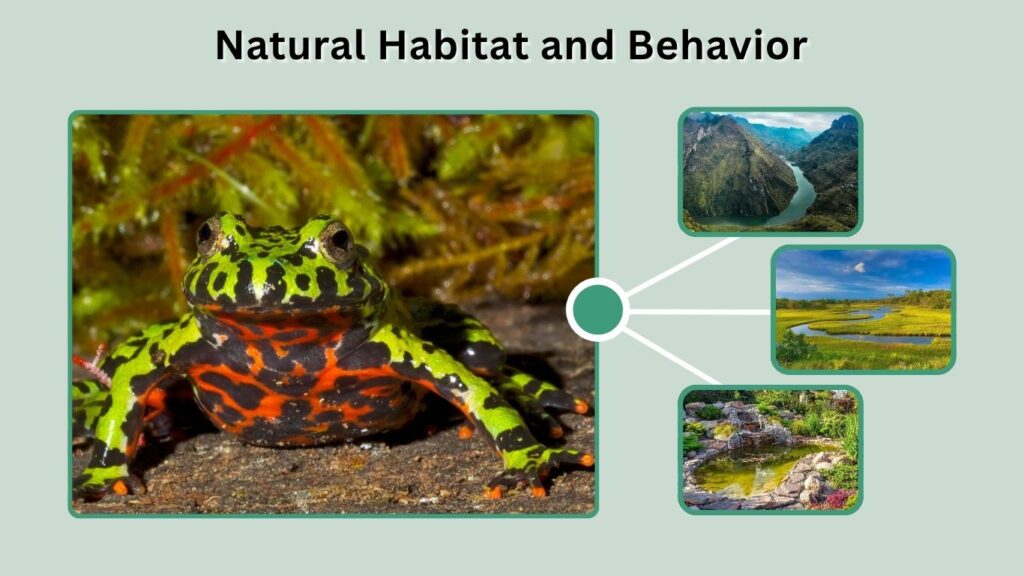
Oriental fire-bellied toads occur in parts of northeastern China, Korea, and the Russian Far East. They inhabit temperate forests, wet meadows, river valleys, marshes, ponds, ditches, springs, and slow-moving streams.
They spend considerable time floating in shallow water but regularly climb onto land, rocks, plants, and floating objects. Their environment should therefore provide easy access to both aquatic and terrestrial areas.
Fire-Bellied Toad Call
The male’s call is a soft, musical sound commonly described as “oop, oop, oop.” Males usually call while floating on the water’s surface. Calling becomes more frequent during the breeding season and may also occur when males establish space around one another.
Fire-Bellied Toad Tank Setup
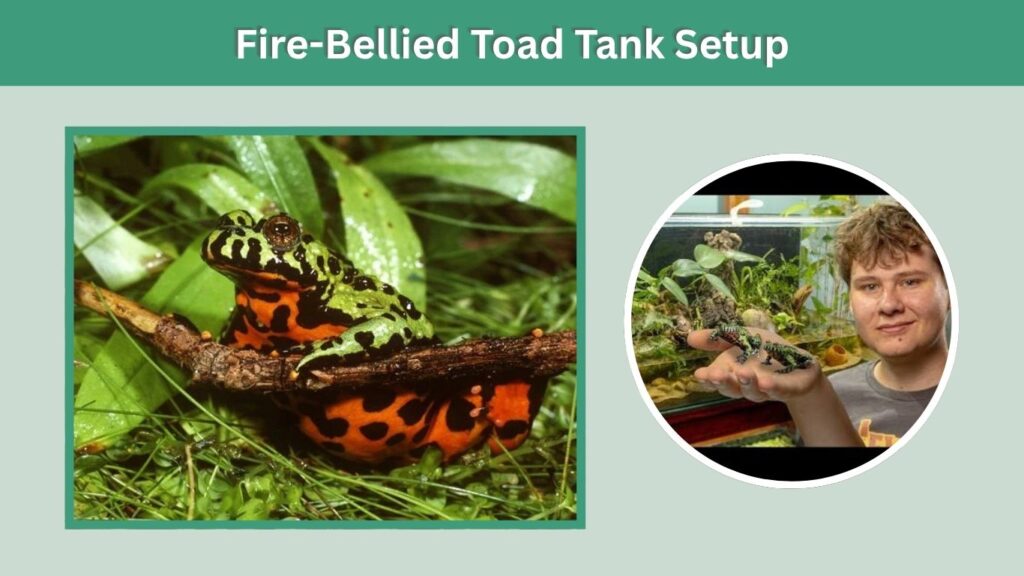
A horizontal aquarium or terrarium works better than a tall enclosure because these toads need floor and water-surface area. A secure, ventilated lid is essential because they can climb surprisingly well and escape through small openings.
Tank Size
- One toad: At least 10 gallons
- Two or three toads: At least 15 gallons
- Small group: 20 gallons or larger
- Preferred shape: Long, horizontally oriented tank
Although one fire-bellied toad can live alone, a compatible pair or small group may display more natural behavior. Provide sufficient room and several hiding places to reduce competition.
Paludarium Layout
A suitable enclosure should contain approximately equal land and water areas, although a slightly larger aquatic section is also acceptable. The water must be shallow enough for the toads to reach the surface easily.
Include:
- Dechlorinated water
- Gently sloping access between land and water
- Cork bark, smooth rocks, or floating platforms
- Live or artificial plants
- Several hiding areas
- Soft substrate that cannot be swallowed easily
- A low-flow aquarium filter
- A secure mesh or ventilated lid
Avoid sharp gravel, powerful filters, deep water without resting places, and small loose materials that may be swallowed with food.
Temperature and Lighting
Maintain daytime temperatures around 70–75°F, with a modest nighttime drop. These cool-tolerant amphibians usually do not need additional heat in a comfortable room. Temperatures around 80°F or above can cause serious stress and dehydration.
Provide a regular 12-hour day-and-night cycle. Low-level UVB lighting can support natural behavior and vitamin D production when appropriately positioned, but the enclosure must contain shaded hiding places.
Water Quality and Humidity
Treat tap water with an amphibian-safe conditioner to remove chlorine and chloramine. Cycle the aquatic section before introducing toads, use gentle filtration, and perform regular partial water changes.
A humid environment is important, but the land should not remain waterlogged. Poor sanitation, excessive crowding, and dirty water increase the risk of bacterial, fungal, and parasitic diseases.
Diet and Feeding
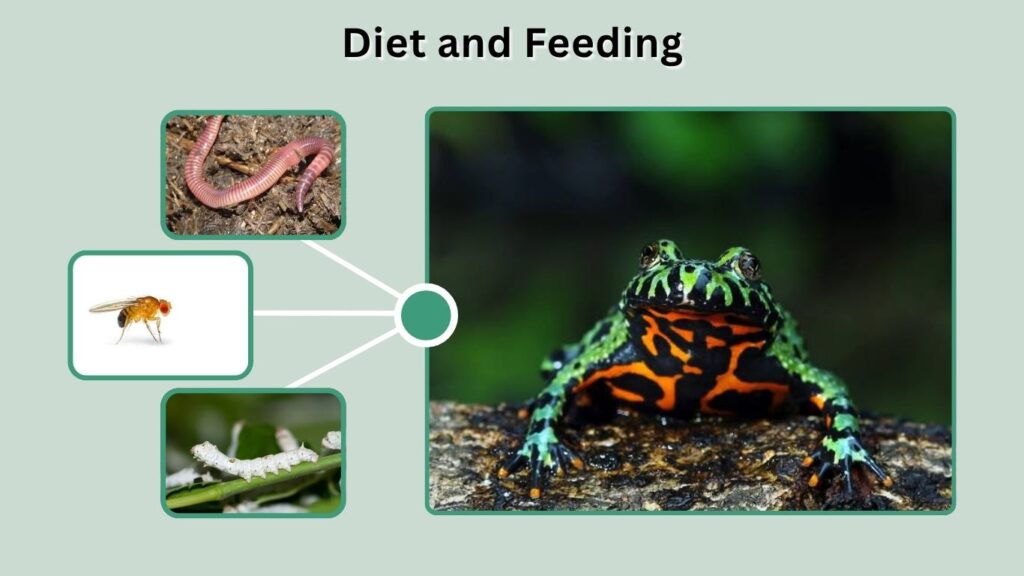
Fire-bellied toads respond most readily to moving prey. Adults should receive a varied diet rather than relying entirely on crickets. Food should be smaller than the distance between the toad’s eyes.
Suitable Foods
- Small crickets
- Dubia roach nymphs
- Earthworms
- Black soldier fly larvae
- Flightless fruit flies
- Small silkworms
- Occasional waxworms
- Other captive-raised invertebrates
Feed adults approximately two or three times weekly, adjusting the amount according to body condition and appetite. Juveniles require smaller meals more frequently.
Gut-load feeder insects before offering them. Use an amphibian-appropriate calcium supplement and a multivitamin according to veterinary or product guidance. Remove uneaten insects before they disturb or bite the toads.
Bloodworms can be offered occasionally, but they should not become the primary diet because they do not provide balanced nutrition.
Can Fish or Newts Live With Fire-Bellied Toads?
Mixing species is not recommended. Fish may compete for food, increase waste, introduce disease, or be eaten. The toads’ skin secretions may also irritate aquatic tank mates.
Fire-bellied newts should not share the same enclosure, despite their similar names and appearance. Newts and toads can release different toxins, carry pathogens harmless to themselves but dangerous to the other species, and require different care. A species-only enclosure is safer.
Are Fire-Bellied Toads Poisonous?
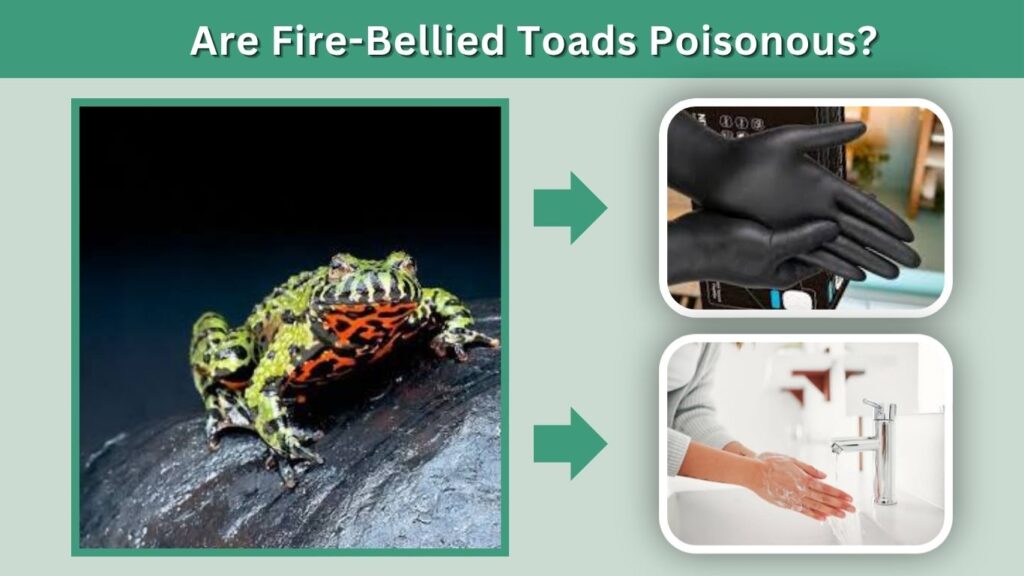
Fire-bellied toads produce defensive skin toxins, but they do not inject venom. Their secretions are not normally dangerous through intact human skin, although they can irritate the eyes, mouth, nose, cuts, and sensitive skin.
Safe Handling Rules
- Handle the toad only when necessary.
- Use clean, damp, powder-free gloves.
- Never touch your eyes or mouth while handling it.
- Keep it away from food-preparation surfaces.
- Wash your hands thoroughly afterward.
- Do not allow children to handle it unsupervised.
- Keep it separate from dogs, cats, and other pets.
Handling also threatens the toad because amphibian skin readily absorbs oils, soap, lotion, chemicals, and salt from human hands.
Breeding and Life Cycle
Breeding usually occurs during warmer months. Males float in shallow water and call to females. During amplexus, a male holds the female around her body while she deposits small groups of eggs on submerged plants.
Development Stages
- Females deposit several small batches of eggs.
- A complete breeding cycle may produce approximately 38–257 eggs.
- Eggs generally hatch within three to ten days.
- Tadpoles initially consume algae, microorganisms, and organic matter.
- Developing tadpoles later accept small prepared or live foods.
- Legs appear, and the tail is gradually absorbed.
- Newly transformed toadlets leave the water but require high humidity.
Adults may eat eggs, tadpoles, or tiny toadlets, so offspring should be raised separately. Development time varies with water temperature, diet, and overall water quality.
FAQs
How long do fire-bellied toads live?
They commonly live around 10–15 years with proper care. Exceptional captive individuals may survive for 20 years or longer.
Can one fire-bellied toad live alone?
Yes. They do not require companionship for emotional health. However, compatible individuals can be kept in a properly sized group enclosure.
Do fire-bellied toads need a heater?
Usually not. Normal room temperatures around 70–75°F are suitable. Supplemental heating should only be used with a thermostat when the room becomes too cold.
Can you handle a fire-bellied toad?
Handling should be minimized. Its secretions can irritate people, while oils and chemicals on human skin can harm the toad.
Where should you buy a fire-bellied toad?
Choose a reputable breeder offering healthy, captive-bred animals. Avoid wild-caught specimens, confirm local ownership laws, and inspect the toad for clear eyes, healthy skin, normal movement, and a good appetite.
