
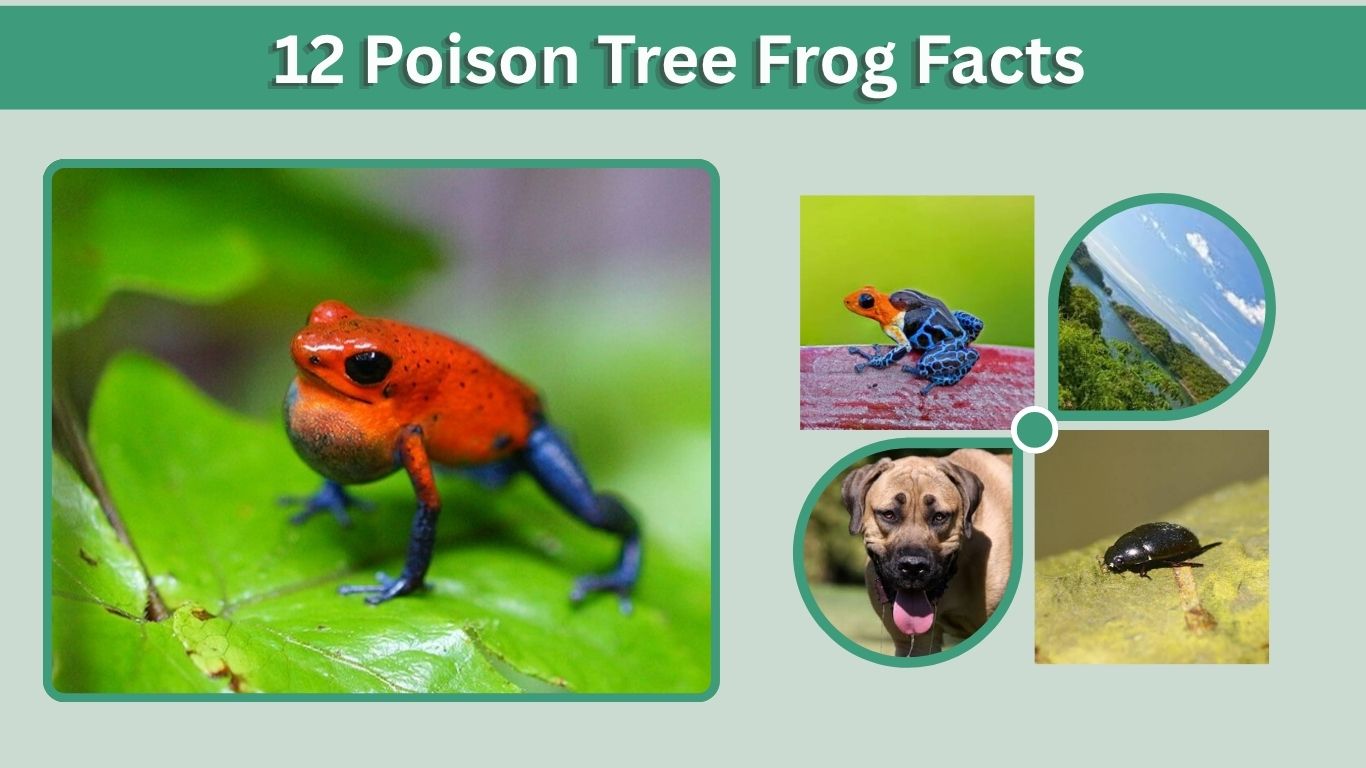
Poison tree frogs are small tropical amphibians famous for their intense colors and chemically defended skin. More accurately called poison frogs or poison dart frogs, they include numerous species with remarkably different colors, toxicity levels, behaviors, and parental strategies. Their poison usually comes from alkaloids obtained through wild prey rather than being manufactured entirely by the frogs themselves. These 12 poison dart tree frog facts explore their names, habitat, diet, toxicity, size, reproduction, parental care, predators, captive safety, and conservation.
1. Poison Tree Frog Is Not a Scientific Group
“Poison tree frog” is an informal name generally used for poison dart frogs. Most belong to the family Dendrobatidae, although chemically defended frogs also occur in the related family Aromobatidae.
They are not typical tree frogs from the family Hylidae. Many poison frogs live primarily on the forest floor among leaves and roots, although some climb trees, shrubs, and bromeliads.
2. They Live in Central and South America
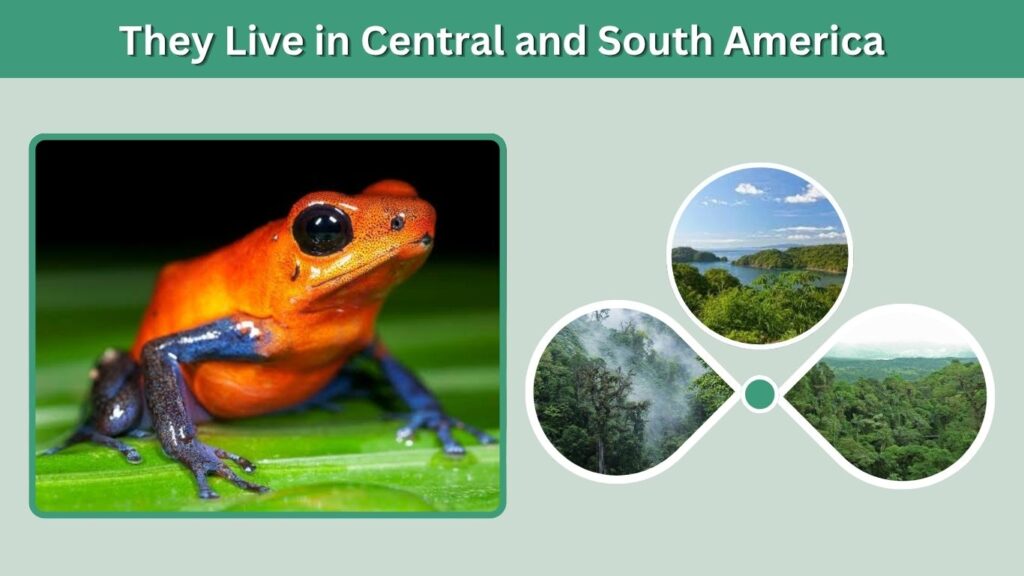
Wild poison frogs occur in warm tropical regions of Central and South America. Their collective range extends from parts of Nicaragua through countries such as Costa Rica, Panama, Colombia, Ecuador, Peru, Bolivia, Brazil, Guyana, Suriname, and French Guiana.
Different species occupy rainforests, cloud forests, stream edges, rocky areas, leaf litter, and vegetation surrounding temporary pools. Most depend on relatively stable moisture and temperature.
3. Bright Colors Warn Potential Predators
Many species display vivid yellow, orange, red, green, or blue patterns. These colors function as warning signals, a defensive strategy called aposematism.
Potential predators may learn to associate the noticeable patterns with a bitter taste, pain, or toxicity. However, not every poison frog is brightly colored. Some species are brown or cryptically patterned, while toxicity can vary between populations and individuals.
4. Their Poison Comes Mainly From Food
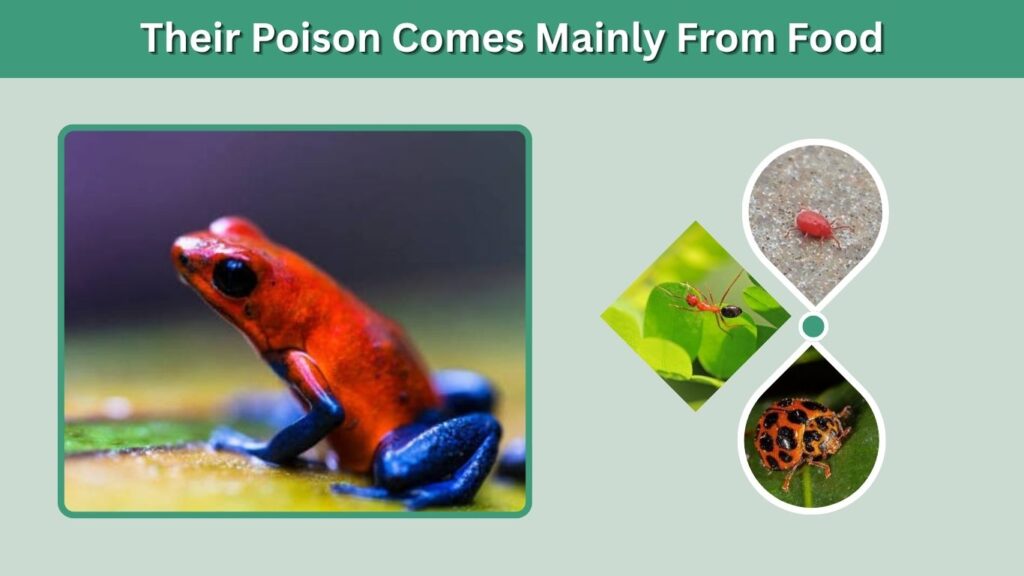
Poison frogs obtain many defensive alkaloids from tiny arthropods in their natural diet. Important sources include ants, mites, beetles, and other small invertebrates.
The frogs absorb these compounds, transport them through the body, and store them in specialized skin glands. Research has identified oribatid mites as an important dietary source of numerous poison-frog alkaloids.
Their ability to consume toxic prey without poisoning themselves depends on specialized physiological adaptations that researchers are still studying.
5. Captive-Bred Poison Frogs Usually Lose Their Toxicity
Captive poison frogs are normally fed fruit flies, springtails, small crickets, and other insects that lack the wild alkaloids needed to maintain strong skin toxins.
As a result, captive-bred frogs are generally non-toxic or far less toxic than wild individuals. Wild-caught frogs may gradually lose their chemical defenses after living on a captive diet.
This does not make regular handling advisable. Frogs have delicate, absorbent skin and can carry microorganisms such as Salmonella.
6. The Golden Poison Frog Is Exceptionally Toxic
The golden poison frog, Phyllobates terribilis, is regarded as one of the most chemically defended vertebrates. Wild individuals can carry batrachotoxin, an extremely powerful alkaloid that disrupts the normal function of sodium channels in nerves and muscles.
This can interfere with movement, heart function, and breathing. Frequently repeated claims about exactly how many people one frog could kill are theoretical and vary according to the assumptions used. Actual frogs should never be touched in the wild.
7. They Are Poisonous, Not Venomous
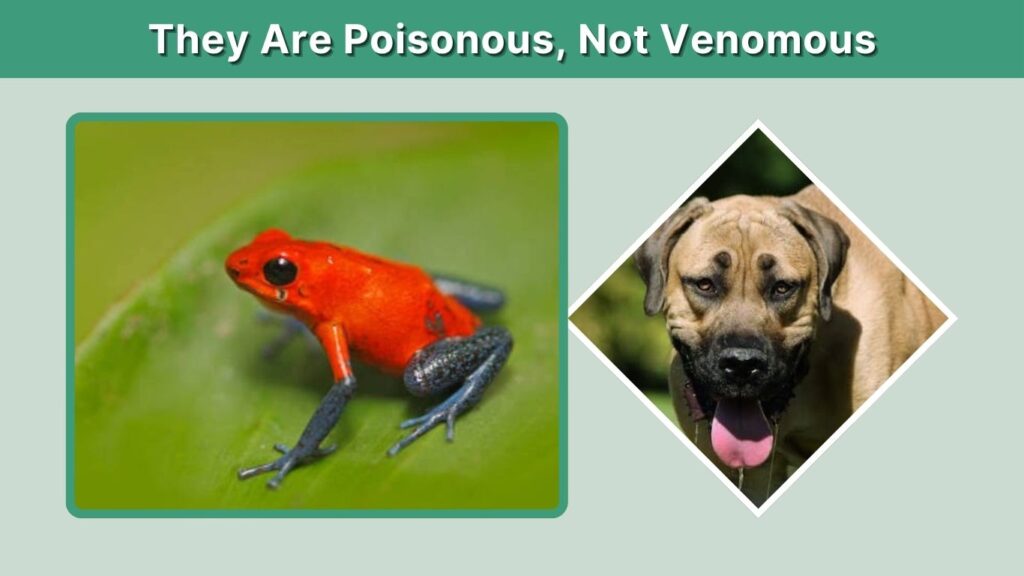
Poison and venom are delivered in different ways. A venomous animal actively injects toxins through structures such as fangs or stingers. A poisonous animal causes exposure when its defensive chemicals are touched, absorbed, or consumed.
Poison frogs do not have fangs or venom-injecting spines. Their alkaloids are stored within glands in the skin, where they discourage predators from biting or swallowing them.
8. Most Poison Frogs Are Surprisingly Small
Despite their powerful reputation, most poison frogs are only around 0.5–2.5 inches long. Males and females may differ in size depending on the species, with females often becoming slightly larger.
Their small bodies allow them to search narrow spaces among leaves and roots for ants, mites, and other tiny prey. Adhesive toe pads help some species climb wet vegetation and access bromeliads or tree cavities.
9. Many Are Active During Daylight
Numerous poison frogs are diurnal, meaning they are most active during the day. Daylight helps their warning colors remain visible to predators and allows them to locate tiny moving prey.
Males may call from exposed positions to attract females and defend territories. Their calls include buzzes, whistles, trills, or chirps, depending on the species. Most become quiet and shelter among leaves when darkness arrives.
10. Parents Carry Tadpoles on Their Backs
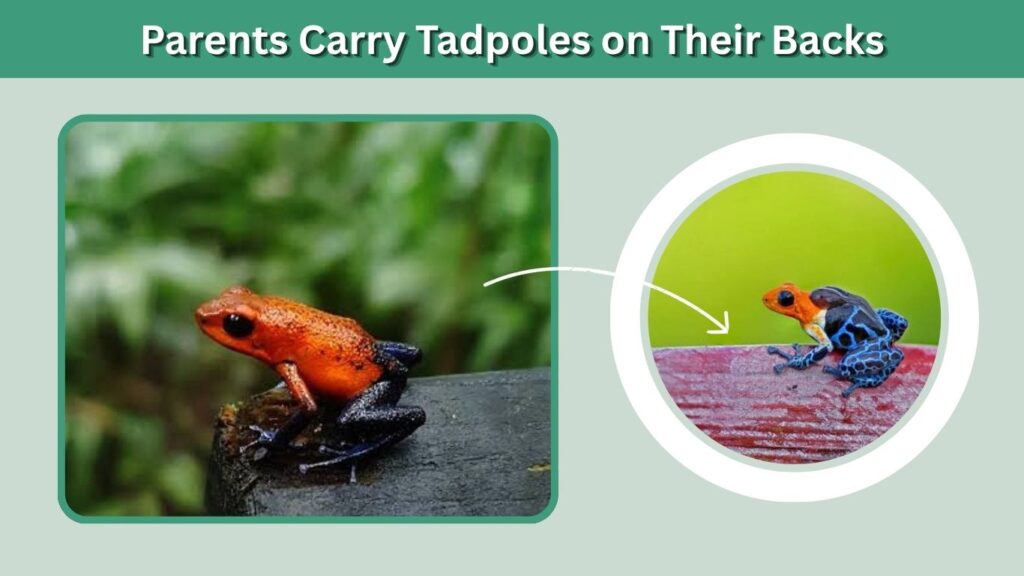
Parental care is one of the most remarkable poison frog behaviors. Eggs are commonly deposited on moist leaves, in leaf litter, or inside protected plant cavities rather than being laid directly in a pond.
One parent guards or moistens the developing clutch. After hatching, the tadpoles climb onto the adult’s back and are carried to a small pool, stream margin, bromeliad, or water-filled tree cavity.
11. Some Mothers Feed Tadpoles Unfertilized Eggs
Female strawberry poison frogs and several related species return regularly to water-filled plants containing their tadpoles. They deposit unfertilized eggs that serve as specialized food.
The genus name Oophaga reflects this behavior and means “egg eater.” The tadpoles may depend heavily or entirely on these meals until metamorphosis. This demanding reproductive strategy requires mothers to remember and repeatedly visit multiple nursery sites scattered through the forest.
12. Not Every Species Is Equally Poisonous or Endangered
Toxicity varies greatly. Some species possess powerful chemical defenses, others carry modest concentrations, and certain relatives have little or no measurable toxicity.
Conservation status also differs. Habitat destruction, agricultural expansion, pollution, climate change, chytrid fungus, and illegal collection threaten numerous populations. Species with tiny geographic ranges are particularly vulnerable because one damaged forest area can represent a large portion of their total habitat.
Purchasing only documented captive-bred frogs helps reduce pressure on wild populations.
Why Are They Called Poison Arrow Frogs?
The names poison arrow frog and poison dart frog are linked to Indigenous hunting practices in western Colombia. Secretions from a small number of highly toxic Phyllobates species were traditionally applied to hunting darts.
The Name Can Be Misleading
Most poison frog species were not used to prepare darts or arrows. The familiar name was eventually applied broadly to many related frogs, including species with relatively weak chemical defenses.
“Poison frog” is therefore the most accurate general term, while “poison dart frog” remains the best-known popular name.
Poison Frog Diet and Feeding Behavior
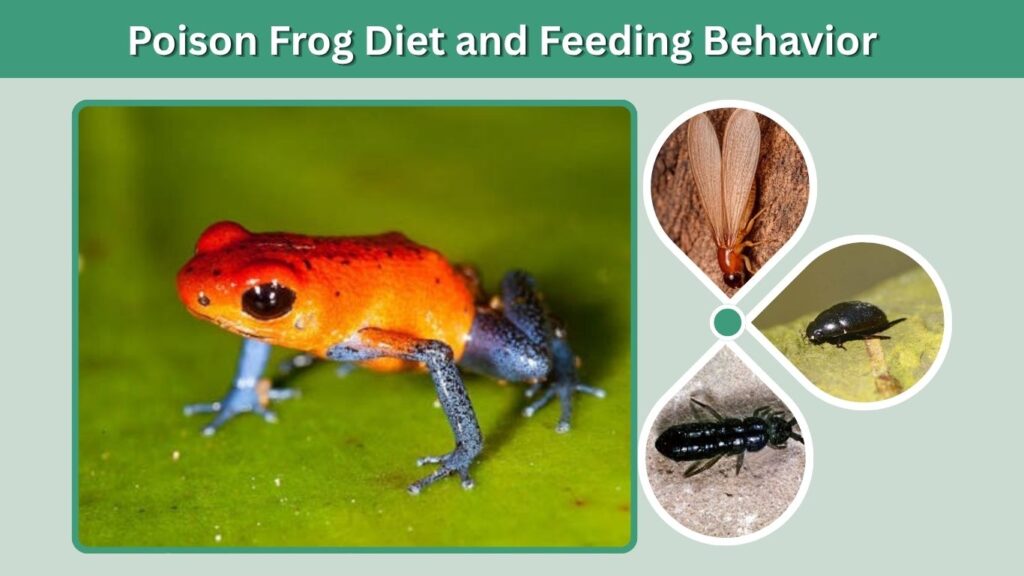
Wild adults consume numerous tiny arthropods throughout the day. Their diet supports both nutrition and chemical defense.
Common Wild Foods
- Ants
- Oribatid mites
- Termites
- Tiny beetles
- Springtails
- Small flies
- Insect larvae
- Other minute arthropods
The frog rapidly extends its sticky tongue to capture prey. Some species actively search through leaf litter, while others wait for a moving insect to approach.
Captive frogs require small live food, proper gut-loading, and carefully scheduled vitamin and calcium supplementation.
Poison Frog Predators
Warning colors and skin alkaloids discourage many predators but do not make poison frogs invulnerable.
Potential Predators
- Alkaloid-resistant snakes
- Birds
- Spiders
- Large insects
- Other frogs
- Fish that consume tadpoles
- Aquatic insect larvae
Eggs and tadpoles are often less chemically protected than adults. Parents reduce losses by hiding eggs, guarding clutches, and transporting larvae to small, isolated pools.
FAQs
Are poison tree frogs deadly to humans?
Some wild species carry extremely dangerous alkaloids, but toxicity varies considerably. Captive-bred frogs normally lack the natural diet required to develop powerful chemical defenses.
Can you touch a poison dart frog?
Wild poison frogs should never be touched. Captive frogs should also be handled only when necessary, using clean, damp, powder-free gloves to protect both the person and the frog.
What is the most poisonous frog?
The golden poison frog, Phyllobates terribilis, is generally recognized as the most toxic known frog.
Do poison frogs make their own poison?
They obtain many important alkaloids from wild arthropods and store or modify them inside their bodies. Captive diets generally do not contain these compounds.
Are poison frogs good pets?
Captive-bred species can be rewarding display animals for experienced keepers. They require a humid planted enclosure, tiny live prey, supplementation, clean water, and careful temperature control.
