
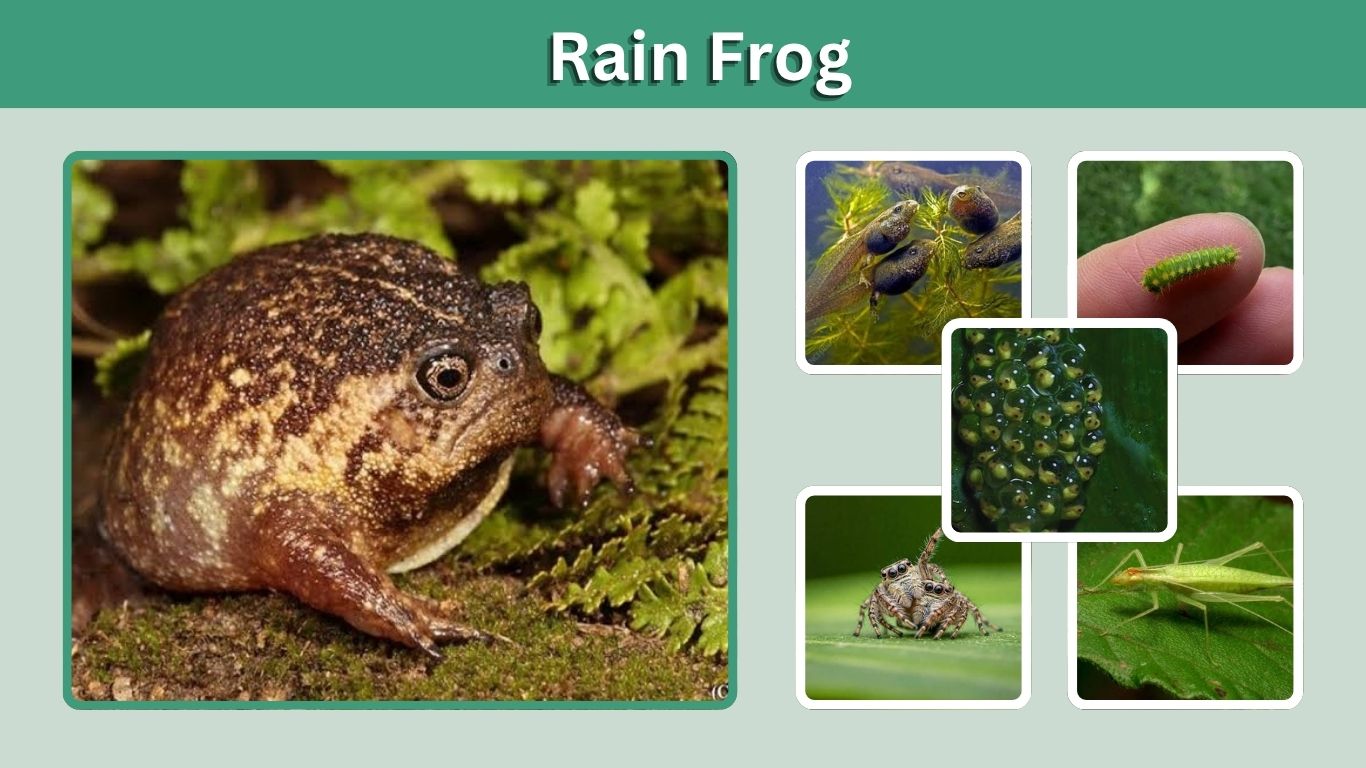
The rain frog is a small, round-bodied burrowing frog best known for its short legs, grumpy-looking face, and surprisingly loud squeaks. Most true rain frogs belong to the genus Breviceps and occur in southern and eastern Africa. Famous species include the desert rain frog, black rain frog, common rain frog, and giant rain frog. Unlike many frogs, rain frogs spend much of their lives underground and do not depend on ponds for tadpoles. Their unusual appearance, calls, and secretive lifestyle have also made them popular online.
What Is a Rain Frog?
Rain frogs are primarily frogs of the genus Breviceps in the family Brevicipitidae. More than 20 species are currently recognized, including desert, black, common, Namaqua, Mozambique, forest, and giant rain frogs. They share a compact body design suited to life on or beneath the ground.
Rain Frog Quick Facts
- Genus: Breviceps
- Family: Brevicipitidae
- Order: Anura
- Distribution: Mainly southern and eastern Africa
- Body shape: Short, rounded, and compact
- Limbs: Short and adapted more for walking and digging than long jumps
- Lifestyle: Mostly terrestrial and burrowing
- Diet: Small invertebrates
- Activity: Often nocturnal
- Reproduction: Eggs generally develop underground
- Tadpole stage: No free-swimming tadpole in typical Breviceps
- Defense: Inflation, squeaking, and remaining hidden underground
Why Are They Called Rain Frogs?
Many rain frogs become noticeably more active when moisture conditions improve. Rain can soften dry soil, increase humidity, and bring insects to the surface, allowing frogs to leave their underground shelters more safely.
Males may also call during favorable wet conditions, which is why people often hear these otherwise secretive frogs following rainfall.
Different Types of Rain Frogs
“Rain frog” does not refer to only one animal. Several Breviceps species have dramatically different colors and habitats, ranging from coastal dunes to mountain forests. The keyword is especially associated with the desert and black rain frogs, but numerous less-famous species share the same burrowing body plan.
Desert Rain Frog
The desert rain frog (Breviceps macrops) is perhaps the most famous species because of its round body and high-pitched defensive squeak.
It has:
- Pale cream to yellow-brown coloration
- Dark mottling across the back
- Large-looking eyes
- Extremely short legs
- Rounded, inflated appearance
- Adaptations for digging into loose coastal sand
It occurs along the Namaqualand coast of South Africa north toward Lüderitz in Namibia. It is fossorial, spending much of its time buried in coastal sand dunes rather than living beside ponds.
The desert rain frog was reassessed as Vulnerable on the IUCN Red List in 2026, with habitat degradation associated particularly with mining and other coastal development contributing to its decline.
Black Rain Frog
The black rain frog (Breviceps fuscus) has dark brown to almost black skin and a particularly round, stocky body.
Adults are approximately 40–51 mm long. The species is endemic to South Africa and occurs mainly on forested slopes and plateaus of the southern Cape Fold Mountains.
Its naturally downturned mouth gives it the famous “angry frog” expression seen in many photographs.
Other Rain Frog Species
Other members of the group include:
- Common rain frog – Breviceps adspersus
- Giant rain frog – Breviceps gibbosus
- Mozambique rain frog – Breviceps mossambicus
- Namaqua rain frog – Breviceps namaquensis
- Forest rain frog – Breviceps sylvestris
- Bushveld-associated rain frogs
- Strawberry rain frog – Breviceps acutirostris
- Mountain rain frog – Breviceps montanus
Each has its own distribution and habitat requirements, so information about one rain frog should not automatically be applied to every species.
Rain Frog Habitat and Adaptations
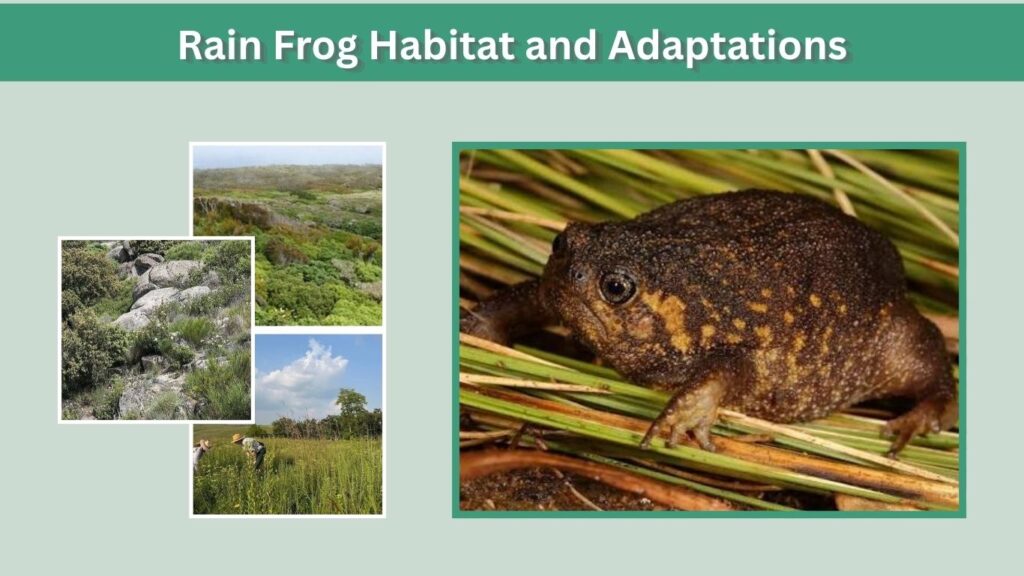
Rain frogs are unusual amphibians because many spend remarkably little time around open water. Their bodies are designed for a terrestrial, underground lifestyle. Depending on the species, they inhabit coastal dunes, grasslands, shrublands, forests, mountain slopes, and other habitats where loose soil allows them to dig.
Important Adaptations
Rain frogs have several useful adaptations:
- Compact body: Fits easily into underground chambers.
- Short powerful limbs: Help move soil during burrowing.
- Rounded shape: Reduces exposed surface area while hiding.
- No need for breeding ponds: Eggs can develop on land.
- No free-living tadpoles: Young emerge as tiny froglets.
- Nocturnal habits: Reduce moisture loss during hot conditions.
- Inflation defense: A threatened frog may puff itself up.
- Loud call: Allows individuals to communicate while hidden.
The desert rain frog is particularly specialized for sandy coastal environments, while the black rain frog inhabits forest and shrubland environments farther inland.
What Do Rain Frogs Eat?
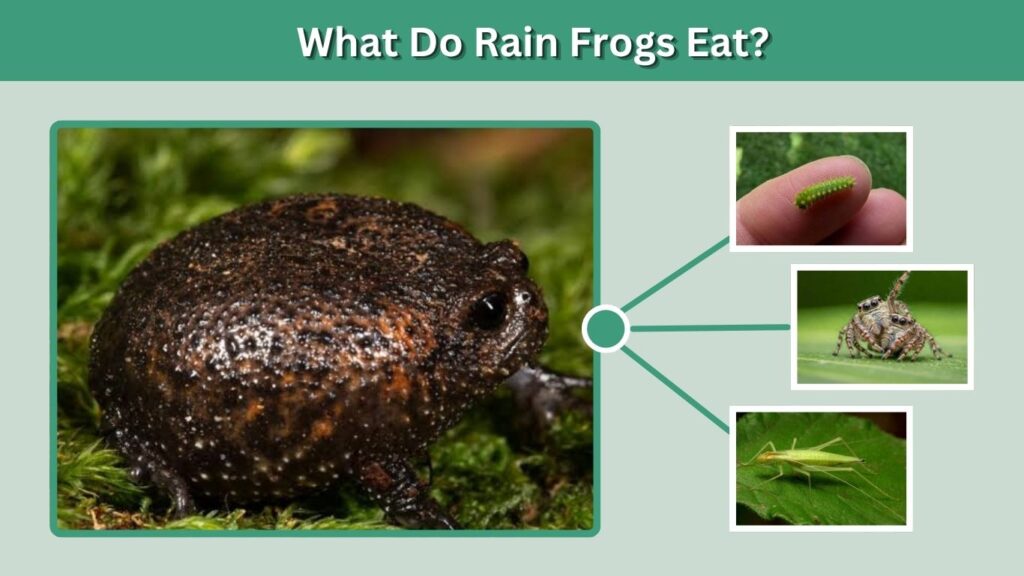
Rain frogs are small predators that mainly hunt invertebrates. Their diet varies depending on species, body size, and what prey is available in their particular habitat.
Typical Rain Frog Food
They may consume:
- Ants
- Termites
- Small beetles
- Insect larvae
- Tiny crickets
- Spiders
- Small worms
- Other ground-dwelling invertebrates
They usually emerge after dark when conditions are cooler and more humid. Rainy conditions can also increase the number of active insects, creating excellent feeding opportunities.
Because of their small mouths, rain frogs generally focus on relatively tiny prey rather than large insects.
Rain Frog Sounds and Behavior
One of the most memorable things about rain frogs is the contrast between their tiny size and surprisingly powerful voice. Different species produce different calls, including chirps, squeaks, whistles, and short repeated notes.
Why Do Rain Frogs Squeak?
A rain frog may vocalize for two main reasons.
Males call during the breeding season to attract females and communicate with other frogs. Some species can even call from burrows, allowing their voices to travel while they remain protected underground.
A frightened rain frog can also make a sharp defensive squeak when handled or approached by a predator.
Black rain frog males, for example, have been documented calling both from burrows and above-ground vegetation.
Why Do Rain Frogs Look Angry?
They are not permanently angry.
Their distinctive facial expression results mainly from anatomy. The short snout, rounded body, small mouth, and natural mouth angle can make them look grumpy even when completely relaxed.
This appearance—along with their round rear end—explains why searches and memes involving the “rain frog butt” or angry rain frog have become so popular.
Rain Frog Life Cycle
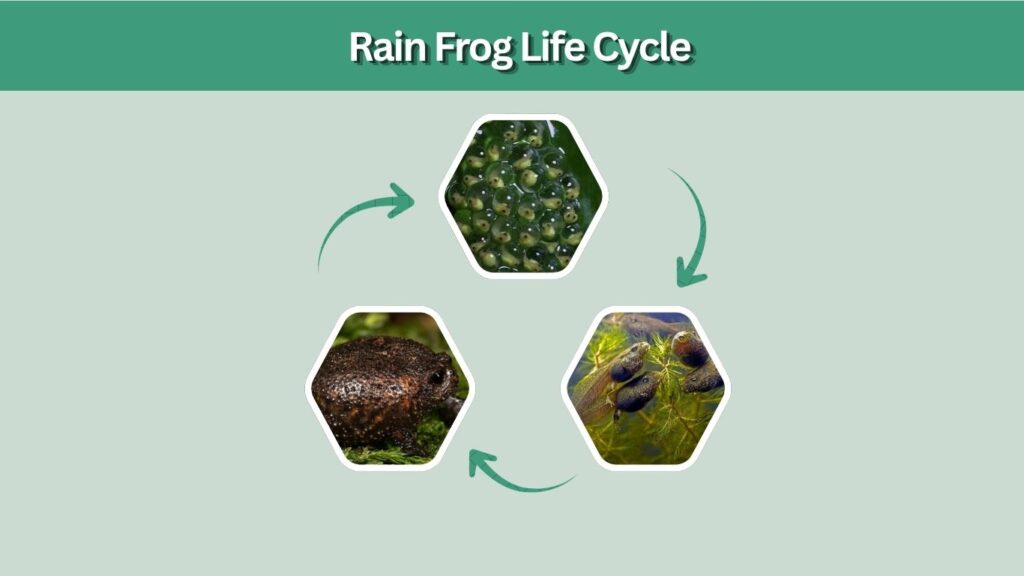
Rain frogs have one of the most interesting reproductive strategies among frogs. Instead of laying eggs in a pond and producing swimming tadpoles, typical Breviceps species reproduce on land. This adaptation allows them to survive in places where permanent surface water may be unavailable.
Eggs and Froglets
The basic life cycle includes:
- Males begin calling when environmental conditions favor breeding.
- A male and female mate on land.
- Eggs are deposited in a protected underground chamber.
- Embryos develop inside the eggs.
- Development bypasses the free-swimming tadpole phase.
- Tiny, fully formed froglets eventually emerge.
This process is known as direct development.
Black rain frogs, for example, deposit eggs inside burrows, and their young emerge as miniature froglets rather than aquatic tadpoles.
Why Direct Development Matters
Direct development is particularly useful for burrowing frogs because they are not tied to permanent ponds.
It allows rain frogs to occupy grasslands, forests, shrublands, and even very dry coastal environments that would be unsuitable for many pond-breeding amphibians.
Can You Keep a Rain Frog as a Pet?
Online searches frequently focus on rain frog pets and desert rain frogs for sale. However, these frogs are not ideal beginner pets.
Their underground lifestyle creates specialized requirements involving substrate depth, humidity, temperature, ventilation, and appropriate tiny prey. Many species also spend much of their time buried, so an owner may rarely see the animal.
Wild collection is another major concern. This is especially important for the desert rain frog because its wild population is declining and the species is now classified as Vulnerable.
Anyone considering an African rain frog should verify the exact species, local wildlife laws, and whether the animal is legally captive-bred rather than taken from the wild.
Does It Really Rain Frogs?
A rain frog is not connected to reports of frogs falling from the sky.
“Raining frogs” describes a rare weather phenomenon in which small animals may apparently fall during or after severe storms. The most widely proposed explanation involves powerful waterspouts or storm-related winds lifting small aquatic animals before dropping them elsewhere.
Rain frogs, by contrast, are simply a group of terrestrial African amphibians whose name is associated with their activity during wet conditions. The two subjects should not be confused.
FAQs
What is the most famous rain frog?
The desert rain frog (Breviceps macrops) is probably the best known because of its extremely round appearance and distinctive squeaking sound.
Where do rain frogs live?
Most true Breviceps rain frogs occur in southern and eastern Africa. Different species inhabit coastal dunes, forests, grasslands, shrublands, and mountainous areas.
Do rain frogs need water?
They need moisture like other amphibians, but many species do not need ponds for reproduction. They lay eggs on land, and the young develop directly into froglets.
Why do rain frogs scream?
Their high-pitched calls can be used for communication and mating. A frightened rain frog may also squeak as a defensive response.
Are desert rain frogs endangered?
The desert rain frog is currently classified as Vulnerable by the IUCN. Its restricted coastal habitat is declining in quality and extent because of pressures including mining and development.
