
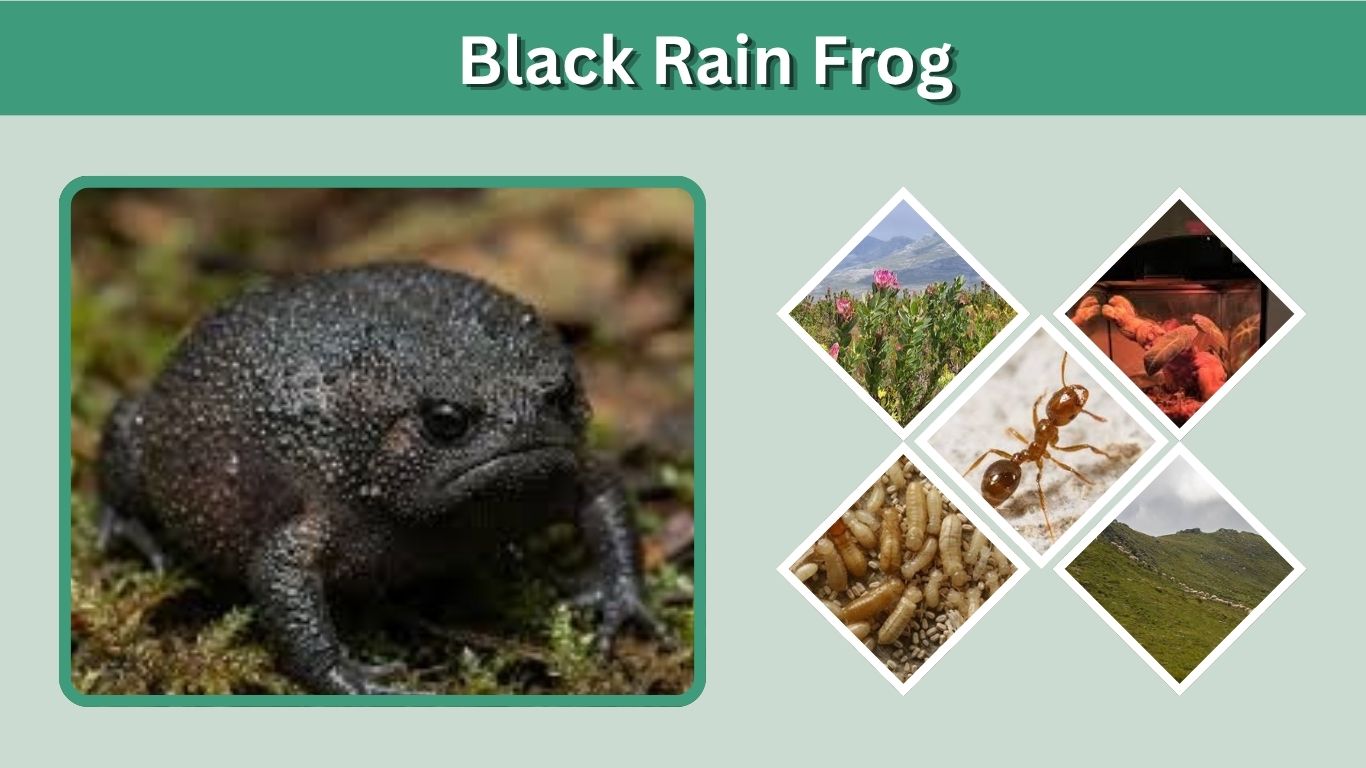
The black rain frog (Breviceps fuscus) is a small, round, dark-colored frog native to South Africa. Famous online for its permanently grumpy-looking face, plump body, and squeaking calls, this unusual amphibian spends much of its life underground. Unlike many frogs, it does not depend on ponds for reproduction, and its young develop directly into tiny froglets rather than free-swimming tadpoles. Black rain frogs are specialized burrowers found mainly in forests, fynbos, and mountainous habitats along South Africa’s southern Cape region.
What Is a Black Rain Frog?
The black rain frog is a true rain frog in the family Brevicipitidae. Its accepted scientific name is Breviceps fuscus, although it has also been called the plain rain frog and brown short-headed frog. The species was scientifically described in 1925 and is endemic to South Africa, meaning it occurs naturally nowhere else.
Black Rain Frog Quick Facts
- Scientific name: Breviceps fuscus
- Family: Brevicipitidae
- Order: Anura
- Color: Dark brown to nearly black
- Size: About 40–51 mm long
- Native country: South Africa
- Habitat: Forests, forest margins, fynbos, and mountains
- Lifestyle: Terrestrial and burrowing
- Diet: Small terrestrial invertebrates
- Activity: Mostly secretive and often nocturnal
- Reproduction: Underground eggs with direct development
- Conservation status: Least Concern
The species occurs on forested slopes and plateaus of the southern Cape Fold Mountains.
Black Rain Frog Identification
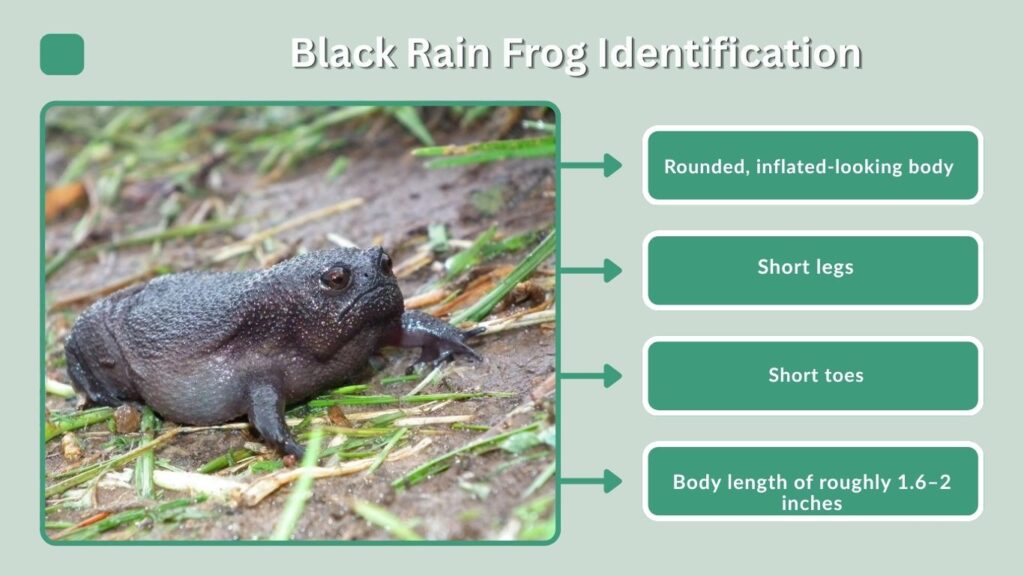
A black rain frog is quite different in appearance from the long-legged frogs commonly found around ponds. Its body is extremely compact, with short limbs, a broad head, and a rounded abdomen. Its naturally downturned mouth creates the expression that has made it famous as the “grumpy” or “angry” rain frog.
Identification Features
Look for:
- Dark brown, charcoal, or nearly black skin
- Rounded, inflated-looking body
- Short legs
- Short toes
- Small head relative to body width
- Rough or granular-looking skin
- Large dark eyes
- Downturned mouth
- Little visible neck
- Body length of roughly 1.6–2 inches
The dark coloration is one of the easiest ways to separate B. fuscus from paler species such as the desert rain frog.
How Big Is a Black Rain Frog?
Adults generally reach around 40–51 mm, or approximately 1.6–2 inches, from the tip of the snout to the rear of the body.
Their extremely rounded shape can make them appear larger than their actual measurements, particularly when they inflate themselves defensively.
Where Do Black Rain Frogs Live?
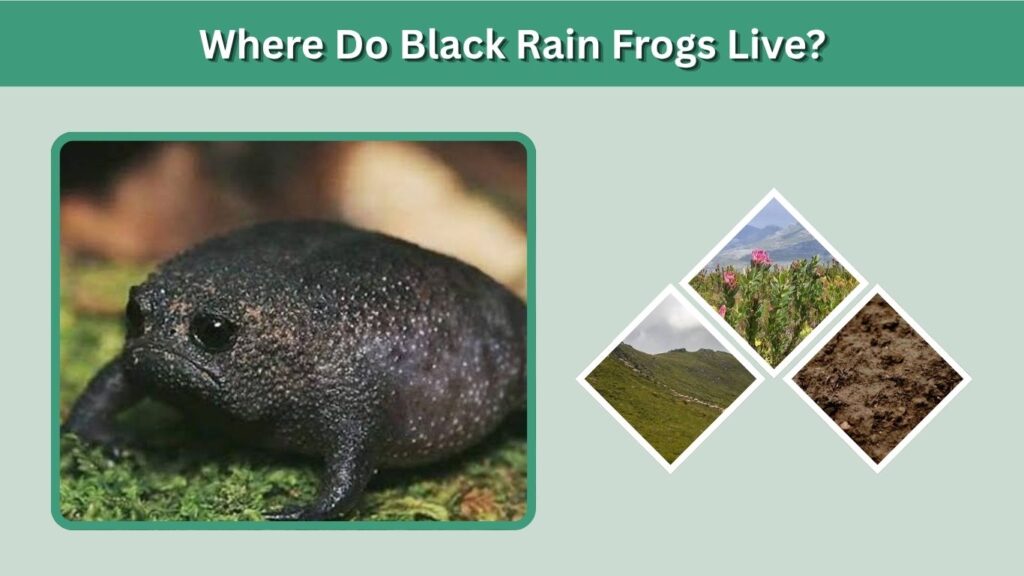
Black rain frogs have a relatively restricted natural distribution. They are endemic to the southern Cape Fold Mountains of South Africa, including portions of the Western and Eastern Cape. They occur from coastal areas to mountain habitats above 1,000 meters in elevation.
Black Rain Frog Habitat
Suitable environments include:
- Indigenous forests
- Forest margins
- Mountain slopes
- Fynbos vegetation
- Moist soil
- Areas beneath logs
- Leaf litter
- Shrubby mountain habitats
They are primarily fossorial, meaning they are adapted for spending much of their lives underground.
In forest habitat, individuals have been found in short vertical tunnels beneath logs. These burrows can connect with shallow horizontal tunnels used when the frogs move around underground.
Why Do Black Rain Frogs Burrow?
Burrowing provides protection against drying conditions, extreme temperatures, and predators. It also gives the frog a secure location for resting and reproduction.
When threatened inside a tunnel, a black rain frog can inflate its body. The expanded frog becomes difficult for a predator to pull from the narrow burrow.
What Do Black Rain Frogs Eat?
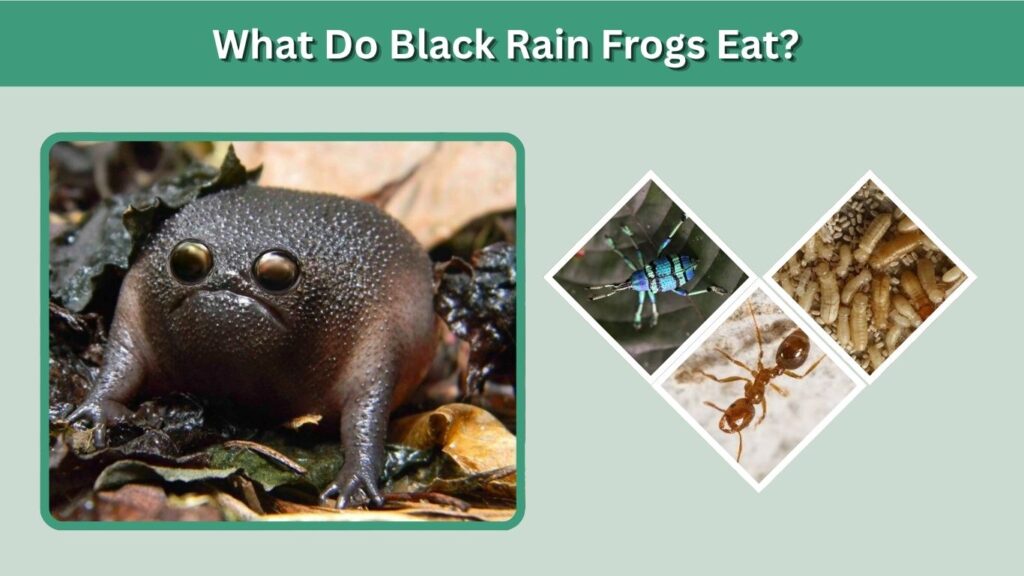
The black rain frog is a small terrestrial predator. Because it spends much of its time near or below the soil surface, its prey mainly consists of small invertebrates that can be found in leaf litter, vegetation, and soil.
Black Rain Frog Diet
Likely foods include:
- Small insects
- Ants
- Termites
- Beetles
- Insect larvae
- Small spiders
- Worms
- Other tiny soil invertebrates
Rather than chasing large prey over long distances, these frogs can emerge through their tunnel systems and feed on suitable animals they encounter nearby.
Their small mouth and compact body mean appropriately sized invertebrates form the majority of their diet.
Black Rain Frog Sound and Behavior
Black rain frogs are difficult to notice visually because they spend so much time hidden. Their calls are therefore often more noticeable than the frogs themselves, particularly during breeding periods after favorable weather.
What Does a Black Rain Frog Sound Like?
Males produce short, high-pitched calls that may be described as:
- Chirping
- Squeaking
- Squealing
- Short whistles
- Repetitive calls
Males begin forming large choruses during the breeding season and may call for several days during rainy conditions. They can call from shallow burrows or climb vegetation and call from above the ground.
Why Do Black Rain Frogs Scream?
Videos sometimes describe their vocalizations as “screams,” but these sounds are generally calls or defensive vocalizations rather than evidence that the frog is angry.
Rain frogs may vocalize when disturbed, while males also call naturally to advertise themselves during reproduction.
Their small size combined with an unexpectedly loud voice helps explain why these sounds have become popular online.
Why Does It Look Angry or Sad?
The black rain frog is neither permanently angry nor sad.
Its famous expression comes from its facial anatomy. The mouth naturally curves downward, while the short head, round body, and closely positioned eyes reinforce the appearance of a frown.
This has resulted in nicknames comparing the frog with an angry avocado.
Black Rain Frog Adaptations
Almost every part of this frog’s unusual body reflects its underground lifestyle. Unlike tree frogs, which need gripping toes, or aquatic frogs with strong swimming legs, black rain frogs are built primarily for digging and moving through soil.
Important Adaptations
- Short limbs: Useful for digging and underground movement.
- Rounded body: Fits securely within burrows.
- Body inflation: Helps wedge the frog inside tunnels when threatened.
- Dark coloration: Blends with soil and shaded forest environments.
- Direct development: Eliminates the need for a pond containing tadpoles.
- Terrestrial reproduction: Allows breeding away from permanent surface water.
- Powerful vocalizations: Help frogs communicate despite their hidden lifestyle.
These adaptations allow black rain frogs to occupy environments very differently from typical pond-breeding frogs.
Black Rain Frog Life Cycle and Reproduction
Black rain frogs have a particularly unusual reproductive strategy. They do not follow the familiar frog sequence of eggs in a pond, aquatic tadpoles, and then froglets. Instead, reproduction takes place underground and development occurs within the eggs.
Mating and Eggs
Male rain frogs are much smaller than females, which creates a challenge during mating. Members of this group use close physical attachment during amplexus.
The female eventually lays eggs inside an underground chamber.
Research describing B. fuscus reported clutches of 42 and 43 eggs, with eggs approximately 5 mm in diameter and surrounded by larger capsules. Egg chambers have been reported roughly 30–40 cm underground.
Do Black Rain Frogs Have Tadpoles?
They do not have a normal free-swimming tadpole stage.
Embryonic development occurs within the protected eggs. Once development is complete, miniature frogs emerge.
This process is called direct development and means the species does not require an open pond for its young to complete metamorphosis.
Male black rain frogs have also been reported remaining with underground egg clutches, suggesting a form of parental care.
Are Black Rain Frogs Poisonous?
Black rain frogs are not known as highly toxic frogs comparable to poison dart frogs. Their primary defenses involve remaining underground, inflating the body, camouflage, and defensive vocalization rather than dangerous venom.
Wild amphibians should still be handled as little as possible. Their skin is sensitive to oils, chemicals, soaps, and other substances on human hands.
They should also never be touched simply to make them inflate or produce the squeaking behavior seen in online videos.
Can You Keep a Black Rain Frog as a Pet?
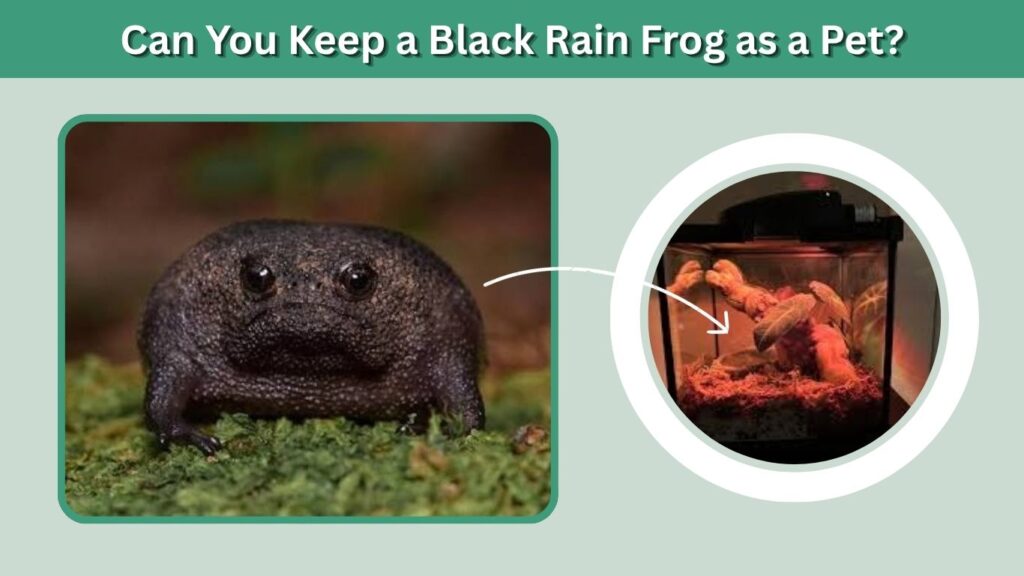
Searches for black rain frogs for sale are common, but Breviceps fuscus is not a typical pet frog.
Its burrowing lifestyle and specialized natural habitat make appropriate long-term husbandry much more complicated than simply providing a small terrarium.
Why They Are Difficult Pets
Potential challenges include:
- Specialized moisture requirements
- Need for deep burrowing substrate
- Sensitivity to inappropriate temperatures
- Secretive underground lifestyle
- Limited established captive-care information
- Difficulty sourcing legally captive-bred animals
- Species-specific nutritional requirements
- Stress caused by frequent handling
A black rain frog may also remain underground for long periods, making it poorly suited to someone looking for a highly visible display animal.
Wild-caught frogs should not be purchased simply because the species has become popular through memes and social media.
Black Rain Frog Predators and Conservation
Although the frog spends much of its life underground, it still has natural predators. One documented predator is the bushpig, with black rain frogs having been found among its stomach contents.
Other potential predators can include animals capable of locating or excavating small frogs from soil and leaf litter.
Are Black Rain Frogs Endangered?
The black rain frog is currently categorized as Least Concern, rather than endangered. Its geographic range is restricted to South Africa, however, making preservation of suitable forest, fynbos, and mountain habitat important.
FAQs
What is the scientific name of the black rain frog?
The scientific name is Breviceps fuscus. It belongs to the African rain frog family Brevicipitidae.
Where do black rain frogs live?
They are endemic to South Africa and occur mainly along the southern Cape Fold Mountains in forest, forest margins, fynbos, and suitable mountain habitats.
What do black rain frogs eat?
They primarily eat small invertebrates such as insects, insect larvae, spiders, worms, and other tiny animals encountered around soil and leaf litter.
Why do black rain frogs squeak?
Males use calls during breeding, while rain frogs can also produce vocalizations when disturbed. Their small bodies can produce surprisingly loud sounds.
Can you have a black rain frog as a pet?
They are not typical beginner pets. Their burrowing behavior, specialized habitat requirements, limited captive-care information, and concerns surrounding the origin of animals in trade make them much more challenging than commonly kept captive-bred frogs.
