
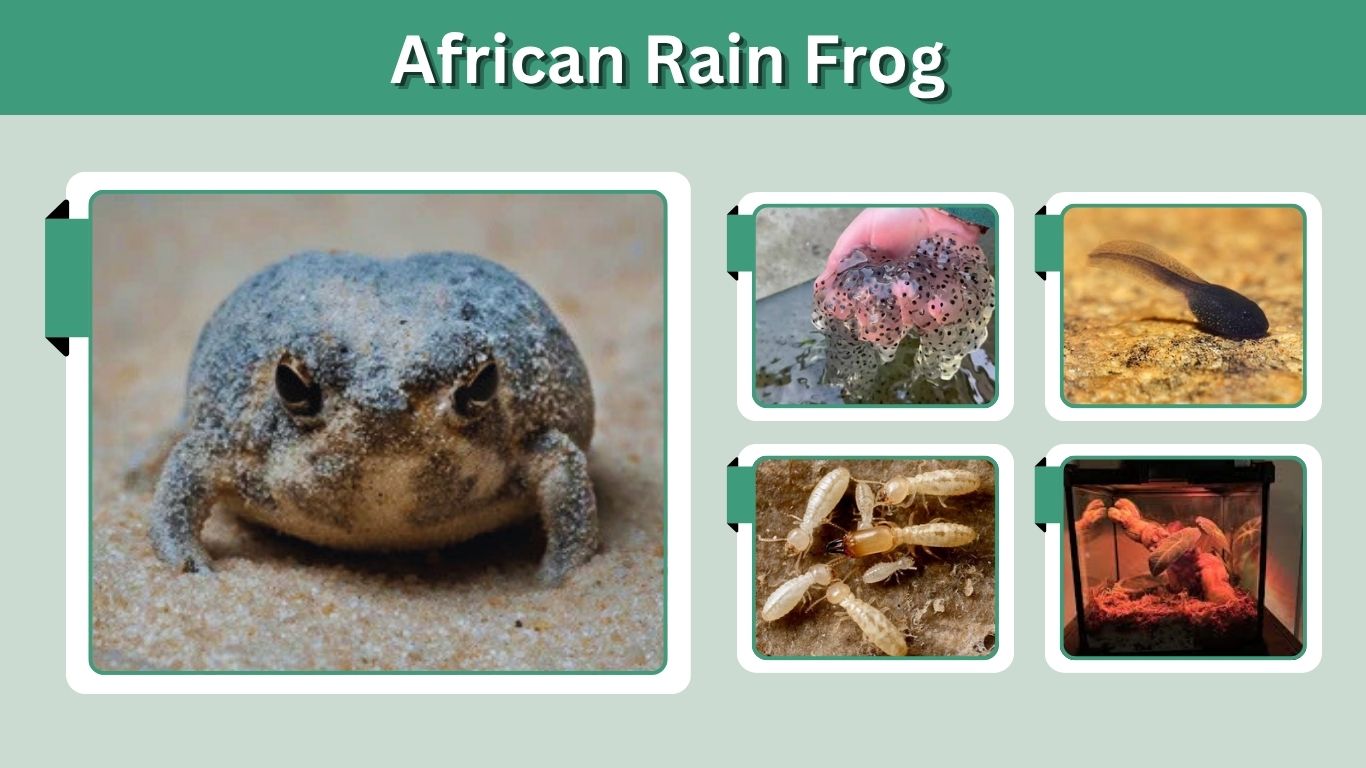
African rain frogs are small, round-bodied amphibians famous for their short legs, grumpy expressions, and surprisingly loud squeaks. The name commonly refers to species in the genus Breviceps, including the desert rain frog (Breviceps macrops) and black rain frog (Breviceps fuscus). Most spend much of their lives underground and emerge during suitable damp conditions to feed and breed. Unlike many familiar frogs, rain frogs are poor jumpers and do not depend on ponds for reproduction. Here is what makes these unusual African frogs so fascinating.
What Is an African Rain Frog?
“African rain frog” is not the scientific name of one individual species. Instead, it is commonly used for several closely related Breviceps frogs native mainly to southern and eastern Africa. These frogs are highly adapted to terrestrial and underground life and have compact bodies, tiny limbs, and specialized feet that help them burrow.
African Rain Frog Identification
Typical rain frog characteristics include:
- Round or almost spherical body
- Very short legs
- Small head and mouth
- Prominent eyes
- Granular or bumpy skin
- Short toes adapted for digging
- Limited ability to jump
- Habit of burrowing backward
- Loud squeaks or chirps when disturbed
Many species walk rather than hop. Their unusual proportions are adaptations for spending much of their lives in soil rather than swimming in ponds.
Why Do Rain Frogs Look Grumpy?
The famous “angry” or “sad” expression comes mainly from their anatomy. Their short snout and naturally downturned mouth create what looks like a permanent frown.
The black rain frog is especially famous online for this appearance. It has a dark, rounded body and downturned mouth that has inspired countless memes, but its expression does not indicate that the animal is actually angry. WWF describes the species as a fossorial, nocturnal frog about 1.5–2 inches long.
Types of African Rain Frogs
Several Breviceps species are informally called African rain frogs. Although they share a round shape and burrowing lifestyle, their colors, habitats, and geographic ranges can be very different. Two species dominate online searches: the desert rain frog and black rain frog.
Desert Rain Frog
The desert rain frog (Breviceps macrops) lives along the coastal Namaqualand region of South Africa and southwestern Namibia.
It has:
- Pale cream to yellowish coloration
- Brown mottling across the back
- Large prominent eyes
- Short, broad feet
- An extremely rounded body
- Strong adaptations for burrowing in sand
It inhabits coastal dunes rather than lush rainforest.
The species is currently listed as Vulnerable. In 2026, IUCN reported that its status had worsened from Near Threatened to Vulnerable, with habitat degradation associated particularly with diamond mining and other land-use pressures.
Black African Rain Frog
The black rain frog (Breviceps fuscus) is dark brown to nearly black and has a bumpy, rounded body.
Important characteristics include:
- Dark brown or black skin
- Short legs
- Approximately 1.5–2 inches in length
- Strong burrowing ability
- Mainly nocturnal behavior
- Small-insect diet
Unlike the desert species, black rain frogs occur in the Cape Fold Mountains of South Africa, including forest and fynbos habitats.
African Rain Frog Habitat and Distribution
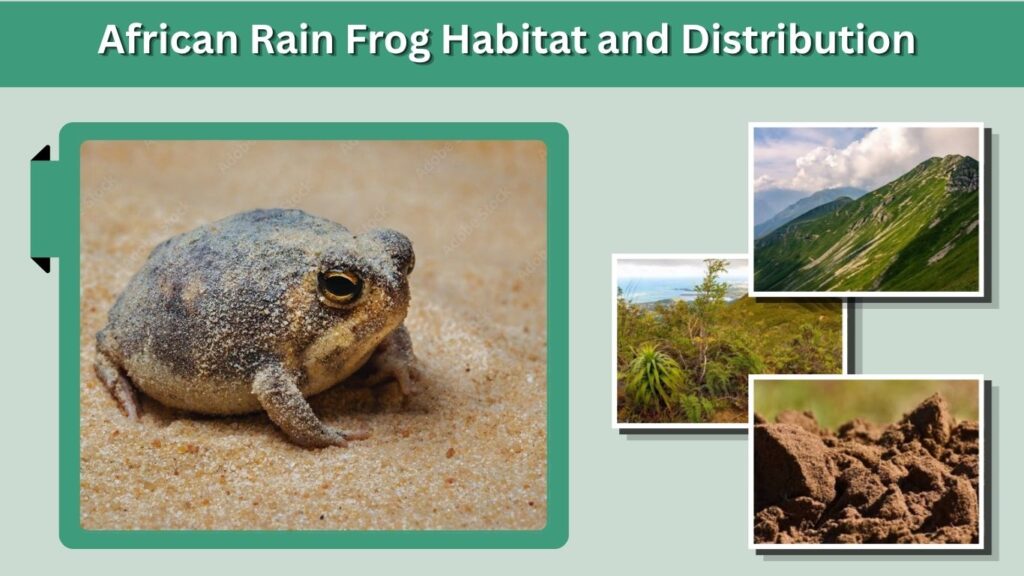
Rain frogs are strongly associated with the ground. Rather than spending their lives beside ponds, many remain underground for extended periods. Moist soil protects their sensitive skin from dehydration while also providing shelter from predators and extreme temperatures.
Where Do African Rain Frogs Live?
Depending on species, rain frogs may inhabit:
- Coastal sand dunes
- Fynbos
- Grasslands
- Forest margins
- Mountain slopes
- Sandy soils
- Shrubland
- Moist underground burrows
Black rain frogs are endemic to a restricted part of South Africa’s Cape Fold Mountains. They spend much of their lives underground and absorb moisture from the surrounding environment.
Desert rain frogs have a very different habitat, occurring along the arid coastal strip of southwestern Africa where fog and moist sand help them survive.
Why Are They Called Rain Frogs?
Rain stimulates activity in many species. Frogs may emerge from underground to feed, call, and reproduce when environmental moisture increases.
This behavior explains why someone might rarely see one for months and then suddenly hear or encounter rain frogs after wet weather.
What Do African Rain Frogs Eat?
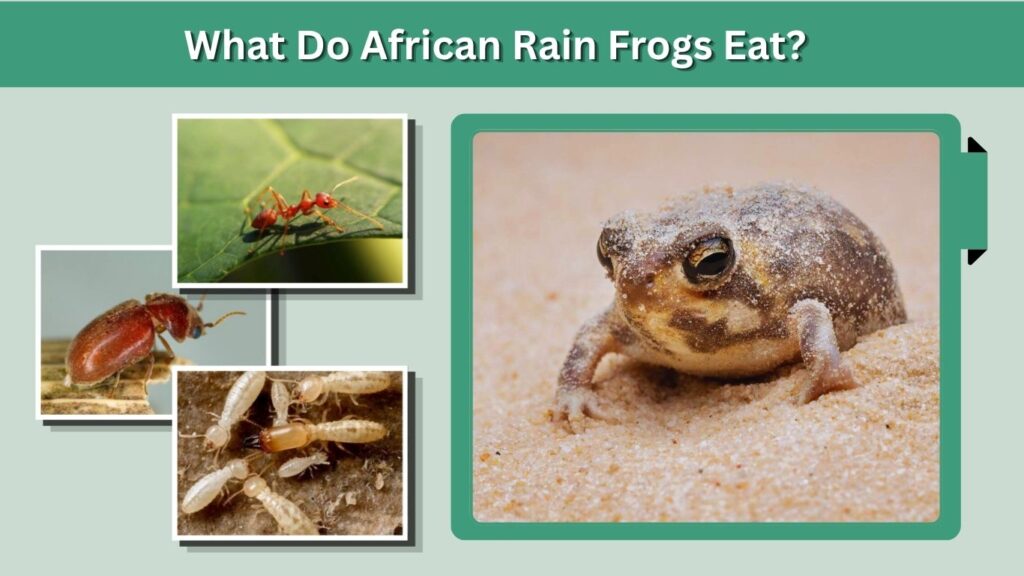
African rain frogs are primarily insectivorous. Their small mouths suit relatively tiny prey, and they usually hunt close to the ground. Because they often emerge at night, many of their meals consist of small invertebrates active on or within soil and leaf litter.
African Rain Frog Diet
Depending on species, prey can include:
- Ants
- Termites
- Small beetles
- Insect larvae
- Tiny moths
- Small spiders
- Worms
- Woodlice
- Other small soil invertebrates
The black rain frog is specifically described as feeding on small insects.
Rain frogs are not herbivores and should not be expected to survive on fruit or vegetables.
Why Do African Rain Frogs Squeak?
The desert rain frog became an internet sensation largely because of its surprisingly high-pitched defensive call. When disturbed, a rain frog may inflate its body and produce a loud squeak, chirp, or shrill call that seems much larger than the animal itself.
What Does the Sound Mean?
Squeaking can serve as a defensive response. A frightened frog may:
- Inflate its body
- Raise itself from the ground
- Produce a high-pitched squeak
- Attempt to retreat underground
- Make itself harder for a predator to swallow
Males also produce calls related to breeding.
Rain frog sounds therefore are not simply expressions of anger. Depending on circumstances, they can function in defense or communication.
African Rain Frog Life Cycle
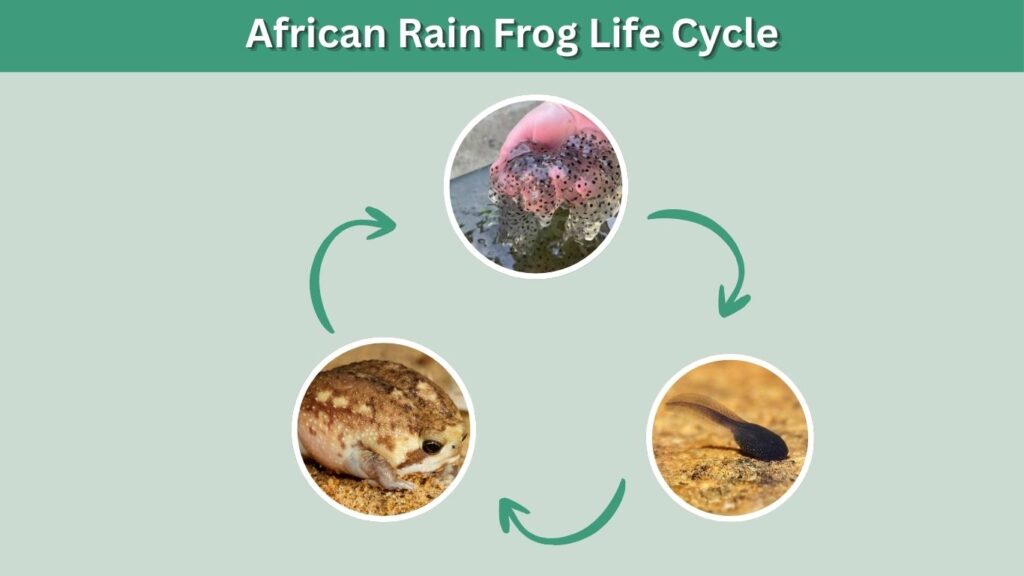
Rain frogs have one of the most interesting reproductive systems among frogs. Unlike familiar pond frogs, members of Breviceps do not need a free-swimming tadpole stage. Their breeding strategy is closely connected to their terrestrial, burrowing lifestyle.
Mating and Eggs
Females are generally considerably larger than males. In some Breviceps species, the size difference makes ordinary mating embraces difficult.
Sticky skin secretions help keep the male attached to the female during mating. Eggs are then deposited underground in protected chambers.
Do African Rain Frogs Have Tadpoles?
Not in the familiar free-swimming sense.
Rain frogs exhibit direct development. Their embryos develop inside the egg and eventually emerge as tiny froglets instead of entering a pond as swimming tadpoles.
For example, South Africa’s Cape rain frog lays eggs underground, and the young develop into froglets without passing through an aquatic tadpole stage.
This adaptation allows rain frogs to reproduce far from permanent bodies of water.
Are African Rain Frogs Poisonous?
African rain frogs are not generally known as dangerously poisonous frogs. Their primary defenses involve hiding underground, inflating their bodies, and producing defensive calls rather than relying on potent toxins.
Are They Dangerous to People?
Rain frogs are not considered dangerous to humans.
However, it is still best not to handle wild frogs unnecessarily. Amphibian skin is highly permeable and sensitive to oils, chemicals, soaps, lotions, and other substances on human hands.
Their defensive squeaking should also be interpreted as a sign that the animal is stressed and wants to be left alone.
Can You Keep an African Rain Frog as a Pet?
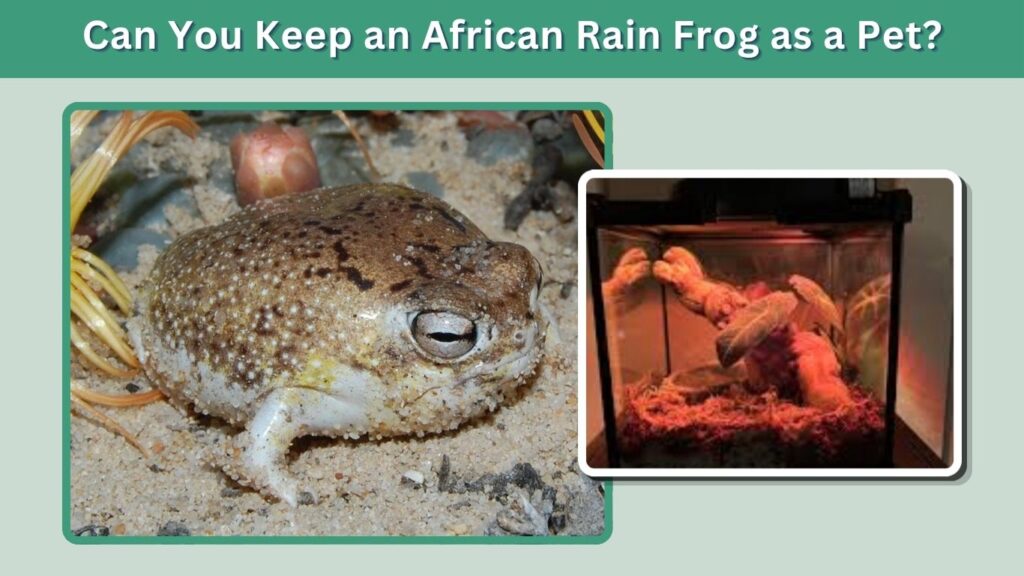
Online searches frequently advertise interest in African rain frogs for sale, but that does not mean these animals make suitable conventional pets. They have specialized environmental requirements and spend much of their lives hidden underground.
African Rain Frog Care
A rain frog would require conditions closely matched to the biology of the particular species, including:
- Appropriate deep burrowing substrate
- Correct soil moisture
- Species-appropriate temperature
- Good ventilation
- Small live invertebrate prey
- Plenty of underground space
- Minimal handling
- Excellent hygiene
Desert rain frogs and black rain frogs do not occupy identical habitats, so there is no universal “African rain frog care” setup.
Anyone considering one should also verify the animal’s exact scientific name, legal origin, local ownership/import rules, and whether it is captive-bred. Wild collection is particularly concerning for species with restricted or declining populations.
African Rain Frog Lifespan
Reliable lifespan information is limited for many rain frog species. These secretive frogs spend much of their lives underground, making long-term study difficult.
How Long Do African Rain Frogs Live?
There is no single scientifically established lifespan that applies to every Breviceps species. Claims giving one exact lifespan for all African rain frogs should therefore be treated cautiously.
Longevity can vary with species, habitat, predators, climate, disease, and other environmental conditions.
Their fossorial lifestyle may help protect them from some predators and harsh surface conditions, but substantial gaps remain in our knowledge of their natural lives.
FAQs
African rain frogs have become internet favorites because their round bodies, tiny legs, dramatic squeaks, and permanent-looking frowns give them an unusually expressive appearance. Behind those amusing features, however, are highly specialized amphibians adapted to life underground in southern African environments.
Are African rain frogs poisonous?
They are not generally regarded as dangerously poisonous to humans. Their best-known defenses are burrowing, body inflation, and defensive squeaking.
Why do African rain frogs scream?
The famous “scream” is a high-pitched defensive call. A frightened rain frog may squeak while inflating its body in an attempt to discourage a predator.
Can African rain frogs be pets?
They are not ideal beginner pets. Rain frogs have specialized burrowing, humidity, temperature, feeding, and environmental requirements, and wild sourcing should be avoided.
What does an African rain frog eat?
Most eat small invertebrates such as ants, termites, beetles, insect larvae, spiders, and other tiny animals found around soil and leaf litter.
Is the black rain frog the same as the desert rain frog?
No. The black rain frog is Breviceps fuscus, while the desert rain frog is Breviceps macrops. They belong to the same genus but differ in coloration, geographic range, and habitat.
