
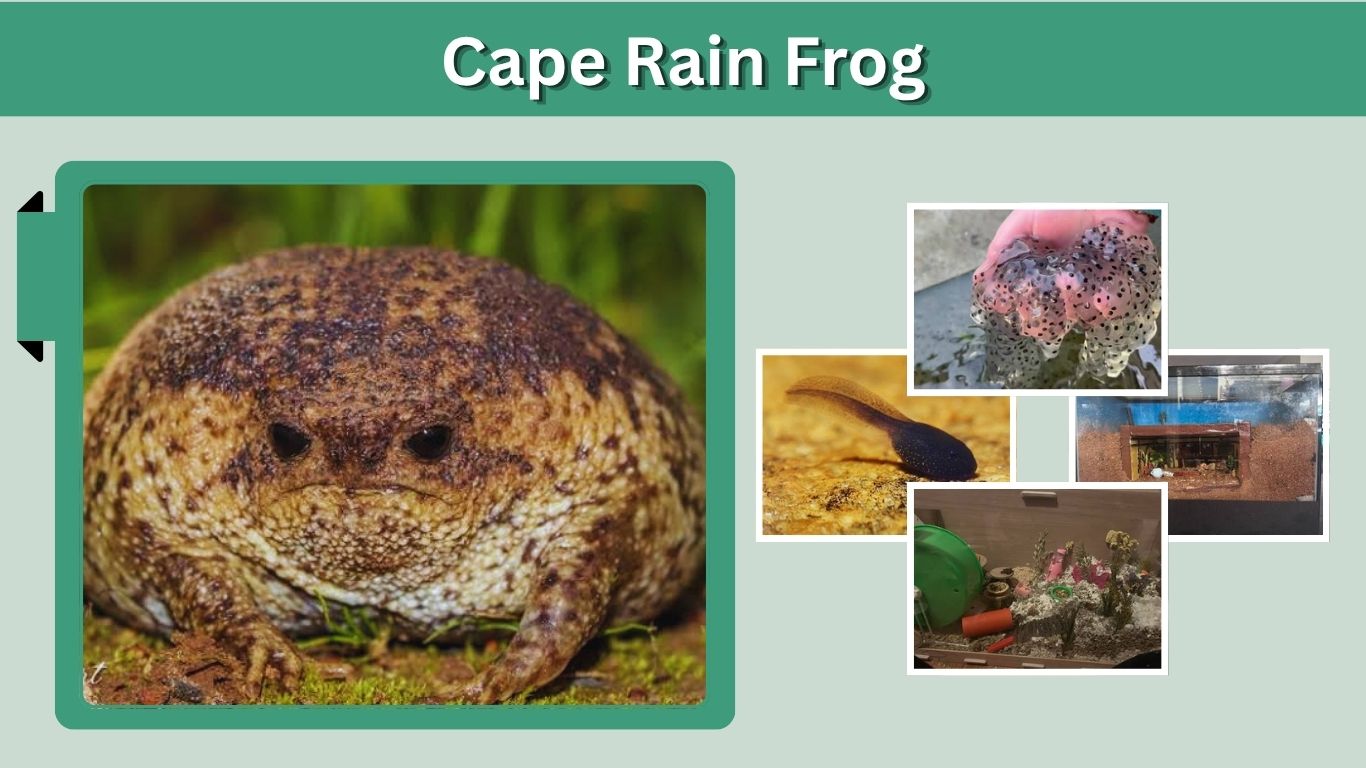
The Cape rain frog is a round, burrowing amphibian native to South Africa’s Western Cape. Scientifically known as Breviceps gibbosus, it spends most of its life underground and usually emerges during wet weather to feed and reproduce. Its short legs, bumpy skin, waddling movement, and ability to inflate its body give it an unmistakable appearance. Unlike many frogs, it does not require ponds for breeding. This guide covers Cape rain frog habitat, diet, sound, reproduction, adaptations, size, safety, and pet care.
What Is a Cape Rain Frog?
The Cape rain frog belongs to the family Brevicipitidae and genus Breviceps. It was the first African frog species formally described by Carl Linnaeus, originally named Rana gibbosa in 1758. Today it is recognized as Breviceps gibbosus. It is one of the largest rain frogs and is endemic to a relatively small region of southwestern South Africa.
Cape Rain Frog Identification
Look for these characteristics:
- Scientific name: Breviceps gibbosus
- Rounded, almost ball-shaped body
- Brown and cream mottled coloration
- Coarse, bumpy skin
- Small forward-facing eyes
- Short, thick legs
- Stubby, unwebbed toes
- Short head and blunt snout
- Adult length up to about 45 mm
- Ability to inflate when threatened
Its legs are too short for efficient jumping, so it usually walks with a distinctive waddling motion.
Cape Rain Frog Habitat and Range
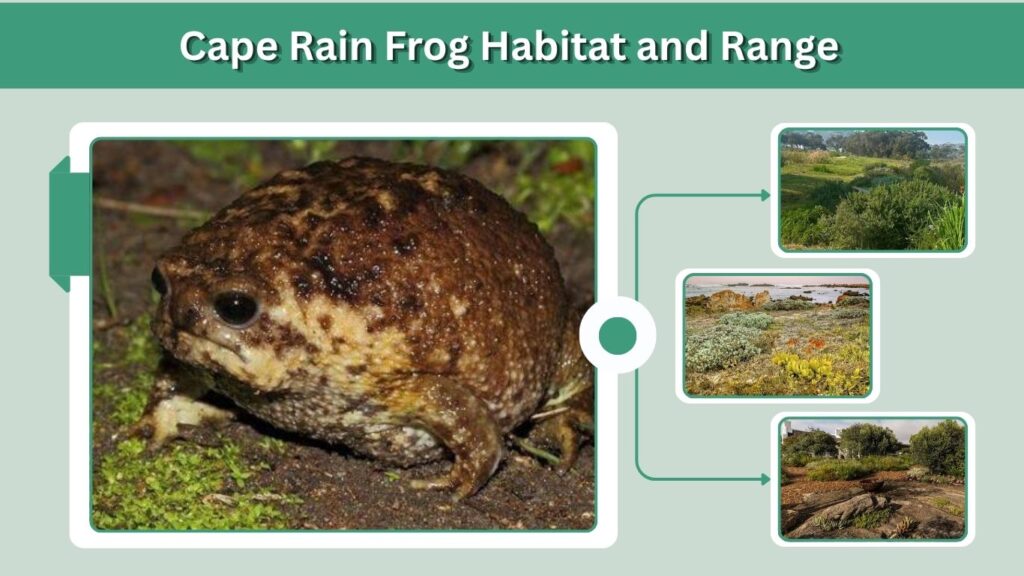
Cape rain frogs are terrestrial and fossorial, meaning they are adapted for life on and beneath the ground. They spend much of their time inside underground burrows, where moisture and temperature are more stable than at the surface. Wet winter conditions encourage them to emerge, which explains why people often associate their appearance with approaching or recent rainfall.
Where Are Cape Rain Frogs Found?
The species occurs only in South Africa’s Western Cape, from the central Cape Peninsula northward to areas west of Citrusdal. Its range extends from near sea level to approximately 1,000 meters in elevation.
Habitats include:
- Fynbos
- Renosterveld
- Residential gardens
- Agricultural landscapes
- Pine plantations
- Areas with loose, diggable soil
- Vegetated ground that retains moisture
Cape rain frogs have adapted surprisingly well to some modified landscapes, although habitat fragmentation remains a conservation concern.
What Do Cape Rain Frogs Eat?
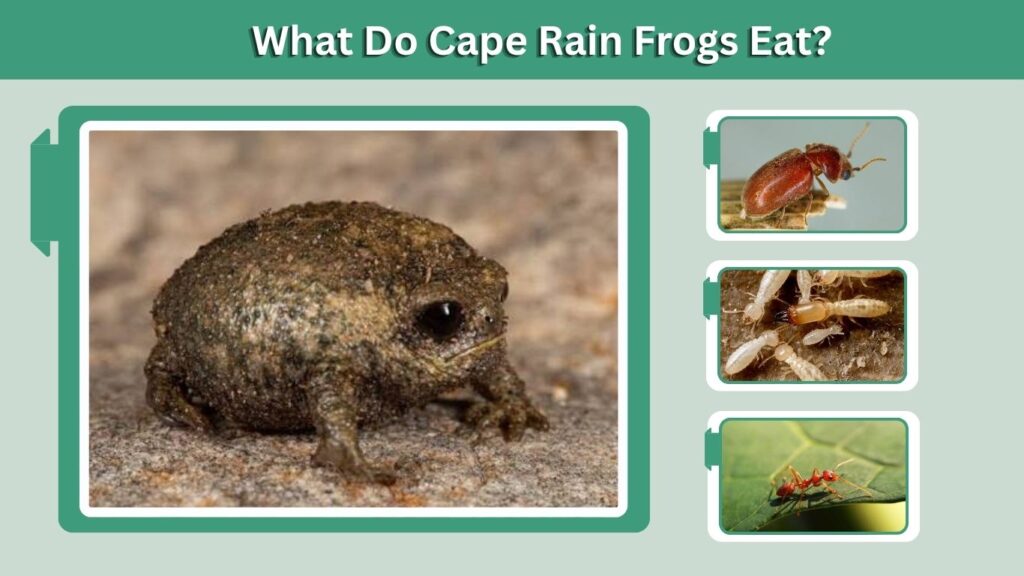
Cape rain frogs are small predators that search the soil and ground surface for invertebrates. Their diet fits their burrowing lifestyle because many prey animals also live beneath vegetation or within soil. They become more active during favorable damp weather, when both frogs and their prey can move about without losing excessive body moisture.
Cape Rain Frog Diet
Their food primarily includes:
- Termites
- Earthworms and other worms
- Ants
- Small insects
- Insect larvae
- Other tiny soil invertebrates
SANBI identifies worms, termites, and other insects as major foods for this species.
Their feeding also gives them an ecological role as predators of small invertebrates, while the frogs themselves become prey for animals such as snakes, lizards, and bush pigs.
Cape Rain Frog Sound and Call
Cape rain frogs are heard more often than they are seen. They spend much of their lives hidden, but males become vocal during breeding periods. Calling can begin before winter rains arrive, which has contributed to traditional beliefs that the frogs somehow predict or bring rain. In reality, changing environmental conditions stimulate their seasonal activity.
What Does a Cape Rain Frog Sound Like?
The male produces a harsh, squawking call repeated at short intervals. Males usually call from inside burrows or from concealed positions beneath vegetation.
The call has two major functions: advertising the male’s presence and helping females locate him during the breeding season.
A frightened frog can also react defensively by inflating itself. Videos sometimes describe rain frog calls as screams or cries, but breeding calls should not automatically be interpreted as fear or distress.
Cape Rain Frog Adaptations
Living mostly underground has produced several unusual adaptations. Cape rain frogs are poor swimmers and do not have the long hind legs or webbed feet typical of aquatic frogs. Instead, their body shape, limbs, breeding behavior, and defensive responses are suited to a terrestrial lifestyle where burrowing provides protection from dehydration and predators.
Important Adaptations
Notable adaptations include:
- Strong digging limbs: Help the frog burrow into soil.
- Short unwebbed toes: Better suited to terrestrial movement than swimming.
- Body inflation: Makes the frog appear larger when threatened.
- Underground lifestyle: Reduces water loss and provides shelter.
- Direct development: Young do not need an open pond.
- Sticky mating secretion: Helps the much smaller male remain attached to the female.
Cape rain frogs can inflate and float temporarily in water, but they cannot swim effectively and may drown if unable to reach land.
Cape Rain Frog Eggs and Life Cycle
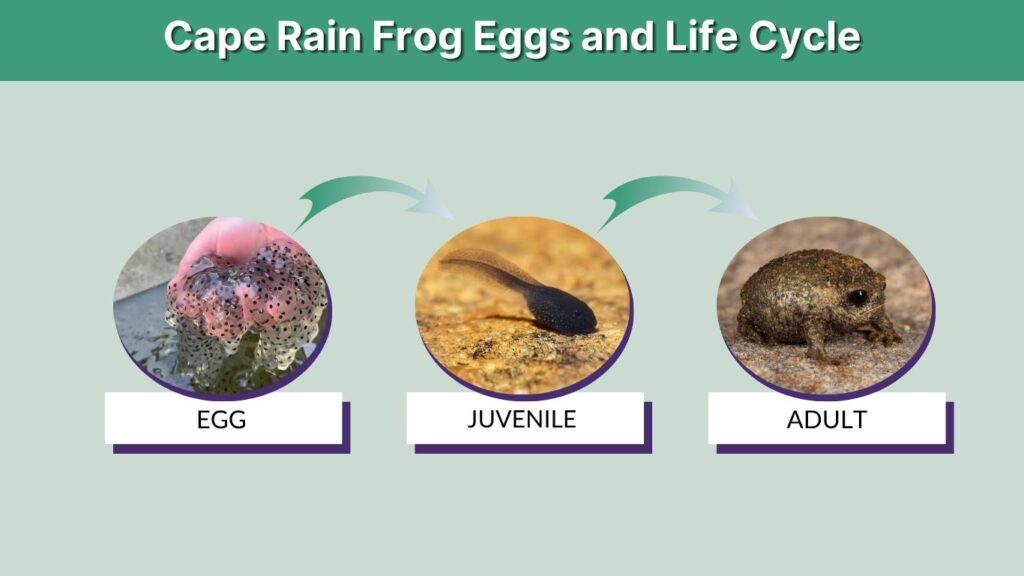
The Cape rain frog has an unusual reproductive cycle because breeding takes place on land rather than in a pond. This allows the species to survive in habitats without permanent standing water. Its eggs develop inside protected underground nests, eliminating the free-swimming tadpole stage associated with many familiar frogs.
Eggs, Mating and Baby Cape Rain Frogs
The male is considerably smaller than the female and cannot grip her effectively during mating. The female produces a sticky secretion that helps attach the male to her back.
She then digs a burrow in which roughly 22 eggs may be deposited. Jelly-filled capsules in the nest provide moisture during development.
The female remains near the underground eggs while the embryos develop. Instead of hatching as aquatic tadpoles, they complete development within the nest and emerge as tiny froglets.
This process is called direct development.
Are Cape Rain Frogs Poisonous or Dangerous?
Their unusual appearance and defensive inflation sometimes make them seem more threatening than they actually are. Cape rain frogs are small, secretive amphibians whose defenses mainly involve hiding underground and making themselves look larger. They are not comparable to highly toxic poison frogs and are not generally considered dangerous to people.
Can a Cape Rain Frog Hurt You?
Cape rain frogs are not known as dangerously poisonous or venomous frogs.
However, wild frogs should still be handled as little as possible. Amphibian skin is sensitive and can absorb substances from human hands, including:
- Soap
- Lotion
- Sunscreen
- Cleaning chemicals
- Oils and other residues
If a rain frog inflates or struggles when approached, that behavior indicates stress. Leaving it where it was found is normally the best response.
Can You Keep a Cape Rain Frog as a Pet?
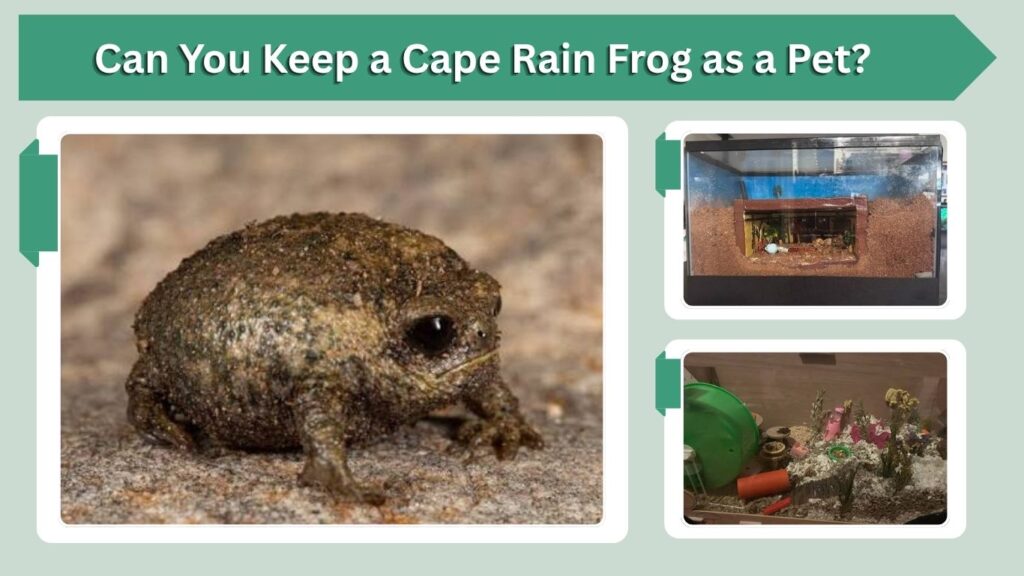
The unusual appearance of rain frogs creates considerable interest in keeping them as pets. However, Cape rain frogs are specialized burrowing amphibians rather than typical beginner frogs. They spend most of their lives hidden underground, have specific environmental requirements, and wild populations face habitat pressures.
Cape Rain Frog Care Considerations
A suitable captive environment would need:
- Deep, soft substrate suitable for burrowing
- Carefully controlled moisture
- Good ventilation
- Appropriate temperatures
- Small live invertebrate prey
- Plenty of hiding opportunities
- Minimal handling
- No deep open water
Wild-caught animals should be avoided. Anyone considering an unusual amphibian should verify the exact species, legal status, source, and availability of legitimately captive-bred animals before ownership.
Cape Rain Frog Conservation
Although the species can remain relatively common in some parts of its range, its geographic distribution is limited. Agricultural development, expanding urban areas, and fragmentation of native vegetation have reduced or degraded some habitat. Chemical use in agricultural areas may create additional pressure on amphibians because their permeable skin makes them sensitive to environmental contaminants.
Is the Cape Rain Frog Endangered?
The Cape rain frog has been assessed as Near Threatened. Its range is relatively restricted, and the extent and quality of suitable habitat continue to decline in parts of the Western Cape.
Protecting fynbos and renosterveld, reducing unnecessary pesticide use, and maintaining soil and vegetation around remaining populations can help conserve the species.
FAQs
Cape rain frogs attract attention because they look very different from familiar pond frogs. Their round body, tiny legs, underground lifestyle, strange calls, and direct development are all adaptations to living almost entirely on land in South Africa’s winter-rainfall region.
What do Cape rain frogs eat?
They primarily eat worms, termites, ants, insects, and other small soil-dwelling invertebrates.
Where does the Cape rain frog live?
It is endemic to the Western Cape of South Africa, occurring from the central Cape Peninsula north to areas west of Citrusdal.
Do Cape rain frogs have tadpoles?
They do not have a free-swimming tadpole stage. Their embryos develop inside underground eggs and emerge as small froglets.
Why do Cape rain frogs inflate?
They inflate their bodies when threatened, making themselves appear larger and potentially more difficult for a predator to swallow.
Is the Cape mountain rain frog the same species?
No. The Cape rain frog is Breviceps gibbosus. The mountain rain frog, Breviceps montanus, is a separate species within the same genus.
