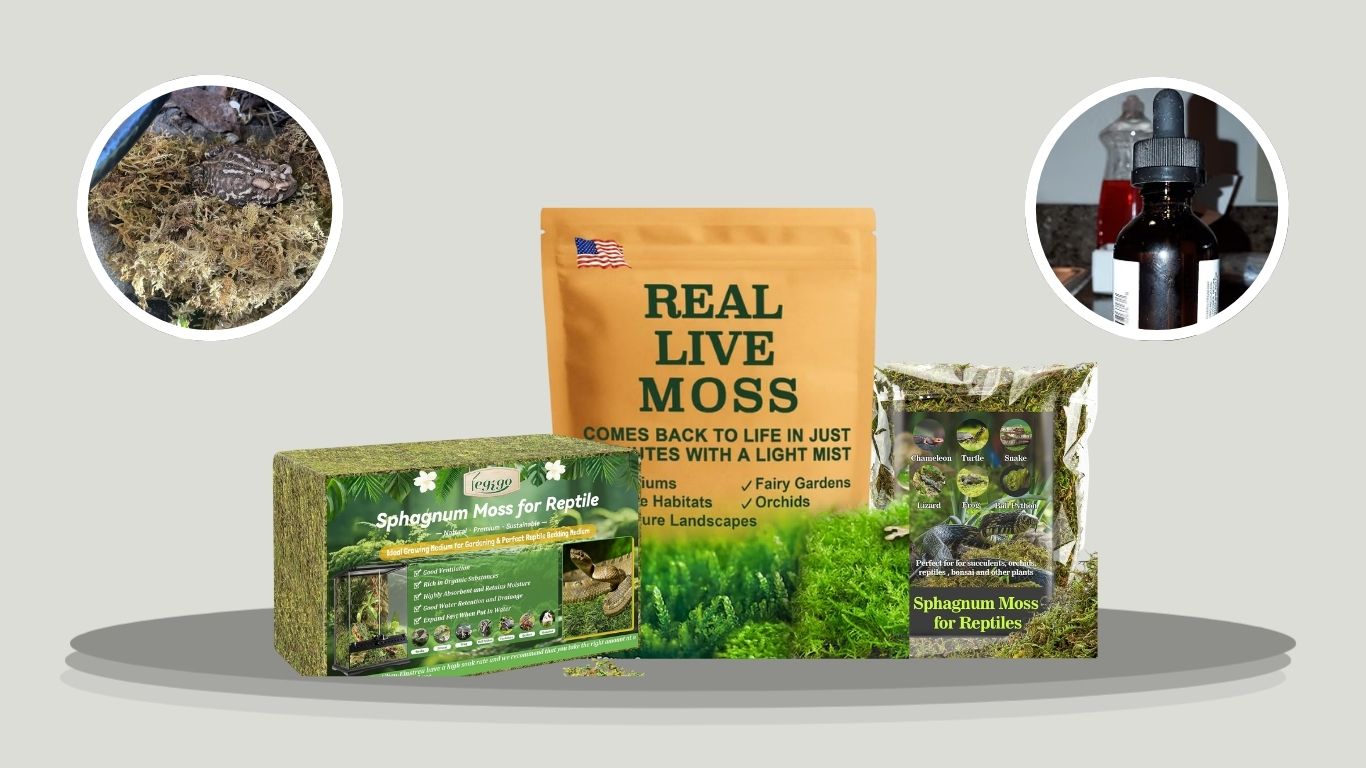
Choosing the right moss can make a terrarium look more natural while also helping maintain moisture and humidity. Sphagnum moss, pillow moss, and live moss each serve different purposes, from holding water around plant roots to creating soft ground cover and humid hiding areas for reptiles and amphibians. The best option depends on your enclosure type, animals, plants, and maintenance routine. In this guide, we review 10 of the best mosses for terrariums based on moisture retention, texture, durability, ease of use, and overall habitat value.
1. Sukh Sphagnum Moss for Reptiles & Terrariums
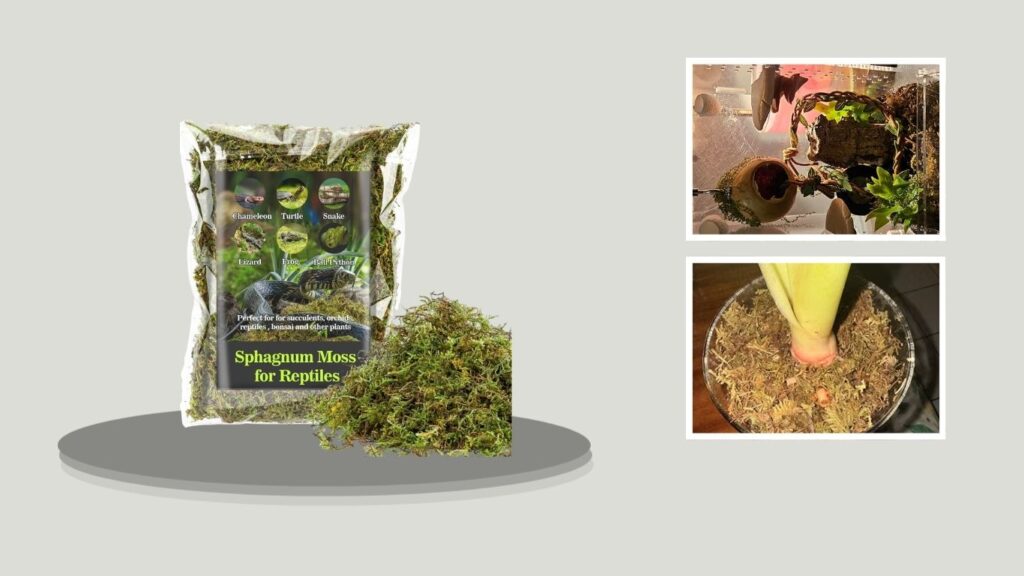
Sukh Sphagnum Moss is a natural dried moss designed for terrariums, reptile enclosures, humid hides, and plant displays. The compressed moss expands after hydration and creates a soft, moisture-retaining layer that can help maintain localized humidity. Its natural texture also gives artificial-looking enclosures a more realistic forest-floor appearance, making it useful for reptiles, amphibians, invertebrates, and tropical terrarium plants.
Key Features
- 5-ounce package
- Natural dried sphagnum moss
- Excellent moisture absorption
- Helps maintain localized humidity
- Soft and lightweight texture
- Suitable for humid hides
- Useful around reptiles and amphibians
- Can support shedding environments
- Works with orchids and other moisture-loving plants
- Creates a natural forest-floor appearance
Why It’s Best for Humidity Control
The strongest advantage of Sukh Sphagnum Moss is its ability to absorb water and release moisture gradually. Rather than allowing a humid hide or terrarium corner to dry immediately after misting, hydrated moss can maintain moisture for longer periods.
This makes it particularly useful for frogs, geckos, snakes, and other animals that benefit from humid microclimates. It can also be placed selectively rather than covering the entire enclosure, giving keepers more control over moisture levels.
Moisture Retention & Everyday Performance
Once hydrated, the compressed fibers become noticeably softer and fluffier. The loose texture makes it easy to arrange around hides, plants, wood, or decorative features.
Routine misting can restore moisture as the moss begins drying. However, it should remain damp rather than constantly saturated. Contaminated or foul-smelling sections should be replaced to maintain good enclosure hygiene.
Overall Value for Terrarium Keepers
Sukh Sphagnum Moss combines strong moisture retention with versatility and natural presentation. It can serve as part of a substrate mixture, humid-hide filling, decorative ground cover, or moisture layer around plants.
For keepers wanting an affordable way to introduce both humidity and visual texture into an enclosure, the expandable 5-ounce package provides considerable practical use from a relatively compact amount of dry moss.
2. LUCKYRUNES Live Moss 3-Pack for Terrariums
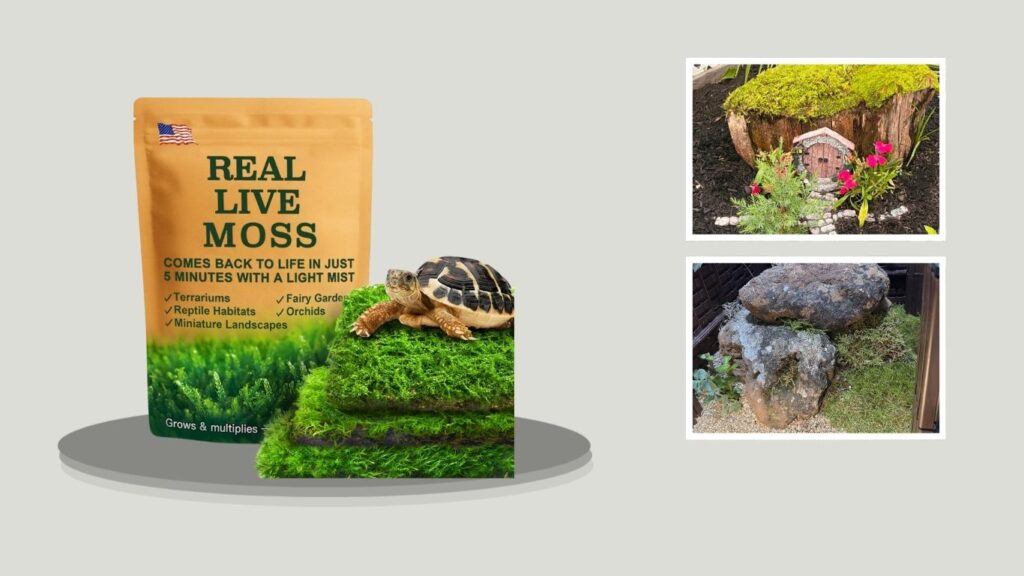
LUCKYRUNES Live Moss offers something different from conventional dried sphagnum products. This set contains three pieces of cultivated live moss in mixed varieties, creating a more authentic green landscape inside terrariums and reptile enclosures. Each moss piece measures approximately 3.5 x 7 inches and can be trimmed or arranged around rocks, wood, plants, and hides to develop a natural forest-floor display.
Key Features
- Three-piece live moss variety pack
- Three mixed moss varieties
- Approximately 3.5 x 7 inches per piece
- Natural green appearance
- Holds moisture
- Can be trimmed for custom layouts
- Suitable for terrariums and reptile enclosures
- Works around bonsai and potted plants
- Useful for humid-hide accents
- Adds living texture to naturalistic setups
Why It’s Best for Natural-Looking Terrariums
The biggest advantage of this product is visual authenticity. Rather than relying solely on brown dried moss, the living green sheets can make stones, wood, and enclosure floors look more like a natural woodland environment.
The three different varieties also introduce texture variation, which can help a terrarium appear more established and less uniform. It is particularly attractive in display enclosures where appearance matters as much as moisture management.
Growth & Moisture Performance
The moss is supplied in a compact condition and responds to hydration and proper humidity. Regular misting helps maintain moisture and encourages a healthier green appearance.
Because it is live material, it requires more attention than dried sphagnum. Direct intense light and excessive drying should be avoided. Keeping the moss humid without permanently soaking it provides a better balance for long-term appearance.
Overall Value for Terrarium Design
LUCKYRUNES is especially suitable for keepers building naturalistic or bioactive-style displays. The individual sheets can be positioned exactly where greenery is needed and trimmed around hardscape elements.
For someone who wants a terrarium to resemble a miniature forest rather than simply use moss for moisture retention, the three-pack provides far more decorative potential than standard dried moss alone.
3. Riare Premium Sphagnum Moss for Terrariums
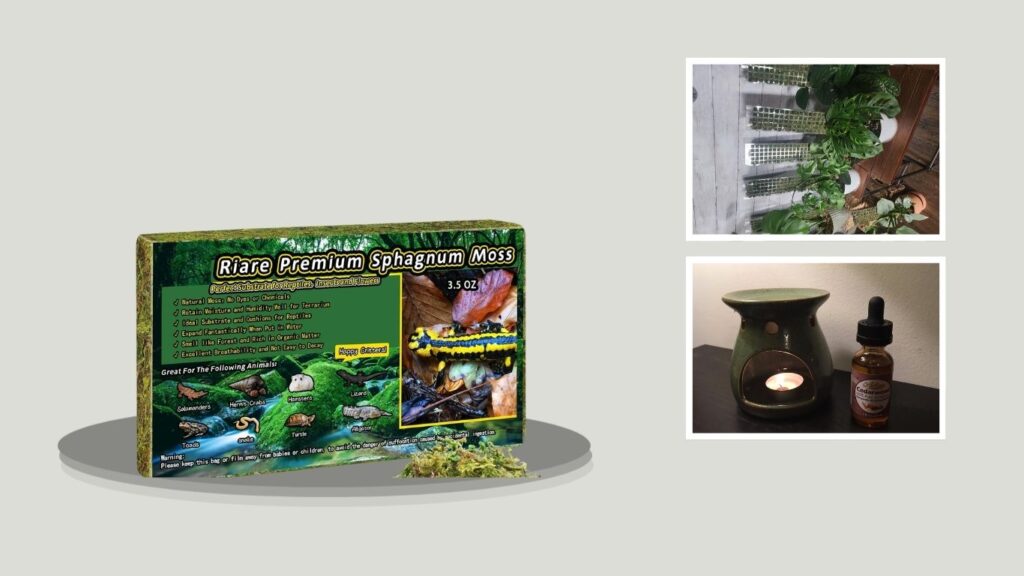
Riare Premium Sphagnum Moss is a compressed natural moss option created for reptile enclosures, humid habitats, hatching setups, and plant applications. Once hydrated, the moss expands into a soft fibrous material that can retain substantial moisture. It is particularly useful for creating localized humid areas while adding natural texture around hides, plants, branches, and other enclosure decorations.
Key Features
- Natural sphagnum moss
- Compressed for compact storage
- Expands significantly after hydration
- Strong moisture-retaining properties
- Soft fibrous texture
- Suitable for terrariums
- Useful for hatching environments
- Works with snakes, geckos, turtles, and frogs
- Suitable for moisture-loving plants
- Creates naturalistic ground coverage
Why It’s Best for Moisture-Rich Habitats
Riare Sphagnum Moss works particularly well in enclosures where maintaining a humid microclimate is important. The fibers hold water and release it gradually, helping reduce how quickly selected areas dry out between misting sessions.
It can be particularly effective inside humid hides, where animals may seek additional moisture during shedding or periods of dry enclosure conditions. Its soft structure also allows it to conform easily around irregular spaces.
Expansion & Terrarium Performance
One of the practical advantages of compressed sphagnum is storage efficiency. A relatively compact package can produce considerably more usable material once properly hydrated.
The moss can be loosened and spread into a thin decorative layer or arranged more deeply inside humid areas. Because organic material can eventually become dirty, spot cleaning and periodic replacement are still important for maintaining sanitary enclosure conditions.
Overall Value for Flexible Setups
Riare Sphagnum Moss offers considerable flexibility because it can function as bedding material, a humidity layer, hide filling, decorative coverage, or horticultural growing medium.
For keepers managing several terrariums, its expandable format can be especially practical. The combination of softness, absorbency, natural appearance, and multiple applications makes it useful well beyond simple enclosure decoration.
4. Legigo 14 OZ Sphagnum Moss for Reptiles
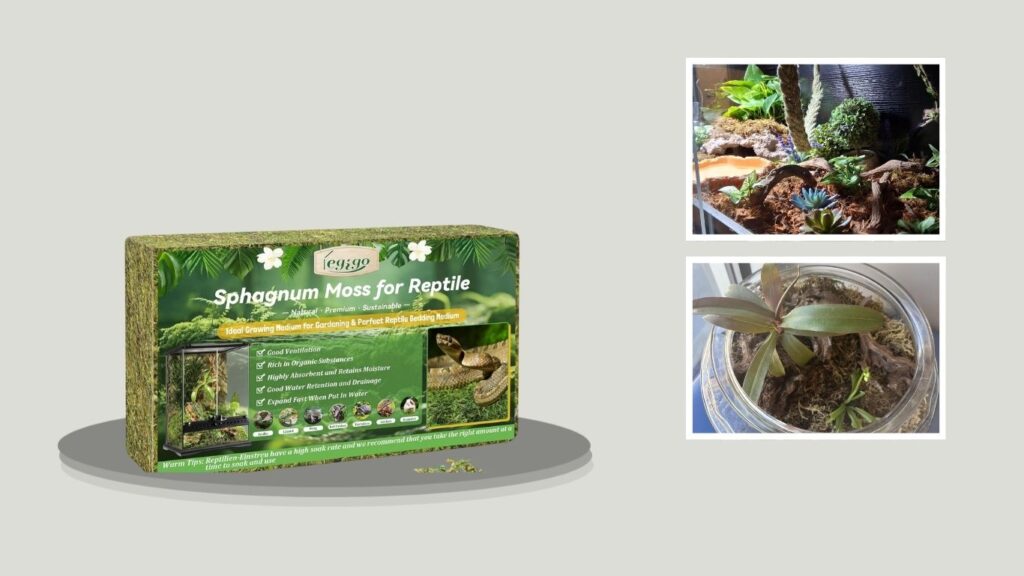
Legigo 14 OZ Sphagnum Moss provides a larger supply of natural moss for keepers who regularly maintain humid terrariums or multiple reptile enclosures. The compressed material expands after soaking, producing approximately 16 quarts of usable moss according to the product listing. Its long fibers help retain moisture while creating a soft layer suitable for hides, enclosure decoration, bedding mixtures, and moisture-loving plants.
Key Features
- 14-ounce package
- Approximately 16-quart expanded volume
- Natural sphagnum moss
- Compressed for efficient storage
- Long fibrous texture
- Good moisture retention
- Suitable for humid hides
- Works with snakes, geckos, frogs, and other reptiles
- Useful with orchids and terrarium plants
- Adds natural texture to enclosure floors
Why It’s Best for Multiple Terrarium Uses
The larger package makes this Legigo option particularly practical for keepers who need moss regularly. Rather than reserving a small amount exclusively for one humid hide, there is enough material for layering, decorating, mixing with other substrates, or maintaining several enclosure areas.
Its long fibers also help create a loose structure instead of a dense, soil-like surface.
Hydration & Long-Term Performance
The compressed moss should be soaked before use and excess water squeezed out so that it feels moist rather than dripping wet. Once expanded, it becomes significantly easier to separate and distribute throughout the enclosure.
Regular misting can restore moisture when required. Because the moss is biodegradable organic material, heavily contaminated sections should be removed rather than continually rehydrated.
Overall Value for Regular Terrarium Maintenance
Legigo 14 OZ Sphagnum Moss provides a useful middle ground between small hobby packages and very large bulk quantities. There is enough material for repeated enclosure maintenance without requiring excessive storage space before hydration.
Its moisture retention, long fibers, and wide range of reptile and plant applications make it particularly practical for keepers who use sphagnum frequently rather than occasionally.
5. Legigo 2.6 LB Sphagnum Moss for Reptiles
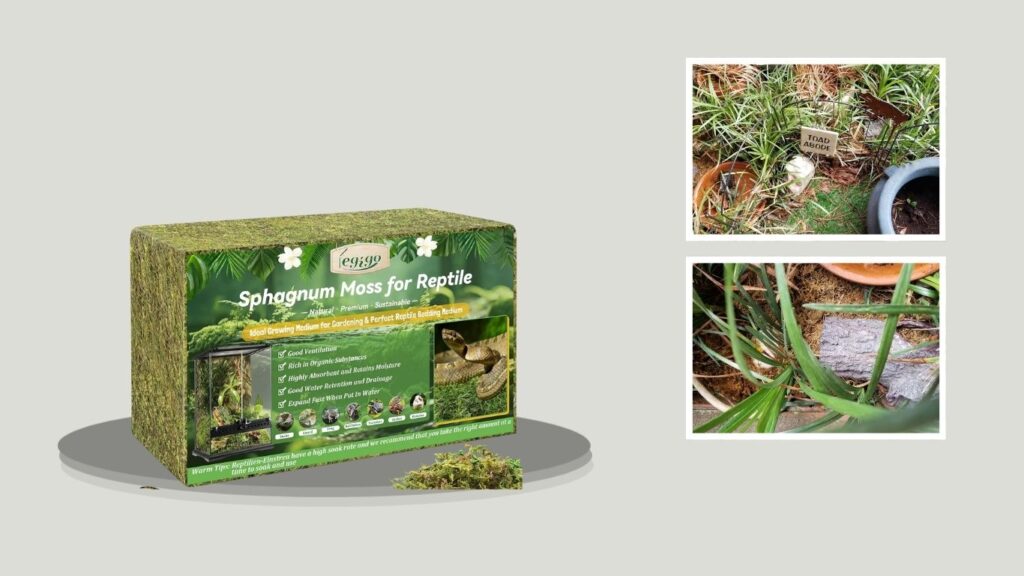
Legigo 2.6 LB Sphagnum Moss is the bulk option in this group, offering approximately 48 quarts of expanded natural moss. Designed for reptile bedding, terrarium substrate mixtures, humid hides, nesting areas, and horticultural applications, the compressed format keeps the package manageable until moisture is added. Its loose fibers are intended to absorb and slowly release water while creating a soft and natural enclosure surface.
Key Features
- 2.6-pound bulk package
- Approximately 48-quart expanded capacity
- Natural forest sphagnum moss
- No artificial dyes listed
- Compressed for storage
- Long, loose fibers
- Strong moisture retention
- Helps create humid microclimates
- Suitable for snakes, frogs, geckos, and turtles
- Can be used with orchids and other plants
- Useful for multiple enclosures
Why It’s Best for Large or Multiple Terrariums
Quantity is the biggest advantage of this Legigo option. Keepers maintaining multiple reptiles or larger enclosures can use substantial amounts of moss without constantly opening small replacement packages.
The bulk format also makes it easier to create deeper humid-hide layers or combine sphagnum with compatible substrates across several habitats. Only the amount needed immediately has to be hydrated, leaving the remaining compressed moss easier to store.
Moisture Retention & Setup Performance
Preparation is straightforward: remove the required portion, soak it in warm water, allow the fibers to expand, and squeeze away excess moisture before placement.
The loose fibrous structure retains water while still allowing spaces between strands. This makes it useful where keepers want moisture retention without creating a dense layer of saturated material. Regular spot cleaning helps preserve freshness.
Overall Value for High-Volume Use
Legigo 2.6 LB Sphagnum Moss is technically most appealing for frequent users. A single bulk package can support multiple enclosure changes, humid hides, plant projects, and substrate mixtures.
For a keeper with several reptiles, amphibians, or terrarium displays, the large expandable volume can provide better practicality than repeatedly purchasing smaller moss packs. Its combination of moisture control, soft texture, natural appearance, and storage efficiency makes it particularly suitable for long-term terrarium maintenance.
6. Zoo Med New Zealand Sphagnum Moss
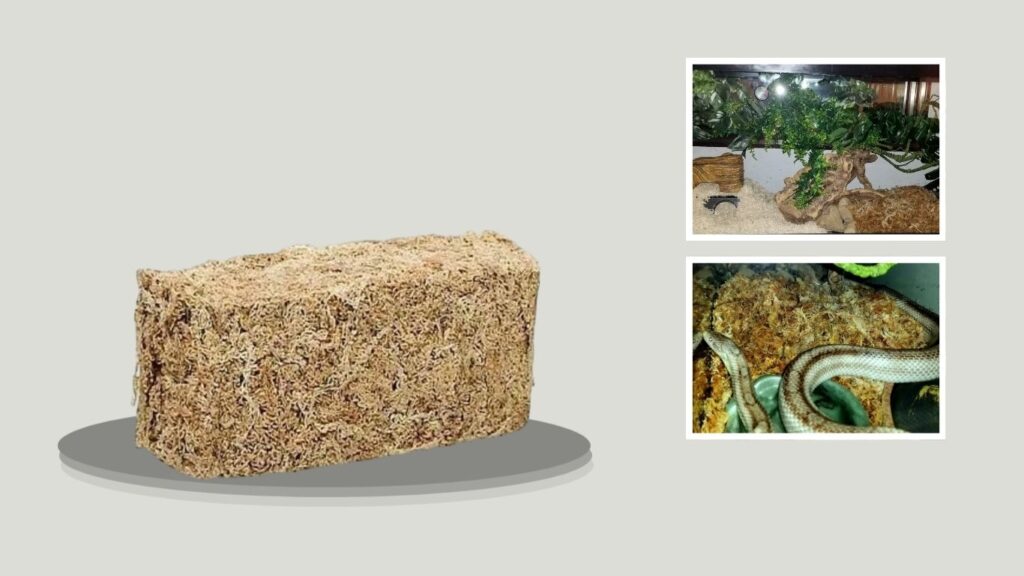
Zoo Med New Zealand Sphagnum Moss is a premium terrarium moss designed for reptiles, amphibians, and other species that benefit from humid conditions. Its long, soft fibers absorb substantial moisture and gradually release it into the enclosure, making it useful for humid hides, tropical terrariums, and moisture-sensitive animals. The natural texture also blends easily with bark, soil, wood, and plants for a realistic habitat appearance.
Key Features
- Natural New Zealand sphagnum moss
- Long, soft fibers
- High moisture-retention capacity
- Helps increase terrarium humidity
- Useful for humid hides
- Suitable for reptiles and amphibians
- Works well around live plants
- Natural-looking enclosure material
- Can be mixed with other substrates
- Lightweight and easy to arrange
Why It’s Best for Reptiles and Amphibians
Zoo Med Sphagnum Moss is particularly useful for animals that need access to humid microclimates. Frogs, salamanders, geckos, and many snakes can benefit from appropriately moist areas within their enclosure.
The soft texture also works well inside shedding hides, where additional humidity can help maintain suitable environmental conditions. It can be placed only where needed rather than making the entire enclosure excessively damp.
Moisture Retention & Durability
Long sphagnum fibers can absorb significant amounts of water while maintaining an airy structure. Once hydrated, the moss remains soft and can be easily rearranged around rocks, hides, and plants.
Regular misting restores moisture as it dries. Because sphagnum is a natural organic material, soiled or deteriorating portions should eventually be replaced rather than left indefinitely.
Overall Value for Terrarium Keepers
Zoo Med New Zealand Sphagnum Moss stands out for dependable moisture retention and a natural texture. It works particularly well for humidity-focused enclosures where ordinary decorative moss may dry too quickly.
For reptile and amphibian keepers who regularly use humid hides or tropical setups, its long fibers and flexible applications make it a technically useful addition to the habitat.
7. Galápagos Pillow Moss Clumps
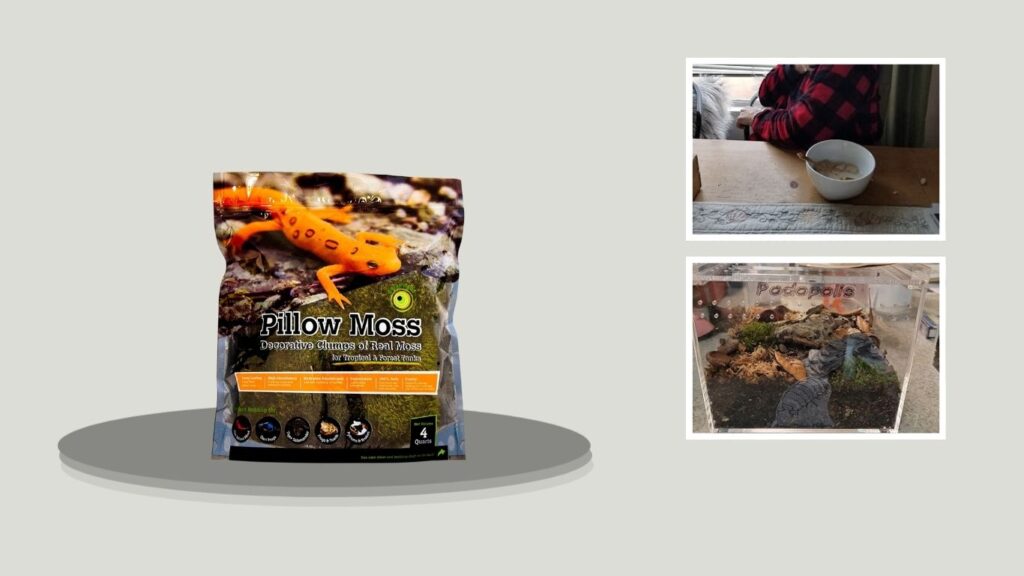
Galápagos Pillow Moss offers a different appearance from loose sphagnum because it comes in soft, thick clumps of real moss. These pillow-shaped pieces can be positioned around rocks, branches, hides, and plants to create a more dimensional forest-floor design. In addition to decoration, the moss absorbs moisture and gradually releases it, helping maintain humidity in tropical and woodland-style terrariums.
Key Features
- Real natural moss clumps
- Soft pillow-like structure
- Designed for tropical and forest terrariums
- Helps maintain humidity
- Absorbs and slowly releases moisture
- Useful as natural ground cover
- Creates hiding and resting areas
- Suitable for reptiles and amphibians
- Works well around hardscape
- Adds realistic texture to terrarium layouts
Why It’s Best for Decorative Terrariums
The main attraction of Galápagos Pillow Moss is its shape. Instead of creating a flat layer, the thick clumps add height and variation to the enclosure floor.
This makes it especially useful around stones, cork bark, driftwood, and planted areas where a terrarium needs a more mature woodland appearance. Frogs, small reptiles, and other animals can also use the soft clumps as resting or hiding areas.
Humidity & Terrarium Performance
Pillow moss absorbs water during misting and slowly releases moisture as the surrounding environment becomes drier. This can help support humid microclimates without requiring every area of the substrate to remain wet.
The clumps are also easy to move during cleaning or redesigning. For best results, the moss should be monitored for excessive saturation, waste accumulation, or deterioration.
Overall Value for Naturalistic Displays
Galápagos Pillow Moss is particularly valuable when both appearance and humidity management matter. Its thick clumps create a more visually interesting landscape than loose moss alone.
For naturalistic tropical or woodland enclosures, it provides an easy way to soften hardscape, fill open spaces, and make the habitat feel more established while contributing to moisture retention.
8. Sukh Sphagnum Moss for Reptiles – 16 oz
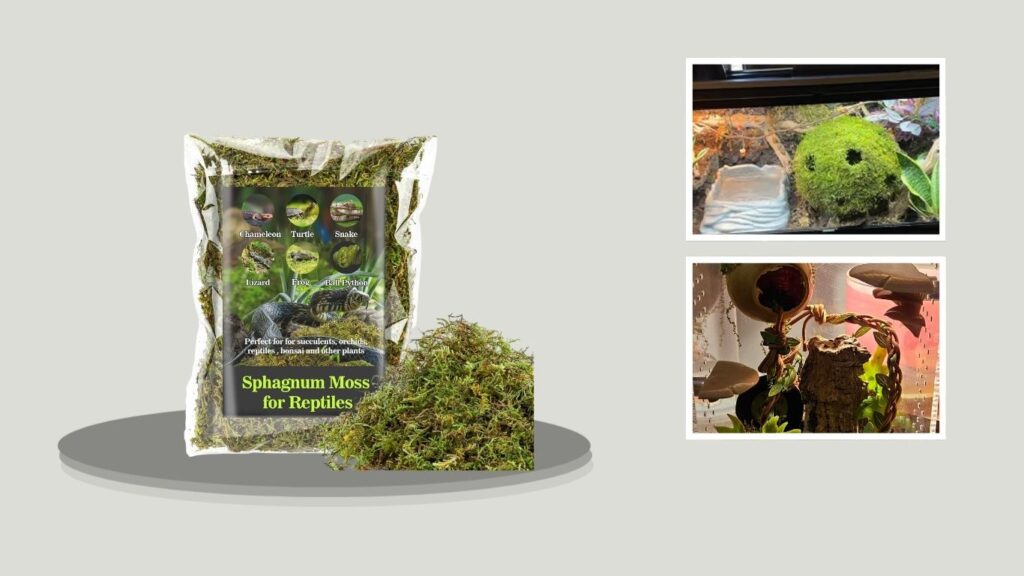
Sukh Sphagnum Moss in the larger 16-ounce package is designed for keepers who need more material for substantial terrariums or repeated enclosure maintenance. Its compressed natural fibers expand significantly when soaked, producing a soft and moisture-retaining medium. It can be used in humid hides, mixed substrate systems, plant areas, or as partial ground cover for reptiles and amphibians.
Key Features
- Large 16-ounce package
- Natural sphagnum moss
- Compressed for efficient storage
- Expands after hydration
- Good water absorption
- Helps maintain localized humidity
- Soft fibrous texture
- Suitable for reptiles and amphibians
- Useful for terrarium plants
- Can be incorporated into substrate mixtures
Why It’s Best for Larger Terrariums
The larger package is the main advantage of this Sukh option. Keepers with bigger enclosures can create several humid areas without quickly exhausting their supply.
It is also practical for households maintaining multiple terrariums. The moss can be divided between humid hides, plant areas, and substrate mixtures while the remaining dry material stays compressed until needed.
Hydration & Everyday Performance
Preparation is simple. A portion can be soaked until fully expanded and then gently squeezed to remove excess water before placement.
The fibrous moss holds moisture while leaving small air spaces throughout the material. As it begins to dry, misting can restore the desired moisture level. Using only the amount needed also makes routine replacement easier when sections become dirty.
Overall Value for High-Volume Use
Sukh 16 oz Sphagnum Moss is particularly attractive for keepers who already know they use sphagnum regularly. The larger quantity reduces the need for frequent small packages while maintaining the same flexible applications.
For large terrariums, multiple humid hides, or several animal enclosures, its combination of absorbency, expansion, soft texture, and storage convenience offers strong practical value.
9. LUCKYRUNES Live Moss Duo Pack
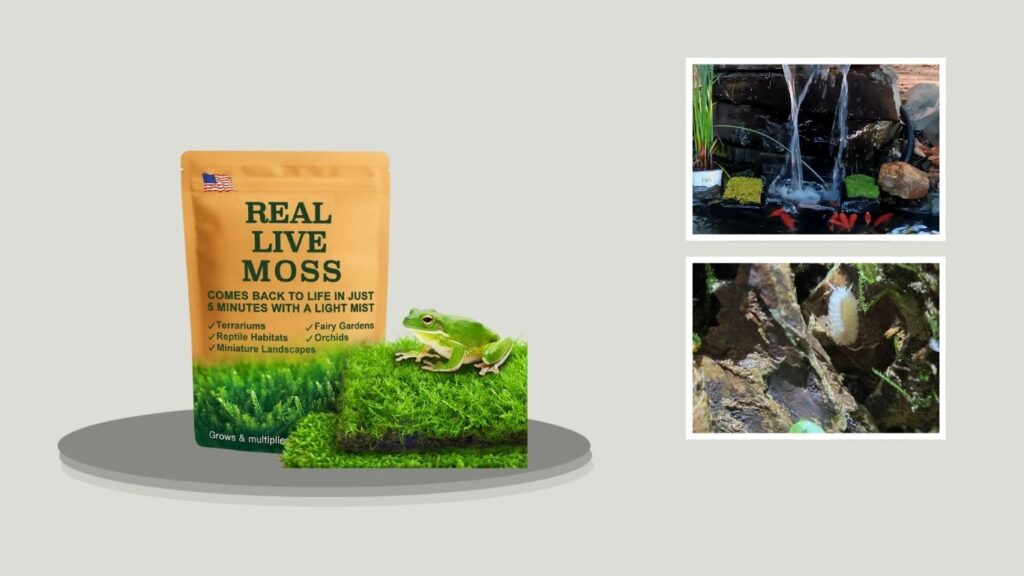
The LUCKYRUNES Live Moss Duo Pack is designed for terrarium keepers who prefer real living greenery instead of relying exclusively on dried moss. The set combines two different moss textures, allowing users to create more visually varied landscapes. It is especially suited to humid terrariums, vivariums, amphibian habitats, bonsai displays, and other naturalistic environments where living ground cover can become part of the design.
Key Features
- Two different live moss varieties
- Natural green coloration
- Living terrarium material
- Provides contrasting textures
- Suitable for humid enclosures
- Can be trimmed to fit layouts
- Works around stones and wood
- Suitable for reptile and amphibian habitats
- Useful in vivariums and bonsai displays
- Supports naturalistic terrarium design
Why It’s Best for Live Terrarium Landscapes
This duo pack works particularly well when the goal is to make the enclosure feel alive rather than simply decorated.
Using two different moss types creates visual contrast across the floor and around the landscape. Sections can be placed between stones, beside plants, on damp substrate, or around wood to develop a miniature woodland appearance.
It is especially appealing in display terrariums where greenery is a major part of the overall design.
Growth & Maintenance Performance
Live moss requires more attention than dried sphagnum. Appropriate moisture, humidity, ventilation, and lighting all influence how successfully it maintains its appearance.
It generally performs best in humid, shaded environments rather than under intense direct heat. Regular light misting can prevent drying, while adequate ventilation helps avoid constantly waterlogged conditions.
Overall Value for Bioactive-Style Setups
LUCKYRUNES Live Moss Duo Pack offers greater visual impact than conventional dried moss. Its combination of living greenery and mixed textures makes it particularly useful for planted and bioactive-style displays.
Keepers willing to provide suitable moisture and light conditions can create a more dynamic enclosure that changes and develops over time rather than functioning only as static decoration.
10. Riare 2.6 lb Natural Sphagnum Moss
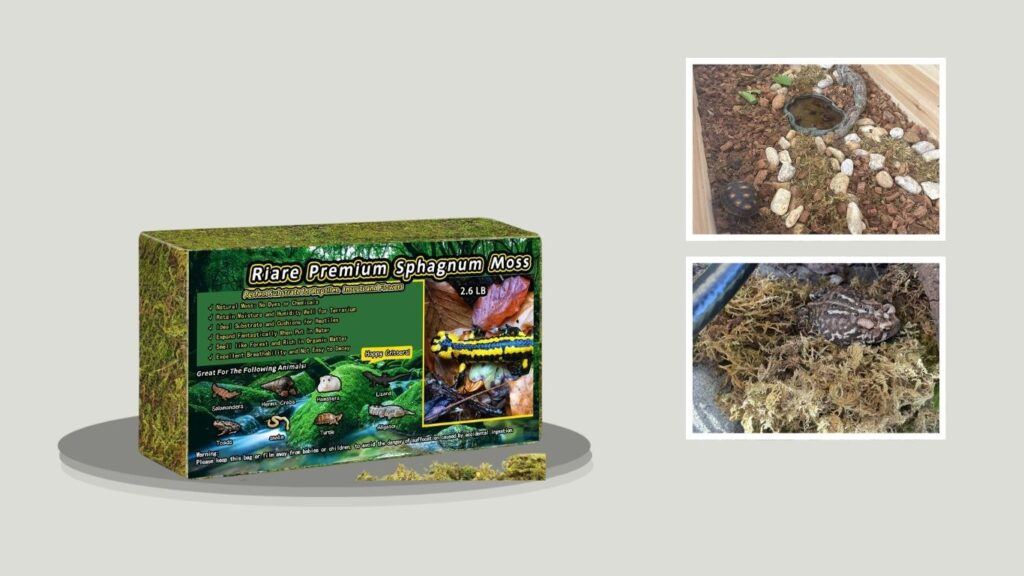
Riare 2.6 lb Natural Sphagnum Moss is a bulk terrarium option intended for keepers who need substantial quantities of moisture-retaining material. Its compressed long fibers expand after hydration, making the package suitable for large enclosures, multiple reptiles, humid hides, substrate mixtures, and plant projects. The natural moss creates a softer enclosure surface while providing an effective way to maintain moisture in selected areas.
Key Features
- Large 2.6-pound package
- Natural dried sphagnum moss
- Long fibrous texture
- High expansion after soaking
- Strong moisture retention
- Suitable for large terrariums
- Useful for multiple enclosures
- Works in humid hides
- Suitable for reptiles and amphibians
- Can be used around terrarium plants
Why It’s Best for Bulk Terrarium Maintenance
The generous quantity makes this Riare option most attractive for experienced keepers with multiple habitats. A small portion can be hydrated whenever fresh moss is required, while the remaining compressed material remains easier to store.
It can also be used more generously in large humid hides or mixed into other substrates without worrying about quickly exhausting a small bag.
Absorbency & Long-Term Performance
The long fibers absorb water quickly and help maintain moisture around the immediate area where they are placed. After soaking, excess water should be removed before the moss enters the enclosure.
Its loose structure allows it to be fluffed, layered, or mixed with other materials. Like all natural moss, it eventually needs replacement when contaminated with waste or when its texture significantly deteriorates.
Overall Value for Multiple Enclosures
Riare 2.6 lb Sphagnum Moss provides excellent practicality for high-volume users. Buying in bulk makes the most sense for keepers who frequently replace humid-hide material or maintain several moisture-loving animals.
The combination of large quantity, strong absorbency, natural fibers, and multiple applications makes it a versatile choice for long-term reptile and amphibian habitat maintenance.
FAQs
1. What is the best moss for a terrarium?
The best moss depends on the terrarium. Sphagnum moss is excellent for moisture retention and humid hides, while live moss and pillow moss are better when natural green appearance and decorative ground coverage are priorities. Many terrariums benefit from combining more than one type.
2. Is sphagnum moss good for terrariums?
Yes. Sphagnum moss is widely used because it absorbs water effectively and helps create humid microclimates. It can be placed around plants, inside humid hides, or mixed with compatible substrates. It should be kept appropriately moist rather than permanently saturated.
3. Can dried moss become alive again?
Most commercially dried sphagnum should be treated as dried organic material rather than expected to reliably regrow. Some products containing dormant living moss may recover under suitable conditions, but results vary. If active growth is important, purchasing moss specifically sold as live moss is a more dependable option.
4. How often should terrarium moss be replaced?
Replacement frequency depends on humidity, animal waste, ventilation, and how the moss is being used. Remove sections whenever they develop mold, unpleasant odors, heavy waste contamination, or significant deterioration. Humid-hide moss may require more frequent replacement than decorative moss that animals rarely contact.
5. How do you keep moss green in a terrarium?
Live moss generally needs consistent moisture, adequate humidity, gentle lighting, and good airflow. Avoid allowing it to completely dry out or remain waterlogged for long periods. Dried sphagnum moss, however, normally stays tan or brown and should not be expected to turn permanently green simply through misting.
