Wood frogs (Lithobates sylvaticus, also called Rana sylvatica) survive in some of North America’s coldest forests, including interior Alaska. Unlike many frogs that remain near permanent water, adults spend much of the year on land, sheltered by damp leaves, logs, and woodland vegetation. They return to shallow wetlands during early spring to breed and can survive winter with parts of their bodies frozen. Understanding wood frog habitat, geographic range, moisture requirements, and breeding conditions explains how this remarkable amphibian thrives in northern environments.
What Is the Natural Habitat of a Wood Frog?
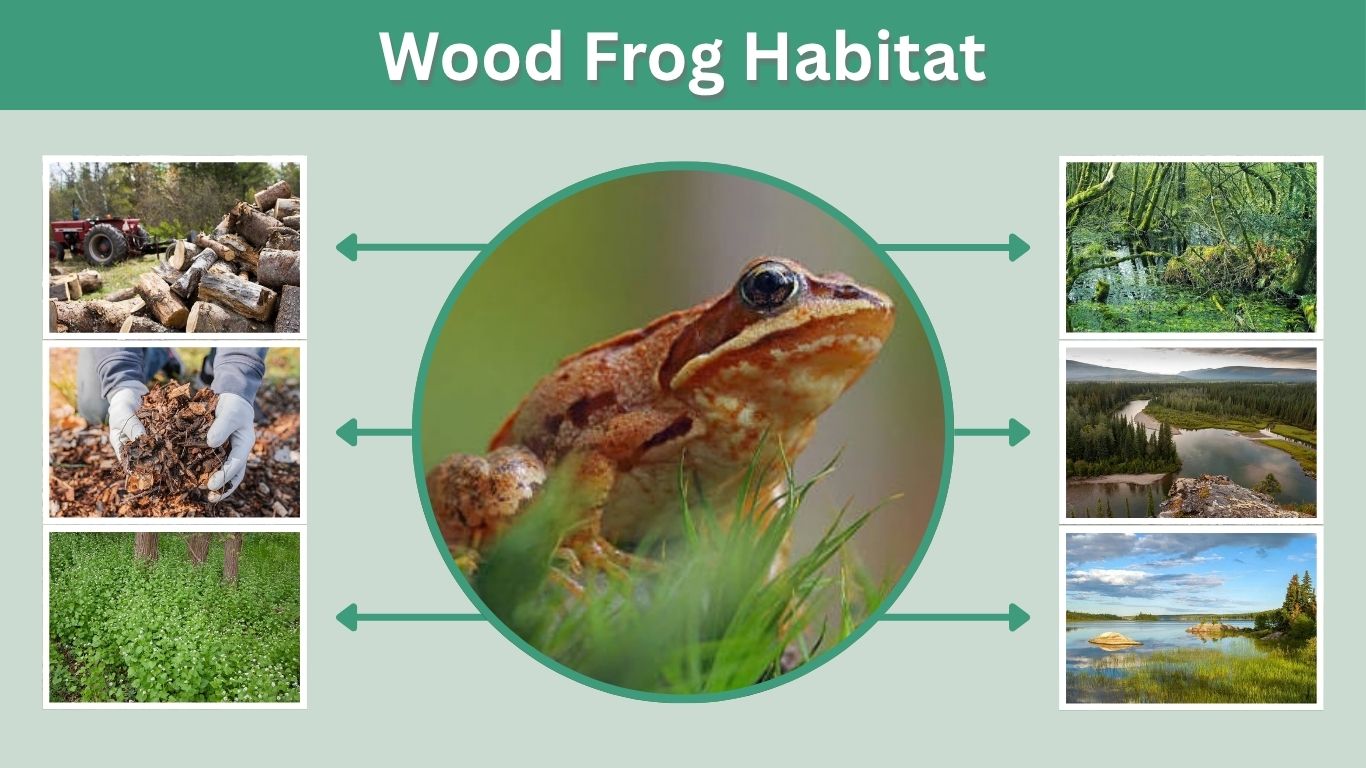
The natural wood frog habitat consists primarily of moist forests, woodland floors, and nearby freshwater wetlands. These amphibians depend on both terrestrial and aquatic environments throughout their lifecycle. Adults usually live among vegetation and leaf litter, while eggs and tadpoles develop in water. Their preference for cool, sheltered habitats helps protect them from dehydration and extreme temperatures.
Forest Floor and Woodland Habitat
Wood frogs commonly inhabit deciduous, mixed, and boreal forests. They shelter beneath fallen leaves, logs, rocks, and low vegetation.
Unlike highly aquatic frogs, adult wood frogs can travel considerable distances from ponds while searching for food.
Their brown coloration and dark facial mask provide camouflage against the forest floor, protecting them from predators.
Common Wood Frog Habitat Features
Suitable wood frog habitats generally contain:
- Moist leaf litter: Provides shelter and helps retain humidity.
- Fallen logs: Offer hiding places during dry or warm conditions.
- Woodland vegetation: Provides shade and protection.
- Temporary ponds: Support seasonal breeding.
- Soft forest soil: Helps maintain suitable moisture conditions.
- Insect populations: Supply food for growing and adult frogs.
Essential Wood Frog Habitat Requirements
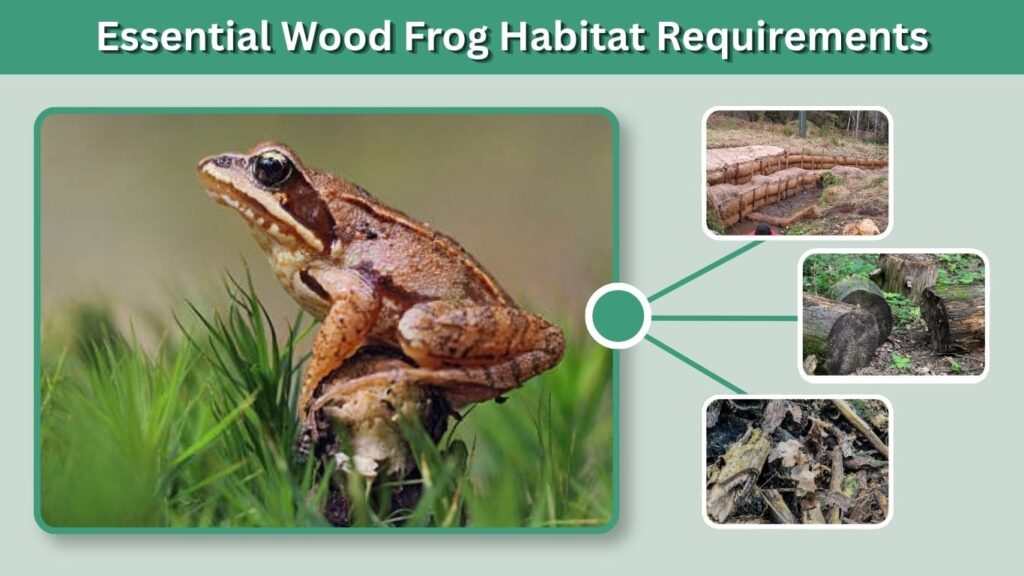
Wood frogs require environments that provide adequate moisture, protection, food, and seasonal breeding opportunities. Although they tolerate extremely cold winters, they remain sensitive to dehydration and unfavorable habitat changes. Healthy populations depend on suitable woodland surroundings and freshwater wetlands that remain available during reproduction. These requirements influence where wood frogs can establish stable populations and complete their lifecycle successfully.
Temperature, Moisture, and Shelter
Wood frogs thrive in cool, relatively humid woodland environments.
Their permeable skin allows water to pass through easily, making damp shelters particularly important.
During hot or dry weather, they seek protection beneath vegetation, decaying logs, and moist leaf litter.
Temperature and moisture conditions also influence feeding activity, breeding timing, and seasonal movements.
Breeding Pond Requirements
Suitable breeding habitats typically provide:
- Shallow freshwater: Allows eggs and tadpoles to develop.
- Temporary pools: Often contain fewer fish predators.
- Submerged vegetation: Provides attachment sites for egg masses.
- Seasonal water retention: Water must remain long enough for tadpoles to transform.
- Nearby woodland: Provides shelter and feeding habitat after breeding.
Wood frogs also breed along wetland margins and sheltered stream backwaters.
Wood Frog Habitat Range in North America
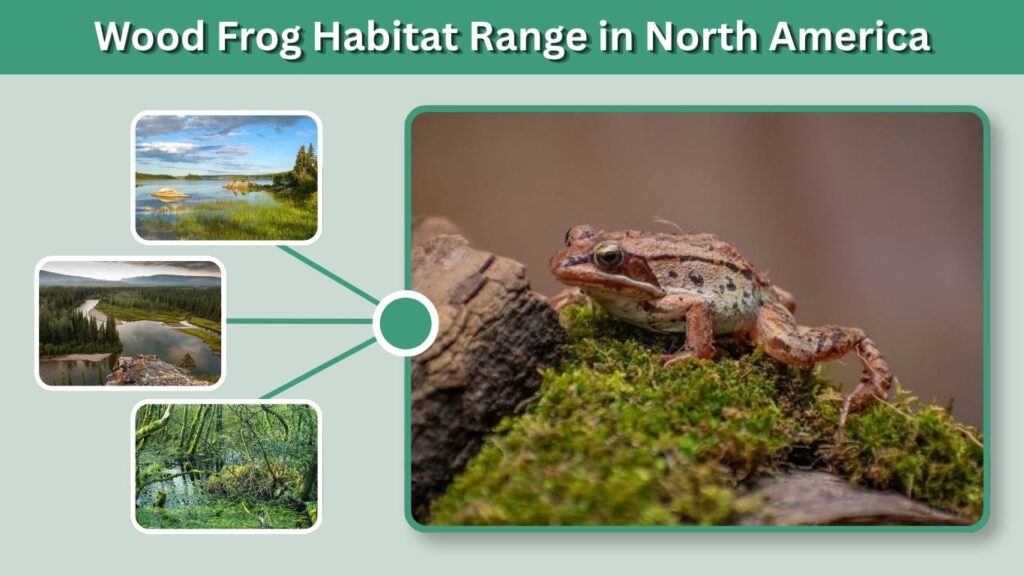
The North American wood frog occupies one of the broadest geographical ranges of any frog on the continent. It occurs across much of Canada, Alaska, and portions of the northern and eastern United States. Its distribution extends from temperate woodlands into subarctic environments. This wide range reflects its remarkable ability to tolerate cold temperatures and use seasonal wetlands.
North American Wood Frog Distribution
Wood frogs inhabit much of Canada and the northeastern United States, extending westward into northern Midwestern regions.
Their range also reaches southward through the Appalachian Mountains into parts of Georgia and Alabama.
Forested landscapes with suitable breeding wetlands support populations across these regions.
Alaskan Wood Frog Habitat
Alaskan wood frogs occupy boreal forests, woodland wetlands, and seasonal ponds throughout much of mainland Alaska.
They occur as far north as the Brooks Range, making them among the northernmost amphibians in North America.
During summer, they shelter within damp forest vegetation. During winter, they survive beneath insulating layers of fallen leaves.
Wood Frog Habitat in Minnesota
In Minnesota, wood frogs occur primarily in northern, east-central, and southeastern parts of the state.
They inhabit forested landscapes containing temporary wetlands, bogs, and sheltered freshwater habitats.
During spring, adults gather around breeding ponds. After reproduction, they return to surrounding woodlands to feed and shelter.
Siberian Wood Frog Habitat
The Siberian wood frog (Rana amurensis) is a different species from the North American wood frog.
It inhabits parts of Russia, northeastern China, Mongolia, and neighboring regions.
Its habitats include lowland forests, wetlands, and open landscapes with suitable moisture.
Despite sharing a similar common name, these frogs have different geographical distributions.
Wood Frog Habitat During Different Seasons
Wood frog habitat use changes throughout the year according to temperature, reproduction, and food availability. During spring, adults migrate toward breeding wetlands, while summer activity occurs mainly in surrounding forests. Autumn brings preparation for freezing temperatures, and winter requires protected terrestrial shelters. These seasonal movements make connections between woodland habitats and wetlands especially important for long-term survival.
Seasonal Habitat Changes
Wood frogs use different environments throughout the year:
- Spring: Shallow ponds and temporary wetlands for breeding.
- Summer: Moist forests, leaf litter, and sheltered woodland vegetation.
- Autumn: Protected forest-floor locations for overwintering.
- Winter: Leaf litter and ground-level shelters where freezing can be tolerated.
How Do Wood Frogs Survive Winter?
Wood frogs possess an extraordinary adaptation known as freeze tolerance.
As temperatures fall, ice can form outside their cells while glucose and other protective substances help prevent damaging ice formation inside cells.
During freezing, breathing and heartbeat may temporarily stop.
When temperatures rise in spring, the frogs thaw and resume normal activity. This adaptation allows them to survive winters that many other amphibians cannot tolerate.
How to Make a Wood Frog Habitat
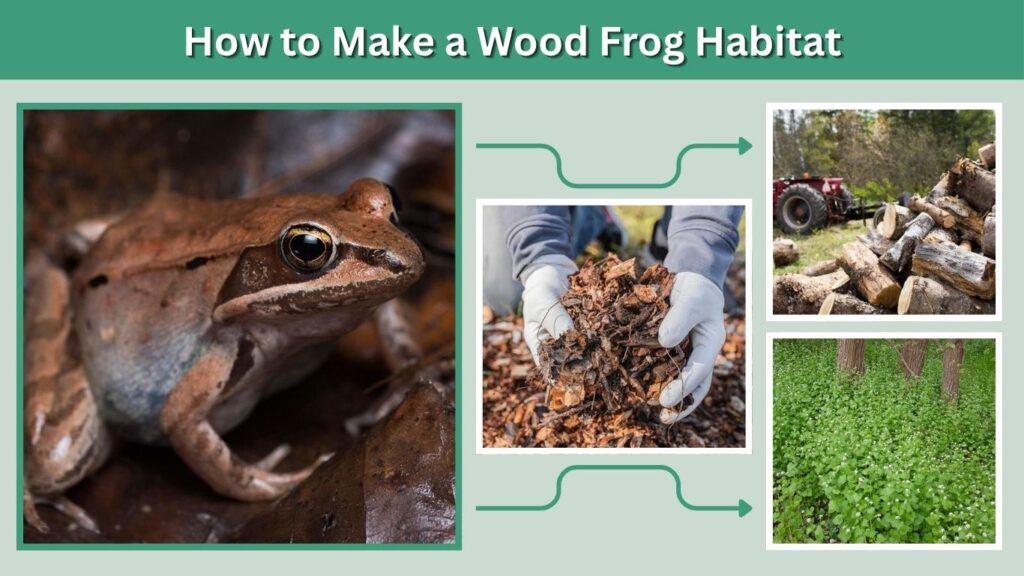
Creating a suitable wood frog habitat involves maintaining moist woodland conditions and protecting freshwater breeding areas. These frogs need more than a pond because much of their adult lives occurs on land. Homeowners with appropriate native habitats can support local populations through thoughtful landscaping, habitat conservation, and reduced chemical exposure. Wild populations should remain undisturbed whenever possible.
Creating a Wood Frog-Friendly Garden
Consider these habitat improvements:
- Preserve leaf litter: Maintain natural ground cover beneath trees.
- Keep fallen logs: Provide cool and moist hiding places.
- Grow native plants: Support insects and sheltered vegetation.
- Protect seasonal pools: Avoid draining natural breeding wetlands.
- Limit pesticides: Reduce unnecessary exposure to harmful chemicals.
- Maintain habitat connections: Allow frogs to move between forests and wetlands.
Wood Frog Captive Habitat Requirements
Wood frogs are wild amphibians with specialized seasonal requirements, making long-term captive care challenging.
A suitable managed enclosure would require moisture-retaining substrate, shaded hiding places, ventilation, appropriate temperatures, and access to clean, shallow water.
However, keeping wild-caught wood frogs may be restricted by local wildlife regulations. Preserving their natural habitat is generally preferable to collecting them as pets.
Threats to Wood Frog Habitats
Wood frogs depend on healthy connections between terrestrial forests and aquatic breeding environments. Habitat destruction can interrupt these connections and threaten local populations. Wetland drainage, forest clearing, road construction, pollution, and changing rainfall patterns can affect survival. Because tadpoles need enough time to develop before seasonal pools dry, changes in wetland conditions may also reduce reproductive success.
Habitat Loss and Fragmentation
Forest clearing and urban development can eliminate essential shelters and breeding locations.
Roads may separate breeding ponds from summer habitats, increasing the risk of mortality during seasonal movements.
Wetland drainage can also eliminate temporary pools that provide relatively predator-free breeding environments.
Climate Change and Water Availability
Changes in precipitation and temperature can alter the timing and duration of seasonal wetlands.
If breeding ponds dry too early, tadpoles may fail to complete metamorphosis.
Warmer winters and changing snow cover may also affect the insulating conditions wood frogs rely on during overwintering.
FAQs
Wood frogs are unusual amphibians because they inhabit cold forests, reproduce in temporary wetlands, and tolerate partial body freezing. Their habitat requirements vary with season and geographical location. Questions about Alaska, Minnesota, breeding ponds, and captivity are especially common. The following answers explain important aspects of wood frog habitat and their remarkable adaptations.
1. Where Do Wood Frogs Usually Live?
Wood frogs primarily inhabit moist deciduous, mixed, and boreal forests. They spend much of their adult lives on the forest floor and return to freshwater wetlands during the breeding season.
2. What Is the Best Habitat for a Wood Frog?
A suitable habitat contains shaded woodland, moist leaf litter, fallen logs, abundant insect prey, and nearby fish-free or low-predator breeding wetlands.
3. Do Wood Frogs Live in Alaska?
Yes. Wood frogs inhabit much of mainland Alaska, including interior boreal forests and areas extending north toward the Brooks Range.
4. Can Wood Frogs Live Without a Pond?
Adult wood frogs can spend extended periods away from ponds. However, they still require freshwater breeding habitats for egg laying and tadpole development.
5. Do Wood Frogs Live in Trees?
Wood frogs are primarily terrestrial amphibians. They usually live on forest floors rather than climbing trees, although woodland vegetation provides important shelter.
