
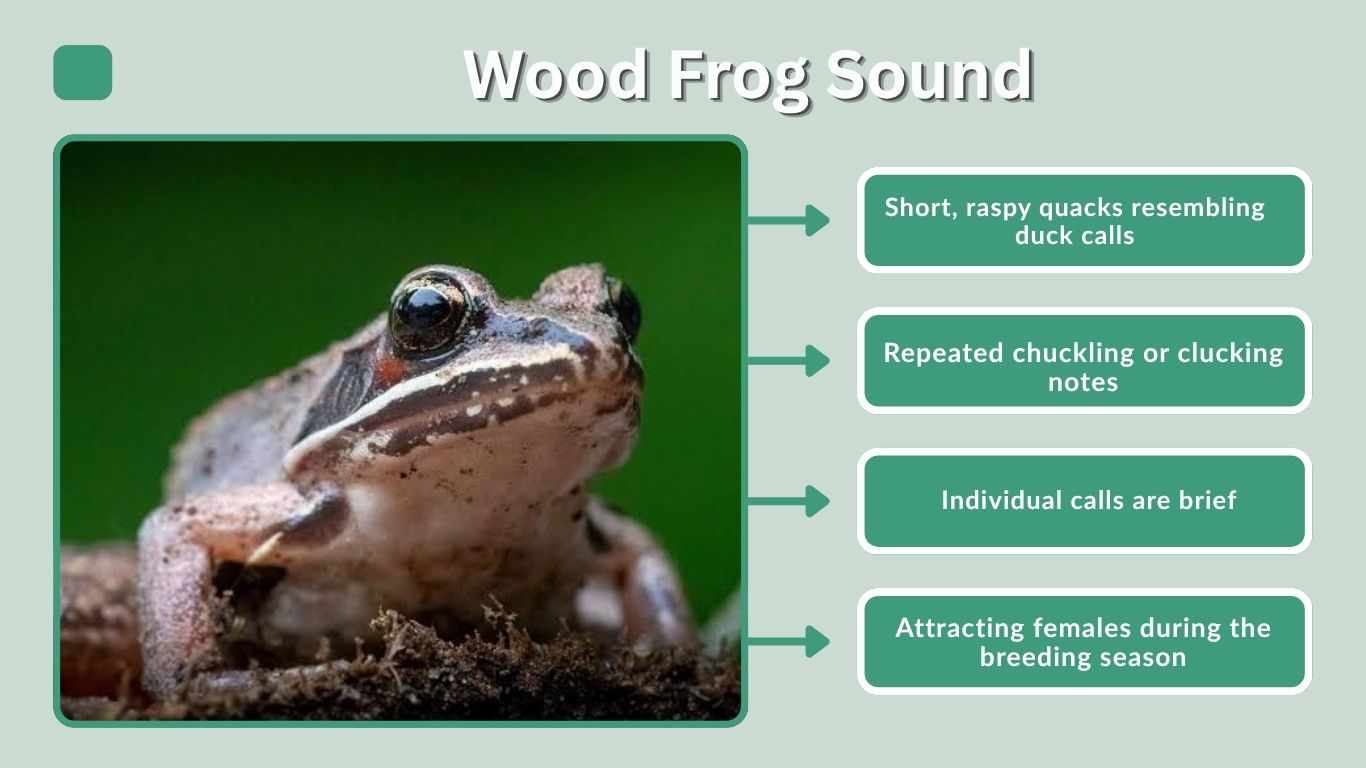
The wood frog sound is one of the most distinctive noises heard in North American forests during early spring. Unlike the familiar croaking of many frogs, wood frogs produce short, raspy calls resembling ducks quacking or chickens clucking. These unusual sounds become especially noticeable when groups of males gather in woodland ponds during the breeding season. But why do wood frogs sound like ducks, and when can you hear them? This guide explores wood frog calls, mating sounds, nighttime activity, sound identification, and where to find authentic recordings.
What Does a Wood Frog Sound Like?
The wood frog (Lithobates sylvaticus) produces a distinctive, low-pitched vocalization that sounds remarkably different from the deep croaks associated with larger frogs. Its call is commonly described as a raspy quack, chuckle, or clucking noise. When multiple males call simultaneously, the combined sound can resemble a gathering of ducks near a woodland pond during early spring.
Common Characteristics of Wood Frog Sounds
Wood frog calls have several recognizable acoustic characteristics that help distinguish them from other amphibians.
- Sound Type: Short, raspy quacks resembling duck calls.
- Pitch: Generally low to moderately pitched, with a rough quality.
- Rhythm: Repeated chuckling or clucking notes.
- Duration: Individual calls are brief and often occur in short sequences.
- Volume: A group of calling males can produce a surprisingly noticeable chorus.
- Primary Purpose: Attracting females during the breeding season.
- Calling Location: Shallow woodland ponds, temporary pools, and flooded forest areas.
Why Do Wood Frogs Sound Like Ducks?
Wood frogs produce sounds that resemble ducks because their vocalizations consist of short, rough, repeated notes rather than long, musical croaks.
Male wood frogs use paired vocal sacs to amplify their calls while floating in breeding ponds.
When several males vocalize together, their overlapping calls create a chorus resembling ducks quacking or chickens clucking.
However, wood frog calls generally have a shorter, rougher, more chuckling quality than typical duck vocalizations.
Why Do Wood Frogs Make Sounds?
Wood frogs communicate primarily through vocalizations associated with reproduction. Their calling behavior is especially important because the breeding season is remarkably short compared with that of many other frog species. Males gather in temporary woodland pools and produce distinctive sounds to attract potential mates. These vocalizations help females locate breeding areas and contribute to the intense activity of spring mating gatherings.
Male Wood Frog Mating Sounds
Male wood frogs are responsible for the characteristic quacking sounds heard during the breeding season.
As temperatures increase and woodland pools begin thawing, males migrate toward suitable breeding locations.
They gather in shallow water and produce repeated, raspy calls that attract females.
Because wood frogs reproduce within a short seasonal window, males concentrate much of their calling activity into a relatively brief period.
Once mating and egg-laying activities conclude, these vocalizations become uncommon.
Wood Frog Chorus Sound
A wood frog chorus occurs when numerous males call simultaneously within the same breeding pool.
Instead of forming a coordinated melody, each male produces repeated vocalizations, creating overlapping layers of quacking and chuckling sounds.
Large breeding gatherings can resemble a flock of ducks communicating across a pond.
The intensity of the chorus changes as individual frogs begin and stop calling.
This distinctive acoustic activity is one of the earliest signs of amphibian reproduction in northern woodland ecosystems.
When and Where Can You Hear Wood Frog Sounds?
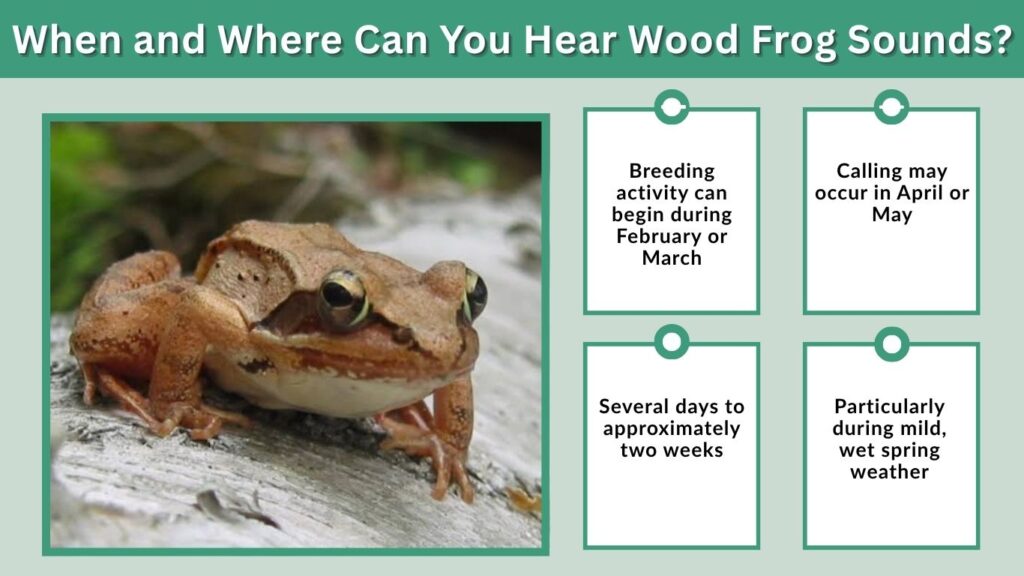
Wood frog vocalizations are closely associated with seasonal changes in temperature and moisture. Unlike frogs that call throughout summer, wood frogs usually concentrate their breeding activity in early spring. Their sounds are most commonly heard near shallow temporary wetlands surrounded by forests. Calling dates vary considerably across their North American range, depending on snowmelt, local weather, and geographic location.
Wood Frog Sounds During Early Spring
Wood frogs are among the first amphibians to become active after winter.
In southern portions of their range, breeding activity can begin during February or March. Farther north, calling may occur in April or May as ice melts.
Their breeding gatherings often last only several days to approximately two weeks.
Once females deposit their eggs and adults leave the pools, the characteristic chorus largely disappears until the following breeding season.
Do Wood Frogs Make Sounds at Night?
Yes, wood frogs can produce mating calls at night, particularly during mild, wet spring weather.
However, they are not exclusively nighttime callers. Males may also vocalize during daylight hours when temperatures and breeding conditions are favorable.
Warm afternoons following snowmelt can produce noticeable calling activity.
Consequently, someone searching for wood frog sounds at night should also listen during suitable daytime conditions.
Wood Frog Sounds in Michigan and Minnesota
Wood frogs are widespread in Michigan, Minnesota, Wisconsin, and other northern states.
In Michigan, their calls are often heard during March and April, although northern areas may experience later breeding.
Minnesota wood frogs similarly begin calling when temporary woodland ponds thaw.
Their short, harsh calls may sound like repeated “racket, racket” noises.
Local temperatures, rainfall, snow cover, and elevation all influence the timing of these spring choruses.
How to Identify Wood Frog Sounds in Nature
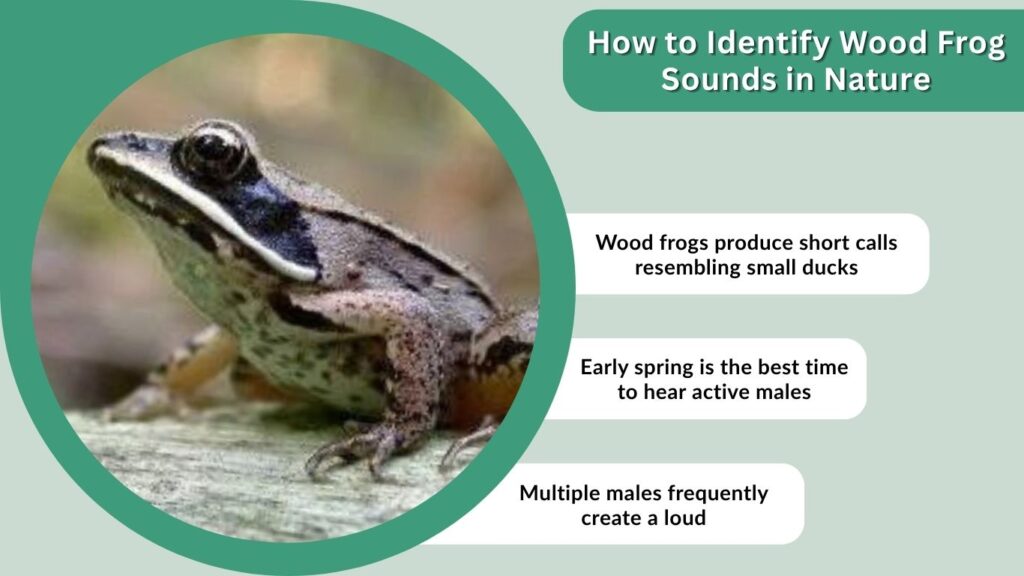
Identifying wood frog sounds becomes easier when you understand their distinctive rhythm, seasonal timing, and preferred habitats. Although several frog species produce unusual calls, wood frogs are particularly recognizable for their duck-like chuckling. Listening carefully to the pattern and surrounding environment can help distinguish them from spring peepers, green frogs, and other amphibians commonly heard near North American wetlands.
Key Tips for Recognizing Wood Frog Calls
Use these identification clues when listening near a woodland pond:
- Listen for quacking: Wood frogs produce short calls resembling small ducks.
- Notice repeated chuckles: Their sounds often occur in quick, rough sequences.
- Check the season: Early spring is the best time to hear active males.
- Observe the habitat: Temporary fishless woodland pools are common calling locations.
- Listen for groups: Multiple males frequently create a loud, overlapping chorus.
- Look for dark eye markings: Wood frogs have a distinctive dark mask extending behind each eye.
Wood Frog Sound vs. Other Frog Sounds
Wood frog calls are noticeably different from those of many other North American frogs.
Spring peepers produce high-pitched, whistle-like peeping sounds, while wood frogs create lower, rougher quacking notes.
Green frogs are known for calls resembling a loose banjo string being plucked.
American bullfrogs produce deeper, resonant sounds that are often compared to repeated jug-like notes.
These differences in pitch, rhythm, and tone help listeners distinguish individual species, even when several frogs occupy nearby wetlands.
Wood Frog Sound Recordings and Listening Tips
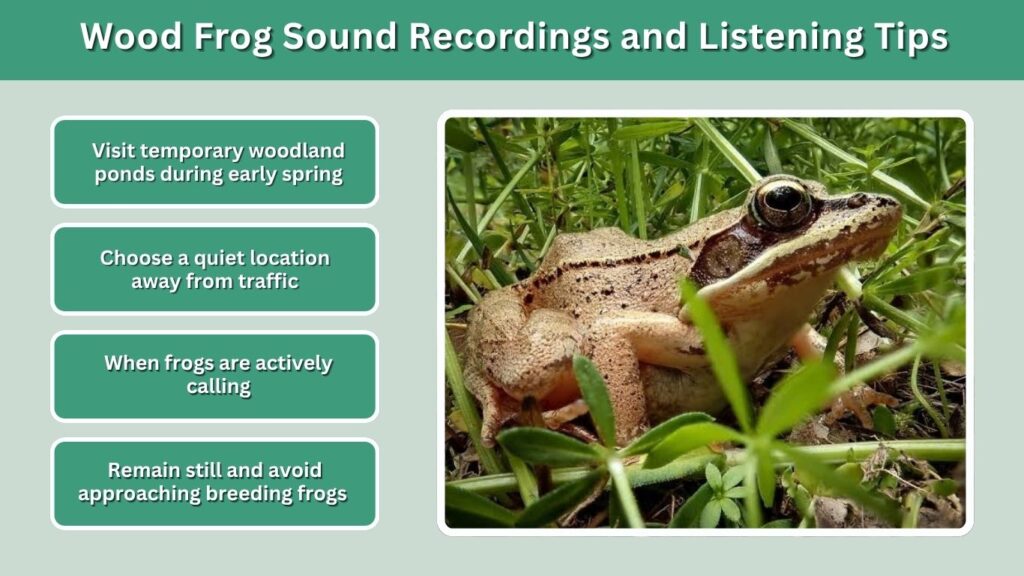
Listening to an authentic wood frog sound recording is one of the easiest ways to recognize this species in nature. Wildlife researchers and naturalists have documented individual mating calls and large breeding choruses across North America. These recordings are particularly useful for distinguishing wood frogs from similarly sounding animals. Learning their calls can also improve amphibian identification during spring wildlife surveys.
Where to Hear Real Wood Frog Sounds
The Cornell Lab of Ornithology’s Macaulay Library maintains recordings of wood frog vocalizations.
Its wildlife audio collection includes individual calls and extended choruses recorded in natural habitats.
The University of Illinois Extension also features wood frog recordings in its Voice of the Wild educational series.
Listeners can compare single frogs with larger breeding groups to understand how individual quacks blend into a continuous chorus.
Authentic recordings are more useful for identification than artificial sound effects.
Tips for Recording Wood Frog Calls
Recording wood frog sounds can be an enjoyable activity for wildlife enthusiasts, researchers, and nature photographers.
For clearer results, follow these recommendations:
- Visit temporary woodland ponds during early spring.
- Choose a quiet location away from traffic and human activity.
- Record during mild weather when frogs are actively calling.
- Use a smartphone or portable audio recorder with minimal handling noise.
- Remain still and avoid approaching breeding frogs too closely.
- Record several minutes to capture variations in their calls.
Avoid entering sensitive breeding pools or disturbing egg masses while recording.
Wood Frog Sound vs. Wooden Frog Instrument Sound
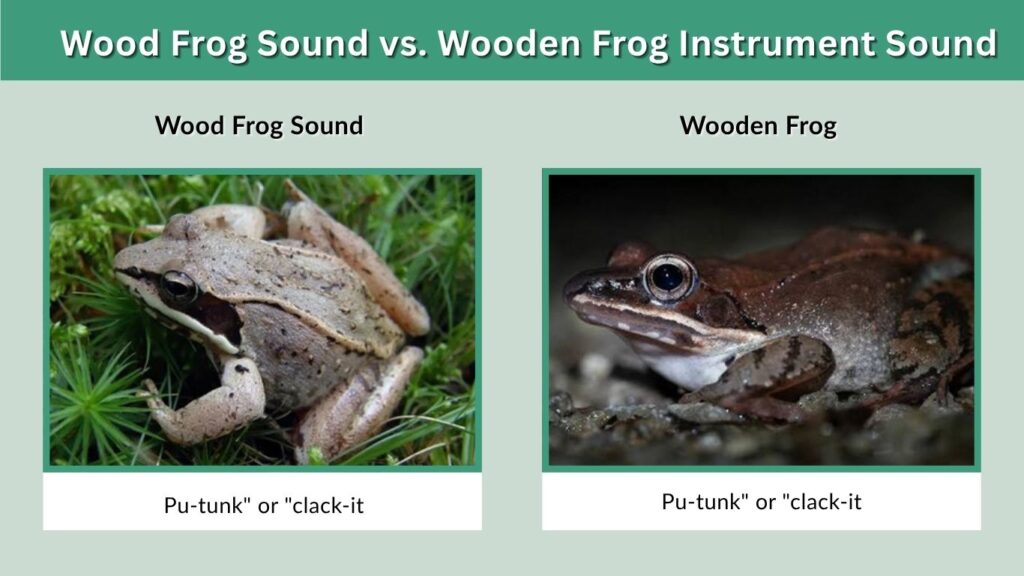
The terms “wood frog sound” and “wooden frog sound” may appear similar in online searches, but they describe completely different things. A wood frog is a living amphibian that produces natural mating calls. A wooden frog is usually a carved musical instrument designed to imitate frog-like noises. Understanding this distinction helps listeners find the correct audio recordings or sound-producing objects.
What Is a Wooden Frog Sound Maker?
A wooden frog sound maker is a traditional percussion instrument often called a frog-shaped güiro.
It typically features a hollow wooden body with ridges carved along its back.
The instrument produces sound when someone rubs a wooden stick across these ridges.
This creates a repetitive, scraping croak that imitates the general sound of a frog.
Unlike actual wood frog calls, its tone and rhythm depend entirely on how the instrument is played.
What Frog Sounds Like Knocking on Wood?
A frog producing sounds similar to someone hammering or knocking on wood may be a carpenter frog rather than a wood frog.
The carpenter frog (Lithobates virgatipes) produces distinctive repeated calls often described as “pu-tunk” or “clack-it.”
These sounds resemble a carpenter hammering nails.
Wood frogs, in comparison, produce shorter, raspy, duck-like vocalizations rather than clearly separated hammering notes.
Recognizing this difference can prevent confusion when identifying unusual sounds around wetlands.
FAQs
Wood frog calls are fascinating because they differ considerably from the familiar croaking associated with many amphibians. Their brief breeding season, unusual duck-like sounds, and ability to vocalize during cold early-spring conditions make them especially interesting to wildlife observers. The following frequently asked questions address common concerns about male calls, nighttime sounds, mating behavior, and seasonal activity.
1. What does a wood frog sound like?
A wood frog produces short, raspy calls resembling ducks quacking or chickens clucking. During the breeding season, groups of males create overlapping choruses that sound like several ducks calling together in a woodland pond.
2. Why do male wood frogs make sounds?
Male wood frogs produce vocalizations primarily to attract females during their brief spring breeding season. These mating calls help females locate active breeding areas where reproduction takes place.
3. Do wood frogs make sounds at night?
Yes, wood frogs can call at night, especially during mild spring weather. However, they also vocalize during daylight hours. Their calling activity depends on breeding conditions rather than nighttime alone.
4. What time of year do wood frogs make sounds?
Wood frogs usually call during early spring, often between February and May depending on geographic location. Their breeding season is short, and most calling stops once reproduction is completed.
5. Do female wood frogs make sounds?
Female wood frogs do not typically produce the familiar mating chorus. Those calls are primarily made by males. Although females may produce occasional vocalizations in particular situations, their calling behavior is much less prominent during breeding.
