
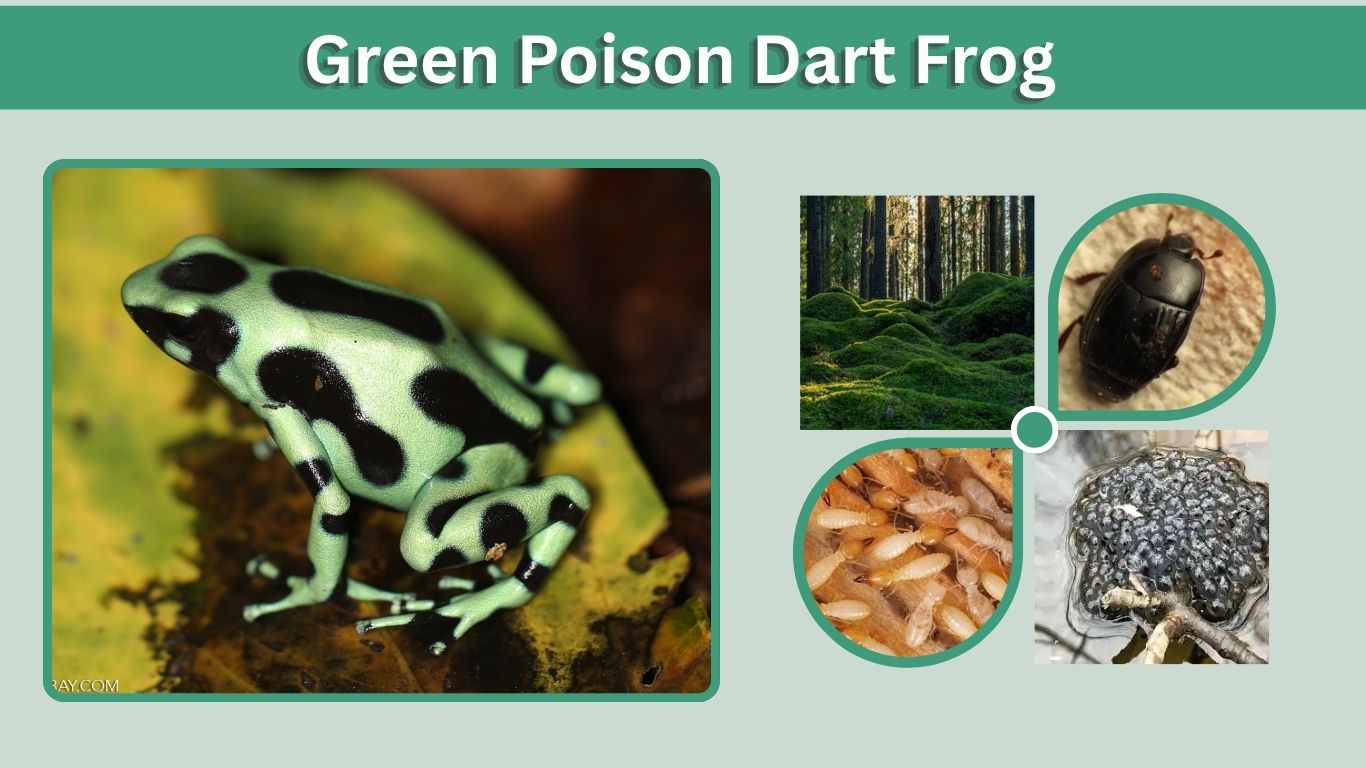
The green poison dart frog is a fascinating tropical amphibian known for its brilliant green coloring, striking black patterns, and poisonous skin. Scientifically called Dendrobates auratus, this tiny frog inhabits humid forests throughout parts of Central and South America. Despite its small size, it has remarkable survival adaptations, unusual parenting behaviors, and a surprisingly varied appearance. From its natural habitat and feeding habits to its toxicity and life cycle, understanding the green and black poison dart frog reveals why it is one of the rainforest’s most interesting amphibians.
What Does a Green Poison Dart Frog Look Like?
The green and black poison dart frog is easily recognized by its glossy skin and contrasting colors. Although green and black are the most familiar combination, individuals can display blue, turquoise, yellowish, or bronze-colored markings. These frogs are relatively small, with compact bodies, powerful hind legs, and specialized toes that help them navigate vegetation and moist forest surfaces.
Green and Black Poison Dart Frog Identification
Several physical characteristics distinguish this species from other tropical frogs:
- Scientific name: Dendrobates auratus
- Family: Dendrobatidae
- Average size: Approximately 1–1.7 inches (2.5–4.2 cm).
- Body color: Typically black or dark brown with green, turquoise, or yellowish markings.
- Skin: Smooth, glossy, and capable of secreting defensive toxins.
- Feet: Slender toes with adhesive pads and no webbing.
- Activity: Primarily active during daylight hours.
Females are generally slightly larger than males, although appearance alone cannot always determine their sex.
Green, Blue, and Other Color Variations
Not every green poison dart frog has identical markings. Some display neon-green patches, while others have mint-green, turquoise, or blue patterns against dark backgrounds.
These variations often reflect geographic differences between populations. The arrangement of spots, bands, and irregular patches can also differ considerably.
Bright coloration helps communicate a warning to potential predators. However, color alone cannot reliably identify a species, because several poison frog species share similar appearances.
Where Do Green Poison Dart Frogs Live?
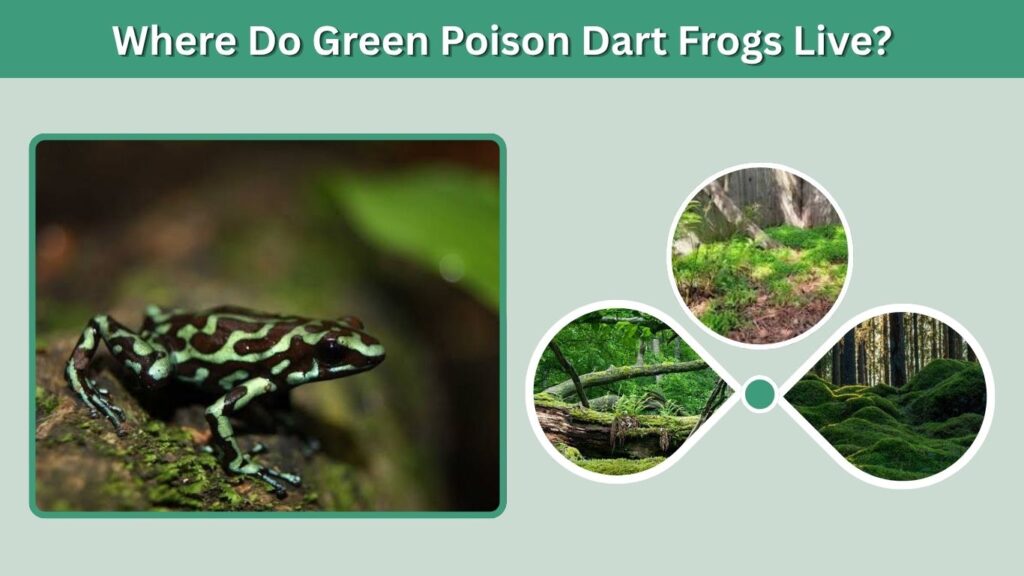
Green and black poison dart frogs inhabit warm, humid environments where vegetation provides protection and small arthropods are abundant. They spend much of their time exploring the forest floor, although they can also climb trees and vegetation. Moisture is essential for maintaining healthy skin and supporting their reproductive activities, especially during periods of egg development and tadpole growth.
Natural Habitat and Geographic Distribution
The green poison dart frog naturally occurs in Nicaragua, Costa Rica, Panama, and Colombia.
It commonly inhabits tropical rainforests, particularly environments with substantial leaf litter, fallen branches, moss, and shaded vegetation.
Suitable habitats provide several important conditions:
- Consistently humid surroundings that prevent dehydration.
- Dense vegetation and fallen leaves offering hiding places.
- Small pools or water-filled cavities supporting tadpole development.
- Abundant ants, mites, and other tiny invertebrates.
Although these frogs prefer moist environments, adults are primarily terrestrial rather than aquatic.
Green and Black Poison Dart Frogs in Hawaii
Interestingly, green and black poison dart frogs also occur in Hawaii, where they are not native.
They were intentionally introduced to Oahu in 1932 as part of an effort to control insect pests. Some populations subsequently became established in suitable humid habitats.
Their presence demonstrates how introduced amphibians can survive outside their original geographic range. However, introducing nonnative animals can disturb local ecosystems, making responsible wildlife management essential.
What Do Green Poison Dart Frogs Eat?
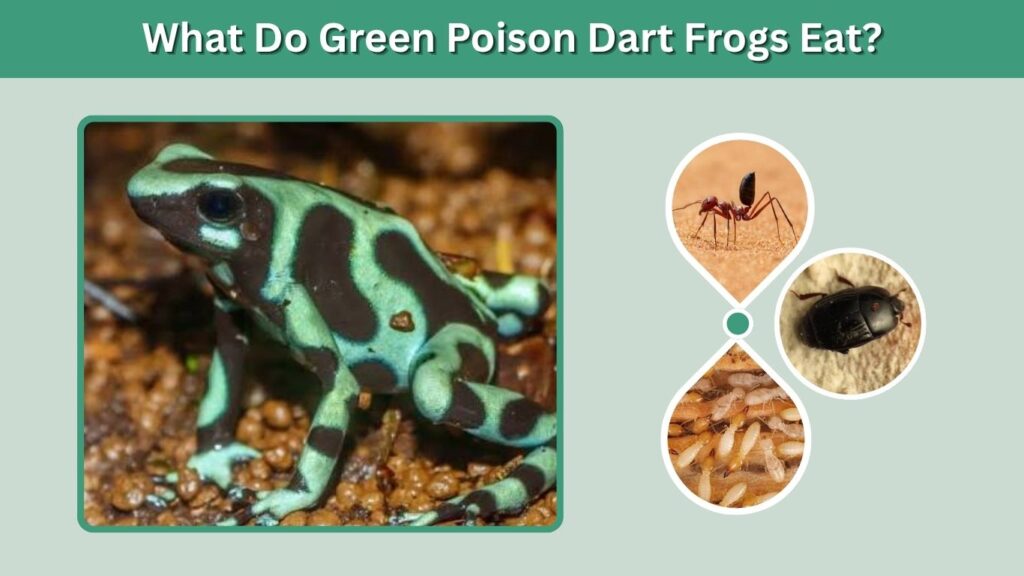
The green poison dart frog is a carnivorous amphibian that feeds primarily on tiny invertebrates. Its diet plays a particularly important role in survival because certain natural prey contain chemical compounds associated with the frog’s defensive toxins. These small hunters search the forest floor during daylight, capturing suitable prey with their quick movements and specialized feeding behavior.
Green and Black Poison Dart Frog Diet
Wild green poison dart frogs consume a variety of small arthropods, including:
- Ants: An important natural food source associated with their chemical defenses.
- Mites: Tiny arthropods commonly found among vegetation and leaf litter.
- Termites: Small insects that may contribute to their overall diet.
- Other invertebrates: Additional suitably sized prey encountered while foraging.
Unlike larger frogs that swallow sizable insects, poison dart frogs specialize in much smaller prey.
Their feeding habits also help regulate populations of tiny forest invertebrates.
Are Green and Black Poison Dart Frogs Poisonous to Humans?
Yes, wild green and black poison dart frogs possess poisonous skin secretions. Their defensive chemicals are derived largely from naturally occurring compounds acquired through their diet.
However, they are not considered among the world’s deadliest poison frogs.
Their toxins primarily protect them against predators rather than assist in hunting. Unlike venomous animals that inject toxins through bites or stings, poison dart frogs release defensive substances through their skin.
Captive-bred frogs fed non-toxic insects generally lack the dangerous alkaloids found in wild individuals.
Nevertheless, wild frogs should never be handled unnecessarily. Their skin is delicate, and contact with potentially toxic secretions should be avoided.
Green Poison Dart Frog Behavior and Life Cycle
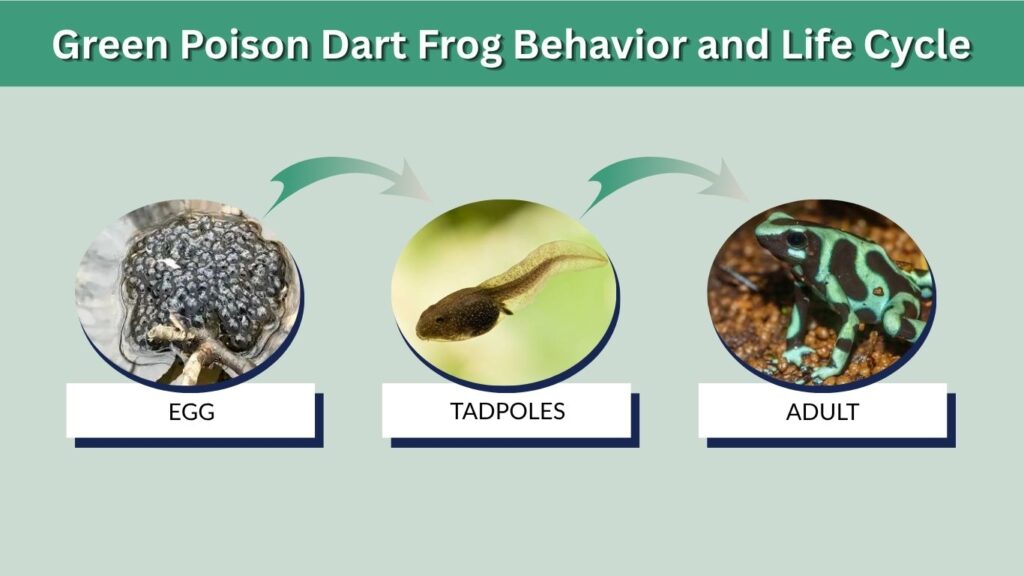
Green poison dart frogs display surprisingly complex behavior for such small amphibians. They communicate through distinctive calls, establish territories, and participate in courtship activities. Their reproductive strategy is especially interesting because parents provide care after eggs are laid. Instead of leaving their offspring completely unattended, adults help protect developing eggs and transport newly hatched tadpoles to suitable water sources.
Green and Black Poison Dart Frog Sounds
Male green poison dart frogs produce soft, high-pitched calls to attract females and communicate with other frogs.
These vocalizations may resemble short, musical chirps rather than the loud croaking commonly associated with larger frogs.
Calling activity is particularly important during reproduction, when males establish territories and attempt to attract potential mates.
Although their sounds are relatively quiet, vocal communication plays a central role in their daily behavior and breeding success.
Green and Black Poison Dart Frog Reproduction
The green poison dart frog has a fascinating reproductive process involving several developmental stages.
Courtship begins when a male attracts a female through calling and behavioral displays. After mating, the female deposits a small clutch of eggs in a sheltered, moist location, often among leaf litter.
The male typically guards the eggs and helps maintain appropriate conditions while they develop.
Once the eggs hatch, the male carries the tadpoles on his back to small pools of water, where they continue developing.
The tadpoles gradually grow legs, absorb their tails, and transform into miniature frogs through metamorphosis.
This parental care improves the offspring’s chances of survival in a challenging rainforest environment.
Green Poison Dart Frog Care, Lifespan, and Conservation
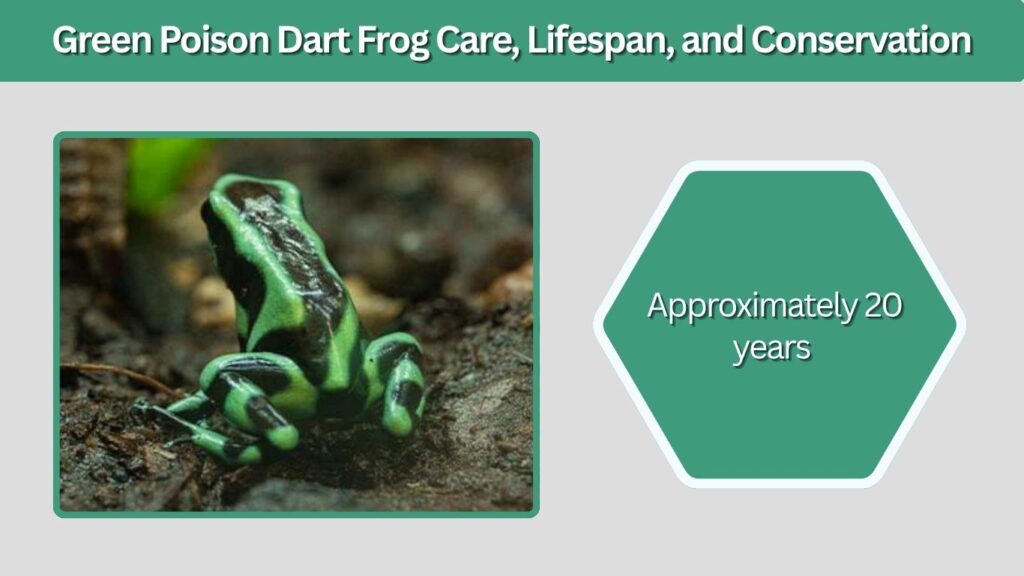
Although green poison dart frogs are popular among amphibian enthusiasts, maintaining them requires careful attention to environmental conditions. Their delicate skin, specialized diet, and dependence on humidity make proper housing essential. Understanding their lifespan and conservation needs is equally important, especially because habitat destruction and irresponsible wildlife collection can threaten populations even when a species remains relatively widespread.
Green and Black Poison Dart Frog Care
Captive-bred green and black poison dart frogs can thrive in carefully maintained tropical vivariums.
Important care requirements include:
- Enclosure: A secure, planted vivarium with enough floor space and hiding areas.
- Humidity: Maintain approximately 70–90% humidity while allowing appropriate ventilation.
- Temperature: Generally provide conditions around 68–80°F, avoiding overheating.
- Substrate: Use moisture-retaining materials with leaf litter and suitable drainage.
- Food: Offer appropriately sized fruit flies, springtails, and other cultured invertebrates.
- Handling: Avoid unnecessary physical contact because amphibian skin is extremely sensitive.
Always obtain captive-bred frogs from reputable, legal sources and consult an amphibian veterinarian about suitable care.
Lifespan and Conservation Status
Green and black poison dart frogs can survive for many years. Their lifespan varies with environmental conditions, and individuals in captivity may live for more than a decade, occasionally reaching approximately 20 years.
The International Union for Conservation of Nature (IUCN) currently classifies Dendrobates auratus as Least Concern.
However, its population trend is decreasing, and habitat destruction, forest fragmentation, disease, and collection for the exotic pet trade remain concerns.
Protecting tropical forests and supporting responsible captive breeding are important steps toward conserving these remarkable amphibians.
FAQs
1. Are green poison dart frogs deadly?
Wild green poison dart frogs contain toxic skin secretions, but they are generally less dangerous than highly toxic species such as the golden poison frog. Avoid touching or consuming wild specimens.
2. How big do green and black poison dart frogs get?
Adults typically measure approximately 1–1.7 inches (2.5–4.2 cm) long. Females are often slightly larger than males.
3. Can green poison dart frogs be kept as pets?
Yes, legally obtained captive-bred individuals can be maintained in specialized tropical vivariums. They require controlled humidity, suitable temperatures, tiny live insects, and minimal handling.
4. How long do green poison dart frogs live?
Their lifespan varies considerably. They can survive for more than ten years under appropriate captive conditions, with some individuals reaching around 20 years.
5. Why are green poison dart frogs brightly colored?
Their bright green, turquoise, or contrasting black patterns can warn predators about their chemical defenses. This protective signaling is commonly called aposematic coloration.
