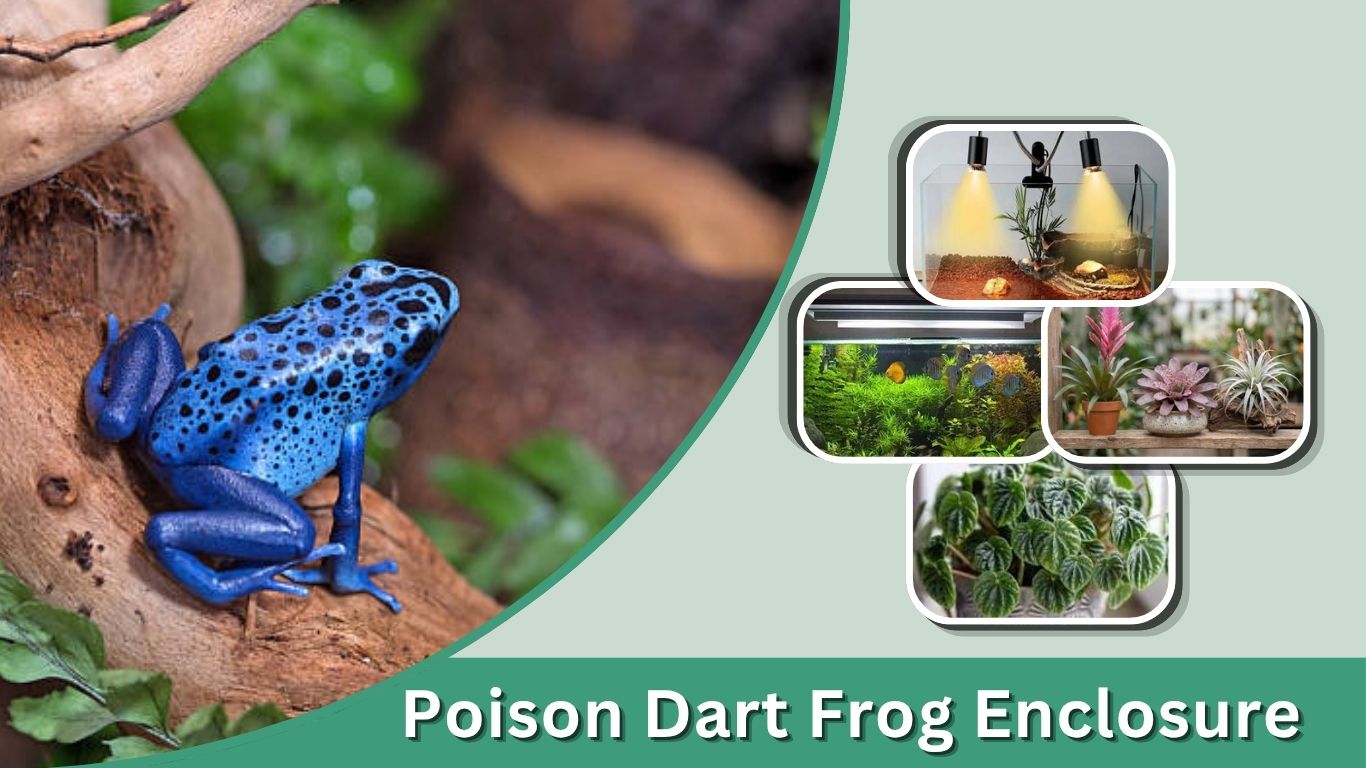
Choosing the right poison dart frog enclosure is essential for creating a healthy, comfortable habitat for these colorful tropical amphibians. Although poison dart frogs are small, they require carefully controlled humidity, temperature, ventilation, and sufficient living space. A suitable enclosure should also support natural activities such as climbing, hiding, and hunting. This guide explains enclosure sizes, housing requirements, essential features, and practical tips for beginners who want to keep poison dart frogs successfully.
What Type of Enclosure Do Poison Dart Frogs Need?
Poison dart frogs need a humid, well-ventilated enclosure that recreates important features of their natural rainforest habitat. Glass vivariums are widely preferred because they retain moisture, support tropical plants, and provide clear visibility. A well-designed enclosure should also contain secure hiding places, natural substrate, and climbing opportunities.
Glass Vivarium vs. Standard Aquarium
Front-opening glass vivariums are often the most convenient choice for poison dart frogs. Their doors allow easy feeding, cleaning, and plant maintenance without disturbing the entire habitat.
Traditional glass aquariums can sometimes be converted into frog enclosures, but they generally require ventilation modifications and secure lids.
A purpose-built vivarium usually offers better accessibility and makes humidity management easier.
Why Enclosure Design Matters
A suitable enclosure supports normal frog behavior while reducing environmental stress. Poison dart frogs spend considerable time exploring leaves, climbing structures, and searching for tiny insects.
Poorly designed enclosures can contribute to territorial conflict, dehydration, overheating, or inadequate shelter. Providing suitable floor space and vertical structures helps create a more functional living environment.
Best Poison Dart Frog Enclosure Size
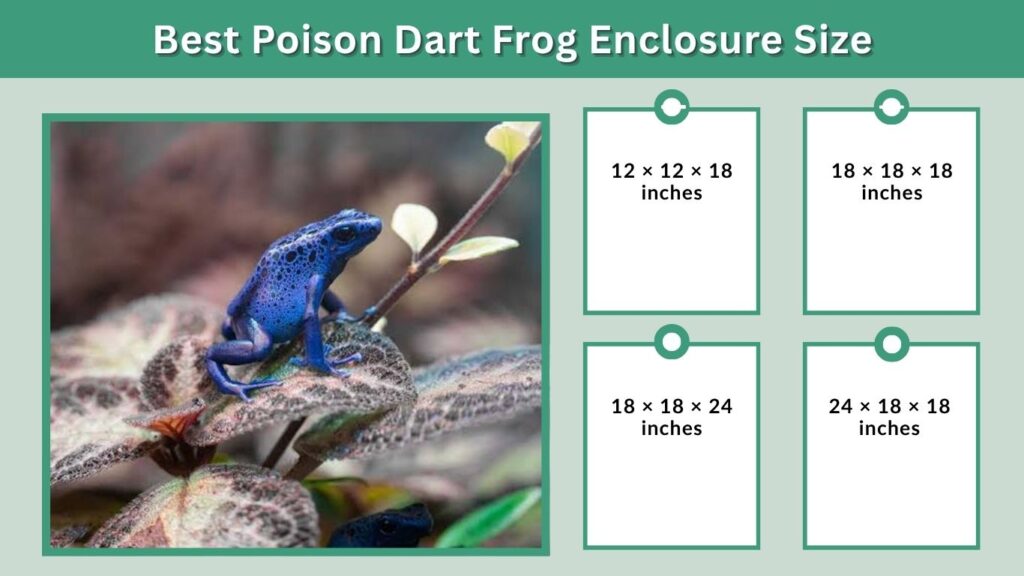
The ideal poison dart frog enclosure size depends on the species, number of frogs, and their natural activity patterns. Some species primarily explore the forest floor, while others spend considerable time climbing vegetation. Choosing a larger enclosure allows more space for plants, hiding areas, and natural movement.
Recommended Enclosure Dimensions
| Enclosure Size | Recommended Use |
| 12 × 12 × 18 inches | Selected small species or temporary housing |
| 18 × 18 × 18 inches | Compact adult setups for suitable species |
| 18 × 18 × 24 inches | Good starting size for many dart frogs |
| 24 × 18 × 18 inches | Additional floor space for terrestrial species |
| 24 × 18 × 24 inches | Spacious planted enclosures |
| 36 × 18 × 24 inches | Larger habitats with more usable territory |
These dimensions are general planning guidelines rather than fixed stocking limits. Actual capacity depends on species, sex, temperament, and enclosure layout.
How Much Space Does Each Frog Need?
Poison dart frogs require sufficient space to establish territories and forage comfortably. An 18 × 18 × 24-inch enclosure can accommodate a compatible pair of many commonly kept species, although some species require larger habitats.
Ground-dwelling frogs benefit from additional floor space, while climbing species need greater enclosure height.
When possible, choosing a larger enclosure provides more flexibility.
Essential Poison Dart Frog Enclosure Requirements
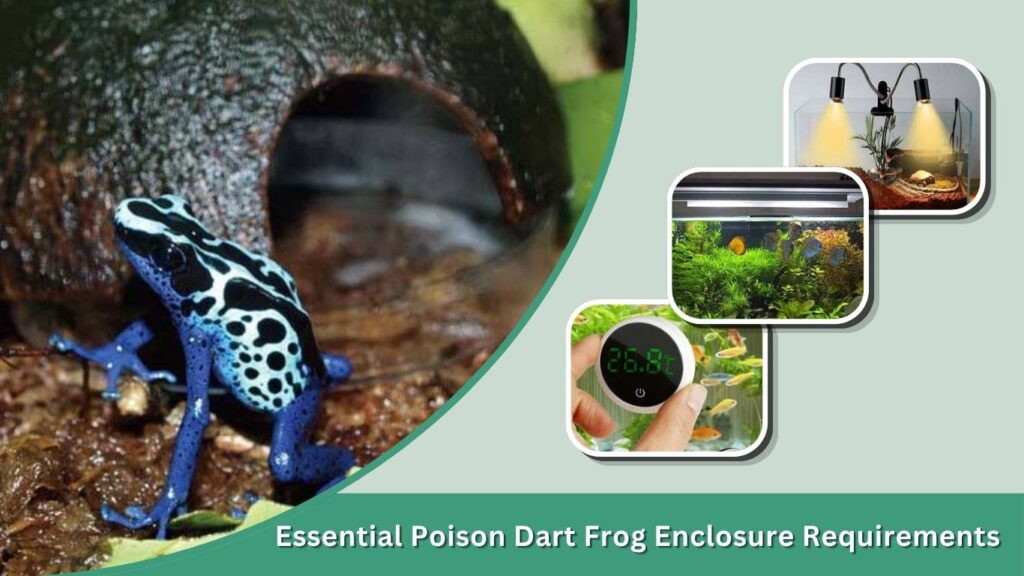
A suitable enclosure must provide stable environmental conditions throughout the year. Poison dart frogs have sensitive skin and can become stressed when temperatures, humidity, or ventilation are unsuitable. Proper enclosure planning should consider the surrounding room environment as well as conditions inside the vivarium.
Temperature Requirements
Many commonly kept species thrive at approximately 68–78°F (20–26°C), although ideal ranges vary.
Avoid allowing the enclosure to become excessively warm. Temperatures above 80°F (27°C) may be dangerous for many species, particularly with prolonged exposure.
Place the vivarium away from windows receiving direct sunlight, heating appliances, and powerful lamps.
Humidity Requirements
Poison dart frogs generally require high humidity, commonly around 75–95%, depending on their species.
Use a misting system and digital hygrometer to monitor moisture levels. However, excessive misting without ventilation can create stagnant conditions and saturated substrate.
Maintain humid hiding areas while allowing suitable airflow and natural moisture fluctuations.
Lighting and Ventilation
Provide a consistent day-and-night lighting cycle, often approximately 10–12 hours of light daily.
Plant-friendly LED lighting supports live vegetation without generating excessive heat.
Ventilation openings should permit air exchange while preventing frogs and feeder insects from escaping. Avoid completely sealing the enclosure.
How to Prepare a Poison Dart Frog Enclosure
Preparing an enclosure involves more than placing decorations inside a glass tank. A suitable habitat needs effective drainage, appropriate substrate, live plants, and multiple hiding areas. Completing these elements before introducing frogs allows the environment to stabilize and helps prevent unnecessary stress.
Install Drainage and Substrate
Create a drainage layer using expanded clay balls or a raised false-bottom system.
Place a mesh barrier above the drainage layer, followed by approximately 2–3 inches of suitable tropical substrate.
The substrate should retain moisture while allowing excess water to drain. Include a method for removing accumulated water beneath the soil.
Add Natural Hiding Places
Provide several secure hiding areas using cork bark, leaf litter, and suitable branches.
Position decorations firmly to prevent movement or collapse. Include both ground-level shelters and elevated surfaces where appropriate.
Leaf litter is particularly useful because it provides shelter, helps retain moisture, and supports beneficial microorganisms.
Establish a Bioactive Environment
A bioactive enclosure uses live plants and beneficial invertebrates to support a functioning miniature ecosystem.
Springtails and suitable small isopods help break down organic material. These organisms are useful additions, although they cannot replace regular cleaning.
Allow the enclosure to establish and verify stable environmental conditions before adding frogs.
Best Plants for Poison Dart Frog Enclosures
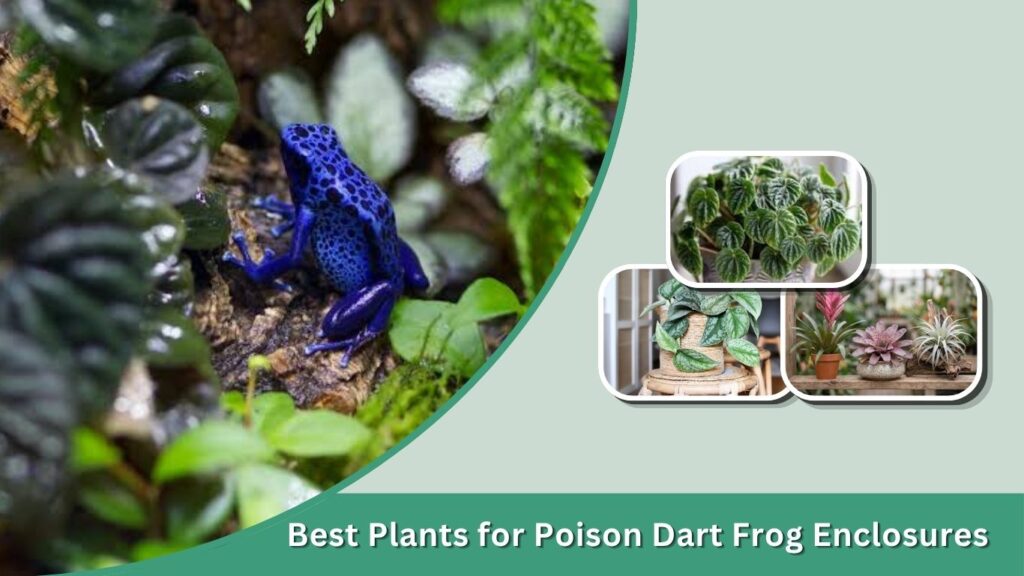
Plants provide shelter, improve the enclosure’s appearance, and create natural climbing opportunities. Tropical species that tolerate humidity and filtered light are often suitable choices. Selecting plants with different growth habits helps create a layered rainforest environment without overcrowding the available space.
Recommended Enclosure Plants
- Bromeliads: Offer elevated shelter and natural structures.
- Pothos: Provides climbing foliage and dense coverage.
- Peperomia: Suitable for compact tropical arrangements.
- Creeping fig: Covers backgrounds and climbing surfaces.
- Small tropical ferns: Create shaded hiding areas.
- Selected tropical mosses: Add greenery to moist surfaces.
Can Tradescantia Spathacea Survive in a Poison Dart Frog Enclosure?
Tradescantia spathacea, commonly known as oyster plant or Moses-in-the-cradle, grows in warm environments with filtered light. However, it prefers well-drained growing conditions rather than continuously waterlogged soil.
Its sap can also irritate skin, and amphibian-specific safety information is limited. For these reasons, it is not a preferred choice for dart frog enclosures. Established vivarium plants such as suitable bromeliads and Peperomia are more practical alternatives.
Choosing Enclosures for Different Poison Dart Frog Species
Different poison dart frog species have distinct behavioral requirements. Some spend most of their time near the ground, while others regularly climb plants and branches. Understanding these differences helps determine whether a wider or taller enclosure is most appropriate.
Blue Poison Dart Frog Enclosure
The blue poison dart frog, Dendrobates tinctorius “azureus,” benefits from an enclosure with generous floor space.
An 18 × 18 × 24-inch vivarium can be suitable for a compatible adult pair, although larger enclosures provide more territory.
Include abundant leaf litter, ground-level shelters, and accessible climbing structures. Territorial behavior should be monitored carefully.
Green and Black Poison Dart Frog Enclosure
The green and black poison dart frog, Dendrobates auratus, uses both terrestrial and elevated areas.
A planted 18 × 18 × 24-inch enclosure is a reasonable starting point for a suitable pair.
Provide climbing plants, cork bark, shaded spaces, and sufficient coverage to help the frogs feel secure.
Thumbnail Poison Dart Frog Enclosure
Thumbnail poison dart frogs, including species in the genus Ranitomeya, are especially small and often use elevated vegetation.
Taller enclosures with secure climbing structures, bromeliads, and small hiding spaces are beneficial.
Because of their tiny size, doors, ventilation panels, and cable openings must be carefully secured.
Common Poison Dart Frog Enclosure Mistakes
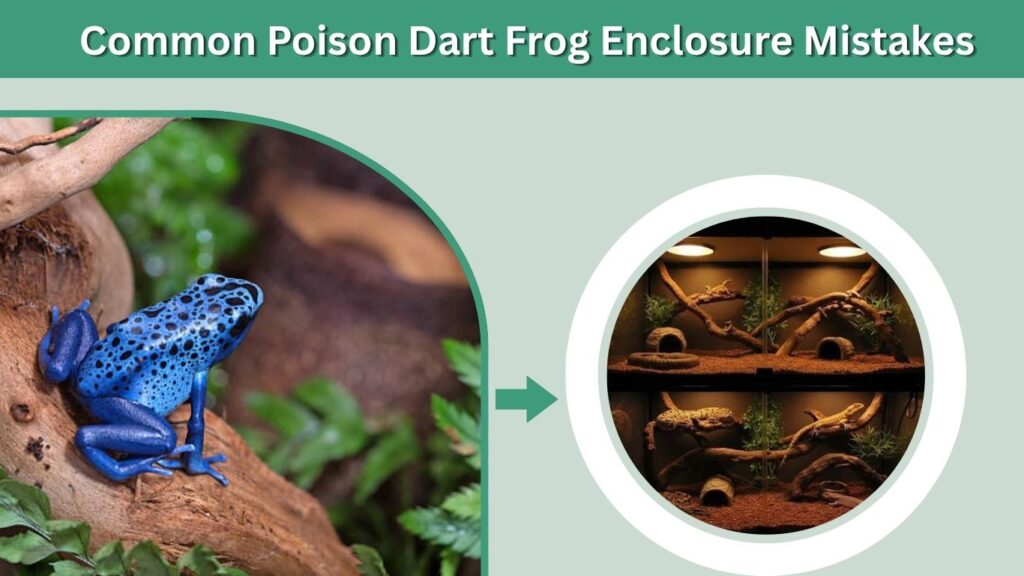
Beginners sometimes focus heavily on enclosure appearance while overlooking the conditions necessary for healthy amphibians. Problems involving moisture, enclosure dimensions, unsuitable plants, and ventilation can become serious over time. Checking these areas regularly helps maintain a safer environment.
Mistakes to Avoid
- Choosing an enclosure without sufficient usable space.
- Using a powerful heat lamp that overheats the habitat.
- Maintaining excessively wet soil without proper drainage.
- Completely blocking ventilation to increase humidity.
- Introducing plants treated with pesticides.
- Adding deep water features with drowning risks.
- Housing incompatible frogs together.
- Introducing frogs before the enclosure is established.
How to Maintain a Healthy Frog Enclosure
Regular maintenance keeps the habitat stable and reduces the risk of environmental problems. Even bioactive enclosures require attention because plants, drainage systems, and beneficial microorganisms cannot manage every type of waste.
Daily and Weekly Maintenance
Check temperature and humidity every day. Observe the frogs’ activity, appetite, and general behavior.
Remove spoiled food, inspect plants, and ensure drinking or breeding water areas remain clean where applicable.
Weekly tasks may include checking drainage levels, trimming plants, and inspecting equipment.
Clean enclosure surfaces using amphibian-safe procedures and avoid chemical household cleaners.
FAQs
1. What is the minimum enclosure size for poison dart frogs?
An 18 × 18 × 18-inch enclosure is a commonly used compact size for selected adult species. However, an 18 × 18 × 24-inch or larger vivarium often provides better flexibility. Species-specific needs determine the appropriate minimum.
2. Can poison dart frogs live in a 10-gallon tank?
Some keepers use 10-gallon tanks for temporary housing or particular small species. However, these tanks are generally less suitable as permanent adult habitats because usable space and ventilation can be limited.
3. Do poison dart frogs need a tall enclosure?
Some species benefit significantly from vertical space, especially climbing species such as Ranitomeya. Terrestrial species generally prioritize floor space but can still use elevated structures.
4. Should a poison dart frog enclosure have standing water?
Deep standing water is generally unnecessary. Proper drainage and misting are more important for maintaining humidity. Species-specific breeding setups may require controlled water areas.
5. Can I keep different poison dart frog species in one enclosure?
Mixing species is generally discouraged. Different frogs may compete for territory and food, carry pathogens, or interbreed. Species-specific housing is the safer approach.
