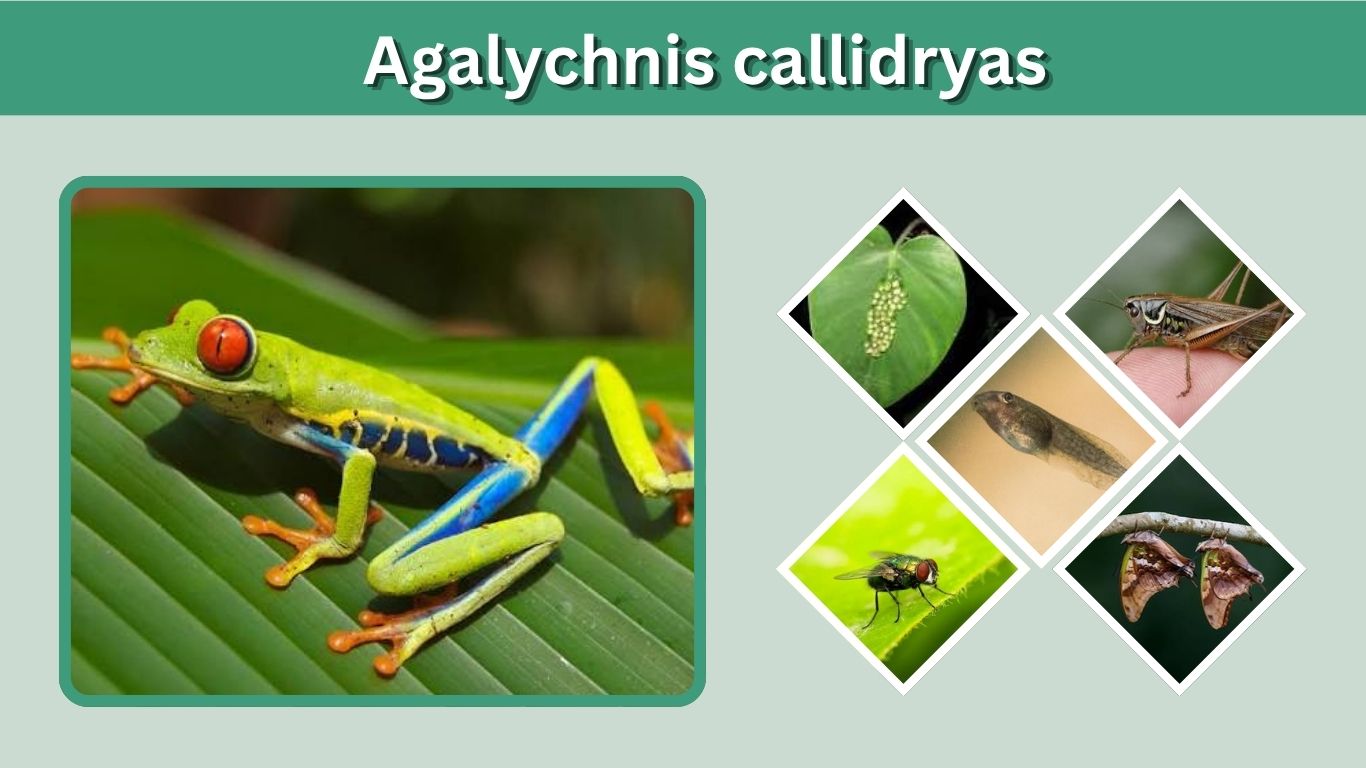
The Agalychnis callidryas red-eyed tree frog is one of the most recognizable amphibians in tropical rainforests. Its bright green skin, striking red eyes, and orange toes make it stand out, yet these colors also play an important role in survival. Native to Central America and nearby regions, this small frog spends much of its life on leaves above the forest floor. Understanding its identification, natural habitat, feeding habits, breeding cycle, and conservation needs reveals how this remarkable species survives in a challenging rainforest environment.
What Are Agalychnis Callidryas?
Agalychnis callidryas, commonly called the red-eyed tree frog, is a tropical amphibian known for its colorful appearance and tree-dwelling lifestyle. This species belongs to the leaf frog family and inhabits warm, humid environments. Its large eyes, adhesive toes, and slender body provide adaptations for climbing, hunting, and avoiding predators.
Scientific Classification
The scientific classification of the red-eyed tree frog includes:
- Scientific name: Agalychnis callidryas
- Common name: Red-Eyed Tree Frog
- Kingdom: Animalia
- Class: Amphibia
- Order: Anura
- Family: Phyllomedusidae
- Genus: Agalychnis
Physical Characteristics
Adult red-eyed tree frogs generally measure approximately 1.5–2.75 inches (4–7 cm) in length. Females are usually larger than males, although both sexes display similar coloration.
Their lightweight bodies and long limbs allow them to move efficiently through rainforest vegetation. Their smooth skin also helps them maintain the moisture needed for healthy amphibian functioning.
Red-Eyed Tree Frog Identification
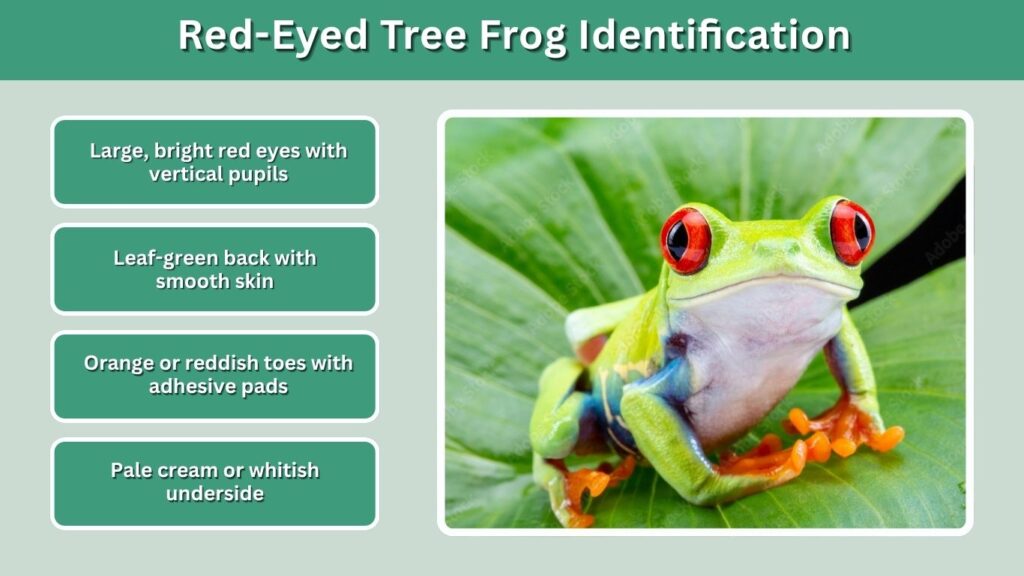
Identifying an Agalychnis callidryas red-eyed tree frog is relatively easy because of its remarkable colors and distinctive body structure. However, these frogs can become difficult to spot when resting among green leaves. Their appearance helps them conceal themselves during daylight and react quickly to approaching predators.
Key Identification Features
- Eyes: Large, bright red eyes with vertical pupils.
- Body: Leaf-green back with smooth skin.
- Feet: Orange or reddish toes with adhesive pads.
- Side markings: Blue and yellow stripes along the flanks.
- Belly: Pale cream or whitish underside.
- Legs: Long, flexible limbs adapted for climbing.
Male vs. Female Red-Eyed Tree Frog
Female red-eyed tree frogs generally have larger, fuller bodies, while males are smaller and slimmer. During breeding periods, males produce calls to attract potential mates.
Females are responsible for selecting suitable egg-laying locations, usually on leaves hanging above freshwater. Comparing mature individuals is the most reliable way to recognize their size differences.
Where Do Red-Eyed Tree Frogs Live?
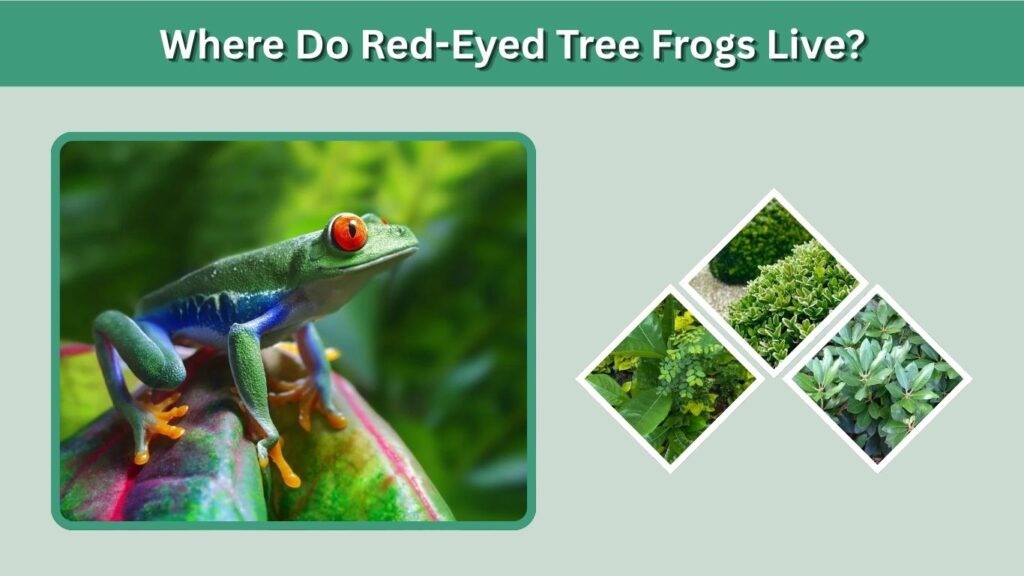
Red-eyed tree frogs naturally inhabit tropical forests extending from southern Mexico through Central America, with records from northern South America. They prefer areas with abundant vegetation, moisture, and accessible freshwater. Although they spend much of their time above ground, ponds and temporary pools are essential for their reproductive cycle.
Natural Habitat
These frogs commonly rest beneath broad leaves, among shrubs, and on branches near rainforest ponds. Their adhesive toe pads help them grip vegetation, even on smooth or damp surfaces.
Dense plant cover provides protection from predators and excessive sunlight. The vegetation also supports the insects that form an important part of their diet.
Temperature and Humidity
Warm, humid conditions are essential to their natural lifestyle. Like other amphibians, red-eyed tree frogs have permeable skin that can lose moisture in dry environments.
They often remain sheltered during hot daylight hours and become more active when nighttime temperatures are cooler and humidity is higher.
Red-Eyed Tree Frog Behavior and Diet
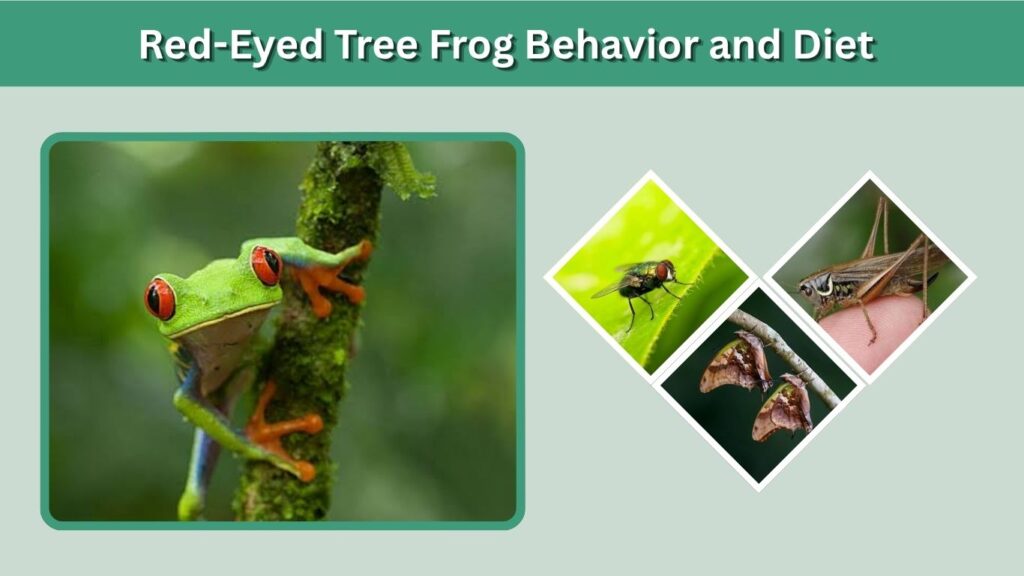
The red-eyed tree frog is primarily nocturnal, meaning it becomes most active after sunset. Its behavior reflects a strong dependence on vegetation, moisture, and nighttime feeding opportunities. These frogs rely on camouflage, sudden movements, and specialized climbing abilities to survive among rainforest plants while avoiding larger animals that hunt amphibians.
Nocturnal Behavior
During the day, red-eyed tree frogs typically sleep beneath leaves with their legs tucked against their bodies. This position conceals their bright markings and reduces their exposure to predators.
At night, they move through vegetation searching for insects. Males also produce calls and communicate through vibrations during breeding periods.
How Red Eyes Help With Defense
The frog’s bright red eyes are associated with a defensive response called startle coloration.
When threatened, it may suddenly expose its eyes, orange feet, and colorful flanks. This unexpected display can momentarily surprise a predator, allowing the frog to escape.
What Do Red-Eyed Tree Frogs Eat?
Red-eyed tree frogs are carnivorous amphibians that primarily consume small invertebrates, including:
- Crickets: A protein-rich insect food source.
- Flies: Common flying insects captured at night.
- Moths: Nocturnal insects encountered around vegetation.
- Grasshoppers: Suitable prey when small enough to swallow.
- Mosquitoes: Small insects consumed when available.
Hunting and Feeding Habits
Red-eyed tree frogs usually capture prey using their sticky tongues. They often remain motionless until an insect approaches within striking distance.
Their excellent climbing abilities allow them to hunt from leaves and branches without spending much time on the forest floor.
Agalychnis callidryas Reproduction and Life Cycle
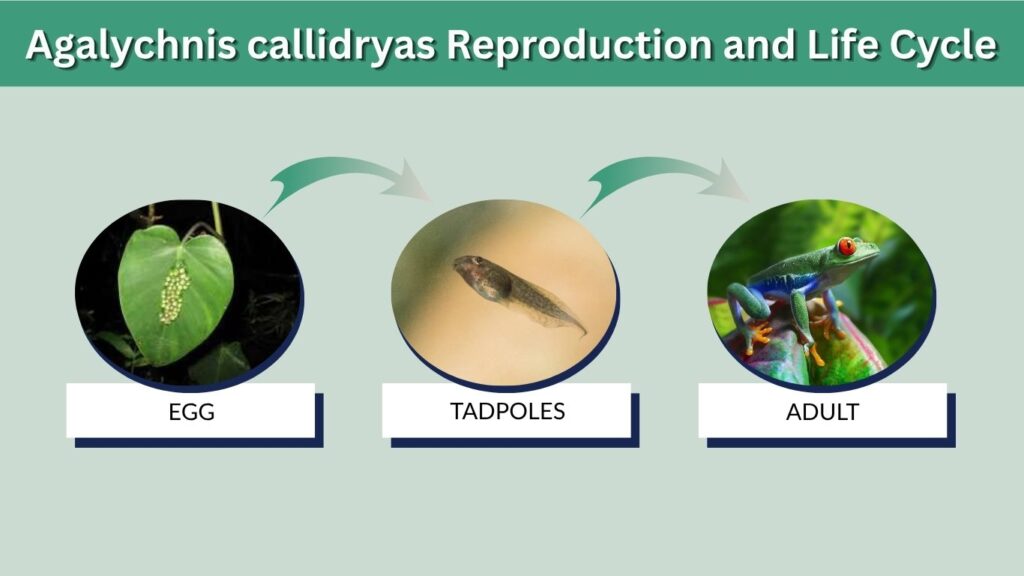
Reproduction in Agalychnis callidryas is closely associated with seasonal rainfall. During the wet season, males gather near suitable breeding sites and call to attract females. Unlike frogs that deposit eggs directly into water, red-eyed tree frogs generally attach their eggs to vegetation hanging above ponds, allowing tadpoles to enter the water after hatching.
Mating and Egg Laying
During mating, the male holds the female in a position called amplexus. The female deposits jelly-covered eggs on leaves above freshwater while the male fertilizes them externally.
A clutch commonly contains around 40 eggs, although numbers vary. The eggs remain attached to the vegetation as embryos develop.
Egg Development and Hatching
Under normal conditions, eggs generally hatch within approximately five to eight days, depending on environmental conditions.
Remarkably, embryos can hatch earlier when they detect vibrations associated with attacks from predators such as snakes. This behavior helps them escape danger before reaching their usual hatching age.
Tadpole Development
After hatching, tadpoles drop into the water below. They feed and develop for several weeks before undergoing metamorphosis.
During this transformation, their legs develop, their tails gradually disappear, and their bodies become adapted for life outside the water.
Red-Eyed Tree Frog Lifespan and Predators
The lifespan of a red-eyed tree frog depends on environmental conditions, food availability, disease, and predation. Although adults possess several protective adaptations, they remain vulnerable throughout their development. Eggs, tadpoles, and mature frogs face different predators within rainforest habitats.
How Long Do Red-Eyed Tree Frogs Live?
Red-eyed tree frogs may survive for several years, with some captive individuals reportedly living beyond eight years.
Their exact average lifespan in the wild remains uncertain. Habitat quality, environmental stress, and predator exposure influence their survival.
Natural Predators
Snakes, birds, bats, and certain spiders may prey on adult red-eyed tree frogs. Eggs are vulnerable to snakes and wasps, while tadpoles face aquatic predators.
Camouflage, climbing ability, and nighttime activity help reduce these risks.
Conservation Status of Agalychnis callidryas
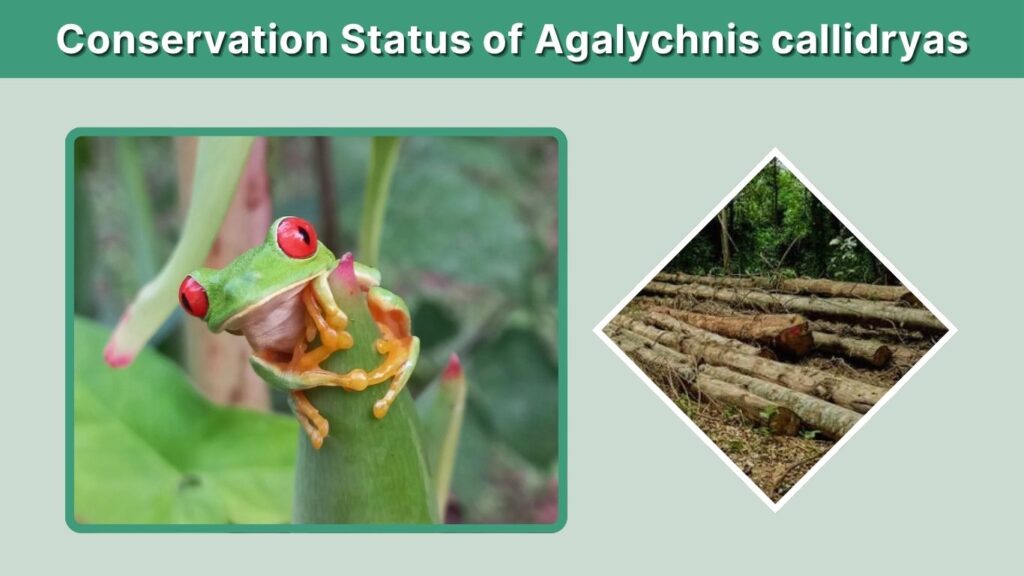
The red-eyed tree frog is currently classified as Least Concern on the IUCN Red List. However, this classification does not mean its habitat is completely secure. Rainforest destruction, environmental pollution, and wildlife collection can affect local populations and the conditions needed for successful reproduction.
Major Threats
The main conservation concerns include:
- Deforestation: Removes shelter and breeding vegetation.
- Habitat fragmentation: Separates suitable rainforest populations.
- Pollution: Can affect sensitive amphibian skin and aquatic habitats.
- Wildlife trade: Collection can place additional pressure on wild populations.
Importance in Rainforest Ecosystems
Red-eyed tree frogs help maintain ecological balance by consuming insects and providing food for other rainforest animals.
Their dependence on healthy vegetation and freshwater also makes them useful subjects for understanding environmental changes affecting tropical amphibians.
FAQs
1. Is Agalychnis callidryas poisonous?
Red-eyed tree frogs are not generally considered dangerous to humans, although their skin contains defensive compounds. Unnecessary handling should be avoided.
2. Where does Agalychnis callidryas live?
It lives in humid tropical forests, particularly around trees and vegetation near freshwater ponds in Central America and nearby regions.
3. Why do red-eyed tree frogs have red eyes?
Their bright red eyes may help startle predators, creating an opportunity to escape.
4. How big is a red-eyed tree frog?
Adults generally reach approximately 1.5–2.75 inches (4–7 cm), with females usually larger than males.
5. Are red-eyed tree frogs endangered?
No. They are currently classified as Least Concern, although habitat loss remains an important conservation concern.
