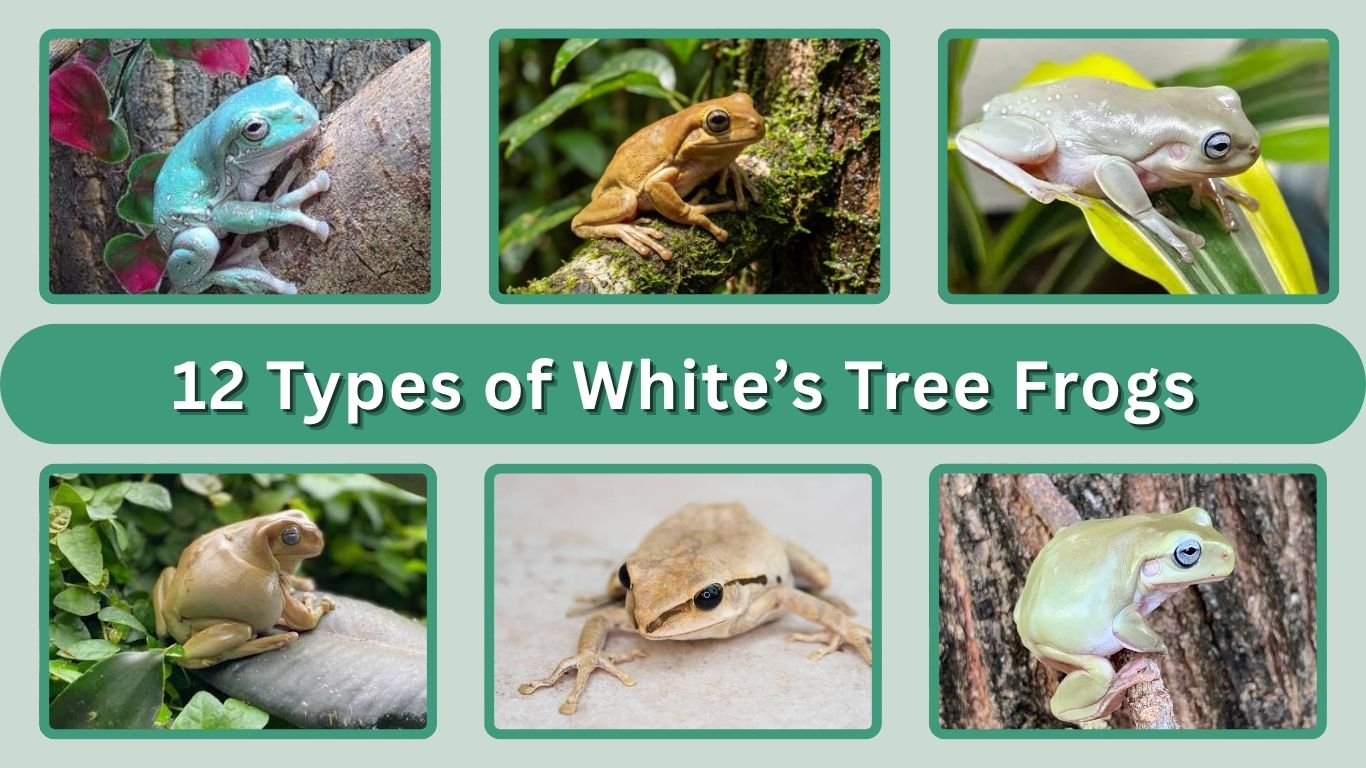
White’s tree frogs are popular amphibians known for their adorable appearance, gentle temperament, and beautiful colors. Although they belong to a single species, these frogs come in several fascinating color morphs and pattern variations. From classic green and stunning blue to honey-colored and snowflake-patterned frogs, each variety has a unique appearance. In this guide, we’ll explore 12 types of White’s tree frogs, including their identification features, colors, natural behaviors, feeding habits, and care requirements.
1. Green White’s Tree Frog (Wild Type)
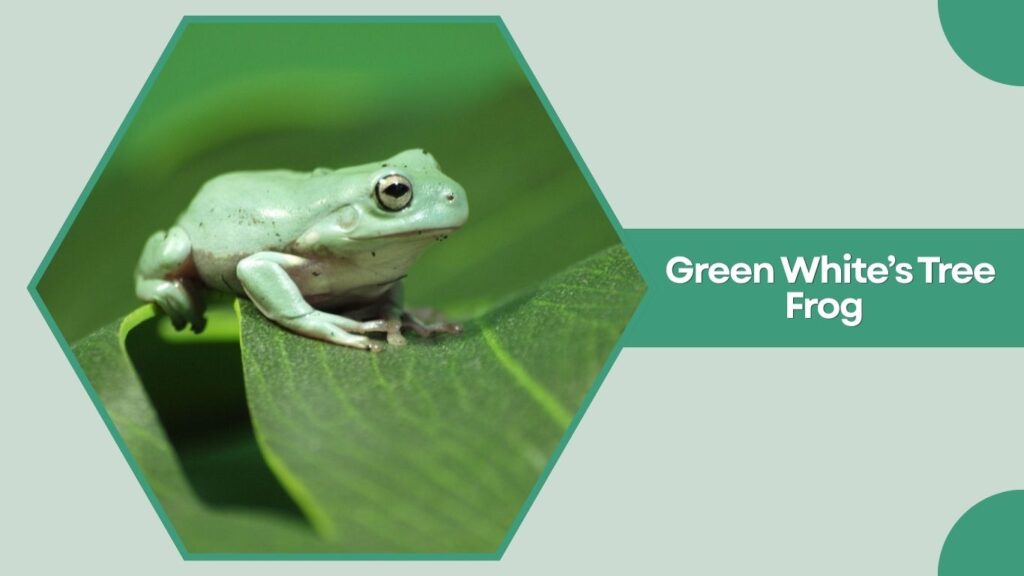
The Green White’s Tree Frog is the most common and naturally occurring variety of White’s tree frog (Ranoidea caerulea). Native to Australia and New Guinea, this frog is known for its beautiful green coloration, round body, and calm temperament. Its adaptable nature and relatively easy care requirements make it a popular choice among amphibian enthusiasts.
Identification
- Scientific Name: Ranoidea caerulea
- Common Name: Green White’s Tree Frog
- Color: Light green, olive green, or bluish-green
- Size: Approximately 3–4.5 inches long
- Body Shape: Rounded, plump body with smooth skin
- Eyes: Large, golden eyes with horizontal pupils
- Lifespan: Often 10–15 years or longer in captivity
- Native Habitat: Australia and New Guinea
Natural Habitat and Behavior
Green White’s Tree Frogs naturally inhabit tropical forests, woodlands, and areas near human settlements. They are primarily nocturnal and spend much of their time resting on branches, leaves, and sheltered surfaces. Their sticky toe pads help them climb trees and other vertical structures.
Diet and Feeding Habits
These frogs are insectivores that primarily eat crickets, moths, cockroaches, and other small invertebrates. They are opportunistic hunters and usually capture moving prey using their sticky tongues.
Care and Maintenance
Green White’s Tree Frogs require a spacious, well-ventilated vertical enclosure with climbing branches, hiding places, and clean water. Maintaining suitable humidity, temperature, and lighting supports their health. A varied diet of appropriately sized, gut-loaded insects with suitable calcium supplementation is also essential.
2. Blue Phase White’s Tree Frog
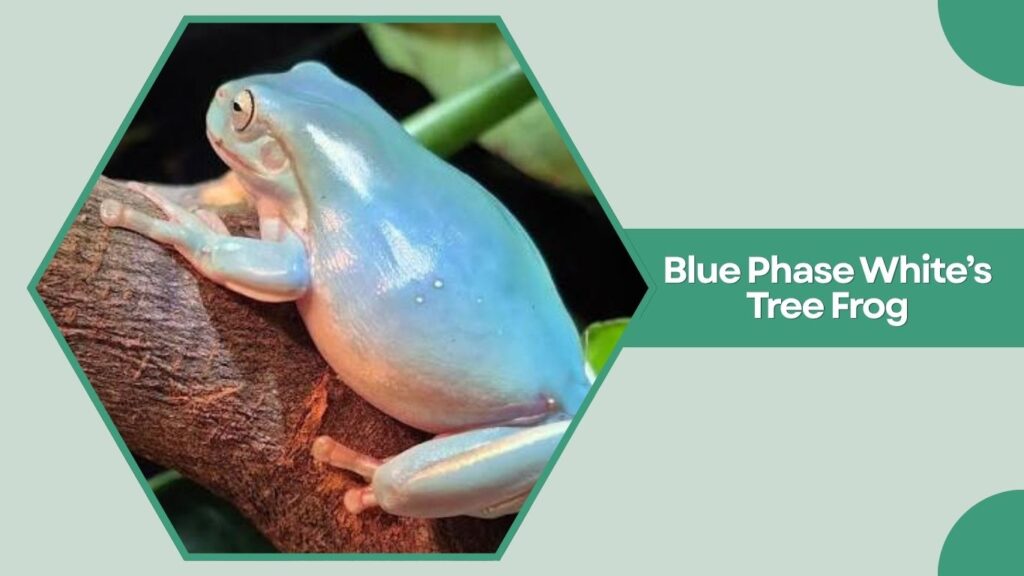
The Blue Phase White’s Tree Frog is a beautiful color variation of the common White’s tree frog (Ranoidea caerulea). Unlike the traditional green variety, this morph displays stunning shades of turquoise, blue-green, or pale blue. Its unusual coloration and gentle temperament make it particularly attractive to amphibian enthusiasts and collectors.
Identification
- Scientific Name: Ranoidea caerulea
- Common Name: Blue Phase White’s Tree Frog
- Color: Turquoise, bluish-green, or pale blue
- Size: Approximately 3–4.5 inches
- Body Shape: Rounded body with smooth skin
- Eyes: Golden or copper-colored with horizontal pupils
- Lifespan: Often 10–15 years or longer in captivity
- Special Feature: Distinctive blue-toned skin coloration
Natural Habitat and Behavior
Blue Phase White’s Tree Frogs belong to the same species found naturally in Australia and New Guinea. They prefer climbing surfaces and sheltered resting areas. Primarily nocturnal, these frogs become more active during the evening and nighttime. Their coloration can change slightly depending on environmental conditions.
Diet and Feeding Habits
These frogs feed primarily on live insects, including crickets, roaches, and appropriately sized worms. They are opportunistic feeders that use their sticky tongues to capture moving prey.
Care and Maintenance
Blue Phase White’s Tree Frogs require a well-ventilated vertical terrarium with sturdy climbing branches, hiding spaces, and access to clean water. Proper temperature, humidity, and lighting are essential. Providing varied, gut-loaded insects and appropriate calcium supplements helps maintain their health.
3. Snowflake White’s Tree Frog
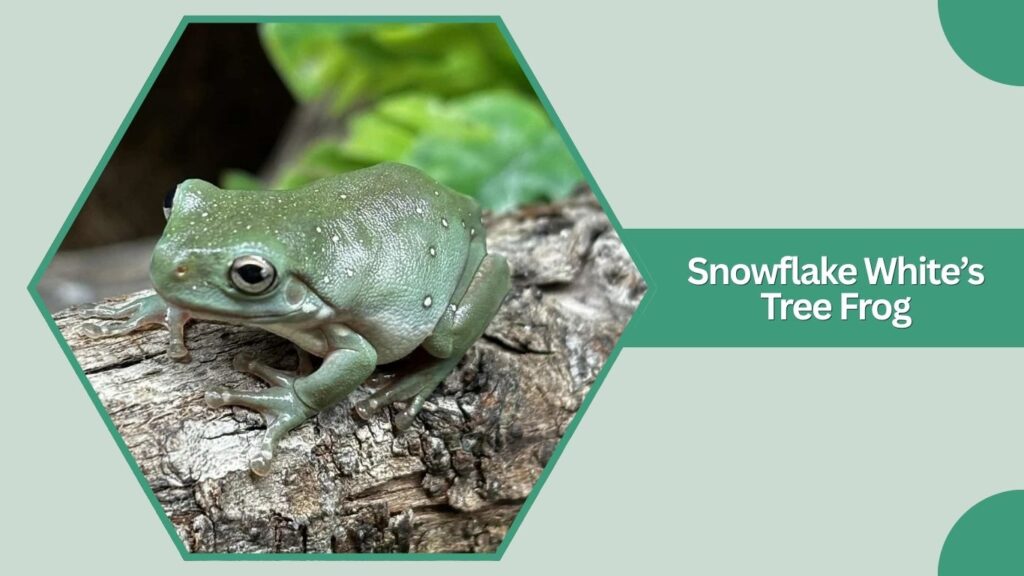
The Snowflake White’s Tree Frog is a distinctive captive-bred variation recognized for its scattered white spots. These markings resemble tiny snowflakes against a green, olive, or bluish background. Each frog develops a somewhat different pattern, making this variety especially appealing to amphibian enthusiasts interested in unique colors and markings.
Identification
- Scientific Name: Ranoidea caerulea
- Common Name: Snowflake White’s Tree Frog
- Color: Green, olive-green, or blue-green
- Pattern: Scattered white spots across the body
- Size: Approximately 3–4.5 inches
- Eyes: Golden or copper-colored
- Body Shape: Plump body with rounded head
- Special Feature: Distinctive white speckled markings
Natural Habitat and Behavior
Snowflake White’s Tree Frogs share the natural habitat preferences of ordinary White’s tree frogs, which inhabit forests, woodlands, and areas around buildings in Australia and New Guinea. They are mostly nocturnal and spend their days resting in sheltered locations. Their adhesive toe pads allow them to climb branches and vertical surfaces easily.
Diet and Feeding Habits
These frogs are insectivorous and feed on crickets, cockroaches, moths, and other small invertebrates. Their feeding behavior is similar to that of standard green White’s tree frogs.
Care and Maintenance
Snowflake White’s Tree Frogs need a spacious vertical enclosure with climbing structures and suitable hiding areas. Maintaining appropriate humidity and ventilation is important. A varied insect diet, clean water, and proper calcium supplementation support their overall health and development.
4. Super Snowflake White’s Tree Frog
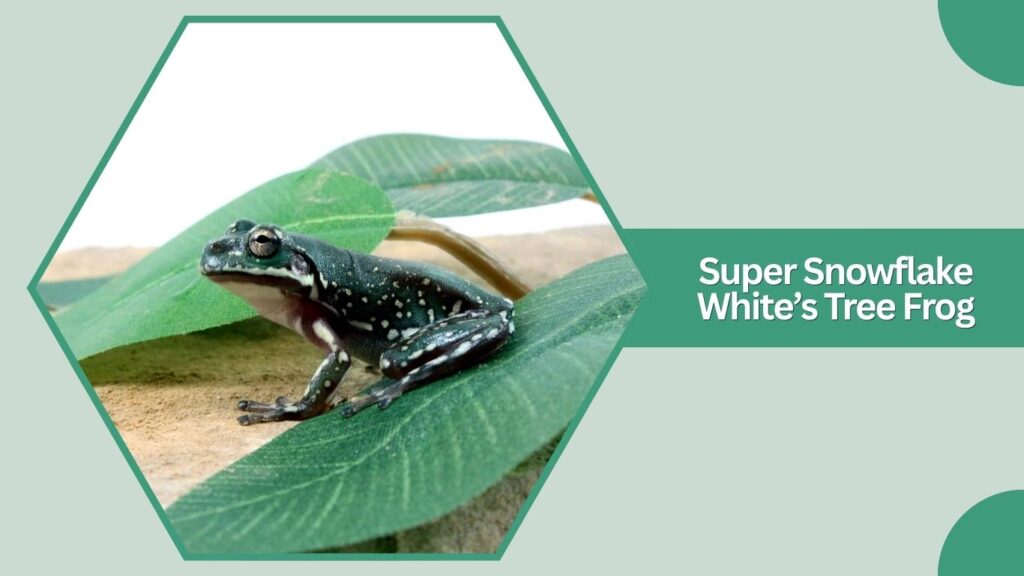
The Super Snowflake White’s Tree Frog is a heavily spotted variation of the Snowflake morph. Its body displays numerous white markings that may cover the back, sides, head, and limbs. The term “Super Snowflake” generally describes frogs with exceptionally dense spotting rather than a separate species or scientifically established genetic category.
Identification
- Scientific Name: Ranoidea caerulea
- Common Name: Super Snowflake White’s Tree Frog
- Color: Green, olive, or bluish-green
- Pattern: Extensive white spots and irregular markings
- Size: Approximately 3–4.5 inches
- Eyes: Usually golden or copper-colored
- Body Shape: Rounded body with broad head
- Special Feature: Exceptionally dense white spotting
Natural Habitat and Behavior
Super Snowflake White’s Tree Frogs share the same biological characteristics as other White’s tree frogs. Their species naturally inhabits Australia and New Guinea, although this particular appearance is associated with captive breeding. They are primarily nocturnal, spending daylight hours resting on elevated surfaces or inside sheltered areas.
Diet and Feeding Habits
Their diet consists mainly of live insects, including crickets, roaches, and other appropriately sized invertebrates. Feeding requirements depend on the frog’s age, size, and body condition rather than its spotting pattern.
Care and Maintenance
These frogs require a vertical terrarium with secure climbing branches, foliage, and hiding places. Proper ventilation, suitable temperatures, and access to fresh water are essential. Their extensive white markings do not require specialized care beyond standard White’s tree frog husbandry.
5. Blue-Eyed White’s Tree Frog
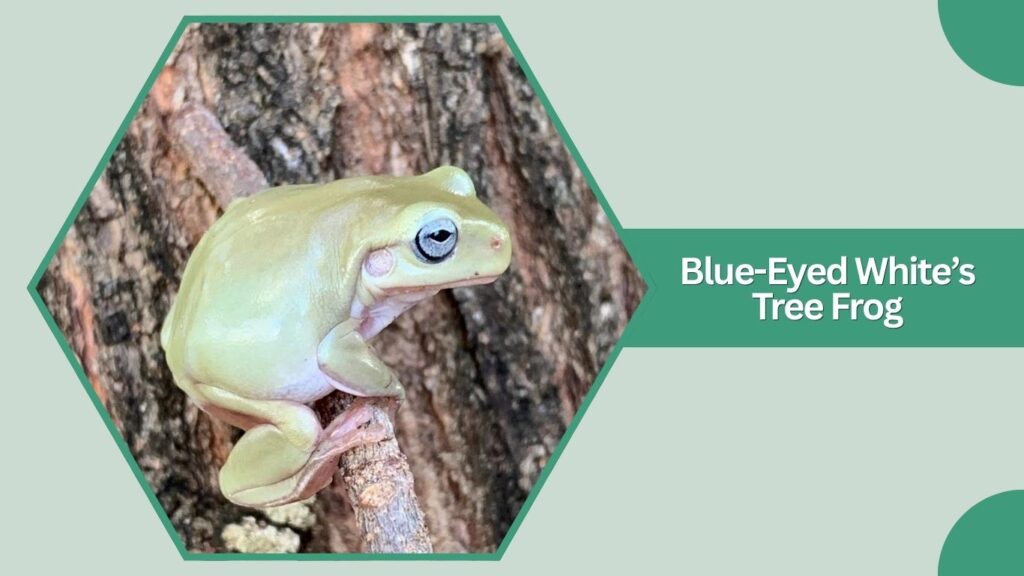
The Blue-Eyed White’s Tree Frog is a striking variation known for its unusual pale blue eyes. Unlike ordinary White’s tree frogs, which typically have golden or copper-colored irises, this variety displays distinctive blue-toned irises surrounding dark pupils. Its unusual eye coloration makes it a sought-after variety among amphibian enthusiasts.
Identification
- Scientific Name: Ranoidea caerulea
- Common Name: Blue-Eyed White’s Tree Frog
- Color: Green, blue-green, or olive-green
- Eye Color: Pale blue or silvery-blue irises
- Size: Approximately 3–4.5 inches
- Body Shape: Rounded body with smooth skin
- Lifespan: Often 10–15 years or longer in captivity
- Special Feature: Distinctive blue-colored irises
Natural Habitat and Behavior
Blue-Eyed White’s Tree Frogs share the natural habitat and behavioral characteristics of their species. They are arboreal amphibians that prefer climbing branches, sheltered resting places, and vegetation. They are generally inactive during daylight hours and become more active after sunset.
Diet and Feeding Habits
These frogs primarily consume live insects such as crickets, cockroaches, and moths. Their feeding habits do not significantly differ from those of other White’s tree frog varieties.
Care and Maintenance
Blue-Eyed White’s Tree Frogs need a secure, vertically oriented enclosure with appropriate climbing structures. Maintaining suitable humidity, temperature, ventilation, and lighting is important for their health. A balanced insect diet with appropriate nutritional supplementation supports healthy growth and long-term well-being.
6. Golden White’s Tree Frog
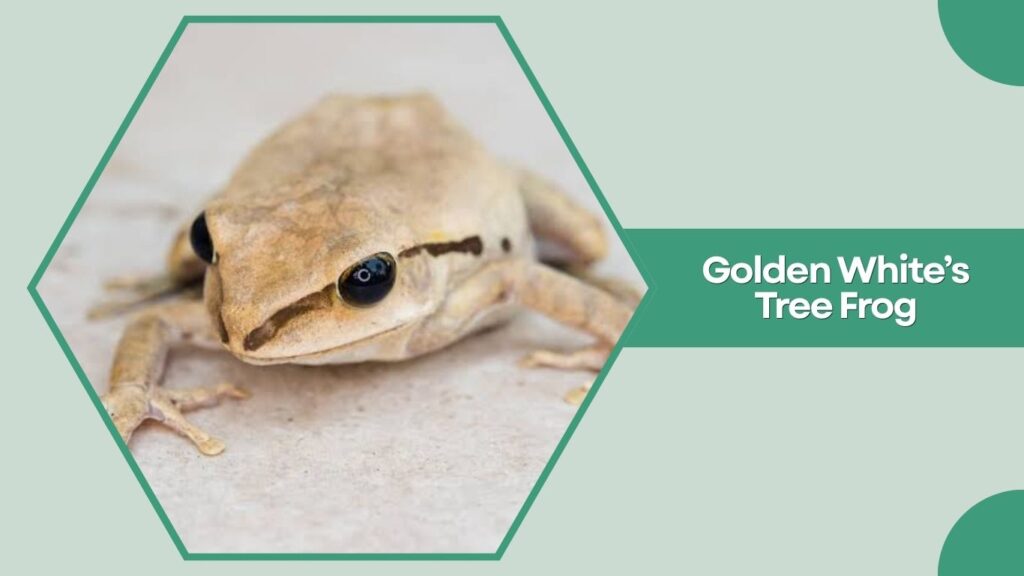
The Golden White’s Tree Frog is a visually attractive color variation characterized by yellowish-green, golden, or honey-colored skin. This appearance is sometimes associated with the Honey morph in the amphibian trade. Its warm coloration distinguishes it from the traditional green and blue varieties, although naming conventions can differ among breeders.
Identification
- Scientific Name: Ranoidea caerulea
- Common Name: Golden White’s Tree Frog
- Color: Golden-yellow, honey, or yellowish-green
- Size: Approximately 3–4.5 inches
- Body Shape: Rounded body with broad head
- Eyes: Eye coloration varies between individuals
- Skin Texture: Smooth to slightly textured
- Special Feature: Warm golden or honey-colored appearance
Natural Habitat and Behavior
Golden White’s Tree Frogs belong to the same species native to Australia and New Guinea. They exhibit typical arboreal behavior, spending much of their time resting on branches and other elevated surfaces. These primarily nocturnal frogs become more active during nighttime hours.
Diet and Feeding Habits
Golden White’s Tree Frogs eat a variety of live insects, including crickets, cockroaches, moths, and appropriately sized worms. Their nutritional requirements are similar to those of other White’s tree frog color varieties.
Care and Maintenance
Golden White’s Tree Frogs require a well-ventilated vertical enclosure with climbing branches, hiding areas, and clean water. Suitable temperature and humidity levels help maintain their health. Providing nutritious, gut-loaded insects, appropriate calcium supplements, and regular enclosure cleaning supports a healthy captive environment.
7. Honey White’s Tree Frog
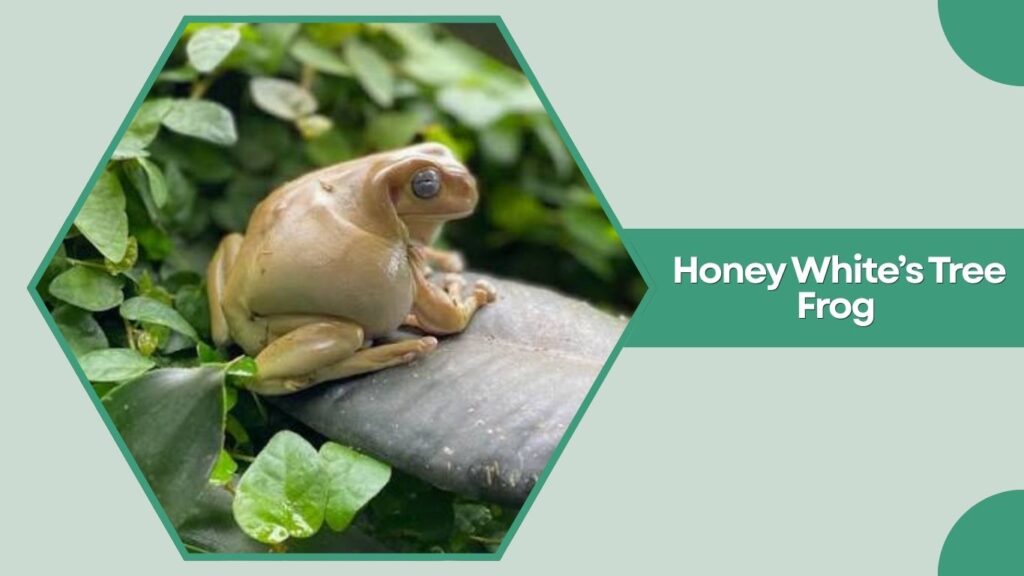
The Honey White’s Tree Frog is a beautiful captive-bred color variation of White’s tree frog (Ranoidea caerulea). This variety is recognized for its warm golden-yellow, honey-brown, or tan coloration. Its attractive appearance and generally calm temperament make it popular among amphibian enthusiasts. The honey coloration may become more noticeable as the frog matures.
Identification
- Scientific Name: Ranoidea caerulea
- Common Name: Honey White’s Tree Frog
- Color: Honey-yellow, golden-brown, or pale tan
- Size: Approximately 3–4.5 inches
- Body Shape: Rounded body with broad head
- Eyes: Golden, copper-colored, or blue, depending on breeding line
- Lifespan: Often 10–15 years or longer in captivity
- Special Feature: Distinctive honey-colored skin
Natural Habitat and Behavior
Honey White’s Tree Frogs belong to a species native to Australia and New Guinea. Their honey coloration is primarily associated with captive breeding. These frogs are arboreal and spend much of their time resting on branches, leaves, or sheltered surfaces. They are generally more active at night.
Diet and Feeding Habits
These frogs primarily consume live insects, including crickets, cockroaches, moths, and other appropriately sized invertebrates. They use their sticky tongues to capture moving prey.
Care and Maintenance
Honey White’s Tree Frogs require a spacious vertical terrarium with climbing structures, hiding places, and clean water. Proper humidity, temperature, ventilation, and suitable lighting are essential. A varied diet of gut-loaded insects and appropriate calcium supplementation helps support their health.
8. Blue Snowflake White’s Tree Frog
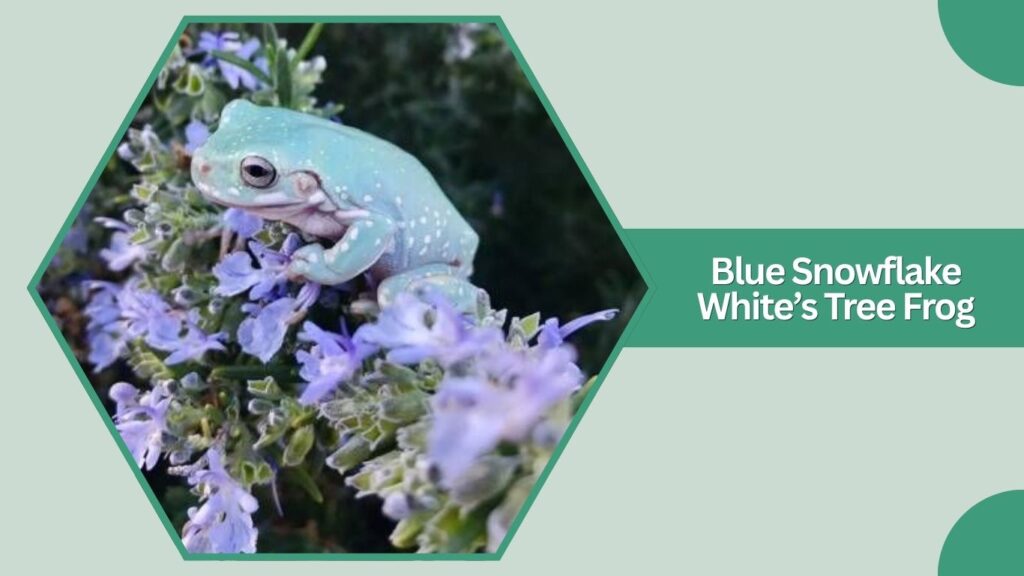
The Blue Snowflake White’s Tree Frog is an attractive captive-bred variation combining bluish-green skin with scattered white spots. Its beautiful turquoise background and snowflake-like markings create a distinctive appearance. The number and arrangement of white spots vary between individuals, making each frog visually unique.
Identification
- Scientific Name: Ranoidea caerulea
- Common Name: Blue Snowflake White’s Tree Frog
- Color: Blue-green, turquoise, or teal
- Pattern: Scattered white spots across the body
- Size: Approximately 3–4.5 inches
- Eyes: Usually golden or copper-colored
- Body Shape: Rounded body with smooth skin
- Special Feature: Combination of blue coloration and white spotting
Natural Habitat and Behavior
Blue Snowflake White’s Tree Frogs share the biological characteristics of other White’s tree frogs. Their species naturally inhabits forests, woodlands, and sheltered areas in Australia and New Guinea. These frogs are primarily nocturnal and prefer climbing branches, vegetation, and elevated resting surfaces. Their adhesive toe pads help them climb efficiently.
Diet and Feeding Habits
These frogs feed mainly on live insects, including crickets, cockroaches, moths, and appropriately sized worms. They are opportunistic hunters and usually capture prey at night.
Care and Maintenance
Blue Snowflake White’s Tree Frogs require a well-ventilated vertical enclosure with branches, foliage, and secure hiding places. Suitable temperatures, moderate humidity, and access to clean water help maintain their health. Offering varied, nutritious insects with appropriate supplementation is important for healthy growth.
9. Blue Super Snowflake White’s Tree Frog
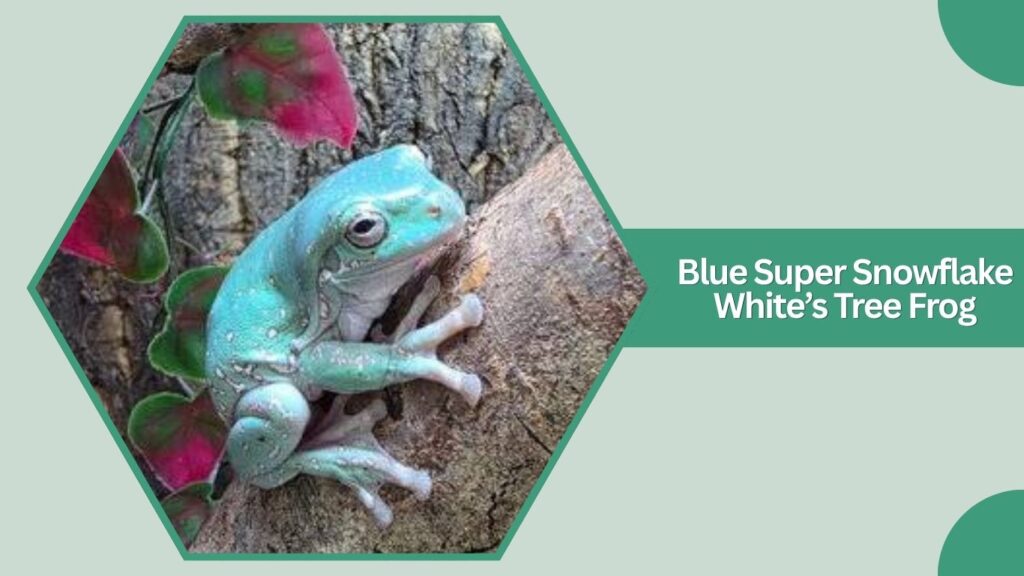
The Blue Super Snowflake White’s Tree Frog is a heavily spotted variation featuring blue-green skin and extensive white markings. Compared with ordinary Blue Snowflake frogs, this variety typically displays a greater concentration of white spots across its head, back, sides, and limbs. Its unusual appearance makes it especially attractive to amphibian collectors.
Identification
- Scientific Name: Ranoidea caerulea
- Common Name: Blue Super Snowflake White’s Tree Frog
- Color: Turquoise, blue-green, or teal
- Pattern: Dense white spots and irregular markings
- Size: Approximately 3–4.5 inches
- Body Shape: Rounded body with broad head
- Eyes: Usually golden or copper-colored
- Skin Texture: Smooth to slightly textured
- Special Feature: Extensive white spotting over blue-toned skin
Natural Habitat and Behavior
Blue Super Snowflake White’s Tree Frogs are captive-bred variations of the species naturally found in Australia and New Guinea. They exhibit typical arboreal behavior and prefer resting on branches and sheltered surfaces. Primarily nocturnal, they become more active during evening and nighttime hours.
Diet and Feeding Habits
These frogs are insectivorous and consume crickets, cockroaches, moths, and other appropriately sized invertebrates. Their feeding requirements are similar to those of standard White’s tree frogs.
Care and Maintenance
Blue Super Snowflake White’s Tree Frogs need a spacious vertical terrarium with climbing branches, foliage, and hiding areas. Maintaining appropriate temperatures, humidity, ventilation, and lighting supports their overall health. Regular enclosure cleaning, fresh water, and a balanced insect diet are essential for long-term care.
10. Honey Blue-Eyed White’s Tree Frog
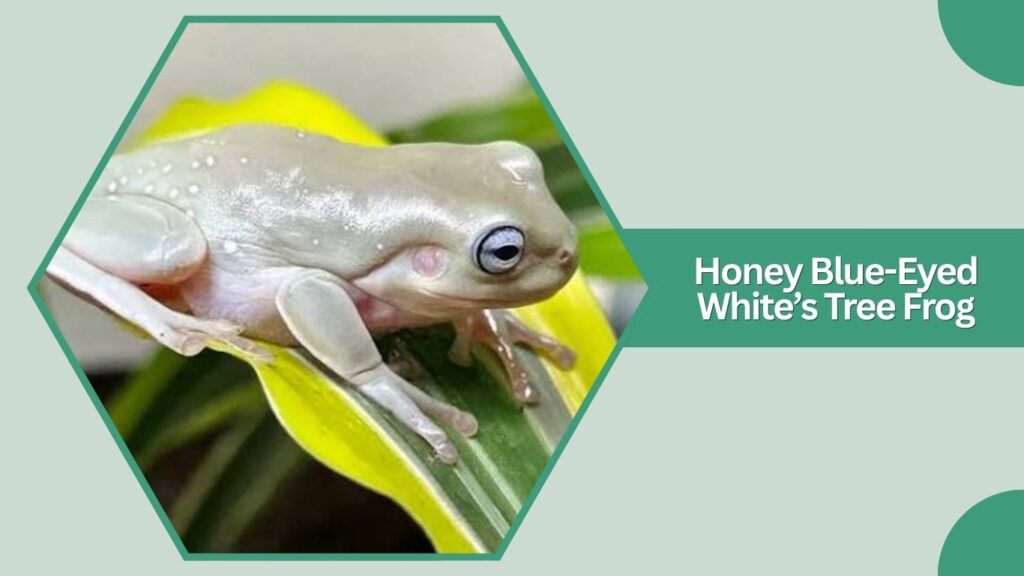
The Honey Blue-Eyed White’s Tree Frog is a striking captive-bred variation combining warm honey-colored skin with pale blue eyes. Its unusual combination of golden-yellow or tan coloration and beautiful blue irises makes it stand out among White’s tree frog varieties. These frogs retain the typical rounded appearance and arboreal behavior of their species.
Identification
- Scientific Name: Ranoidea caerulea
- Common Name: Honey Blue-Eyed White’s Tree Frog
- Color: Honey-yellow, golden-brown, or pale tan
- Eye Color: Light blue or silvery-blue
- Size: Approximately 3–4.5 inches
- Body Shape: Rounded body with broad head
- Skin Texture: Smooth to slightly textured
- Special Feature: Honey-colored body combined with blue eyes
Natural Habitat and Behavior
Honey Blue-Eyed White’s Tree Frogs share the natural habitat preferences of their species, which occurs in Australia and New Guinea. Their distinctive appearance results from captive breeding. They are primarily nocturnal and spend daylight hours resting on branches, vegetation, or sheltered surfaces.
Diet and Feeding Habits
These frogs consume live insects such as crickets, cockroaches, moths, and other small invertebrates. They use their sticky tongues to catch prey and are generally enthusiastic feeders.
Care and Maintenance
Honey Blue-Eyed White’s Tree Frogs require a secure vertical enclosure with appropriate climbing structures and hiding spaces. Proper temperature, humidity, ventilation, and lighting are important. They should receive a varied diet of nutritious, gut-loaded insects with suitable calcium supplementation and continuous access to clean water.
11. Blue-Eyed Snowflake White’s Tree Frog
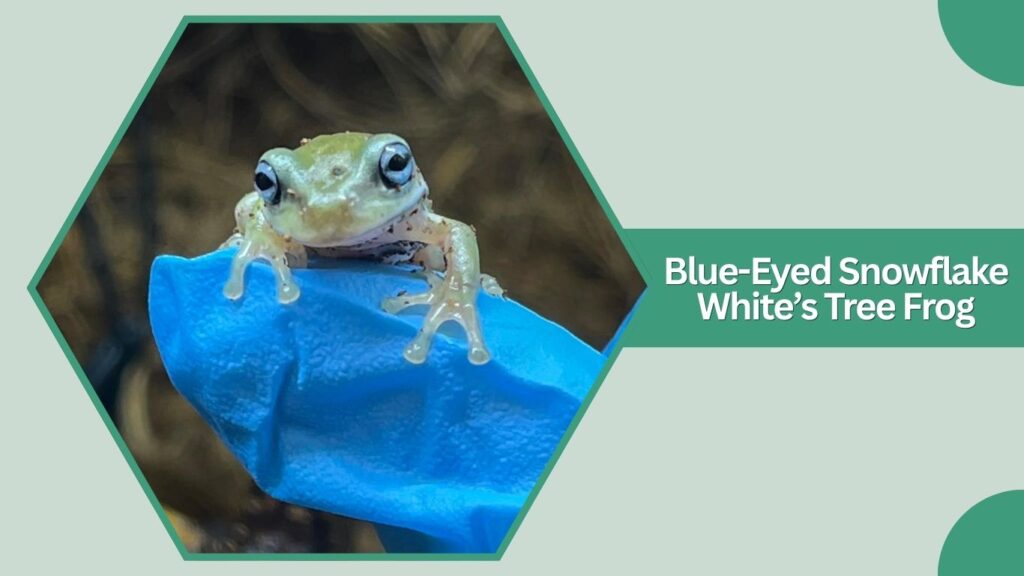
The Blue-Eyed Snowflake White’s Tree Frog is a beautiful captive-bred variety featuring pale blue eyes and scattered white markings. Its skin may display green, olive, or bluish-green shades, decorated with snowflake-like spots. The combination of unusual eye coloration and distinctive body patterns makes this variety particularly recognizable.
Identification
- Scientific Name: Ranoidea caerulea
- Common Name: Blue-Eyed Snowflake White’s Tree Frog
- Color: Green, olive-green, or blue-green
- Pattern: White spots scattered across the body
- Eye Color: Pale blue or silvery-blue
- Size: Approximately 3–4.5 inches
- Body Shape: Rounded body with smooth skin
- Special Feature: Blue eyes combined with white snowflake markings
Natural Habitat and Behavior
Blue-Eyed Snowflake White’s Tree Frogs belong to the same species native to Australia and New Guinea. These frogs prefer elevated resting areas, climbing branches, and sheltered vegetation. They are primarily nocturnal and usually become active after sunset. Their adhesive toe pads allow them to move easily across vertical surfaces.
Diet and Feeding Habits
These frogs primarily feed on live insects, including crickets, cockroaches, moths, and other appropriately sized invertebrates. Their nutritional requirements are similar to those of other White’s tree frog varieties.
Care and Maintenance
Blue-Eyed Snowflake White’s Tree Frogs need a well-ventilated vertical terrarium with climbing structures, hiding places, and a shallow water dish. Suitable temperatures, humidity, and lighting help support their health. A varied insect diet and appropriate nutritional supplements are essential for proper growth.
12. Honey Snowflake White’s Tree Frog
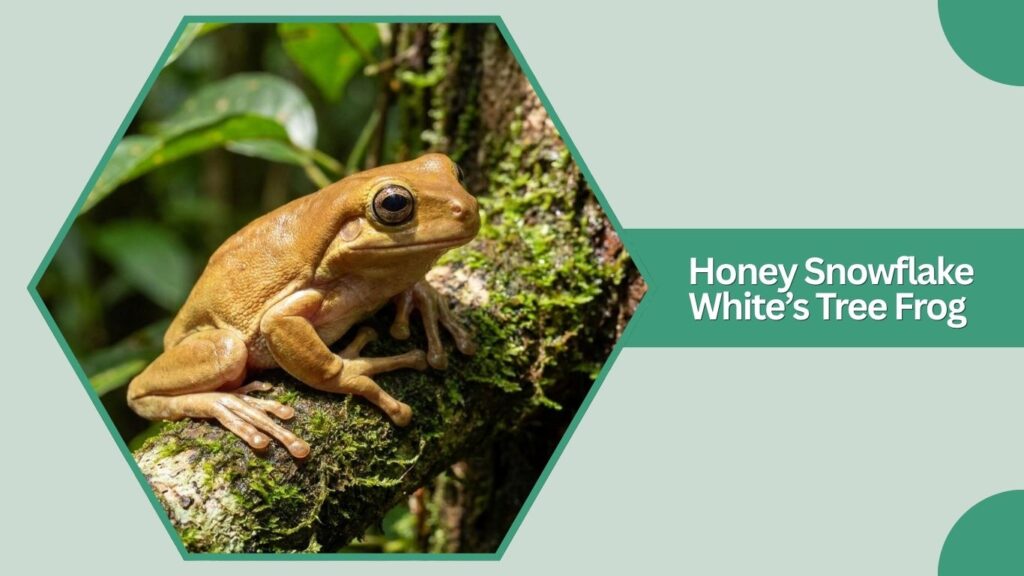
The Honey Snowflake White’s Tree Frog is an attractive captive-bred variation combining warm honey-colored skin with scattered white markings. Its golden-yellow, tan, or honey-brown background creates a beautiful contrast with the white spots. The amount and distribution of spotting vary between individuals, giving each frog a distinctive appearance.
Identification
- Scientific Name: Ranoidea caerulea
- Common Name: Honey Snowflake White’s Tree Frog
- Color: Honey-yellow, golden-brown, or pale tan
- Pattern: Scattered white spots across the body
- Size: Approximately 3–4.5 inches
- Body Shape: Rounded body with broad head
- Eyes: Golden, copper-colored, or blue, depending on breeding line
- Skin Texture: Smooth to slightly textured
- Special Feature: Honey-colored skin with white snowflake markings
Natural Habitat and Behavior
Honey Snowflake White’s Tree Frogs share the natural habitat preferences of their species, found in Australia and New Guinea. This particular appearance is associated with captive breeding. They are arboreal amphibians that prefer elevated resting places and sheltered vegetation. Their activity generally increases during evening and nighttime hours.
Diet and Feeding Habits
These frogs primarily eat crickets, cockroaches, moths, and other appropriately sized insects. Their feeding habits are similar to those of other White’s tree frogs, and they use sticky tongues to capture moving prey.
Care and Maintenance
Honey Snowflake White’s Tree Frogs require a spacious, secure vertical enclosure with climbing branches, foliage, and hiding areas. Maintaining suitable temperature, humidity, ventilation, and lighting is essential. Clean water, regular enclosure maintenance, and a nutritious insect-based diet support their long-term health.
FAQs
1. How Many Types of White’s Tree Frogs Are There?
White’s tree frogs belong to a single species, Ranoidea caerulea. However, several color morphs, patterns, and combinations are recognized in the pet trade. Green, Blue Phase, Snowflake, Super Snowflake, Honey, and Blue-Eyed are commonly used variety names.
2. What Is the Rarest Type of White’s Tree Frog?
Unusual combinations, such as Honey Blue-Eyed Snowflake and Blue-Eyed Super Snowflake White’s Tree Frogs, can be less commonly available than standard green or Blue Phase frogs. Their rarity varies according to breeder availability and breeding success.
3. What Is the Difference Between Snowflake and Super Snowflake White’s Tree Frogs?
The main difference is the amount of white spotting. Snowflake White’s Tree Frogs generally have scattered white spots, while Super Snowflake frogs display much denser spotting that may extend across the head, back, sides, and limbs.
4. Are Blue White’s Tree Frogs Different From Green White’s Tree Frogs?
No. Blue Phase and green White’s tree frogs belong to the same species. Their primary difference is skin coloration. Blue Phase frogs typically display cooler turquoise or blue-green tones, while normal green frogs have greener or olive-colored skin.
5. Do Different White’s Tree Frog Morphs Need Different Care?
Generally, no. Most White’s tree frog color and pattern varieties share the same basic care requirements. They need appropriate climbing space, temperature, humidity, ventilation, clean water, suitable lighting, and a varied insect diet. Individual health and age matter more than coloration when determining care.
