
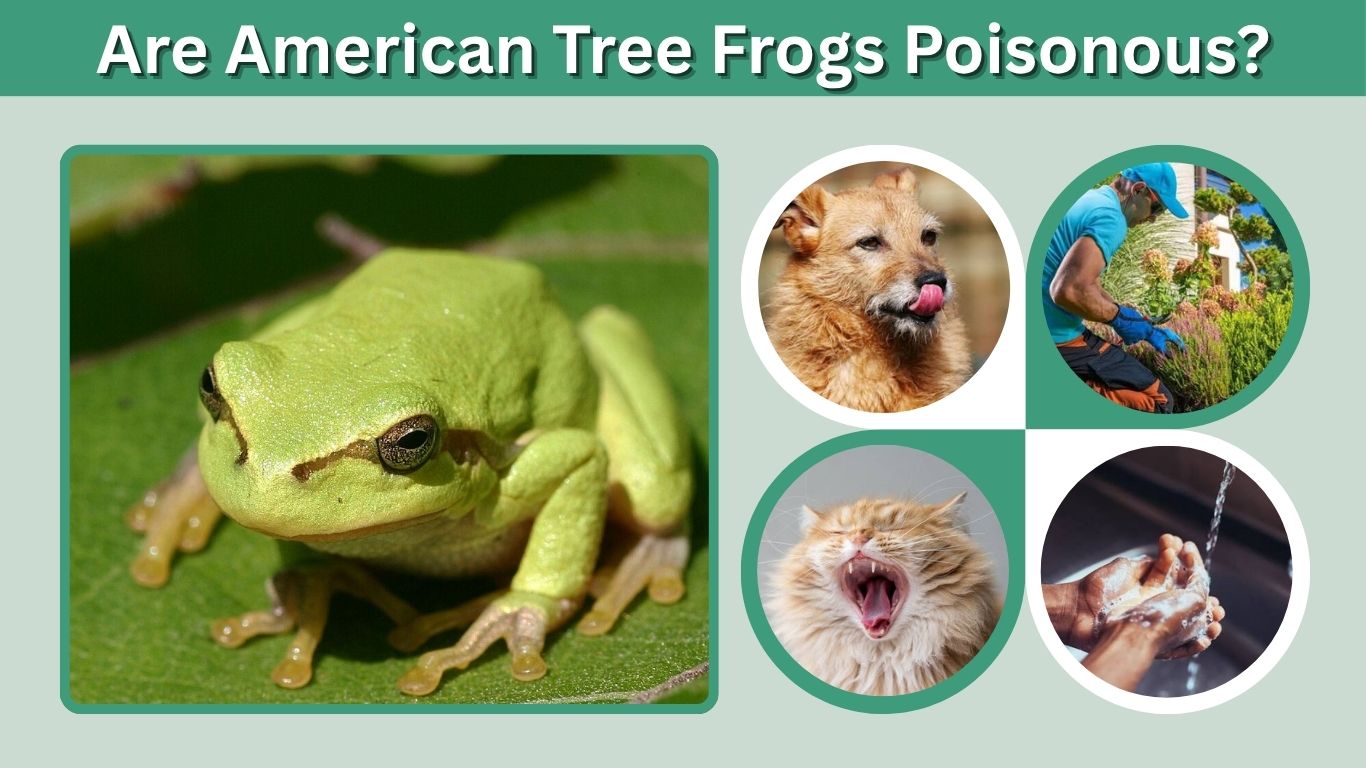
Have you spotted a bright green tree frog near your home and wondered whether touching it could be dangerous? American tree frogs are common around gardens, wetlands, and wooded areas, but their skin secretions can raise safety concerns. Fortunately, the American green tree frog is not considered dangerously poisonous to humans. However, contact with amphibians still requires some precautions, especially around pets and children. Understanding their natural defenses and potential health risks can help you interact with these frogs safely.
Are American Tree Frogs Poisonous to Humans?
American green tree frogs are not considered dangerously poisonous to humans. These small amphibians do not have venom-injecting fangs or stingers, and they generally avoid contact with people. However, some frog skin secretions can irritate sensitive tissues, while amphibians can also carry bacteria that cause illness.
Are American Green Tree Frogs Toxic?
The American green tree frog (Dryophytes cinereus, formerly Hyla cinerea) is not known for the highly toxic defensive chemicals associated with poison dart frogs.
Like other amphibians, it has specialized skin glands that help maintain moisture and provide protection. Frog skin secretions can contain biologically active substances, so direct contact with the eyes, mouth, or open wounds should be avoided.
A brief encounter with an American green tree frog is unlikely to cause serious poisoning in a healthy person, but good hygiene remains important.
Can Touching an American Tree Frog Make You Sick?
Touching a tree frog does not automatically cause poisoning. However, frogs may carry Salmonella bacteria even when they appear healthy.
The bacteria can spread when contaminated hands touch food or the mouth. Young children, older adults, and people with weakened immune systems are particularly vulnerable to complications.
The CDC recommends washing hands thoroughly with soap and water after handling amphibians or anything in their environment.
Are American Green Tree Frogs Poisonous to Dogs?
American green tree frogs are not recognized as a major poisoning threat to dogs. However, dogs may chase, lick, bite, or swallow frogs while exploring gardens and outdoor areas. Such encounters should be taken seriously because some other amphibians have much stronger chemical defenses and can cause significant poisoning.
What Happens If a Dog Licks an American Green Tree Frog?
A dog that mouths a frog may experience an unpleasant taste or temporary oral irritation. Possible warning signs include:
- Excessive drooling or foaming around the mouth.
- Repeated licking of the lips.
- Pawing at the mouth.
- Gagging or vomiting.
- Unusual restlessness or discomfort.
These symptoms are not specific to American green tree frogs and may indicate exposure to a different, more toxic amphibian.
If your dog encounters an unidentified frog, remove the animal from its mouth if safe, gently wipe the gums with a damp cloth, and contact a veterinarian for advice. Avoid forcing water down your dog’s throat. Severe symptoms require immediate veterinary attention.
Are American Green Tree Frogs Poisonous to Cats?
American green tree frogs are not generally regarded as highly toxic to cats, but feline encounters still present potential risks. Cats have strong hunting instincts and may catch frogs near garden plants, ponds, or patios. Biting or swallowing an unfamiliar amphibian can expose a cat to irritating secretions or other hazards.
What If a Cat Eats an American Green Tree Frog?
A cat that catches or swallows a frog may develop gastrointestinal discomfort or oral irritation, although serious poisoning is not expected from a correctly identified American green tree frog.
Monitor for excessive salivation, repeated vomiting, unusual behavior, or difficulty swallowing.
If your cat develops symptoms or you cannot identify the frog, contact a veterinarian promptly. Never attempt to induce vomiting without veterinary instructions.
Why Do American Tree Frogs Have Skin Secretions?
American tree frogs possess specialized skin glands that support moisture regulation and protection. Their skin is thin and permeable, allowing water and certain substances to pass through it. Skin secretions are therefore important for maintaining the frog’s health, reducing microbial threats, and providing some protection against predators.
Are Tree Frog Skin Secretions Poisonous?
The effects of tree frog secretions vary considerably among species.
American green tree frogs are not known for highly dangerous secretions, but other tree frogs can produce substances that cause considerable irritation.
For example, the invasive Cuban tree frog (Osteopilus septentrionalis) produces a defensive secretion capable of causing burning and irritation when it contacts human eyes or other sensitive tissues. Its secretion can also cause discomfort in dogs and cats that attack it.
How to Identify an American Green Tree Frog
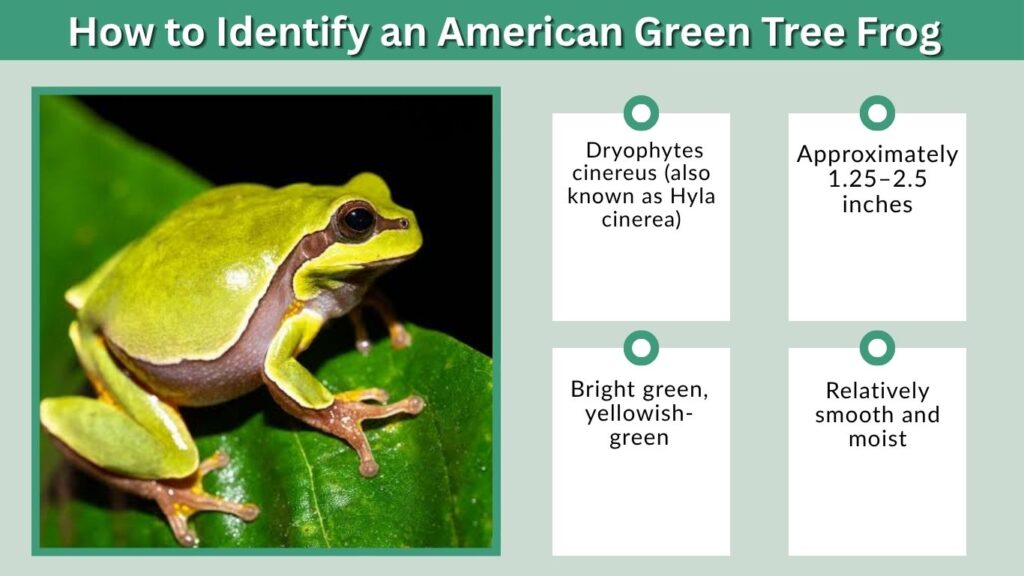
Correct identification is important when determining whether a frog poses a potential safety risk. The American green tree frog is native to the southeastern United States and often appears around houses, gardens, wetlands, and wooded landscapes. Its bright coloration and distinctive side markings help distinguish it from several other frogs.
American Green Tree Frog Identification Features
- Scientific name: Dryophytes cinereus (also known as Hyla cinerea).
- Body length: Approximately 1.25–2.5 inches.
- Body color: Bright green, yellowish-green, or occasionally dull grayish-green.
- Side markings: Usually a white or yellowish stripe extending along the sides.
- Skin texture: Relatively smooth and moist.
- Toe pads: Rounded adhesive pads for climbing.
- Natural habitat: Wetlands, ponds, forests, gardens, and vegetation near freshwater.
The white side stripe is a particularly helpful identification feature, although it may be reduced or absent in some individuals.
American Green Tree Frog vs. Other Potentially Harmful Frogs
Not every green-colored frog has the same chemical defenses. Some native American tree frogs pose little risk during ordinary encounters, while other amphibians have irritating or medically significant toxins. Correct identification is especially important when pets have bitten or swallowed a frog.
Differences in Toxicity and Safety
| Frog Species | Risk to Humans | Risk to Pets |
| American Green Tree Frog | Low; hygiene precautions advised | Generally low, but avoid ingestion |
| Gray Tree Frog | Secretions may irritate sensitive tissues | Possible irritation |
| Cuban Tree Frog | Irritating skin secretions | Can cause oral irritation and other symptoms |
| Cane Toad | Toxic secretions can be harmful | Potentially life-threatening poisoning |
Cane toads are not tree frogs, but they are included because they may occur in some of the same regions and represent a considerably greater risk to pets.
The University of Florida documents the irritating secretions of Cuban tree frogs, while veterinary guidance identifies cane toads as a major poisoning hazard for dogs.
How to Handle American Green Tree Frogs Safely
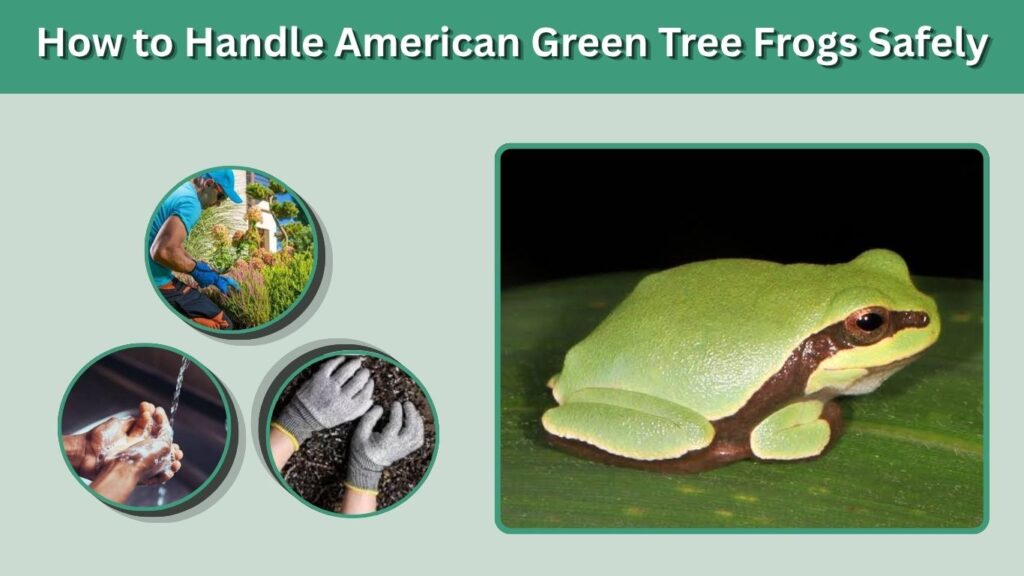
Although American green tree frogs are not considered highly poisonous, unnecessary handling should be avoided. Amphibians possess sensitive skin that readily absorbs moisture and other substances. Oils, sunscreen, soap residues, and chemicals on human hands can harm frogs, while handling amphibians may expose people to bacteria.
Safe Handling and Hygiene Tips
- Avoid handling wild frogs unless necessary.
- Use clean, moistened, powder-free gloves when handling is unavoidable.
- Never squeeze or restrain a frog tightly.
- Avoid touching your eyes, nose, or mouth after contact.
- Wash your hands thoroughly with soap and water afterward.
- Keep young children from handling unfamiliar amphibians.
- Prevent dogs and cats from chasing or biting wild frogs.
PetMD recommends minimizing handling of American green tree frogs because of their delicate skin and potential to carry infectious organisms.
FAQs
1. Can an American green tree frog poison you by touching your skin?
Ordinary skin contact is unlikely to cause poisoning. However, frog secretions may irritate sensitive tissues, and amphibians can carry bacteria. Wash your hands after handling.
2. Are baby American green tree frogs poisonous?
Young American green tree frogs are not known to be dangerously poisonous to humans. They should still be handled carefully because of their delicate skin and potential to carry germs.
3. Can American green tree frogs cause allergic reactions?
Contact with amphibian skin secretions may cause irritation in sensitive individuals. If unusual redness, swelling, or persistent irritation develops, seek medical advice.
4. Is it safe for dogs to eat American green tree frogs?
Dogs should not be allowed to eat frogs. Although American green tree frogs are not considered highly toxic, ingestion may cause problems, and other amphibians can be much more dangerous.
5. Are American green tree frogs more poisonous than gray tree frogs?
Neither species is generally considered a serious poisoning threat to humans during ordinary encounters. Both should be handled cautiously, and their skin secretions should be kept away from the eyes and mouth.
